分类: politics

  • Laura Fernandez claims victory in Costa Rica’s presidential election

    Laura Fernandez claims victory in Costa Rica’s presidential election

    SAN JOSE — Laura Fernandez of the ruling Sovereign People Party has secured a decisive victory in Costa Rica’s presidential election, capturing 48.3% of the vote and avoiding a runoff election. The political scientist and former government minister celebrated with supporters in the capital Sunday evening, outlining her vision for what she termed “the Third Republic”—a new chapter in the nation’s history.

    With 93.8% of polling stations reporting, official data from the Supreme Electoral Tribunal confirmed Fernandez’s substantial margin over opponents Alvaro Ramos of the National Liberation Party (33.4%) and Claudia Dobles of the Citizen Agenda Coalition (4.9%). Under Costa Rican electoral law, candidates exceeding 40% support in the first round claim outright victory.

    The president-elect has already received congratulatory calls from both outgoing Costa Rican President Rodrigo Chaves and Salvadoran President Nayib Bukele. In her victory address, Fernandez emphasized continuity with the current administration’s transformation agenda while pledging to strengthen democratic institutions.

    “Costa Rica has voted for the continuity of change—a change aimed solely at rescuing and perfecting our democratic institutions and returning them to you, the sovereign people,” Fernandez declared, acknowledging both the excitement and immense responsibility of her mandate.

    The 39-year-old leader, who previously served as Minister of National Planning and Minister of the Presidency under Chaves, has committed to prioritizing national dialogue while urging constructive engagement from opposition parties. Both Ramos and Dobles conceded defeat while vowing to uphold democratic principles through their legislative representatives.

    Key policy priorities include addressing national security through emergency measures to reclaim criminal-controlled territories and utilizing a new prison facility currently under construction. Economically, Fernandez proposes expanded public-private partnerships for infrastructure development, streamlined bureaucracy, and enhanced foreign investment attraction.

  • Argentina fires ravage pristine Patagonia forests, fueling criticism of Milei’s austerity

    Argentina fires ravage pristine Patagonia forests, fueling criticism of Milei’s austerity

    LOS ALERCES NATIONAL PARK, Argentina — Argentina’s iconic Patagonian wilderness, a landscape immortalized by generations of writers and adventurers, now resembles a conflict zone. Towering plumes of smoke rise like artillery fire while nocturnal flames cast an apocalyptic orange glow across mountainsides, transforming this UNESCO World Heritage site into a haunting spectacle.

    The devastating wildfires ravaging drought-stricken Patagonia represent the region’s most severe blazes in decades, having consumed over 45,000 hectares of native forest in recent weeks. The inferno has forced thousands of residents and tourists to evacuate as flames continue spreading through Los Alerces National Park, home to ancient trees dating back 2,600 years.

    This ecological catastrophe has ignited fierce criticism against President Javier Milei’s administration, whose radical austerity measures have dramatically reduced funding for fire prevention and response agencies. Since taking office promising economic rescue from decades of debt, Milei has implemented an 80% budget reduction to the National Fire Management Service compared to the previous year, severely hampering brigades, aircraft maintenance, and equipment procurement.

    According to analysis by the Environment and Natural Resources Foundation (FARN), the agency faces an additional 71% funding cut in the upcoming budget cycle. These reductions coincide with increasingly frequent extreme weather events linked to climate change, creating perfect conditions for catastrophic wildfires.

    Firefighter Hernán Mondino, his face streaked with sweat and soot after grueling shifts, stated: “Climate change is undeniable. This is us living it. But we see no sign that the government is concerned about our situation.”

    The crisis has exposed structural weaknesses in Argentina’s environmental protection framework. The Ministry of Security, which assumed firefighting oversight after Milei downgraded the Environment Ministry, declined to comment on the situation.

    Milei’s economic policies have achieved some success, reducing annual inflation from 117% to 31%—the lowest rate in eight years. However, his alignment with former U.S. President Donald Trump’s approach to governance has extended to environmental policy. After Trump announced U.S. withdrawal from the Paris climate agreement, Milei threatened to follow suit, dismissing human-caused climate change as a “socialist lie”—a position that enrages many Argentinians experiencing record-breaking heat and dryness firsthand.

    Local resident Lucas Panak expressed growing public frustration: “There’s a lot of anger building up. People here are very uncomfortable with our country’s politics.”

    Experts argue the fundamental issue isn’t fire response but prevention. Andrés Nápoli, director of FARN, explained: “Fires are not something you only fight once they exist. They must be addressed beforehand through planning, infrastructure and forecasting. Prevention has essentially been abandoned.”

    The National Park Administration has suffered similar cuts, resulting in hundreds of rangers, firefighters, and administrative staff departing. Current staffing stands at 391 firefighters against a recommended minimum of 700, with many remaining personnel relying on secondhand equipment and donations.

    The human toll on responders is severe. Patagonian firefighters earn approximately $600 monthly, forcing many to seek additional work as gardeners and farmhands. “From the outside it looks like everything still functions,” said Mondino, “but our bodies bear the cost.”

    Political tensions escalated when Milei delayed addressing the crisis publicly while participating in public dancing events. After mounting pressure, he eventually declared a state of emergency, releasing $70 million for volunteer firefighters and announcing “a historic fight against fire” via social media.

    At base camps where exhausted firefighters recuperate, volunteer Mariana Rivas summarized the collective sentiment: “It hurts because it’s not just a beautiful landscape, it’s our home. There’s anger about what could have been avoided, and anger because every year it gets worse.”

  • Shanghai’s political advisory body opens annual session

    Shanghai’s political advisory body opens annual session

    The 14th Shanghai Municipal Committee of the Chinese People’s Political Consultative Conference (CPPCC) commenced its fourth annual session on Monday, highlighting significant advancements in the city’s governance model and policy advisory functions.

    Chairman Hu Wenrong, delivering the keynote work report, revealed that Shanghai’s pioneering practice sites for whole-process people’s democracy have substantially expanded their operational scope throughout 2025. These democratic innovation hubs attracted considerable international attention, hosting 440 foreign delegates who expressed admiration for Shanghai’s distinctive approach to democratic governance. Many international observers noted the potential applicability of Shanghai’s model as a reference for other nations exploring democratic innovations.

    The advisory body’s operational metrics demonstrate robust engagement: 143 specialized consultative meetings were organized across the network, featuring participation from CPPCC members at national, municipal, and district levels, accounting for 3,861 individual engagements. The initiative further extended to educational outreach, welcoming 274 domestic groups and 948 students from diverse academic backgrounds.

    Economic stabilization emerged as the cornerstone of the committee’s policy focus throughout the past year. Nine dedicated research teams conducted comprehensive analyses across 12 critical sectors, including high-end manufacturing, real estate markets, and foreign investment frameworks. The research initiative encompassed 173 enterprise visits to gather firsthand operational insights, with findings systematically channeled to party and government authorities to facilitate responsive policy adjustments.

    The committee’s proposal mechanism demonstrated exceptional productivity, receiving 1,269 formal submissions with 1,046 proposals achieving formal acceptance after rigorous review. These vetted proposals provided substantively constructive, precisely targeted, and operationally feasible recommendations aimed at accelerating reform initiatives and advancing Shanghai’s comprehensive modernization agenda.

  • British politician Peter Mandelson faces pressure to quit House of Lords over Jeffrey Epstein ties

    British politician Peter Mandelson faces pressure to quit House of Lords over Jeffrey Epstein ties

    LONDON — Peter Mandelson, the former British ambassador to Washington and prominent Labour Party figure, has resigned from his political affiliations following explosive new revelations about his connections to convicted sex offender Jeffrey Epstein. The development marks another dramatic turn in the career of one of Britain’s most skilled yet controversial political operators.

    Mandelson’s resignation from the governing Labour Party on Sunday came in response to allegations contained within over 3 million documents recently released by the U.S. Department of Justice. These documents reportedly indicate that Mandelson received substantial payments totaling $75,000 from Epstein accounts two decades ago. While Mandelson has questioned the authenticity of bank records and denies recollection of receiving these funds, he stated he was stepping aside to prevent “further embarrassment” to the party.

    The released correspondence reveals extensive communication between Mandelson and Epstein, including emails from 2009 suggesting Mandelson, then a UK government minister, offered to lobby officials regarding banking bonus taxes. One particularly compromising photograph shows Mandelson in his underwear near an unidentified woman in a bathrobe.

    Prime Minister Keir Starmer, who previously dismissed Mandelson from his ambassadorial position over earlier Epstein revelations, now faces mounting pressure to ensure Mandelson testifies in U.S. investigations. Starmer has additionally called for Mandelson’s resignation from the House of Lords, Parliament’s unelected upper chamber where Mandelson holds lifetime membership and the title Lord Mandelson since 2008.

    Cabinet minister Steve Reed emphasized that Mandelson, like Prince Andrew, bears a “moral obligation” to assist Epstein’s victims. “If anybody has information or evidence that they can share that might help to understand what’s gone on and bring justice for those victims, then they should share it,” Reed stated.

    The situation presents complex constitutional challenges, as removing Mandelson from the Lords would require parliamentary legislation—a process last undertaken over a century ago. A spokesman for Starmer acknowledged that while the Prime Minister believes Mandelson should not remain in the Lords, he lacks the direct authority to remove him.

    This development represents the latest chapter in Mandelson’s turbulent political journey. The architect of Labour’s centrist “New Labour” transformation under Tony Blair, Mandelson previously resigned twice from government over financial and ethical allegations before remarkably returning to high office. His recent appointment as Washington ambassador capitalized on his trade expertise and connections with wealth circles, but ultimately proved unsustainable as Epstein connections continued to surface.

    Epstein died by suicide in 2019 while awaiting trial on federal charges of sexually abusing dozens of girls, having previously avoided prosecution through a controversial plea deal in Florida.

  • Beijing criticises Dalai Lama Grammy win as ‘manipulation’

    Beijing criticises Dalai Lama Grammy win as ‘manipulation’

    China has issued a stern diplomatic condemnation following the Grammy Awards’ recognition of the Dalai Lama, characterizing the accolade as a form of political weaponization against Chinese interests. The Tibetan spiritual leader received the award in the Best Audio Book, Narration & Storytelling Recording category for ‘Meditations: The Reflections of His Holiness the Dalai Lama.’

    Foreign Ministry spokesman Lin Jian articulated Beijing’s position during a press briefing, stating: ‘We firmly oppose relevant parties using art awards as a tool for anti-China political manipulation, and this position is consistent and clear.’ The declaration reinforces China’s longstanding view of the Dalai Lama as a separatist figure seeking to undermine Chinese territorial integrity.

    The 90-year-old Nobel Peace Laureate, who has resided in exile in Dharamshala, India since fleeing Tibet during the 1959 uprising, accepted the honor with measured diplomacy. In a social media statement, he noted: ‘I receive this recognition with gratitude and humility. I don’t see it as something personal, but as a recognition of our shared universal responsibility.’ Musician Rufus Wainwright accepted the award on his behalf during the ceremony.

    The Grammy recognition coincides with heightened tensions regarding succession plans for the spiritual leadership. The Dalai Lama’s previous statements indicating his reincarnation would occur in the ‘free world’ outside China directly contradict Beijing’s insistence that any succession must adhere to Chinese laws and receive government approval. This disagreement has amplified concerns among Tibetan exile communities that China might attempt to control the succession process to strengthen its governance over Tibet, which China has administered since 1950.

  • Germany detains 5 men accused of illegally exporting goods to Russian defense companies

    Germany detains 5 men accused of illegally exporting goods to Russian defense companies

    German federal prosecutors have executed a major operation against an illicit procurement network allegedly supplying Russian defense companies, resulting in five arrests across northern Germany. The operation targeted individuals accused of systematically violating EU sanctions imposed following Russia’s full-scale invasion of Ukraine in 2022.

    The detained suspects, all German nationals with two holding dual Russian citizenship and one additional Ukrainian citizenship, face charges of criminal organization membership and breaching Germany’s Foreign Trade and Payments Act. Law enforcement conducted simultaneous raids in Lübeck and Lauenburg district, with additional searches executed at multiple properties nationwide. Five additional suspects remain at large according to official statements.

    At the center of the investigation is Nikita S. (identified under German privacy conventions), a German-Russian dual national who operates a trading company based in Lübeck. Prosecutors allege this enterprise served as the primary vehicle for procuring and exporting goods to Russian defense industries. The sophisticated operation employed fabricated companies within Lübeck and established fictitious clients both inside and outside the EU to conceal transactions and circumvent sanctions.

    Evidence indicates Russian state agencies orchestrated the network, which supplied at least 24 Russian defense contractors. The scale of operations involved approximately 16,000 separate shipments to Russia with an estimated value exceeding €30 million ($35.5 million). While prosecutors have not disclosed the specific nature of the exported goods, the investigation highlights ongoing challenges in enforcing sanctions against Russia’s military-industrial complex.

  • EU’s foreign policy chief says a Europe-wide army could be ‘extremely dangerous’

    EU’s foreign policy chief says a Europe-wide army could be ‘extremely dangerous’

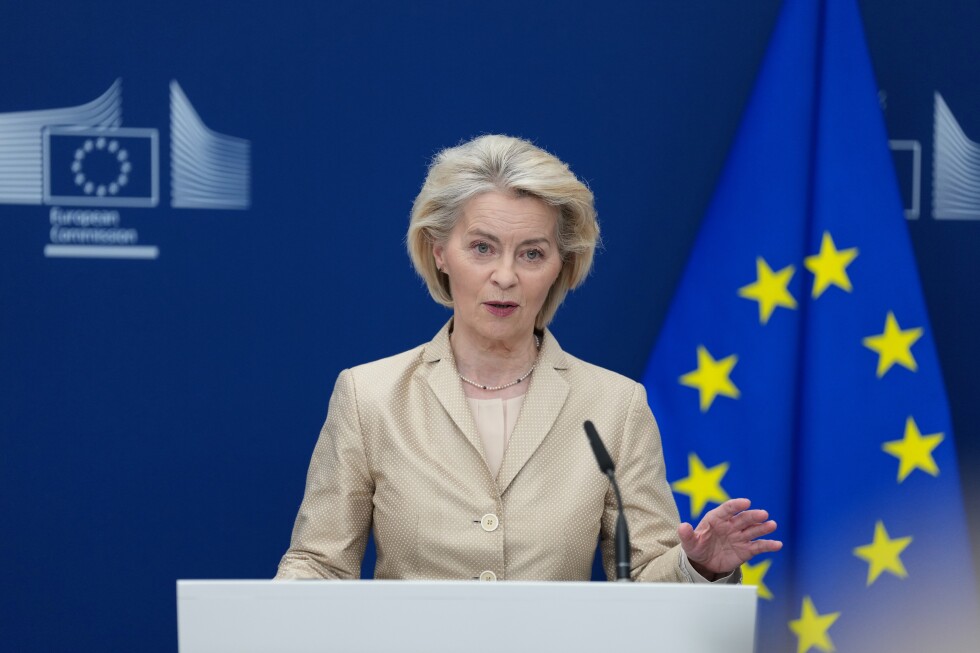
    BRUSSELS — European Union Foreign Policy Chief Kaja Kallas has issued a stark warning against proposals for a European army, characterizing the concept as “extremely dangerous” during a security conference in Norway on Monday. Her remarks come amid intensified discussions about European security autonomy following shifting U.S. geopolitical priorities.

    Kallas systematically dismantled the European army proposition, emphasizing practical military command structures as her primary concern. “Those advocating for a European army may not have thoroughly considered the practical implications,” she stated. “When already integrated within NATO, establishing a separate military force becomes fundamentally unworkable.”

    The Estonian diplomat highlighted the critical importance of clear command hierarchies during security crises. “The paramount military asset in any emergency situation remains the chain of command—establishing unequivocally who issues orders to whom,” Kallas explained. “Creating parallel structures between a European army and NATO would result in catastrophic coordination failures, with critical decisions falling between institutional gaps.”

    Norwegian Prime Minister Jonas Gahr Støre echoed Kallas’ position despite Norway’s non-EU membership status. “NATO maintains an established decision-making process among allies that, while complex, undergoes continuous operational training,” Støre noted, unequivocally rejecting European army proposals as “not a road we should travel.”

    The debate resurged following recent NATO tensions triggered by former President Donald Trump’s controversial suggestions regarding Greenland’s status. Adding strategic perspective, NATO Secretary-General Mark Rutte recently asserted that European self-defense without U.S. support remains currently unachievable. Rutte told EU lawmakers that Europe would need to more than double existing military spending targets to approach autonomous defense capabilities, bluntly stating that those believing otherwise should “keep on dreaming.”

  • France’s budget set to clear the way for Macron’s military spending boost

    France’s budget set to clear the way for Macron’s military spending boost

    PARIS — After months of political discord, France’s delayed annual budget is poised for final approval on Monday, paving the way for substantial increases in defense expenditure as pledged by President Emmanuel Macron. The budgetary process, characterized by parliamentary fragmentation and governmental instability, ultimately required Prime Minister Sébastien Lecornu to invoke special constitutional powers to bypass legislative gridlock and enact the legislation without a formal vote.

    The defense allocation represents a significant departure from broader austerity measures, with the military sector receiving an exceptional €6.7 billion ($7.9 billion) augmentation compared to 2025 levels. This financial injection will facilitate the acquisition of advanced military assets including a nuclear-powered attack submarine, 362 armored vehicles for army modernization, and new Aster surface-to-air missile systems. Concurrently, France is launching an expanded voluntary military service program targeting thousands of young citizens aged 18-19.

    Macron’s administration is pursuing deficit reduction targets aiming to decrease the budget deficit from 5.4% to 5% of GDP, while implementing spending cuts across most government departments. This fiscal consolidation occurs amid pressure from European Union institutions and credit rating agencies concerned about France’s debt sustainability within the Eurozone’s second-largest economy.

    The budgetary process revealed the government’s precarious parliamentary position, forcing concessions including the suspension of Macron’s controversial pension reforms that would have raised the retirement age. Corporate taxation will see increases, with an additional levy on large companies projected to generate €7.3 billion ($8.7 billion) in revenue.

    As Macron approaches the final year of his presidency, his attention has increasingly shifted toward international affairs and defense strategy. Recent diplomatic initiatives include advocating for security guarantees for Ukraine, demonstrating European solidarity with Greenland, and supporting the designation of Iran’s Revolutionary Guard as a terrorist organization by the EU. The president’s foreign policy stance gained particular attention during the Davos summit, where his remarks expressing preference for ‘respect over bullies’ were widely interpreted as a rebuke to former President Donald Trump’s tariff threats.

  • Balloons from Belarus cross into Polish airspace for a third night

    Balloons from Belarus cross into Polish airspace for a third night

    WARSAW, Poland — For the third consecutive night, Polish authorities have documented unauthorized balloon incursions originating from Belarus, marking a significant escalation in hybrid operations along the EU’s eastern frontier. The Polish Armed Forces Operational Command characterized these events as deliberate attempts by Minsk to test Warsaw’s aerial defense readiness and reconnaissance capabilities.

    Military spokesperson Jacek Goryszewski revealed that balloon-related incidents have surged dramatically in early 2026 compared to the same period last year. While the exact motivation remains unclear, officials suggest the increase could stem from either political directives within the Belarusian government or sophisticated adaptation by criminal smuggling networks evading enhanced border security measures.

    Although the Polish military maintains these aerial violations pose no direct threat to national airspace security, temporary flight restrictions have been imposed over the Podlaskie region bordering Belarus as a precautionary measure. The Belarusian embassy in Warsaw has not responded to requests for commentary regarding these allegations.

    This development occurs within the broader context of what NATO members Poland and Lithuania describe as coordinated hybrid warfare tactics employed by Belarus and its ally Russia. These tactics previously included manufacturing migration crises, alleged sabotage operations, and systematic espionage activities targeting Western nations.

    The balloon incidents follow earlier security breaches including Russian drone penetrations of Polish airspace in September and a November explosion on passenger rail infrastructure that Warsaw attributes to Moscow. Lithuanian authorities faced similar aerial provocations in December when meteorological balloons from Belarus forced repeated shutdowns of Vilnius International Airport, creating massive travel disruptions that officials labeled as deliberate hybrid attacks.

  • A Kremlin official confirms that U.S.-brokered Russia-Ukraine talks are resuming this week

    A Kremlin official confirms that U.S.-brokered Russia-Ukraine talks are resuming this week

    ABU DHABI, United Arab Emirates – Diplomatic efforts to resolve the Russia-Ukraine conflict will resume this week with trilateral negotiations scheduled in Abu Dhabi on Wednesday and Thursday, according to Kremlin officials. The talks, mediated by the United States, follow a brief postponement attributed to scheduling conflicts despite ongoing frontline hostilities and devastating long-range attacks on civilian infrastructure.

    Kremlin spokesman Dmitry Peskov characterized the discussions as “very complex,” noting that while progress has been achieved on certain issues, significant divisions remain on others. The negotiations occur as the fourth anniversary of Russia’s full-scale invasion approaches, with key sticking points including Moscow’s demand to retain occupied Ukrainian territories, particularly in Ukraine’s eastern industrial regions.

    The diplomatic push continues against a backdrop of intensified violence. Recent Russian drone and missile bombardments have resulted in substantial civilian casualties, including twelve miners killed in a single attack on Sunday. These assaults have severely damaged Ukraine’s power infrastructure, leaving populations without heating, electricity, or running water during harsh winter conditions.

    In a parallel technological development, Ukrainian Defense Minister Mykhailo Fedorov announced measures to prevent Russian forces from exploiting SpaceX’s Starlink satellite services for drone navigation. Ukraine has implemented a mandatory registration system for Starlink terminals, disabling unapproved devices within its territory. SpaceX CEO Elon Musk acknowledged the effectiveness of these countermeasures, offering further cooperation if needed.

    The talks follow discreet weekend meetings between Russian envoy Kirill Dmitriev and American officials in Miami, though details remain undisclosed. Despite sustained diplomatic engagement from the Trump administration, fundamental disagreements continue to impede breakthrough possibilities as the conflict approaches its fourth year.