分类: health

  • China recording rapid increase in flu cases

    China recording rapid increase in flu cases

    China is currently experiencing a significant upsurge in influenza cases, with health authorities reporting a rapid nationwide increase that is projected to intensify in the coming weeks. According to recent data from the Chinese Center for Disease Control and Prevention, the influenza positivity rate among patients presenting influenza-like symptoms has reached nearly 45% during the week beginning November 17, marking a substantial rise from the previous week’s 38% rate.

    The national health agency has classified the current flu epidemic at a medium intensity level, with several provinces already reporting high influenza activity. Health officials have identified a particular vulnerability among school-aged children, noting that infection clusters within educational institutions continue to multiply. Children between five and fourteen years old are demonstrating significantly higher positivity rates compared to other age demographics.

    While influenza dominates current respiratory concerns, other viruses including rhinovirus, respiratory syncytial virus, and enterovirus remain in circulation, though their transmission rates show a declining trend while maintaining noticeable presence.

    The China CDC has issued specific guidance for high-risk environments, urging nursery care facilities, schools, and elderly care institutions to implement rigorous health monitoring protocols and respond promptly to any detected infection clusters. Public health recommendations emphasize preventive measures, particularly advocating for vaccination among vulnerable populations including healthcare workers, elderly individuals, and those with preexisting medical conditions. The agency further advises mask-wearing in public spaces as an additional protective measure against respiratory virus transmission.

  • Drinking is a way of life in Ireland. Can a warning label change that?

    Drinking is a way of life in Ireland. Can a warning label change that?

    Ireland’s profound cultural entanglement with alcohol faces unprecedented regulatory challenges as the nation implements some of the world’s strongest alcohol warning labels. These labels, now appearing on bottles and cans nationwide, explicitly state that alcohol consumption causes liver disease and is linked to fatal cancers. The measures represent the latest development in Ireland’s complex relationship with drinking, where pub culture remains deeply embedded in social traditions.

    The legislation, initially signed into law in 2023, mandates physical barriers between alcohol and general products in supermarkets alongside graphic health warnings. However, in a controversial move criticized by public health advocates, the Irish government has postponed compulsory implementation until 2028, citing global trade uncertainties. Critics suggest industry lobbying influenced the delay, though Drinks Ireland, the industry representative body, maintains they sought “breathing space” and prefers EU-wide standardization.

    Despite decreasing overall consumption—down approximately one-third over 25 years according to The Drinks Industry Group of Ireland—concerning trends persist among youth. Public health organization Alcohol Action Ireland reports binge drinking rates among 15-24-year-olds have increased significantly, with two-thirds regularly engaging in hazardous consumption patterns. The average drinking initiation age has risen to 17, yet young Irish drinkers still rank among Europe’s heaviest consumers once they start.

    Interviews with Dublin residents reveal mixed reactions to the warnings. Jack, a 29-year-old advertising professional who regularly consumes six or more pints on heavy nights, acknowledges the labels but questions their efficacy: “I know my limits. As long as you know what your limits are, I think it’s fine health-wise.” Others like 23-year-old Amanda express skepticism: “You look at it and you’re like, ‘Oh, I just drank that. Should I drink another one?’”.

    Structural factors complicate Ireland’s drinking culture. Sean, 21, notes the lack of social alternatives: “There’s not much to do in Dublin after a certain time… you have to get a pint.” This pub-centric social landscape contrasts with emerging sober curious movements. Individuals like 27-year-old Sam, completely alcohol-free for three years, and Helen, who rarely drinks, represent growing demographic shifts despite facing social stigma for their choices.

    The delayed warning label implementation reflects broader tensions between public health objectives, cultural traditions, and economic considerations in a nation where alcohol brands like Guinness and Jameson remain iconic exports. With calorie and alcohol content labeling also postponed until 2028, Ireland’s journey toward alcohol harm reduction continues to navigate complex social and political currents.

  • Experts call for year-round commitment as DFC ends

    Experts call for year-round commitment as DFC ends

    As Dubai’s annual fitness initiative concludes its 30-day campaign, healthcare professionals are emphasizing the critical importance of maintaining physical activity and nutritional balance throughout the year. Viktor Ristic, a prominent Dubai-based nutritionist and fitness trainer, asserts that while the Dubai Fitness Challenge (DFC) successfully generates widespread participation, lasting health benefits require ongoing commitment rather than temporary engagement.

    Ristic challenges the conventional mindset surrounding short-term fitness programs, stating: “The fundamental question transcends what participants accomplished during November. What truly matters is their sustained effort throughout the subsequent months. Physical movement represents a biological necessity rather than a monthly project.”

    The health expert detailed the scientific advantages of consistent exercise, noting its proven benefits for cardiovascular function, blood sugar regulation, and muscle preservation. These physiological improvements, he emphasized, result from steady behavioral patterns rather than sporadic high-intensity interventions.

    Addressing nutritional aspects, Ristic cautioned against extreme dietary restrictions that often follow challenge-based fitness programs. “Attempting complete lifestyle overhauls frequently leads to unsustainable practices. Individuals eliminate sugar, avoid oils, and abandon cultural foods, but such drastic measures typically prove counterproductive,” he explained. “Gradual, achievable modifications yield more lasting results than radical approaches.”

    Ristic provided specific guidance regarding fat consumption, highlighting the importance of selecting quality sources that deliver both energy and nutritional value. He cited palm oil as containing beneficial compounds like carotenoids and tocopherols, which demonstrate antioxidative, anti-inflammatory, and cholesterol-managing properties.

    The nutritionist further debunked ingredient-focused health myths, stating: “No single food component singularly causes health deterioration. We must examine comprehensive dietary patterns, physical activity levels, and overall lifestyle factors. Focusing exclusively on ingredient elimination while neglecting sedentary behavior misses the complete health picture.”

    Ristic recommends incorporating daily walking routines, regular strength training, and balanced meal preparation as sustainable practices. These approaches enable individuals to enjoy diverse cuisines while maintaining physiological wellness.

    With the DFC’s conclusion, Ristic reframes the event as a motivational starting point rather than a finish line. “The genuine victory manifests not in November’s achievements, but in continued dedication during December, January, and all subsequent months—including holiday seasons and ordinary days alike,” he concluded. “Consistent practice represents both the fundamental challenge and ultimate solution for long-term wellness.”

  • US: FDA attributes 10 children’s deaths to Covid vaccines

    US: FDA attributes 10 children’s deaths to Covid vaccines

    A confidential memorandum from the Food and Drug Administration’s vaccine division has revealed that agency officials have attributed the deaths of at least ten children to COVID-19 vaccinations. Dr. Vinay Prasad, director of the division, indicated in the Friday communiqué that these fatalities were connected to myocarditis, a form of heart inflammation recognized as a rare vaccine side effect.

    The internal document, obtained by The New York Times but not formally released to the public, lacked critical details regarding the children’s ages, pre-existing health conditions, or the methodology used to establish causation between vaccination and death. The memo similarly omitted identification of the vaccine manufacturers involved in these cases.

    This development represents a significant policy shift under Health Secretary Robert F. Kennedy Jr., a longstanding vaccine skeptic who has frequently characterized COVID-19 vaccines as unsafe. The current administration has implemented new policies restricting vaccine access primarily to individuals over 65 and younger populations with underlying medical conditions.

    The scientific community remains divided on these findings. Dr. Paul Offit of Children’s Hospital of Philadelphia criticized the memo as ‘science by press release,’ noting the absence of contextual data comparing mortality rates between vaccinated and unvaccinated children. Medical experts emphasize that while vaccine-related myocarditis typically resolves quickly, virus-induced myocarditis often requires intensive care treatment.

    The timing of the memo’s circulation precedes next week’s meeting of the CDC’s vaccine advisory committee, now populated with Kennedy-appointed members who support medical freedom principles. The committee is expected to review childhood vaccine schedules, including the hepatitis B vaccine for newborns, alongside COVID-19 vaccines.

    Dr. Peter Marks, former FDA vaccine regulation chief, expressed concern about the memo’s ‘clearly political tone’ while acknowledging the need for further scrutiny of these complex cases. The FDA’s internal review was reportedly led by Dr. Tracy Beth Hoeg, a senior adviser with documented vaccine skepticism, and reviewed by agency teams.

  • Tianjin Hospital hosts Malaysian orthopedic experts to deepen China-ASEAN medical exchange

    Tianjin Hospital hosts Malaysian orthopedic experts to deepen China-ASEAN medical exchange

    Tianjin Hospital has strengthened international medical cooperation by hosting a delegation of distinguished orthopedic specialists from Malaysia for the 2025 International Advanced Arthroplasty Seminar. This strategic initiative aims to deepen clinical partnerships between China and ASEAN nations while advancing the field of joint surgery through shared expertise.

    The seminar created an environment for transnational professional dialogue, with Malaysian surgeons presenting complex clinical cases from their practice. These case studies sparked extensive technical discussions with Professors Ren Kaijing and Zhang Fujiang from Tianjin Hospital’s joint surgery department, fostering mutual learning and professional growth.

    Malaysian delegates expressed particular admiration for Tianjin Hospital’s technological capabilities and surgical expertise. Dr. Chan Kin Yuen from Gleneagles Hospital Kuala Lumpur noted the institution’s cutting-edge work in 3D printing applications and complex revision surgery, describing the hospital’s technical resources as exceptional for handling high-risk procedures.

    Dato’ Dr. Goh Eng Tat from LohGuanLye Specialists Centre highlighted the effective mentorship culture observed between senior and junior surgeons, noting this collaborative approach enables the team to confidently undertake major complex operations while maintaining procedural excellence.

    Beyond technical expertise, Dr. Cheu Teck Luk from Borneo Medical Centre expressed appreciation for the hospital’s historical significance, noting how the institution’s legacy forms an integral part of China’s medical heritage.

    The exchange program featured live surgical demonstrations by Professor Li Xiaohui, administrative director of the joint surgery department. These included three complex procedures: hip dysplasia correction, knee revision surgery, and robot-assisted joint replacement—all representing the forefront of orthopedic innovation.

    This professional dialogue has established a sustainable platform for ongoing Sino-ASEAN collaboration in joint surgery while demonstrating Tianjin Hospital’s clinical capabilities on the international stage.

  • How China aims to reach 80-year average life expectancy by 2030

    How China aims to reach 80-year average life expectancy by 2030

    China has launched an ambitious national health initiative with the strategic goal of elevating average life expectancy to 80 years by 2030, representing a significant one-year increase from current levels. This target forms the cornerstone of the country’s 15th Five-Year Plan (2026-2030) for national economic and social development, positioning health advancement as both a developmental objective and a crucial component of China’s modernization journey.

    National Health Commission Director Lei Haichao outlined the comprehensive strategy that will transform health metrics into key performance indicators for local governments. The evaluation framework will include infant mortality rates, maternal mortality statistics, control of infectious and chronic diseases, and the expansion of childcare services. This systematic approach aims to align regional development priorities with national health objectives.

    The multi-faceted plan incorporates several groundbreaking measures: legislation mandating health impact assessments for new policies, integration of health education into national curriculum standards, and ambitious targets to boost public health literacy from 31.87% to over 40% by 2030. The initiative specifically addresses infectious disease management through enhanced monitoring systems, advanced laboratory capabilities, and strengthened emergency response mechanisms.

    Infrastructure modernization forms another critical component, with planned upgrades to primary healthcare facilities and expanded specialized services in pediatrics, mental health, emergency medicine, traditional Chinese medicine, rehabilitation, and nursing care. The strategy also introduces a full life-cycle population service system, complemented by policy measures including improved maternity insurance, extended maternity leave provisions, and the establishment of affordable childcare systems to reduce family burdens.

    With China’s aging population projected to grow throughout the implementation period, the plan emphasizes healthy aging through expanded long-term care insurance and the development of innovative home-based medical services for elderly and disabled citizens. This holistic approach represents one of the world’s most comprehensive public health strategies, aiming to bring China’s major health indicators to levels comparable with high-income nations.

  • Home visits and WeChat platform aid Ningxia patients

    Home visits and WeChat platform aid Ningxia patients

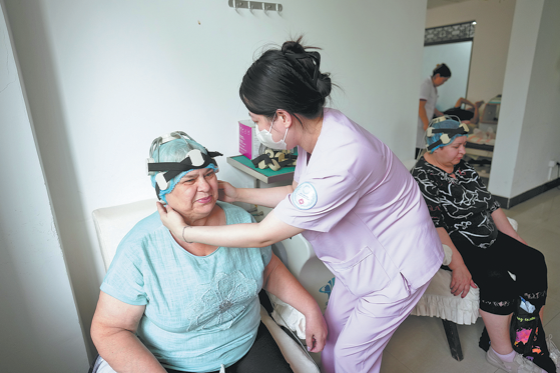
    In the Ningxia Hui Autonomous Region, a innovative healthcare initiative blending traditional home visits with modern digital platforms is revolutionizing chronic disease management for elderly patients. This program provides regular medical check-ups and personalized treatment adjustments directly in patients’ homes, supplemented by continuous digital monitoring through WeChat-based communication channels.

    Seventy-year-old Zhang Younsheng, a hypertension patient of twelve years, exemplifies the program’s success. As a stage 2 patient, he qualifies for contracted family doctor services that bring comprehensive medical care to his doorstep. Dr. Chen Wenchang, his assigned family physician, conducts routine visits to monitor Zhang’s blood pressure, evaluate his condition, and fine-tune his medication regimen.

    ‘The doctor’s regular visits provide tremendous peace of mind,’ Zhang noted. ‘Not only does he adjust my medications during each visit, but he also offers clear explanations about proper dosage and administration.’

    The initiative represents a significant advancement in regional healthcare infrastructure, particularly in Shizuishan where such visits have become standardized practice. By combining the personal touch of in-home medical consultations with the convenience and accessibility of digital health platforms, Ningxia’s healthcare authorities have created a hybrid model that addresses both medical and accessibility challenges.

    This approach demonstrates how traditional medical practices can effectively integrate with digital technology to create more responsive, patient-centered healthcare solutions, especially valuable for elderly patients managing long-term chronic conditions in remote areas.

  • Quttainah Hospital earns JCI re-accreditation, reinforcing its leadership in ethical elective care

    Quttainah Hospital earns JCI re-accreditation, reinforcing its leadership in ethical elective care

    Dubai’s Quttainah Medical Center has once again achieved the coveted Joint Commission International (JCI) re-accreditation, solidifying its status as a premier institution for ethical elective and aesthetic healthcare in the Middle East. This distinguished recognition, awarded following an exhaustive evaluation process, validates the hospital’s unwavering dedication to exceptional patient safety protocols, clinical excellence, and organizational integrity.

    The JCI Gold Seal represents the highest global standard in healthcare quality, with accreditation demanding strict adherence to over 1,300 measurable criteria spanning clinical outcomes, infection prevention, facility management, and staff credentialing. Quttainah Hospital’s successful renewal demonstrates not merely compliance but consistent exceeding of these rigorous international benchmarks.

    This accomplishment carries substantial implications for both the institution and Dubai’s expanding medical tourism sector. The re-accreditation enhances patient confidence in selecting ethically-grounded elective procedures, supports Dubai’s strategic vision to become a world-class medical destination, and establishes new quality standards for regional healthcare providers.

    Hospital leadership emphasized the cultural significance behind this achievement. Founder and Chairman Dr. Adel Quttainah stated, ‘This accreditation transcends ceremonial recognition—it embodies our daily commitment to patient-centered care. While aesthetic excellence remains our trademark, creating an environment where patients feel secure, valued, and comprehensively supported defines our fundamental philosophy.’

    Chief Medical Officer Dr. Mohamed Omran elaborated on operational excellence: ‘Reattaining the JCI Gold Seal reflects meticulous attention to detail across every care continuum—from initial consultation through postoperative recovery. Our integrated systems prioritize patient protection while delivering treatments that meet stringent international protocols, a responsibility we embrace with profound seriousness.’

    The re-accreditation positions Quttainah Hospital at the forefront of Dubai’s medical landscape, potentially influencing broader healthcare standards while reinforcing the emirate’s growing reputation as a trusted global destination for medical tourism.

  • Movember is nearly over: Why men’s health awareness should include financial well-being

    Movember is nearly over: Why men’s health awareness should include financial well-being

    As Movember awareness month concludes, alarming data from the Gulf region reveals a critical intersection between men’s health and financial stability. Zurich International Life Ltd.’s 2025 Customer Claims Report, analyzing three years of data across UAE, Bahrain, and Qatar, presents compelling evidence that demands a paradigm shift in how we approach men’s wellness.

    The statistics paint a concerning picture: 58% of men’s living-benefit claims resulted from heart attacks or strokes, while cancer accounted for 33%. Mortality figures prove equally sobering—cardiovascular events claim every second male life, with cancer responsible for one in four deaths.

    In a region where single-income households frequently support entire families, health professionals now emphasize that medical protection alone proves insufficient. Prashant Sharma, CFA, Vice President – Life at The Continental Group, explains the crucial distinction: “Medical insurance pays the hospital; critical-illness insurance pays the household. It bridges the gap between getting better and getting back to work by covering mortgages, school fees, and everyday costs that don’t stop when income does.”

    This evolving perspective recognizes that many men, despite being primary providers, often overlook their vulnerability. Insurance experts note that while awareness campaigns like Movember and Pink October have successfully normalized health screenings, the conversation must now expand to encompass economic resilience.

    Industry professionals advocate for integrated solutions that combine preventive measures with financial protection. Sanghamitra Banerjee, Life Insurance Manager, highlights how insurers now incorporate wellness programs, preventive health checkups, and mental health support alongside traditional coverage. She emphasizes that critical illness riders provide essential interim relief during medical crises, offering both financial and mental security.

    The report underscores employers’ vital role in closing protection gaps. Many organizations still overlook critical illness coverage when designing employee benefits programs, despite its potential to safeguard both staff and their families during health emergencies.

    This comprehensive approach to men’s health—merging physical wellness with financial preparedness—represents the next frontier in holistic well-being for Gulf communities, where health stability directly correlates with family security.

  • Bird flu poses pandemic risk worse than Covid-19, says France research centre

    Bird flu poses pandemic risk worse than Covid-19, says France research centre

    Leading French researchers at Institut Pasteur have issued a stark warning that avian influenza could potentially trigger a global health crisis surpassing the devastation caused by COVID-19. Dr. Marie-Anne Rameix-Welti, Medical Director of the institute’s respiratory infections center, emphasized that while current human infections remain rare, the virus’s adaptation for human-to-human transmission would create pandemic conditions of unprecedented severity.

    The highly pathogenic H5 avian influenza strain has already necessitated the culling of hundreds of millions of birds worldwide, creating significant disruptions to food supplies and driving price increases across global markets. Unlike seasonal influenza strains H1 and H3, against which humans maintain some antibody protection, the H5 variant presents a completely novel threat to human immune systems.

    According to World Health Organization data spanning 2003-2025, nearly 1,000 human cases have been documented primarily in Egypt, Indonesia, and Vietnam, with a startling 48% mortality rate. Recent developments include the first documented human case of H5N5 in Washington state, where an immunocompromised individual succumbed to the infection.

    Despite these concerning developments, international health authorities maintain that the immediate risk of human pandemic remains relatively low. Gregorio Torres of the World Organisation for Animal Health advises continued vigilance while reassuring the public about current safety measures for food consumption and outdoor activities.

    The scientific community highlights several advantages in pandemic preparedness compared to the initial COVID-19 response. Multiple vaccine candidates stand ready for rapid deployment, manufacturing protocols have been established for swift vaccine production, and strategic stockpiles of effective antiviral medications have been maintained specifically for influenza threats.