分类: health

  • Africa urged to chart new paths amid funding cuts

    Africa urged to chart new paths amid funding cuts

    Amid unprecedented cuts in global health funding, Africa finds itself at a pivotal juncture, grappling with the dual challenges of sustaining its healthcare systems and redefining its approach to self-reliance. Health experts are urging African nations to shift from despair to determination, emphasizing the need for innovative solutions and sustainable financing models. Catherine Kyobutungi, Executive Director of the African Population and Health Research Center, highlights the urgency of moving beyond the immediate crisis to strategize long-term resilience. Since January, the continent has felt the impact of significant funding reductions from major donors, including the United States and OECD countries. While programs like HIV and malaria have maintained some stability, critical areas such as maternal and child health, as well as water and sanitation, have suffered severe cuts. Kyobutungi warns that these cuts not only threaten immediate healthcare delivery but also set a concerning precedent for the unpredictability of aid. However, many African leaders and experts view this crisis as an opportunity to transform the continent’s healthcare systems. During the Africa Health Sovereignty Summit in Ghana, leaders advocated for sustainable health financing through domestic resource mobilization and reduced reliance on external aid. Daniel Mwai, Kenya’s presidential health adviser, emphasized that achieving sustainability requires robust political and technical leadership, meticulous planning, and a willingness to rethink priorities. As Africa navigates this funding crisis, the path forward lies in innovation, self-reliance, and a renewed commitment to building resilient healthcare systems.

  • AI takes on rising role in healthcare

    AI takes on rising role in healthcare

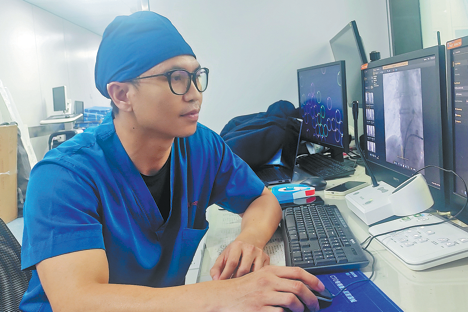
    Artificial Intelligence (AI) is increasingly transforming the healthcare sector, driving efficiency and expanding resources in underserved areas. At Beijing Chest Hospital, radiologist Hou Dailun has observed remarkable improvements since the introduction of an AI system in 2020. The system assists in analyzing CT scans for lung nodules, processing hundreds of slices in seconds and providing precise data on size, shape, and density. This innovation has slashed the time required for analysis from over 20 minutes to mere seconds, enabling the department to interpret results for 600 patients daily. This advancement is part of China’s broader strategy to integrate AI into healthcare, as outlined in a recent guideline by the National Health Commission. The guideline aims to make AI-assisted diagnostic imaging widely available in secondary-level hospitals by 2030, emphasizing data quality, research, and development. AI is also being deployed at the grassroots level, such as at Beiqijia Community Health Service Center, where an online system tracks blood sugar levels for diabetic patients and offers dietary recommendations. Despite its benefits, AI remains an auxiliary tool, with human oversight essential to address its limitations and ensure patient safety. The future of AI in healthcare is promising, with potential to enhance diagnosis, treatment, and chronic disease management, while requiring robust regulation and collaboration across sectors.

  • ‘I panic every time she coughs’ – Delhi’s toxic air is making its children sick

    ‘I panic every time she coughs’ – Delhi’s toxic air is making its children sick

    Delhi, the Indian capital, is grappling with a severe air pollution crisis, with children emerging as the most vulnerable victims. Hospitals across the city are witnessing a surge in young patients suffering from respiratory issues, a direct consequence of the hazardous air quality. The situation has reached alarming levels, with the Air Quality Index (AQI) consistently hovering between 300 and 400, far exceeding the World Health Organization’s recommended limit. Fine particulate matter (PM2.5), which can penetrate deep into the lungs, is a major contributor to the health crisis. Pediatric clinics are overwhelmed, with doctors reporting a tenfold increase in pollution-related illnesses among children. Dr. Shishir Bhatnagar, a pediatrician in Noida, noted that 50-70% of his patients during the pollution season suffer from breathing difficulties, compared to 20-30% in normal times. The government has implemented emergency measures, including halting construction and banning polluting vehicles, but these efforts have failed to curb the smog. Parents like Khushboo Bharti, whose one-year-old daughter Samaira was hospitalized with pneumonia, are living in constant fear. Research underscores the long-term health risks for children, including stunted development, weakened immunity, and cognitive impairments. A recent study from the University of Cambridge linked air pollution to a higher risk of dementia. Many families are considering relocating to safer environments, but for the economically disadvantaged, escape is not an option. Dr. A Fathahudeen, a pulmonologist, warns that chronic exposure to pollution can lead to irreversible lung damage in children. While schools have shifted to hybrid learning and outdoor activities have been curtailed, parents question how long they can keep their children indoors. The crisis has sparked protests and calls for urgent action to protect the health of Delhi’s youngest residents.

  • ‘Lifesaver’: UAE women hail US step to drop warning on menopause symptoms therapy

    ‘Lifesaver’: UAE women hail US step to drop warning on menopause symptoms therapy

    A landmark regulatory shift by the U.S. Food and Drug Administration (FDA) to eliminate stringent ‘black box’ warnings from most menopausal hormone replacement therapy (HRT) products is being celebrated as a transformative development for women’s healthcare in the United Arab Emirates. Medical professionals predict this decision will catalyze a significant surge in women seeking treatment, empowering them to pursue personalized strategies for managing menopause symptoms.

    The FDA’s action reverses a decades-old cautionary stance established in the early 2000s, which was based on a study that initially suggested a non-significant increase in breast cancer risk. This warning had created widespread apprehension, causing a dramatic decline in HRT usage. The updated regulatory position now aligns with contemporary scientific evidence demonstrating that initiating therapy within ten years of menopause onset, or before age 60, presents a favourable risk-benefit profile for most women.

    Dr. Aysha Salam, Specialist in Obstetrics and Laparoscopic Gynaecology at Aster Hospital Mankhool, described the development as “a pivotal moment for women in the UAE, potentially leading to increased access to evidence-based menopausal care.” She emphasized that this change facilitates more informed health decisions, moving away from a generalized approach to menopause management.

    The emotional resonance of this decision is profound among UAE residents. Dubai resident Fathimath Shehnaz characterized HRT as a “lifesaver” that alleviated her severe symptoms following a hysterectomy. “The hot flashes were unbearable,” she recounted. “Within one day of starting treatment, I could feel the difference.”

    Despite established benefits—including a documented 50% reduction in heart attack risk, 64% decrease in cognitive decline, and 35% lower Alzheimer’s risk—persistent misconceptions continue to deter women from treatment. Dr. Milena Caccelli, Endocrinologist at metabolic.health, noted that outdated fears surrounding cancer and cardiovascular risks have created disproportionate anxiety, often causing women to delay seeking appropriate medical care.

    Medical experts conclude that the FDA’s updated stance will foster more individualized prescribing practices, enhance patient-clinician dialogue, and ultimately improve quality of life for women navigating menopause by providing clearer access to safe and effective treatments.

  • Hair transplant costs in Turkey: What’s included and what to expect

    Hair transplant costs in Turkey: What’s included and what to expect

    Turkey has emerged as a premier destination for hair transplantation, offering a unique blend of affordability, quality, and comprehensive care. With costs ranging from $2,500 to $6,500, Turkish clinics provide a cost-effective alternative to Western countries like the UK, Europe, and the US. Renowned clinics such as Asli Tarcan Clinic employ experienced surgeons and utilize advanced techniques, ensuring natural results and a seamless recovery process.

    What sets Turkey apart is its all-inclusive packages, which typically cover accommodation, airport transfers, surgery, and aftercare. Patients can enjoy stays in 4- or 5-star hotels, private airport transfers, and access to specialized medical expertise. The competitive pricing is driven by factors such as affordable living costs, a robust medical tourism industry, and shorter waiting times.

    Turkish clinics also prioritize aftercare, offering virtual consultations, wound care instructions, medication guidance, and more. The success rate of hair transplants in Turkey exceeds 95%, making it a reliable choice for international patients. Additionally, the country’s convenient tourism arrangements, from arrival to departure, enhance the overall experience.

    Choosing the right clinic and understanding the inclusions in the package are crucial for a successful treatment. With proper research and planning, patients can achieve long-lasting results and enjoy a comfortable, cost-effective medical tourism experience in Turkey.

  • Chinese researchers help realize non-invasive insulin delivery through skin

    Chinese researchers help realize non-invasive insulin delivery through skin

    Millions of diabetes patients worldwide may soon bid farewell to the discomfort of daily insulin injections, thanks to a groundbreaking discovery by Chinese researchers. A team led by scholars from Zhejiang University has achieved the world’s first non-invasive delivery of insulin through the skin, offering a pain-free alternative with efficacy comparable to traditional injections. The findings, published in the prestigious journal Nature, mark a significant leap in diabetes treatment. The innovative approach utilizes a polymer called OP, which exhibits exceptional permeability in skin tissues, enabling the delivery of insulin without disrupting the skin barrier. This breakthrough not only addresses the physical and psychological challenges associated with injections but also opens doors for the transdermal delivery of other biological macromolecules, such as therapeutic proteins and monoclonal antibodies. The technology, already transferred to enterprises for clinical translation, holds immense potential to revolutionize treatment for chronic diseases requiring long-term injections.

  • TCM’s future is looking up down under

    TCM’s future is looking up down under

    Traditional Chinese Medicine (TCM) is experiencing a significant surge in recognition and adoption across Australia and the Southern Hemisphere, driven by its holistic approach and growing integration with Western medical practices. Steven Wolfgang Sass, a Melbourne-based TCM practitioner, exemplifies this trend. His clinic, which opened nearly two years ago, has seen a steady increase in patients seeking relief from conditions ranging from chronic pain to stress-related ailments. Sass’s success stories, such as treating a neurologist with acupuncture, highlight TCM’s efficacy and its ability to complement conventional treatments.

  • Alliance for thalassemia prevention and treatment launched in Thailand

    Alliance for thalassemia prevention and treatment launched in Thailand

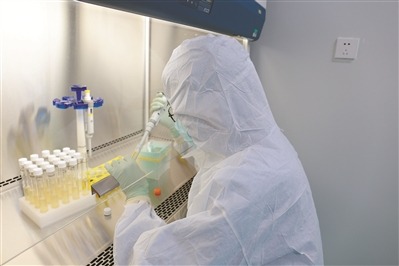
    In a significant stride towards combating thalassemia, the Southeast Asia Thalassemia Prevention Alliance (SEATPA) was officially launched in Chiang Mai, Thailand, on Monday. This groundbreaking initiative, spearheaded by BGI Group, a leading Chinese life sciences and genomics company, aims to eradicate preventable cases of this inherited blood disorder across Southeast Asia. Thalassemia, characterized by impaired hemoglobin synthesis and accelerated red blood cell destruction, poses a major public health challenge in the region due to its high prevalence. SEATPA’s mission is to foster cross-border collaboration, uniting countries, experts, and communities to enhance prevention and control efforts. The alliance will focus on capacity building, standardized training, technical unification, public awareness campaigns, and the sharing of expertise. Thailand’s Minister of Public Health, Pattana Promphat, emphasized the importance of regional cooperation in adapting modern medical technologies to local contexts and building a robust response to the disease. Wang Jian, co-founder and chairman of BGI Group, highlighted the necessity of global cooperation in precision medicine, stating that the alliance will bring advanced screening and treatment solutions to Southeast Asia, shifting the medical paradigm from passive treatment to active prevention. Piriya Cherdsatirakul, Vice-president of Chiang Mai University, lauded the alliance as a ‘significant milestone’ in improving the quality of life for thalassemia patients and offering new hope to the region.

  • Traditional treatments soothe patients’ pains

    Traditional treatments soothe patients’ pains

    Southwest China’s Guizhou province, home to 48 of the country’s 56 ethnic groups, has long been a hub of cultural and medicinal diversity. In Tongren, a city in Guizhou, Bai Yutao, a rehabilitation physician and acupuncturist, employs traditional Qiang ethnic techniques to treat patients. His method, known as ‘white-stone therapy,’ involves immersing polished stones in herbal broth, wrapping them in cloth, and rolling them across a patient’s back to release muscle tension. This fusion of ancient practices and modern medical care exemplifies Guizhou’s unique approach to traditional Chinese medicine (TCM).

    Guizhou’s rich ethnic heritage has become a cornerstone of its TCM industry. At Jiangkou County Hospital of Traditional Chinese Medicine, Bai and his team have adapted Qiang manual techniques to meet clinical standards, ensuring safety and efficacy. Historically, ethnic healing systems like Miao and Qiang medicine included shamanistic elements and were passed down orally. However, as younger generations pursue formal education and urban jobs, the number of traditional healers is dwindling. Bai emphasizes the need to preserve these cultural roots while making them accessible to a broader audience.

    In 2024, Tongren was designated a national pilot zone for the inheritance and innovative development of TCM. Efforts include standardizing treatments, regulating medicinal materials, and establishing quality control centers. The region is also leveraging its unique plant resources for economic growth. For instance, barrenwort, a herb known for strengthening tendons and bones, is cultivated in Jiangkou county and has become a staple in medicines and supplements. State-owned China National Pharmaceutical Group has partnered with local cooperatives to build the country’s largest barrenwort breeding base, providing technical guidance and purchase guarantees to farmers.

    Guizhou’s aromatic and medicinal raw materials are also gaining international recognition. Companies like Guizhou Miaoyao Biotech Co export essential oils and plant extracts, with valerian oil being a major product. The company supports over 3,000 cooperative households and plans to expand its branded wellness products. This blend of tradition and innovation is transforming Guizhou’s healthcare landscape while boosting its economy.

  • Music eases surgery and speeds recovery, Indian study finds

    Music eases surgery and speeds recovery, Indian study finds

    In a groundbreaking study conducted at Delhi’s Maulana Azad Medical College, researchers have discovered that playing music to patients during surgery under general anaesthesia can significantly reduce the need for anaesthetic drugs and improve recovery outcomes. The study, published in the journal *Music and Medicine*, focused on patients undergoing laparoscopic cholecystectomy, a common keyhole procedure to remove the gallbladder.