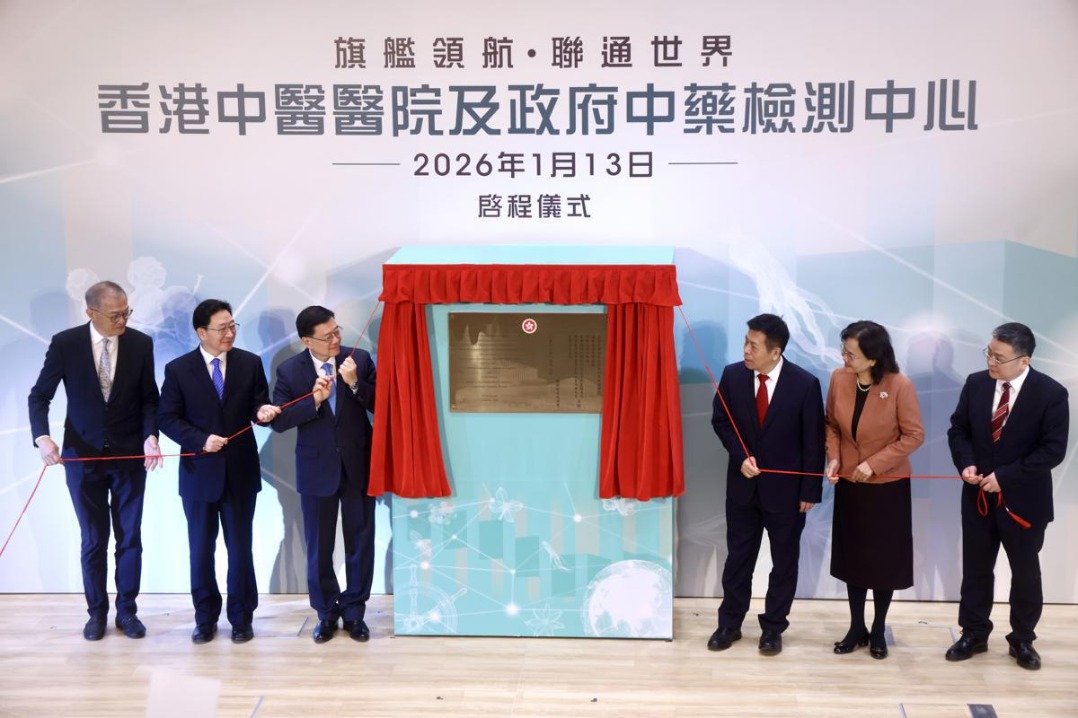
Hong Kong has officially inaugurated a groundbreaking integrated traditional Chinese medicine (TCM) complex, positioning itself as a future global leader in the ancient medical practice. The dual-facility development, comprising the Chinese Medicine Hospital of Hong Kong and the Government Chinese Medicines Testing Institute, commenced initial operations in December with a formal plaque-unveiling ceremony held Tuesday.
The sprawling 42,900-square-meter hospital and adjacent 17,200-square-meter testing facility, situated in Tseung Kwan O, represent the city’s most ambitious TCM infrastructure project to date. The ceremony attracted over 300 attendees including healthcare professionals, legislators, and government officials from both Hong Kong SAR and mainland China.
Chief Executive John Lee Ka-chiu heralded the complex as the cornerstone of a new TCM ecosystem that integrates academic, clinical, and industrial capabilities. ‘These flagship projects will foster collaborative advancement in scientific research and commercial application,’ Lee stated, noting the hospital has already received overwhelmingly positive patient feedback since its soft opening.
The initiative aligns with China’s national strategic emphasis on TCM development, particularly highlighted in the forthcoming 15th Five-Year Plan (2026-30). Lee pledged Hong Kong would leverage its internationally connected healthcare system, globally compatible regulatory framework, and robust clinical research capabilities to serve as China’s ‘bridgehead for taking traditional Chinese medicine global.’
National Health Commission Minister Lei Haichao recognized the opening as an ‘important milestone’ for Hong Kong’s TCM sector, which has seen remarkable growth—TCM consultations now account for 24.3% of all medical visits, up from just 7.5% in 1996.
Minister Lei outlined a comprehensive vision for Hong Kong’s TCM future: embedding services within local communities, driving synergistic growth across industry-academia-research spheres, and pooling resources to establish the Greater Bay Area as a premier TCM hub. He specifically highlighted Hong Kong’s exceptional capabilities in pharmaceutical testing and quality control as critical assets for advancing TCM’s global expansion.
The development follows Hong Kong’s release of its first-ever TCM development blueprint last month, supported by the Chinese Medicine Development Fund which has awarded grants to over 9,800 applicants benefiting more than 1,300 institutions since 2019.