分类: environment

  • Kenya eyes Chinese investment to accelerate clean energy transition

    Kenya eyes Chinese investment to accelerate clean energy transition

    NAIROBI, Kenya – As East African nations race to scale up renewable energy adoption and cut carbon emissions, Kenya is actively courting Chinese capital and technical partnership to build a domestic clean energy manufacturing sector, advance its national energy transition, and cement its status as the region’s leading green industrial hub. The announcement came during Kenya Trade Week 2026, where dozens of Chinese clean energy firms showcased their latest solar power, grid infrastructure and electric mobility products to local industry stakeholders and government officials.

    Thomas Karungu, alternate director to the principal secretary at Kenya’s State Department for Energy, outlined the country’s value proposition for foreign investors in a recent address, noting that Kenya holds unique advantages for clean energy investment: it boasts one of the highest shares of renewable energy in its national electricity mix on the continent, with abundant untapped solar, geothermal, wind and hydropower resources. Complementing these natural assets are its strategic position as a gateway to the East African Community’s 300-million-plus consumer market, a rapidly growing domestic energy demand, and a slate of recently updated government policies designed to lower barriers for clean energy project development and manufacturing investment.

    Karungu emphasized that China, as a global leader in renewable energy innovation, large-scale equipment manufacturing, grid infrastructure deployment and energy storage technology, is uniquely positioned to support Kenya’s clean energy goals. Through local production, targeted technology transfer and cross-border industrial partnerships, Chinese firms can help Kenya turn its natural resource advantages into long-term industrial and economic gains, he added.

    The Kenyan government is prioritizing partnerships that foster local industrial capacity, Karungu explained. This includes supporting local assembly of clean energy equipment, domestic production of core components, knowledge and technology transfer, joint research and development initiatives, technical skills training for local workers, and the build-out of a localized regional supply chain. Specifically, the government is welcoming Chinese investment across a wide range of high-priority sectors: solar panel manufacturing, transformer and smart meter production, high-voltage transmission equipment, electric vehicle charging infrastructure, geothermal energy development, mini-grid deployment for off-grid rural communities, clean cooking technology, waste-to-energy projects, and digital electricity network management.

    These investments will deliver far-reaching benefits beyond expanding renewable energy access, Karungu noted. They will create thousands of local manufacturing and technical jobs, build long-term sustainable technical capacity within Kenya, and allow the country to become a central manufacturing and distribution hub for clean energy equipment serving the entire East African region.

    To meet the country’s rapidly growing domestic electricity demand, the Kenyan government has laid out an ambitious infrastructure expansion plan: by 2030, it aims to modernize and extend the national high-voltage transmission network by roughly 8,000 kilometers, and add approximately 12,000 megavolt-amperes of additional transmission capacity to the grid. Delivering this large-scale infrastructure push will require massive capital input, cutting-edge technology, specialized technical expertise, strong institutional collaboration, and sustained public-private partnership, Karungu said.

    “For global investors, financiers and clean energy project developers, Kenya has set a clear, unwavering direction for its energy transition,” Karungu stated. “Achieving our goal of universal electricity access, expanding our transmission network and meeting the rising energy demand of our growing economy will require substantial, active participation from the private sector.”

    Chinese firms already active in the Kenyan market say the country offers strong untapped business potential, even amid fierce competition among Chinese clean energy suppliers. Cao Wenjing, a representative of a Chinese renewable energy company that entered the Kenyan market in 2025 after expanding across other major African markets including Nigeria, South Africa and Zimbabwe, noted that competition in the sector is intense, as most global clean energy equipment suppliers hail from China. Even so, Kenya’s exceptional solar resources, relatively high domestic electricity rates, and rapidly growing demand for both grid modernization and new renewable energy capacity continue to create attractive business opportunities for foreign firms, Cao added.

  • Firefighters on offensive in France, Spain as new heatwave arrives

    Firefighters on offensive in France, Spain as new heatwave arrives

    As Western Europe braces for a second blistering heatwave this week, firefighters across France and Spain are working around the clock to corral the most destructive wildfires the region has seen in decades, leveraging a narrow window of slightly cooler conditions before soaring temperatures return to fan the flames.

    The fast-spreading infernos have already carved a devastating path through thousands of hectares of forest, reducing hundreds of residential structures to ash and forcing mass evacuations that have displaced tens of thousands of residents. With meteorologists forecasting a return of oven-like heat — starting Tuesday in France and Wednesday in Spain — emergency crews are locked in a race against time to get existing blazes under control before extreme conditions return.

    On France’s Cap Ferret peninsula, where civilian volunteers have helped carve a massive 50-meter-wide, 25-kilometer-long firebreak to contain the blaze near Bordeaux, regional fire commander Eric Pitault said crews were holding the line against the inferno, though he acknowledged that teams were growing exhausted after six straight days of battle. Since the blaze ignited, it has scorched more than 42,000 hectares (103,000 acres) of land, forced 220,000 people to flee their homes, and destroyed 240 dwellings. While overnight flare-ups were reported in the northern part of the peninsula, French authorities confirmed these outbreaks have been contained, and the total burned area has not expanded.

    In Spain, the toll is even greater: wildfires burning primarily west of Madrid have already consumed 77,000 hectares (190,000 acres) — an area nearly as large as New York City — and forced 60,000 residents to evacuate. Outside the Madrid-region town of Aldea del Fresno, displaced locals waited in lines of cars at roadblocks on Monday, hoping for permission to return to their homes to check on properties and rescue stranded pets. But Spanish civil security forces blocked re-entry, citing extreme risks from toxic wildfire smoke. Galia Borisova, a 55-year-old domestic worker waiting to reach her animals in nearby Picadas, said authorities had warned even masks could not filter the thick smoke, a risk she could see firsthand from her position at the roadblock.

    The ongoing crisis is the latest manifestation of a broader trend of extreme weather that has gripped Europe throughout 2024, with consecutive back-to-back heatwaves and a widespread continental drought that scientists directly link to human-caused climate change. Years of rising global temperatures have created the ideal conditions for catastrophic wildfires: the preceding wet, mild winter and spring allowed vegetation to grow thick and lush, but months of extreme heat have dried that vegetation out, turning vast swathes of the European countryside into a massive tinderbox ready to ignite at the smallest spark.

    Leaders of both nations have acknowledged the new reality of climate change that is driving these repeated disasters. Spanish Prime Minister Pedro Sanchez described the ongoing wildfire crisis as “the most painful expression of a climate emergency,” while French President Emmanuel Macron warned the public that “the coming weeks will be tough and we have to hold out.”

    The crisis is already stretching European emergency resources thin, and EU crisis management commissioner Hadja Lahbib warned that the danger is not limited to France and Spain. Extreme fire risk is also building across central and eastern Europe, with conditions expected to worsen in Hungary, Slovakia, the Czech Republic, and Portugal in the coming days. “Extreme conditions are looming for Hungary, Slovakia and the Czech Republic, in addition to France, the Iberian Peninsula… where the situation is expected to worsen, including in Portugal starting today,” Lahbib said.

    Spain’s national meteorological agency AEMET has confirmed the new heatwave will last through at least the end of this week, with forecasts calling for temperatures as high as 42°C (107.6°F) in the country’s northeast and 39°C (102.2°F) in central regions. For its part, MeteoFrance is forecasting high temperatures of up to 40°C (104°F) across the country starting Tuesday, paired with dry, gusty winds that will only increase fire risk. Spanish Interior Minister Fernando Grande-Marlanka said Sunday that the next 48 hours would be “absolutely decisive” for containing the large wildfires burning outside Madrid before the new heatwave hits.

  • Shenzhen maps plan for mangrove management

    Shenzhen maps plan for mangrove management

    Nestled along the shores of Shenzhen Bay, between one of China’s most densely urbanized regions and a critical migratory bird corridor, the Futian Mangrove Wetland stands as a groundbreaking model of how thriving megacities can coexist with fragile coastal ecosystems. Facing Hong Kong’s Mai Po Nature Reserve across the narrow bay, this urban wetland has evolved into both a national showcase of ecological restoration and a global hub for cross-border cooperation on mangrove protection.

    As part of the Guangdong Neilingding-Futian National Nature Reserve, first established in 1984 and granted national-level status four years later, the 367.64-hectare site holds the distinction of being China’s only national-level mangrove reserve located within a major city’s core urban zone. It was officially designated a Wetland of International Importance under the Ramsar Convention in 2022.

    Today, the reserve hosts 20 distinct mangrove species across 9 plant families and provides critical habitat for 273 recorded bird species. The 2026 global synchronized census of waterbirds counted 341 endangered black-faced spoonbills in the greater Shenzhen Bay area (including adjacent Hong Kong waters), accounting for approximately 4.4% of the species’ entire global population.

    This conservation success story was not a given. Decades ago, the site faced a major threat when the planned Binhai Avenue was originally routed straight through the reserve’s core protected zone. In a landmark decision that prioritized ecological protection over rapid infrastructure development, city authorities shifted the highway alignment 200 meters north to avoid damaging the wetland. That choice kicked off a decades-long series of targeted protections: a 500-meter noise barrier to reduce disturbance to roosting birds, strict height limits for new development surrounding the reserve, a full fishing ban across Shenzhen Bay implemented in 2014, and China’s first bird-friendly urban planning standard released by the city in 2025.

    This local progress aligns with national efforts to reverse decades of mangrove loss across China’s coastlines. The country has enacted a national Wetland Protection Law, launched sustained national campaigns for wetland conservation, large-scale mangrove restoration, and control of the invasive smooth cordgrass (Spartina alterniflora) that outcompetes native mangrove species. During the 14th Five-Year Plan period (2021-2025), China exceeded its restoration target ahead of schedule, planting 9,200 hectares of new mangroves and bringing the country’s total national mangrove area to approximately 30,300 hectares.

    Shenzhen has expanded this domestic progress to a global stage through the International Mangrove Center (IMC), an initiative first proposed by China at the 14th Meeting of the Conference of the Contracting Parties to the Ramsar Convention on Wetlands in November 2022. As of June 2026, Myanmar became the 21st signatory to the IMC establishment agreement, according to the center’s interim secretariat.

    Since 2024, the IMC has organized six international training workshops, bringing together 137 delegates from 30 countries around the world. Each two-week workshop combines classroom lectures, peer discussion panels, and hands-on field visits to the Futian reserve, with participants drawn from government environment agencies, intergovernmental organizations, research institutions, and protected area management teams. Workshop topics cover a full spectrum of mangrove protection priorities: national policy frameworks, ecological restoration techniques, blue carbon accounting, community co-management of coastal resources, and transboundary conservation cooperation. In June 2026, a regional workshop for Asia-Pacific economies hosted 24 delegates from 10 economies, alongside partners from the East Asian-Australasian Flyway Partnership and the Ramsar Regional Center — East Asia.

    Based on input from participating member states and workshop attendees, the IMC is currently developing two key global resources: a comprehensive Global Mangrove Status and Key Issues Report, and open-access mangrove conservation datasets for all signatory countries. The center is also conducting research on blue carbon policy frameworks, market-based conservation mechanisms, and best practices for governance, local community engagement, and sustainable conservation financing.

    The Futian reserve provides a real-world case study for these global exchanges to draw on. To date, Shenzhen has invested more than 300 million yuan ($44.2 million) into estuary and coastal mangrove restoration, traditional fishpond rehabilitation, and improved habitat management across the Shenzhen Bay region. These investments have covered 220 hectares of coastal land, including more than 30 hectares of new mangrove planting.

    Since 2016, the reserve has transformed nearly 40 hectares of abandoned tidal shrimp ponds into high-quality waterbird habitat. Restoration work included clearing invasive reeds and overgrown vegetation, reconnecting historic tidal waterways, creating new intertidal mudflats, and constructing circular deep-water zones that serve as safe roosting spots during high tide. The results speak for themselves: the number of black-faced spoonbills roosting overnight in the restored Futian fishponds now exceeds 150, hitting a record high in recent years. Across the entire Shenzhen Bay area, counted numbers of the endangered species have surged from just 82 individuals in 1994 to 328 in 2025.

    Modern digital technology has further refined the reserve’s management practices. Since 2020, the reserve has installed 27 high-definition video monitoring systems and 50 infrared trail cameras. Integrated with AI-powered bird species identification, automatic image sorting, and intelligent sluice gate management, the system allows reserve managers to adjust water levels in real time and continuously track bird population and activity patterns without disturbing wildlife.

    Shenzhen has also pioneered new market-based mechanisms to fund conservation and connect mangrove protection to broader ecological value. In September 2023, China held its first ever auction of mangrove conservation carbon credits in the city, with credits selling for 485 yuan per metric ton; all proceeds from the auction are earmarked for future mangrove restoration projects. Public engagement has also been a core priority: by the end of 2025, nature education programs based at the Futian reserve had attracted more than 1 million students from over 300 schools across the country.

    As coastal communities around the world face intensifying storm damage, accelerating habitat loss, and growing pressure on fisheries, mangroves are increasingly recognized as natural, cost-effective infrastructure that mitigates climate impacts while supporting biodiversity. China’s experience, from the innovative urban mangrove management model at Futian to the global knowledge sharing and capacity building work of the IMC, demonstrates that effective mangrove conservation succeeds when it integrates legal protection, scientific research, digital monitoring, public education, market-based blue carbon mechanisms, local livelihood support, and cross-border international cooperation as interconnected components of a single holistic system.

  • France orders 4,000 more evacuated as heat threatens fragile hold on vast wildfire

    France orders 4,000 more evacuated as heat threatens fragile hold on vast wildfire

    LEGE-CAP FERRET, France — As soaring temperatures return to southwestern Europe, French emergency officials have ordered the evacuation of nearly 4,000 people from coastal Atlantic tourist sites, raising the stakes for an unprecedented regional wildfire crisis that has already displaced hundreds of thousands across France and Spain.

    The sprawling Gironde wildfire west of Bordeaux, which has already burned through 420 square kilometers of land — an area four times the size of Paris — has been held at a standstill overnight by firefighting crews, who managed to douse flare-ups near coastal dunes and halt the fire’s advance. While regional authorities have categorized the blaze as stabilized, they warn this status does not mean the fire is fully contained: with thermometers climbing and humidity levels dropping, the inferno could easily resume its spread across drought-parched vegetation.

    The precautionary evacuation order issued Tuesday covers all tourist infrastructure in the Lacanau resort region, including popular campsites, holiday villages, seasonal residences and leisure parks stretching across Lacanau Ocean and both shorelines of Lacanau Lake. “We are currently in a highly fragile position,” Eric Brocardi, spokesperson for France’s national firefighters federation, told broadcaster BFMTV Tuesday. “Even with the predicted temperature rise, we will continue our offensive against this fire.”

    Since igniting last week, the Gironde blaze has proven wildly unpredictable, at times escalating into a self-sustaining firestorm that forced 220,000 people to flee their homes and vacation getaways. Even after 24 hours without expansion, officials warn that smoldering undergrowth along the fire’s 103-kilometer completed firebreak line could spark new outbreaks as conditions worsen. To date, 93 firefighters have been injured battling the blaze, key transport routes including the A63 highway remain partially closed, and most rail traffic south of Bordeaux is suspended.

    The tense standoff in Gironde stands in contrast to promising progress in neighboring Landes, where a separate destructive wildfire has officially been declared contained, allowing 15,000 of the more than 30,000 displaced residents and tourists to return to their properties starting Monday night. “The fire is fixed, that is good news for Landes,” French President Emmanuel Macron confirmed Monday evening, noting that containment means the fire’s advance has been fully halted with no new active outbreaks spreading. The reprieve comes as a major relief for summer vacation communities that were emptied when flames swept through regional forests and tourist hubs. Still, authorities stress the Landes fire is not fully extinguished: residual hot spots, combined with persistent drought and shifting winds, could reignite the blaze, and surveillance and damping operations will continue for days, if not weeks.

    All hard-won progress across both French fire zones faced an immediate test Tuesday as heat began building back up across the region. France’s national weather service placed Gironde under a yellow heat warning starting midday, forecasting inland temperatures between 33 and 35 degrees Celsius, with southeastern winds expected across the department.

    So far this year, more than 116,000 hectares of land have burned across France, part of a broader trend of extreme wildfire activity amplified by climate change. The European Union’s Copernicus Climate Change Service confirmed Western Europe saw its hottest June on record this year, with extreme heat and widespread drought creating ideal conditions for fires to spread and intensify across both France and Spain.

    Across the border in Spain, the situation remains even more severe, with hundreds of firefighters, military emergency brigades and water-dropping aircraft continuing to battle multiple major blazes, including the largest wildfire recorded in the country’s history. Spain entered its fourth major heat wave of the summer on Tuesday, with forecasts calling for temperatures exceeding 40 degrees Celsius in many inland regions. To date, the ongoing wildfire crisis — which prompted the Spanish government to declare a first-ever national wildfire emergency — has forced roughly 79,000 people to evacuate and ordered another 30,000 to remain sheltered in their homes.

    The highest level of concern centers on two large blazes west of Madrid that have at times neared merging into a single mega-wildfire in the region’s wooded hills, while a separate blaze in the eastern province of Castellón has also triggered mass evacuations. The record-breaking wildfire in Ávila, west of Madrid, has already scorched more than 500 square kilometers of hilly rural terrain — an area five times the size of Barcelona. “Look at how the entire valley is burned. Look at the houses, look at what people have lost,” said David Gonzalez, a 48-year-old gardener who has used his personal van to deliver supplies to firefighting crews in Ávila. “We feel so much anger and helplessness. This is something inhuman.”

    This year alone, wildfires have burned more than 1,530 square kilometers across Spain — six times the total area scorched by wildfires in the same period of 2025, according to Spanish Ecology Minister Sara Aagesen. Spanish Prime Minister Pedro Sánchez has called for a unified national pact to address the growing wildfire risk, which scientists and policymakers agree has been significantly worsened by human-caused climate change.

    Across the two countries, the ongoing crisis has forced more than 330,000 people to flee their homes and tourist accommodations, marking one of the largest and most destructive wildfire outbreaks in recent European history.

  • UN lists South Sudan antelope route as heritage in danger

    UN lists South Sudan antelope route as heritage in danger

    In a landmark moment for the world’s youngest nation, South Sudan’s Boma-Badingilo migratory landscape has become the country’s first ever entry on UNESCO’s World Heritage List, with the UN body immediately placing it on the parallel List of World Heritage in Danger due to urgent threats from ongoing conflict and accelerating climate change.

    Spanning more than 37,500 square kilometers of grassland and open woodland savanna — an expanse larger than the entire territory of Belgium — the remote wilderness sits between the banks of the White Nile and South Sudan’s border with Ethiopia. Each year, the site hosts one of the planet’s most spectacular terrestrial wildlife migrations, with more than one million mammals, including massive herds of lechwe antelopes and gazelles, traversing the region in search of seasonal grazing and water. The collective movement of these huge herds leaves distinct, patterned tracks across the savanna that are clearly visible from aerial surveys.

    South Sudan has been plagued by recurring cycles of violent civil conflict since it gained full independence in 2011, creating widespread instability that has put immense pressure on the country’s relatively intact natural ecosystems. At the same time, rising global temperatures and shifting rainfall patterns have exacerbated drought and habitat degradation across the region, adding further strain to the migratory ecosystem.

    For South Sudan’s leaders and local communities, the designation marks a historic milestone. Tourism Minister Denay Jock Chagor told Agence France-Presse that the migratory landscape is not only host to one of the world’s greatest natural wildlife events, but also stands as a powerful symbol of South Sudan’s resilience, natural beauty, and untapped potential. “Its listing as South Sudan’s first UNESCO World Heritage Site is a proud and historic moment for our nation,” Chagor added.

    Paulino Warnyang, a community representative from Indigenous groups that have lived alongside the landscape for generations, echoed the sentiment, noting that the designation honors more than just the unique wildlife and ecosystems. “It honours not only the animals and the land, but also the people whose lives, traditions and cultures have always been connected to them,” Warnyang said.

    UNESCO’s designation is expected to bring tangible benefits to conservation efforts in the region. Inscription on the World Heritage List typically attracts increased international attention, drives growth in sustainable nature tourism, and unlocks access to global funding earmarked for the protection of threatened heritage sites facing risks from conflict, climate change, and human activity.

  • Wildlife face ‘catastrophic’ losses as France’s forests burn

    Wildlife face ‘catastrophic’ losses as France’s forests burn

    A massive wildfire that has torn through more than 42,000 hectares of forest west of Bordeaux, France, has left a trail of ecological destruction, with officials warning that wildlife populations face catastrophic, irreversible losses as a record heatwave threatens to reintensify the blaze.

    The inferno, which ignited earlier this week, has already consumed residential properties, agricultural land and infrastructure across the Gironde region, but the ecological toll is shaping up to be one of the disaster’s most devastating consequences. France’s Ecology Minister Monique Barbut confirmed Monday that wildlife losses are already “extremely significant”, and warned that final mortality numbers will almost certainly reach catastrophic levels, despite full assessments not yet being complete.

    In the worst-hit Atlantic coastal communes such as Le Porge, the fire’s intensity was so extreme that almost no native animals could survive, according to Laurent Tillon, an engineer with France’s National Forestry Office. “The power and energy released by the fire were far too great for any creature to outrun or outlast it,” Tillon told Agence France-Presse.

    Ecology experts note that even species with adaptations to forest ecosystems could not withstand the extreme heat, choking smoke and rapid spread of the flames. This includes already threatened native species, such as the Western spadefoot burrowing toad, the regionally rare ocellated lizard, and the Etruscan shrew — one of the smallest mammals on the planet. Insect populations, which form the base of many regional food chains, have been killed off on a mass scale, creating long-term ripple effects for the entire ecosystem.

    Grégory Lois, an ornithologist at Paris’ National Museum of Natural History, explained that bird species that rely on insects for food will struggle to survive in the region for years to come. “That entire burned area will be completely uninhabitable for these species next year,” Lois said. Ash runoff from the charred landscape has also contaminated local rivers and streams, damaging freshwater and aquatic ecosystems. Celine Sissler-Bienvenu, an animal protection and crisis management expert, pointed to the European pond turtle, a long-lived native species that has now suffered major population hits from large wildfires in the same region twice since 2022.

    Even faster-moving species that managed to flee the advancing flames have not escaped harm. Deer and other large mobile animals that escape the initial blaze often become disoriented in unfamiliar territory outside their normal ranges. Many become trapped between shifting fire lines, while others wander onto major roads or railway lines, where deadly vehicle collisions are common. Smoke and toxic fume inhalation also causes both immediate injury and long-term chronic health issues, particularly for smaller animals with sensitive respiratory systems, such as birds.

    For the animals that do survive the fire, the loss of habitat and feeding grounds creates new, ongoing struggles. Survivors are forced to compete for limited resources in unburned patches of forest already occupied by established wildlife populations, leading to food scarcity and increased conflict.

    French Prime Minister’s office will convene a meeting Tuesday to discuss the full ecological impact of the fires and outline potential recovery and restoration strategies. Barbut cautioned that reintroducing species that were displaced or extirpated by the fire will be an enormous challenge, noting that habitat restoration must come first. “When there are no longer any forests left, you cannot simply bring species back,” she said. “Wildlife cannot survive without a functional habitat to call home.”

    Forecasters warn that an incoming heatwave this week could reignite the existing fire lines, expanding the burned area and worsening the already severe ecological damage.

  • North America wildfires burn millions of acres in western US and Canada

    North America wildfires burn millions of acres in western US and Canada

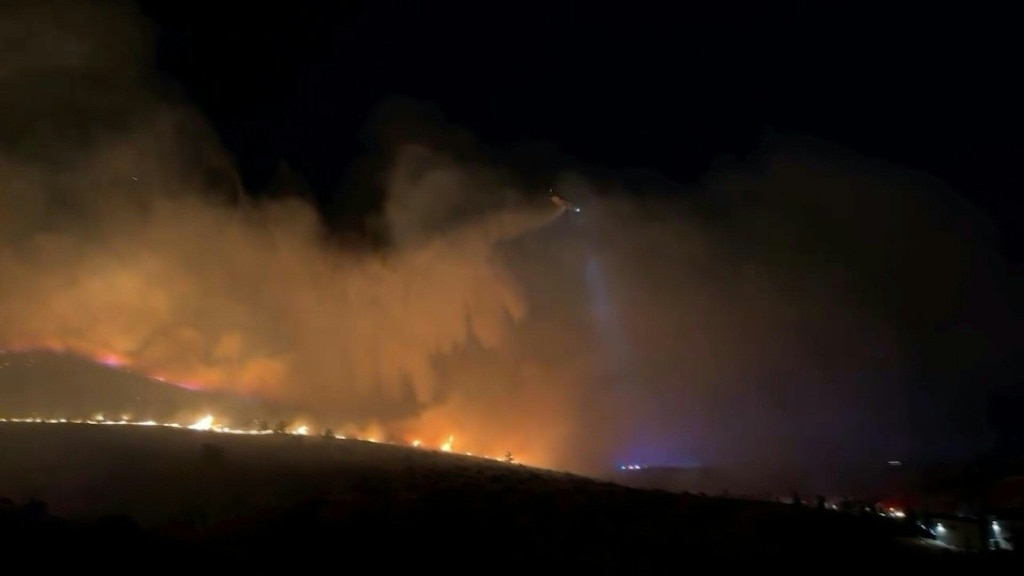
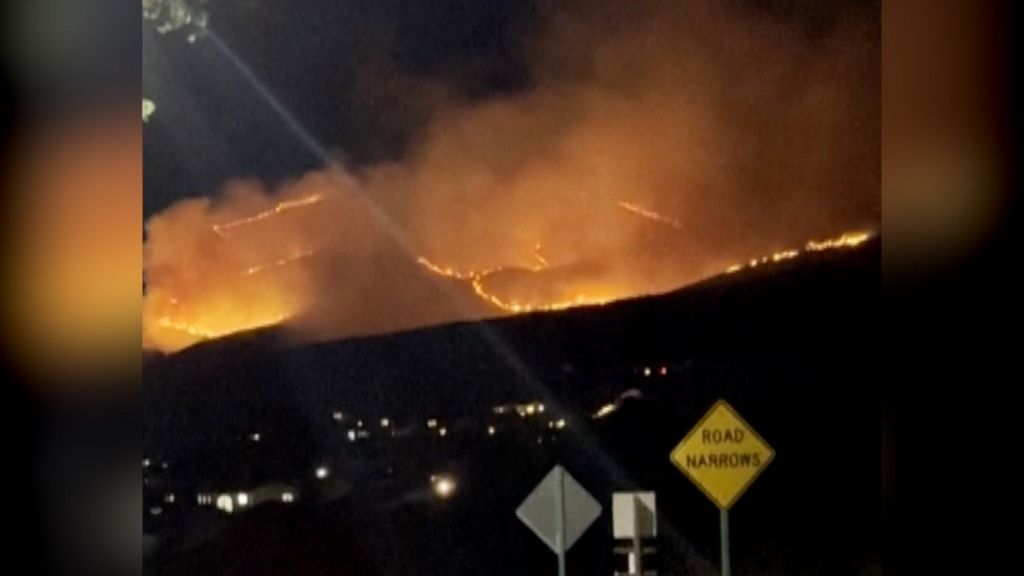
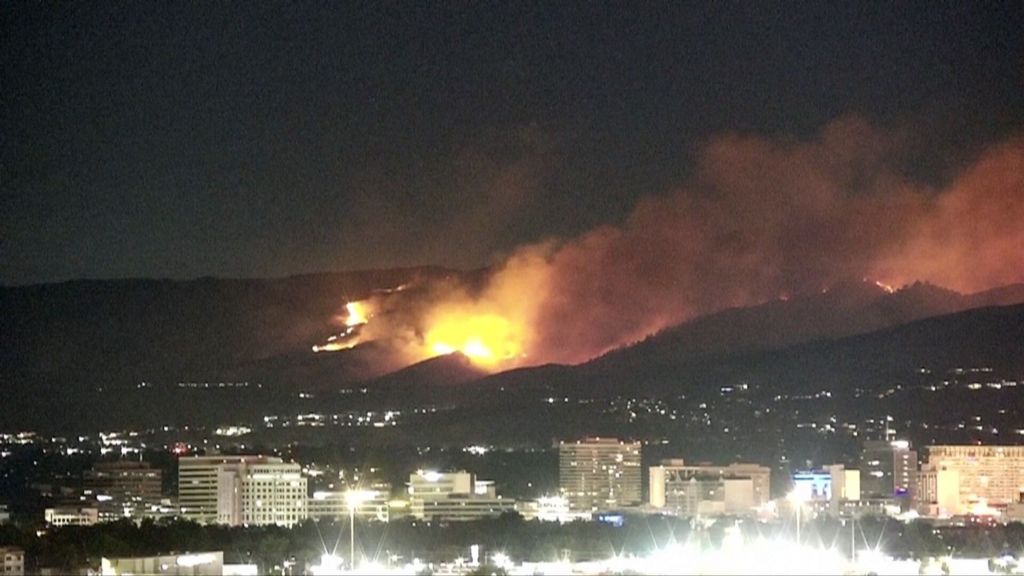
    Across the western expanse of North America, a growing climate-driven crisis is unfolding as dozens of intense wildfires scorch vast swathes of land in two major regions: the U.S. state of Oregon and Canada’s western province of British Columbia. Fueled by steadily climbing regional temperatures that have dried out vegetation and turned vast forested areas into tinder, these uncontrolled blazes have already consumed millions of acres of land, and show no signs of slowing their advance.

    The ongoing wildfire season, which has become increasingly severe in recent decades amid global climate shifts, has put local communities, emergency response teams, and ecological systems under extreme strain. Rising temperatures create a feedback loop that exacerbates fire risk: higher heat evaporates moisture from soil and plant life, making even normally resilient forests far more flammable. With warm weather patterns persisting across the Pacific Northwest, fire managers have warned that the spread of active blazes will likely continue in the coming weeks.

    This disaster is not contained within a single national border. Both Oregon and British Columbia share extensive ecological corridors and weather systems, meaning smoke and fire risk can cross international boundaries, impacting air quality and public health across a far wider area than the burned zones themselves. As emergency crews work around the clock to contain the blazes and evacuate at-risk communities, the event underscores the growing threat that climate change poses to wildfire frequency and severity across western North America.

  • Wildfires ‘stark reminder’ of extreme climate challenge, says William

    Wildfires ‘stark reminder’ of extreme climate challenge, says William

    As ferocious wildfires scorch large swathes of Western Europe and the United Kingdom, and a new intense heatwave builds on the horizon, Prince William, the Prince of Wales, has highlighted that these ongoing disasters are a clear wake-up call for the growing threat of climate-driven extreme weather.

    Across France and Spain, the wildfire crisis has already forced more than 300,000 residents to evacuate their homes as blazes continue to spread unchecked. Spain has recorded its most destructive wildfires in the Madrid region’s modern history, while France is facing its worst fire season in 20 years.

    In the UK, the scale of the crisis is already significant. A full major incident was declared over the weekend for an out-of-control wildfire burning across the Cairngorms in Scotland, while dozens of smaller blazes have ignited across the nation. In north Wales, a major wildfire burning across the Rhinogydd mountains produced plumes of smoke thick enough to be detected from satellite imagery, and two people had to be rescued after they put themselves at risk to capture drone footage of the blaze. On the Isle of Wight, a single fire, believed to have been sparked by an unattended campfire, burned an area equivalent to nearly 13 standard football pitches over five days. Over the weekend alone, London Fire Brigade responded to more than 1,300 fire-related incidents, including hundreds of grass and property fires, alongside rescue operations. The UK’s Met Office has warned that hot, parched conditions across southeast England, eastern England and London could lead to catastrophic wildfire outbreaks by Wednesday, and has issued amber heat health alerts for most of eastern England as a fourth annual heatwave approaches the region. Provisional temperature data shows July 2026 is already running 3°C above the long-term average across the UK, putting it on track to become one of the hottest Julys ever recorded.

    In a public post on the social platform X, Prince William shared his solidarity with communities impacted by the blazes. “Our thoughts are with everyone affected by the devastating wildfires across France, Spain and the UK,” he wrote. “We are deeply grateful to the firefighters, emergency services and volunteers working tirelessly in extraordinarily difficult conditions. These events are a stark reminder of the challenges posed by an increasingly extreme climate and the importance of protecting both people and nature.”

    Long-term climate data confirms the urgency of this warning. Europe is warming at twice the average global rate, according to the European Union’s Copernicus Climate Change Service, making it the fastest-warming continent on Earth. This rapid warming has directly fueled a sharp rise in the frequency and intensity of summer heatwaves, strained regional water supplies, and created far more dangerous conditions for devastating wildfires to ignify and spread. London Fire Brigade has issued a public appeal for people to avoid using disposable barbecues in dry open areas, properly dispose of cigarette waste, and take litter home rather than leaving it in natural areas to reduce the risk of accidental wildfire ignition.

    Prince William has continued the decades-long environmental advocacy work of his father, King Charles III. In 2020, he launched the Earthshot Prize, a 10-year global initiative that awards £1 million in funding annually to five innovators developing scalable solutions to climate and environmental challenges facing the planet.

  • Wildfire now nine miles away from French city of Bordeaux, mayor warns

    Wildfire now nine miles away from French city of Bordeaux, mayor warns

    As Europe grapples with accelerating climate change that has pushed regional temperatures far above the global average, a catastrophic wave of wildfires has sparked national emergencies in two neighboring Western European nations, overwhelming emergency responders and forcing mass evacuations. The situation in France’s Gironde region, one of the worst-hit areas, has been described as “unprecedented” by top French officials, with a massive blaze that continues to defy containment efforts less than 15 kilometers from the major southwestern city of Bordeaux.

    Bordeaux Mayor Thomas Cazenave announced that municipal authorities are mobilizing emergency resources to prepare for every possible outcome, including large-scale additional evacuations. “We are putting plans in place to accommodate a surge of displaced residents if new evacuation orders are issued,” Cazenave stated. For his part, French Interior Minister Laurent Nuñez emphasized that firefighters on the ground are confronting an out-of-control blaze with unpredictable behavior, noting that the active fire “has a life of its own.”

    Jerome Steffe, mayor of the Gironde town of Cestas located just south of Bordeaux, called the ongoing inferno “the fire of the century.” Just two days prior, rapid expansion of the blaze forced emergency crews to evacuate all 17,000 Cestas residents overnight. So far across the Gironde region, wildfires have charred more than 42,000 hectares of land and destroyed 240 residential structures. “In my city, the situation is truly catastrophic,” Steffe told reporters. While the fire’s forward spread has slowed in recent days, Steffe warned that first responders have only claimed a small victory, with persistent risks from flying embers and sudden wind shifts that could reignite active flames. “All of our resources are focused on building protective firebreaks,” Steffe explained, “but we are all scared facing this magnitude of disaster.”

    French Prime Minister Sébastien Lecornu confirmed that the country is experiencing its most extreme wildfire season on record. In a social media post on X from Monday, Lecornu reported that 116,085 hectares of land have burned across France since the start of January, with more than 13,500 separate fire outbreaks recorded. The prime minister added that nine out of every 10 wildfires in the country are linked to human activity, most starting from simple carelessness: an improperly discarded cigarette butt, an unattended outdoor barbecue, or unregulated outdoor work without fire safety precautions. Crucially, Lecornu also noted that not all blazes are accidental, confirming that some have been intentionally set. Since July 6 alone, French law enforcement has made 162 arrests related to arson in connection with the wildfires. To highlight national support for emergency crews, French President Emmanuel Macron is currently touring fire-ravaged areas of Gironde to meet with firefighters and response teams.

    Wildfires are not isolated to Gironde; active blazes are also burning across multiple other French regions, including Var, Landes, and Haute-Corse on the island of Corsica. To date, more than 220,000 people have been evacuated from high-risk areas across France.

    Across the border in neighboring Spain, the situation is equally dire, with the country entering its fifth day of a national state of emergency on Monday as uncontrolled wildfires burn west of the capital Madrid. Analysis of satellite imagery by BBC Verify confirms that the merged fire complex west of Madrid has already scorched more than 27,000 hectares, after separate blazes in the Almorox, Villa del Prado, and San Martín de Valdeiglesias areas combined into a single massive inferno. Images captured on July 24 and 26 show the rapid expansion of the burn scar over just 48 hours, with the blaze leaving behind a trail of destruction that has turned the village of Casavieja into what local observers describe as a “car cemetery” of burned-out vehicles. Local Spanish officials have called the outbreak the worst wildfire event in the region’s history, with more than 100,000 people evacuated across the country so far.

    A forecast new intense heatwave set to arrive in the region on Tuesday is expected to worsen conditions for firefighters, with higher temperatures, lower humidity, and potential shifting winds creating new risks for further fire expansion. Climate scientists have long warned that this type of extreme wildfire event is becoming more frequent as a result of human-caused climate change. According to data from the Copernicus Climate Change Service, Europe is warming twice as fast as the global average, a trend that has amplified the frequency and intensity of summer heatwaves, strained regional water supplies, and created ideal conditions for larger, more destructive wildfires across the continent.

  • Spain and France wildfire witnesses describe ‘wall of flames’, fear and stress

    Spain and France wildfire witnesses describe ‘wall of flames’, fear and stress

    A devastating outbreak of wildfires burning across France and Spain has upended the lives of hundreds of thousands of people, leaving widespread destruction, disrupted travel plans, and mounting anxiety in affected communities across the Iberian Peninsula. With blazes still raging just kilometers from major urban centers and popular tourist destinations, residents and holidaymakers alike have shared harrowing firsthand accounts of the crisis, as cross-border emergency teams work around the clock to bring the fast-spreading fires under control.

    In southwestern France, the fire line sits just 15 kilometers outside the major city of Bordeaux, leaving local residents gripped by fear and uncertainty. Local resident Pierre Pourquery told the BBC that a thick, acrid smoke haze has blanketed the entire city, forcing people to wear protective face masks outdoors and leaving many with severe respiratory distress. “People here are anxious and fearful,” Pourquery explained, describing the constant sense of danger hanging over the community.

    The situation is even more severe in the nearby coastal resort town of Biscarrosse Plage, where a wildfire swept through populated areas earlier this week. Rachel Hanberry, a local resident whose beachfront home sits adjacent to the town’s official evacuation point, said her community has already suffered catastrophic losses. “Everyone fled here on Thursday night,” she recalled. “People had nowhere else to go, so we opened our home to as many as we could. The stress and trauma that you feel as someone living here is immense.”

    Further inland, in the southeastern French town of Cotignac, resident Jo Barnes described a close call that left her family shaken after four days of mandatory evacuation. When the blaze advanced on her neighborhood, “a wall of orange flames came roaring up over the hill,” she said. By Friday afternoon, the fire had advanced to within 10 meters of her back door, just feet from a residential gas tank on her property. “It was all very dramatic.” While the surrounding hillsides were left completely charred and blackened, Cotignac itself escaped major damage, and Barnes’ home remained miraculously intact, allowing her family to return over the weekend.

    The crisis is mirrored across the border in Spain, where fast-moving blazes have scorched more than 27,000 hectares alone in the central Madrid region, forcing urgent mass evacuations of entire rural villages. “Everyone had to get out of the village quickly, it was a critical situation and people were scared,” local resident Olga Congacha told AFP. She and her husband fled with little more than the handful of essential items they could grab on the way out: critical personal documents and a few changes of clothes.

    In Spain’s eastern Castellón province, where blazes have burned across vast swathes of forest and rural land, long-term residents say they have never seen a wildfire of this scale and intensity. “I’ve seen major fires, but only on television. Nothing like this, here and now,” said local resident Ricardo Pozo. Maria Garcia, a resident of the Castellón town of Betxí, added that the fire has brought daily life to a complete standstill for evacuees. “You can’t go out to work, you can’t go about your daily life. You can see the mountains you’ve known your whole life burning,” she said.

    Beyond local residents, the wildfires have also completely upended travel plans for thousands of summer holidaymakers who flocked to the region’s popular coastal destinations. British visitor James Hillier was visiting his son in Lacanau, a seaside community 42 kilometers east of Bordeaux in France’s Gironde department, when the smoke moved in. “The whole town got consumed by smoke,” he told the BBC. “There was ash falling from the sky and I noticed a big lump of it landed on my hand.” He and his wife fled to Bordeaux for safety, only to find the city’s air so heavily polluted that “the air was acrid – it stung your eyes and people were wearing masks.” The pair ultimately cut their trip short and traveled further north to escape the hazard.

    Another British visitor, Sarah from Hertfordshire, also cut her family’s week-long Bordeaux vacation after smoke seeped into their rented apartment even after they sealed all windows and doors. She warned her sister-in-law Georgia, who was scheduled to join the group in Lacanau, to cancel her trip, and Georgia rebooked accommodation in the Loire Valley instead. But Georgia says she has been unable to secure a refund for her canceled Lacanau booking, since the fire had not reached the town when she canceled. “If we don’t find a solution with them we currently stand to lose over £3,500,” she said.

    Across both countries, the blazes have scorched tens of thousands of hectares of land and forced more than 300,000 people to evacuate their homes and vacation properties, with emergency crews from both nations continuing their containment efforts as the fire season enters its most dangerous period.