In an unprecedented move that marks a new chapter in regional environmental accountability, the Andean Court of Justice — the judicial body tasked with upholding the rule of law for the Andean Community trade bloc — has accepted a landmark lawsuit against Peru over the country’s repeated failures to crack down on rampant illegal mining across its Amazonian territories. This case is the first in the court’s history to examine whether an Andean Community member state has fulfilled its binding regional legal obligations to curtail illicit mining activity, setting a critical precedent for environmental governance across South America.
The legal challenge targets Peru’s long-standing policy of extending deadlines for REINFO, the nation’s formalization program designed to transition small-scale informal miners into legal, regulated operations. Critics of the policy, including the Indigenous and local plaintiffs who brought the case, argue that repeated extensions have not helped legitimate small-scale operators; instead, they have provided de facto temporary legal protection for large-scale illegal mining operations to continue operating with impunity.
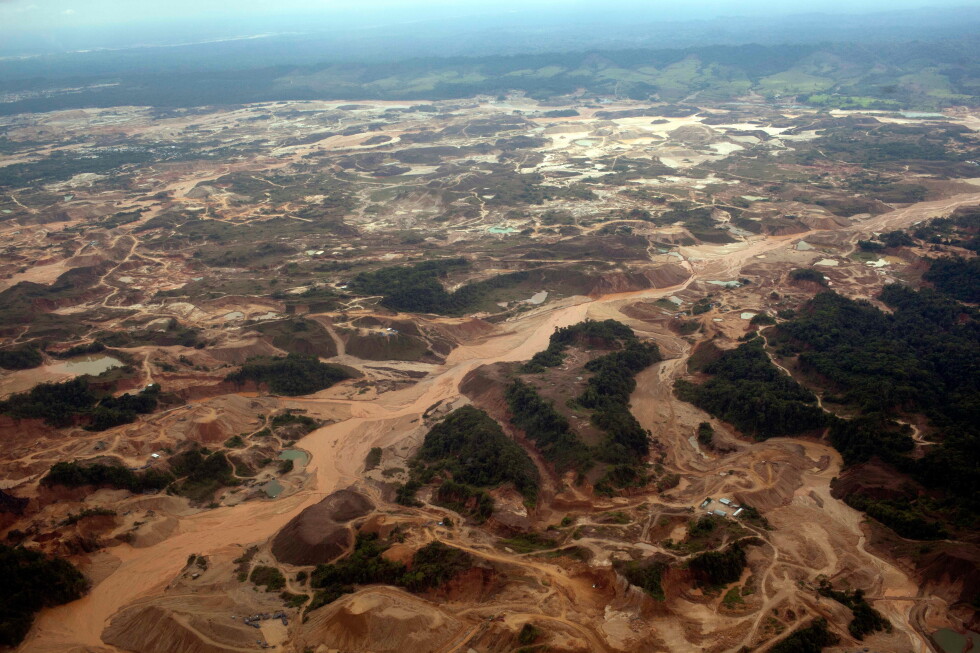
Illegal gold mining has emerged as one of the most destructive environmental threats facing the Amazon basin in recent decades. The unregulated activity drives rampant deforestation as miners clear old-growth forest to access gold deposits, poisons river systems with toxic mercury that contaminates drinking water and food chains for both human and wildlife communities, and fuels brutal violent conflict against Indigenous groups that have inhabited the Amazon for millennia. In Peru, illegal mining operations have spread far beyond their historic hub in the southern Madre de Dios region, expanding into untouched areas of the Amazon including the ecologically sensitive Nanay River basin near the northern city of Iquitos — the region where the plaintiffs in the case are based.
The court accepted the case in a formal order dated July 15, and notified all involved parties on July 20, granting Peru a 40-calendar-day window to file its official response to the claims. The judicial body has not yet issued a ruling on the plaintiffs’ request for precautionary measures, which include a temporary suspension of the REINFO program for the duration of the proceedings.
The lawsuit was brought by a collective of Indigenous and rural communities from the Nanay River basin, joined by seven local residents of the Peruvian Amazon. The plaintiffs argue that the Peruvian government has refused to strengthen enforcement against illegal mining, associated money laundering, and other connected criminal activity, despite clear obligations outlined in Andean Community law. The trade bloc counts Bolivia, Colombia, Ecuador, and Peru as its four member states.
The case traces its roots back to a 2025 findings report from the General Secretariat of the Andean Community — the bloc’s executive governing body — which concluded that Peru had failed to adequately build out regulatory and enforcement measures to combat illegal mining and linked crimes, including effective asset forfeiture mechanisms to seize assets from illegal operations. The secretariat also determined that Peru’s repeated extensions of REINFO directly contradict the country’s binding legal obligations under Andean Community regulations.
Environmental organizations and Indigenous advocacy groups across the region have long echoed this conclusion, noting that ongoing extensions have allowed illicit mining to operate openly under the cover of the formalization process. For its part, the Peruvian government has defended the policy, arguing that extensions are necessary because thousands of small-scale miners have not yet completed the required formalization process. As of this report, Peru’s Ministry of Energy and Mines and Ministry of Environment have not responded to requests for comment on the ongoing lawsuit.
César Ipenza, an environmental attorney representing the plaintiffs, emphasized that the case breaks entirely new ground for regional environmental accountability. “This is the first time a person or organization has sued one of the Andean countries for failing to comply with obligations established under the Andean integration system,” he explained. While accepting the case is only a procedural step, Ipenza noted that the admission itself is a major milestone: it opens the door for the regional court to formally examine whether a member state has breached its obligations to combat illegal mining.
If the court ultimately rules against Peru and the national government fails to comply with the final judgment, Ipenza said the case could result in tangible economic consequences for Peru under the Andean Community’s existing legal framework. Beyond the immediate outcome for Peru, he added, the case sets a critical precedent that will shape environmental enforcement across the region. “Without a doubt, this is an important precedent,” Ipenza said. “It could lead the other countries to reconsider and understand that these obligations must be fulfilled.”
This reporting on climate and the environment from The Associated Press receives funding support from multiple private foundations, with The AP retaining full editorial control over all content. Information on AP’s ethical standards for philanthropic partnerships, a full list of supporters, and an overview of funded coverage areas is available at AP.org.