分类: entertainment

  • Michael Jackson biopic smashes box office record

    Michael Jackson biopic smashes box office record

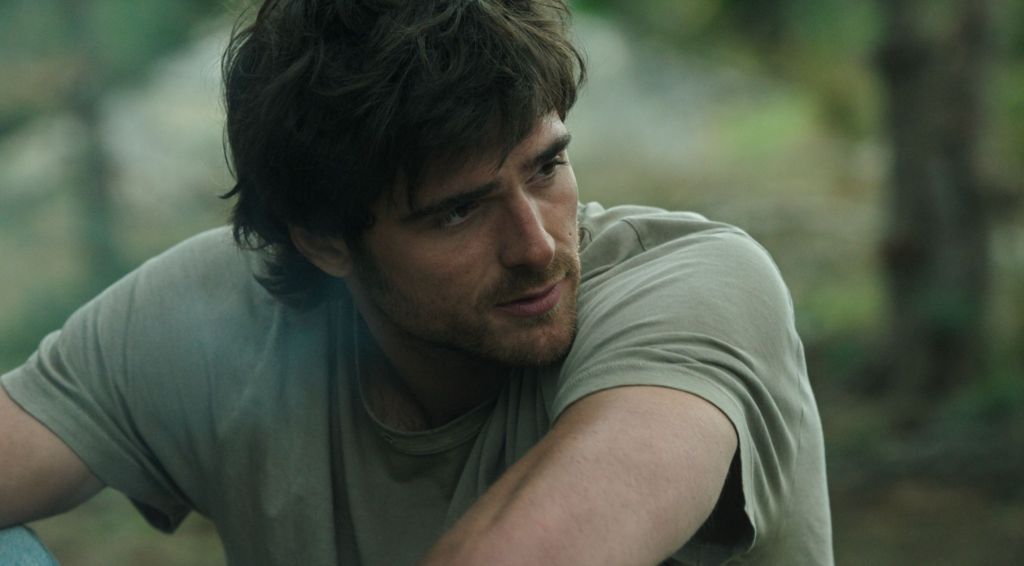
    The highly anticipated Michael Jackson biopic *Michael* has roared onto the global box office landscape, securing its place in Hollywood history by posting the highest opening weekend gross ever recorded for any biographical film. Led by Jaafar Jackson, the late King of Pop’s own nephew in his breakout leading role, the musical biopic raked in a staggering $217 million (£160 million) worldwide during its opening five days, which launched globally last Wednesday.

    This record-breaking haul topples two long-standing benchmarks. Before *Michael*’s release, the top opening for a musical biopic belonged to 2018’s *Bohemian Rhapsody*, which launched with $124 million (£91 million) and earned star Rami Malek an Academy Award for his portrayal of Freddie Mercury. The new release even outpaced 2024’s *Oppenheimer*, which opened to $180 million (£133 million) to claim the all-biopic opening crown.

    Adam Fogelson, chair of *Michael*’s United States distribution partner Lionsgate, attributed the historic opening to broad cross-demographic appeal. “You don’t deliver this figure unless you’re seeing huge numbers across every conceivable demographic,” Fogelson noted. “Audiences are clearly having a blast.”

    Despite its massive commercial success, the film has sparked a sharp divide between critics and moviegoers. On review aggregator Rotten Tomatoes, critics have awarded *Michael* a lukewarm 38% average score, with many reviewers criticizing the film for presenting what they call a “sanitized” narrative of Jackson’s decades-long career. In stark contrast, audience ratings sit at an overwhelming 97%, with widespread praise directed at Jaafar Jackson’s uncanny portrayal of the pop icon.

    The omission of any reference to child sexual abuse allegations that dogged Jackson’s later career has been the core point of critical contention. Jackson consistently maintained his innocence and was acquitted of all child molestation charges in a 2005 criminal trial. Filmmakers initially planned to include a storyline centered on 1990s allegations made by Jordan Chandler, but the project was forced to undergo major changes after a long-forgotten non-disclosure agreement (NDA) was rediscovered. The confidential settlement Jackson reached with Chandler’s family included a permanent clause banning the singer’s estate from ever mentioning Chandler in any film production.

    Director Antoine Fuqua described the last-minute NDA discovery as a uniquely challenging hurdle for the production team. Speaking to *Deadline* over opening weekend, Fuqua explained, “The rediscovery of the NDA led to a tough period because the team had to rethink everything. All movies have different challenges, but this one was unique.” To work around the legal restriction, the team opted to refocus the narrative entirely on Jackson’s rise to legendary status in the music industry, ending the story in 1988 – years before the first public allegations emerged.

    The revised narrative centers heavily on meticulously recreated concert performances and explores the famously strained relationship between a young Jackson and his domineering father Joseph, portrayed by Oscar-nominated actor Colman Domingo. The extensive reshoots required to restructure the film pushed its total production budget to an estimated $200 million (£148 million), making *Michael* one of the most expensive biopics ever made. Financed by Jackson’s own estate, the film features the star’s original studio and live vocals for all its iconic musical numbers, from *Billie Jean* to *Beat It* and *Thriller*.

    *Michael* is just the latest entry in a decade-long boom of musical biopics in Hollywood, a genre that studios have come to rely on as consistent box office draws. In recent years, the lives of music icons including Queen, Elton John, Bob Dylan, Aretha Franklin, Elvis Presley, Bruce Springsteen, Bob Marley, Amy Winehouse, N.W.A, Robbie Williams, and Whitney Houston have all been adapted for the big screen.

    While *Michael* launched simultaneously across most major global markets last weekend, it has yet to reach Japanese cinemas, with a June release date scheduled by local distributors. The film’s blockbuster opening also adds to a recent positive upswing for the global cinema industry, coming on the heels of other major hits including *The Super Mario Galaxy Movie* and *Project Hail Mary*, with the highly anticipated *The Devil Wears Prada 2* set to premiere this coming weekend. For long-time fans of Jackson, whose 1982 album *Thriller* remains the best-selling album of all time, the film offers a deep dive into the early career of one of pop music’s most influential and recognizable performers.

  • Remembering Raghu Rai: The photographer who showed India to itself

    Remembering Raghu Rai: The photographer who showed India to itself

    The global photography community and audiences across India are continuing to pay heartfelt tribute to Raghu Rai, the nation’s most iconic and influential photojournalist, who passed away at 83. Over a more than 50-year career, Rai built an unmatched body of work that did not merely capture moments in Indian history — it reshaped how the nation understood its own defining events, and cemented his status as the father of modern Indian photojournalism.

    Rai launched his professional journey in 1966 at Kolkata-based daily *The Statesman*, before moving on to hold key roles as photo editor at leading Indian publications *India Today* and *Sunday* magazine. A major milestone of his career came in 1977, when he was accepted into the prestigious international photography cooperative Magnum Photos, an achievement widely considered one of the highest honors in the field. His acceptance was supported by legendary French photographer Henri Cartier-Bresson, whose candid, human-centered approach to street photography left a permanent mark on Rai’s own artistic philosophy.

    Throughout his career, Rai’s lens turned to every corner of Indian public and private life, ranging from corridors of political power to quiet moments of ordinary daily life, always rendered with a striking, intimate clarity. His most enduring works include an extensive catalog of photographs of former Indian Prime Minister Indira Gandhi, shot across decades: from raucous, high-stakes election campaigns to confidential closed-door Congress Party meetings, and even her diplomatic visits to meet world leaders like UK Prime Minister Margaret Thatcher. These images remain the definitive visual record of one of modern India’s most consequential political figures.

    Beyond politics, Rai created unforgettable portraits of many of India’s most celebrated cultural icons, from legendary filmmaker Satyajit Ray and iconic playback singer Lata Mangeshkar to celebrated painter MF Hussain and global Bollywood star Amitabh Bachchan. Each portrait captured the quiet, unspoken connection between creator and their craft, revealing layers of personality rarely visible to the public.

    Two of Rai’s most impactful bodies of work documented some of the darkest and most consequential chapters of late 20th century India: the devastating 1984 Bhopal Gas Tragedy, one of the world’s worst industrial disasters, and the violent period of Sikh militancy in Punjab that claimed thousands of lives in the 1980s. His tense, unflinching portrait of Sikh separatist leader Jarnail Singh Bhindranwale remains one of the most striking visual artifacts of that turbulent era. Rather than distancing himself from the suffering and upheaval he documented, Rai embedded himself in these moments, creating work that forced the nation to confront its own truths.

    For Rai, photography was never just a technical craft or a journalistic task — it was a deeply spiritual practice. In one of his final interviews, he framed the art as a form of connection to the divine, explaining, “I meet my god through my camera. Once I pick up my camera, I am driven by the ever-changing energy of life and nature. When you have invested mentally, physically, and spiritually in situations and take pictures constantly, it is like investing in a bank of life in which the returns keep getting bigger and the energy keeps you going.”

    He emphasized that powerful photography required consistent, disciplined practice rather than fleeting, trendy experimental techniques. When asked about his favorite portrait subject, he named the Dalai Lama, citing the leader’s unique “intensity and spiritual energy” that translated so powerfully on camera. Even when photographing subjects he admired deeply, Rai argued that a great portrait must prioritize raw authenticity over flattery, capturing “the moment, the experience of the person, the energy of the person” exactly as it existed in front of the lens.

    Peers across the industry have long described Rai’s work as a seamless bridge between hard-nosed news reportage and fine art, balancing the urgent immediacy of breaking news with intentional, thoughtful composition that elevates every image. Today, his massive archive stands not just as a collection of photographs, but as a decades-long act of intentional witnessing: a deeply human portrait of a nation, its people, and its many contradictions, that will continue to influence and inspire generations of photographers for decades to come.

  • Global voices meet Confucian culture in Nishan

    Global voices meet Confucian culture in Nishan

    Between April 24 and 26, 2026, Qufu, the ancient birthplace of the renowned Chinese philosopher Confucius located in Jining, Shandong Province, opened its gates to a special cross-cultural gathering. Hosted under the theme “Nishan Sacred Land: A Vision Shared with the World”, the event welcomed 28 digital content creators from more than a dozen nations across the globe, including the United States, France, and Russia, inviting them to dive deep into centuries-old Confucian heritage.

  • Chinese costume dramas top Southeast Asian streaming platforms

    Chinese costume dramas top Southeast Asian streaming platforms

    A viral social media moment this month has underscored just how far Chinese costume dramas have penetrated mainstream popular culture across Southeast Asia: Thailand’s Royal Thai Army turned to a hit new Chinese historical romance to boost military recruitment, leveraging the show’s massive local fanbase to draw new applicants.

    The service’s official Facebook page shared recruitment creatives featuring lead characters from *Pursuit of Jade*, a lavishly produced Chinese costume drama that has taken global streaming platforms by storm since its March premiere. One playful poster read: “Do you want a boyfriend with the same heroic spirit as Marquis Wu’an, the male lead of *Pursuit of Jade*? Ask your partner to join the cavalry!” The post racked up nearly 100,000 likes from Thai internet users, who widely praised the military’s clever, trend-savvy approach to outreach.

    “This is one of the most creative recruitment posters I’ve seen in years — the army is really keeping up with the times,” commented Thai netizen Ratchaneekorn. Other users joked with the page’s administrator, asking whether the account team itself counted itself among the drama’s legion of local fans. For *Pursuit of Jade*, the viral recruitment moment is just the latest marker of its unexpected global success: the series currently tops Google Trends search rankings for Chinese dramas across 15 international markets, including Thailand, Malaysia, Singapore, South Korea, the United States and Canada. It has broken viewership records on Chinese streaming giant iQIYI’s international platform, and became the first Chinese drama to top Netflix’s trending charts in multiple Asian regions, earning high user ratings on popular global entertainment site MyDramaList.

    For many viewers across Southeast Asia, the appeal of Chinese costume dramas extends far beyond catchy plotlines. Amy Chen, a 34-year-old Chinese-Malaysian professional based in Kuala Lumpur who has followed Chinese content for years, counts *Pursuit of Jade* as her current favorite series. She attributes the genre’s growing regional popularity to a combination of cultural proximity and uncompromising production quality: “We get the cultural references naturally, and on top of that, you get opulent set designs, exquisite costumes and makeup, tightly crafted storylines, and seamless streaming access on major platforms — it’s a complete package that’s hard to beat.” *Pursuit of Jade* also weaves traditional Chinese cultural elements like Qin opera and shadow puppetry into its narrative, giving international viewers a window into unique aspects of Chinese heritage while delivering a compelling, modern viewing experience.

    The breakout success of *Pursuit of Jade* is no isolated incident; it is the most visible sign of a years-long growth trend in Chinese television exports. Data from the Development and Research Center of China’s National Radio and Television Administration (NRTA) shows that China’s TV series export revenue jumped nearly threefold between 2012 and 2023, rising from $24 million to $70 million. Per NRTA analysis, costume dramas — one of the first Chinese genres to build an international fanbase — remain the most popular category of Chinese content in the global market, with 2023 hits like *Bright Moon Citation*, *The Song Inquisitor*, and *Flourished Peony* all earning top rankings across multiple overseas markets.

    Southeast Asia has emerged as the largest and fastest-growing core market for Chinese drama exports, drawing major investment from leading Chinese streaming platforms including iQIYI, WeTV, Youku and Mango TV, all of which have launched localized regional services with Thailand as a key operational hub. Industry leaders note that Chinese content has carved out a large, loyal audience in Thailand following decades of K-drama dominance, with appeal cutting across age groups.

    Sirisak Koshpasharin, vice-chairman of Thailand’s National Federation of Motion Pictures and Contents Associations, explained that Chinese content has deep roots in the country: “Older generations of Thais, many of whom have Chinese immigrant heritage, grew up loving classic Chinese dramas like *Justice Pao*. What’s really striking now is that more and more young Thais are also falling in love with modern Chinese series.” He cited overlapping cultural values and lifestyle similarities as a key foundation for the trend, adding that improved production quality and wider distribution have accelerated growth: “Today’s Chinese dramas have compelling stories, high production value, and addictive cliffhangers that keep Thai viewers coming back. Short-video apps and major streaming platforms now prioritize Chinese content, so it’s easier than ever for young people to discover it.”

    Beyond full-length costume dramas, the region’s fast-growing base of internet users has also created fertile ground for the expansion of Chinese micro-dramas — bite-sized series that typically run between one and 10 minutes per episode, with hundreds of episodes per series. Data from analytics firm DataEye shows that the number of paying micro-drama users in Southeast Asia grew 28% year-on-year in the latest reporting period, confirming the region as a core market with strong commercial potential and a loyal established audience.

    Beyond entertainment value, the rising popularity of Chinese content is also shifting young Southeast Asians’ perceptions of China and sparking deeper curiosity about the country. Chompoo, a 21-year-old Thai university student and lifelong fan of Chinese dramas who grew up watching the classic costume hit *My Fair Princess* and now follows *Pursuit of Jade*, said Chinese content has shaped her desire to visit the country. “I’ve never been to China, but I really want to go. The landscapes, modern trends, and food all sound so attractive, and Chinese technology and innovation are really impressive. I admire how Chinese creators integrate different influences and build on existing ideas to make something new,” she said.

    Kampol Piyasirikul, head of the Chinese Studies Program at Bangkok’s Thammasat University, noted that costume dramas are just one part of a broader wave of Chinese cultural content gaining traction among young Thais, from pop idols to fashion collectibles. He emphasized that people-to-people cultural exchange through popular content plays an increasingly critical role in building mutual understanding and trust between Chinese communities and audiences across the globe.

  • How the Irish novelty song that ‘toppled’ Céline Dion is making a comeback

    How the Irish novelty song that ‘toppled’ Céline Dion is making a comeback

    Three decades after upsetting global superstars to claim the top spot on Ireland’s music charts, beloved Irish comedic singer-songwriter Richie Kavanagh’s iconic hit *Aon Focal Eile* has captured a whole new generation of fans, going viral across social media platforms. To mark the 30th anniversary of the track’s historic 1996 chart run, Kavanagh has teamed up with his grandson CJ to re-release the cheeky hit, which leans into playful wordplay around a vulgar Irish four-letter term. A collaborative TikTok clip of the pair performing the track side-by-side has already racked up more than 500,000 views, catapulting the 77-year-old entertainer back into the spotlight. “I’m probably more popular now than I was when we had the number one hit,” Kavanagh shared in a recent interview.

  • ‘We don’t come to play’: Is Gawdland’s RuPaul win Asia’s big drag moment?

    ‘We don’t come to play’: Is Gawdland’s RuPaul win Asia’s big drag moment?

    In a landmark moment for global drag culture, 24-year-old Thai performer Gawdland — born Tharathep Thaweephon — has etched her name into the history books as the first Southeast Asian to take home the crown in *RuPaul’s Drag Race UK vs the World*, breaking a long-running glass ceiling for regional performers on the world stage.

    The victory, which caps off a hard-fought competition against fan-favorite queens from seven different countries including the U.S., UK, Canada, Mexico, Germany, Sweden, and the Philippines, fulfills a lifelong dream the drag artist nurtured growing up in the quiet northern Thai town of Lamphun. Long before her rise to international fame, Gawdland carried her regional identity as a core part of her art, a choice that ultimately became her greatest competitive advantage.

    Gawdland, who entered the competition determined to avoid the early elimination fate that felled prominent Southeast Asian predecessors like Thailand’s Pangina Heals in 2022 and the Philippines’ Marina Summers in 2024, leaned fully into distinctly Thai aesthetics for every runway look. Her iconic designs drew inspiration from Lamphun’s ancient temples, and she brought iconic Thai cultural figures to life on stage: she sashayed as a Muay Thai warrior, embodied the vivid energy of a Siamese fighting fish, and reimagined the mythic half-bird, half-woman Kinnaree from Thai folklore. A consistent undercurrent of warrior strength ran through every one of her creations. Initially unsure how much of her Thai identity to center in the global competition, Gawdland credited her stylist and friend Art Arya for pushing her to embrace her roots unapologetically. “She told me that this Thai-ness is exactly what would make me stand out. Our culture, this difference that sets us apart from everyone else,” Gawdland shared. “Once you’re standing on that main stage next to the others, you will be outstanding.”

    That unapologetic authenticity culminated in a viral standout performance of her original track *Firecracker*, during which she interacted with flames bursting from a fireworks prop in a bold, memorable routine. The performance resonated so deeply across Southeast Asia that a group of young Filipino jasmine garland sellers in Manila spontaneously broke into a dance to the track after recognizing Gawdland in public. The 24-year-old queen posted a joyful clip of the encounter, cheering the boys on using the Filipino queer slang term “nakshie” (meaning daughter), a moment that captured the outpouring of regional support that followed her historic win.

    Speaking to BBC Thai after her victory, Gawdland framed the win as far more than a personal achievement. “For me to win this crown, to have this victory, it means the world. It means representation, it means taking up space. It means that we can dream big. We can dream an impossible dream,” she said. “I am the proof of Asian drag excellence. When we do drag in Asia, in South East Asia, we’re not here to play. We’re here to win.” Her greatest hope, she added, is that her victory will inspire marginalized young queer people across the region — like the three young flower sellers in Manila — to pursue their own dreams, no matter how out of reach they may seem.

    While Gawdland’s victory marks a historic milestone for Southeast Asian drag, the community still faces significant structural and social challenges across the region. Home to nearly 700 million people, much of Southeast Asia remains socially conservative, with widespread legal and cultural discrimination against LGBTQ+ communities. Homosexuality is criminalized in Malaysia, and in Indonesia’s Aceh province, same-sex relations are punishable by public caning under Sharia law. Even in the comparatively progressive Philippines, same-sex couples lack formal legal recognition and protections. To date, Thailand is the only nation in the region that recognizes same-sex unions.

    Drag performers across the region also face growing scrutiny as their profile rises. Gawdland herself faced online backlash for wearing an outfit featuring the colors of the Thai flag, while two years prior, Filipina drag artist Pura Luka Vega was arrested after a performance in which she wore a costume portraying Jesus Christ. Though charges were ultimately dropped, the incident sparked widespread conservative outrage in the predominantly Catholic nation. For Gawdland, this scrutiny underscores a core truth of the art form: “Drag is political. It has always been. It’s been that way for a long time. The origins of drag are protest, a refusal to submit to tradition. Society wants us to be men, but no, I’ll be a woman,” she said. “That question — ‘What is she doing? Why is she doing this?’ — that is the very core of drag. It leaves behind a conversation, dialogue, debate.”

    Beyond social and political barriers, the Southeast Asian drag industry also faces systemic underfunding. Gawdland had to raise 1 million Thai baht (approximately $31,000) to cover the costs of competing on *UK vs the World*, pulling together savings from her own performances, support from producers, and contributions from senior drag queens in Thailand. Sakol Sopitachasak, an assistant professor at Bangkok’s Thammasat University who has published research on Thai drag, explained that while the Thai government supports traditional arts, drag rarely qualifies for public funding. “It’s a profession that requires you to put everything into one person. You have to do your makeup, your costumes, be creative, and you have to be able to act, be a good speaker, be funny, be sarcastic… You need so much,” Sakol noted.

    Gawdland’s £50,000 prize for winning the competition, paired with her new title of “Queen of the Mothertucking World,” offers a lifeline not just for her, but for the broader Thai drag ecosystem. She emphasized that booking a single drag queen supports an entire network of behind-the-scenes workers, from costume designers and hair stylists to choreographers and dancers. “Hiring one drag queen goes on and on. Everyone gets paid because we’re essentially a money distributor,” she explained.

    In the weeks since her victory, Gawdland has returned to Thailand for a triumphant homecoming, headlining this year’s Songkran (Thai New Year) celebrations in Bangkok — an event that has become a major draw for LGBTQ+ tourists from across the region. Carried on a throne through crowds of revelers under a central Bangkok train station, the newly crowned queen reflected on the journey that brought her from a small northern town to the global drag throne. Just months earlier, waiting for her flight to London at Bangkok’s Suvarnabhumi Airport, she said she had worried about how domestic audiences would receive her. But the outpouring of support from Thai fans after the show premiered has erased any doubt. “It’s beyond the word worth it. Every exhaustion, every effort, every tear and drop of blood, every pain, every heartbreak — it all vanished instantly. It is so, so worth it for everything I have now,” she said.

  • Huangshan’s fish lantern tradition captivates Russian influencer

    Huangshan’s fish lantern tradition captivates Russian influencer

    An 800-year-old traditional Chinese folk art has left a deep and lasting impression on a visiting Russian digital influencer, shining a global spotlight on one of Anhui province’s most cherished intangible cultural treasures. Angelika Romanovskaia, a Russian content creator traveling with a group of international influencers through East China’s Anhui, recently explored Shexian County in Huangshan and encountered the iconic Zhanqi fish lantern tradition that has been passed down through generations of local villagers.

    During her visit to Zhanqi Village, Romanovskaia did not just observe the celebrated craft from a distance — she stepped into the workshop to try her hand at the intricate, age-old lantern-making process, learning the techniques that artisans have refined over hundreds of years. She later joined local performers in the traditional fish lantern dance, a core part of the cultural practice that is held during festivals to bring good fortune and prosperity to the community.

    What struck the Russian influencer most was the unexpected scale of the full-size ceremonial fish lanterns. She described the handcrafted works as surprisingly sturdy in structure while boasting incredible, intricate beauty that cannot be replicated by mass-produced decorations. Reflecting on her experience, Romanovskaia emphasized the urgent need for greater collective efforts to protect and promote this unique cultural heritage, which has survived for more than eight centuries to remain a vibrant part of local life today.

    The visit of international influencers to Anhui’s cultural sites is part of broader efforts to share lesser-known Chinese traditional crafts with global audiences, helping to cross cultural boundaries and build global appreciation for intangible cultural heritage from around the world.

  • Shanghai to launch citywide international coffee festival

    Shanghai to launch citywide international coffee festival

    Shanghai is preparing to welcome coffee lovers from across the globe and local communities as the sixth iteration of its iconic International Coffee Culture Festival is scheduled to open its doors on April 30. The five-day celebration, which will run through the entire May Day holiday, has been designed as a citywide, immersive coffee-themed gala that blends global coffee culture with local urban charm.

    The official opening ceremony will take place at the scenic North Bund Water Stage in Hongkou District, a vibrant waterfront location that has become one of Shanghai’s most popular gathering spots for large-scale public events. Unlike traditional indoor trade shows, this year’s main venue stretches across 2.3 kilometers of panoramic riverside public space, which will be completely reimagined as an open-air, block-style coffee market accessible to both residents and visiting tourists.

    Across this sprawling waterfront site, organizers have arranged nearly 300 distinct brand booths alongside more than 20 renowned international coffee operators, all sorted into four thoughtfully curated zones to cater to different visitor interests. The international zone will showcase specialty coffee beans, brewing techniques, and brand cultures from major coffee-producing and consuming countries around the world. The industrial chain zone will highlight every link of the global coffee supply chain, from bean cultivation and processing equipment to finished product distribution. The crossover integration zone will explore creative intersections between coffee and other industries, from fashion and art to local specialty food products. Finally, the interactive experience zone will offer hands-on activities, coffee tasting workshops, and cultural performances that allow attendees to engage directly with coffee culture in a fun, approachable way.

    The event marks a continued celebration of Shanghai’s growing reputation as one of the world’s top coffee cities, with a thriving coffee scene that draws together local roasters, international chains, and independent cafes to create a diverse, dynamic cultural landscape. By hosting the festival across a public riverside space during the peak May Day travel period, organizers aim to make coffee culture accessible to all, turning the city into a must-visit destination for holidaymakers and coffee enthusiasts alike.

  • Global influencers explore Confucian culture at Nishan Sacred Land

    Global influencers explore Confucian culture at Nishan Sacred Land

    On April 24, 2026, a cohort of 28 international digital influencers from across the globe gathered at Nishan Sacred Land, the revered birthplace of ancient Chinese philosopher Confucius in Qufu, a city administered by Jining in east China’s Shandong Province, for a hands-on, immersive deep dive into thousands of years of Confucian cultural heritage.

    Far from a standard sightseeing tour, the trip was designed to let participants engage with Confucian traditions through multi-sensory, interactive experiences rather than passive observation. The itinerary opened with *Golden Sound and Jade Vibration*, a grand, carefully choreographed ritual music performance that draws directly from ancient Confucian ceremonial customs, setting a solemn and reverent tone for the visit. Influencers later got the chance to try on hanfu, the traditional ethnic clothing of China’s Han majority, participate in classic Confucian ceremonial rituals, and practice the ancient art of hand-copying excerpts from *The Analects*, the foundational collection of Confucius’ teachings that has shaped East Asian thought and ethics for millennia.

    This event is part of broader efforts to share traditional Chinese culture with global audiences, leveraging the reach of social media influencers to introduce the core values of Confucianism — including benevolence, filial piety, and social harmony — to international communities in an accessible, relatable format. As a site deeply tied to Confucius’ legacy, Nishan Sacred Land has emerged as a leading global destination for cultural exchange focused on Chinese philosophy and traditional thought.

  • Shanghai Jinshan beach to host fireworks shows on May Day holiday

    Shanghai Jinshan beach to host fireworks shows on May Day holiday

    As the 2026 May Day holiday approaches, Shanghai’s scenic Jinshan City Beach is putting the final touches on a dazzling cultural event that is expected to draw thousands of local and out-of-town visitors: the 2026 International Music Fireworks Show.

    Organizers have scheduled two full evening performances for the holiday period, set to take place on May 2 and May 4, turning the coastal shoreline into an immersive open-air stage blending pyrotechnic art, music, and scenic waterfront views. First announced in late April 2026, the event marks a major seasonal entertainment offering for Shanghai, designed to celebrate the five-day national holiday and boost regional leisure tourism.

    Jinshan District’s coastal location makes it an ideal venue for large-scale fireworks displays, with unobstructed views over the East China Sea that allow spectators to experience the full visual impact of pyrotechnics reflected off the water. The international-themed event is expected to showcase a range of fireworks designs paired with carefully curated musical scores, creating a multi-sensory experience for attendees of all ages.

    Local tourism officials anticipate that the fireworks shows will not only provide a memorable recreational option for holiday-makers but also support surrounding small businesses including hotels, restaurants, and local retailers that rely on seasonal visitor traffic. With preparations already well underway ahead of the holiday, the event is set to be one of Shanghai’s most anticipated public entertainment attractions for the 2026 May Day travel peak.