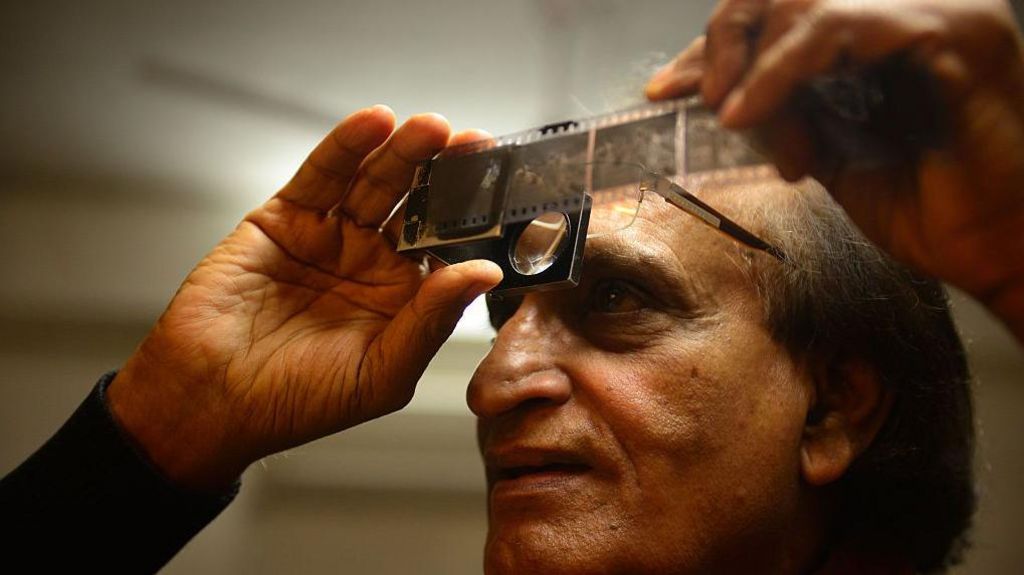
The global photography community and audiences across India are continuing to pay heartfelt tribute to Raghu Rai, the nation’s most iconic and influential photojournalist, who passed away at 83. Over a more than 50-year career, Rai built an unmatched body of work that did not merely capture moments in Indian history — it reshaped how the nation understood its own defining events, and cemented his status as the father of modern Indian photojournalism.
Rai launched his professional journey in 1966 at Kolkata-based daily *The Statesman*, before moving on to hold key roles as photo editor at leading Indian publications *India Today* and *Sunday* magazine. A major milestone of his career came in 1977, when he was accepted into the prestigious international photography cooperative Magnum Photos, an achievement widely considered one of the highest honors in the field. His acceptance was supported by legendary French photographer Henri Cartier-Bresson, whose candid, human-centered approach to street photography left a permanent mark on Rai’s own artistic philosophy.
Throughout his career, Rai’s lens turned to every corner of Indian public and private life, ranging from corridors of political power to quiet moments of ordinary daily life, always rendered with a striking, intimate clarity. His most enduring works include an extensive catalog of photographs of former Indian Prime Minister Indira Gandhi, shot across decades: from raucous, high-stakes election campaigns to confidential closed-door Congress Party meetings, and even her diplomatic visits to meet world leaders like UK Prime Minister Margaret Thatcher. These images remain the definitive visual record of one of modern India’s most consequential political figures.
Beyond politics, Rai created unforgettable portraits of many of India’s most celebrated cultural icons, from legendary filmmaker Satyajit Ray and iconic playback singer Lata Mangeshkar to celebrated painter MF Hussain and global Bollywood star Amitabh Bachchan. Each portrait captured the quiet, unspoken connection between creator and their craft, revealing layers of personality rarely visible to the public.
Two of Rai’s most impactful bodies of work documented some of the darkest and most consequential chapters of late 20th century India: the devastating 1984 Bhopal Gas Tragedy, one of the world’s worst industrial disasters, and the violent period of Sikh militancy in Punjab that claimed thousands of lives in the 1980s. His tense, unflinching portrait of Sikh separatist leader Jarnail Singh Bhindranwale remains one of the most striking visual artifacts of that turbulent era. Rather than distancing himself from the suffering and upheaval he documented, Rai embedded himself in these moments, creating work that forced the nation to confront its own truths.
For Rai, photography was never just a technical craft or a journalistic task — it was a deeply spiritual practice. In one of his final interviews, he framed the art as a form of connection to the divine, explaining, “I meet my god through my camera. Once I pick up my camera, I am driven by the ever-changing energy of life and nature. When you have invested mentally, physically, and spiritually in situations and take pictures constantly, it is like investing in a bank of life in which the returns keep getting bigger and the energy keeps you going.”
He emphasized that powerful photography required consistent, disciplined practice rather than fleeting, trendy experimental techniques. When asked about his favorite portrait subject, he named the Dalai Lama, citing the leader’s unique “intensity and spiritual energy” that translated so powerfully on camera. Even when photographing subjects he admired deeply, Rai argued that a great portrait must prioritize raw authenticity over flattery, capturing “the moment, the experience of the person, the energy of the person” exactly as it existed in front of the lens.
Peers across the industry have long described Rai’s work as a seamless bridge between hard-nosed news reportage and fine art, balancing the urgent immediacy of breaking news with intentional, thoughtful composition that elevates every image. Today, his massive archive stands not just as a collection of photographs, but as a decades-long act of intentional witnessing: a deeply human portrait of a nation, its people, and its many contradictions, that will continue to influence and inspire generations of photographers for decades to come.