分类: entertainment

  • Vatican begins 5-year restoration of Raphael Loggia, used by popes and presidents

    Vatican begins 5-year restoration of Raphael Loggia, used by popes and presidents

    Nestled in the most restricted inner corridors of the Vatican’s Apostolic Palace, a Renaissance masterpiece unseen by nearly all the visiting public is set to receive its first comprehensive conservation effort in more than five centuries. The Raphael Loggia, a 65-meter-long, 4-meter-wide corridor walked exclusively by popes, heads of state, and privileged invited guests, was designed by the iconic Renaissance master Raphael, and Vatican Museums officially launched the five-year, $5.5 million restoration project at a press conference Wednesday.

    Widely regarded as one of the pinnacles of Renaissance figurative art, the loggia occupies a sunlit second-floor space overlooking the Apostolic Palace’s San Damaso courtyard. Closed to general tourists, the corridor treats only the lucky few granted audiences with the pope or the Secretariat of State to its sprawling decorative scheme: vivid scenes from both the Old and New Testaments, intricate botanical motifs rendered in vibrant paint and textured stucco, spread across 12 distinct arched bays. Its artistic influence extended far beyond Vatican walls, with full-scale replicas produced by cultural institutions around the world, including a prominent full-scale copy at St. Petersburg’s State Hermitage Museum.

    Completed between 1517 and 1519, the loggia stands as one of Raphael’s final commissions for Pope Leo X, a companion project to his better-known, publicly accessible works that draw millions of visitors to the Vatican Museums each year — the Raphael Rooms and his celebrated tapestry series, both of which have been the subject of previous major restoration work. Today, current Pope Leo XIV, who returned to full-time residence in the Apostolic Palace after his predecessor Pope Francis chose to stay elsewhere, traverses the loggia regularly on his way to public and private audiences, with his private apartments located just upstairs from the corridor.

    Centuries of neglect and environmental damage have left the masterpiece in a fragile state, restoration leaders explained. Until 1813, the corridor remained open to the elements, leaving the paintings and stucco exposed to rain, wind, and extreme temperature shifts that caused gradual but irreversible decay. Even after windows were installed to close off the space, the enclosed structure trapped heat and humidity, creating conditions that accelerated degradation of the water-soluble pigments Raphael used.

    To avoid damaging the fragile artwork, restorers will abandon traditional wet cleaning and chemical solvent methods in favor of a precision-based approach: hand-held lasers will gently clean grime from the stucco and painted surfaces without compromising the original pigments. The project is a collaboration between the Vatican Museums and the New York-based World Monuments Fund, with full financing coming from the Stephen A. Schwarzman Foundation. In total, the foundation is committing more than $14 million to the broader initiative: $5.5 million for the core restoration work, with the remaining funds allocated to digitizing high-resolution images of the loggia to make the hidden masterpiece accessible to the global public, producing a feature documentary following the restoration process, and endowing a permanent art restoration training program at a Swiss university.

    In addition to conserving the existing artwork, the Vatican will also replace the loggia’s current arched windows with specialized protective glass that filters out harmful ultraviolet solar radiation, preventing future fading and environmental damage. The Associated Press’ religion coverage, which produced this report, receives support through a collaboration with The Conversation U.S. via funding from the Lilly Endowment Inc., with the AP retaining full editorial responsibility for all content.

  • Pharrell sends Vuitton surfing as Jeremy Allen White, Missy Elliott and Victor Wembanyama look on

    Pharrell sends Vuitton surfing as Jeremy Allen White, Missy Elliott and Victor Wembanyama look on

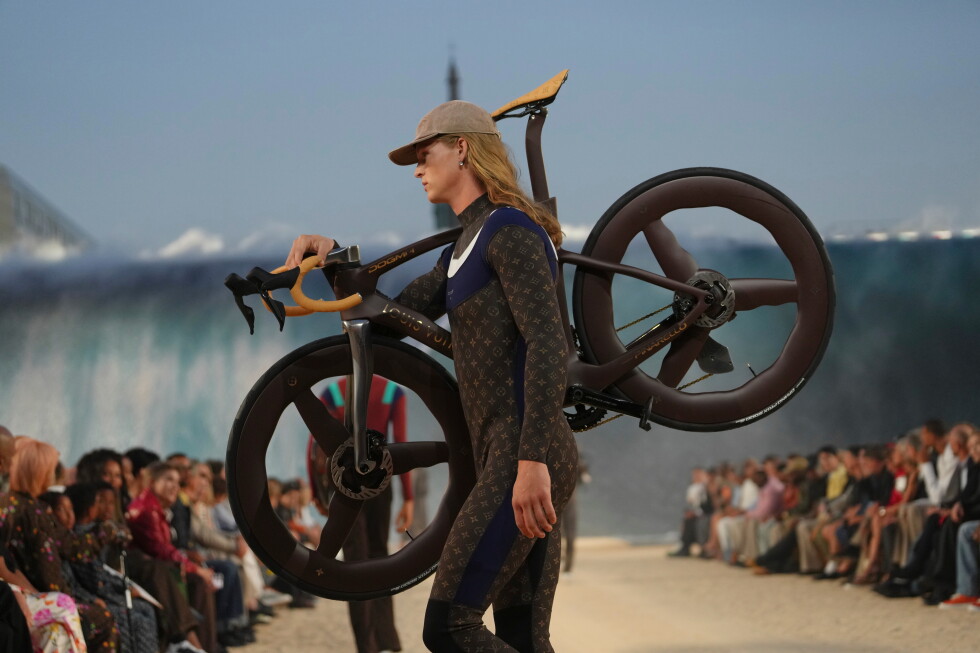
    PARIS – On the opening night of Paris Fashion Week’s menswear season Tuesday, Pharrell Williams delivered a dramatic yet grounded debut for Louis Vuitton’s Spring-Summer 2027 men’s collection, framing a surf-inspired narrative that prioritized design over flashy spectacle to close out the first day of shows.

    Against a sandy outdoor set built along the Seine, Williams constructed a production that felt both cinematic and intentional: a 20-foot towering curling wave structure that could swallow the entire runway in its barrel, mist spraying into the cool Paris evening; a projected full moon rising over the dunes, with artificial stars twinkling above the catwalk; and a sleek glass-walled silver camper van parked between sand dunes, a subtle nod to Louis Vuitton’s origins as a luxury trunk and travel brand. The star-studded front row drew A-list names from across entertainment and sports, including Jeremy Allen White, Charles Melton, rapper Future, hip-hop legend Missy Elliott, NBA rookie Victor Wembanyama, K-pop stars Jackson Wang and BamBam, and singers Lola Young and Coco Jones, among other notable guests.

    When the lights dimmed and the show began, models emerged one by one from the hollow of the giant wave, embodying what Williams calls the “dandy surfer”: a figure equally at home on the boardwalk after a morning of catching waves and in a downtown boardroom for a midday meeting. Blending the laid-back practicality of surf culture with the refined elegance that has defined Williams’ tenure at Louis Vuitton, the collection pulled core motifs from ocean life, reinterpreting them for high-fashion menswear.

    Wetsuit technical fabrics were merged with traditional suiting material, emblazoned with the brand’s iconic monogram for a functional yet luxurious twist. Outerwear featured lived-in, weathered finishes that mimicked the effect of sun and salt water on fabric; hoodies came sun-faded and soft, accented with gilded LV monogram drawstrings. Denim and wool coats boasted hand-dyed shibori-style indigo gradients that evoked the gradient of the ocean, while statement bomber jackets were covered in intricate dense beadwork for texture and visual weight. Williams also brought back his signature trompe l’oeil techniques, with fabric surfaces printed and shaped to mimic entirely different materials, revealing intricate handcraft on close inspection.

    Post-surf comfort shaped a range of relaxed layering pieces, including robe-like overcoats and soft unstructured jackets designed to feel as cozy as a cotton towel thrown over damp, cold shoulders after a session. The collection also circled back to Williams’ creative roots with a new line of flat-soled skate shoes, a nod to his early days in skate culture and his founding of streetwear labels Billionaire Boys Club and Ice Cream, in collaboration with Japanese designer Nigo. This cross-pollination of subcultures gave the surf theme a sharper, more accessible edge, positioning the line for strong commercial performance.

    Throughout his leadership at Louis Vuitton, Williams has become known for over-the-top, viral-worthy show productions: his debut collection turned Paris’ historic Pont Neuf bridge into a gilded Damier-patterned runway, while past shows have featured full orchestras, interactive game sets, custom built cottages and camera-ready front rows designed for social media virality. Tuesday’s show retained the high production value audiences have come to expect, opening with a cinematic short film starring pro surfers Mikey February and Julian Wilson, and featuring a curated soundtrack from Quavo, Williams and Angélique Kidjo, paired with live performances from the L’Orchestre du Pont Neuf and the Voices of Fire choir. But unlike past spectacles that sometimes overshadowed the clothing, the massive wave set served as a backdrop, not the main event—allowing the collection to hold its own against the dramatic staging.

    In a nod to the collection’s ocean theme, Louis Vuitton also announced a partnership with marine conservation non-profit Coral Gardeners. The luxury brand will fund the out-planting of 1,000 new coral colonies and the restoration of 250 square meters of damaged reef habitat in French Polynesia, scheduled for completion in 2026.

    As Williams took his final bow at the end of the show, the towering wave still loomed behind him. For the first time in his Vuitton tenure, the headline-making set did not overshadow the design: this time, the clothes were not swept away by spectacle.

  • Guinness crowns Canberra town crier as the world’s loudest person at 122.4 decibels

    Guinness crowns Canberra town crier as the world’s loudest person at 122.4 decibels

    MELBOURNE, Australia — An unlikely Australian record-breaker has secured his place in the Guinness World Records history books, dethroning a 30-year standing mark to earn the title of the world’s loudest male individual. Joseph McGrail-Bateup, a 58-year-old Canberra resident who works full-time as an air conditioner cleaner and serves as an honorary official town crier, earned the global recognition last week after delivering a shout that clocked in at 122.4 decibels.

    His thunderous yell of the word “now” surpasses the previous 121.7 decibel record set back in 1994 by Annalisa Flanagan, a Northern Irish schoolteacher who famously shouted the word “quiet” to claim her mark. To put McGrail-Bateup’s achievement in perspective, his shout falls into the same noise intensity category as a running chainsaw, a departing jet aircraft heard at close range, and a blaring ambulance siren right beside the listener.

    In an interview this week, McGrail-Bateup explained that the extreme nature of the feat meant no structured training or practice could prepare him for the record attempt. “There’s no way that you can actually practice for it. You have to just keep it for the day, especially with the world record attempt,” he said. “It took me seven attempts just to nail one word, which was ‘now,’ and my voice was completely gone for the next couple of days. It was husky and terrible, so you really can’t practice for it. But even so, it’s a lot of fun when you’re doing it.”

    Unlike the previous all-gender record, no prior mark for the loudest male shout existed, so McGrail-Bateup said he is comfortable framing himself as the world’s loudest man, while Flanagan retains her title as the world’s loudest woman. “I’m pleased that she gets to keep her record. So she’s still the loudest woman in the world and I’m the loudest male in the world,” he explained.

    The accidental challenge came about when McGrail-Bateup was searching the Guinness World Records database for existing town crier-related feats, and stumbled across Flanagan’s long-standing shouting record instead. His path to competitive volume began in 2017, when he was appointed Canberra’s honorary official town crier — a part-time, unpaid ceremonial role created by the local government that he describes as “a bit of fun.” He goes by the ceremonial title Lord Joseph, and makes public announcements at local community gatherings, school fairs, and car shows across the region. The role also granted him membership to the Ancient and Honorable Guild of Australian Town Criers, a national organization that works to preserve the historic ceremonial tradition and hosts competitive events for its members.

    Earlier this year, McGrail-Bateup took home first place in the guild’s 2024 national competition, delivering the traditional town crier opening call “Oyez, Oyez, Oyez” at 98 decibels to claim the win for loudest call. Ahead of his world record attempt, he tested out a range of different words to find which one delivered the maximum volume, before ultimately settling on the short, punchy single syllable of “now.”

    The official record measurement took place on May 2 in a Canberra radio studio, with a professional acoustic engineer on hand to capture the reading and independent witnesses present to verify the attempt. The verified measurement files were submitted to Guinness World Records, which made the official announcement of the new record last Friday.

    This is not McGrail-Bateup’s first experience breaking a global Guinness record. Back in 2019, he claimed a speed record for fastest archer to shoot 10 arrows, finishing the feat in 60.03 seconds and shaving a tiny fraction of a second off a mark that had stood unbroken since 2015. Just nine months later, however, a 7-year-old child shattered his archery record by an impressive 11.4 seconds.

    Today, McGrail-Bateup says he has no interest in reclaiming the archery title, nor does he worry about someone eventually beating his new shouting record. “If someone beats me, that’s fantastic,” he said. “After all, records are meant to be broken.”

  • Stalker who rang BTS star’s doorbell 133 times faces deportation

    Stalker who rang BTS star’s doorbell 133 times faces deportation

    A Brazilian woman who carried out a months-long campaign of stalking against global K-pop icon Jungkook of BTS has been handed a suspended prison sentence and faces deportation from South Korea after repeatedly trespassing on the singer’s private Seoul residence, court documents have confirmed.

    The unnamed woman first initiated her unwanted intrusions on December 7 of last year, when she loitered outside Jungkook’s home, threw personal items over the property’s boundary wall, and slid handwritten letters and photographs through gaps in the singer’s front door. According to court testimony, she claimed her actions were motivated by her romantic affection for the 28-year-old world-famous performer.

    Just days after that first incursion, she returned to the property and pressed Jungkook’s doorbell 133 consecutive times — a behavior Seoul District Court characterized as clear evidence of an extreme, unhealthy obsession with the star. She was arrested just a week later, on December 13, after she followed a food delivery employee through a side gate to gain unauthorized access to the residential compound. She was released from custody the following day after receiving an official formal warning that she was prohibited from approaching the property again, a order she immediately chose to ignore.

    Over the following two months, the woman continued her pattern of harassment. Police issued an emergency restraining order barring her from coming within 100 meters of Jungkook’s home, but the restriction did nothing to stop her repeated visits. By February, authorities had exhausted all preliminary interventions and referred her case to public prosecutors for formal criminal prosecution. In total, court records confirm the woman visited the singer’s private property at least 22 times between December and February, far more than the initial reported count of 20.

    Seoul District Court ultimately sentenced the woman to 12 months of imprisonment, with the sentence suspended for a two-year probationary period. The judge explained that the ruling accounted for multiple mitigating factors, including an assessment that the woman’s risk of committing repeat offenses after the case is closed is not significant. Unless she successfully appeals the guilty verdict, she will also be deported back to Brazil following the conclusion of court proceedings.

    This is not the first high-profile stalking incident targeting Jungkook in recent months. In June of last year, a Chinese woman in her 30s was arrested in Seoul just hours after Jungkook completed his mandatory South Korean military service, after she attempted to force her way into the star’s home. The string of intrusions has sparked renewed public debate in South Korea over the adequacy of current anti-stalking laws and the level of privacy protection afforded to high-profile public figures.

  • National Portrait Gallery display withdrawn after Churchill row

    National Portrait Gallery display withdrawn after Churchill row

    A heated debate over former British Prime Minister Winston Churchill’s connection to the 1943 Bengal famine has led to the removal of a controversial video installation from London’s National Portrait Gallery, sparking new conversations about artistic freedom, historical interpretation, and institutional accountability.

    Created by Turner Prize-winning artist Helen Cammock, the 40-minute work titled *Persistence* was developed in partnership with the gallery beginning in 2023. Part of the temporary exhibition “Artists First: Contemporary Perspectives on Portraiture”, the piece had been on public display for 10 months and was scheduled to run through August. In her self-narrated installation, Cammock drew a parallel between Oliver Cromwell’s 17th-century mass starvation tactics during military campaigns in Ireland and what she described as “the wilful starvation of the Indian population by Winston Churchill” during the devastating 1943 famine.

    The artist’s framing quickly drew fierce pushback from prominent historical figures and politicians. Churchill biographer Lord Roberts of Belgravia organized an open letter to the gallery leadership, which gathered signatures from more than 50 members of the House of Lords — including Churchill’s own grandson, Sir Nicholas Soames. The letter argued that Cammock’s characterization of Churchill was factually incorrect, dismissing the claim as an “ideologically motivated rant”. Lord Roberts contended that the famine was primarily triggered by a devastating typhoon, and that Churchill had directed his war cabinet to deploy all available resources to support affected regions, even requesting emergency grain shipments from global allies. While this perspective is shared by some historians, other academics have long argued that wartime policy decisions made by Churchill’s government exacerbated the crisis. An estimated 3 million people died in the famine that struck eastern India, and Churchill’s exact role remains one of the most hotly contested topics in modern colonial history.

    Beyond the open letter, the gallery also received direct complaints from members of the public. Initially, the institution defended the work as a legitimate expression of the artist’s personal perspective, but the controversy gained sustained national media attention last week, ultimately leading to the work’s removal on Monday.

    In an official statement provided to BBC News, the National Portrait Gallery confirmed that Cammock had made the independent decision to withdraw her piece. “We respect her decision, just as we acknowledge the opinions of those who were offended by what was said in the film,” the gallery said. It emphasized that the exhibition framework was designed to center artists’ personal creative responses to the gallery’s permanent collection, noting “the work was presented as an artistic piece, not a documentary, and the views expressed in the film do not necessarily reflect those of the NPG.” The institution added that it remains committed to balancing respect for the historical legacies of figures in its collection with support for free artistic expression.

    Cammock, however, has pushed back against what she describes as overwhelming external pressure to censor challenging historical narratives. In her own statement released Monday, she said: “There is an incredible pressure on artists and arts institutions to bend to external pressure; to be benign at best and silent at worst. I do not accept this pressure. To question, challenge and explore ideas and histories is vital to a healthy society and art is intrinsic to this.”

    The artist added that her work was rooted in existing academic research on the famine, and that its core goal was to interrogate how society chooses to honor and memorialize historical figures. “It asks us to think about who is honoured and valorised and who is not; whose stories are told and whose are not,” she said. Echoing activist and artist Nina Simone, Cammock noted: “An artist’s duty, as far as I’m concerned, is to reflect the times, and sometimes this means revisiting, enquiry and challenge.”

  • ‘Devotion is everything’: Breaking Bad star Giancarlo Esposito converts to Islam

    ‘Devotion is everything’: Breaking Bad star Giancarlo Esposito converts to Islam

    Hollywood star Giancarlo Esposito, best known for his iconic Emmy-nominated turn as calculating drug kingpin Gus Fring in *Breaking Bad*, has become the center of a viral global conversation after unconfirmed reports emerged that he has converted to Islam, sparked by his recent public remarks and on-site activities during a film tour in Morocco.

    The 66-year-old multihyphenate — who counts acting, directing and producing among his credits — traveled to the North African kingdom this June to promote *7 Dogs*, a Saudi-backed Arabic-language action thriller in which he portrays Roman, a shadowy antiquities trafficker with deep ties to the elite ranks of the eponymous criminal syndicate.

    While walking the red carpet for the film’s premiere, Esposito made striking remarks that quickly drew attention: “In your country, Muhammad is everything. For me, it’s the same.” In a subsequent interview with Radio Abraham, filmed while Esposito held what appeared to be Islamic prayer beads, he expanded on his comments, describing Moroccans as “a mirror” for himself. He praised the community’s open devotion, noting their shared understanding “that there is one God, one Allah,” and added that his time in the country allowed him to “see the truth.”

    Days after the premiere, Saudi Arabia’s General Entertainment Authority chairman Turki Alalshikh shared a video on the platform X that pushed the story into viral territory. The footage captures Esposito leading a prayer alongside his *7 Dogs* production colleagues inside Casablanca’s iconic Hassan II Mosque. Alalshikh’s accompanying caption claimed Esposito made the decision to embrace Islam during months of filming *7 Dogs* on location in Saudi Arabia. As of press time, the post has racked up more than 13 million views.

    In a pre-video interview with *Lalla Fatema* magazine at the Casablanca premiere, Esposito himself had already confirmed that his first stop after arriving in Morocco was the Hassan II Mosque, where he said he stopped to pray. To date, the acclaimed actor has not issued an official, personal confirmation of the conversion reports. Multiple requests for comment from Middle East Eye went unanswered ahead of publication.

    Even without an official statement, the news has exploded across social media, with overwhelmingly positive reactions pouring in, particularly from Arabic-speaking users around the world. Dozens of posts across X and Instagram have welcomed Esposito to the Islamic faith, with many users calling the announcement one of the most pleasant and surprising pieces of entertainment news in recent memory. One user wrote on X: “By God, this is the best news of the day. Esposito converted to Islam and pronounced the testimony of faith, may God make him steadfast.” Another commented: “One of the most shocking and heartwarming news stories at the same time. Uncle Gustavo Fring from *Breaking Bad* and *Better Call Saul* embraces Islam. Praise be to God, that God guides whom He wills.”

    Alongside sincere messages of welcome, many social media users have leaned into humor, creating lighthearted memes that tie Esposito’s reported conversion to his most famous on-screen roles. One viral X post edited a classic promotional photo of Esposito standing next to the sign for Gus Fring’s fictional fried chicken restaurant Los Pollos Hermanos, replacing the original logo with that of beloved Saudi fried chicken chain Albaik. On Reddit, users joked: “Los Pollos will now be serving halal chicken.” The playful content has only amplified the story’s reach, turning a celebrity religion story into a global viral conversation.

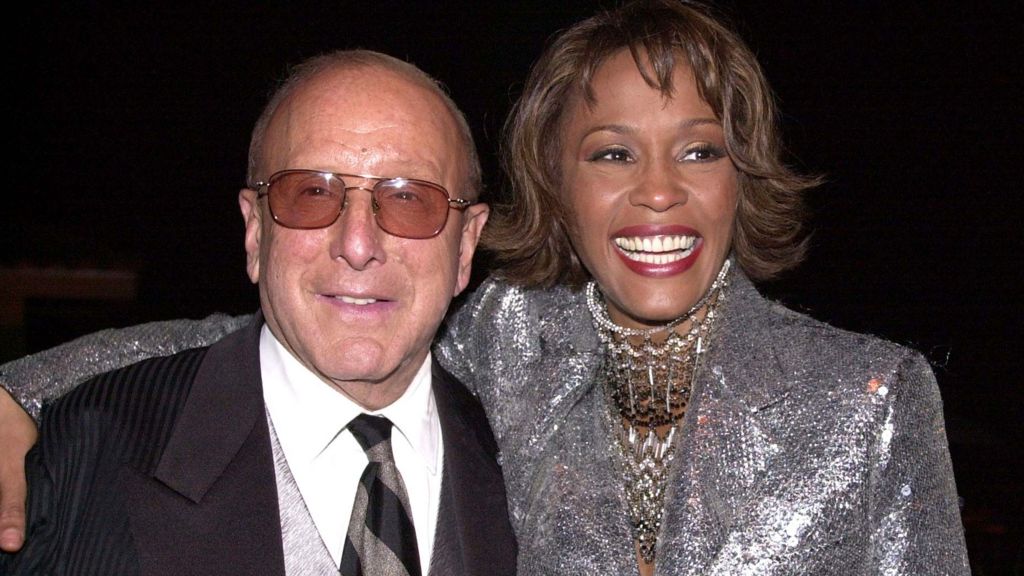
  • Clive Davis, music mogul behind Whitney Houston and Bruce Springsteen, dies aged 94

    Clive Davis, music mogul behind Whitney Houston and Bruce Springsteen, dies aged 94

    The world of modern music is mourning the loss of one of its most transformative figures: Clive Davis, the iconic industry executive who discovered and nurtured some of the biggest names in rock, pop, and R&B across a six-decade career, has passed away at the age of 94.

    Davis’ family confirmed that he died while recovering at his Manhattan home in New York, following a recent hospital stay for respiratory issues. In a heartfelt statement shared publicly, his family remembered the dual identity that defined his life: a giant to the world, and a loving anchor to those closest to him. “To the world, our father was the iconic music legend whose vision, instincts, and relentless pursuit of excellence shaped the soundtrack of countless lives,” the statement read. “He discovered, mentored, and championed the greatest artists in modern music history, leaving an indelible mark on culture that will endure for generations. To his family, Clive was Dad and Granddaddy, the steady presence at the centre of our lives, the source of wisdom, strength, encouragement, and unconditional love.”

    Born in Brooklyn, New York in April 1932 and raised in Crown Heights, Davis entered the music industry through an unlikely path. A graduate of Harvard Law School, he joined Columbia Records at age 28 with no prior professional experience in the business. To make up for this gap, he taught himself the finer points of copyright law, contract negotiation, and music industry litigation through night classes. His legal expertise quickly proved invaluable: he helped Columbia defeat a federal antitrust lawsuit targeting the label’s mail-order record club, and convinced a young Bob Dylan to re-sign with the label after his original contract became void when Dylan turned 21.

    By 1965, Davis had risen to the role of Columbia’s president, and he immediately set about reshaping the label’s roster, injecting it with new, boundary-pushing talent that would define 1960s and 1970s rock. The list of artists he signed during this era reads like a who’s who of modern music: Janis Joplin, Santana, Aerosmith, Pink Floyd, and Bruce Springsteen, among many others. Reflecting on his knack for spotting raw talent later in life, Davis downplayed innate genius, noting: “I didn’t necessarily have an ear, but I think I developed one. Whether there was a natural ear that was triggered, I don’t know the answer to that. But when you see a Joplin or a Springsteen, you know.”

    Davis’ reputation was built on his willingness to challenge conventional industry wisdom to bring out the best in his artists. In one famous anecdote from 1970, he shocked Simon & Garfunkel by rejecting their plan to release “Cecilia” as the lead single from their fifth album *Bridge Over Troubled Water*, arguing that the title track was the project’s undeniable home run. “Yes, it was a ballad; yes, it was lengthy,” he later told the *New York Times*. “But you’ve got to know when you have a home run. You can’t play everything by the rules.” His call proved correct: the song went on to become one of the most beloved hits in music history.

    He was also a hands-on mentor who shaped every part of his artists’ careers. Just two years after signing Springsteen, Davis offered the young musician a small but transformative piece of performance advice after seeing an early showcase: he suggested Springsteen move more freely around the stage, a change that would become a defining part of the singer’s legendary electric stage presence. When Davis saw him again a few weeks later, he was stunned to see Springsteen jumping across tables and performing as a “whirling dervish” of energy. After the show, Springsteen greeted him backstage with a joke: “Clive, did I move around enough for you tonight?”

    Davis’ career hit a major setback in the 1970s, when he was forced out of Columbia amid accusations that he used company funds for personal expenses, including his son’s bar mitzvah. He ultimately pleaded guilty to one count of tax evasion and was exonerated of all other charges, and within months he had launched his own independent label, Arista Records. It did not take long for his signature golden touch to reassert itself: he notched immediate commercial success with singer Barry Manilow, and earned widespread critical acclaim for releasing Patti Smith’s genre-defining debut album *Horses*.

    Throughout the rest of his career, Davis continued to spot and cultivate once-in-a-generation talent that dominated global charts. In 1983, he signed 19-year-old Whitney Houston, and spent three years carefully curating producers, songwriters, and material to highlight her unmatched vocal power. When her self-titled debut dropped in 1985, it spawned three number-one singles and sold more than 25 million copies worldwide, according to label parent Sony. Years later, he again defied producer input to insist Houston’s cover of Dolly Parton’s *I Will Always Love You* open with 40 seconds of unaccompanied a capella. The track became Houston’s biggest hit, topping the U.S. chart for 14 weeks and the UK chart for 10.

    Davis also delivered a career-resurrecting hit for Mexican-American guitarist Carlos Santana in 1999, with the album *Supernatural*. He convinced Santana to collaborate with contemporary pop vocalists including Lauryn Hill, Rob Thomas, and Eagle-Eye Cherry, resulting in the global smash hit “Smooth” that helped the album sell more than 15 million copies and take home the Grammy Award for Album of the Year.

    Over his decades-long career, Davis led and founded labels including Columbia, Arista, RCA, J Records, and Sony Music. His work earned him five Grammy Awards, and he was inducted into the Rock and Roll Hall of Fame as a non-performer in 2000, a rare honor for an industry executive. Long after he rose to fame, Davis remained committed to his core belief that music was an irreplaceable part of human life, regardless of how technology reshaped the industry. Speaking to *The Talks* in 2016, he explained the simple philosophy that guided his decades of work: “Music is a necessary ingredient in people’s lives. No matter what revolution is occurring in technology, it has to understand that music will not be obsoleted. People need music, and they’ve needed it for many years in many different ways… It’s a very, very natural basic ingredient that’s essential to the full enjoyment of life.”

    Unlike most music industry executives who remained behind the scenes, Davis became a household name, his legacy inextricably tied to the countless hits and legendary careers he helped bring to the world.

  • Late singer Oliver Tree’s body returned to US after helicopter crash

    Late singer Oliver Tree’s body returned to US after helicopter crash

    Nearly a week after a tragic mid-air helicopter collision killed seven people including 32-year-old American musician and internet personality Oliver Tree over Rio de Janeiro, the singer’s remains have been returned to his home state of California, allowing him to “finally rest” according to a statement from his family posted to his official Instagram account.

    Tree first catapulted to mainstream fame in 2016 after his unique artistic persona and music went viral across social media platforms. Born Oliver Tree Nickell in Santa Cruz, California in 1993, he became instantly recognizable for his signature bowl-cut hairstyle and a string of chart-topping hits, including fan-favorite tracks *Life Goes On*, *Miss You*, and *Alien Boy*. At the time of his passing, Tree had just launched a global tour, wrapping his most recent performance in São Paulo, Brazil on June 6. He was scheduled to continue the tour with stops in Lisbon, Portugal in early July, followed by three UK shows in Glasgow, Manchester, and London this coming September.

    In the heartfelt statement shared to his account, Tree’s family announced they would honor the entertainer’s final wish, laid out in his will before his death, by launching a charitable foundation in his name. Named the Dr. Oliver Tree’s Extremely Epic Grant For Baby Geniuses, the organization will carry forward Tree’s lifelong goal of spreading joy, love, and artistic creativity to communities around the world.

    The post concluded with a message of gratitude to the millions of fans who have rallied around Tree’s loved ones in the wake of the accident. “Thank you for your constant love, support and positivity” during these extremely difficult times, the statement read. “Love you all so much, Oliver would be so proud of every one of his supporters, friends and family. Peace be with Oliver.”

  • BTS fans desperate to catch comeback tour lose more than $100,000 to scammers

    BTS fans desperate to catch comeback tour lose more than $100,000 to scammers

    After three years of pandemic-induced hiatus, global K-pop supergroup BTS has launched a massive 88-date reunion world tour that has sparked unprecedented fan excitement — and a tidal wave of targeted ticket scams that have left hundreds of devotees across Southeast Asia out of pocket and heartbroken.

    The tour, which launched in April and will run through 2027 across 34 cities, marks the first time the seven-member band has scheduled multiple shows in five Southeast Asian nations: Indonesia, Malaysia, the Philippines, Singapore and Thailand. With 15 of the total tour stops hosted in the region, demand for tickets has hit extraordinary levels: industry insiders confirm that the number of fans seeking entry outstrips available seats by a factor of 15, prompting organizers to add extra dates in high-demand locations including Jakarta and the Philippines’ Bulacan just to keep up.

    For long-time fans — who call themselves the BTS Army — the tour represents a once-in-a-lifetime chance to see the group perform together again after years of planned solo projects and pandemic disruptions. That desperation has opened the door for widespread fraud, with total reported losses across Southeast Asia already topping $100,000, according to regional law enforcement data.

    Take 26-year-old Indonesian fan Vevee, a logistics worker who had waited more than a decade to see her favorite group perform in her home city of Jakarta. When tickets for the first Jakarta stop went on sale in June, she took the day off work, camped in front of her computer for hours waiting in the Ticketmaster queue, only to be told all seats had sold out when her turn finally arrived. After multiple failed attempts on the official platform, she turned to a ticket reseller she found on X, paying $1,200 — the equivalent of two months of her full salary — for four VIP tickets. Within hours of transferring the money, the seller had vanished without a trace.

    “Right after I sent the money, they ghosted me. It’s horrible. I am so sad and heartbroken,” Vevee told reporters. She admitted that panic had gotten the better of her: “I was about to go into a meeting at work and was so terrified that someone else would grab the tickets. I just wanted to transfer the money quickly to lock them in. If I had just taken a moment to calm down, I might have spotted the red flags.”

    Vevee’s story is far from unique across the region. In Singapore, police have recorded at least 62 complaints of BTS ticket fraud since June 1, with total losses exceeding S$68,000 ($51,000). Local e-commerce platform Carousell has even responded by implementing a full ban on ticket reselling that will remain in place through BTS’s final Singapore show in December. Malaysian authorities have received 28 formal fraud reports, with investigators currently working to trace the mule bank accounts used by scammers to launder stolen funds.

    In Thailand, 126 defrauded fans have brought their collective complaint to national lawmakers, after a prominent X account promised to secure premium seats for fans for a fee, then disappeared shortly before the official ticket sale. Juraluk Kunaruk, a 23-year-old fan who lost 25,000 baht ($760) to the scam, told reporters the account appeared entirely legitimate, boasting thousands of followers and positive reviews from other users. “They have many reviews and followers so they looked reliable. The prices were reasonable too,” she explained. Since falling victim, Juraluk has traveled repeatedly from her hometown to Bangkok to lobby parliament for action, and though MPs have promised to push for fund recovery, she has not given up on seeing the tour: “I still want to go because I don’t know when I will get another chance to see them.”

    Scammers have adapted their tactics to exploit fan loyalty, infiltrating private online fan groups to build trust before offering fake exclusive access or below-market prices. Many fraudsters even go so far as to share fake power of attorney forms to convince targets their tickets are legitimate, a ruse that has worked on even seasoned fans. In the Philippines, 30-year-old customer service worker Cookie thought she had vetted her reseller thoroughly: she checked the seller’s Facebook profile, cross-referenced their education and background, and believed she had avoided common scams. Still, within days of paying, she was blocked and left ticketless. “I feel ashamed. I didn’t even tell my family or my closest friends what happened,” she said. “I don’t want to be judged or hear them say ‘you’re dumb’. It was a desperate move since I really wanted to be there.”

    This wave of fraud connected to a massively popular high-demand tour echoes similar issues seen during Taylor Swift’s record-breaking Eras Tour, which also saw widespread ticket scalping and fraud. Fans have called on tour promoter Live Nation and its subsidiary Ticketmaster, which manages ticketing for most BTS tour dates, to implement stronger protections against scams. In response, Ticketmaster says it has ramped up anti-fraud and anti-scalping measures, deploying new AI tools to block bot activity and implementing stricter verification rules. All tickets are now linked directly to the buyer’s email address, and holders of unofficially resold tickets may be turned away at the venue gate. A company spokeswoman urged fans to only purchase tickets through official channels, noting that “the artist’s website will always be able to point fans in the right direction.”

    Despite the risks, many fans are willing to go to extraordinary lengths to secure entry. In Jakarta, some devotees have rented high-speed internet cafe computers for a full week ahead of ticket sales, and even rent premium smartphones just to improve their odds of beating the digital queue. “In Indonesia, we aren’t just fighting the ticket war,” Vevee said. “We fight to secure the best internet cafe and we even fight to rent high-end phones. It’s a war on every front.” For many long-time fans, the stakes go far beyond a single concert: “Some of us aren’t just trying to attend a concert. We’re trying to finally see the seven people we’ve been rooting for for years,” one Filipino fan wrote on social media.

    For Vevee, that fight finally had a happy ending. After her earlier scam, she tried again for tickets to the newly added third Jakarta show, which falls on BTS member V’s birthday — making it an even more sought-after date. After a failed pre-sale, she and her friends split up across the city, each trying from different locations with separate internet connections and accounts to beat the system. This time, it worked: she finally secured the tickets she had spent years waiting for. The K-pop juggernaut and its label Hybe are projected to earn nearly $2 billion from the reunion tour across ticket sales, merchandise, streaming and licensing revenue, analysts estimate, a testament to the unwavering loyalty of the Army that has turned BTS into a global cultural phenomenon.

  • Production begins in New York on immigrant drama Lily in the Cracks

    Production begins in New York on immigrant drama Lily in the Cracks

    On a Thursday in New York, a new chapter of authentic storytelling centered on Chinese immigrant experiences officially opened, as principal production launched for *Lily in the Cracks*, the highly anticipated second entry in the *New York Stories* independent film anthology. A kickoff ceremony and press conference drew a diverse crowd of industry creators, cast members, and community representatives from across New York’s Chinese and Asian American networks, gathering to celebrate a project rooted in real-life struggle and quiet triumph.

    Written and directed by New York-based Chinese filmmaker Wang Ziqi, the film features a standout lead cast including acclaimed Hong Kong performer Irene Wan and veteran Chinese actress Wang Ji. Unlike generic portrayals of immigrant life, the *New York Stories* series is crafted to trace the interconnected journeys of multiple generations of Chinese migrants, whose lives have been forged by uncertainty, hardship, and unyielding perseverance. *Lily in the Cracks* narrows its focus to people living on the economic and social margins of the iconic metropolis, unpacking how they navigate overlapping social, economic, and emotional pressures while evolving through their challenges.

    The film’s evocative title draws on a powerful metaphor: a lily that blooms and grows even when rooted in harsh, unforgiving cracks. This imagery mirrors the overlapping experiences of immigrants caught between two cultural worlds, women pushing back against systemic and personal obstacles, and entire overseas Chinese communities building meaningful lives between disparate social spheres. For Wang, the project did not emerge from abstract creative thinking—it grew directly from the real people and stories she encountered during her years living in New York. The director noted that the city holds a unique story for every person who calls it home, and she began developing New York-centered script projects back in 2022, gradually expanding her work into the full anthology that exists today.

    Wang acknowledged that creating independent Chinese-led cinema outside of China comes with steep structural barriers, but added that bringing thoughtful, authentic stories to screen has been a goal she has pursued relentlessly. Like her characters, Wang has grappled with balancing personal creative dreams against the practical realities of building a career in New York, a tension that sits at the heart of the film’s narrative. Through the *New York Stories* series, she hopes audiences do not only connect with the vivid, compelling narratives set against the city’s skyline—they will also draw inspiration from the determined individuals working to build full, purposeful lives in a new country.

    For lead actress Irene Wan, the project felt like a deeply personal fit. Having collaborated with Wang for many years, she was immediately drawn to the nuanced script and felt an immediate emotional connection to her character. The role explores layered themes, from complex family dynamics and intergenerational rifts between mothers and daughters to emotional accountability and women’s lifelong personal growth. With a decades-long career spanning film, television, and music, Wan explained that the character aligns with her own long-held belief in perseverance and her hopes for the next generation of women. Through her performance, she aims to deliver a message of female empowerment, encouraging women to chase their own dreams while growing both personally and professionally.

    Supporting cast member Chang Guiruisi, who portrays a mother in the film, expanded on the story’s core themes: her character was once a promising young designer who set aside her own creative ambitions after immigrating to the U.S. to prioritize family obligations. The role, Chang noted, lays bare the quiet tension many immigrant women experience between their personal dreams and everyday reality, as well as the intergenerational and emotional divides that shape many immigrant family structures.

    Producer Max Ren emphasized that the film’s focus on women’s experiences, family bonds, and Chinese immigrant life gives it sharp contemporary relevance. Works centered on overseas Chinese communities, he argued, create a critical opportunity for broader audiences to deepen their understanding of the community’s shared experiences, core values, and long-held aspirations. Ryan Su, who appeared in *River Cards*, the first entry in the *New York Stories* series and works as a senior New York law enforcement inspector, shared that he hopes the project will foster greater unity, mutual aid, and resource sharing within overseas Chinese communities. He also expressed a desire for international audiences to move beyond one-dimensional views of Chinese communities as solely focused on economic activity, and gain a more holistic understanding of their diverse lives.

    Song Miao, director of the Canada-China International Film Festival, observed that feature-length Chinese-language films centered on immigrant experiences have grown increasingly rare in recent years. Stories of this nature, she argued, carry urgent contemporary resonance and have the power to connect with audiences across cultural backgrounds. As production gets underway across New York, the creative team remains committed to using the city’s distinctive energy and landscape as a backdrop for telling intimate stories of Chinese women and immigrant families as they search for belonging, pursue their dreams, and build lives between two cultures.