分类: entertainment

  • A historic heat wave catches Europe’s fashion industry unprepared

    A historic heat wave catches Europe’s fashion industry unprepared

    When a record-breaking heat wave settled over Paris this week, one of the fashion industry’s most high-profile annual events became an unexpected public test of how luxury brands are responding to the warming planet they regularly claim to address. This year’s Paris Fashion Week Men’s, which showcases upcoming spring-summer collections, played out against a backdrop of soaring temperatures that exposed a glaring contradiction: while organizers scrambled to keep guests comfortable with emergency cooling measures, models still took the runways in heavy, heat-trapping fabrics like leather, neoprene, and wool.

    For attendees and industry insiders, the discomfort was unavoidable. “I honestly thought I was going to pass out,” recalled Ben Freeman, an Australia-born, London-based fashion critic covering the event. Even with emergency interventions including complimentary ice packs, misting stations, cold towels, and iced Evian water served on silver platters, many venues stayed sweltering. Supplies of cold water ran low, and air conditioning was either entirely absent or woefully inadequate in the city’s historic buildings. Outside one show, 24-year-old fashion student Thomas Levy summed up the widespread disconnect: “I don’t know how the models did it this week in some of the leather and knit coats. The heat rarely seems to make it into the clothes. It shows up in the sets like at waterfalls and mist machines and ice packs.” Some front-row attendees have already raised a long-term proposal: if climate change continues to deliver more frequent and intense extreme heat events, Paris may need to permanently move its fashion week away from the annual peak of summer.

    Throughout the week, most brands framed the heat as a logistical and hospitality challenge rather than a design issue. Organizers adjusted schedules to avoid the hottest parts of the day, pushing start times earlier to beat the midday sun. Dior relocated its Wednesday show from 2:30 p.m. to 9 a.m. to escape the worst heat, but even that shift couldn’t escape the soaring temperatures: water remained limited, the venue had no air conditioning, and multiple guests reported feeling unwell.

    A handful of designers did offer targeted solutions that integrated heat adaptation into their work. Loewe creative director Jonathan Anderson showcased lightweight sheer silk-chiffon tailoring, but still noted that the global fashion industry calendar is fundamentally out of step with actual seasonal weather. “The calendar does not make any sense,” Anderson told reporters, pointing to broken delivery cycles and a shifting retail landscape that have left the traditional schedule misaligned both with weather patterns and how luxury clothing is actually sold. Issey Miyake’s IM Men line delivered one of the week’s most coherent practical responses: for its “In Praise of Bamboo Shadows” collection, the brand passed out ice packs to guests at entry and showcased garments woven from bamboo thread blended with organic cotton and lightweight nylon, with loose silhouettes designed to let air circulate rather than trapping heat against the body. At Ami, designer Alexandre Mattiussi leaned into the moment, dressing models in loose shorts, washed trenches and casual “I Love Paris” T-shirts, while remarking from beside a roaring industrial fan that “Paris is burning.” Rick Owens went a step further, making heat the central theme of his presentation: he moved his Thursday show earlier to beat the heat, then sent models walking through a mist installation at the Palais de Tokyo in garments with built-in whirring fans. One leading fashion critic called the presentation “a metaphor for climate catastrophe.”

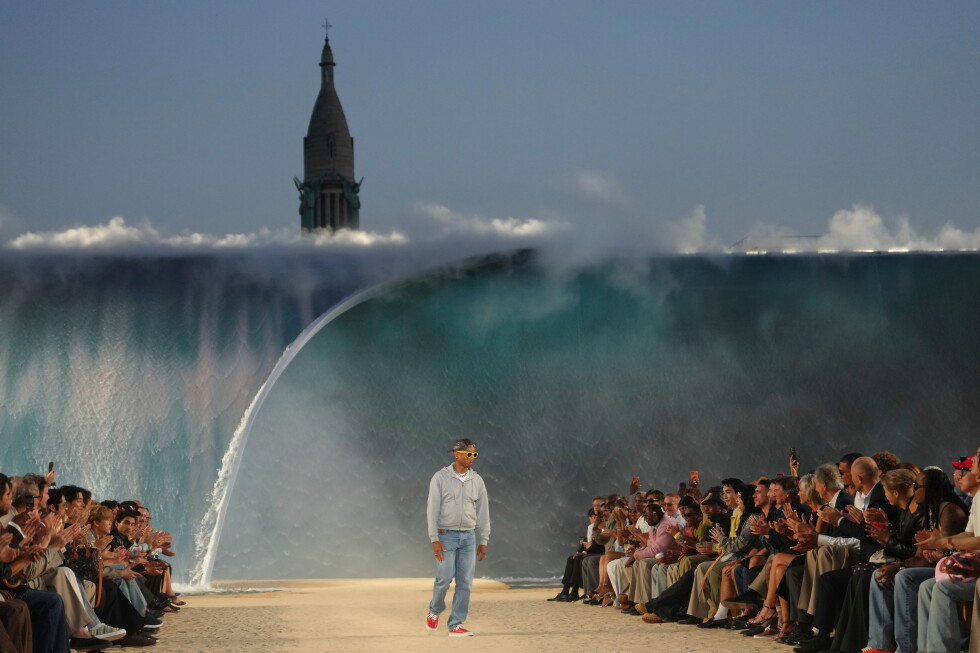
    Even luxury houses that leaned into lighter construction didn’t fully escape the contradiction. At Saint Laurent, designer Anthony Vaccarello created unlined jackets and soft, pale silhouettes explicitly designed for heat, but paired the lightweight pieces with leather briefs, choker scarves and transparent shoes that quickly fogged with perspiration. At Louis Vuitton, Pharrell Williams staged his show around a giant artificial wave installation, but still sent models out in neoprene wetsuits, cashmere coats, and fur pieces.

    Pascal Morand, head of France’s Haute Couture and Fashion Federation, said organizers had followed the French government’s official heat wave response plan. “We are conscious of the challenges and very attentive to preserving the Fashion Week experience in this context of structural change,” he told the Associated Press. But fashion week is far from the only Parisian institution being strained by rising temperatures: the Louvre recently shortened visiting hours during the heat wave, noting that its historic building structure is “remains vulnerable and is not sufficiently adapted to climate change.”

    The event also laid bare a broader cultural debate playing out across France and much of Europe: how to adapt to rising extreme heat without widespread adoption of air conditioning, which many Europeans still view as wasteful and ecologically harmful. Unlike many other regions, most of Europe’s historic city buildings were constructed without built-in cooling, and the continent is warming faster than any other on Earth. The Macron administration has prioritized low-tech cooling solutions like adding shade, improving building insulation, and planting more urban trees rather than encouraging widespread AC installation.

    For many observers, Paris Fashion Week’s struggle with heat serves as a warning for every global industry tied to fixed schedules and public gatherings. From professional sports to tourism to construction, sectors built around long-standing seasonal timelines and outdoor crowds are already being forced to adapt to heat waves that arrive earlier, last longer, and reach higher temperatures than the built environment was designed for. As Freeman put it: “Paris Fashion Week is the canary in the mine.”

  • Hollywood gets into the microdrama race as mobile-first storytelling draws stars and major studios

    Hollywood gets into the microdrama race as mobile-first storytelling draws stars and major studios

    While the bulk of Hollywood’s attention in recent years has been absorbed by the cutthroat battle for streaming market share, Emmy-nominated creator and producer Issa Rae turned her focus to a fast-emerging entertainment format half a world away: mobile-first microdramas.

    Rae, who already built her early career on the success of the viral web series *The Misadventures of Awkward Black Girl*, spotted untapped potential in China’s exploding microdrama market — a sector that grew exponentially during the global pandemic — for both cultivating new audiences and developing original intellectual property. In May this year, her production banner Hoorae Media launched *Screen Time*, a twisty thriller that ranks among the first major studio-quality microdrama projects from an established Hollywood player. Backed by TikTok, the vertical series racked up nearly 75 million global views in its first week alone, marking a strong debut for the format in mainstream U.S. entertainment.

    For Rae, microdramas unlock unique benefits that traditional long-form film and television simply cannot match. “Because the production budget is far lower than TV or feature films, it creates space to take creative risks that would never get greenlit in traditional systems,” she explained in an interview with the Associated Press. “Production turnaround is also drastically faster, which lets us craft stories that respond to current cultural conversations and stay relevant to audiences in real time.”

    Defined by vertically oriented episodes that run just 1 to 3 minutes each, optimized for binge-watching on smartphones, microdramas have quickly become one of the fastest-growing sectors of the global entertainment industry. That growth has sparked widespread interest from A-list celebrities, independent creators and major media conglomerates scrambling to connect with audiences that increasingly consume narrative content on mobile devices.

    At its core, the microdrama formula is straightforward: episodes center on addictive, plot-driven stories ranging from steamy romance to corporate betrayal to dramatic redemption, with clickable titles like *The Double Life of My Billionaire Husband*. Most platforms release the first few episodes for free, then charge users to unlock subsequent chapters of the serialized story. What started as a pandemic-era trend in China has ballooned into a global industry: technology research firm Omdia projects total global microdrama revenue will hit $14 billion by 2026, a figure that has forced the U.S. entertainment establishment to sit up and take notice.

    Major media players have already raced to stake their claim in the space. NBCUniversal’s streaming platform Peacock recently launched a dedicated hub for microdrama content. Fox Entertainment has invested in microdrama production company Holywater and pledged to produce hundreds of original vertical titles. Mexican media giant TelevisaUnivision is developing serialized short-form dramas for its ViX streaming service. A-list names are also getting in on the action: Kevin Hart’s HartBeat production banner has expanded into vertical comedy content, Kim Kardashian has backed scripted mobile-first storytelling through her investment in leading microdrama platform ReelShort, Taye Diggs has starred in original vertical series for smartphone audiences, and filmmaker Deon Taylor is developing a sports-focused microdrama titled *I Am Hoop*. At the 2024 MIP London television market, industry executives noted that top microdrama platforms are now allocating up to 90% of their total budgets to consumer marketing, a sign of how fierce audience competition has become in the nascent sector.

    Before Hoorae launched *Screen Time*, the company spent more than two years researching the microdrama format and studying global audience behavior. That deep dive convinced the team that microdramas are far more than a passing fad, rooted in the simple reality that audiences now spend the majority of their media time on mobile devices. “The phone is the connective tissue that brings content straight to audiences where they already are every day,” explained Dzifa Yador, Hooraa Media’s head of digital. “We don’t have to force audiences to come to a new platform to find our content — we meet them where they already are.”

    For emerging creators, Yador added, the format removes one of the biggest barriers to breaking into Hollywood: the notoriously slow studio greenlighting process that can leave projects in limbo for years. Instead, creators can test story ideas directly with audiences, build a loyal following, and retain full ownership of their work. “It completely cuts out the traditional gatekeepers of the industry,” Yador said. “You don’t need a studio executive’s approval to greenlight your own show.”

    Long before major Hollywood corporations began investing in the format, independent creators had already proven that millions of viewers would spend hours following serialized microdrama content on social platforms. One of the most successful independent pioneers is Kountry Wayne, a comedian who first rose to fame with viral sketch comedy before shifting his focus to a sprawling interconnected universe of relationship microdramas after noticing the format had a much longer audience engagement lifespan than standalone sketches.

    The Georgia-based creator, who released his stand-up special *Kountry Wayne: Nostalgia* on Amazon Prime Video earlier this year, now releases 50 new microdrama episodes per week to his growing global audience. Wayne recently reported his content generated roughly 1.4 billion views on Facebook and an additional 100 million views on YouTube in a single month, figures that Meta and YouTube declined to independently verify. As Hollywood’s interest in vertical storytelling has exploded, Wayne says he has turned down multiple eight-figure offers to license or sell his content library, choosing to retain full ownership as his audience continues to grow. “If big studios take control of this space, they’ll try to water it down and dictate what gets made,” he explained. “I knew this format was only going to keep growing, so I wanted to hold onto it.”

    The format is also opening new doors for emerging underrepresented creators, with industry institutions stepping in to nurture new talent. The American Black Film Festival (ABFF), one of the nation’s leading platforms for showcasing Black film and television, launched its first ever microdrama showcase this year, selecting eight finalists from hundreds of submissions from emerging creators across the country. Festival programmer Bobbi Broome said the overwhelming response to the showcase confirms how quickly creators are embracing the format as a viable entry point into the industry. “At least two or three of the finalists told us they only decided to try making a microdrama because the ABFF competition launched,” Broome said in an interview.

    For many emerging filmmakers, the showcase is more than just a short-form opportunity: it acts as a low-risk test bed for ideas that can eventually grow into larger budget projects. “I spoke with a couple of filmmakers who told us this was their proof of concept for a full-length feature film,” Broome said. “The entertainment industry changes every single day, and creators are adapting right along with it.”

    As for what comes next for microdramas, Issa Rae says the format has barely scratched the surface of its potential. “We knew audiences would respond to premium content that’s free and easy to access wherever they are,” she said. “If the story is engaging, the performances are strong, and the content is made with the audience in mind, they will show up and engage.”

    For Kountry Wayne, the future of microdramas is inherently tied to the device that made the format possible. He shoots all of his episodes on cellphones with minimal traditional editing, a workflow that lets his team move quickly to release new content while still delivering high-quality visuals for mobile viewers. “The eyeballs are already on the phone,” Wayne said. “People still go to the movie theater and still watch linear TV, but our phones are with us everywhere, all the time. That’s where the audience is.”

  • ‘It increases my pride’ – Great American State Fair kicks off in Washington

    ‘It increases my pride’ – Great American State Fair kicks off in Washington

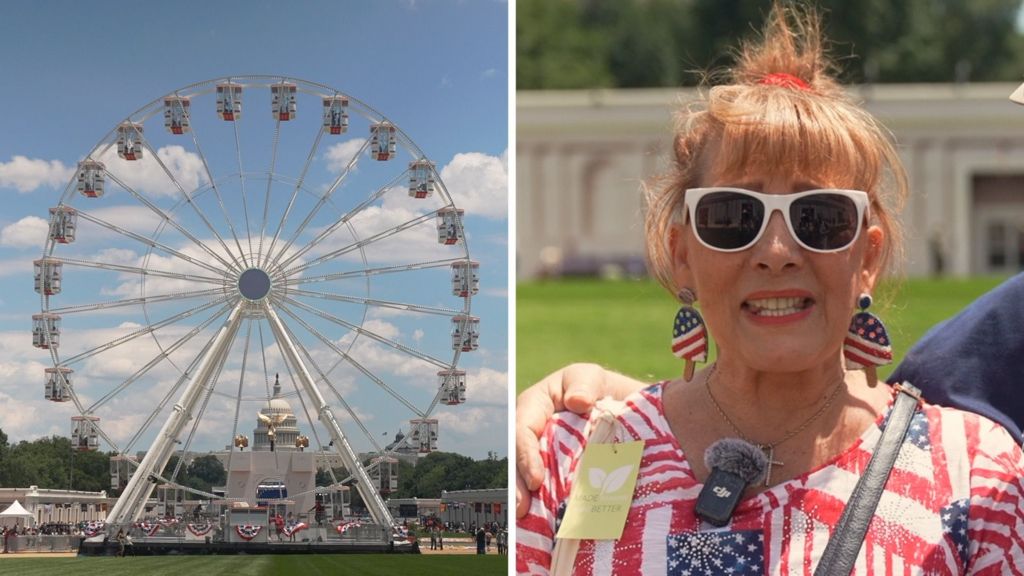
    One of the nation’s most anticipated annual celebrations has officially opened its gates in Washington, bringing with it a palpable wave of national pride and cross-state excitement. The 16-day Great American State Fair, a centerpiece event honoring the United States’ 250th anniversary, was designed to highlight the unique cultural, culinary, and artistic traditions of every American state, turning the venue into a microcosm of the entire country.

    For attendees and organizers alike, the opportunity to gather under one fairground to celebrate the breadth of American diversity has struck a deeply personal chord. “It increases my pride,” one long-time fairgoer shared, echoing the sentiment of many who have already wandered through pavilions showcasing handcrafted goods, regional signature foods, and innovative displays from every corner of the nation.

    Unlike traditional state fairs that focus primarily on the hosting region, this special edition was curated specifically to mark the historic 250th milestone of the United States. Organizers spent more than two years coordinating with representatives from all 50 states to curate one-of-a-kind attractions, from Louisiana’s iconic Cajun cooking demonstrations to Alaska’s native craft exhibitions and California’s agricultural innovation displays. Beyond the cultural showcases, the fair also features classic fair attractions, including carnival rides, live music performances from across genres, and livestock competitions that draw participants from around the country.

    Local officials expect the event to draw hundreds of thousands of visitors over its 16-day run, providing a significant boost to Washington’s hospitality and tourism sectors while creating a shared space for national celebration. As the gates opened on day one, crowds streamed in eager to explore, taste, and connect with the diverse tapestry of traditions that make up the United States, turning the fair into more than just an entertainment event – it is a celebration of national identity and shared history.

  • Blood, Sweat & Tears rocker David Clayton-Thomas dies at 84

    Blood, Sweat & Tears rocker David Clayton-Thomas dies at 84

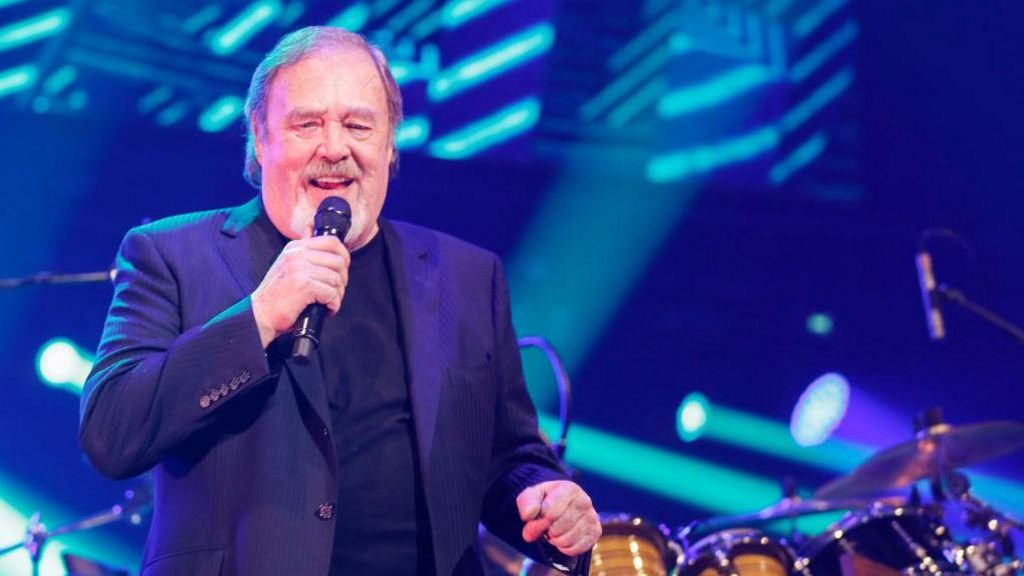
    The world of music is mourning the loss of one of jazz-rock’s most influential voices: David Clayton-Thomas, the Canadian lead singer of Blood, Sweat & Tears, has passed away at the age of 84. His publicist Eric Alper confirmed that Clayton-Thomas died peacefully on Wednesday at a hospital in Toronto, with no immediate cause of death released to the public.

    A inductee of the Canadian Music Hall of Fame, Clayton-Thomas leaves behind an unparalleled artistic legacy defined by chart-topping hits and a genre-bending sound that redefined 1960s popular music. Best known for his soulful, powerhouse vocals on era-defining tracks including *You’ve Made Me So Very Happy* and *Spinning Wheel*, the singer-songwriter amassed global record sales exceeding 40 million across his decades-long career. His journey from street performing in Toronto to headlining iconic festivals like Woodstock cemented his status as a transformative figure in the fusion of jazz and rock.

    Clayton-Thomas’s early life was marked by hardship that ultimately forged his artistic path. As a teenager, he experienced homelessness and spent time in a series of correctional facilities and youth detention centers, where he taught himself to play guitar and discovered his love of music through performances for fellow inmates. It was not until 1968 that he joined Blood, Sweat & Tears, stepping into the role of lead vocalist and quickly becoming the creative backbone of what would emerge as one of the decade’s most commercially successful and critically acclaimed groups.

    The same year he joined the band, their self-titled second album made industry history: it sold 10 million copies globally, held the number one spot on the Billboard 200 album chart for seven consecutive weeks, and took home five Grammy Awards, including the coveted Album of the Year—beating The Beatles’ legendary *Abbey Road* for the honor. The record spawned three top-charting singles that all reached number two on the Billboard Hot 100: *You’ve Made Me So Very Happy*, *And When I Die*, and *Spinning Wheel*, a track written by Clayton-Thomas himself.

    In 1970, the band made political as well as musical history, becoming the first rock act to tour behind the Iron Curtain in Eastern Europe at the invitation of the U.S. State Department. A 2023 documentary titled *What the Hell Happened to Blood, Sweat & Tears?* later revealed that the Nixon administration had issued an ultimatum to Clayton-Thomas, who was a Canadian citizen living in the U.S.: complete the tour in exchange for permanent residency, or face deportation. The collaboration with the Nixon administration drew significant backlash at the time, particularly from anti-Vietnam War activists who criticized the band’s ties to the government.

    Clayton-Thomas departed Blood, Sweat & Tears in 1972, citing physical and mental exhaustion from years of non-stop global touring. He went on to build a successful solo career, releasing more than 12 independent albums and headlining his own tours across North America, before rejoining the iconic group in the early 1980s.

    He is survived by his two daughters, Ashleigh Clayton-Thomas and Christine Graham. Per a statement from his publicist, a memorial concert honoring Clayton-Thomas’s life and decades of musical contributions will be held at a future date, with all proceeds going to Peacebuilders Canada—a peace organization Clayton-Thomas supported deeply.

  • Could a Madison Square Garden wedding be the Love Story of Taylor Swift’s Wildest Dreams?

    Could a Madison Square Garden wedding be the Love Story of Taylor Swift’s Wildest Dreams?

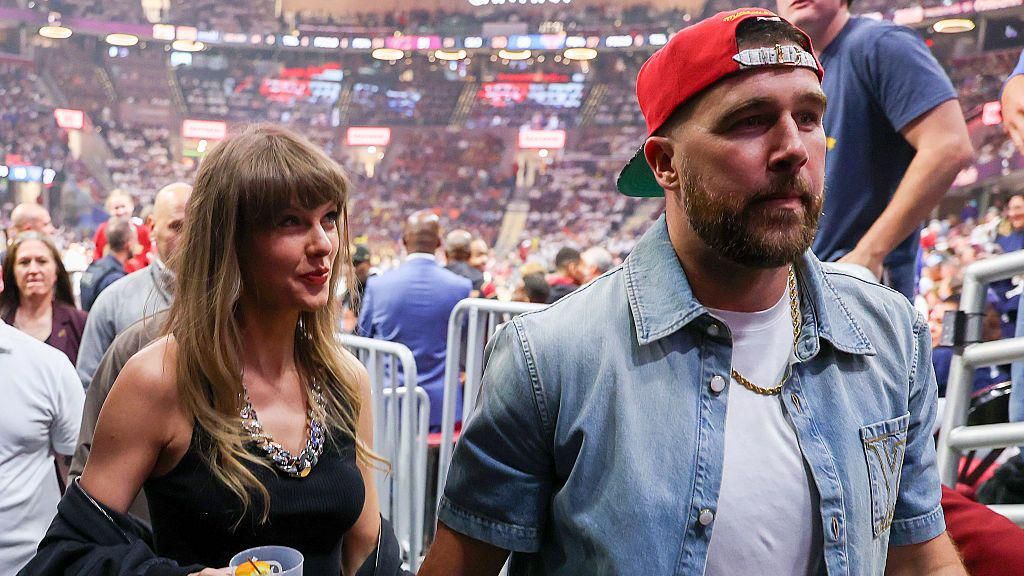
    Speculation about the upcoming wedding of global pop superstar Taylor Swift and NFL star Travis Kelce has reached a fever pitch this week, after New York City officials confirmed a permit application has been filed to close streets surrounding Midtown Manhattan’s iconic Madison Square Garden over the Fourth of July holiday weekend.

    Dora Pekec, a communications representative for the New York City Mayor’s Office, confirmed to the BBC that the permit request was submitted in early June, requesting road closures around the arena from July 2 through July 4. The permit was first uncovered by *The New York Times*, which also reported that multiple players from Kelce’s Kansas City Chiefs have secured nearby hotel reservations for the same weekend. Since the couple announced their engagement last August, fans across the world have been combing social media and public records for any hint of the wedding’s location and timing, turning the search for details into a widespread cultural pastime.

    Crucially, city officials have not confirmed who submitted the permit application, and CNN reports that neither Swift’s nor Kelce’s name appears on the public filing. Still, *The New York Times* has outlined multiple unconfirmed indicators that point to a MSG nuptial, including reports that Amtrak police — who handle security at Penn Station, the major transit hub located directly beneath the arena — have been notified to prepare for a Swift wedding over the busy holiday weekend. The outlet also claims the couple plans to host a small, private gathering for 100 close guests on July 2, followed by a larger celebratory event on July 3 that may include surprise performances from famous guests.

    The potential venue choice has split Swift’s dedicated fanbase, with many expressing confusion over the selection of the 19,500-seat indoor arena over the scenic, outdoor location many predicted. Most fans had expected the couple to wed near Swift’s oceanside estate in Rhode Island, a guess backed by the couple’s engagement photos, which showed Kelce proposing in a lush, flower-filled garden setting. In contrast, Madison Square Garden is a windowless indoor venue in the heart of Manhattan, with no natural light and no panoramic scenic views.

    Molly Gaffney, a self-identified Swiftie from Albany, New York, called the rumored location baffling. “Her getting married in Manhattan at all, let alone during the Fourth of July during America 250, plus the World Cup, is insanity,” she said, referencing the simultaneous 250th anniversary of U.S. independence and 2026 FIFA World Cup that will draw hundreds of thousands of extra visitors to the city that weekend. “This dark, industrial location as her wedding venue couldn’t be more perplexing.” Some fans have even theorized that the permit is a deliberate decoy to distract media and fans from the couple’s actual, private wedding location — though Gaffney noted that staging such an elaborate decoy would require far more effort than it would be worth.

    But other long-time Swift fans argue the venue is a surprisingly perfect fit for the high-profile couple, who span two of the world’s biggest industries: music and professional sports. Nicki Vleisides, a New York City resident who co-hosts a popular podcast focused on Swift’s career and personal life, pointed to MSG’s unique status as a global landmark for both industries. “MSG is where music and sports come together at the most famous venue in the world,” she explained. “The more I’ve thought about it, it kind of seems like the perfect choice for both Taylor and Travis and their respective industries.”

    Vleisides’ co-host Andie Furber added that the arena also offers unbeatable security benefits for a celebrity wedding of this scale. “No drones or paparazzi can get in or out, and Taylor, Travis and guests can enter underground from blocks away with no chance of getting photographed,” she said. MSG is equipped with a private off-street entrance and underground access ramp that allows A-list guests to enter and exit completely out of public view, a feature that has made it a favorite for high-profile private events. The arena already proved its ability to handle massive security operations earlier this month, when it hosted former U.S. President Donald Trump during the 2026 NBA Finals between the New York Knicks and San Antonio Spurs.

  • Prosecutors drop outstanding rape case against Harvey Weinstein

    Prosecutors drop outstanding rape case against Harvey Weinstein

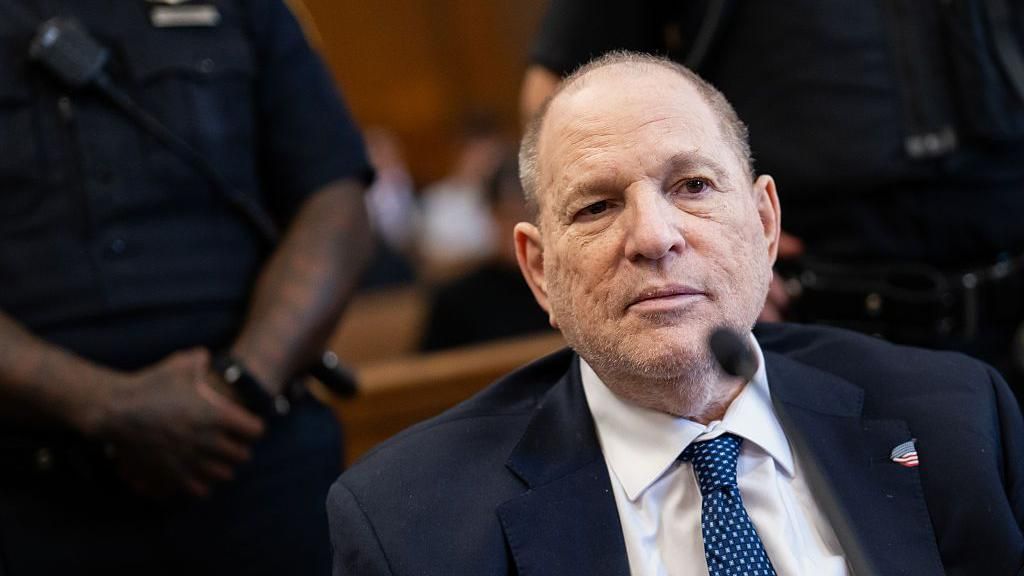
    More than seven years after the #MeToo movement first brought widespread attention to sexual misconduct allegations against disgraced Hollywood film producer Harvey Weinstein, Manhattan prosecutors have announced they will not move forward with a fourth rape trial against the fallen media mogul. This unresolved case, which has already cycled through three court proceedings, will be closed permanently, according to a formal statement from the office of Manhattan District Attorney Alvin Bragg Jr. released Thursday. The case related to accusations from Jessica Mann, a former hair stylist and actor who alleged Weinstein raped her more than a decade ago. Previous attempts to prosecute the claim have ended in procedural deadlock: one jury failed to reach a unanimous verdict in 2020, a second mistrial was declared after another hung jury in a 2022 retrial, and a 2023 conviction was later thrown out on appeal. In his statement, Bragg emphasized that his office remained fully confident in Mann’s account of the incident and her standing as a credible witness. Following in-depth consultations with the accuser, prosecutors made the decision to drop the charge after Mann confirmed she did not want to endure the emotional and logistical strain of a fourth trial, Bragg added. It is important to note that the dismissal of this case does not impact Weinstein’s other existing sexual assault convictions. The former producer remains incarcerated for a separate sexual felony conviction out of New York, as well as additional convictions for sexual misconduct handed down by a California court in 2022. The case stands as one of the most high-profile legal outcomes of the global #MeToo movement, which broke into the mainstream in 2017 after hundreds of women came forward with abuse allegations against Weinstein, sparking a nationwide reckoning over sexual harassment and assault in workplaces across every industry.

  • Top Australian TV star to leave job after Tommy Robinson interview, reports say

    Top Australian TV star to leave job after Tommy Robinson interview, reports say

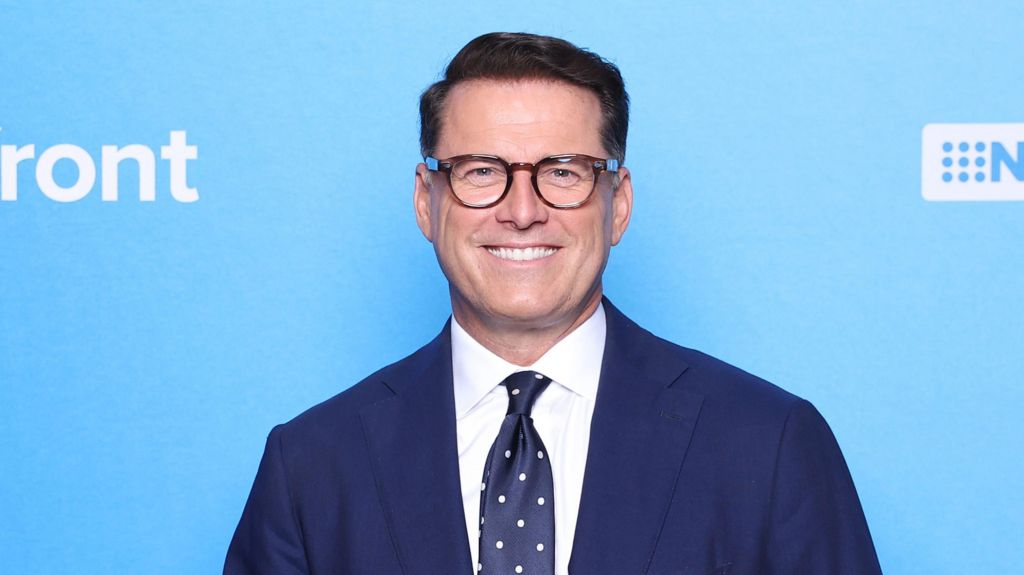
    One of Australia’s most recognizable and highest-paid television personalities is on the brink of departing his long-running role at a major national broadcaster, following intense public and industry backlash over a controversial podcast interview with a British far-right extremist. For nearly 20 years, Karl Stefanovic has been the face of Nine Entertainment’s flagship morning breakfast program *Today*, becoming a household name across the country and building a reputation as a working-class, larrikin-style media figure. Now, multiple local Australian outlets have confirmed that network executives are in active negotiations to end Stefanovic’s contract months before it was set to expire at the end of 2025.

    The catalyst for the current crisis came in early June 2025, when Stefanovic released a new episode of his self-produced independent podcast featuring an interview with Tommy Robinson, real name Stephen Yaxley-Lennon, a far-right British activist with a long history of anti-Muslim rhetoric and criminal convictions. Within hours of the episode going live, it was pulled offline after a wave of public outrage and threats from advertisers to pull spending from Nine’s platforms. The episode drew particular condemnation after promotional clips emerged showing Stefanovic praising Robinson’s “tenacity” and “courage” for his political views, and using a crude, offensive slur to describe outgoing UK Prime Minister Keir Starmer while posing with Robinson.

    Nine Entertainment, one of Australia’s two largest commercial broadcasting groups, moved quickly to separate itself from Stefanovic’s project this week. In an official statement to the BBC, a network spokesperson emphasized that *The Karl Stefanovic Show* podcast is a fully independent venture with no network involvement in guest selection, editorial decisions, or production. “Nine has no involvement, including in the guest selection and other editorial processes. However, Nine is taking this matter seriously,” the spokesperson said.

    This is not the first time Stefanovic has weathered scandal during his decades-long tenure at Nine. The 51-year-old presenter has previously made headlines for public missteps: he once appeared visibly intoxicated on air following an industry awards ceremony, and was forced to apologize on-air after a private conversation in an Uber was leaked, in which he insulted his *Today* co-host. He stepped down temporarily from the role in 2018 amid falling ratings and intense tabloid scrutiny of his personal life, but returned to the hosting chair just 12 months later. He won Australia’s most prestigious television honor, the Gold Logie Award for Most Popular Presenter, in 2011, capping his rise to become the country’s highest-paid news anchor.

    In the months since he launched the independent podcast in January 2025, pressure has been building on both Stefanovic and Nine. The podcast has featured a string of controversial guests from across the political spectrum, and Stefanovic’s own comments on divisive issues including alleged Australian war crimes in Afghanistan, so-called “woke” culture, and COVID-19 vaccination policies have drawn ongoing criticism. Internal tensions at Nine have also grown, with multiple network journalists raising concerns that Stefanovic’s podcast was damaging Nine’s reputation as a credible news organization. By mid-week, multiple major advertisers had publicly expressed their displeasure with the interview, pushing network leadership to move toward a negotiated exit.

    As of Wednesday, Stefanovic remains on leave and is currently in London, and his representatives have not yet responded to requests for comment on the impending departure. The Sydney Morning Herald, a Nine-owned masthead, confirmed the negotiations following the initial report from *The Australian*, marking a swift end to one of the longest and most high-profile careers in modern Australian television.

  • Palace in the Mist: The inside story of the 1908 Young Turk revolution

    Palace in the Mist: The inside story of the 1908 Young Turk revolution

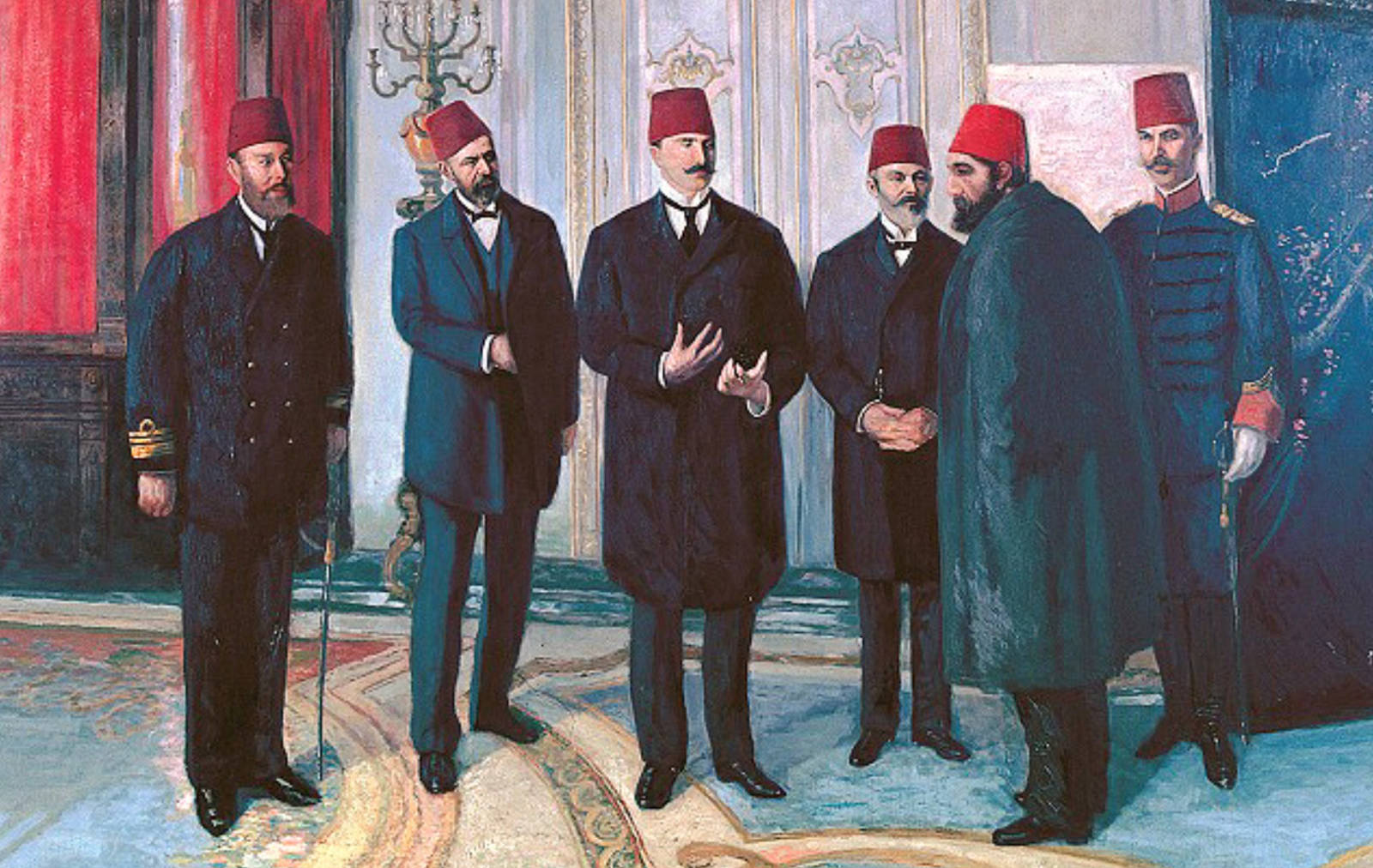
    For history enthusiasts and casual readers alike, few experiences match the excitement of gaining exclusive, behind-the-scenes access to the hidden inner workings of one of humanity’s most influential imperial dynasties. That rare opportunity has arrived with the July 3 release of *Palace in the Mist*, a new work by Ayse Osmanoglu — a professional writer, and a direct member of the House of Osman, the ruling family of the Ottoman Empire.

    Osmanoglu, who currently resides in England, carries unmatched ancestral context for this project: she is a direct descendant of two Ottoman sultans, Murad V and Mehmed Resad, and her grandfather was an imperial prince forced into exile from Istanbul in 1924, when Turkish Republic founder Mustafa Kemal Ataturk formally abolished the Ottoman caliphate. This unique lineage puts her in an unparalleled position to chronicle the final, turbulent era of the Ottoman Empire.

    Set against the transformative upheaval of the 1908 Young Turk Revolution, *Palace in the Mist* tells the deeply personal story of Osmanoglu’s own ancestors within the imperial palaces of Istanbul. The work occupies a rare middle ground between narrative fiction and rigorous academic history: every central figure in the book is a real historical person, and Osmanoglu went to extraordinary lengths to ensure all portrayals adhere strictly to the historical record. While this commitment to avoiding unsubstantiated embellishment occasionally leaves supporting characters feeling less developed than they might be in a conventional novel, critics note this small trade-off is more than justified by the book’s extraordinary accuracy and authentic voice.

    Osmanoglu draws on one-of-a-kind source material that no outside scholar could easily access: obscure contemporary memoirs written by people who lived through the era, plus oral histories of the imperial family passed down directly to her through generations. In the book’s opening, she explains that during her childhood, her paternal grandparents and great-aunts and uncles shared countless stories of the dynasty’s final decades, and she committed these intimate anecdotes to memory to preserve them for future readers. “They gave me a precious insight into what life was like for the people who lived in the Ottoman palaces at the turn of the 20th century,” she writes.

    To ground the narrative, Osmanoglu begins by recapping the decades of political tension that led to the revolution: In 1876, a reformist faction called the Young Ottomans launched a coup against Sultan Abdulaziz, deposing him and installing his liberal nephew Prince Murad — Osmanoglu’s direct ancestor — as the new sultan. Plagued by paranoia that others would accuse him of conspiring against Abdulaziz, Murad suffered a severe nervous breakdown, was deemed unfit to rule, and was replaced by his younger brother, who took the throne as Sultan Abdulhamid II in September 1876.

    Though Abdulhamid initially accepted a constitution and established a parliament, he soon grew authoritarian, dissolved the legislative body, arrested political dissenters, and even imprisoned members of his own family who he saw as threats. That included Murad and his son Prince Mehmed Selahaddin, who were confined to the so-called “gilded cage” of Istanbul’s Ciragan Palace for 28 years.

    *Palace in the Mist* picks up its narrative in the final years of Abdulhamid’s iron-fisted rule, with Osmanoglu reconstructing this history through vivid prose and meticulous attention to sensory detail. She paints a clear portrait of the sultan, noting his “crisp white linen shirt and navy-blue trousers” and the gold buttons of his custom jacket, and captures his growing paranoia in a small, revealing moment: “The world moves against me,” he whispers, waving a pistol through an empty room.

    Betrayal and popular revolt stand as the book’s central themes. Young Turk revolutionaries, including key protagonist Captain Hafiz Ismail Hakki, grapple with the moral weight of betraying the sitting sultan to build a democratic constitutional monarchy. Political intrigue permeates every chapter, seen in one iconic scene where masked rebels gather around a table holding “the Qu’ran and the revolver, gleaming ominously in the golden light.”

    Beyond high politics, Osmanoglu devotes significant attention to the often-overlooked private lives of women in the Ottoman imperial family, many of whom lived in forced confinement. Readers meet Princess Rukiye, Murad’s granddaughter, who secretly reads the Sherlock Holmes novels that Arthur Conan Doyle gifted to Abdulhamid, and the tragic Princess Hadice, Murad’s daughter, whose illicit romantic correspondence with a young officer named Kemaleddin Pasha leads to her public disgrace and his exile; when he finally returns to Istanbul decades later, she refuses to meet him.

    Osmanoglu also brings the opulence of late imperial palace life to life, describing glittering parties held under high ceilings where “chandeliers dripped with countless crystals.” In this rarefied, privileged world, “the scent of oud and musk clung to the tailored frock coats” of princes and politicians sipping sherbet and “cardamom-scented coffee,” all to the accompaniment of the “soft melodies of the Imperial orchestra.”

    The book’s turning point arrives in July 1908, when Young Turk forces compel Abdulhamid to reinstate the 1876 constitution and reconvene parliament. At the most critical moment, the empire’s highest religious authority, the sheikh-ul-islam, sides with the revolutionaries. When asked to issue a religious ruling declaring the insurgency illegal, he tells a stunned Abdulhamid that “the Constitution accords with Sharia… To refuse it would be to defy Divine law.” With that ruling, the sultan’s absolute power is broken, and parliament gains the authority to hold the monarchy accountable.

    The political shift frees Murad’s imprisoned family from their long confinement, but the new era of reform proves short-lived. Osmanoglu introduces readers to Ali Kemal, a liberal journalist and ancestor of former British Prime Minister Boris Johnson, who declares boldly, “They may silence a man, but never an idea. If ink is treason, let the gallows be our pressroom.”

    Many leading Young Turks, however, favored a centralized, bureaucratic state over the decentralized model reformers had initially promised. Prince Sabahaddin, the revolutionary son of Abdulhamid’s sister, argued unsuccessfully that “it is essential that the provinces be given autonomy if the Empire is to survive,” and lost the internal debate. Ultimately, the revolution is betrayed from all sides: an uprising led by disgruntled soldiers and madrasa students erupts, the Young Turk leadership consolidates power into a new authoritarian regime and crushes the rebellion, and Abdulhamid is accused of appeasing the mutineers, deposed, and exiled from Istanbul. “Allah and history will bear witness that I have served the State faithfully,” he insists before leaving. Osmanoglu’s ancestor, Mehmed Resad, is installed as the new sultan, with far more chaos and bloodshed still waiting for the empire in the years ahead.

    Critically, the work is widely praised as beautifully written and carefully constructed, moving seamlessly between high-stakes imperial politics and intimate family drama to create an extraordinary literary achievement. Osmanoglu has delivered a truly insider account of the dynasty’s final years, and the work is considered essential reading for anyone with an interest in Ottoman history. *Palace in the Mist: The Ottoman Dynasty Chronicles* by Ayse Osmanoglu is available in both paperback and hardcover editions starting July 3.

  • Dior moves Paris men’s show earlier as heat wave grips city

    Dior moves Paris men’s show earlier as heat wave grips city

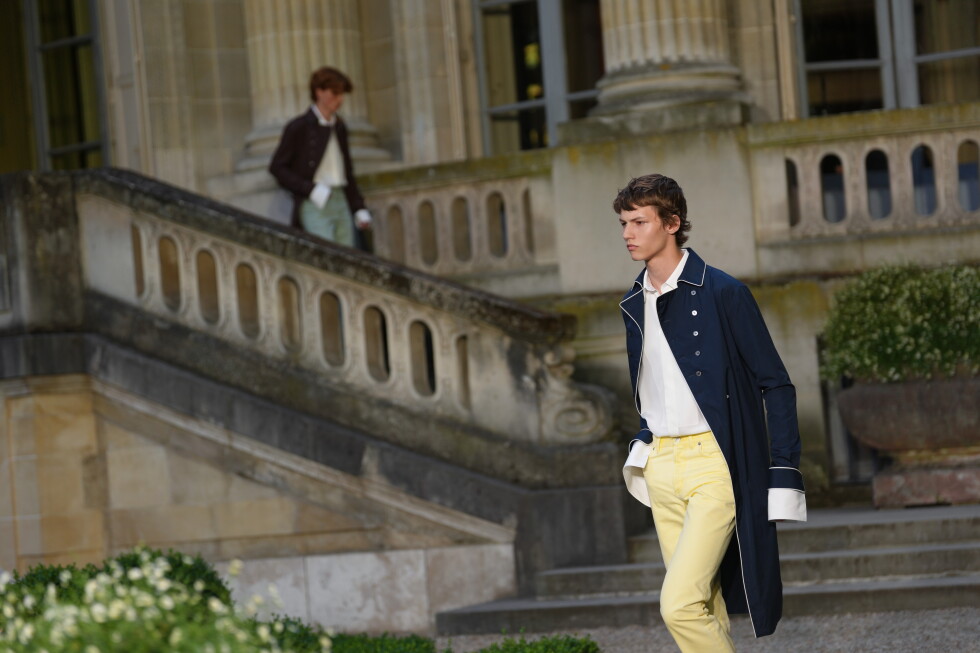
    A record-breaking heatwave sweeping across large swathes of Western Europe has forced iconic luxury fashion house Dior to make an unusual last-minute adjustment to its Paris Fashion Week men’s show, rescheduling the event to an unprecedented 9 a.m. start time on Wednesday. Even the early-morning kickoff, however, was not enough to escape the soaring temperatures that have gripped the French capital this week. When invited guests began filing into the event venue, the historic Musée Nissim de Camondo, organizers had prepped small cooling comforts: cold damp towels, fresh strawberries, and portable parasols were distributed to attendees at the entrance to help beat the heat. Inside the stately 18th-century-inspired mansion, temperatures climbed steadily as the show got underway, leaving some guests visibly uncomfortable amid sweltering conditions, with potable water in short supply for the crowd. Despite the oppressive heat, the front row held true to Fashion Week tradition, boasting a star-studded guest list that included actor LaKeith Stanfield, musician Little Simz, actor James Marsden, Outerbanks star Drew Starkey, actor Mike Faist, rapper 070 Shake, actor Alexander Ludwig, and actor Sam Nivola. Northern Irish designer Jonathan Anderson, the creative lead for Dior Men, unveiled his latest ready-to-wear collection centered around a deliberate core concept: traditional high fashion formality unspooling and relaxing into something more casual and lived-in. Dior’s creative team framed the collection’s mood as “a soiree turning into a house party,” while Anderson himself described it as “something quite formal becoming undone.” The overarching narrative of the line was that the modern Dior man does not just arrive at an elite event; he stays from the night before through the messy, joyful aftermath of the morning after. Anderson opened the presentation with tailored suiting, a Dior staple, but reimagined it to feel lighter and less rigid than traditional formalwear. Classic suiting patterns including pinstripes and houndstooth were printed onto lightweight silk chiffon instead of being woven into heavy wool, creating a silhouette that retained the structure of formal wear while feeling ethereal and semi-transparent. The collection pushed Dior’s long-established brand codes into a grittier, more approachable territory. Sequined tailoring was shaped to resemble casual denim jeans, while ripped denim pieces were finished with delicate silver chain details. Traditional tuxedos were re-cut in loose, relaxed fits, and soft pink denim shorts were layered underneath structured formal outerwear. Standout accessories included crystalline statement sunglasses, sparkling disco-ball inspired boots, and patchworked shirts crafted from upcycled Japanese denim. The strongest pieces in the collection successfully balanced respect for Dior’s iconic heritage with intentional creative disruption. A recurring scarf motif was pulled directly from a 1979 Dior haute couture design, while fine silver embroidery took inspiration from the ornate detailing on 18th-century gentlemen’s formal coats. The collection’s disco boots were intentionally crafted to look slightly disheveled, decorated with tiny embroidered ladybird motifs scattered across the material. Far from rejecting Dior’s century-long legacy, the reworking of classic design elements was framed as a way to make heritage feel dynamic and relevant for a new generation. The choice of the Musée Nissim de Camondo as the event venue added unexpected depth and context to the collection. The mansion, which is currently closed to the public for major restoration work, was originally built to house Moïse de Camondo’s extensive collection of 18th-century French decorative arts — the same design era that deeply inspired Dior founder Christian Dior. Anderson’s exploration of loosened formality played perfectly against the space’s own “in-between” state of preservation and ongoing repair, a tension that Dior’s own show notes highlighted as core to the collection’s theme of beauty found in imperfection. The venue also carries a somber historical weight: Camondo’s only son died in combat during World War I, and multiple remaining members of the Camondo family were deported and murdered during the Holocaust. Today, the mansion operates both as a decorative arts museum and a quiet memorial to the family’s loss. Against this layered backdrop of history and change, the collection’s playful reimagining of classic Dior created a striking creative tension. Anderson pulled the house’s most recognizable signatures — the tuxedo, the iconic Bar jacket silhouette, couture hand embroidery, 18th-century decorative references — and recontextualized them into a younger, less polished aesthetic. The resulting presentation is widely regarded as one of Anderson’s clearest, most cohesive outings for Dior Men to date.

  • Two men make $50k to watch the World Cup, with nowhere to hide

    Two men make $50k to watch the World Cup, with nowhere to hide

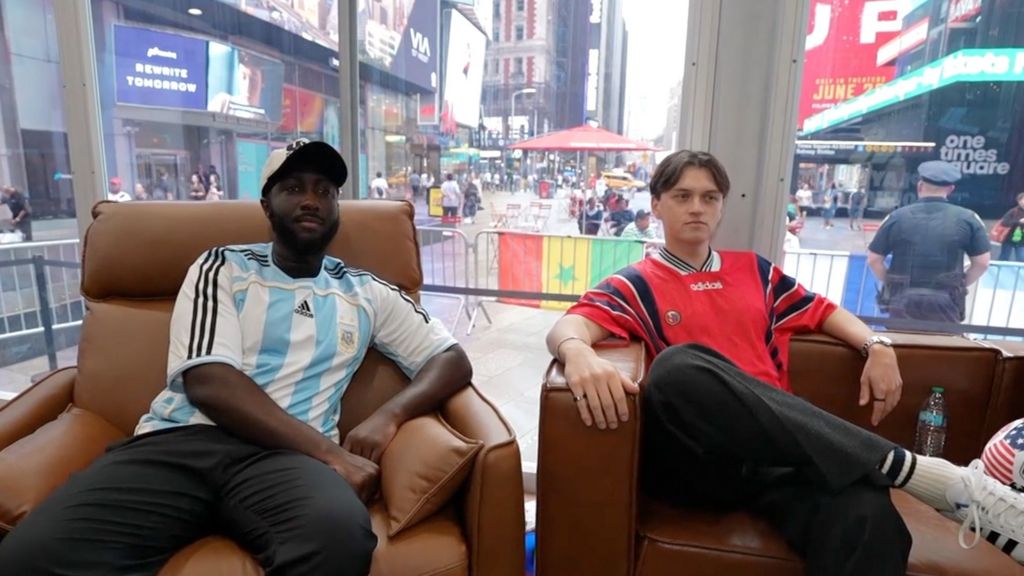
    In a bold, eye-catching marketing stunt that blends sports fandom with public spectacle, two lucky individuals have landed a once-in-a-lifetime opportunity: they will earn a combined $50,000 (£44,000) to watch every match of the FIFA World Cup, all while confined to a transparent glass living room installed right in the heart of New York City’s iconic Times Square.

    Unlike typical World Cup viewing parties that unfold in private homes, crowded sports bars or public fan zones, this gig offers zero privacy for the two participants. Surrounded by thousands of passing tourists and locals every day, their every reaction—from last-minute goal celebrations to tense penalty shootout nerves—will be on full display for anyone wandering through the busy crossroads of Manhattan. The glass enclosure is fully set up as a comfortable living space, with all the amenities needed to accommodate the pair through the entire tournament, but their lack of seclusion is the defining quirk of the unusual role.

    The stunt, designed to draw massive public attention to a brand aligned with the World Cup, taps into the global frenzy surrounding soccer’s biggest international tournament. Times Square, already one of the most visited and photographed locations in the United States, provides the perfect stage to amplify the experience, turning two ordinary fans’ World Cup journey into a public attraction all its own. For the two men, the gig combines three of life’s great pleasures—watching world-class soccer, being in the middle of one of the world’s most famous cities, and walking away with a generous paycheck that most people would need months to earn—all in one unusual package.