分类: entertainment

  • Gender-bending is now part of menswear. Paris runways show how mainstream it has become

    Gender-bending is now part of menswear. Paris runways show how mainstream it has become

    The just-concluded Paris Men’s Fashion Week told a quiet but transformative story: even in a season dedicated to menswear, women are now an inextricable, intentional part of the narrative, reshaping long-held boundaries around gender and clothing. Across runways, the industry’s shift toward gender-blurred design is no longer a niche provocation—it is a core feature of one of luxury fashion’s most high-profile global events, reflecting both changing cultural attitudes and deliberate commercial calculations.

    Co-ed runways have become the norm across major houses this season. Women walked alongside men at Amiri and Ami, while at Vetements, female models led the presentation of most “menswear” looks, with Hollywood icon Sharon Stone closing the show in a dramatic pair of thigh-high leather boots. Even outside the show space, the trend is on full public display: last year, pregnant pop icon Rihanna made history as the face of Pharrell Williams’ debut Louis Vuitton menswear campaign, featured on a massive Paris billboard posing with her visible baby bump and a full armful of the brand’s signature handbags.

    Fashion insiders emphasize this shift is not a sudden revolution, but the culmination of decades of gradual change. “It’s not something completely new,” explained Joseph McBrinn, an art historian at Ulster University. Women have appeared in menswear presentations for so many seasons that industry veterans barely bat an eye today. Even as Gen Z’s mainstream audience is only now embracing gender-bending style—a trend David Bowie pioneered back in the 1970s—fashion has long operated ahead of popular cultural discourse. Over recent decades, McBrinn noted, the industry has moved “from very binary understandings of gender and fashion to something which is today very fluid,” a shift that directly mirrors how younger generations conceptualize gender identity.

    This blurring extends beyond casting to the very design of the clothing itself. Even at brands that maintained an all-male cast for their presentations, like Issey Miyake’s IM Men line, the entire collection read as inherently androgynous. This season’s menswear designs borrowed openly from womenswear tropes: for Dior, where Jonathan Anderson became the first designer to oversee both the brand’s men’s and women’s lines, male models walked the runway in strings of pearls, soft pink garments, and sheer blouses tied with delicate bows at the collar. Anderson told reporters the collection explored how he “connects with the feminine.” At Saint Laurent, which opened this season’s Paris Men’s Week, male models bared their chests in form-fitting second-skin tops, wore leather-cut briefs, and sported transparent shoes pulled directly from the brand’s women’s runway.

    Beneath the aesthetic shift, however, industry experts point out that commercial incentives are a major driving force behind the move toward blended gender presentations. Saint Laurent, for example, has not only reimagined its menswear aesthetic: the brand has publicly targeted doubling its menswear sales by 2030, according to industry reports. Many major fashion houses have merged separate men’s and women’s shows into single co-ed presentations, a shift that by the late 2010s moved from a radical statement to a standard calendar strategy—equal parts creative experimentation, logistical convenience, and bottom-line calculation.

    Valerie Steele, director of the Museum at the Fashion Institute of Technology, argues that economic logic is often the underpinning of merged runways, not just ideological commitment to gender inclusivity. “I don’t think having men and women on the same runway means a greater belief in nonbinary genders,” she said. “That’s really more of an economic thing.” Hosting one show cuts costs in half, consolidates media attention around a single major event, and allows designers to tell a unified creative story—a particularly attractive advantage for a luxury fashion sector that has faced a period of slowed growth in recent years. The commercial logic is further reinforced by consumer behavior: women have long been major buyers of menswear, a trend that led men’s brand Ami, founded in 2011, to add a womenswear line to its offerings just years after launch.

    The history of gender fluidity in fashion stretches back far longer than modern terms like “nonbinary,” experts note. Yves Saint Laurent introduced women’s tailored menswear-inspired suits back in 1966, Bowie blurred gender lines through his performance style in the 1970s, and Jean Paul Gaultier sent male models down the runway in skirts in the 1980s—decades before mainstream discourse caught up to the idea. Veteran fashion critic Suzy Menkes traces the trend even further back: centuries ago, Menkes pointed out, men regularly wore some of the world’s most dramatic, precious, and glamorous jewelry, without any question that such garments were suitable for male dress. It was only in the 20th century that the boundaries of acceptable male fashion narrowed dramatically, setting the stage for today’s gradual reopening of those boundaries.

    Yet experts note that the erosion of gender lines has not been equal across the board. Sixty years after women in men’s tailored suits became widely accepted, a man wearing a skirt or heels is still widely framed as a transgressive act. “Women’s bodies are still consumed in ways that men’s bodies are not,” McBrinn explained. Men who cross traditional gender lines, he added, “can still be seen as deviant.”

    This tension plays out against a volatile broader cultural context: the rise of combative online masculinity, the spread of “manosphere” influencers, and a growing wave of anti-transgender legislation across many Western countries. Just a few years ago, clothing brand J.Crew sparked intense conservative backlash when it marketed a pink sweater to male consumers, even as major luxury brands including Dior and Paul Smith regularly featured pink garments on their menswear runways. Ironically, the controversy drove sales: industry reports show that sales of pink men’s apparel rose 17% year-over-year during the 2025 spring-summer season.

    Some experts warn that the current openness to gender fluidity could face a backlash amid shifting cultural tides. Openness to androgyny in fashion has crested in previous eras—the 1920s, 1970s, and 1990s, Steele noted—only to recede each time. “Everything is moving to the right,” McBrinn said. “Fashion may go back to being much more entrenched within gender binary” within the next five to 10 years, he warned.

    Against a global backdrop of rolling back legal protections for LGBTQ+ people, with transgender people at the center of cultural and political fights, the question of gender in fashion extends far beyond the runway. “We are seeing tremendous backlash internationally against trans people,” Steele said. Ultimately, she argued, runway shifts matter less than the everyday changes visible in workplaces, public spaces, and family gatherings. Public acceptance grows when people see androgynous clothing worn by friends, colleagues, and acquaintances in daily life. Slowly but surely, what once read as a radical statement is becoming just another part of everyday fashion: increasingly, they are just clothes.

  • Thousands of Vespas swarm Rome’s historic center to mark iconic scooter’s 80th anniversary

    Thousands of Vespas swarm Rome’s historic center to mark iconic scooter’s 80th anniversary

    On a sun-drenched Saturday in June 2026, the historic streets of Rome echoed with the distinctive soft putter of more than 10,000 Vespas, as enthusiasts from every corner of the globe gathered to celebrate eight decades of Italy’s most beloved two-wheeled icon. The parade wound past the ancient arches of the Colosseum and the weathered ruins of the Roman Forum, turning the Eternal City’s cobblestone lanes into a rolling tribute to a design that has transcended transportation to become a global cultural symbol.

    Devotee traveled thousands of miles to join the celebration: the Associated Press spoke to attendees from across continental Europe, northern England, San Francisco, Australia’s Gold Coast, the Philippines and beyond. For one weekend, high-performance Italian automotive marques like Ferrari and Ducati took a backseat, as the compact, charming Vespa claimed the spotlight as the star of the city. For Natalie Dunand, a French retiree marking her own 61st birthday at the event, the draw of Vespa runs deeper than mechanics. “The passion for Vespa is for the Italian style, freedom, the ’60s,” she said. “I love it.”

    The story of Vespa begins in post-World War II Italy, born from unexpected necessity. Piaggio, once a leading aircraft manufacturer, saw its Pontedera factory reduced to rubble by Allied bombing. Forced to pivot away from aviation, the company shifted gears to develop an affordable, accessible mode of transport for a war-torn nation, rolling the first scooter off production lines in 1946. From its earliest days, the scooter was designed with intentional inclusivity: Piaggio marketing executive vice president Davide Zanolini explained that women were among the brand’s core initial target audiences. The scooter’s low frame and step-through design allowed riders to wear long skirts without exposing their legs, a detail that shaped Vespa’s signature elegant curved silhouette. “The shape, the elegance. This very charming attitude of Vespa is much more of a lady than a man,” Zanolini told the AP.

    It didn’t take long for the scooter to conquer Italy, and then the world. By 1950, an Associated Press report noted Vespas were so ubiquitous in central Rome that their collective “staccato exhaust racket” made the downtown sound like the Indy 500. “Scooters darting loudly around Rome are said to impress motor-minded Americans as strongly as St. Peter’s or the Colosseum,” the 1950 article read. Global stardom arrived in 1953, when Gregory Peck gave Audrey Hepburn a iconic ride through Rome’s city center in *Roman Holiday*, cementing the Vespa’s reputation as a symbol of Mediterranean romance and adventure. The scooter has since appeared in dozens of films, from *The Talented Mr. Ripley* to Pixar’s 2021 animated hit *Luca*. Often compared to the Volkswagen Beetle for its timeless, approachable design, the Vespa has a universal ability to draw smiles from onlookers even 80 years after its launch.

    In the days leading up to Saturday’s parade, the city was flooded with Vespa aficionados, who gathered in groups in matching branded t-shirts and filled public squares across Rome. Outside Rome’s Stadium of the Marbles, rows of Vespas spanning eight decades of production were lined up for display, ranging from pristine original 1940s models to modern limited-edition releases. Some were decorated with flowers and stuffed toys; others carried personal mementos from their owners’ cross-continental journeys. Dunand brought her West Highland terrier, who rode along on the back, clipped short to cope with Rome’s summer heat. A Japanese enthusiast from Tokyo swapped his local club banner with an Italian Vespa group, while a German attendee showed off a tattoo of the Vespa logo paired with the iconic phrase “La Dolce Vita” on his calf.

    For many enthusiasts, the appeal of Vespa lies in its simplicity compared to larger, higher-powered motorcycles. Many riders trade in bulkier bikes for the nimble, lightweight automatic Vespa, which operates with a simple hand-twist accelerator. “You get on, twist, go. Doddle. Easy,” explained Andrew Walton, a 59-year-old truck driver from Newcastle who bought his first Vespa nearly 20 years ago. Walton rode for eight days from his home in northern England, taking a ferry to Rotterdam, following the Rhine through Germany and along Austria’s Romantic Road, before cruising down the Italian coast to reach Rome.

    After Rome’s mayor cut the opening ribbon for the celebration’s Vespa Village at the Stadium of the Marbles, crowds streamed in singing, chanting and waving national and club flags. Thousands headed straight for the official merchandise tent, where limited-edition helmets emblazoned with “80 Years of an Icon” were the most sought-after item, alongside a full range of branded goods from jackets and hats to blankets, water bottles and umbrellas. A photo retrospective traced Vespa’s cultural history, from classic mid-century shots of couples picnicking in Mediterranean meadows and seaside getaways to unexpected feats, like explorer Soren Nielsen’s 1963 trip to the Arctic Circle on his Vespa. Piaggio also displayed its private collection of pristine rare Vespas, drawn from 80 years of production.

    Today, Zanolini confirmed, Vespa has sold nearly 20 million units worldwide since 1946, and is available in 110 countries. While the brand remains niche in the United States, it has a strong following in Florida and California, and is growing in popularity in markets like Austin, Texas. Burke Sandman, whose family owns a century-old car dealership in Indiana, caught the Vespa bug nearly 20 years ago, after buying his first model for its sidecar. He became an official dealer after discovering there were no local resellers in his region, and has since moved more than 1,000 Vespas across the U.S., keeping 15 for his personal collection. “No one ever says anything bad about a Vespa. You know, it’s crazy,” Sandman said from the celebration in Rome. “Everyone that trades other brands for a Vespa, they never go back. It’s just something about it. And everyone likes Italian stuff. I get a lot of people that come back from Europe, and they’ve got the bug.”

  • Hit South African show gets the world talking about polygamy and cheating

    Hit South African show gets the world talking about polygamy and cheating

    When the opening credits of Netflix’s breakout hit *The Polygamist* roll, audiences are immediately plunged into a charged, tense moment: the funeral of Johannesburg tycoon Jonasi Gomora, where the carefully constructed facade of his life shatters before viewers’ eyes. Standing front and center as chief mourners are not one, but two of his secret wives, flanked by a third spouse and a long-hidden mistress — all dressed in mourning black, while his public-facing social media influencer widow stands out in a striking white ensemble. What unfolds from this explosive opening is a 22-episode non-English drama that has not only dominated streaming charts across Africa and beyond, but also ignited fierce global conversation about polygamy, infidelity, and intergenerational trauma in modern African families.

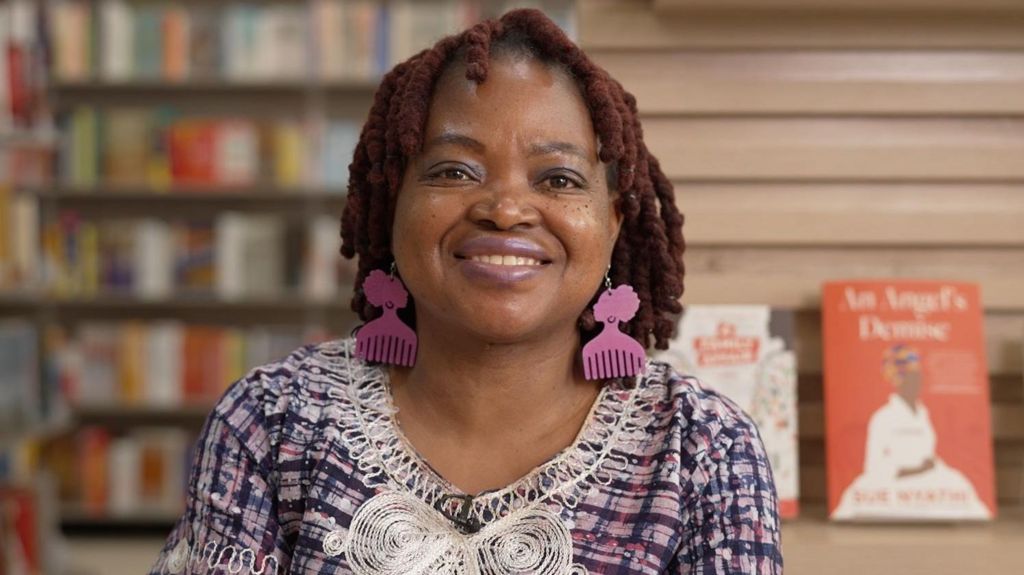
    Adapted from Zimbabwean author Sue Nyathi’s 2012 novel of the same name, the Zulu-language series traces the toxic, tangled dynamics of Gomora’s household over five years, unspooling the secrets and betrayals that led to the emotional confrontation at his funeral. Produced through a partnership between streaming giant Netflix and South African production house Stained Glass TV, the series counts two daughters of former South African president Jacob Zuma — a well-known public polygamist with deep roots in Zulu traditional culture — among its executive producers. Gugu Zuma-Ncube, one of the Zuma sisters leading the project, opened up about how her own upbringing shaped the show’s raw, authentic storytelling.

    “A lot of the scenes that you see in the show are taken directly out of our lives. I famously come from a very polygamist family… [so] I brought that in,” Zuma-Ncube told the BBC. She added that the production team was completely caught off guard by the overwhelming global response to the series, which far outstripped even their most optimistic expectations. Within its first week of release on June 12, *The Polygamist* claimed the number one spot on Netflix’s viewing charts in both South Africa and Kenya, cracked the top 10 in Nigeria and Mauritius, and climbed to number four on the streamer’s global list of most-watched non-English series, racking up two million views worldwide. Its popularity extended far beyond the African continent, too, earning top spots in Trinidad and Tobago, Romania, and the Dominican Republic.

    For Zuma-Ncube, the pan-African embrace of the series carries extra weight amid rising continental tensions sparked by recent anti-migrant unrest in South Africa. Beyond geographic reach, the series has struck a surprising emotional chord with diverse audiences, particularly women navigating unfaithful relationships and people raised in fractured family structures. It is the charismatic, ruthless patriarch Jonasi, masterfully portrayed by South African actor Sdumo Mtshali, who has emerged as the show’s most divisive figure, splitting viewers and critics alike.

    Critics and everyday viewers have condemned Gomora as a manipulative serial cheater and narcissistic opportunist, whose secretive, duplicitous approach to multiple relationships has laid bare normalized social ills plaguing modern South African society. Letlhogonolo Mogale, a 35-year-old viewer from South Africa who binged the series shortly after release, told the BBC that the show’s unflinching portrayal of broken family dynamics hit particularly close to home, even though she does not come from a polygamous background. “What stuck out for me personally was how broken families are and how broken society is,” she said. Unlike the culturally rooted, consensual polygamy recognized under South African law and practiced in many traditional Zulu, Xhosa, Ndebele, and Venda communities, Mogale argues that the series depicts a coercive, hidden form of polygamy that warps every relationship in the household — a dynamic she says is rarely discussed openly. The show also confronts overlapping public health and social issues, including HIV transmission risks in plural unions (a particularly pressing topic in South Africa, where 13% of the population lives with HIV), gender-based violence, and intergenerational trauma.

    Not everyone has reacted positively to the series, however. The show has drawn vocal criticism from defenders of traditional polygamy, most notably Kenyan civil servant Geoffrey Mosiria, who has amassed a large social media following calling for *The Polygamist* to be banned entirely in Kenya. Mosiria, who grew up as the youngest of 22 children in a happy polygamous household, argues the series paints a misleadingly negative picture of the practice, which he says builds strong community bonds and is a common cultural norm across parts of Kenya. “Polygamy is the best way to find love,” he told the BBC, adding that the show’s plot will only fuel unnecessary distrust among married couples.

    Prominent South African film critic Phil Mphela pushed back on this criticism, noting that the series is not an attack on cultural polygamy as an institution, but rather a character study of one man’s selfish, harmful behavior. He also framed *The Polygamist* as a pivotal turning point for African television, noting that while South Africa has long produced world-class content, the series’ global breakout marks a major milestone for authentic African stories reaching and resonating with international audiences. “It’s doing exactly what it’s supposed to be doing because these stories are supposed to evoke something within our society,” Mphela said.

    The series’ runaway popularity has already had ripple effects beyond the streaming space: demand for Nyathi’s original source novel has surged, prompting the author to issue a public warning this week about pirated counterfeit copies being sold in Nairobi bookstores. “Please don’t buy pirated copies. I am working day and night (like Michael Jackson) to make sure the book becomes available in the East African region. Copyright infringement is a crime and a violation of my rights,” she wrote on Instagram.

    A-list celebrities from across the globe have also weighed in on the viral hit: Nigerian Afrobeats star Davido tweeted simply, “Yo JONASI is WILD,” while Emmy-winning host and actress Sherri Shepherd joked on Instagram, “I thought Crazy Rich Asians was something, but crazy rich Africans is a whole ‘nother level.” Academy Award-nominated actress Taraji P. Henson replied to Shepherd’s post, admitting the show had her in a “chokehold” and that she binged the entire first season in a single day. The show’s popularity is so intense in Kenya that local matatu minibus taxis have already been redecorated with Jonasi’s face and name to capitalize on the hype.

    As Netflix and the producers celebrate the show’s unprecedented success, fans across the world are already demanding a second season. When pressed for details on future installments, Zuma-Ncube remained coy, telling reporters: “I think ultimately what we’ll be guided by is serving the story and serving the audience… [but] who knows where we end up.”

  • The Bhojpuri singers fighting vulgar tag on one of India’s oldest languages

    The Bhojpuri singers fighting vulgar tag on one of India’s oldest languages

    A haunting century-old Bhojpuri folk song performed on a hit Indian music platform has become a viral overnight sensation, igniting a long-overdue reckoning with harmful stereotypes that have obscured the language’s rich, layered cultural heritage for decades.

    When 29-year-old folk singer Udit Utpal, hailing from the rural Saharsa district of India’s northern state of Bihar, took the stage for *Coke Studio Bharat* — the Indian iteration of the global popular music franchise that amplifies underrepresented regional sounds for cross-South Asian audiences — to perform *Kachaudi Gali* alongside acclaimed vocalist Rekha Bhardwaj, the track quickly amassed millions of views. Beyond launching Utpal’s national career, the unexpected breakout hit has drawn renewed attention to Bhojpuri, a language spoken by tens of millions across northern India and a global diaspora stretching from the Caribbean to the South Pacific, yet one long reduced to harmful, one-note stereotypes in mainstream Indian culture.

    For most modern Indians, Bhojpuri is synonymous with a commercial entertainment industry dominated by crude, sexually charged lyrics and misogynistic tropes. On film and television, Bihari characters and accents are routinely pushed into one-dimensional roles: comic sidekicks, impoverished migrant laborers, or unrefined rural outsiders. This persistent caricature has completely overshadowed Bhojpuri’s centuries-deep literary and folk canon, which includes thousands of folk songs, epic poetry, theatrical works, and oral storytelling traditions rooted in the lived experiences of Bihar’s people. For decades, regional folk artists have worked to preserve these traditions, but their work has been largely eclipsed by the language’s more visible, negative mainstream image.

    For Utpal, changing that misperception has become a life’s mission. Growing up moving across different regions of Bihar for his father’s government job, he absorbed local folk melodies from childhood; in his early 20s, he began diving deeper into the work of iconic Bhojpuri playwrights and poets like Bhikhari Thakur and Mahendra Misir, who shaped the state’s folk artistic identity. A defining throughline of Bhojpuri folk music, he learned, is the experience of migration — a theme that has shaped Bihar for centuries, from the forced colonial labor systems that shipped Bihari workers across the British Empire to the modern pattern of outmigration to India’s wealthy urban centers for work. *Kachaudi Gali* itself embodies this history: it tells the story of a colonial-era woman mourning as her husband leaves to fight in a distant British war, cursing the empire that tore him from her and even imagining taking up arms herself.

    “It hurts when you are deeply connected to the music of your roots, yet others perceive it poorly,” Utpal told reporters. “I really want to change that. I want people to realise that Bhojpuri and Bihari music have much more depth than the stereotypes suggest. I want them to hear the stories the music conveys.”

    To make these stories accessible to new audiences, Utpal shares detailed contextual explanations of the history and cultural meaning of every song he posts to social media, pairing short performances with reflections on colonialism, migration, and the legacies of Bhojpuri’s greatest artists. It was this commitment to context that caught the eye of Khwab, producer of *Kachaudi Gali* for *Coke Studio Bharat*, who discovered Utpal a year ago through an Instagram video of the singer performing the track in his village.

    “Utpal is obviously a brilliant singer, but when I read his explanation of the song’s history, I literally sat up in bed. I knew then that something significant had to come from this,” Khwab recalled.

    For the *Coke Studio* reimagining, Khwab crafted a production that balances modern pop polish with uncompromising respect for the song’s traditional roots: all core traditional instruments — including shehnai, tabla, dholak, harmonium, and dotara — were recorded live, rather than relying on synthesized backing tracks. “It’s about preserving what might be lost while creating something fresh. I wanted others to realise that folk music can be cool too,” Khwab explained of the project’s mission.

    Utpal’s folk revival is not the only effort to rewrite mainstream narratives about Bhojpuri: hundreds of kilometers away, independent rapper Sanket Shikriwal is challenging stereotypes from an entirely different angle, blending Bhojpuri language and themes with jazz, spoken word, and hip-hop to create a completely contemporary sound that bridges Bihar’s rural past and India’s digital present. Where Utpal’s work centers recovering forgotten traditional heritage, Shikriwal’s thrives on creative collision: his verses weave together village childhood memories with references to Franz Kafka and John Coltrane, pairing stories of migration with modern internet culture, and creating an ongoing conversation between past and present, village and city.

    His music often uses raw street language and profanity to express social agitation, a choice he says is no different from the profanity long accepted as a tool for commentary in global hip-hop or even mainstream Punjabi music, which has grown into one of India’s most successful cultural exports under artists like Diljit Dosanjh and Sidhu Moosewala. Shikriwal argues that Bhojpuri is held to a double standard: other regional genres are allowed to experiment and work through raw emotion, but Bhojpuri is constantly expected to sanitize itself to prove its respectability.

    “The question isn’t whether Bhojpuri can be made respectable. It’s why Bhojpuri speakers are always expected to prove that they are,” Shikriwal said. “What I hope for is not a sanitised version of Bhojpuri culture, but a more confident one — secure enough to define itself on its own terms. I want people to look at Bihar and see philosophers again. We call it the Land of Buddha, yet we treat its people with such disrespect.”

    For Utpal, the viral success of *Kachaudi Gali* is already a sign that change is coming. Millions of listeners across India and beyond have connected with the song’s raw, centuries-old story of grief and resistance, proving that audiences are hungry for the full, unfiltered story of Bhojpuri culture. “It was a reminder that one of India’s most widely spoken languages is still waiting to be heard on its own terms,” Utpal said.

  • Canada eligible to join Eurovision competition

    Canada eligible to join Eurovision competition

    The world’s biggest live music competition, the Eurovision Song Contest, is opening its doors to a new North American contender: Canada. This historic change comes after the country’s national public broadcaster, CBC/Radio-Canada, secured full membership status in the European Broadcasting Union (EBU) – the non-negotiable requirement for any nation that wants to compete in the iconic annual contest.

    The shift follows months of coordinated work between the Canadian government and the public broadcaster, dating back to Prime Minister Mark Carney’s 2025 national budget. Since taking office last year, Carney has prioritized deepening political and economic connections between Canada and European nations, and adding Eurovision participation was framed as a key cultural pillar of that outreach strategy. By November, the Carney administration confirmed it was collaborating with CBC to explore the logistics of entering the competition, and the 2025 budget allocated C$150 million (£80 million) to the public broadcaster to support this and other cultural initiatives.

    While Canada will be the latest non-European nation to join the contest’s lineup, it is far from the first. Israel and Australia have been regular competitors for years, and Morocco made a single appearance in the 1980 contest. EBU Director General Noel Curran welcomed the change, noting that adding Canada’s unique cultural voice to the Eurovision community strengthens the entire event.

    Interestingly, Canadian talent has already left an indelible mark on Eurovision history decades before the nation gained formal eligibility. In 1988, Quebec-born global superstar Céline Dion claimed the contest’s top prize when she competed on behalf of Switzerland. That unexpected victory became the launching pad for Dion’s decades-long, record-breaking career that has made her one of the best-selling artists of all time. Other Canadian artists have followed in her footsteps, representing competing European nations: Acadian singer Natasha St-Pier from New Brunswick represented France in 2001, and Montreal-born performer La Zarra represented France at the 2023 contest.

    With full membership now confirmed, Canada is on track to field its first official national entry when the next Eurovision Song Contest kicks off next year, marking one of the most significant changes to the competition’s participation rules in recent memory.

  • Artist bids goodbye to Danish postal system

    Artist bids goodbye to Danish postal system

    In a thoughtful creative project that bridges art, nostalgia, and shifting communication norms, UK-based paper artist Gillian Taylor has crafted a unique hanging daisy art installation using letters collected during the final days of public letter delivery from Denmark’s national postal operator PostNord. The exhibition, titled *Med Venlig Hilsen* — Danish for “With Kind Regards” — is currently hosted at the Thelma Hulbert Gallery in Honiton, southwest England, bringing together contributions from friends, strangers, and letter lovers across two countries.

    Taylor, who hails from Cockwood, Devon, has longstanding connections to Denmark, where she spent a significant portion of her career. Her project drew submissions from dozens of participants: Danish close friends who shared her fondness for handwritten correspondence, as well as complete strangers who jumped at the chance to contribute personal memories of receiving and opening handwritten letters. Many contributors took the opportunity to send their letters as a deliberate act of preserving the dying tradition, even adding their own small artworks to the envelopes and using up old collections of postage stamps that would otherwise go unused.

    The end of letter delivery in Denmark marks a major milestone in global digital adoption. In 2025, PostNord announced it would cease all residential and commercial letter delivery services starting that December, shifting its entire operational focus to parcel delivery. The company justified the change by noting Denmark has ranked among the world’s most digitally advanced nations for years, with email and instant messaging apps now dominating personal and professional communication far more than traditional posted letters. The transition was so abrupt that one of Taylor’s friends attempting to mail her a letter on the official final day discovered the local public post box had already been removed. They ultimately had to route the letter via a courier through Austria, a journey that took two full months to reach Taylor.

    When assembling the installation, Taylor transformed the submitted correspondence into delicate hanging daisies: the postage stamps from each letter form the bright central core of each flower, while cut-up pieces of the letters and their envelopes make up the soft petals. Taylor explained her choice of the daisy was twofold: not only is it the official national flower of Denmark, but it also carries a universal symbolism of hope that fits the project’s tone.

    Reflecting on the exhibition’s broader message, Taylor noted that the project has already sparked renewed interest in handwritten correspondence among attendees and contributors. “Lots of people have gone away and written letters as a result of this because they realised that if we don’t use our own postal service then we might lose it as well,” she said. Taylor added that while the end of Denmark’s national letter service feels like a mournful turning point, she wanted the installation to carry an optimistic message. “This project has made me think about the way I communicate with old friends,” she said. “Although this is a really sad moment, I’m an optimistic person and I like to offer that hope for the future — that we will return to those more personal ways of communicating.”

  • A historic heat wave catches Europe’s fashion industry unprepared

    A historic heat wave catches Europe’s fashion industry unprepared

    When a record-breaking heat wave settled over Paris this week, one of the fashion industry’s most high-profile annual events became an unexpected public test of how luxury brands are responding to the warming planet they regularly claim to address. This year’s Paris Fashion Week Men’s, which showcases upcoming spring-summer collections, played out against a backdrop of soaring temperatures that exposed a glaring contradiction: while organizers scrambled to keep guests comfortable with emergency cooling measures, models still took the runways in heavy, heat-trapping fabrics like leather, neoprene, and wool.

    For attendees and industry insiders, the discomfort was unavoidable. “I honestly thought I was going to pass out,” recalled Ben Freeman, an Australia-born, London-based fashion critic covering the event. Even with emergency interventions including complimentary ice packs, misting stations, cold towels, and iced Evian water served on silver platters, many venues stayed sweltering. Supplies of cold water ran low, and air conditioning was either entirely absent or woefully inadequate in the city’s historic buildings. Outside one show, 24-year-old fashion student Thomas Levy summed up the widespread disconnect: “I don’t know how the models did it this week in some of the leather and knit coats. The heat rarely seems to make it into the clothes. It shows up in the sets like at waterfalls and mist machines and ice packs.” Some front-row attendees have already raised a long-term proposal: if climate change continues to deliver more frequent and intense extreme heat events, Paris may need to permanently move its fashion week away from the annual peak of summer.

    Throughout the week, most brands framed the heat as a logistical and hospitality challenge rather than a design issue. Organizers adjusted schedules to avoid the hottest parts of the day, pushing start times earlier to beat the midday sun. Dior relocated its Wednesday show from 2:30 p.m. to 9 a.m. to escape the worst heat, but even that shift couldn’t escape the soaring temperatures: water remained limited, the venue had no air conditioning, and multiple guests reported feeling unwell.

    A handful of designers did offer targeted solutions that integrated heat adaptation into their work. Loewe creative director Jonathan Anderson showcased lightweight sheer silk-chiffon tailoring, but still noted that the global fashion industry calendar is fundamentally out of step with actual seasonal weather. “The calendar does not make any sense,” Anderson told reporters, pointing to broken delivery cycles and a shifting retail landscape that have left the traditional schedule misaligned both with weather patterns and how luxury clothing is actually sold. Issey Miyake’s IM Men line delivered one of the week’s most coherent practical responses: for its “In Praise of Bamboo Shadows” collection, the brand passed out ice packs to guests at entry and showcased garments woven from bamboo thread blended with organic cotton and lightweight nylon, with loose silhouettes designed to let air circulate rather than trapping heat against the body. At Ami, designer Alexandre Mattiussi leaned into the moment, dressing models in loose shorts, washed trenches and casual “I Love Paris” T-shirts, while remarking from beside a roaring industrial fan that “Paris is burning.” Rick Owens went a step further, making heat the central theme of his presentation: he moved his Thursday show earlier to beat the heat, then sent models walking through a mist installation at the Palais de Tokyo in garments with built-in whirring fans. One leading fashion critic called the presentation “a metaphor for climate catastrophe.”

    Even luxury houses that leaned into lighter construction didn’t fully escape the contradiction. At Saint Laurent, designer Anthony Vaccarello created unlined jackets and soft, pale silhouettes explicitly designed for heat, but paired the lightweight pieces with leather briefs, choker scarves and transparent shoes that quickly fogged with perspiration. At Louis Vuitton, Pharrell Williams staged his show around a giant artificial wave installation, but still sent models out in neoprene wetsuits, cashmere coats, and fur pieces.

    Pascal Morand, head of France’s Haute Couture and Fashion Federation, said organizers had followed the French government’s official heat wave response plan. “We are conscious of the challenges and very attentive to preserving the Fashion Week experience in this context of structural change,” he told the Associated Press. But fashion week is far from the only Parisian institution being strained by rising temperatures: the Louvre recently shortened visiting hours during the heat wave, noting that its historic building structure is “remains vulnerable and is not sufficiently adapted to climate change.”

    The event also laid bare a broader cultural debate playing out across France and much of Europe: how to adapt to rising extreme heat without widespread adoption of air conditioning, which many Europeans still view as wasteful and ecologically harmful. Unlike many other regions, most of Europe’s historic city buildings were constructed without built-in cooling, and the continent is warming faster than any other on Earth. The Macron administration has prioritized low-tech cooling solutions like adding shade, improving building insulation, and planting more urban trees rather than encouraging widespread AC installation.

    For many observers, Paris Fashion Week’s struggle with heat serves as a warning for every global industry tied to fixed schedules and public gatherings. From professional sports to tourism to construction, sectors built around long-standing seasonal timelines and outdoor crowds are already being forced to adapt to heat waves that arrive earlier, last longer, and reach higher temperatures than the built environment was designed for. As Freeman put it: “Paris Fashion Week is the canary in the mine.”

  • Hollywood gets into the microdrama race as mobile-first storytelling draws stars and major studios

    Hollywood gets into the microdrama race as mobile-first storytelling draws stars and major studios

    While the bulk of Hollywood’s attention in recent years has been absorbed by the cutthroat battle for streaming market share, Emmy-nominated creator and producer Issa Rae turned her focus to a fast-emerging entertainment format half a world away: mobile-first microdramas.

    Rae, who already built her early career on the success of the viral web series *The Misadventures of Awkward Black Girl*, spotted untapped potential in China’s exploding microdrama market — a sector that grew exponentially during the global pandemic — for both cultivating new audiences and developing original intellectual property. In May this year, her production banner Hoorae Media launched *Screen Time*, a twisty thriller that ranks among the first major studio-quality microdrama projects from an established Hollywood player. Backed by TikTok, the vertical series racked up nearly 75 million global views in its first week alone, marking a strong debut for the format in mainstream U.S. entertainment.

    For Rae, microdramas unlock unique benefits that traditional long-form film and television simply cannot match. “Because the production budget is far lower than TV or feature films, it creates space to take creative risks that would never get greenlit in traditional systems,” she explained in an interview with the Associated Press. “Production turnaround is also drastically faster, which lets us craft stories that respond to current cultural conversations and stay relevant to audiences in real time.”

    Defined by vertically oriented episodes that run just 1 to 3 minutes each, optimized for binge-watching on smartphones, microdramas have quickly become one of the fastest-growing sectors of the global entertainment industry. That growth has sparked widespread interest from A-list celebrities, independent creators and major media conglomerates scrambling to connect with audiences that increasingly consume narrative content on mobile devices.

    At its core, the microdrama formula is straightforward: episodes center on addictive, plot-driven stories ranging from steamy romance to corporate betrayal to dramatic redemption, with clickable titles like *The Double Life of My Billionaire Husband*. Most platforms release the first few episodes for free, then charge users to unlock subsequent chapters of the serialized story. What started as a pandemic-era trend in China has ballooned into a global industry: technology research firm Omdia projects total global microdrama revenue will hit $14 billion by 2026, a figure that has forced the U.S. entertainment establishment to sit up and take notice.

    Major media players have already raced to stake their claim in the space. NBCUniversal’s streaming platform Peacock recently launched a dedicated hub for microdrama content. Fox Entertainment has invested in microdrama production company Holywater and pledged to produce hundreds of original vertical titles. Mexican media giant TelevisaUnivision is developing serialized short-form dramas for its ViX streaming service. A-list names are also getting in on the action: Kevin Hart’s HartBeat production banner has expanded into vertical comedy content, Kim Kardashian has backed scripted mobile-first storytelling through her investment in leading microdrama platform ReelShort, Taye Diggs has starred in original vertical series for smartphone audiences, and filmmaker Deon Taylor is developing a sports-focused microdrama titled *I Am Hoop*. At the 2024 MIP London television market, industry executives noted that top microdrama platforms are now allocating up to 90% of their total budgets to consumer marketing, a sign of how fierce audience competition has become in the nascent sector.

    Before Hoorae launched *Screen Time*, the company spent more than two years researching the microdrama format and studying global audience behavior. That deep dive convinced the team that microdramas are far more than a passing fad, rooted in the simple reality that audiences now spend the majority of their media time on mobile devices. “The phone is the connective tissue that brings content straight to audiences where they already are every day,” explained Dzifa Yador, Hooraa Media’s head of digital. “We don’t have to force audiences to come to a new platform to find our content — we meet them where they already are.”

    For emerging creators, Yador added, the format removes one of the biggest barriers to breaking into Hollywood: the notoriously slow studio greenlighting process that can leave projects in limbo for years. Instead, creators can test story ideas directly with audiences, build a loyal following, and retain full ownership of their work. “It completely cuts out the traditional gatekeepers of the industry,” Yador said. “You don’t need a studio executive’s approval to greenlight your own show.”

    Long before major Hollywood corporations began investing in the format, independent creators had already proven that millions of viewers would spend hours following serialized microdrama content on social platforms. One of the most successful independent pioneers is Kountry Wayne, a comedian who first rose to fame with viral sketch comedy before shifting his focus to a sprawling interconnected universe of relationship microdramas after noticing the format had a much longer audience engagement lifespan than standalone sketches.

    The Georgia-based creator, who released his stand-up special *Kountry Wayne: Nostalgia* on Amazon Prime Video earlier this year, now releases 50 new microdrama episodes per week to his growing global audience. Wayne recently reported his content generated roughly 1.4 billion views on Facebook and an additional 100 million views on YouTube in a single month, figures that Meta and YouTube declined to independently verify. As Hollywood’s interest in vertical storytelling has exploded, Wayne says he has turned down multiple eight-figure offers to license or sell his content library, choosing to retain full ownership as his audience continues to grow. “If big studios take control of this space, they’ll try to water it down and dictate what gets made,” he explained. “I knew this format was only going to keep growing, so I wanted to hold onto it.”

    The format is also opening new doors for emerging underrepresented creators, with industry institutions stepping in to nurture new talent. The American Black Film Festival (ABFF), one of the nation’s leading platforms for showcasing Black film and television, launched its first ever microdrama showcase this year, selecting eight finalists from hundreds of submissions from emerging creators across the country. Festival programmer Bobbi Broome said the overwhelming response to the showcase confirms how quickly creators are embracing the format as a viable entry point into the industry. “At least two or three of the finalists told us they only decided to try making a microdrama because the ABFF competition launched,” Broome said in an interview.

    For many emerging filmmakers, the showcase is more than just a short-form opportunity: it acts as a low-risk test bed for ideas that can eventually grow into larger budget projects. “I spoke with a couple of filmmakers who told us this was their proof of concept for a full-length feature film,” Broome said. “The entertainment industry changes every single day, and creators are adapting right along with it.”

    As for what comes next for microdramas, Issa Rae says the format has barely scratched the surface of its potential. “We knew audiences would respond to premium content that’s free and easy to access wherever they are,” she said. “If the story is engaging, the performances are strong, and the content is made with the audience in mind, they will show up and engage.”

    For Kountry Wayne, the future of microdramas is inherently tied to the device that made the format possible. He shoots all of his episodes on cellphones with minimal traditional editing, a workflow that lets his team move quickly to release new content while still delivering high-quality visuals for mobile viewers. “The eyeballs are already on the phone,” Wayne said. “People still go to the movie theater and still watch linear TV, but our phones are with us everywhere, all the time. That’s where the audience is.”

  • ‘It increases my pride’ – Great American State Fair kicks off in Washington

    ‘It increases my pride’ – Great American State Fair kicks off in Washington

    One of the nation’s most anticipated annual celebrations has officially opened its gates in Washington, bringing with it a palpable wave of national pride and cross-state excitement. The 16-day Great American State Fair, a centerpiece event honoring the United States’ 250th anniversary, was designed to highlight the unique cultural, culinary, and artistic traditions of every American state, turning the venue into a microcosm of the entire country.

    For attendees and organizers alike, the opportunity to gather under one fairground to celebrate the breadth of American diversity has struck a deeply personal chord. “It increases my pride,” one long-time fairgoer shared, echoing the sentiment of many who have already wandered through pavilions showcasing handcrafted goods, regional signature foods, and innovative displays from every corner of the nation.

    Unlike traditional state fairs that focus primarily on the hosting region, this special edition was curated specifically to mark the historic 250th milestone of the United States. Organizers spent more than two years coordinating with representatives from all 50 states to curate one-of-a-kind attractions, from Louisiana’s iconic Cajun cooking demonstrations to Alaska’s native craft exhibitions and California’s agricultural innovation displays. Beyond the cultural showcases, the fair also features classic fair attractions, including carnival rides, live music performances from across genres, and livestock competitions that draw participants from around the country.

    Local officials expect the event to draw hundreds of thousands of visitors over its 16-day run, providing a significant boost to Washington’s hospitality and tourism sectors while creating a shared space for national celebration. As the gates opened on day one, crowds streamed in eager to explore, taste, and connect with the diverse tapestry of traditions that make up the United States, turning the fair into more than just an entertainment event – it is a celebration of national identity and shared history.

  • Blood, Sweat & Tears rocker David Clayton-Thomas dies at 84

    Blood, Sweat & Tears rocker David Clayton-Thomas dies at 84

    The world of music is mourning the loss of one of jazz-rock’s most influential voices: David Clayton-Thomas, the Canadian lead singer of Blood, Sweat & Tears, has passed away at the age of 84. His publicist Eric Alper confirmed that Clayton-Thomas died peacefully on Wednesday at a hospital in Toronto, with no immediate cause of death released to the public.

    A inductee of the Canadian Music Hall of Fame, Clayton-Thomas leaves behind an unparalleled artistic legacy defined by chart-topping hits and a genre-bending sound that redefined 1960s popular music. Best known for his soulful, powerhouse vocals on era-defining tracks including *You’ve Made Me So Very Happy* and *Spinning Wheel*, the singer-songwriter amassed global record sales exceeding 40 million across his decades-long career. His journey from street performing in Toronto to headlining iconic festivals like Woodstock cemented his status as a transformative figure in the fusion of jazz and rock.

    Clayton-Thomas’s early life was marked by hardship that ultimately forged his artistic path. As a teenager, he experienced homelessness and spent time in a series of correctional facilities and youth detention centers, where he taught himself to play guitar and discovered his love of music through performances for fellow inmates. It was not until 1968 that he joined Blood, Sweat & Tears, stepping into the role of lead vocalist and quickly becoming the creative backbone of what would emerge as one of the decade’s most commercially successful and critically acclaimed groups.

    The same year he joined the band, their self-titled second album made industry history: it sold 10 million copies globally, held the number one spot on the Billboard 200 album chart for seven consecutive weeks, and took home five Grammy Awards, including the coveted Album of the Year—beating The Beatles’ legendary *Abbey Road* for the honor. The record spawned three top-charting singles that all reached number two on the Billboard Hot 100: *You’ve Made Me So Very Happy*, *And When I Die*, and *Spinning Wheel*, a track written by Clayton-Thomas himself.

    In 1970, the band made political as well as musical history, becoming the first rock act to tour behind the Iron Curtain in Eastern Europe at the invitation of the U.S. State Department. A 2023 documentary titled *What the Hell Happened to Blood, Sweat & Tears?* later revealed that the Nixon administration had issued an ultimatum to Clayton-Thomas, who was a Canadian citizen living in the U.S.: complete the tour in exchange for permanent residency, or face deportation. The collaboration with the Nixon administration drew significant backlash at the time, particularly from anti-Vietnam War activists who criticized the band’s ties to the government.

    Clayton-Thomas departed Blood, Sweat & Tears in 1972, citing physical and mental exhaustion from years of non-stop global touring. He went on to build a successful solo career, releasing more than 12 independent albums and headlining his own tours across North America, before rejoining the iconic group in the early 1980s.

    He is survived by his two daughters, Ashleigh Clayton-Thomas and Christine Graham. Per a statement from his publicist, a memorial concert honoring Clayton-Thomas’s life and decades of musical contributions will be held at a future date, with all proceeds going to Peacebuilders Canada—a peace organization Clayton-Thomas supported deeply.