分类: entertainment

  • Bayeux Tapestry unveiled to UK public for first time at British Museum

    Bayeux Tapestry unveiled to UK public for first time at British Museum

    Nearly a millennium after it was stitched by hand, the iconic Bayeux Tapestry has opened to the public in the United Kingdom for the first time in its history, marking a landmark cultural exchange between France and Britain that has been nearly a century in the making.

    Believed to have been originally embroidered in England shortly after the 1066 Norman Conquest, the 70-meter 11th-century artwork has resided in Normandy, France, for centuries. It chronicles the lead-up to the Battle of Hastings and William of Normandy’s decisive invasion of England, breaking down the narrative into 58 vivid sequential scenes. This unprecedented loan comes as Bayeux’s permanent museum undergoes critical renovation work, creating a once-in-a-lifetime opportunity for UK audiences to view the treasure in person.

    The British Museum opened its exhibition doors at 10:00 BST on opening day, where costumed re-enactors bearing shields, dressed in period-accurate 1066 garments, greeted thousands of early arriving history lovers who queued for hours for their chance to see the tapestry. When the priceless artifact made its overnight cross-channel journey from Normandy to London this July—echoing William the Conqueror’s original crossing—it was transported in a custom-built protective case under cover of darkness, a carefully planned operation designed to avoid vibration and damage from poor road conditions.

    For many first-time visitors, the experience exceeded all expectations. Adrian Harris, one of the first members of the public to view the exhibition, called the opportunity a “real privilege.” “I’m not a very emotive or expressive person but I was absolutely blown away by it,” he said, describing the shock of seeing the full tapestry stretch out before him at the start of the exhibition gallery. Serena Smith, an enthusiastic tapestry fan, secured her ticket after landing 4,000th in the online queue—despite clicking the booking link moments after the British Museum’s alert went out—and arrived with 24 pages of detailed notes to spot historical details, from the Normans’ distinctive round haircuts to the invasion boats that carried the army across the Channel.

    Italian visitors Cecilia and Fabio Zanini said the scale and detail of the tapestry left them stunned. “I was amazed by the vibrancy of the colours. The detail of the characters,” Cecilia said. “It gave both of us goosebumps.” Fabio praised the embroidery’s dynamic energy, noting: “It feels like you’re in the battlefield. It really allowed you to go back to 1066.” BBC Culture Editor Katie Razzall, who spent months preparing to cover the exhibition, echoed that reaction: after studying texts and photos for months, and even witnessing the careful unfurling of the tapestry after its arrival, nothing prepared her for the impact of seeing the full work stretch the entire length of the British Museum gallery.

    Michael Lewis, one of the four curators organizing the landmark exhibition, framed the cross-Channel loan as a major gesture of international diplomacy. “1066 is, of course, one of the most important events in English history, and the tapestry is the ultimate reflection of that in terms of a visual narrative,” he explained. “Some people see it as akin to a graphic novel or a cartoon or something like that, it’s immediately recognisable.”

    Not all feedback about the event has been positive, however. Some UK residents outside of London have criticized the exhibition as inaccessible to working-class and northern British families, noting that combined costs of entry tickets, train travel, and on-site food put the experience out of reach for many. “London-only cultural events alienate many families north of Watford,” said Angie, a resident of Leeds, who called the historic occasion “out of reach for many, many families in the north.” Other visitors complained of overcrowding and extreme wait times, with one visitor comparing the flow through the exhibition to being moved along a conveyor belt.

    Despite the criticism, public demand for tickets remains overwhelming: all advance tickets for the exhibition are sold out until the next release on 21 October. The tapestry will remain on display at the British Museum until 11 July 2027, giving audiences a limited window to see the historic artwork before it returns to its permanent home in France. Even with the early public debate around accessibility, the exhibition stands as a singular cultural moment, bringing one of the most famous artifacts of medieval European history back to the country where it was first created, nearly 1,000 years later.
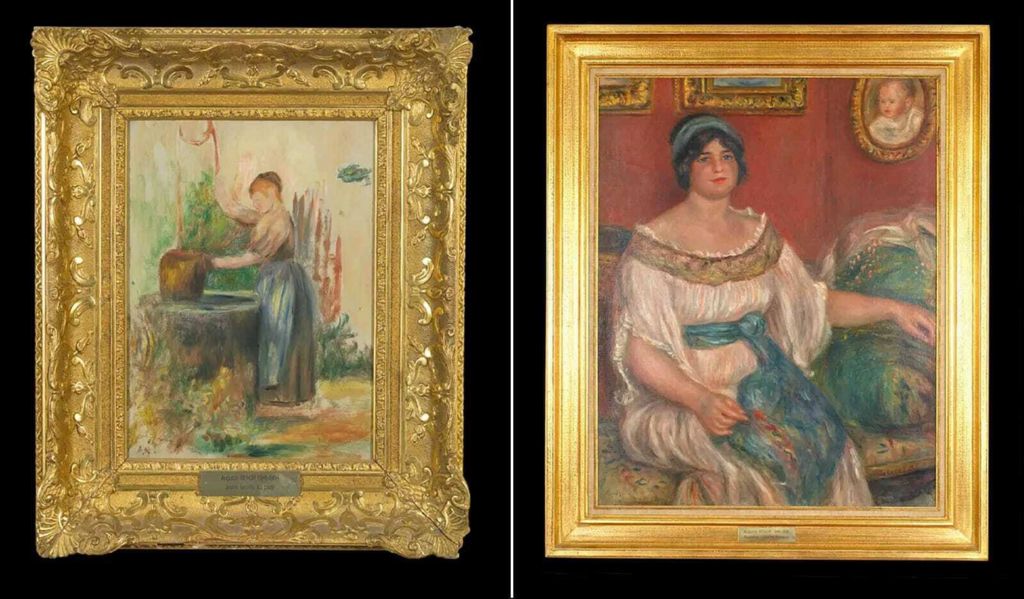
  • Renoir theft ‘shows museums should check security’

    Renoir theft ‘shows museums should check security’

    A high-profile art theft targeting works by iconic 19th-century Impressionist Pierre-Auguste Renoir in southern France has sparked fresh calls for improved security standards at small cultural institutions globally, according to a leading Guernsey-based arts organizer.

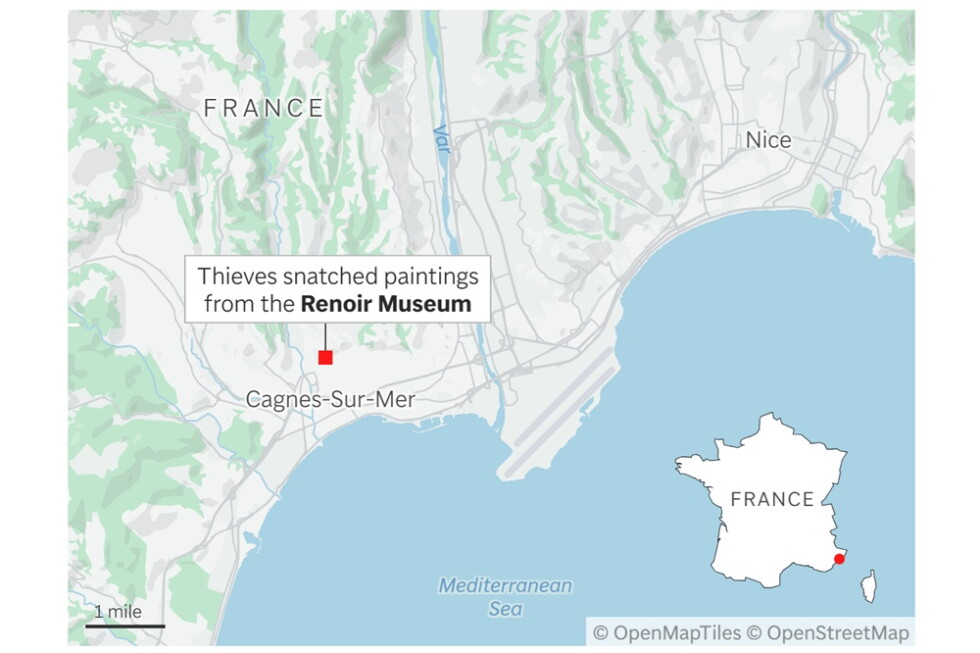
    The incident unfolded on Tuesday, when two thieves gained unauthorized access to the Renoir Museum in Cagnes-sur-Mer, making off with four Renoir paintings collectively valued at over €9 million. While two of the stolen canvases were abandoned by the perpetrators during their escape and later recovered by law enforcement, the brazen heist has raised urgent questions about gaps in cultural heritage protection.

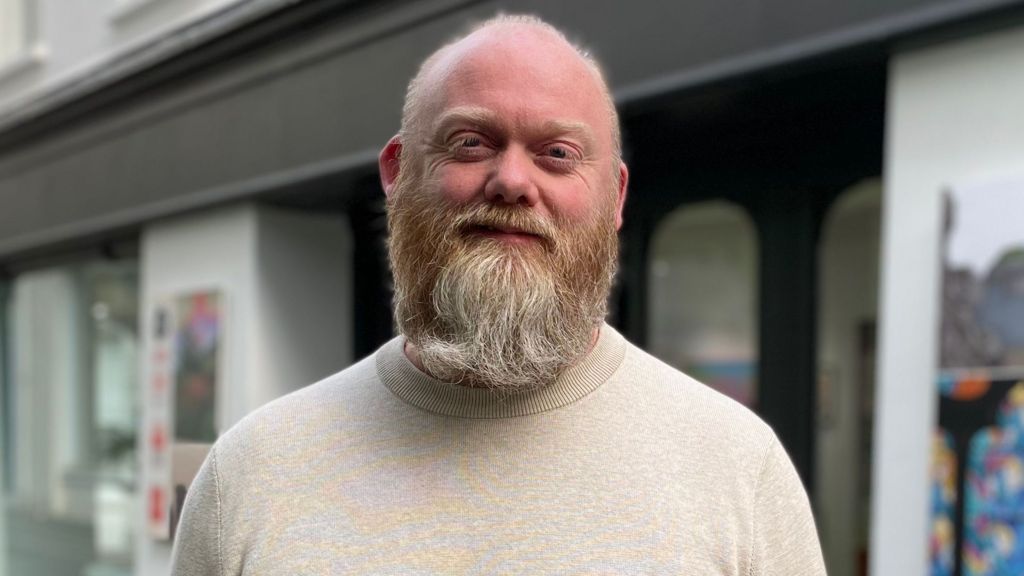
    David Ummels, founder of Art for Guernsey, who spearheaded a landmark Renoir exhibition on the Channel Island in 2023, shared his perspective on the theft and its broader implications. Renoir first visited Guernsey in 1883, completing roughly 15 paintings during his month-long stay on the island. Many of these rarely seen works were brought together for the 2023 exhibition, made possible through partnerships with private collectors and international art institutions.

    Ummels noted that shifting cultural attitudes have contributed to growing risks for art collections, saying: “It’s a sad reality that many people now view artwork solely through the lens of market value, rather than appreciating the creative cultural value they hold and their unique power to inspire local communities.”

    Compared to large metropolitan museums with substantial operational budgets, small regional institutions and galleries face a disproportionate security challenge, Ummels explained. “This theft perfectly illustrates the struggle smaller museums go through. They hold irreplaceable national treasures and cultural legacy, but operate with far smaller budgets than large international institutions. This leaves many relying on outdated, subpar security systems that cannot stop determined thieves.”

    On Guernsey, Ummels said the island’s small size and tight-knit community have created an ideally positioned security framework for art collections, but the tension between accessible public access and robust protection remains a persistent challenge. “My core philosophy for public exhibitions is to keep intrusive security measures to a minimum, so visitors can engage with the art freely. But we also have to prepare for unpredictable, reckless acts of theft,” he said. “This incident makes clear that major policy rethinking is needed across the world to support smaller museums in securing their collections.”

    Ummels, who settled on Guernsey 11 years ago, said he quickly fell in love with the island’s strong cultural integrity, a trait he argues is worth protecting for future generations. “Passing down our artistic heritage and legacy is critical. It not only preserves our history, it also inspires young people and gives them the courage to create. We have a strong community spirit and kindness here, and we are very fortunate that this kind of incident rarely happens on Guernsey,” he added.

  • Four Renoir paintings worth millions stolen in French museum heist

    Four Renoir paintings worth millions stolen in French museum heist

    In a brazen early-morning break-in that has sent shockwaves through Europe’s cultural heritage community, four original Pierre-Auguste Renoir paintings were stolen from the small Renoir Museum in Cagnes-sur-Mer, southern France, this week. Only two of the valuable works have been recovered, after the two thieves abandoned them in the museum’s grounds during their hasty escape.

    Local mayor Bryan Masson, who has been fronting updates on the investigation, confirmed that the incident unfolded just before 6 a.m. local time on Tuesday. The alarm system triggered at 5:48 a.m., and law enforcement officers responded within five minutes of the alert, a rapid response that forced the suspects to flee before they could secure all four stolen pieces.

    Close-circuit camera footage captured the perpetrators’ methodical approach: they first cut through a perimeter fence to access the museum’s gardens before moving inside to cut through the mounting structures holding Renoir’s paintings in their frames. According to Masson, the pair were clearly prepared for a targeted heist: they arrived equipped with helmets, gloves, tactical clothing, an electric cutting knife and a hacksaw, indicating premeditation and advance planning. Investigators have also recovered two zip-up bags left at the scene, which they believe belonged to the suspects and were intended to transport the stolen art.

    Of the four stolen works, two 19th and early 20th century pieces — *Portrait of Madame Pichon* (1895) and *Coco Lisant* (1905) — were abandoned mid-escape and recovered undamaged in the museum garden. Two other works remain at large: 1910’s *Portrait of Madame Colonna Romano* and 1886’s *Jeune fille au puits*. Each of the four paintings carries an estimated market value of €9 million (approximately $10.4 million), though the mayor emphasized that as irreplaceable works by one of the founders of Impressionism, their cultural value is impossible to quantify. Unlike ordinary contraband, these famous pieces cannot be openly sold on the legal art market, leading investigators to suspect the heist was carried out for an unscrupulous private collector or organized art crime network.

    The Renoir Museum is a small, culturally significant institution housed in the iconic Impressionist painter’s final residence, where he lived until his death in 1919. Opened to the public in 1960, the museum holds 12 original Renoir works alongside a collection of the artist’s personal effects, including his easel, custom wheelchair, personal correspondence and original photographs. For the coastal town of Cagnes-sur-Mer, the museum is a core part of its local heritage and identity. Masson put it plainly: “Attacking the Renoir Museum is attacking a part of the history and heritage of Cagnes-sur-Mer.”

    This heist is far from an isolated incident. It marks the latest in a growing string of high-profile art thefts across Europe in recent months. Just one month prior, four Renaissance paintings were stolen from a museum in Sicily, Italy, and last October, a brazen break-in at Paris’s Louvre Museum saw priceless French crown jewels stolen. The wave of targeted art thefts has reignited urgent conversations about gaps in security at small and regional European museums, many of which operate on tight budgets that leave cultural heritage vulnerable to increasingly sophisticated organized criminal groups.

    In the wake of the theft, Masson issued a stark warning to national cultural authorities: “Beyond Cagnes-sur-Mer, this incident should serve as a warning about the protection of our museums, which now face a new form of organised crime targeting works of art.” He called on the French central government to allocate additional funding to regional and local museums to upgrade security infrastructure, helping them fend off what he described as “increasingly organised and determined criminals” targeting European cultural heritage.

  • Ancient Roman fresco and mosaic featuring maritime city unveiled at newly restored Baths of Trajan

    Ancient Roman fresco and mosaic featuring maritime city unveiled at newly restored Baths of Trajan

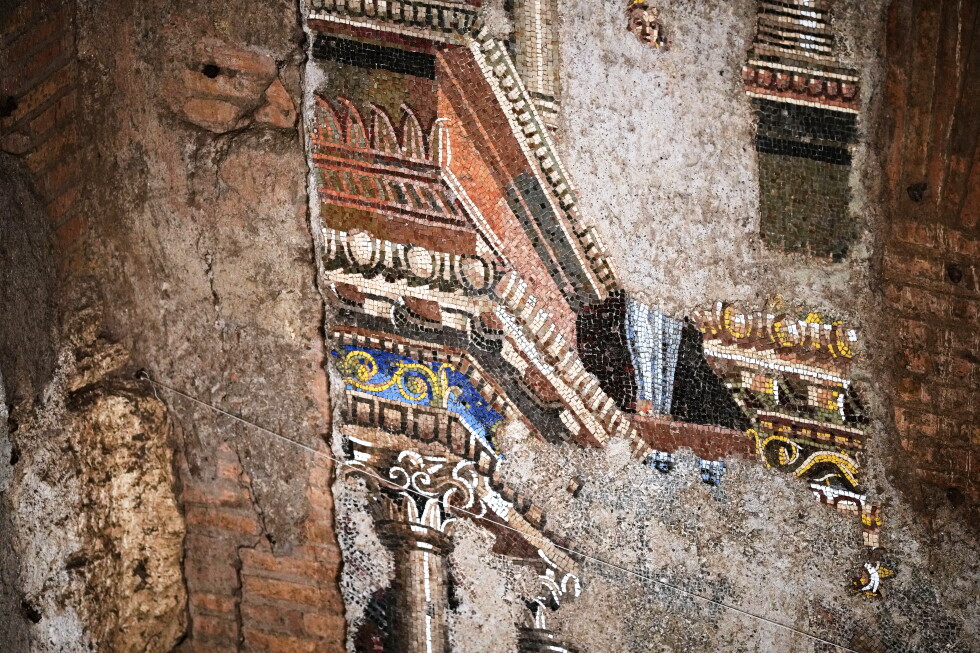
    On Tuesday, September 8, 2026, Roman authorities officially unveiled a remarkable archaeological treasure long hidden from public view: what experts confirm is the largest surviving fresco and mosaic complex from ancient Rome. Dating back to the 1st century AD, the paired works depict a bustling maritime port city, and were discovered decades ago in the underground foundation galleries of the Baths of Trajan, the iconic ancient thermal complex that once stood as the largest public bath facility in the world.

    Located on Rome’s Oppio Hill, just steps from the world-famous Colosseum, the two pieces — the sweeping “Painted City” fresco and towering “Great Mosaic” — were first uncovered during excavation work in the 1990s, and have just completed a years-long restoration process ahead of their public debut. At the official unveiling ceremony, Rome Mayor Roberto Gualtieri presented the long-awaited restored works to the public and press.

    For the first time in modern history, these ancient artworks will be accessible to visitors. Starting this month, access will be limited to a trial phase, with only small groups of 15 people allowed entry on weekends. This phased approach is designed to monitor how the fragile ancient artworks respond to changes in humidity and environmental conditions caused by human presence, before officials approve broader, more frequent public access.

    Described by Gualtieri as an unparalleled global cultural treasure, the fresco presents a rare bird’s-eye view of a walled port city, complete with detailed depictions of urban architecture. At roughly 1st century AD, it stands as the largest intact wall fresco of its era from ancient Rome, a distinction that makes its public opening a landmark moment for archaeology and heritage. “They are truly unique in the world, both from the point of view of artistic beauty and the historic and documental importance,” Gualtieri emphasized during his remarks at the unveiling.

    Claudio Parisi Presicce, Rome’s top cultural superintendent, added that the fresco’s remarkable level of preservation has left scholars with new clues about ancient urban life. The work clearly shows detailed features of the depicted city: fortified walls, a functional port, a dedicated theater, a religious temple, open public piazzas, and defensive towers, all rendered with striking artistic skill. While researchers have not yet confirmed the identity of the city shown in the painting, Parisi Presicce noted that it must have been a major, widely recognized urban center in the ancient Mediterranean world.

    The 15-meter-tall Great Mosaic, the companion piece to the fresco, is equally impressive. Its intricate surface is divided into four distinct horizontal levels, adorned with elaborately decorated columns, detailed architectural motifs, and human figures. The uppermost levels of the mosaic are arranged to resemble a staged theatrical scene, while the lower section holds a surprise: a second depiction of a port city, a detail that was only uncovered during the recent restoration work.

    To contextualize the find, the Baths of Trajan themselves are a landmark of Roman imperial engineering. Dedicated by Emperor Trajan in 109 AD, the sprawling complex covered more than six hectares of the Oppio Hill, making it the largest bath complex in the world at that time. The facility integrated an earlier imperial structure, Nero’s Domus Aurea, and was engineered with a reoriented layout to better leverage natural water temperatures, creating an optimized thermal experience for Roman residents and visitors. The newly opened underground gallery is part of the complex’s original foundation system, built to support the massive above-ground thermal structures.

    Today, the portion of the complex open to visitors includes a grand semicircular upper-level space that archaeologists have identified as a library. This finding confirms that the Baths of Trajan were far more than a recreational bathing facility: they served as a multifunctional public hub where ancient Romans could not only bathe and compete in athletic activities, but also engage with cultural and intellectual pursuits.

  • Renoir paintings stolen from provincial French museum

    Renoir paintings stolen from provincial French museum

    In an early morning theft that has shaken France’s cultural heritage community, two robbers stole four valuable Pierre-Auguste Renoir artworks from a small coastal museum on the French Riviera on Tuesday, before abandoning two of the pieces during their escape, according to local municipal officials. Law enforcement agencies have launched a full-scale manhunt for the unidentified perpetrators.

    Bryan Masson, mayor of the town of Cagnes-sur-Mer where the Renoir Museum is located, released an official statement confirming details of the heist. Footage from the museum’s on-site surveillance system clearly documented two suspects entering the landmark institution and removing four Renoir originals from their displays, Masson said.

    The museum’s security alarm was triggered at 5:48 a.m. local time, with responding police officers arriving at the scene just five minutes after the alert went out, the mayor’s statement added. In comments to local French newspaper Nice-Matin, Masson noted that two of the stolen paintings were quickly recovered in the museum’s landscaped gardens shortly after the thieves fled the property.

    Per local reports from Nice-Matin, the three unrecovered stolen works include *Portrait of Madame Colonna Romano*, *Coco Lisant* and *Young Girl at the Well*, bringing the total estimated value of all four stolen pieces to $10.5 million. A senior official from the regional police administration, who spoke to The Associated Press on condition of anonymity in line with departmental protocol, confirmed the theft and the ongoing search for suspects, adding that a formal criminal investigation has been opened. The official however declined to confirm the reported $10.5 million valuation of the stolen artworks.

    The Renoir Museum remained closed to the public all Tuesday as investigators processed the crime scene and collected evidence. In a strongly worded response to the incident, Mayor Masson emphasized that targeting the museum amounted to an attack on a core piece of Cagnes-sur-Mer’s cultural and historical identity. “Attacking the Renoir Museum is attacking a part of the history and heritage of Cagnes-sur-mer,” he said.

    Masson also used the incident to call for sweeping upgrades to security standards at cultural institutions across France, arguing that more must be done to protect the country’s priceless artistic legacy. Tuesday’s heist comes one year after a high-profile theft of crown jewels from the Louvre Museum in Paris, a separate incident that also sparked widespread debate over cultural site security in France.

    Nestled between the iconic Mediterranean resort towns of Cannes and Nice, the Renoir Museum occupies the former private residence of Pierre-Auguste Renoir, the leading French Impressionist painter who lived in the home until his death in 1919. The site is the most popular tourist attraction in Cagnes-sur-Mer, drawing thousands of art lovers from across the globe each year.

  • An Elon Musk documentary and a Penélope Cruz and Javier Bardem thriller premiere at Venice

    An Elon Musk documentary and a Penélope Cruz and Javier Bardem thriller premiere at Venice

    The 2026 Venice Film Festival is set to showcase three highly anticipated feature films on its opening Tuesday, bringing together a provocative documentary on one of the world’s most famous billionaires, a star-studded psychological thriller from an Oscar-winning director, and a meditative drama from actor-filmmaker Casey Affleck.

    Leading the day’s premieres is Oscar-winning documentarian Alex Gibney’s nearly four-hour investigative portrait *Musk*, a deep dive into the unprecedented power and influence of Elon Musk, the world’s wealthiest individual. Gibney, a veteran of exposing unvarnished truths about iconic figures and powerful institutions — from fallen healthcare entrepreneur Elizabeth Holmes to disgraced energy giant Enron to the Church of Scientology — originally approached the project as an admirer of Musk’s work, and held out hope that the tech executive would agree to an on-camera interview.

    Those hopes never came to fruition, however. “Ultimately he didn’t want to talk to me,” Gibney told the Associated Press in an interview. “Then you start digging into the facts and you follow them where they lead. And where they led for me was to a place that upended the myth, I would say, of Elon Musk as a kind of modern Leonardo da Vinci.” The documentary is scheduled to hit North American theater screens this coming October.

    Also making its world premiere on the day is *Bunker*, a tense psychological thriller that pairs real-life Hollywood power couple Penélope Cruz and Javier Bardem, marking their on-screen reunion decades after their breakout together in 1992’s *Jamón Jamón*. Written specifically for the two leads by director Florian Zeller — who previously took home an Oscar for Best Adapted Screenplay for *The Father*, which also earned Anthony Hopkins a Best Actor win — the film centers on an architect who accepts a commission to build a doomsday survival bunker for a wealthy client, a choice that sends unresolvable ripples through his marriage. The cast also includes acclaimed character actors Stephen Graham and Paul Dano, plus Patrick Schwarzenegger.

    In his director’s statement, Zeller explained the layered themes at the heart of the story. “‘Bunker’ touches on several contemporary themes – fear of the future, ecological threats, rising social inequality, and rampant individualism–but it does so through a deeply personal lens: a couple struggling with each other,” he wrote. “I wanted to explore love, fidelity and forgiveness while placing the audience in a position of deliberate ambiguity.” *Bunker*, which is distributed by Searchlight Pictures, is slated for a wide theatrical release in early 2027, and is currently competing for the festival’s top honor, the Golden Lion, alongside other high-profile contenders including *Wild Horse Nine* and *Ink*. It will also complete a qualifying run for 2026 Academy Award consideration.

    Completing the trio of premieres is *Company*, a thoughtful exploration of grief and compassion directed and co-written by Casey Affleck, which is also in the running for the Golden Lion. Set during a 1975 winter holiday gathering, the story follows the unexpected arrival of a mysterious stranger who upends the celebration, opening the door to a layered narrative centered on challenging moral questions. The film is still actively seeking distribution deals following its premiere, and features a cast that includes veteran actor Nick Nolte, Ben Mendelsohn, and Affleck’s own children, Atticus Affleck and Indiana Affleck.

    In his director’s note, Affleck opened up about the core message that drives the story. “I spent a lot of my life looking over the ledger, keeping score, frustrated by the debt of kindness. Somewhere along the way I began to realize that the ledger is never balanced by the world. It’s balanced by what you contribute,” he wrote. “That’s what this film is reaching for.”

    Festival-goers and industry audiences will wait just a few days for the announcement of this year’s award winners, which will be unveiled Saturday by a jury headed by Oscar-nominated filmmaker and actor Maggie Gyllenhaal.

  • Ticketmaster accused of misleading Oasis fans

    Ticketmaster accused of misleading Oasis fans

    Fifteen years after splitting up, iconic British rock band Oasis sent shockwaves through the global live music scene when they announced their long-awaited reunion tour, triggering a feverish ticket rush that would ultimately spark a major consumer law controversy. When tickets went on sale to the public on August 31, 2024, more than 900,000 passes sold out almost instantly, as hundreds of thousands of diehard fans waited for hours in virtual waiting rooms across the world, hoping to secure a spot at the band’s first shows in over a decade. The band was even inducted into the Rock & Roll Hall of Fame the same year, adding extra momentum to the reunion hype.

  • Tale of conquest and symbol of friendship, the Bayeux Tapestry is a hot ticket at the British Museum

    Tale of conquest and symbol of friendship, the Bayeux Tapestry is a hot ticket at the British Museum

    Nearly a millennium after it was last on British territory, one of the world’s most iconic medieval artifacts has made its historic debut to the British public this week at the British Museum. The 70-meter embroidered Bayeux Tapestry, which chronicles the 1066 Norman Conquest of England — the last successful invasion of the British Isles — has drawn extraordinary public excitement months ahead of its opening, with all advance tickets sold out and organizers projecting up to 1 million visitors before the exhibition closes in July 2027. Special educational programs will also bring the tapestry’s history to life for school groups across the United Kingdom, ahead of a private pre-opening preview attended by Britain’s King Charles III and French President Emmanuel Macron. As British Prime Minister Keir Starmer’s government has joked, the legendary work is ultimately a 230-foot reminder of one of the most consequential defeats in British history.

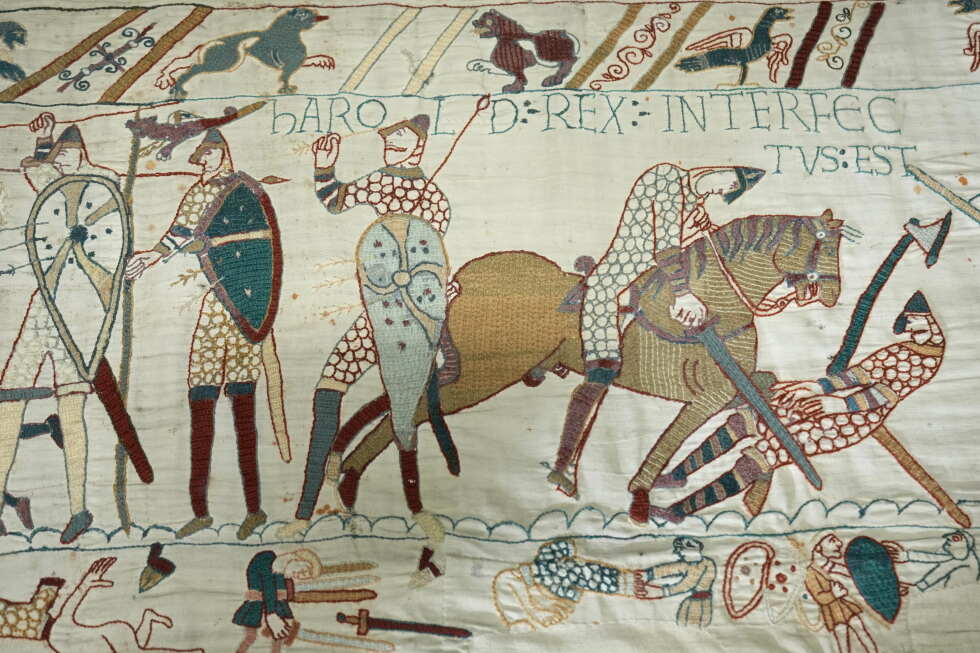
    More than a simple medieval artwork, the tapestry unfolds as a narrative panorama of betrayal, conflict and regime change that shaped the course of European history. Structured in 58 sequential scenes, it opens with English nobleman Harold Godwinson’s journey to Normandy, where he swears an oath to support William, Duke of Normandy’s claim to the English throne. When Edward the Confessor, the ruling English king, dies months later, Harold claims the crown for himself, prompting William to assemble an invasion fleet and sail across the Channel. The tapestry builds to the climactic Battle of Hastings, where William’s forces defeated Harold’s Anglo-Saxon army, a victory that installed William as England’s first Norman king, tied the fates of Britain and France irrevocably, and introduced French linguistic and cultural influences that endure in English society to this day.

    Exhibition curator Michael Lewis explained at a press preview on Monday that the work carries an intentional early political messaging core. “1066 is the most important event in English history,” Lewis noted, adding that the tapestry was stitched with a clear propaganda function: it was designed to convince the conquered English population that while loyalty to Harold was understandable, the old order had fallen, and the new Norman rule under William had to be accepted.

    Beyond its political purpose, the tapestry offers an unparalleled, granular window into daily life in 11th-century Europe, blending depictions of brutal battlefield violence with intimate, mundane domestic details. It shows soldiers stealing livestock, cooking meals over open fires, eating from their own shields, and sacking English settlements as women and children flee the violence. Lively marginal illustrations fill the top and bottom edges of the fabric, populated by fish, hunting dogs, mythical winged beasts and ordinary commoners that often offer subtle ironic commentary on the main narrative. For 11th-century audiences, Lewis argued, the work would have felt deeply immersive: “Maybe they would even have tried to pick out themselves in the story of these events,” he said.

    For modern historians, the tapestry remains an invaluable primary source, revealing insights into medieval shipbuilding, fashion, cuisine, military armor, architecture and even astronomy. One panel clearly depicts Halley’s Comet streaking across the sky, matching the comet’s actual appearance in 1066, the year of the invasion. Many mysteries still surround the centuries-old work, however: scholars continue to debate whether the famous arrow that strikes Harold’s eye, killing the Anglo-Saxon king, was added centuries after the original stitching; a final planned panel, likely showing William’s coronation as king, has been lost to time; even the exact count of human and equine genitalia depicted in the marginalia remains a point of contention, with counts ranging from 93 to 94.

    In the modern era, the tapestry’s enduring cultural popularity stems in part from its accessible, comic-strip style that makes it adaptable to contemporary commentary, explained Leonie Hicks, a professor of medieval studies at Canterbury Christ Church University. Hicks noted that its simple, vivid illustrations are “very meme-able,” often repurposed to mock modern political events. She pointed to a recent magazine cover that reimagined a 2020s UK leadership contest, depicting current Prime Minister Keir Starmer as Harold falling with an arrow in his eye, and former opposition leader Andy Burnham as William advancing on horseback, with modern touches like Big Ben and Downing Street’s resident Larry the Cat added to the tapestry-style margins.

    Historians broadly agree that while the tapestry has been housed in the French town of Bayeux for nearly 1,000 years, where it was likely commissioned by Bishop Odo of Bayeux, William the Conqueror’s half-brother, it was almost certainly stitched by female artisans in southeast England, just miles from the Battle of Hastings battlefield. King Charles III even noted at a joint reception with Macron last week that the work could just as accurately be called the Canterbury Embroidery.

    The landmark loan has been framed by both the British and French governments as a powerful symbol of enduring Franco-British friendship, but securing the artifact’s journey to London required nearly a decade of delicate diplomacy. Decades of repeated British requests to borrow the tapestry were unsuccessful, before an initial agreement was reached in 2018. The opening was then delayed repeatedly by COVID-19 pandemic disruptions and post-Brexit diplomatic tensions, before the arrangement was finally confirmed during Macron’s state visit to the UK in 2024.

    The move has not been without controversy: some French cultural heritage advocates and the late legendary British artist David Hockney opposed the loan, citing major risks of irreversible damage to the fragile, nearly 1,000-year-old textile. To mitigate risk, the tapestry was insured for 960 million euros ($1.1 billion), packed in custom climate-controlled, shock-proof packaging, and transported to London under heavy police escort via road and rail, arriving at the museum under cover of darkness. Unlike its traditional hanging display in Bayeux, the tapestry will be exhibited flat in a purpose-built, state-of-the-art protective case that curators say eliminates strain on the fabric. Lewis confirmed that the collaborative work of conservation teams from both France and Britain allowed the artifact to arrive in London completely undamaged, noting that the planning process for the trip has generated new conservation knowledge that will ensure the tapestry’s safe return to France when the exhibition concludes. “It has to make that trip back as well,” Lewis said. “But we’ve learnt so much in that process. I’m confident that we’ve learned a lot that helps us be sure that going back is going to be as good.”

  • When lunch is the main event, here’s a ‘Greek Out’ take on halibut and halloumi skewers

    When lunch is the main event, here’s a ‘Greek Out’ take on halibut and halloumi skewers

    What does the term “main dish” actually mean? For most people across the globe, the phrase immediately brings to mind a formal evening dinner, typically following the rigid formula of meat paired with a starch side and a vegetable portion. This common assumption makes perfect sense: for millions of households, dinner is the largest, most structured meal of the day. But for Greek recipe creator Maria Koutsogiannis, author of the new cookbook *Greek Out*, a main dish is far less about a set structure and far more about a feeling that fits how you grew up eating. And for Koutsogiannis, that means the biggest meal of the day has always been lunch – and main dishes don’t have to be reserved for the dinner table at all.

    In an excerpt from her upcoming 2026 cookbook, Koutsogiannis shares one of her signature creative main dishes: handheld grilled skewers that pair flaky wild halibut with salty halloumi, sweet dried dates and fresh figs, balanced with warm aromatic spices. Designed to work as a hearty main for four people or a shareable appetizer for a crowd of 10, this dish brings together an unexpectedly harmonious blend of textures and flavors: chewy sourdough, creamy cheese, tender juicy fish, and layered notes of sweet, salty, and warm spice all in one portable bite.

    Many Greek recipes gravitate toward graviera for firm, salty grating and grilling cheese, but Koutsogiannis makes a deliberate swap for halloumi here. The choice is a practical one: halloumi holds its shape perfectly on the grill without melting or turning mushy, and its bold saltiness stands up beautifully to the mild, tender halibut for a balanced bite. The simple prep process starts with seasoning the fish: cubed 1-inch chunks of skinless wild halibut get coated in a dry rub of lemon zest, ground sumac, garlic powder, onion powder, kosher salt, black pepper, and just a hint of warm cinnamon, tossed with a splash of extra-virgin olive oil. Cubed sourdough, 1-inch chunks of halloumi, halved fresh figs, and pitted Medjool dates get a light toss in olive oil as well, before being threaded onto pre-soaked wooden skewers in repeating order: bread, halloumi, halibut, fig, and date, to create 10 complete skewers.

    The skewers are grilled over medium heat (around 400°F or 200°C) until each side develops deep caramelized char marks, with a total grilling time of 8 to 12 minutes to ensure the halibut cooks through and flakes easily. Once pulled off the grill, a quick drizzle of hot or regular honey, a squeeze of fresh lemon, and a sprinkle of bright mint leaves finish the dish. For an extra punch of garlicky creaminess, Koutsogiannis recommends serving with store-bought toum, a creamy garlic spread.

    Koutsogiannis is no newcomer to Greek cooking: the CEO and creator of the popular recipe platform FoodByMaria grew up working in her parents’ Greek diner and spent every summer traveling through Greece, building a deep foundation of traditional Greek food knowledge that she reimagines for modern home cooks. She now shares her approach with a community of nearly 4 million followers across social and digital platforms, splitting her time between New York City and Calgary, Alberta. This excerpt is printed with permission from Voracious, an imprint of Little, Brown and Company, with all content copyrighted 2026 by Maria Koutsogiannis.

  • One Tech Tip: How to avoid Celine Dion ticket scams as she makes her grand concert comeback

    One Tech Tip: How to avoid Celine Dion ticket scams as she makes her grand concert comeback

    As Celine Dion prepares for her long-awaited return to the concert stage in Paris, venue organizers are preparing for a devastating side effect of the singer’s massive popularity: hundreds of fans are expected to be turned away at the door after falling victim to ticket scams run by opportunistic cybercriminals. Drawing on lessons learned from Taylor Swift’s 2024 Paris shows at the same venue, Plenitude Arena management is warning fans of widespread fraudulent ticketing operations that have already stolen thousands of dollars from excited attendees.

    Dion’s comeback tour, which kicks off its first of 26 Paris shows this Saturday, marks the Grammy-winning artist’s first full tour series after she revealed a 2022 diagnosis of stiff-person syndrome, a rare neurological disorder that forced her to step back from live performance for years. Her brief showstopping performance of *Hymne à l’amour* at the 2024 Paris Olympics opening ceremony, delivered from the Eiffel Tower in pouring rain, only amplified already pent-up global demand for tickets, which sold out within moments of going on sale. This unprecedented hype has created the ideal breeding ground for scammers, according to cybersecurity experts.

    “Where there is massive demand and widespread excitement, fraudsters see a golden opportunity,” notes Group-IB, a Singapore-based cybersecurity firm that partners with Interpol on global cybercrime tracking. The organization confirms scammers are reusing the same proven scam tools they deployed to target Taylor Swift fans during her 2023-2024 Eras Tour and Oasis fans ahead of the British band’s 2025 reunion tour, adapting the tactics for Dion’s eager audience.

    Plenitude Arena, which will host 16 Dion shows between September and October 2024, plus an additional 10 dates in May 2027, says scam risk peaks in two windows: immediately after tickets first go on sale (April 2024 for the upcoming run, June 2024 for the 2027 shows) and in the final weeks leading up to performances. “That’s when the public will be very exposed to these scammers,” Céline Trioux, the arena’s marketing director, told the Associated Press in an interview. “People are going to wake up and think, ‘Oh, right, I didn’t get a ticket, everyone is going, I want to go,’ or ‘I’ve seen the first show all over social media, it looks amazing, I’m going to find a ticket by any means possible.’ And that’s also when the scammers will be out in force.”

    While all general admission tickets sold out immediately, a limited number of VIP packages — including perks like Champagne and exclusive access — remain available for between €1,099 and €2,999 (US$1,276 to $3,473) exclusively through the arena’s official website. For fans seeking resold tickets from original purchasers who can no longer attend, Trioux emphasized that only three platforms are authorized to facilitate safe secondary sales: AXS France, Ticketmaster France, and Fnac Spectacles. Trioux noted that resold tickets will be extremely scarce, as only 4% to 8% of ticket holders at the arena ultimately end up unable to use their purchases.

    “I strongly advise against buying a ticket from an individual or from someone advertising it on social media, because there’s no way to know whether it’s genuine or whether the same ticket will also be sold to other people,” Trioux warned.

    Cybersecurity researchers have found a wide network of fraudulent sites designed to mimic official ticketing platforms, Dion’s official website, and the Plenitude Arena’s own site. Many of these fake platforms use nearly identical URLs to trick unsuspecting fans — common examples include celinedion.co instead of the official celinedion.com, ticketmaster-celinedion.fr instead of the legitimate ticketmaster.fr, and axs-billetterie.com in place of official axs.com.

    Trioux says arena legal teams have already identified nearly 200 fraudulent Dion-related websites and social media accounts selling fake tickets, but shutting down these operations is a losing battle. “When we shut down one copycat website, another one opens,” she explained. “It’s a constant battle. It’s impossible to close them all because technology is advancing faster than legal authorities can act.” Fans are advised to only access ticket links through the official Paris concert section of Dion’s website, which hosts direct, verified links to all authorized sellers.

    During Swift’s four 2024 Paris shows at Plenitude Arena, venue staff turned away between 400 and 500 fans who had purchased fake tickets from scammers. For Dion’s tour, Trioux says the arena is expecting potentially hundreds of fraud victims every single night of the run. To support fans who fall victim, the arena has set up dedicated on-site complaint desks at the venue entrance, where staff will assist scammed fans with filing official police reports.

    Fans from across the globe are traveling to Paris for the once-in-a-lifetime comeback shows, which mark a major milestone for one of the most decorated pop artists in modern music history. For those who have been targeted by scammers, the disappointment of being turned away at the door will be particularly devastating. “They will generally discover the problem at the entrance, when they present their fake ticket,” Trioux said.