Beneath the first clear skies after weeks of unbroken spring rain, French-German artist Alexandre Dupeyron wandered through the weathered corridors and crumbling staircases of the long-shuttered Wumuchong coal mine in Ningxiang, Hunan province. With every step, clouds of fine dust, undisturbed for decades, rose from the broken debris scattered across the facility’s concrete floors.
Stopping amid the remnants of the mine’s once-bustling operations, Dupeyron bent to pick up a small, dense lump of coal left behind when the mine closed. Not far from where he stood, the rusted frame of an old coal conveyor jutted toward the sky, its metal beams forming a skeletal, weathered monument to the site’s industrial past. In that quiet moment, that ordinary chunk of coal — its surface glinting faintly in the rare spring sunlight — transformed from a forgotten relic of heavy industry into the core raw material for a new body of art.
Arriving at the Wumuchong site in early March 2026 for a month-long artist residency, the 43-year-old creator has centered his practice here on working with locally sourced crushed coal, blending hand-drawing and photography to create site-specific works. Inside his makeshift studio, set within one of the mine’s repurposed original buildings, Dupeyron grinds collected coal chunks and broken brick fragments from the site into fine powder, running the mixture through multiple rounds of filtering to refine it. Using a custom blending recipe he developed over years of experimental work, he turns this locally sourced material into natural pigments for his drawings, photographic pieces, and mixed-media works that draw directly from the mine’s own physical identity.
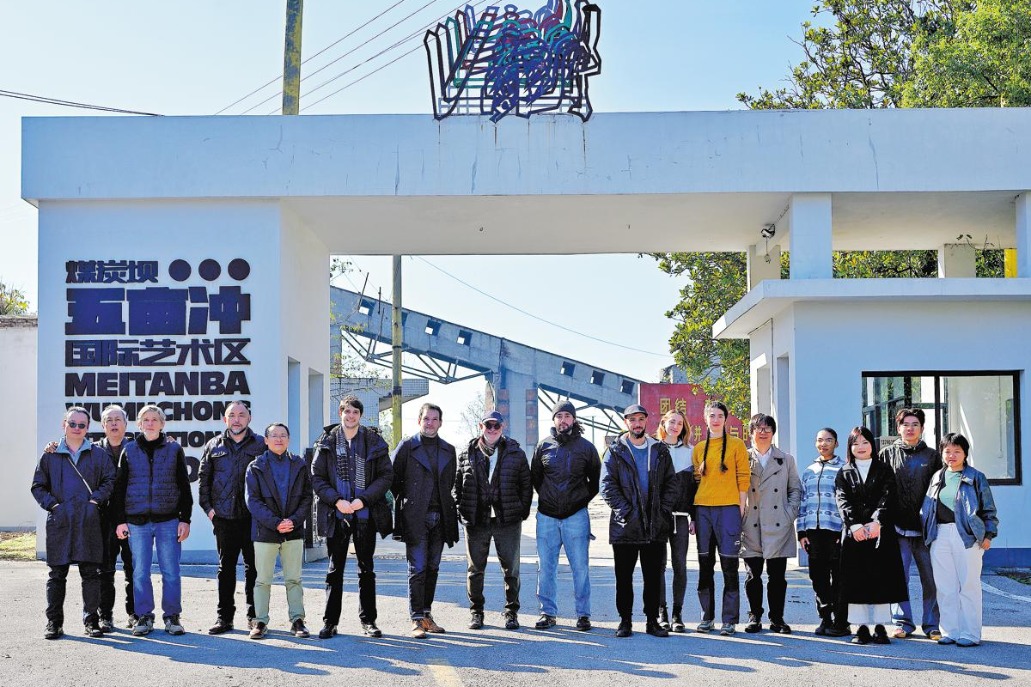
Dupeyron explained that the connection between human activity and the natural world is a persistent throughline in all his creative work. As an artist who has spent his career focusing on shifting urban and post-industrial landscapes, he had long sought the opportunity to create work on location at a decommissioned industrial site. “This place is amazing,” he shared of the former mining hub, which has been reinvented as the Wumuchong Art Zone, a creative space that attracts artists from across China and around the world.
Dupeyron’s residency is just one example of a growing trend across China: repurposing abandoned industrial heritage sites — from retired mines and shuttered factories to obsolete steel mills and disused warehouses — into dynamic public cultural spaces. What were once symbols of 20th-century industrial expansion have been reborn as art centers, public museums, community sports facilities, and creative hubs that draw visitors and creators alike, breathing new economic and cultural life into former industrial hubs while preserving the region’s industrial history for future generations.