For a full century, a dented, well-worn wooden trunk passed from one generation of the McFarland family to the next, shuffled between attics, barns, and garages without anyone suspecting the cinematic treasure locked inside its walls. It took the curiosity of 76-year-old retired high school teacher Bill McFarland to finally unpack its secrets – a discovery that has rewritten a key chapter of early film history.
McFarland had served as the trunk’s caretaker for 20 years, having inherited it from his great-grandfather William DeLyle Frisbee, a traveling silent film exhibitor who brought moving pictures to rural Pennsylvania audiences at the turn of the 20th century. “It was just this trunk of films that seemed too good to throw away. But I had no idea what they were or how to show them,” McFarland told Agence France-Presse in an interview.
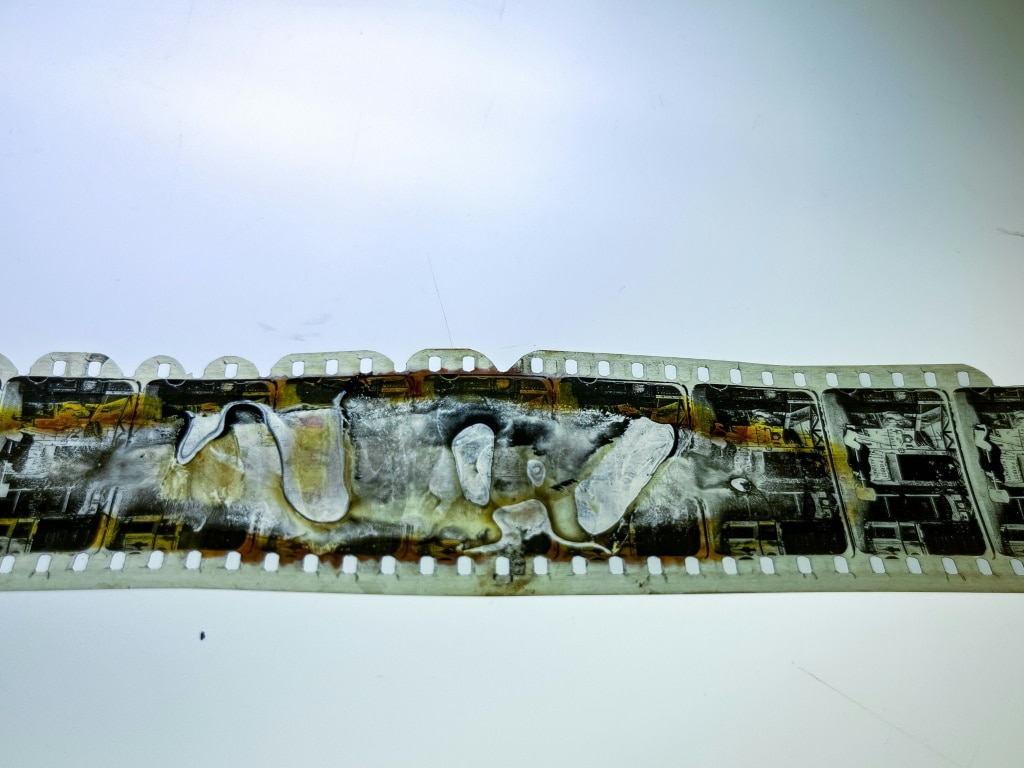
Early attempts to offload the collection hit a snag: after McFarland tried to sell the reels through a local antique shop, the owner quickly asked him to remove them over safety concerns. Nitrate film, the standard photographic material of early cinema, is highly flammable and prone to combustion if not stored properly. Undeterred, McFarland loaded the 10 fragile reels into his car last summer and drove from his Michigan home to the U.S. Library of Congress’ National Audio-Visual Conservation Center in Culpeper, Virginia, where archivists made a stunning find:
spliced between other reels was a 45-second 1897 silent short by French cinema pioneer Georges Méliès, *Gugusse and the Automaton* – a film thought lost to history for more than a century.
Méliès, a former stage magician and theatrical showman, revolutionized the art of moving pictures just two years after the Lumière Brothers held the world’s first public film screening in Paris in 1895. He was among the first filmmakers to experiment with fictional storytelling and innovative special effects, and remains best known for his iconic 1902 work *A Trip to the Moon*, famous for its legendary scene of a rocket crashing into the Man in the Moon’s eye. After Méliès attended the Lumière Brothers’ landmark screening, he left inspired to create his own films, cementing his legacy as one of the founding fathers of modern cinema.
By the 1910s, however, Méliès’ work fell out of public favor as the global film industry’s center of gravity shifted from Europe to the United States. He eventually closed his studio and spent his later years working as a toy seller at Paris’ Gare Montparnasse train station, a chapter of his life immortalized in Martin Scorsese’s 2011 film *Hugo*. Despite his late-life professional decline, his contributions to cinema never faded. “He was one of the first filmmakers,” said George Willeman, head of the Library of Congress’ nitrate film vault. “And one of the first to experience film piracy.”
Ironically, that widespread piracy of Méliès’ work has become a gift to modern film historians. The director reportedly destroyed hundreds of his own original negatives, melting their celluloid down to be repurposed into raw material for soldiers’ boots during World War I, leaving many of his works surviving only in bootleg copies. The recovered *Gugusse and the Automaton* reel is believed to be a third-generation pirate copy – a rare miracle of survival that brings a previously lost work back to public view.
The recovered short follows Méliès himself, playing a stage magician who activates a growing automaton that strikes him over the head with a stick. The magician retaliates by smashing the automaton with a sledgehammer, causing it to shrink and disappear through a remarkably precise sequence of jump cuts. “These single frame cuts are really precise for a movie this old, and the gags are timeless,” said Jason Evans Groth, curator of the library’s moving image section.
The discovery has also opened a new window into the life of McFarland’s great-grandfather Frisbee. A jack-of-all-trades born in 1860 in rural northwestern Pennsylvania, Frisbee grew potatoes, kept bees, produced maple syrup, and taught for three months out of the year. In his free time, he traveled by horse and buggy across Pennsylvania and neighboring states with his traveling “exhibition,” which featured an early Edison phonograph, a magic lantern projector, and eventually silent films. Frisbee’s well-worn pocket diaries chronicle his journeys, with one entry reading, “Gave the exhibition at Garland, $5 receipts, rough crowd” – leaving McFarland to wonder whether the rowdy audience was disappointed by the new technology or simply excited by the unprecedented experience.
When McFarland arrived at the conservation center with the reels, archivists immediately rushed the highly flammable nitrate reels to a custom-built refrigerated vault, which already holds tens of thousands of films from Hollywood’s golden age, designed to prevent catastrophic nitrate fires. “It finally really registered that I had been…carrying a ticking time bomb,” McFarland joked.
Preservation specialists spent a full week restoring the film one frame at a time and digitizing it for long-term preservation. Though the reel had shrunk and frayed after decades of storage in temperature-fluctuating attics, it remained in surprisingly good condition. Today, the recovered film is available to view on the Library of Congress’ website, preserving a key piece of early cinema history for future generations of researchers and film fans.