分类: entertainment

  • Will Oscars be 17th time lucky for songwriter Diane Warren?

    Will Oscars be 17th time lucky for songwriter Diane Warren?

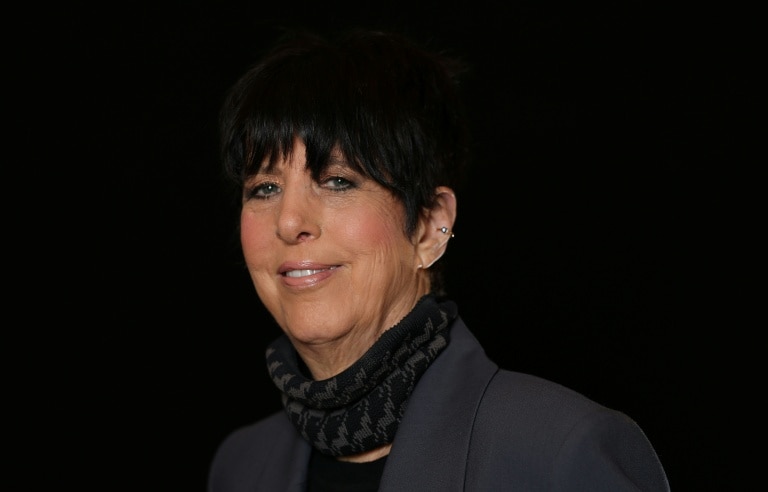
    After an unprecedented 17 nominations spanning nearly four decades, legendary songwriter Diane Warren stands on the precipice of potentially claiming her first competitive Academy Award. The 68-year-old music icon, recognized for penning timeless hits like Aerosmith’s “I Don’t Want to Miss a Thing” and Celine Dion’s “Because You Loved Me,” has become a perennial Oscars fixture despite never securing the golden statuette.

    This year’s nomination carries profound personal significance for Warren. Her nominated composition, “Dear Me,” serves as an emotional letter of empowerment to her childhood self. Featured in the documentary “Diane Warren: Relentless,” the Kesha-performed ballad directly addresses Warren’s experiences with childhood bullying and isolation. “This is my most personal song I’ve ever done for a movie,” Warren revealed, describing how music provided salvation during her difficult youth.

    The Grammy-winning songwriter conceptualized the piece as a therapeutic message to her younger self, assuring that life would eventually improve despite contemporary hardships. With characteristic humor, Warren added that she envisioned telling her bullied younger self that “you’re going to go back to your reunion, they’re going to look really old, you’re going to still look good, too.”

    Despite holding the record for most Oscar nominations without a win, Warren maintains philosophical perspective about the recognition. She emphasizes that selection by the Academy’s music branch—comprising esteemed composers, songwriters, and music editors—already constitutes victory among hundreds of contenders.

    Warren faces competition from Nicholas Pike’s “Sweet Dreams of Joy” from the opera documentary “Viva Verdi!,” alongside entries from “KPop Demon Hunters,” “Train Dreams,” and “Sinners.” Pike, a first-time nominee, echoed Warren’s sentiment that nomination itself represents extraordinary achievement, remarking that “everyone is a winner” among the distinguished finalists.

    The 98th Academy Awards ceremony on March 15 will determine whether Warren’s 17th attempt finally yields that transformative victory, potentially crowning one of American music’s most influential careers with its missing ultimate accolade.
  • Olivia Dean wins 4 Brit Awards, taking artist of the year and song of the year

    Olivia Dean wins 4 Brit Awards, taking artist of the year and song of the year

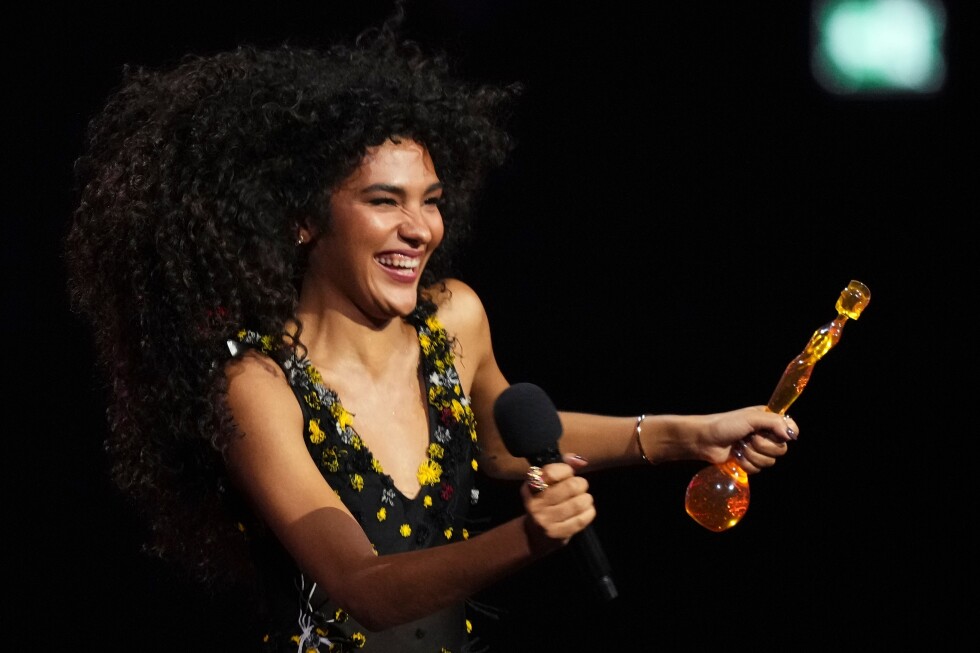
    MANCHESTER, U.K. — The 2024 Brit Awards ceremony witnessed a spectacular triumph for singer-songwriter Olivia Dean, who achieved an extraordinary sweep by capturing four prestigious trophies at the United Kingdom’s premier music celebration. The event, historically held in London, made a significant geographical shift this year to the AO Arena in Manchester, marking its first occurrence in Northern England.

    Dean’s remarkable haul included the night’s top honors: Artist of the Year and Song of the Year, complemented by her Grammy-aligned victory as Best New Artist. The British performer, who once attended the renowned BRIT School, delivered a captivating live performance of her hit single ‘Man I Need’ during the Saturday evening broadcast.

    The ceremony commenced with a highly anticipated television debut by global superstar Harry Styles, who unveiled ‘Aperture’—the lead single from his forthcoming album ‘Kiss all the Time, Disco Occasionally,’ scheduled for release next week.

    International categories saw Spanish sensation Rosalía claim Best International Artist, while the collaborative track by ROSÉ and Bruno Mars secured Best International Song. American rock band Geese earned recognition as Best International Group.

    A poignant memorial segment honored the late heavy metal legend Ozzy Osbourne, who passed away last year. Former Take That member Robbie Williams led the tribute, joined by surviving members of Black Sabbath for a specially arranged performance of ‘No More Tears.’

    Emerging artist Jacob Alon received the Critics Choice Award (previously titled Brits Rising Star), joining an esteemed lineage that includes Adele and Sam Fender. The performance roster additionally featured Raye, SOMBRE, and Mark Ronson—the latter honored with the Outstanding Contribution to Music award.

  • Madonna steals the spotlight at Dolce & Gabbana’s Milan Fashion Week runway show

    Madonna steals the spotlight at Dolce & Gabbana’s Milan Fashion Week runway show

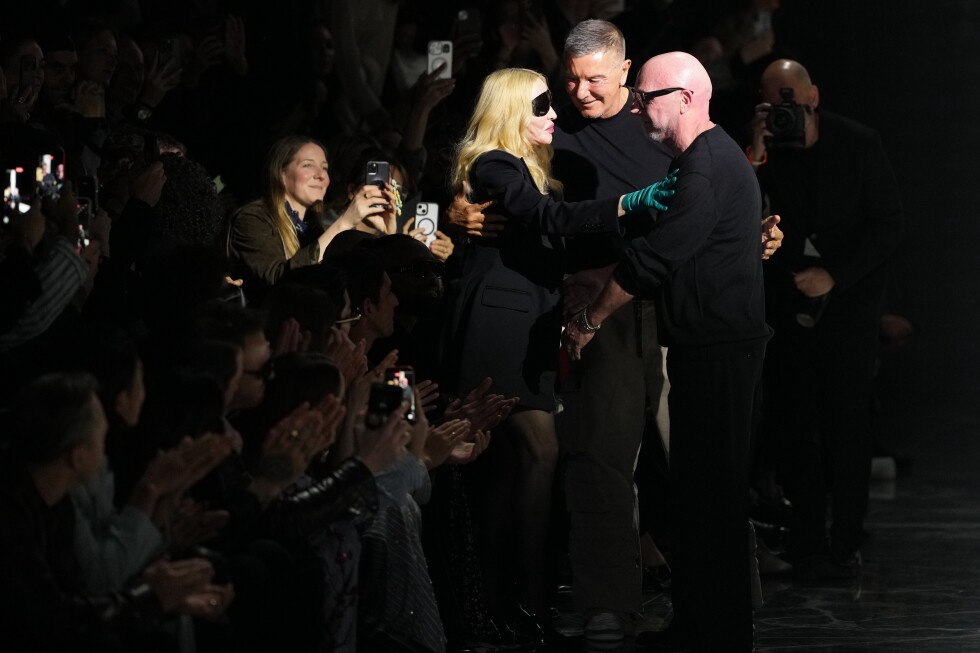
    MILAN — The iconic Queen of Pop, Madonna, transformed into the undisputed queen of the front row at the Dolce & Gabbana Fall-Winter 2026-27 showcase during Milan Fashion Week. Her arrival, synchronized perfectly with her empowering anthem “You’ll See,” created an electric atmosphere as she took her seat beside Vogue’s formidable editor-in-chief, Anna Wintour.

    The 67-year-old music legend, accompanied by boyfriend Akeem Morris, immediately became the center of attention. Fellow attendees eagerly captured the moment she warmly embraced actor Alberto Guerra, her recent co-star in a Dolce & Gabbana advertising campaign. This appearance reinforces Madonna’s enduring relationship with the Italian fashion house, a collaboration spanning over three decades since she first wore their jewel-encrusted bodice during the 1991 New York premiere of “Truth or Dare.”

    Designers Domenico Dolce and Stefano Gabbana presented a collection that served as both homage and dialogue with Madonna’s distinctive style legacy. Transparent lace dresses and skirts evoked her early aesthetic, while powerful pinstriped suits with exaggerated shoulders directly referenced her iconic “Vogue” music video era. The show further incorporated lavish faux furs and bold animal prints, creating a visual narrative of Madonna’s evolving fashion journey.

    Madonna’s own ensemble demonstrated her lasting influence: a sophisticated black blazer layered over a dark minidress, punctuated by striking turquoise leather gloves. Unlike her previous appearance wearing a lace veil, she opted for loose blonde locks this time, maintaining her status as a perpetual style innovator.

    Following the spectacular presentation, the designers personally escorted Madonna backstage, while hundreds of devoted fans gathered outside hoping to glimpse the pop icon and other international celebrities including Japanese singer Hikaru Iwamoto, South Korea’s Choi San, and Italy’s Achille Lauro.

  • 54th Hong Kong Arts Festival opens

    54th Hong Kong Arts Festival opens

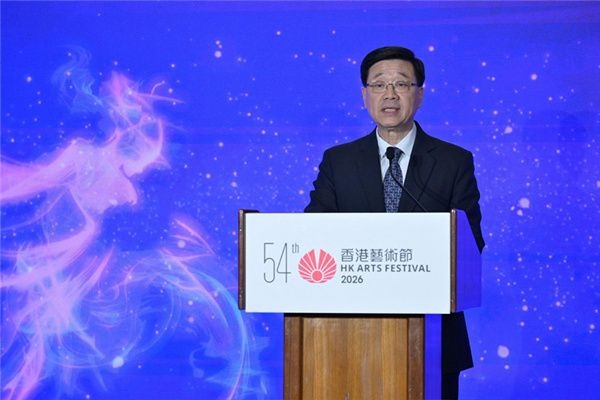
    HONG KONG – The 54th Hong Kong Arts Festival commenced on Friday, marking the beginning of a prestigious cultural celebration featuring 180 performances by more than 1,100 international artists. The month-long event solidifies Hong Kong’s position as a global arts hub while stimulating cultural tourism and creative industries.

    At the opening ceremony, Hong Kong Special Administrative Region Chief Executive John Lee emphasized the festival’s dual role as both a showcase for artistic excellence and a vital platform for international cultural exchange. ‘This 54-year-old cultural extravaganza provides an arena for top artists to demonstrate their talent and ingenuity while serving as a bridge for cross-cultural dialogue,’ Lee stated.

    The HKSAR government, as a primary sponsor, has committed to continuing financial and resource support for artists and performance troupes to foster creative development. Lee highlighted the festival’s growing popularity among both local residents and international visitors, noting its significant contribution to Hong Kong’s tourism sector and cultural economy.

    The festival program encompasses diverse artistic disciplines including theater, dance, music, and experimental performances, representing both Eastern and Western cultural traditions. This year’s edition features several world premieres and exclusive collaborations developed specifically for the festival.

  • These filmmakers know exactly how to get you hooked on bizarre one-minute dramas

    These filmmakers know exactly how to get you hooked on bizarre one-minute dramas

    On a frigid afternoon in Paju, just north of Seoul, director Kang Mi-so orchestrates theatrical chaos on set. “More anger, more anger, please!” she commands an actor portraying a villainous aunt, who unleashes a torrent of abuse unheard in conventional Korean soap operas. This is the new frontier of entertainment: micro-dramas—vertical, ultra-compact productions designed for smartphone consumption through platforms like TikTok, Instagram, and YouTube.

    Unlike traditional streaming content where viewers intentionally dedicate time, micro-dramas battle against infinite scrolling. Each episode, often as brief as 120 seconds, must immediately captivate with spectacular moments—table-flipping confrontations, dramatic slaps, or medieval fantasy sequences. The genre operates on a razor-sharp business model: the first 5-10 episodes are free, hooking viewers before transitioning to paid platforms.

    South Korea’s entertainment industry, having already conquered global markets with music and television, now aggressively targets the micro-drama sphere. Vigloo, one of Korea’s leading micro-drama apps, exemplifies this shift. CEO Neil Choi declares, “South Korea has shown the world its power to create music, TV, and films. The same content makers are now coming over [to micro-dramas] and I think they are world-class.”

    The production pace is breathtaking. During a four-hour BBC visit, crews filmed four episodes, with four more scheduled afterward. “We are the fast fashion of movie-making,” Choi explains, describing a conveyor-belt system where screenwriters, directors, and editors work in specialized sequence. Each in-house filmmaker is expected to deliver 10 titles annually.

    Artificial intelligence revolutionizes this high-volume industry. At Vigloo’s Gangnam headquarters, editors demonstrate AI’s transformative role: generating non-existent actors from screenplays, creating synthetic voices matched to digital faces, and producing realistic background scenes in mere seconds. This technology slashes production costs to just 10% of traditional filmmaking, particularly valuable for fantastical elements in popular “romantasy” genres or luxury car scenes that would otherwise require expensive rentals.

    While purists like UK fan Jen Cooper express skepticism about AI-only productions, acknowledging that real actor interactions form much of the appeal, she appreciates the rapid sequel production unavailable in conventional streaming. The genre’s unabashed escapism provides relief from what many find to be an increasingly worrisome news cycle.

    Despite technical limitations—unsophisticated sets, novice actors, and occasionally uncanny AI visuals—micro-dramas fulfill a specific need: filling life’s small time pockets. As actor An Chae-hee notes, “They are spicy and that’s what keeps grabbing our eyeballs.” Both cast and crew find joy in the exaggerated storytelling, with laughter frequently erupting after each dramatic table flip or slap.

    With content ranging from “Miracle of the dirt-poor single mum” to “Red Monster: Revenge against the devil,” the genre pushes boundaries while navigating Korea’s censorship landscape. Choi envisions micro-dramas maturing into diverse formats, potentially even Oscar-winning productions, drawing parallels to how computer graphics evolved from industry skepticism to Academy Award recognition.

    As South Korean creators embrace AI as an unstoppable trend rather than a silver bullet, they’re democratizing entertainment production while capturing a global market—particularly American women who reportedly spend more than their Korean counterparts. In an era where audiences are increasingly time-poor, micro-dramas represent both technological innovation and a fundamental shift in content consumption patterns.

  • Neil Sedaka, singer of Breaking Up Is Hard To Do, dies at 86

    Neil Sedaka, singer of Breaking Up Is Hard To Do, dies at 86

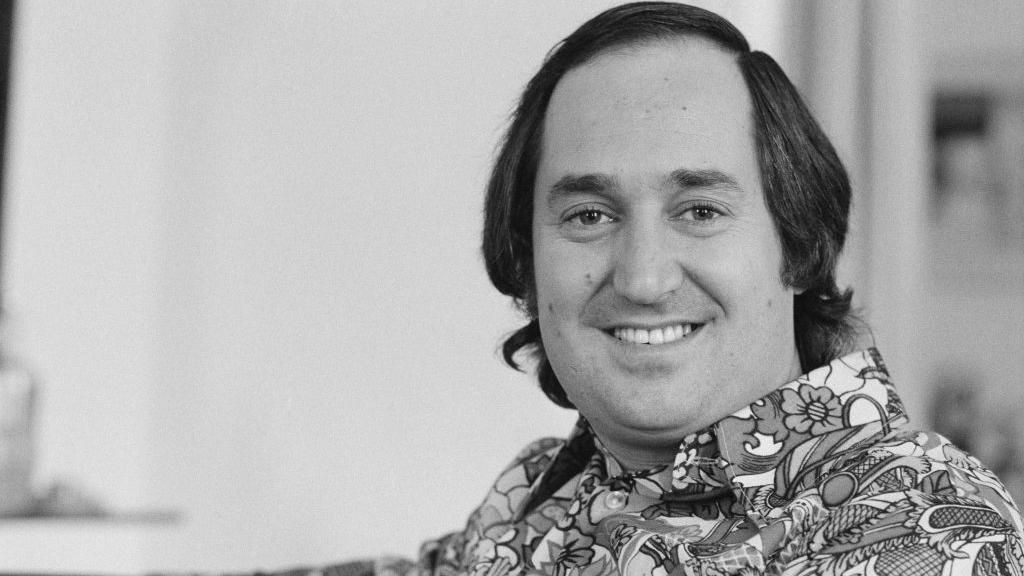
    The music world mourns the loss of legendary American singer-songwriter Neil Sedaka, who passed away at age 86. His family confirmed the devastating news through an official statement, describing him as “a true rock and roll legend” and “an incredible human being who will be deeply missed.

    Sedaka’s extraordinary career spanned six decades, during which he crafted some of pop music’s most enduring hits. The Brooklyn native, who received classical training at New York’s prestigious Juilliard School, first rose to prominence as a founding member of the doo-wop group The Tokens in the late 1950s.

    His remarkable songwriting talent produced timeless classics including Oh! Carol, Breaking Up Is Hard To Do, Bad Blood, Laughter in the Rain, and Calendar Girl. Beyond his own performances, Sedaka’s compositions became hits for numerous other renowned artists, earning him five Grammy Award nominations throughout his career.

    The musician demonstrated remarkable longevity in the industry, returning to Billboard’s Top 10 chart in 1975 with Love Will Keep Us Together, performed by the duo Captain & Tennille. This achievement highlighted his unique ability to adapt and remain relevant across changing musical eras.

    Sedaka’s legacy extends beyond his commercial success to his profound influence on multiple generations of musicians and music lovers. His family’s statement emphasized that while he was “an inspiration to millions,” those who knew him personally valued him most as a beloved husband, father, and grandfather.

  • Netizens captivated by pony figurines

    Netizens captivated by pony figurines

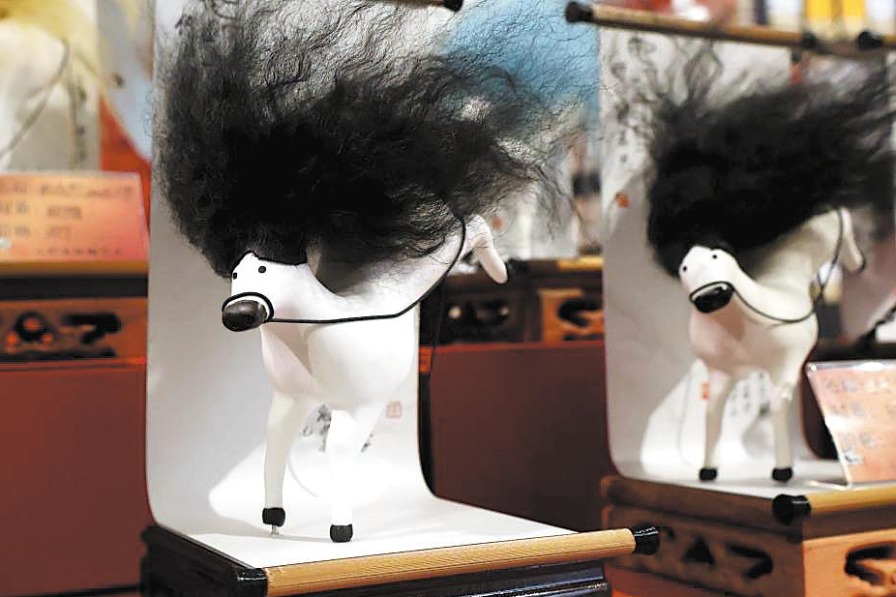
    In an extraordinary fusion of classical artistry and contemporary design, Shandong Art Museum’s Mabiaobiao pony figurines have emerged as a cultural phenomenon across China. These meticulously handcrafted creations, whose name translates to “spirited little horse,” have captivated netizens and art enthusiasts alike, generating over 900,000 yuan ($130,546) in sales since their introduction.

    The artistic journey began in September 2025 when Jinan-bordering Zibo’s Xiaoxiami polymer clay studio received a unique commission: to interpret over 200 paintings by legendary Chinese artist Qi Baishi (1864-1957) into three-dimensional forms. While Qi remains celebrated for his traditional shrimp and floral paintings, the studio’s team found particular inspiration in his dynamic, rarely featured equestrian artwork.

    “Translating Qi’s free and lively artistic spirit into clay presented significant artistic challenges,” acknowledged Wang Zhi, the studio director. Specializing in realistic sculpture, Wang assembled a team of artists who spent months perfecting their technique to preserve the essence of Qi’s distinctive brushwork. The most complex aspect proved to be recreating the horse’s flowing mane, which ultimately led to the innovative use of natural sheep wool for its softness, durability, and styling versatility.

    The breakthrough moment arrived when the first batch of completed ponies with their extravagant manes sparked spontaneous creativity within the studio. “We couldn’t resist braiding different hairstyles for them,” Wang recalled, unwittingly establishing the customizable feature that would become the product’s signature appeal.

    Social media platforms including Xiaohongshu and Weibo rapidly amplified the phenomenon, with users sharing affectionate posts and styling suggestions. The museum embraced this collaborative relationship, incorporating netizen feedback on hair color, body tone, and volume into subsequent designs. Popular demand prompted new color variations in pink and blue, while early comments about thin manes inspired a fluffier redesign.

    At the museum’s retail space, visitors meticulously examine each pony’s unique mane texture, curl pattern, and volume. “Each piece is distinctive—we can create pigtails or spiky hairstyles according to our preferences, essentially owning an exclusive companion,” remarked student Liu, who had just acquired one.

    The figurines’ success stems from their unique positioning between artistic heritage and daily life. “Mabiaobiao carries the soaring energy of Qi’s horse, embodying the belief that ‘steady steps cover a thousand miles,’ while its authentic appearance brings lofty art into people’s daily experiences,” explained Cui Wentao, deputy director of Shandong Art Museum.

    Each sculpture undergoes meticulous hand-shaping, baking, and finishing processes, with any imperfections necessitating complete restart. This painstaking craftsmanship results in limited availability, yet visitors patiently await the opportunity to acquire these unique artistic companions that successfully bridge centuries of Chinese cultural expression with modern creative consumption.

  • The Boys’ Love at the heart of Heated Rivalry is a familiar tale in Asia

    The Boys’ Love at the heart of Heated Rivalry is a familiar tale in Asia

    A cultural phenomenon is sweeping across international entertainment landscapes as the groundbreaking series ‘Heated Rivalry’ sparks an unprecedented creative movement among Boys’ Love enthusiasts worldwide. The show’s portrayal of the decade-spanning romance between elite hockey stars Shane Hollander and Ilya Rozanov has ignited a global wave of fan-generated content that bridges Western and Eastern storytelling traditions.

    The series’ profound impact emerges through its organic resonance with established BL conventions, particularly its emphasis on emotional depth and character vulnerability. Asian fans have recognized striking parallels between the show’s narrative architecture and the danmei literary tradition—Chinese male-male romance stories that have long catered to female fantasy. This cross-cultural recognition has inspired illustrators from the Philippines to Japan to reimagine pivotal moments from the series through manga and anime aesthetics, creating a vibrant tapestry of intercultural artistic dialogue.

    Dr. Aiqing Wang, Senior Lecturer in Chinese at the University of Liverpool, contextualizes this phenomenon within broader sociological frameworks. ‘BL provides women from conservative societies a sanctuary for sexual exploration and emotional agency,’ she explains. ‘The genre allows female audiences to engage with male vulnerability and challenge traditional gender norms through a safe, controlled medium.’ This psychological safety stems from BL’s unique ability to bypass heteronormative power dynamics, focusing instead on pure emotional connectivity between characters.

    The commercial implications are substantial. Thailand’s BL industry projects revenues exceeding 4.9 billion baht (£114m) by 2025, while Chinese streaming platforms have invested millions in danmei adaptations. Despite varying levels of LGBTQ+ acceptance across Asia, dedicated fan communities in Japan, South Korea, and Vietnam have embraced ‘Heated Rivalry’ through unauthorized translations, LED billboard campaigns, and birthday celebrations for the show’s stars.

    Dr. Sam Chan, lecturer in digital cultures at the University of Sydney, notes the series’ significance for queer representation: ‘When marginalized communities cannot find real-life role models, they turn to media narratives for validation and empowerment.’ The show’s authentic portrayal of queer intimacy has filled a critical void left by declining LGBTQ+ representation in mainstream Western media.

    As audiences await the second season in 2027, the cultural exchange continues with fans exploring recommended BL content to sustain the emotional resonance first ignited by ‘Heated Rivalry.’ This transnational movement demonstrates how queer storytelling can transcend geographical boundaries and cultural differences, creating unified spaces of hope and recognition for diverse audiences worldwide.

  • Video of two tigers at Chongqing theme park goes viral

    Video of two tigers at Chongqing theme park goes viral

    Two resident tigers at Locajoy Theme Park in Chongqing’s Yongchuan district have unexpectedly become viral internet celebrities, charming millions with their strikingly contrasting demeanors. Captured in a visitor’s video that has rapidly circulated across social platforms, the majestic felines have earned the affectionate nicknames “Dopey and Grumpy” from captivated audiences worldwide.

    The now-famous footage depicts the pair lounging side-by-side on sun-drenched grass within their habitat, presenting a study in contrasting expressions. One tiger appears blissfully absent-minded and relaxed, while its companion exhibits what netizens have interpreted as a perpetually discontented disposition. This visual dichotomy has sparked widespread amusement and endearment among viewers.

    The tigers’ personalities draw direct parallels to characters from a classic 1962 Chinese animated short film based on a traditional children’s story. The original narrative featured two archetypal figures—one characterized by forgetfulness and the other by constant dissatisfaction—creating a perfect cultural reference point for the animals’ contrasting yet complementary behaviors.

    Adding to their appeal, internet commentators have humorously described the duo as resembling a “Pro Max version of household cats” due to their exaggerated feline mannerisms and charismatic presence. The unexpected fame has generated increased public interest in the theme park’s wildlife exhibits, demonstrating how animal behavior can transcend cultural barriers and capture global attention through social media.

  • S.Korea’s Park Chan-wook to head Cannes festival jury

    S.Korea’s Park Chan-wook to head Cannes festival jury

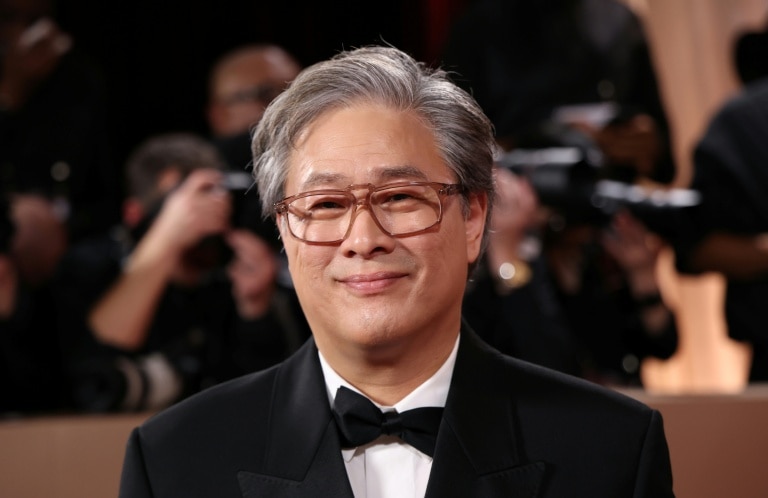
    In a landmark decision for global cinema, the Cannes Film Festival has appointed acclaimed South Korean director Park Chan-wook as president of its main competition jury for the 79th edition this May. This historic appointment marks the first time a Korean filmmaker will preside over the prestigious jury that determines the Palme d’Or winner.

    The festival organization released an official statement celebrating Park’s ‘narrative, stylistic, and moral’ cinema, particularly praising his ability to blend genres while addressing profound human themes. The 62-year-old director, known for his visually striking and thematically complex films, expressed honor at the selection, noting that in ‘this age of hatred and division,’ the collective experience of cinema creates ‘a moving, universal sense of solidarity.’

    Park’s appointment coincides with unprecedented global recognition for South Korean cultural exports, from Bong Joon-ho’s Oscar-winning ‘Parasite’ to the international phenomenon of ‘Squid Game’ and the worldwide dominance of K-pop groups like BTS and Blackpink. The director stands as a pioneering figure in this cultural wave, having achieved international acclaim with his 2003 masterpiece ‘Oldboy,’ which won the Grand Prix at Cannes in 2004.

    Renowned for his exploration of vengeance and redemption through what critics term ‘Korean noir,’ Park’s filmography includes the celebrated ‘Vengeance Trilogy’ and his recent romantic thriller ‘Decision to Leave,’ which earned him the Best Director award at Cannes in 2022. His upcoming project, ‘No Other Choice’ (2025), adapts Donald Westlake’s novel ‘The Ax’ and addresses contemporary anxieties about artificial intelligence and the competitive job market.

    Beyond his cinematic achievements, Park is recognized as a profound literary adapter, having transformed works by Émile Zola into his vampire film ‘Thirst’ and Sarah Waters’ ‘Fingersmith’ into the critically acclaimed ‘The Handmaiden.’ His television work includes the English-language mini-series ‘The Little Drummer Girl’ and HBO’s ‘The Sympathizer,’ demonstrating his versatility across mediums and languages.

    A philosophy graduate from Seoul’s Sogang University, Park brings both intellectual depth and artistic vision to his role as jury president, positioning him to lead one of the film world’s most prestigious judging panels during this year’s festival.