分类: business

  • Tech shares and miners lead ASX rebound after strong Wall Street rally

    Tech shares and miners lead ASX rebound after strong Wall Street rally

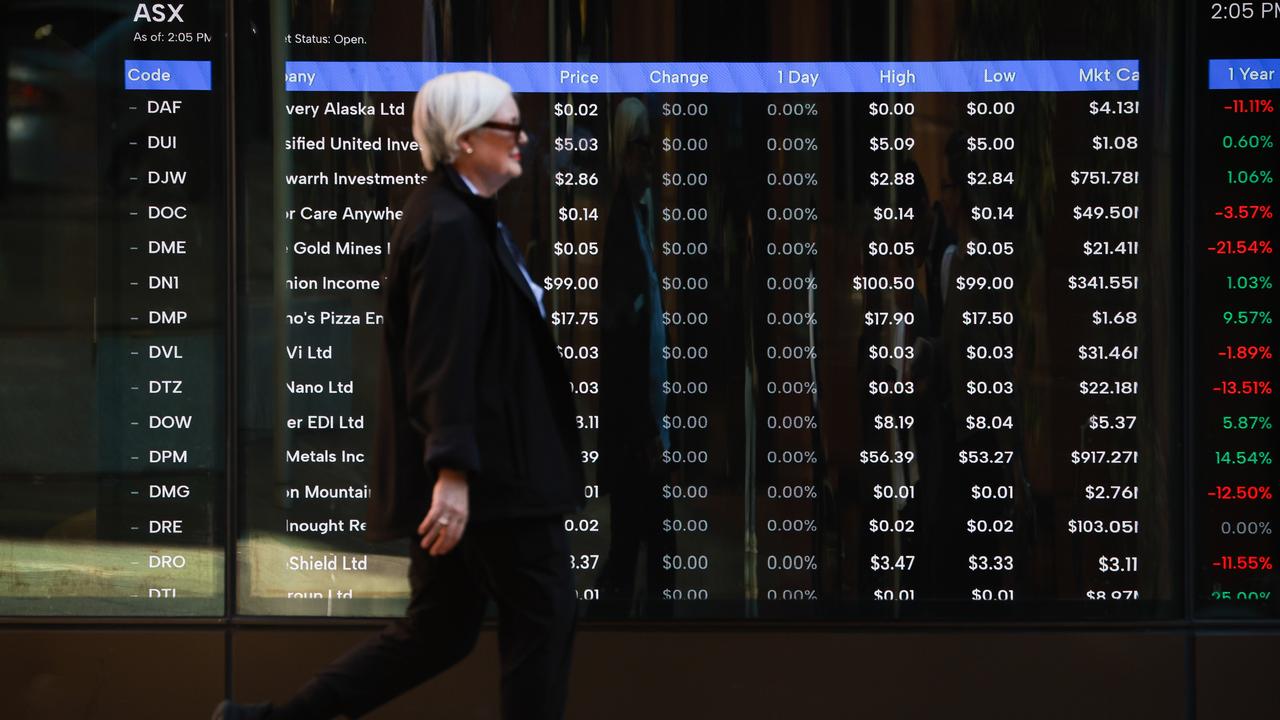
    Australia’s financial markets staged a robust recovery on Wednesday, reversing a significant $63 billion downturn as new economic data altered monetary policy expectations. The benchmark ASX 200 index climbed 39.10 points (0.44%) to settle at 8,940.30, while the broader All Ordinaries index advanced 47.80 points (0.52%) to reach 9,164.90.

    The resurgence was primarily fueled by unexpectedly modest household spending figures from the Australian Bureau of Statistics, which showed a mere 0.3% increase—substantially below market projections. This development significantly reduced pressure on the Reserve Bank of Australia to implement consecutive interest rate hikes, creating a more favorable environment for equity investments.

    Technology equities spearheaded the market recovery with remarkable sector growth of 4.65%. Leading this charge were WiseTech Global, surging 7.14% to $47.57, Xero climbing 4.26% to $83.89, and Technology One advancing 4.41% to $26.30. Healthcare stocks also contributed substantially to the rally, with industry giant CSL jumping 2.54% to $146.49 following its announcement of a major vaccine supply agreement with Canada for pandemic preparedness.

    The financial sector exhibited mixed performance with three of the four major banks recording gains. National Australia Bank led the group with a 1.39% increase to $47.33, while Commonwealth Bank edged up 0.44% to $172.66, and Westpac rose 0.58% to $41.37. ANZ bucked the trend, declining 0.45% to $37.77.

    Commodity markets provided additional support as Singapore iron ore futures surged to a four-week peak of $US101.20, driven by China’s renewed commitment to addressing steel production overcapacity. This development propelled Rio Tinto shares upward by 1.16% to $164.58 and Fortescue Metals by 2.05% to $19.39. BHP experienced a 0.95% decline to $55.15 as the mining conglomerate traded ex-dividend.

    The domestic recovery mirrored positive momentum on Wall Street, where stronger-than-anticipated ISM Services PMI data demonstrated continued resilience in the U.S. economy. Market analysts noted that declining price subindex components helped alleviate concerns about persistent inflationary pressures.

    AMP economist My Bui commented on the spending data: ‘We anticipate further moderation in spending growth in coming months. Momentum had already begun slowing prior to February’s RBA rate hike, likely driven by weakening consumer sentiment, while rising inflation continues to erode real purchasing power.’

    Overall, eight of the eleven market sectors finished higher, indicating broad-based recovery across the Australian equity landscape.

  • Credit card loyalty costing Australians $1.6bn a year in interest, new figures reveal

    Credit card loyalty costing Australians $1.6bn a year in interest, new figures reveal

    New financial research has uncovered a massive economic drain affecting millions of Australian households, revealing that persistent credit card loyalty is costing consumers approximately $1.6 billion annually in unnecessary interest payments. The comprehensive study conducted by financial comparison platform Canstar surveyed over 2,000 credit cardholders nationwide, uncovering that nearly one-third (31%) have never conducted a formal review of their current credit card arrangements.

    The analysis presents startling figures: Australians collectively paid more than $3.4 billion in credit card interest during the previous year, carrying an average interest rate of 18% on outstanding balances totaling $19.6 billion. Financial experts emphasize that simply transitioning to lower-rate cards offering 10% interest or less could effectively halve this enormous interest burden, creating substantial savings for consumers.

    Sally Tindall, Director of Data Insights at Canstar, characterized these findings as a significant financial oversight by Australian consumers. ‘Our research indicates that one in three cardholders have never reviewed their credit card arrangements. In a marketplace where rates vary dramatically from 8.99% to 28.49%, this approach is essentially equivalent to handing your bank your wallet and hoping for favorable outcomes,’ Tindall explained.

    The personal finance implications are equally striking. For individual consumers carrying an average debt of $4,000, switching from the average rate to a more competitive 10% option could yield annual interest savings approaching $350—funds that could substantially reduce principal debt balances.

    Beyond interest rates, the research highlights how annual fees continue to erode consumer finances regardless of outstanding balances. With some premium cards charging up to $1,200 annually, Tindall notes that eleven providers currently offer credit cards with zero ongoing fees, including three that maintain rewards programs alongside fee-free structures.

    Financial advisors now recommend that consumers conduct comprehensive credit card health checks every twelve months, carefully evaluating interest rates, fee structures, and rewards program valuations to ensure their current banking arrangements remain financially advantageous.

  • War with Iran chokes flows of oil and natural gas, highlighting energy security risks for Asia

    War with Iran chokes flows of oil and natural gas, highlighting energy security risks for Asia

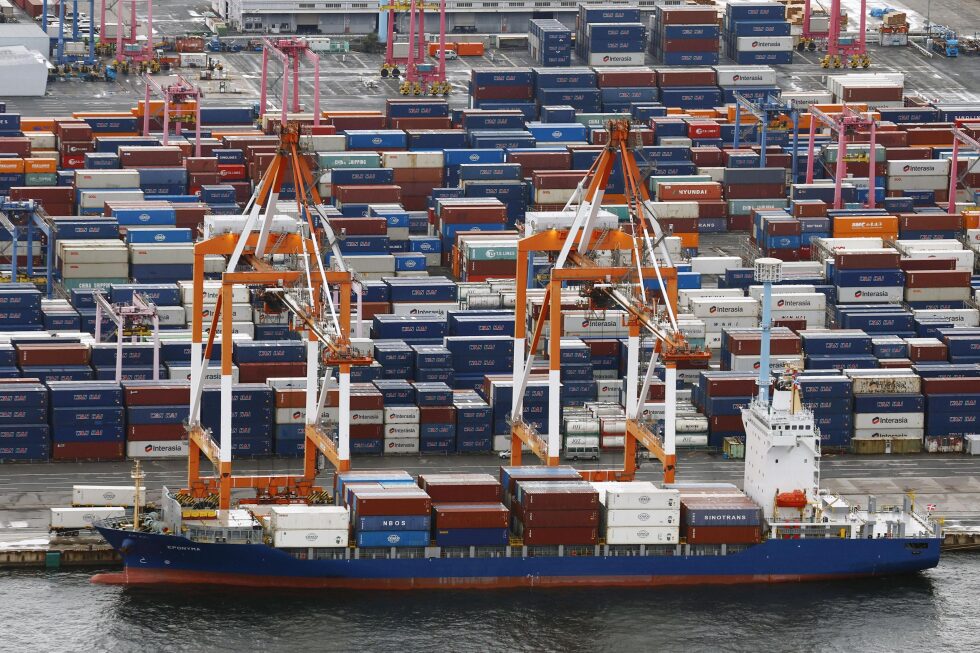
    BANGKOK (AP) — Escalating military conflict around the Persian Gulf has triggered severe disruptions to global energy markets, with oil and natural gas shipments through the critical Strait of Hormuz facing unprecedented challenges. The strategic waterway, which facilitates approximately one-fifth of global crude oil and liquefied natural gas (LNG) trade, has become a flashpoint in regional tensions, sending energy prices soaring worldwide.

    Asia emerges as the most vulnerable region due to its heavy dependence on imported energy resources. According to energy consultancy Kpler, approximately 13 million barrels of oil transited through the corridor daily in 2025, representing about one-third of all seaborne crude. The U.S. Energy Information Administration reports that over 80% of LNG shipments through the strait in 2024 were destined for Asian markets.

    Since hostilities began, Brent crude prices have surged by 15% to approximately $84 per barrel, reaching their highest level since July 2024. U.S. President Donald Trump announced potential naval protection and risk insurance for shippers, but the ripple effects extend far beyond the immediate region. Wealthier nations are outbidding developing economies for scarce energy cargoes, recreating patterns observed during previous energy shocks.

    Zulfikar Yurnaidi of the ASEAN Centre for Energy warned that “the crisis, with the closure of the Hormuz Strait as the latest development, would not only raise oil and gas prices but also grind global economic activity to a halt.”

    China and India face particularly significant challenges as the world’s largest and third-largest crude oil importers, respectively. While China maintains substantial strategic petroleum reserves and alternative supply routes—including discounted Iranian, Russian, and Venezuelan oil through independent refiners—the price volatility remains a concern. India’s situation appears more precarious with less than one month of crude reserves, creating potential for rapid deterioration if conflicts persist.

    East Asian economies demonstrate varying levels of vulnerability. Japan imports approximately 95% of its crude from the Middle East, while South Korea sources around 70% of its crude oil and 20% of its LNG from the region. Taiwan, despite diversification efforts, remains heavily dependent on Qatari LNG. All three economies maintain energy stockpiles but face challenges in energy-intensive industries.

    Southeast Asian nations are implementing emergency measures as developing economies risk being outbid in tightening markets. Singapore has warned of higher energy bills, Manila has restricted non-essential fuel use, and Thailand has suspended petroleum exports while boosting domestic production. The region’s reliance on spot-market LNG creates additional exposure to price volatility and geopolitical instability.

    Energy analysts emphasize that current reserves provide only temporary relief, with many nations regretting insufficient investment in renewable energy diversification that could have served as a natural hedge against such disruptions.

  • China sets lowest economic growth target since 1991

    China sets lowest economic growth target since 1991

    China has announced its most conservative annual economic growth target in over three decades, setting a range of 4.5% to 5% for the coming year during the ongoing Two Sessions political gathering. This marks the lowest expansion goal since 1991 and represents the first downward adjustment since the “around 5%” target established in 2023.

    The revised growth framework emerges as Beijing confronts multiple economic headwinds, including persistently weak domestic consumption, an unresolved property sector crisis, and escalating trade tensions with Western nations. The announcement coincided with preliminary details of China’s 15th Five-Year Plan, which outlines strategic investments in innovation, high-tech industries, and scientific research.

    Premier Li Qiang addressed delegates emphasizing the government’s dual focus: stimulating household consumption while advancing manufacturing sophistication. This approach reflects concerns about over-reliance on export-driven growth despite China recording a record $1.19 trillion trade surplus in the previous year.

    Recent economic data reveals the complexity of China’s situation. While officially meeting the 5% growth target for 2025 overall, expansion slowed to 4.5% in the final quarter, consistent with the new target’s lower bound. This slowdown has prompted more than two-thirds of Chinese provinces to similarly temper their growth expectations.

    Georgetown University researcher Ning Leng notes that China’s export dependency creates vulnerability, particularly as former President Donald Trump’s tariff policies continue to pressure trade relations. In response, China has aggressively pursued trade diversification strategies to maintain manufacturing output and market access.

  • China sets a lower economic growth target of 4.5% to 5% for this year

    China sets a lower economic growth target of 4.5% to 5% for this year

    BEIJING — In a strategic move to navigate complex domestic and global economic challenges, the Chinese government has established a flexible growth target range of 4.5% to 5% for the current fiscal year. The announcement was delivered by Premier Li Qiang on Thursday during his keynote address at the inaugural session of the National People’s Congress, the country’s top legislative body.

    This calibrated objective represents a modest downward adjustment from the consistent 5% benchmark maintained over the preceding three years. The decision reflects a pragmatic approach by policymakers confronting a protracted downturn in the real estate sector, persistent external uncertainties, and fluctuating international demand.

    Analysts interpret the introduction of a target band, as opposed to a fixed figure, as a deliberate policy mechanism. It grants authorities enhanced operational flexibility to implement responsive fiscal and monetary measures throughout the year, adapting to evolving economic conditions. The official government work report explicitly framed the goal as aiming for the upper limit of this range, “while striving for better in practice,” signaling an underlying ambition to maximize performance.

    The revised target follows an official economic expansion of precisely 5% in 2023. This new guidance is widely perceived as an effort to balance the dual objectives of sustaining stable development and managing systemic risks, particularly those emanating from the beleaguered property market and trade tensions.

  • World shares are mixed as oil prices climb higher and Iran launches new attacks

    World shares are mixed as oil prices climb higher and Iran launches new attacks

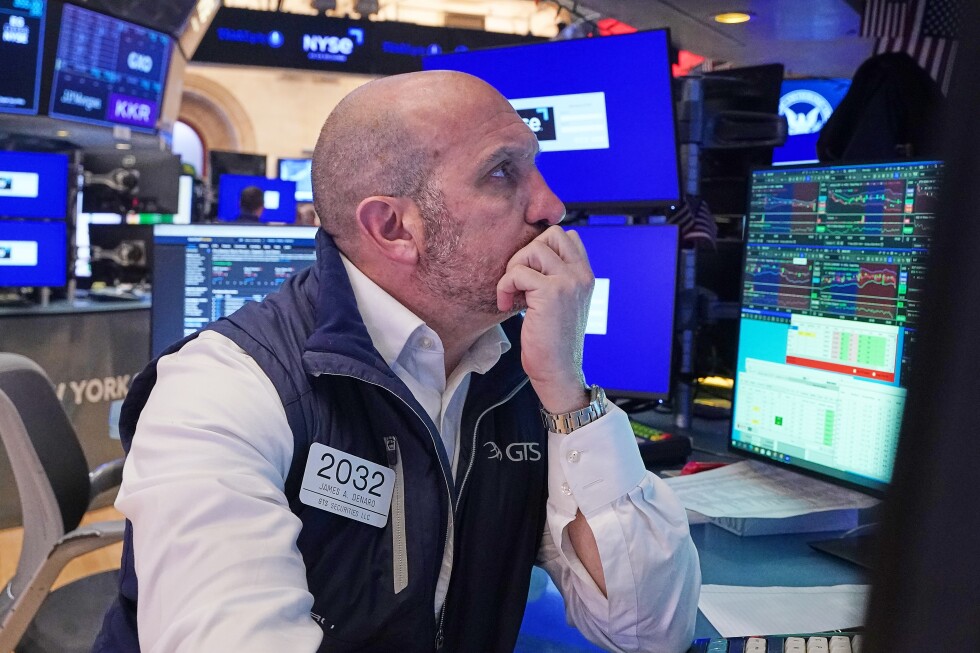
    Financial markets experienced significant turbulence on Thursday as escalating Middle East hostilities triggered a complex interplay between risk aversion and opportunistic buying. While Asian and European indices posted modest gains, U.S. futures declined following Iran’s renewed missile attacks against Israeli and American targets, marking the sixth day of intensified conflict.

    The immediate market impact manifested through energy markets, with Brent crude surging 1.8% to $82.87 per barrel and U.S. benchmark crude jumping 2.1% to $76.31. This oil price spike renewed inflation concerns and created uncertainty about corporate profitability, particularly as Iran threatened further retaliation and religious leaders issued inflammatory statements.

    Asian markets demonstrated remarkable resilience despite the geopolitical backdrop. South Korea’s Kospi staged a dramatic recovery, soaring 9.6% to 5,583.90 after Wednesday’s historic plunge, triggering multiple trading halts as investors sought bargains. The government responded with emergency measures, activating a 100 trillion won ($68.5 billion) financial stabilization package to curb volatility.

    Other regional markets followed suit with Tokyo’s Nikkei 225 advancing 1.9%, Australia’s S&P/ASX 200 rising 0.4%, and Taiwan’s main index gaining 2.6%. In China, the Hang Seng climbed 0.3% as Premier Li Qiang announced a 4.5-5% growth target at the National People’s Congress, alongside a 7% increase in military spending.

    European markets showed cautious optimism with Germany’s DAX rising 0.2%, France’s CAC 40 up 0.3%, and Britain’s FTSE 100 adding 0.4%. This contrasted with U.S. futures, where Dow Jones Industrial Average futures fell 0.2% and S&P 500 futures declined 0.1%.

    The dollar strengthened to 157.16 yen, reflecting its status as a safe-haven currency during geopolitical uncertainty. Stephen Innes of SPI Asset Management noted that ‘the dollar remains the market’s preferred storm shelter’ during periods of global uncertainty, as capital gravitates toward the deepest liquidity pools.

    Market analysts characterized the previous day’s U.S. rally as a ‘classic relief rally’ rather than a sustained turnaround, with investors remaining cautious about prolonged conflict implications for inflation and economic stability.

  • Trade court orders tariff refunds in setback for Trump administration

    Trade court orders tariff refunds in setback for Trump administration

    In a significant legal development, the US Court of International Trade has mandated Customs and Border Protection to process refunds for tariffs previously imposed under the International Emergency Economic Powers Act (IEEPA). The ruling comes weeks after the Supreme Court invalidated these levies, creating substantial financial implications for thousands of American businesses.

    Judge Richard Eaton’s decision establishes that all importers of record subjected to IEEPA duties are entitled to reimbursement. The case originated from a legal challenge by Atmus Filtration, a Tennessee-based filtration company, though the ruling applies broadly to affected importers nationwide.

    The court’s directive represents a notable setback for the Trump administration, which had implemented an estimated $130 billion in tariffs through IEEPA authorities. Major corporations including FedEx have pursued litigation seeking full refunds, while small business coalitions like ‘We Pay the Tariffs’ have welcomed the decision as a landmark victory.

    Concurrently, Treasury Secretary Scott Bessent indicated the United States would likely implement a new 15% global tariff this week, replacing the invalidated IEEPA measures. This development follows conflicting statements from President Trump regarding the new rate structure, which originally ranged from 10% to 50% depending on the country of origin.

    The initial tariffs, announced last April as ‘Liberation Day’ measures, triggered extensive trade negotiations as nations sought lower rates through investment commitments and policy changes. The Supreme Court’s rejection of these tariffs last month extended to additional duties imposed on goods from Mexico, Canada, and China.

    Significant procedural questions remain regarding the refund mechanism and the administration’s future trade policy direction. The White House has not yet commented on the court’s ruling.

  • Household spending rebounds as shoppers open wallets after Christmas slump

    Household spending rebounds as shoppers open wallets after Christmas slump

    Australian households have demonstrated a cautious return to spending in January, though not in the manner many economists had anticipated. Official data from the Australian Bureau of Statistics (ABS) reveals a modest 0.3 percent increase in overall consumer expenditure for the month, defying expectations of a more robust post-holiday rebound.

    The composition of this spending, however, tells a more nuanced story. The growth was predominantly driven by essential services, which surged by 0.8 percent. This category was led by increased expenditure on health services and automotive repairs and maintenance—practical necessities rather than luxury items. Meanwhile, discretionary spending saw only a marginal uptick of 0.1 percent, with modest gains in air transport, personal effects, and recreational services.

    A significant divergence emerged between spending on services and goods. Service-oriented consumption rose by 1 percent, bolstered by digital streaming subscriptions and travel agency services. In contrast, goods purchases declined by 0.3 percent, with notable reductions in vehicle acquisitions and recreational goods.

    This January performance follows a volatile holiday shopping season characterized by heavy discounting in October and November 2022, which boosted sales, followed by a 0.5 percent contraction in December. The latest figures fell slightly below projections from major financial institutions including Commonwealth Bank and NAB, both of which had forecast a 0.4 percent increase.

  • Brazil’s Congress ratifies EU-Mercosur trade deal

    Brazil’s Congress ratifies EU-Mercosur trade deal

    SAO PAULO — In a landmark decision, Brazil’s Senate has given unanimous approval to the monumental free-trade agreement between the Mercosur trade bloc and the European Union, signaling a major advancement toward the pact’s implementation. This decisive move follows similar ratification by Brazil’s lower house and positions the agreement closer to realization than at any point in its quarter-century negotiation history.

    The agreement, which would create an integrated market encompassing over 700 million consumers, represents one of the most significant trade partnerships globally. With Argentina and Uruguay having previously ratified the deal, and Paraguay expected to follow shortly, the Mercosur bloc demonstrates unified progress. Bolivia, as the newest Mercosur member, retains the option to join the agreement in subsequent years despite not participating in initial negotiations.

    Brazil, as Mercosur’s dominant economy with a projected GDP exceeding $2.3 trillion by 2025, has been instrumental in advancing the agreement. President Luiz Inácio Lula da Silva emerged as a pivotal advocate for the pact, which still requires validation from the European Union’s top court before full implementation.

    European Commission President Ursula von der Leyen has repeatedly acknowledged President Lula’s diplomatic efforts in overcoming European opposition. The combined economic power of the participating nations amounts to approximately $22 trillion in GDP, underscoring the agreement’s global significance.

    Despite legal proceedings in Europe, Brazilian officials including Vice President Geraldo Alckmin indicate the agreement could partially take effect within months—a timeline von der Leyen supports. Senate President Davi Alcolumbre characterized the ratification as demonstrating “institutional maturity” and alignment with Brazilian societal interests.

    The trans-Atlantic trade pact, formally signed on January 17 after 25 years of stalemate, faces continued resistance from European agricultural sectors concerned about competitive imbalances. Recent months have witnessed tractor-blocking protests and firework demonstrations by European farmers in Brussels opposing the agreement.

    French President Emmanuel Macron, among the pact’s most prominent critics, has insisted on implementing robust safeguards against economic disruption, enhanced regulatory standards in Mercosur nations regarding pesticide usage, and intensified import inspections at EU ports.

  • Musk tells jury ‘people read too much’ into his posts

    Musk tells jury ‘people read too much’ into his posts

    SAN FRANCISCO – Billionaire entrepreneur Elon Musk testified before a California jury on Wednesday, asserting that financial markets overanalyze his social media communications. The testimony forms part of Musk’s defense against allegations that he deliberately manipulated markets through misleading tweets preceding his 2022 acquisition of Twitter.

    Musk characterized his posts following the initial acquisition agreement as “extremely literal” statements rather than tactical maneuvers to renegotiate the purchase price. “I was simply speaking my mind,” Musk stated when questioned about his awareness of the market impact caused by his declaration that the takeover was “on hold.”

    The litigation represents the first courtroom battle stemming from Musk’s $44 billion Twitter acquisition. While Musk has previously defeated legal challenges regarding his social media communications involving Tesla investors and defamation claims, this class action lawsuit initiated by individual investors seeks unspecified monetary damages for alleged financial losses.

    Lead plaintiff Brian Belgrave testified Monday that he sold thousands of Twitter shares in July 2022 based on his interpretation that Musk was abandoning the acquisition. Belgrave liquidated his position below both his original purchase price and the eventual $54.20 per share that Musk paid after Twitter successfully sued to enforce the merger agreement. “I got screwed. I got cheated,” Belgrave told the court.

    Plaintiffs’ attorney Aaron Arnzen presented a theory that Musk employed strategic negotiation tactics comparable to boxing’s “rope-a-dope” technique – intentionally allowing Twitter to exhaust itself to gain bargaining leverage. When questioned about this approach, Musk conceded he “may have” utilized such strategies.

    Throughout Wednesday’s proceedings, Musk initially provided terse responses limited to “yes,” “no,” or “I don’t recall” before later accusing Arnzen of “trying to mislead the jury” through his questioning methodology. Presiding Judge Charles Breyer briefly paused testimony to address the witness before allowing proceedings to continue.

    The trial, expected to span three weeks, also featured testimony from Jared Birchall, head of Musk’s family office, who repeatedly responded to questions about Twitter acquisition discussions with “I don’t recall” – including questions about whether Jack Dorsey served as Twitter’s CEO prior to Musk’s takeover bid. Dorsey had led the company for seven years before stepping down just months before Musk’s acquisition attempt.