分类: business

  • ‘Where’s it come from?’: Business owners smashed by RBA surcharge change

    ‘Where’s it come from?’: Business owners smashed by RBA surcharge change

    Starting October 1, 2026, one of Australia’s most widely resented hidden consumer fees will disappear entirely, as the Reserve Bank of Australia (RBA) enforces a full ban on card payment surcharges. But small business owners across the country are already sounding the alarm: the policy change will backfire dramatically, pushing up general prices for all Australian consumers and forcing many small operators to close their doors.

    The RBA’s long-awaited review of merchant payment costs and surcharging, released Tuesday, outlined three major reforms to Australia’s retail payment network. The core change is a total ban on separate card surcharges, requiring all businesses to include credit and debit card processing costs in their advertised sticker prices. To offset the burden of this shift, the central bank is lowering interchange fees – the charges paid by a merchant’s bank to a customer’s card-issuing bank – and has pledged to increase transparency around fees levied by major card networks. The RBA projects the reforms will save Australian consumers up to $1.6 billion annually, even as officials acknowledge not all savings will reach household budgets.

    But small business owners say the RBA’s math ignores the reality of operating on thin margins amid a prolonged cost of living crisis, and argue any lost revenue from eliminated surcharges will simply be passed to shoppers through higher base prices.

    Kodar Eid, owner of Chaos Cafe with locations in Neutral Bay and Mosman, warned the change will deliver a devastating financial hit. For his Neutral Bay store alone, Eid estimates annual costs will jump by $22,000 when the ban takes effect. “That $22,000 isn’t going to disappear – where do you think it’s going to come from? What margin do you think I’m working with?” Eid asked. “Cost of living affects small businesses too. Small businesses absorb as much as they can, but if I take a $22,000 hit, I’ll be one of the businesses that close.”

    Eid explained that for nearly 13 years, separate surcharges allowed his cafe to keep base menu prices lower, meaning customers paying with cash or debit cards did not bear the cost of credit card processing. The timing of the ban, he added, could not be worse: cafes already face soaring energy and supply chain costs, with many operators absorbing extra supplier fuel levies to keep prices low for struggling households. As discretionary spending drops amid cost of living pressures, cafes are already seeing fewer customers, and the new cost burden will only worsen the crisis. “The people in the room that made the decision, don’t they have a background in economics?” Eid said. “We are supposed to be happy they slugged the banks 0.3 per cent – seriously. Why not tell the bank to absorb the 1.2 per cent and the small business can cop the 0.3 per cent.”

    Industry leaders echo Eid’s concerns, arguing the ban shifts the entire cost of card processing onto small businesses and all consumers, rather than forcing card users to pay for the benefits they receive. John Arnott, director of AMP Bank Go, said that if bank processing fees remain high, small businesses have no choice but to pass the costs onto all consumers through higher sticker prices.

    “If surcharges are banned but bank fees stay high, small businesses are left carrying the cost. Australians will pay, just in less visible ways,” Arnott said. “You may not see a surcharge at the terminal, but you will start to see the surcharge flow through to the ticket. And small businesses are telling us they’ve got no choice. They’re already running on the smell of an oily rag.”

    Arnott added that while big banks and card networks continue to record billions in annual profits, small business conditions are worsening rapidly. “If banks don’t slash card fees, Australians will keep paying – full stop. At some point, enough is enough, and small businesses need to start voting with their feet. And the payments industry needs to walk the talk.”

    Critics also point out that cash and debit card users will be the biggest losers under the new rule. Currently, Australians pay roughly $1.6 billion in annual card surcharges, while businesses pay $200 million in fees to card providers. Jason Bryce, founder of Cash Welcome, argues that by banning surcharges for both debit and credit cards, the RBA has gone far beyond the original goal of cutting consumer costs – a move first flagged by the Prime Minister as a cost of living relief measure for debit card users.

    “I’m concerned cash users are going to end up paying for the frequent flyer points and the benefits that accrue to people using fancy premium credit cards,” Bryce said. “So who is losing? Ordinary bank account holders with a debit card, cash users, people on a budget – and I can’t see how small businesses are going to like this at all.”

    Bryce added that the ban does not eliminate processing fees, it simply hides them. “There’s no transparency, no little sign at the cash register that says if you pay this way it will cost you this much. Those signs, while very annoying, are very transparent.” He also noted that the RBA’s original 1990s surcharge framework made Australia a global leader in transparent card transaction pricing, a status the new reforms will end.

    Not all observers oppose the change, however. Sally Tindall, data insights director at comparison site Canstar, said the reforms will simplify checkout pricing and crack down on hidden price-gouging. Canstar survey data of 3,001 Australian adults found 33 percent of shoppers switch to cash when a surcharge is applied, indicating widespread frustration with separate checkout fees.

    “These changes will simplify the system, stop any price-gouging and help consumers compare apples with apples at the checkout,” Tindall said. “It’s a tiny fee in isolation, but plonked on top of the cost of a flat white every day, is enough to make people see red.”

    But for small business owners already teetering amid rising costs, the reform is just one more burden that will leave both operators and consumers worse off. Arnott summed up the widespread industry concern: “It’s tough for small business right now, and the way things are headed, there’s only going to be more pain. Supporting local businesses matters – they’re at the heart of our communities and local economies. It’s your mate, your cousin, your local barista.”

  • European ministers call for profit caps on energy companies as Iran war drives price surge

    European ministers call for profit caps on energy companies as Iran war drives price surge

    As geopolitical tensions in Iran roil global energy markets, five European finance ministries have launched a coordinated push for the European Union to implement a region-wide windfall profit tax on energy companies, aimed at offsetting inflationary pressures that threaten to squeeze household budgets across the bloc. The joint call, spearheaded by Spanish Economy Minister Carlos Cuerpo, has been backed by his counterparts from Germany, Italy, Portugal and Austria, who co-signed a formal letter submitted to the European Commission that highlights severe market distortions triggered by the sudden spike in global oil and natural gas prices.

    The letter, dated Friday and published publicly by Cuerpo via an online social post, outlines the cascading economic risks of the Middle East conflict for European communities. “The conflict in the Middle East has caused oil prices to rise, placing a significant burden on the European economy and on European citizens,” the document reads. “It is important to ensure that this burden is distributed fairly.”

    European economies have long faced structural vulnerability to global energy price shocks, due to the bloc’s heavy reliance on imported fossil fuels. That exposure was laid bare in 2022, when Russia’s full-scale invasion of Ukraine upended global energy markets and pushed annual inflation into double digits across most of the EU. In response to that crisis, the bloc introduced a temporary “solidarity contribution” framework that put caps on excess profits earned by energy companies. The five signatory nations argue that a similar, urgently implemented tool is needed now to address the current market disruption.

    “Given the current market distortions and fiscal constraints, the European Commission should swiftly develop a similar EU-wide contribution instrument,” the letter states. “It would also send a clear message that those who profit from the consequences of the war must do their part to ease the burden on the general public.”

    Current economic data already shows the impact of rising oil prices on eurozone inflation: the bloc’s annual inflation rate climbed from 1.9% in February to 2.5% in March, a jump economists attribute almost entirely to higher fuel costs. Compounding the market volatility, Iran has halted most tanker traffic through the Strait of Hormuz, the strategic chokepoint that carries roughly 20% of the world’s daily oil and gas supplies. The closure has cast a long shadow over global fuel markets, with many analysts projecting extended supply tightness in the months ahead.

    In comments earlier this week, EU Energy Commissioner Dan Jorgensen underscored the severity of the disruption, warning that fuel prices are unlikely to return to stable, pre-conflict levels any time in the foreseeable future.

  • Joint initiative aims to boost talent in NEV sector

    Joint initiative aims to boost talent in NEV sector

    Against the backdrop of the global automotive industry’s rapid transition toward electrification and low-carbon mobility, a new cross-regional consortium dedicated to cultivating high-skilled talent for the new energy vehicle (NEV) sector launched Friday in Bangkok, drawing together stakeholders from China and multiple Southeast Asian nations to advance cooperation in green transportation and technical vocational education.

    This joint initiative unites leading NEV manufacturers, government regulatory bodies, industry associations and vocational education institutions from across China and ASEAN member states, creating a unified collaborative platform to develop joint training programs and formalize cross-border partnership agreements. Over 100 delegates from China, Thailand, Vietnam and Malaysia gathered for the launch ceremony, which took place alongside the Thailand leg of the World New Energy Vehicle Congress, the global industry conference that kicked off the same day in the Thai capital.

    Attendees at the event used the gathering to explore pathways to deepen collaborative work in intelligent energy systems, smart mobility solutions and next-generation green technology innovation. The initiative received formal backing from three major Chinese industry and education bodies: the China Association for Science and Technology (CAST), the National Steering Committee of Teaching for Automobile Vocational Education, and the China Society of Automotive Engineers.

    Addressing attendees, CAST President Wan Gang noted that the global automotive sector is currently undergoing a profound structural transformation, shifting steadily toward electrification, intelligent connectivity and low-carbon operations. He emphasized that this industry-wide shift is fundamentally dependent on skilled human capital, with rising demands for advanced technical knowledge, upgraded practical skills, strong management capabilities and cross-cultural global competence among industry practitioners.

    Against the backdrop of 2026 marking the fifth anniversary of the China-ASEAN Comprehensive Strategic Partnership, Wan explained that this new talent development platform is designed to drive coordinated technological innovation, joint workforce cultivation and expanded bilateral and multilateral cooperation between China and ASEAN nations.

    The rapid growth of China’s NEV sector underscores the urgent need for expanded cross-border talent development: data from the China Passenger Car Association shows China’s domestic NEV retail sales hit roughly 12.81 million units in 2025, representing a 17.6% year-on-year increase. Exports of Chinese-branded NEVs surged even faster, jumping 139% year-over-year to 2.04 million units, meaning NEVs accounted for nearly half — 49.5% — of all Chinese brand vehicle exports last year.

    Despite this rapid growth, stakeholders say the globalization of NEV talent still faces multiple persistent barriers, including fragmented international skill certification systems, uneven talent distribution across regions, and divergent cultural and regulatory frameworks between markets. Xu Nianfeng, secretary-general of the National Steering Committee of Teaching for Automobile Vocational Education, called on education regulators, industry groups and leading NEV manufacturers to work together to develop unified automotive competency standards and curriculum frameworks tailored to the specific industrial needs of different regional markets. He also highlighted the importance of establishing mutual recognition agreements for skill certifications, a policy change that would smooth cross-border talent mobility across the Asia-Pacific region.

    As ASEAN’s central automotive manufacturing hub and one of the region’s fastest-growing NEV markets, Thailand has emerged as a top destination for Chinese NEV investment and a leading example of bilateral cooperation to build a skilled workforce aligned with global green growth trends. Yodsapol Venukosess, secretary-general of the Office of the Vocational Education Commission under Thailand’s Ministry of Education, noted that China’s global leadership in NEV innovation and production can support Thailand in building a domestic vocational training system aligned with the latest industry technological trends.

    “We hope to strengthen such cooperation and create more opportunities in this green trend,” Yodsapol said.

  • United Airlines raises bag fees amid rising fuel costs and introduces tiered premium fares

    United Airlines raises bag fees amid rising fuel costs and introduces tiered premium fares

    Starting this Friday, the vast majority of passengers flying with United Airlines will face a $10 increase in checked baggage fees, making the Chicago-based carrier the latest major U.S. airline to pass soaring jet fuel costs — triggered by ongoing conflict in the Middle East — onto consumers.

    Under the new pricing structure, the first checked bag for travel within the U.S., Mexico, Canada and Latin America will now cost $45, while a second checked bag will carry a $55 price tag. This marks United’s first adjustment to baggage fees in two years, the airline confirmed in an official statement. Exceptions remain in place for select passenger groups, who will still retain access to a free first checked bag: these include holders of United co-branded credit cards, top-tier loyalty program members, active-duty military personnel, and passengers seated in premium cabins. Travelers who complete their baggage check-in less than 24 hours before scheduled departure will pay an extra $5 fee on top of the updated rates.

    United’s fee adjustment comes just days after JetBlue implemented its own baggage fee hike, raising prices by up to $9 for peak travel periods. Like United, JetBlue maintains free first bag perks for qualifying customers, echoing a broader industry strategy of keeping base fares competitive by shifting higher costs to optional add-on services that only affect travelers who use them.

    The root cause of this wave of airline fee increases traces back to the month-long Middle East conflict, which has severely disrupted global crude oil supplies. Roughly 20% of the world’s daily oil shipments pass through the Strait of Hormuz, a critical chokepoint near the conflict zone, and the instability has sent crude prices swinging dramatically. Since jet fuel is refined directly from crude oil, this volatility has pushed operating costs sharply higher for carriers around the globe.

    Data from energy market intelligence firm Argus Media illustrates the scale of the increase: as of Thursday, the average price for a gallon of jet fuel across four major U.S. aviation hubs — Chicago, Houston, Los Angeles, and New York — hit $4.88. That figure is nearly double the $2.50 average recorded just before the conflict began.

    For most airlines, fuel ranks as the second-largest operating expense behind only labor costs. Speaking to investors last month, United CEO Scott Kirby noted that rising jet fuel costs following the outbreak of conflict had already added an estimated $400 million to the carrier’s operating expenses. Top executives at Delta Air Lines and American Airlines reported comparable cost increases at their respective airlines.

    As carriers scramble to offset mounting fuel bills, non-U.S. airlines have already responded by adding fuel surcharges or raising base ticket prices. Industry analysts note that while U.S. carriers are also expected to increase base fares over time, they traditionally rely less on explicit fuel surcharges. Instead, most U.S. carriers are opting to pass higher costs to consumers by raising existing add-on fees or introducing new ones.

    Alongside the baggage fee increase, United rolled out an additional pricing restructuring Friday that extends its unbundled “pay for what you want” fare model — already standard for economy class — to its premium cabin offerings. The new structure will roll out on long-haul international routes, transcontinental U.S. flights, and select services to Hawaii, splitting premium cabin seats into three distinct fare tiers.

    The new entry-level base premium fare offers the lowest upfront price, but strips out common premium perks including advance seat selection and ticket refunds, creating a cheaper access point to premium travel for passengers willing to forgo extra benefits. The mid-tier standard fare adds back the most popular perks: advance seat selection, extra checked baggage allowance, and flexible itinerary changes. At the highest end, the fully refundable flexible tier includes all available perks, catering to travelers who prioritize maximum schedule flexibility and are willing to pay a premium for it.

    United plans to launch the new fare structure in select markets this month, with a full rollout across all eligible routes scheduled for later this year.

  • US car buyers warm up to Chinese EVs

    US car buyers warm up to Chinese EVs

    Despite steep trade barriers that currently block Chinese-made electric vehicles from the US market, a growing share of American consumers — particularly younger car shoppers — are increasingly open to purchasing these vehicles, new industry data and on-the-ground interviews reveal.

    For years, Chinese EVs have been effectively locked out of the United States: the Biden administration imposed a punishing tariff of more than 100 percent on Chinese-made passenger vehicles under the banner of protecting domestic jobs, while additional federal restrictions limit access to Chinese automotive technology on national security grounds. Even with these regulatory hurdles, shifting market conditions and viral social media coverage have sparked rising curiosity about what Chinese EVs have to offer.

    Much of this growing interest stems from three key factors: the attractive pricing, innovative design and advanced tech features of Chinese EVs, positive viral reviews across TikTok and YouTube, and sky-high prices for domestically available electric vehicles. Compounding this demand shift is the steady rise of US fuel costs tied to ongoing regional tensions between the US, Israel and Iran. Data from Kelley Blue Book shows the average new EV in the US carried a transaction price of $57,245 last year, putting many models out of reach for budget-conscious buyers.

    Industry analysts note that Chinese EVs hold clear competitive advantages that set them apart from Western and other Asian rivals. Bill Russo, founder and CEO of Shanghai-based automotive investment advisory firm Automobility Limited, explained that Chinese models stand out for their development speed, cost efficiency, and seamless integration of cutting-edge digital technologies. Leading Chinese brands have carved out distinct strengths in the global market: BYD leads in vertical integration and massive production scale, Geely (which owns the premium EV brand Zeekr) prioritizes global expansion, Xiaomi leverages its pre-existing digital consumer ecosystem, and NIO has built a loyal customer base through premium user experiences and after-sales services.

    “Technically, these vehicles would be fully competitive in the US market,” Russo noted. “However, geopolitical friction and regulatory barriers — from steep tariffs to national security concerns — make large-scale entry into the US a major challenge in the near term.”

    A new poll conducted by Cox Automotive between late December and early January confirms that openness to Chinese EVs breaks sharply along generational lines. The survey found that sentiment toward Chinese automotive brands is deeply divided: younger consumers already focused on EV adoption show significant willingness to buy Chinese models, while older buyers and shoppers loyal to domestic brands remain largely resistant.

    The generational gap is especially stark: 69 percent of Gen Z car shoppers (aged 14 to 29) surveyed by Cox said they would be more likely to consider purchasing a Chinese auto brand than competing options. This openness crosses age groups for some consumers, however. Sarano LaGrande, a 72-year-old New York resident, told China Daily he is eager to test a Chinese EV for its fuel savings and affordable pricing. “I’ve seen these cars all over social media, and I like the way they look,” LaGrande said. “Why shouldn’t Americans have access to them? They’re beautiful, reasonably priced, and much cheaper than most domestic models that start at $30,000 and go up from there.” Other older consumers, like 59-year-old Alabama resident Beau who drives a European-made gasoline-powered Porsche, remain skeptical and prefer to buy European or American-made vehicles.

    China’s EV industry has expanded rapidly over the past decades, backed by targeted investment and policy support, with more than 100 domestic manufacturers competing for customers at home. Today, China is the world’s largest auto producer and exporter, having already built a strong foothold for Chinese EVs in Europe and Latin America, and is now expanding into neighboring markets like Canada, which recently cut tariffs to 6.1 percent for an annual quota of 49,000 Chinese EVs. According to Reuters, Chinese automakers are also exploring factory acquisition opportunities in Mexico, which already allows imports of Chinese EVs.

    In the US, where Tesla dominates the domestic EV market, domestic auto trade groups sent a letter to the Trump administration in March urging it to maintain restrictions on Chinese automakers. Notably, BYD surpassed Tesla as the world’s top-selling EV manufacturer in 2025. Still, President Trump has signaled potential flexibility: in a January speech at the Detroit Economic Club, he hinted he would be open to allowing Chinese automakers to enter the US market within the next two years, provided they build vehicles using American factories and workers. “Let China come in,” Trump stated.

    Many American consumers share this view of open access. Tony Jackson, a 68-year-old New York resident originally from Missouri, said he would happily buy a well-made Chinese EV. “The most important thing for me is that the car is structurally safe in an accident, and has access to reliable charging infrastructure,” Jackson explained. “The US should let Chinese cars come in. If they offer good vehicles at fair prices, that’s a win for American consumers.”

    Among US car dealerships, only 15 percent currently support opening the market to Chinese auto brands, per Cox Automotive’s survey. Russo reiterated that near-term widespread availability of Chinese EVs at US dealerships remains unlikely due to existing policy constraints. “That said, if these barriers were lowered, Chinese EVs would almost certainly be well received by consumers based on their clear value proposition: high-end features at competitive price points,” he added.

  • New forces reshape how China buys

    New forces reshape how China buys

    As China embarks on its 15th Five-Year Plan (2026-2030), a sweeping transformation is unfolding in the country’s consumer market, driven by the strategic push to cultivate new quality productive forces. Integrated into the national plan’s core goal of high-quality development, these emerging forces — spanning artificial intelligence integration, smart manufacturing, data-centric industries, and green technology — are steering the nation away from traditional mass consumption toward a new era of personalized, premium, and sustainable purchasing. Independent analysts and policy experts across the Asia-Pacific have outlined the far-reaching impacts of this shift, detailing how technological innovation is rewiring both production patterns and consumer expectations.

    Anna Rosario Malindog-Uy, vice president of Manila-based think tank the Asian Century Philippines Strategic Studies Institute, notes that cutting-edge tools like AI and smart manufacturing have dramatically lowered the cost of customized production, allowing brands to rapidly respond to niche market demands while lifting overall product quality. This enabling environment, she explains, is pushing consumers to shift their priorities from purchasing more goods to seeking more selective, higher-quality offerings that align with individual values and needs.

    “China’s consumer future is not about buying more; it’s about buying better, smarter and more meaningfully,” Malindog-Uy said. She projects that consumer demand will continue to grow around three key trends: selective premiumization, AI-powered personalized experiences, and green, health-focused products and services.

    Peter T.C. Chang, a research associate at the Malaysia-China Friendship Association, echoes this assessment, confirming that new quality productive forces are accelerating the transition from one-size-fits-all mass consumption to tailored, high-end consumption. He argues that China’s consumer market is evolving into a purpose-driven ecosystem where purchasing choices reflect personal identity and lifestyle values, not just basic need.

    Thanks to flexible production lines, AI-powered demand forecasting, and intelligent quality control systems, manufacturers can now deliver mass customized goods without charging significant extra costs, Chang explained. He points to Chinese home appliance giant Haier as a leading example: the company allows customers to co-design custom refrigerators via online platforms, and its smart factories fulfill each unique order with the same efficiency that once only applied to large-scale mass production. This innovation upends the long-held trade-off between affordability and individualization, creating a new consumption model that delivers both personalization and quality, Chang added.

    The 15th Five-Year Plan outline, approved by Chinese lawmakers during the annual Two Sessions legislative and political advisory meetings earlier this year, also ties this technological shift to national environmental goals. As part of the Beautiful China Initiative, the government has pledged to continue its anti-pollution campaign, advance ecosystem restoration, speed up the adoption of eco-friendly production and lifestyles, and keep the country on track to meet its 2030 carbon peaking target. Green technology and smart systems are central to this effort, reshaping not just what consumers buy, but how they use resources.

    Yang Muyi, senior analyst at global energy policy think tank Ember, explains that AI and connected smart devices are revolutionizing household energy consumption. As clean energy production becomes more distributed and variable across time of day, AI can help households and local communities adjust their energy use patterns to match supply. For example, a home with rooftop solar panels and battery storage can store excess power when generation is high, then share or trade that surplus within a local community. Widespread smartphone penetration across China means mobile apps can already facilitate these local solar energy exchanges, Yang added. “AI may matter less in telling people what to buy, and more in helping them use energy in a smarter, more efficient way,” he noted.

    Beyond energy, advanced technologies such as AI and biotechnology are also meeting growing consumer demand for healthier and more sustainable consumption patterns, Chang said. AI-powered precision nutrition and connected smart home appliances can deliver personalized wellness solutions, from customized dietary supplements to tailored home health routines, while blockchain-tracked supply chains allow consumers to independently verify the environmental footprint of the products they purchase.

    Digital infrastructure and smart logistics also carry transformative potential for reducing inequality in China’s consumer market, Chang added. These tools can bring high-quality, customized goods to underserved rural areas, helping narrow the persistent consumption gap between urban and rural regions. However, he emphasized that these benefits are not automatic: their full impact depends on targeted supporting infrastructure and inclusive policies, with sustained investment needed in rural digital networks, last-mile logistics delivery, and public digital literacy training. “When paired with inclusive policies, AI and smart manufacturing can serve as powerful tools for more balanced consumption growth,” Chang said.

    One example of this inclusive growth in action is the pairing of smart manufacturing with e-commerce platforms, which has opened access to personalized, high-quality goods for rural consumers that were previously unavailable in local markets. Chang cites Chinese online retailer Pinduoduo’s Duo Duo Farms initiative, which uses AI to connect small-scale rural farmers directly with urban consumers. Beyond improving farmer incomes, the initiative also encourages rural households to purchase customized agricultural equipment and home appliances at affordable prices via group-buying models, bringing the benefits of personalized consumption to underserved communities.

  • New York City shows off new cars, concepts

    New York City shows off new cars, concepts

    The 2026 New York International Auto Show kicked off Wednesday at Manhattan’s Javits Center, bringing together automakers from every corner of the globe to unveil their latest cutting-edge vehicle models and concept designs, with electric vehicle innovation taking center stage. The 10-day event, open to the public through April 12, opens against a tense backdrop for the U.S. electric vehicle market: overall EV sales have slumped and consumer demand remains stagnant, following the federal government’s elimination of the popular $7,500 electric vehicle tax credit at the end of last year.

    Even as U.S. industry stakeholders work to navigate these ongoing headwinds, a growing consensus has emerged among show attendees: Chinese electric vehicle manufacturers have cemented their growing global influence and are reshaping the future of the international auto sector.

    Many industry leaders argued that opening the U.S. market to Chinese EV brands would foster healthy, productive competition that pushes all manufacturers to innovate. Jens Sverdrup, chairman and chief commercial officer of Denmark-based luxury hypercar maker Zenvo Automotive, shared his positive views of Chinese EV brands in an interview with China Daily on the show floor.

    “Competition is good. We see plenty of Chinese brands in Europe and they’re really, really good,” Sverdrup said. “A brand like BYD, every time I see one, I’m impressed by the build, quality, you know, they drive well — they definitely have a sort of a head start in terms of efficiency and production.”

    Sverdrup was at the show showcasing Zenvo’s latest offering: the $3 million Aurora, a light blue V12 hybrid hypercar crafted with the brand’s signature Danish design precision. For the small Danish manufacturer, overseas markets are the backbone of its business: at least 60 percent of all Zenvo vehicles are sold to customers in the U.S. (primarily in California), with the remainder going to buyers across Europe and Asia.

    While Sverdrup highlighted the unique appeal of Zenvo’s handcrafted luxury vehicles, he emphasized that Chinese-made EVs have earned their widespread global popularity through consistent quality and innovation. Instead of erecting trade barriers to block Chinese EVs, he argued, global markets should embrace competition to drive progress. “Instead of protecting ourselves, we should just not get in the way of progress, and we should actually embrace the Chinese, and just try to do as good or better, right? Competition is good. And they are great cars, you know, like there’s nothing wrong with any of them. I’m thoroughly impressed,” he added.

    The event also included a panel of U.S. auto industry experts, who called on federal policymakers in Washington to implement more consistent, stable regulatory and policy frameworks to support long-term growth of the domestic auto sector. Multiple attendees echoed a shared sentiment: the entire global automotive ecosystem benefits from open, inclusive participation from all major manufacturing nations.

    Trade policy for Chinese EVs remains in flux in the U.S. In 2024, former President Joe Biden implemented a sharp tariff hike, raising duties on imported Chinese electric vehicles to 100 percent in a move widely interpreted as a preemptive measure to block Chinese brands from expanding into the U.S. market. Even before the tariff increase, Chinese EVs held only a tiny share of the U.S. market, but the higher duties, paired with new federal restrictions on connected vehicle technology, have effectively eliminated any near-term path for major Chinese market entry.

    Current U.S. President Donald Trump has signaled a potential shift in policy, saying in a January speech at the Detroit Economic Club that he would allow Chinese automakers to access the U.S. market over the next two years, provided they build vehicles in U.S. factories using American labor.

    Alongside the discussion of global EV policy, major global automakers used the New York show to celebrate milestones and debut new offerings. U.S.-based Ford Motor Company marked three decades of its popular full-size Expedition SUV with a special 30th anniversary limited-edition 2027 model, featuring a unique tricolor iridescent paint originally developed for a Mustang performance variant. Since the Expedition first launched in 1996, Ford has sold nearly 3 million units of the full-size SUV globally. Mike Levine, Ford’s North America product communications director, noted that China remains a critical overseas market for the automaker, which operates Ford China with headquarters in Shanghai.

    South Korean automaker Hyundai, which is celebrating 40 years of operations in the U.S. market, used the show to unveil its new Boulder Concept, a rugged off-road SUV designed for outdoor enthusiasts. Jose Munoz, Hyundai’s president and CEO, emphasized that rebuilding consumer confidence remains the top priority for the brand as it navigates current market headwinds.

    Beyond industry displays, the show also drew celebrity car enthusiasts: Korean-American actor Sung Kang, best known for his role as Han Lue in the *Fast & Furious* film franchise, was on hand promoting his upcoming independent film *Drifter*, a car-focused project he wrote, directed, and stars in.

  • Wall Street closed for Good Friday, but US futures inch lower following strong March jobs report

    Wall Street closed for Good Friday, but US futures inch lower following strong March jobs report

    Early trading on Good Friday saw U.S. equity futures edge lower, triggered by unexpectedly robust monthly employment data from the U.S. federal government. While traditional equities markets were shuttered for the Easter holiday, futures trading continued through Friday morning in a muted, low-volume session. The S&P 500 futures contract dropped 0.3%, Dow Jones Industrial Average futures retreated 0.2%, and Nasdaq futures slid 0.4% by early morning.

    The Labor Department’s latest jobs report delivered a far stronger reading than most analysts projected: U.S. employers added 178,000 new positions in March, bouncing back sharply from February’s revised 133,000 job loss. The national unemployment rate also ticked down to 4.3% from 4.4% the prior month, marking a surprise improvement in labor market conditions.

    Meanwhile, global energy markets were also closed for the Good Friday holiday, a day after dramatic price spikes driven by growing fears that the ongoing conflict between the U.S. and Iran will be prolonged. On Thursday, the U.S. benchmark West Texas Intermediate crude surged 11.4% to settle at $111.54 per barrel, while global benchmark Brent crude jumped 7.8% to close at $109.03 per barrel.

    The uncertainty around the conflict stems from remarks made by U.S. President Donald Trump late Wednesday, when he pledged that the U.S. would continue military operations against Iran and declined to provide a clear timeline for withdrawing forces or ending the Middle East conflict. Analysts at BMI, a division of Fitch Solutions, warned that a drawn-out conflict would carry significant risks for global energy supplies. “A more extended conflict raises the threat to physical infrastructure, extends disruptions through the Strait of Hormuz, and will entail a longer postwar recovery period, with price impacts spilling over later into the year,” the BMI report noted.

    Even though the U.S. only sources a small share of its imported oil from the Persian Gulf, global oil pricing operates as a single interconnected market, meaning any disruption to regional supplies pushes up prices for consumers and businesses worldwide. The dynamic is far more acute for Asian economies: Japan, for example, depends on the Strait of Hormuz for the majority of its oil imports, and would need to secure alternative supply routes if transit through the key chokepoint is blocked long-term. Still, some analysts note that many Asian nations are currently negotiating contingency agreements with Iran to keep fuel shipments moving through the strait even amid the conflict.

    Across major European markets, trading was also closed for Good Friday, with sessions suspended in France, Germany and the United Kingdom. In the Asia-Pacific region, market activity was mixed as most major exchanges stayed closed for the holiday. Japan’s Nikkei 225 benchmark gained 1.3% to close at 53,123.49, while South Korea’s Kospi index jumped 2.7% to finish at 5,377.30. The only major open mainland Chinese market, the Shanghai Composite, fell 1.0% to end the session at 3,880.10. Exchanges in Hong Kong, Singapore, Australia, New Zealand, the Philippines, Indonesia and India were all closed for the holiday.

  • China imports US oil for Asian fuel markets amid Hormuz crisis

    China imports US oil for Asian fuel markets amid Hormuz crisis

    Against a backdrop of crippling Middle East energy supply disruptions and tightening fuel markets across the Asia-Pacific, China has announced a major strategic shift, resuming large-scale purchases of United States liquefied natural gas (LNG) and crude oil after nearly a year and a half of suspended trade tied to escalating bilateral trade tensions.

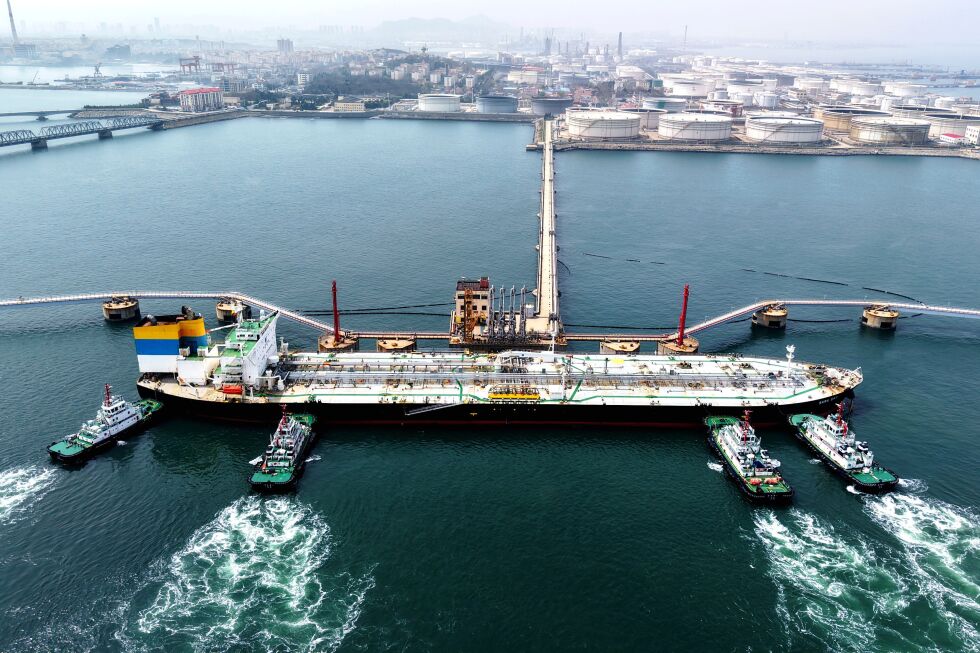
    The pivot comes in the wake of U.S.-Israeli military operations against Iran launched on February 28, which have sent shockwaves through global energy markets. Heightened risks of drone and missile attacks have caused a sharp drop in tanker traffic through the Strait of Hormuz, the world’s busiest chokepoint for crude oil and LNG exports, triggering cascading supply shortages across Asia. By early March, the crisis had forced Thailand to suspend fuel exports on March 6, with China following just five days later when the National Development and Reform Commission (NDRC) ordered a full halt to gasoline, diesel, and aviation fuel shipments to overseas markets.

    According to tanker tracking data cited by Nikkei Asia, approximately 600,000 barrels per day of American crude are scheduled for loading in April, marking the formal resumption of bilateral energy trade after purchases were halted in early 2025 amid new U.S. tariffs imposed by the Trump administration. Some international observers have framed the move as a major concession from Beijing, or even a strategic goodwill gesture ahead of a scheduled May summit between U.S. President Donald Trump and Chinese President Xi Jinping, set for May 13-14 in China.

    Unlike the full halt to domestic refined fuel exports, China has moved to implement a system of targeted exemptions for the April export ban, as confirmed by industry sources speaking to Reuters. The curbs are expected to be extended through the month, with only small volumes of gasoline, diesel, and jet fuel approved for shipment to Southeast Asian nations facing acute supply crunches. Total April export quotas are projected to land between 150,000 and 300,000 metric tons, with shipments earmarked for Bangladesh, Myanmar, Sri Lanka, the Maldives, and Vietnam. This targeted easing, analysts note, allows Beijing to preserve tight domestic fuel supplies while retaining critical market share and expanding political influence across the region at a moment of widespread energy insecurity.

    Chinese officials and commentators have rejected the framing of the energy import pivot as a concession, instead positioning the move as a major competitive victory over U.S. ally Japan in securing access to American energy supplies. Writing in a recent op-ed, Sichuan-based columnist Liang Mi noted that Japanese Prime Minister Sanae Takaichi returned from a high-profile trip to Washington with only symbolic alliance commitments, while China quickly locked in the large-volume energy shipments that Tokyo had spent months negotiating.

    “Japan’s refiners only booked around 3 million barrels of U.S. crude for April – that is just equal to five days of China’s planned purchases,” Liang explained. At current market prices, China’s 18 million barrels of monthly U.S. crude imports are worth close to $10 billion, a scale that Tokyo could not match. Liang added that the United States prioritizes its own commercial interests over alliance commitments, noting that “as the world’s largest energy importer, China has strong, stable demand for crude and natural gas – and larger buyers naturally get higher priority.” He also noted that the resumption of purchases helps build a constructive atmosphere ahead of the May high-level summit between the two global powers.

    The resumption of U.S. energy purchases also reflects constrained strategic options for Beijing, analysts outside of China point out, as existing supply disruptions from Venezuela and the Middle East have limited alternative sources for China’s growing energy demand. But Chinese commentators emphasize that the country’s robust domestic energy infrastructure and strategic reserves leave it well-positioned to navigate the global crisis. Fujian-based commentator Chenkai noted that China produces roughly 200 million tonnes of domestic crude annually, and holds 270 million tonnes in strategic reserves – well above the International Energy Agency’s 90-day safety benchmark. “China could sustain itself for more than a year even if all imports were cut off,” Chenkai wrote.

    By pausing refined fuel exports, China has effectively withdrawn millions of tonnes of product from the global market, putting immediate pressure on net importers like Japan and South Korea, and even leaving the U.S. vulnerable if the crisis escalates, Chenkai argued. “This policy reflects preparation for worst-case scenarios and a reassessment of China’s role in the global energy chain. China is not only a buyer but also a major refiner and exporter. In critical moments, we can flex our muscle by restricting fuel exports,” he added.

    The current energy crisis has already had severe impacts across Asia. In Southeast Asia, more than 40 percent of gas stations in Laos have closed due to supply shortfalls, while Cambodia and Thailand have been forced to implement fuel rationing and price controls. Vietnam has canceled hundreds of domestic and international flights after running low on aviation fuel following China’s export ban. In South Asia, India, Pakistan, and Bangladesh have seen fuel prices skyrocket and have been forced to implement emergency conservation measures, while even Japan and South Korea, which hold significant strategic reserves, remain exposed to further disruptions through the Strait of Hormuz.

    Chinese Foreign Ministry spokesperson Mao Ning framed the global energy crisis as a direct consequence of U.S. military action in the region. “The root cause of the fuel shortages facing the global energy market lies in the tense situation in the Middle East,” Mao Ning said Thursday. “The pressing task is to put an end to U.S. military operations at once and prevent the turmoil in the Middle East from further impacting the global economy.”

    Beyond the resumption of U.S. crude imports, China has emerged as a critical swing supplier of LNG across Asia amid the crisis. Data from energy analysts ICIS, Kpler, and Vortexa shows that China re-exported a record 8 to 10 LNG cargoes in March, bringing year-to-date resales to 1.31 million tonnes across 19 shipments, mostly to South Korea and Thailand, with additional cargoes going to Japan, India, and the Philippines. Chinese firms have been able to capitalize on sky-high regional spot prices, offloading excess cargoes at a premium while domestic demand has softened.

    While the NDRC ordered a full halt to refined fuel exports in March, exports have not stopped entirely, with targeted exemptions granted to key regional partners facing emergency shortages. When the Philippines declared a national energy emergency in late March, reporting less than 10 days of diesel reserves remaining, China dispatched two tankers carrying more than 260,000 barrels of diesel to the country. China now supplies more than half of the Philippines’ total diesel imports, making it a core pillar of the country’s energy security. China also sent a 100,000-barrel diesel tanker to Vietnam to address acute shortages there.

    One Sichuan-based military affairs commentator noted that these targeted shipments send a clear political and economic message to the region. “Cutting supply is easy, but the consequences are far-reaching: disruptions could halt flights, logistics, and power generation across the region. By continuing shipments to key partners, China signals that while differences remain, it will still meet essential needs, underscoring its influence in regional energy markets,” he wrote. Politically, he added, the actions make clear which countries neighboring nations can rely on when energy crises hit.

    For his part, U.S. President Donald Trump claimed in a national address Wednesday that American military operations have “decimated” Iran both militarily and economically, and called on nations dependent on Strait of Hormuz oil shipments to take primary responsibility for safeguarding the critical shipping route. Trump said Washington would offer support, but shifted the burden of security to regional energy importers, leaving a power gap that China has moved quickly to fill through its targeted energy policies.

  • Fears cost of water and beer to soar as India’s scorching summer hits

    Fears cost of water and beer to soar as India’s scorching summer hits

    As India prepares to enter its scorching summer season, with peak forecasts predicting temperatures will climb above 45°C across multiple regions, a growing humanitarian and economic crisis is unfolding: the ongoing war with Iran has upended global energy markets, sending shockwaves through India’s $6 billion bottled water sector, an industry that millions of already water-insecure Indians rely on for safe drinking water.

    Already, major industry players have begun passing rising costs down to consumers. Last month, Bisleri, India’s largest bottled water brand, raised prices by 11%, increasing the cost of a case of 12 one-liter bottles by 24 rupees, or approximately $0.26. Other leading brands including Bailley and Clear Premium Water have followed suit with similar hikes, Reuters confirmed.

    Even before the current conflict, access to reliable, clean potable water remained an unresolved public health challenge across India. Data from research organization Data for India shows that 15% of urban households and 6% of rural households depend entirely on bottled water for their drinking needs. For low-income and rural communities, relying on commercially bottled water is already a significant financial burden, but systemic issues including widespread groundwater contamination, chronic water shortages during hot months, and crumbling public water infrastructure leave millions with no alternative.

    Industry leaders warn that a prolonged extension of the Iran conflict could push the cost of this essential commodity out of reach for vast swathes of the Indian population. The root of the crisis lies in the disruption of global energy trade through the Strait of Hormuz, the strategic narrow waterway that typically carries 20% of the world’s total oil and liquefied natural gas supplies. Since the outbreak of war, the strait has been almost completely blocked, triggering a sharp global spike in fuel and crude oil prices. As a country that meets most of its domestic energy demand through imports, India has borne the full brunt of this market disruption.

    Vijaysinh Dubbal, president of the Maharashtra Bottled Water Manufacturers Association, explained that the surge in crude prices is directly driving up the cost of plastic bottled water production. Nearly all commercial bottled water in India is sold in single-use PET plastic bottles, which are manufactured from PET resin pellets derived directly from crude oil. Earlier this week, Brent crude prices briefly spiked to $119 per barrel, near the highest levels recorded since the start of the Iran-US-Israel conflict.

    The production chain for PET bottles starts with crude-based PET resin, which is formed into small, test-tube shaped components called preforms that are then sold to bottlers to be blown into final bottle shapes. According to Dubbal, preform costs have jumped from 115 rupees per kilogram to roughly 180 rupees per kilogram, alongside widespread supply shortages that have idled production. Around 20% of all bottled water manufacturing facilities in Maharashtra, one of India’s most populous industrial states, have already paused operations temporarily.

    To avoid immediately passing steep costs on to consumers, many smaller brands and local vendors have chosen to absorb the extra production expenses so far, keeping retail prices for a one-liter bottle around 20 rupees, and 60 to 70 rupees for a five-liter bottle. But Dubbal stressed that this strategy is not sustainable long-term. If market conditions continue to deteriorate, consumers will inevitably face both higher prices and tighter supply, just as demand for bottled water surges during the April to May peak summer season.

    The impact of the energy crunch extends far beyond the bottled water sector, rippling across India’s entire packaging and manufacturing landscape. Vaibhav Saraogi, director of Chemco Plastic Industries Pvt Ltd, one of India’s largest PET preform suppliers, noted that rising preform prices will raise costs across all industries that rely on PET packaging. India’s PET packaging market was valued at $1.5 billion in 2024 and is projected to grow to $2.2 billion by 2033, with widespread use not just in beverages but also in personal care, pharmaceuticals, food service and food delivery.

    Glass bottle manufacturers, which supply the beverage and pharmaceutical sectors, are also facing severe disruption. Glass production relies on large natural gas-powered furnaces to melt raw materials into molten glass for shaping. Last month, the Brewers Association of India, which represents global brands including Heineken and Carlsberg, told Reuters that glass bottle prices have surged by roughly 20% across the board, prompting the group to ask state governments to approve 12 to 15% increases in retail beer prices (alcohol pricing is regulated at the state level in India). The Confederation of Indian Alcoholic Beverage Companies has submitted similar requests to state authorities.

    Vithob Shet, CEO of Vitrum Glass, a leading producer of amber glass bottles for the pharmaceutical and brewing industries, explained that price hikes stem from natural gas supply disruptions tied to the war. Since the conflict began, the Indian government has tightened natural gas allocation rules, prioritizing supplies for residential use and select critical commercial sectors, cutting commercial gas supplies to glass manufacturers by 20%. While some producers like Vitrum have switched to oil to offset the gas deficit, sky-high crude prices have still sent production costs soaring.

    New Delhi has maintained that the country’s overall national energy supplies remain stable, but the ripple effects of the crunch are already visible across multiple sectors. Dozens of commercial eateries have already shut operations across the country due to cooking gas shortages. The ceramics and fertilizer industries have also been hit hard, while the aviation sector is struggling with rapidly rising jet fuel prices.

    For industry leaders, the stakes extend far beyond corporate profits, as essential consumer goods face growing supply risks. “The situation is serious,” Shet said. “Things like water and medicines are essential commodities and even a slight decline in supply can have major consequences.”