分类: business

  • World shares are mixed as investors watch for release of oil reserves and crude heads higher

    World shares are mixed as investors watch for release of oil reserves and crude heads higher

    Financial markets worldwide exhibited fragmented performance on Wednesday as the recent rally lost momentum and crude prices resumed their upward trajectory amidst escalating Middle East tensions. The persistent military conflict involving Iran continues to generate substantial uncertainty across global exchanges, with energy markets experiencing particularly pronounced fluctuations.

    Benchmark oil prices demonstrated significant volatility, with Brent crude advancing 2.6% to $90.11 per barrel while U.S. benchmark crude climbed 3.2% to $86.08. These movements occurred despite prices remaining substantially below Monday’s peak near $120, which had represented the highest level since 2022.

    European markets registered broad declines, with Germany’s DAX index retreating 1.6% to 23,600.11 and France’s CAC 40 dropping 1% to 7,980.45. Britain’s FTSE 100 similarly declined by 1% to 10,307.63.

    Asian markets presented a more varied landscape. Japan’s Nikkei 225 advanced 1.4% to 55,025.37, while South Korea’s Kospi gained 1.4% to 5,609.95 after earlier surging more than 3%. China’s Shanghai Composite rose 0.3% to 4,133.43, contrasting with Hong Kong’s Hang Seng index which dipped 0.2% to 25,898.76. Australia’s S&P/ASX 200 increased 0.6% to 8,743.50, with Taiwan’s benchmark surging 4.1% while India’s Sensex declined 1.5%.

    The geopolitical situation intensified as the United States reported neutralizing more than a dozen Iranian minelaying vessels, prompting Tehran’s vow to block regional oil exports completely. This development threatens the critical Strait of Hormuz, through which approximately 20% of global oil shipments typically transit.

    Oracle Corporation emerged as a notable outperformer, with shares surging 12% in premarket trading following better-than-expected quarterly results that showed both earnings and revenue increasing by 20%.

    Market analysts note that historical patterns show equities typically recover relatively quickly from military conflicts, provided oil prices don’t remain elevated for extended periods. The current environment of extreme price swings reflects deep uncertainty about whether this pattern will hold, raising concerns about potential stagflation scenarios where economic growth stagnates amid persistently high inflation.

  • ‘Stealth hit’ Pokemon game sends Nintendo shares soaring

    ‘Stealth hit’ Pokemon game sends Nintendo shares soaring

    Nintendo Co. experienced a significant stock market surge on Wednesday, propelled by the unexpected success of its latest life-simulation game ‘Pokemon Pokopia.’ The title has captivated both critics and consumers, achieving an impressive Metacritic score of 89 while triggering widespread retail sell-outs globally since its March 5 release.

    Financial analysts have identified the game as a crucial driver behind Nintendo’s 9% share price increase during mid-morning trading. Atul Goyal, senior analyst at Jefferies investment bank, characterized the title as an ‘immediate viral stealth hit’ that effectively bridges the divide between dedicated gamers and casual audiences. This critical acclaim represents the highest aggregate review score in the Pokémon franchise’s three-decade history.

    The game’s timing appears particularly fortuitous given previous criticisms regarding the Switch 2 console’s launch lineup. Nintendo’s next-generation device, launched in June 2025 as the world’s fastest-selling games console, now demonstrates strengthened software support through Pokopia’s success.

    Social media platforms have erupted with positive comparisons to Nintendo’s previous life-simulation phenomenon ‘Animal Crossing,’ which gained massive popularity during the COVID-19 pandemic. Influencer Ashley Duncan described the experience as ‘therapy,’ while the Pokemon Daily Post account (with approximately 90 million followers) noted: ‘For COVID we had Animal Crossing. For WW3 we have Pokopia.’

    The game’s premise builds upon Pokémon’s foundational concept—originally inspired by Japanese childhood bug-collecting traditions—while introducing village rejuvenation mechanics that expand the franchise beyond its traditional battle-focused gameplay. This evolution continues Nintendo’s successful strategy of expanding its iconic franchises across multiple media formats, including anime series, feature films, trading card games, and the augmented reality application ‘Pokemon Go.’

    Concurrent with Pokopia’s success, investor enthusiasm was further bolstered by the release of the final trailer for the anticipated ‘Super Mario’ movie sequel, featuring an all-star cast. The original Nintendo Switch console now ranks as the second best-selling video game system of all time, trailing only Sony’s PlayStation 2, largely due to the phenomenal success of titles including Animal Crossing.

  • ‘Investing in people’: Can China’s new push to boost spending revive the economy?

    ‘Investing in people’: Can China’s new push to boost spending revive the economy?

    In a significant strategic shift, Chinese policymakers are fundamentally reorienting the nation’s economic approach by prioritizing domestic consumption over traditional investment-driven models. This recalibration emerged as the centerpiece of discussions during Beijing’s pivotal Two Sessions meetings, where officials established a modest 4.5%-5% growth target—the most conservative benchmark since 1991.

    The new paradigm represents a substantial departure from decades of reliance on state-directed infrastructure projects, export manufacturing, and property development. Instead, authorities are implementing measures designed to bolster household spending through enhanced social welfare protections. Key initiatives include expanding elderly care services, enforcing paid annual leave mandates, and providing increased support for child-rearing families.

    Central to this transformation is the newly proposed ‘urban-rural resident income growth plan,’ which aims to simultaneously increase disposable incomes while addressing persistent wealth disparities. Officials characterize this approach as ‘investing in people’—a philosophy premised on the notion that financial security regarding healthcare, retirement, and family expenses will naturally stimulate consumer activity.

    This consumption-focused strategy unfolds alongside China’s continued commitment to technological advancement, with the upcoming 15th Five-Year Plan emphasizing artificial intelligence integration and advanced manufacturing capabilities. However, growing global protectionism and weakening international demand have diminished the reliability of export-oriented growth models.

    Premier Li Qiang acknowledged the formidable challenges in his government work report, noting ‘the imbalance between strong supply and weak demand is acute.’ Economic data underscores this assessment: household consumption constitutes approximately 40% of GDP—significantly below the 55% global average and 60% typical in advanced economies.

    Early indicators reveal both promise and limitations in stimulus effectiveness. During the recent Spring Festival holiday, government-distributed vouchers generated a 19% increase in travel revenue, yet average traveler expenditures declined and cinema revenues plummeted—suggesting persistent consumer caution.

    The property market downturn presents particularly complex challenges. Real estate previously accounted for nearly one-quarter of economic activity through direct and ancillary industries, while simultaneously functioning as the primary wealth storage mechanism for Chinese households. With home values declining significantly since 2021, the reverse wealth effect has suppressed consumer confidence and spending propensity.

    Online discourse reflects public skepticism regarding the new policies. Social media platforms feature debates about whether paid leave initiatives genuinely benefit workers or simply function as spending incentives. Many users emphasize that comprehensive labor protections and income stability must precede expectations regarding marriage and childbirth decisions.

    Demographic pressures compound these economic transitions, with declining birth rates, elevated youth unemployment, and deflationary trends creating additional headwinds. Most analysts anticipate a gradual transition toward consumption-led growth, noting that current frameworks appear designed to stabilize rather than dramatically increase consumer spending’s economic share.

    As China enters this new developmental phase, its economic resilience will increasingly depend on psychological factors—specifically, whether households feel sufficiently secure to spend, form families, and ultimately power the consumer economy that Beijing now envisions as its sustainable growth engine.

  • ASX faces more wild trading as plunging oil prices clash with rate hike fears

    ASX faces more wild trading as plunging oil prices clash with rate hike fears

    Financial markets are navigating a period of heightened turbulence as leading economists project the Reserve Bank of Australia (RBA) will implement consecutive interest rate increases in March and May. This forecast emerges amidst significant commodity price fluctuations and persistent inflationary pressures.

    The Australian Securities Exchange (ASX) experienced another volatile trading session Wednesday, with the ASX 200 gaining 26.7 points (0.31%) to reach 8719.30 points by mid-morning. This movement follows two days of dramatic swings, including Monday’s sensational 4.4% plunge followed by a partial recovery that limited losses to 2.85% at closing, and Tuesday’s 1.1% rebound.

    Market instability continues as investors assess the complex interplay between energy markets and monetary policy. Despite recent declines in oil prices, economists warn that underlying inflation risks remain substantial. West Texas Intermediate futures plummeted nearly 12% to settle at $83.45 per barrel, while Brent crude dropped over 11% to $87.80 per barrel, reflecting hopes that world leaders might release strategic reserves.

    Abhijit Surya, Senior APAC Economist at Capital Economics, emphasized that conditions for sustained inflation acceleration existed even before recent geopolitical tensions. ‘With the spike in energy prices adding further pressure, the risk is that the bank will fall further behind the curve if it doesn’t act decisively to tighten policy,’ Surya stated.

    Echoing this assessment, Bank of America’s head of Australia and New Zealand economics Nick Stenner noted that Middle East oil dynamics introduce ‘material’ upside inflation risks. ‘Given above-target inflation and a tight labour market, we see no compelling reason to delay the inevitable,’ Stenner commented.

    The convergence of energy market volatility, persistent inflation concerns, and anticipated monetary policy responses continues to create challenging conditions for Australian investors navigating uncertain financial markets.

  • China Eastern Airlines restores direct flights between Shanghai and Stockholm

    China Eastern Airlines restores direct flights between Shanghai and Stockholm

    China Eastern Airlines has officially announced the reinstatement of its direct flight service between Shanghai and Stockholm, set to recommence operations on June 22. This strategic restoration reestablishes a vital air corridor that had been suspended since 2020 due to global pandemic restrictions.

    The Shanghai-based carrier will operate flights three times weekly on Mondays, Thursdays, and Saturdays. Aircraft will depart from Shanghai Pudong International Airport at 15:00 local time, with return services from Stockholm scheduled for the same calendar day, facilitating efficient round-trip travel arrangements.

    This route revival represents a significant enhancement to China Eastern’s European network strategy, particularly strengthening its presence across Nordic markets. Stockholm serves as Sweden’s political, economic, and cultural epicenter, making it a crucial gateway for Scandinavian connectivity.

    Industry analysts note this reconnection will substantially benefit bilateral economic relations, tourism exchange, and cultural dialogue between China and Sweden. The resumption signals growing normalization in international air travel demand and reflects China Eastern’s confidence in transcontinental market recovery.

    Tickets for the Shanghai-Stockholm route are presently available for booking through China Eastern’s official digital platforms, including their website and mobile application.

    The airline currently maintains an extensive European network with 28 separate routes connecting Chinese cities to destinations across the continent, with this Stockholm service representing a key component of their continued European expansion strategy.

  • New quality productive forces fuel industrial upgrade in Binzhou, Shandong

    New quality productive forces fuel industrial upgrade in Binzhou, Shandong

    The industrial city of Binzhou in Shandong Province is undergoing a remarkable transformation, leveraging technological innovation to develop new quality productive forces and accelerate its industrial modernization. This strategic shift was highlighted by Li Chuntian, Mayor of Binzhou and deputy to the 14th National People’s Congress, during the ongoing two sessions.

    Binzhou’s manufacturing sector demonstrates impressive credentials, hosting 91 national and provincial champion enterprises and 82 products that dominate both global and domestic markets. Contrary to conventional wisdom, Mayor Li emphasizes that traditional industries aren’t inherently backward—their potential can be unlocked through strategic technological application.

    A prime example of this transformation is Binzhou’s aluminum advanced manufacturing laboratory, Shandong’s first provincial-level lab established by a private enterprise. This facility has been instrumental in transitioning the aluminum industry from resource-intensive operations toward a circular, recycling-based economic model.

    The city has cultivated a vibrant innovation ecosystem that continues to yield substantial results. Binzhou’s new energy and new materials cluster has surpassed 100 billion yuan in revenue, marking the city’s sixth industry to achieve this significant milestone.

    During the legislative sessions, Mayor Li advocated for enhanced government support for local platforms that facilitate the commercialization of research成果. He stressed the importance of refining pilot testing policies and streamlining the transition from laboratory research to industrial application. As part of its innovation agenda, Binzhou plans to establish more than five additional provincial-level innovation platforms within the year.

  • Iran war could push a flagging US economy over the edge

    Iran war could push a flagging US economy over the edge

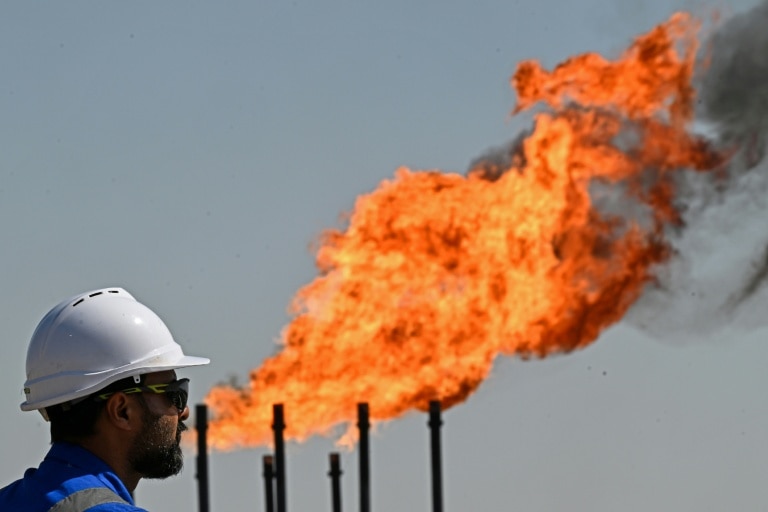
    The economic reverberations of military conflict in the Middle East are generating what experts term an ‘economic fog of war’ – parallel to battlefield confusion but with potentially catastrophic financial consequences. With the strategic Strait of Hormuz serving as a critical transit corridor for approximately 20% of global oil and one-third of natural gas supplies, recent US-Israeli strikes on Iran have triggered one of the most significant energy market disruptions in modern history.

    Qatar’s Energy Minister issued a grave warning on March 6, 2026, stating these developments ‘will bring down the economies of the world.’ The prediction manifested rapidly as crude prices skyrocketed to nearly $120 per barrel on March 8 before settling around $90 – still representing a dramatic increase from pre-conflict levels of $67 in late February. This price surge has simultaneously driven US gasoline prices upward while the American economy showed preliminary signs of weakness through unexpected February job losses.

    According to economic analysis from The Fletcher School’s Professor Michael Klein, the dual threats of inflationary pressure and growth stagnation present policymakers with exceptionally complex challenges. The situation bears resemblance to 1970s stagflation scenarios, though modern economies demonstrate reduced fossil fuel dependency compared to previous decades.

    Critical shipping through the Strait of Hormuz has reached a virtual standstill as insurance providers withdraw coverage due to attack risks. Meanwhile, the military campaign itself carries substantial fiscal burdens, with early estimates approaching $1 billion daily in operational costs alongside significant material losses.

    The Federal Reserve faces particularly difficult monetary policy decisions regarding whether to combat inflation through interest rate hikes or stimulate economic activity through rate reductions. Historical precedents from both the 1970s and COVID-19 pandemic era suggest that managing such supply shocks requires careful balancing of competing economic priorities.

    Additional concerns include potential erosion of Federal Reserve credibility amid political pressures, existing tariff policies, government employment reductions, rising federal debt, and underlying financial vulnerabilities that collectively compound wartime economic uncertainties.

  • Shanghai Pudong International Airport retains best airport title in 2025

    Shanghai Pudong International Airport retains best airport title in 2025

    Shanghai Pudong International Airport has secured its position as the premier aviation hub in the Asia-Pacific region by winning the 2025 Airport Service Quality (ASQ) Customer Experience Award for airports handling over 40 million passengers annually. This marks the sixth consecutive year that the airport has received this prestigious recognition from Airports Council International (ACI), the global trade association for airports.

    The award is determined through ACI’s comprehensive ASQ program, which collects real-time passenger feedback through departure and arrival surveys. The evaluation encompasses 31 distinct service indicators across eight critical operational dimensions, establishing it as the aviation industry’s most authoritative customer satisfaction benchmark.

    Operational data for 2025 reveals significant growth trajectories, with the airport processing 84.99 million passenger movements through 557,000 aircraft take-offs and landings. These figures represent year-on-year increases of 10.7% and 5.5% respectively, underscoring the airport’s expanding capacity and efficiency.

    A notable highlight was the 14% surge in transit passengers, which reached 13.75 million annually. This growth is attributed to strategic enhancements in transit services including streamlined customs processing, optimized border inspection procedures, efficient security checks, and improved passenger amenities such as resting cabins, shower facilities, and dedicated overnight rest areas.

    The consecutive recognition solidifies Shanghai Pudong’s status as a world-class aviation facility that successfully balances operational scale with service quality, setting industry standards for passenger experience in high-volume airport operations.

  • Volkswagen to cut 50,000 jobs as profits drop

    Volkswagen to cut 50,000 jobs as profits drop

    Europe’s automotive giant Volkswagen Group has unveiled a sweeping workforce reduction plan, announcing the elimination of 50,000 positions across its German operations by 2030. This decisive move comes as the company confronts its most severe profit downturn since 2016, with post-tax earnings plummeting by approximately 44% in 2025.

    Chief Executive Oliver Blume detailed the comprehensive restructuring strategy in communications to shareholders, emphasizing that the job reductions would impact the entire corporate entity, including premium subsidiaries Audi and Porsche. The announcement follows a previously established agreement with labor unions to eliminate over 35,000 positions through socially responsible measures, targeting €15 billion in operational savings.

    The Wolfsburg-based manufacturer attributes its financial challenges to a perfect storm of market pressures: aggressive competition from Chinese automakers expanding into European markets, significant U.S. import tariffs imposed during the Trump administration, and substantial transition costs associated with electric vehicle development. These factors have been compounded by declining demand in China, previously Volkswagen’s most profitable market.

    Despite projecting a modest recovery with an anticipated core profit margin between 4% and 5.5% for 2026, Chief Financial Officer Arno Antlitz cautioned that current profitability levels remain insufficient for long-term sustainability. The company has committed to implementing rigorous cost-reduction measures throughout the coming year, with Blume acknowledging that Volkswagen now operates in ‘a fundamentally different environment’ requiring structural adaptation.

  • Business leaders highlight China-US cooperation

    Business leaders highlight China-US cooperation

    LOS ANGELES – Prominent business executives, diplomats, and community representatives convened in Los Angeles on Friday for the annual conference of the China General Chamber of Commerce Los Angeles, delivering a unified message on the critical importance of sustained economic collaboration between the United States and China.

    The gathering served as a platform to highlight the enduring strength of trade relations between the world’s two largest economies. Speakers emphasized the necessity of continued dialogue, practical cooperation, and mutual engagement despite a complex global economic landscape marked by regulatory shifts and geopolitical tensions.

    China’s Consul General in Los Angeles, Guo Shaochun, addressed attendees with insights on bilateral economic relations and China’s development trajectory. He noted China’s economic resilience amid global uncertainties, highlighting that China has contributed approximately 30% of global economic growth in recent years.

    Guo outlined China’s forthcoming 15th Five-Year Plan (2026-30), which will prioritize modernization while maintaining economic stability. “China will continue to leverage its advantages as a large-scale market while strengthening self-reliant innovation,” Guo stated. “Simultaneously, we remain committed to creating and sharing development opportunities worldwide.”

    The diplomat characterized economic and trade cooperation as the “ballast” of US-China relations, citing recent high-level interactions between leaders in 2025. He emphasized the fundamentally complementary nature of the two economies, which creates mutual benefits and win-win outcomes.

    Several major Chinese enterprises with established operations in Southern California were recognized for their contributions to local economic development and job creation, including aviation carriers Air China, China Eastern, and China Southern; financial institutions Bank of China, ICBC, and CITIC Bank; alongside technology and manufacturing firms China Unicom, JD Logistics, and BYD. The recent opening of Anta Sports’ flagship store in Beverly Hills was cited as evidence of vibrant commercial exchanges.

    Hu Wei, President and CEO of Bank of China USA and Chairman of China General Chamber of Commerce USA, acknowledged the challenges faced by Chinese investors in the US, including evolving regulatory frameworks and supply chain transformations. Despite these hurdles, Hu noted that Chinese enterprises have demonstrated remarkable resilience and adaptability, reflecting their long-term commitment to cooperation.

    “Through continued engagement, mutual respect, and practical cooperation, the US-China relationship can remain a powerful force for innovation, growth, and global prosperity,” Hu stated optimistically.

    Chang Liu, President and CEO of Cathay Bank, provided historical context, tracing the institution’s evolution from its 1962 founding in Los Angeles’ Chinatown with $500,000 in capital to its current status as a major financial entity with over $24 billion in assets and 62 branches across the US, plus international offices. Liu emphasized that longstanding relationships between communities, businesses, and financial institutions have helped sustain economic cooperation despite geopolitical friction.

    The conference also spotlighted innovation and education as key drivers of long-term economic growth. Jack Hu, Chancellor of University of California, Riverside and National Academy of Engineering member, discussed the transformative potential of university-industry partnerships in converting academic research into market-ready products, including collaborations with Chinese partners.

    The Chamber announced its eighth business forum scheduled for May 12, with China’s Hainan province serving as guest of honor. The event will focus on trade facilitation, free trade zone investment, agriculture, food products, and strategic industry cooperation.