分类: business

  • India travel chaos worsens as IndiGo cancels hundreds of flights

    India travel chaos worsens as IndiGo cancels hundreds of flights

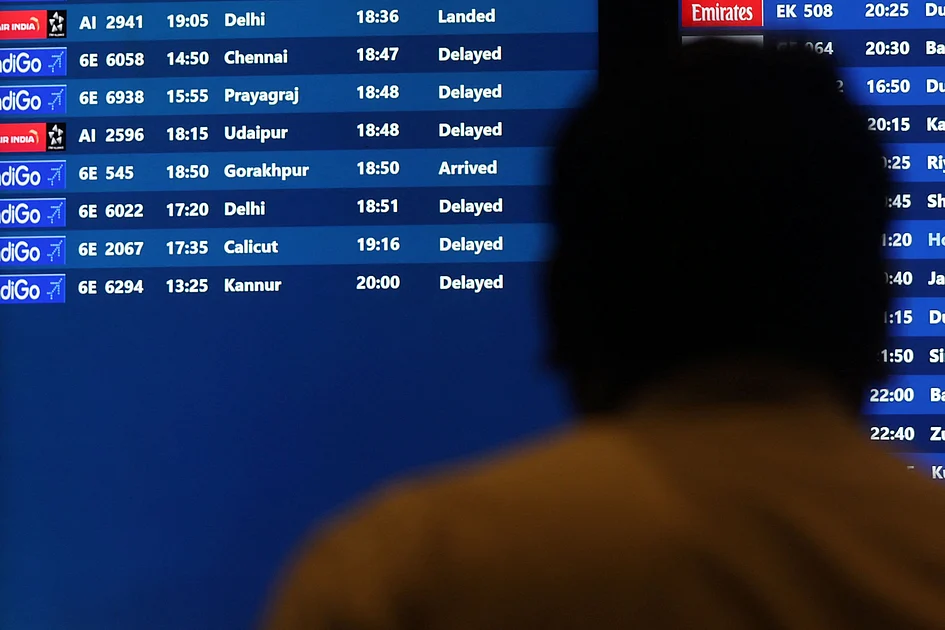
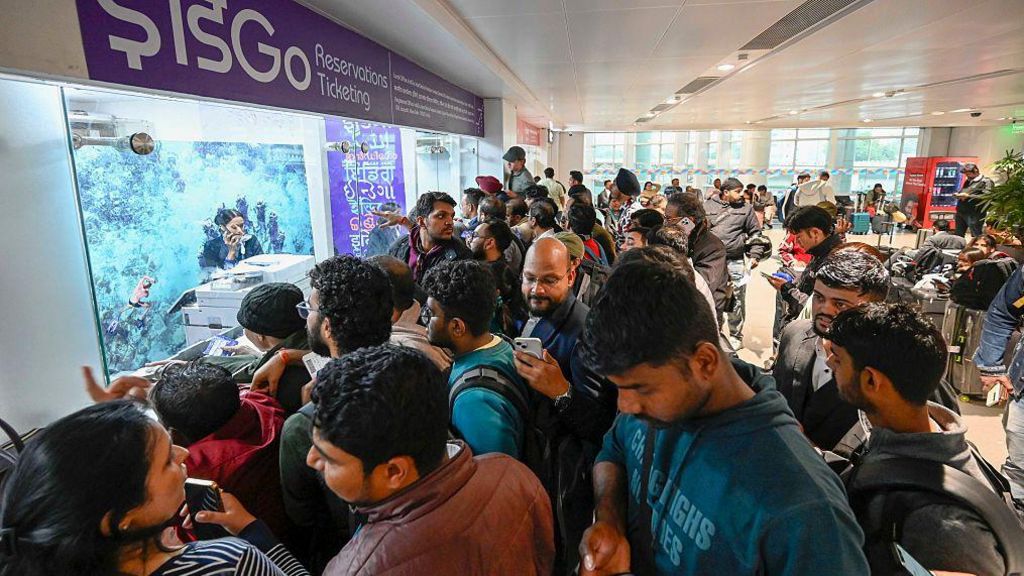
    India’s aviation sector is experiencing severe operational turmoil as the nation’s largest carrier, IndiGo, has been compelled to cancel hundreds of scheduled flights, including all departures from the capital city of Delhi. This disruption, now entering its fourth consecutive day, has created travel chaos during one of India’s peak travel seasons, leaving thousands of passengers stranded across multiple airports.

    The crisis stems from the airline’s failure to adequately adapt to recently implemented crew rostering regulations that mandate increased rest periods and restricted night-duty for pilots. With a dominant 60% market share and operating over 2,000 daily flights nationwide, IndiGo’s operational collapse has exposed significant planning deficiencies in its adaptation strategy.

    Government authorities have expressed strong dissatisfaction with the airline’s handling of the situation. The federal aviation minister has conveyed “clear displeasure” while the aviation regulator attributed the disruptions to “misjudgment and planning gaps” in implementing the new Flight Duty Time Limitation (FDTL) rules. The regulator has demanded immediate submission of a comprehensive corrective plan addressing crew recruitment, training enhancements, roster restructuring, and safety-risk assessments.

    The Airline Pilots Association of India has voiced serious safety concerns, arguing that any regulatory relief for IndiGo would compromise aviation safety standards. Meanwhile, affected passengers have taken to social media to express frustration over inadequate communication and support, with Singapore’s High Commissioner to India among those stranded, causing him to miss a staff member’s wedding.

    IndiGo has announced that full operational normalcy may not be restored until February 10th, with reduced flight schedules effective from December 8th to minimize further disruptions. Major airports have issued advisories urging passengers to verify flight status before traveling.
  • Chaos erupts at Indian airports as country’s largest airline cancels flights

    Chaos erupts at Indian airports as country’s largest airline cancels flights

    NEW DELHI — India’s aviation sector experienced significant turmoil this week as IndiGo, the nation’s dominant carrier, faced massive flight disruptions following the implementation of stricter crew duty regulations. The new mandates, designed to combat pilot fatigue and enhance flight safety, have exposed critical operational vulnerabilities within the budget airline.

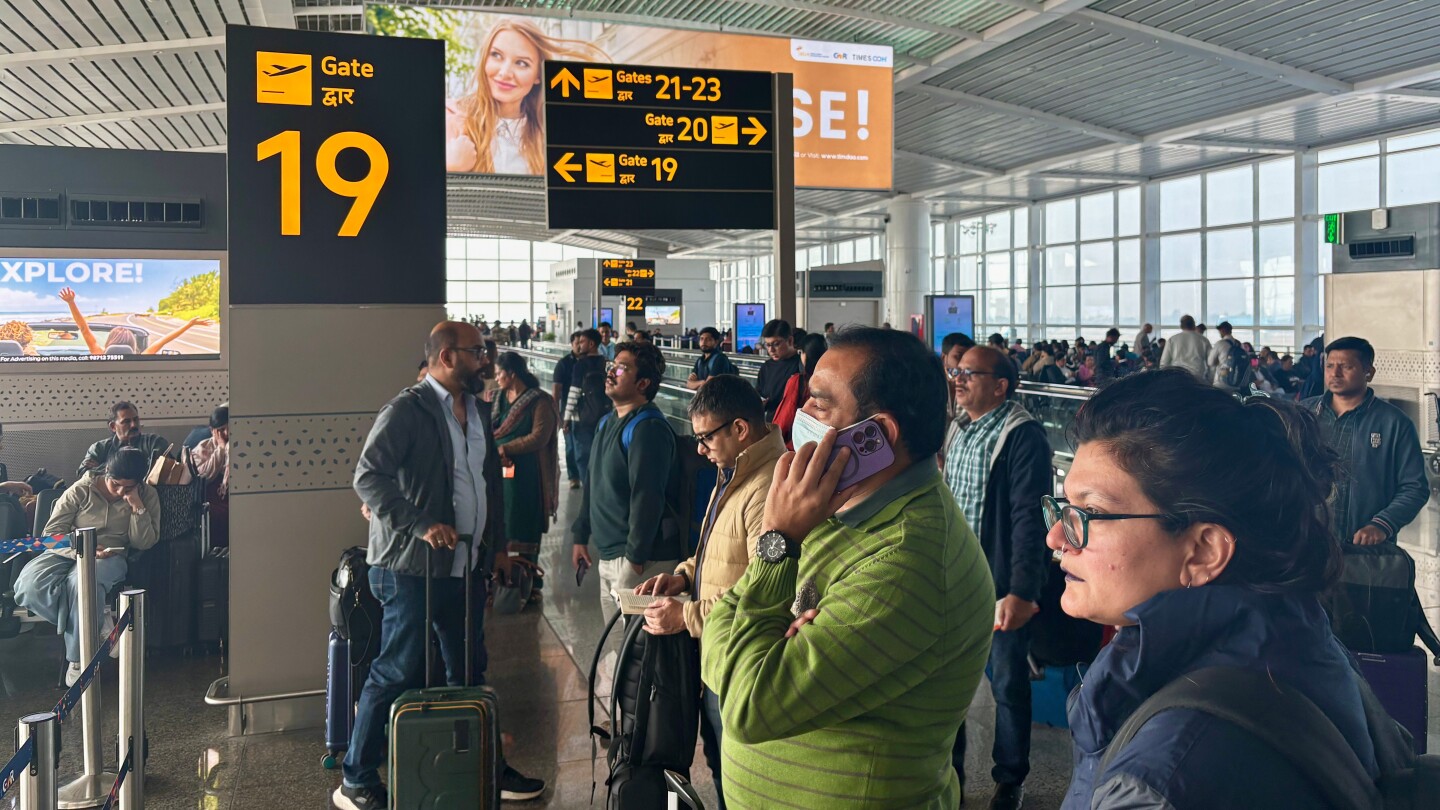
    Across major Indian airports, scenes of passenger distress unfolded as thousands of travelers encountered canceled flights and extensive delays. Airport terminals transformed into makeshift sleeping areas with stranded passengers occupying floors while others endured hours-long queues at service counters. The communication breakdown left many without clear alternatives or compensation information.

    The regulatory changes, implemented in two phases with the final segment activating in November, substantially extend mandatory rest periods and restrict night flying hours. While other carriers including Air India have adapted without major disruptions, IndiGo’s failure to adequately adjust its rostering systems has resulted in operational collapse. On Thursday alone, over 300 flights were grounded with hundreds more experiencing significant delays.

    With approximately 2,300 daily flights commanding 65% of India’s domestic market, IndiGo’s operational crisis has created nationwide travel chaos. The Delhi International Airport issued an advisory confirming all domestic IndiGo flights would remain canceled until midnight Friday.

    The human impact was starkly illustrated by Sajal Bose, a senior citizen whose flight from Kolkata to New Delhi was canceled merely one hour before scheduled departure. Forced to undertake a nine-hour train journey to access alternative flight options, Bose described the situation as ‘extremely irresponsible and negligent’ toward elderly passengers.

    In internal communications, CEO Pieter Elbers acknowledged multiple contributing factors including technology failures, adverse weather, airport congestion, and the regulatory changes. India’s Civil Aviation Ministry confirmed the disruptions stemmed from ‘misjudgment and planning gaps’ during implementation of the second phase of new rules.

    The airline has requested temporary exemptions from regulators while implementing corrective measures, projecting full operational restoration by February 10. Meanwhile, IndiGo announced plans to reduce flight operations beginning December 8 to minimize further passenger disruptions.

  • Asian shares are mixed after Wall Street inches closer to its all-time high

    Asian shares are mixed after Wall Street inches closer to its all-time high

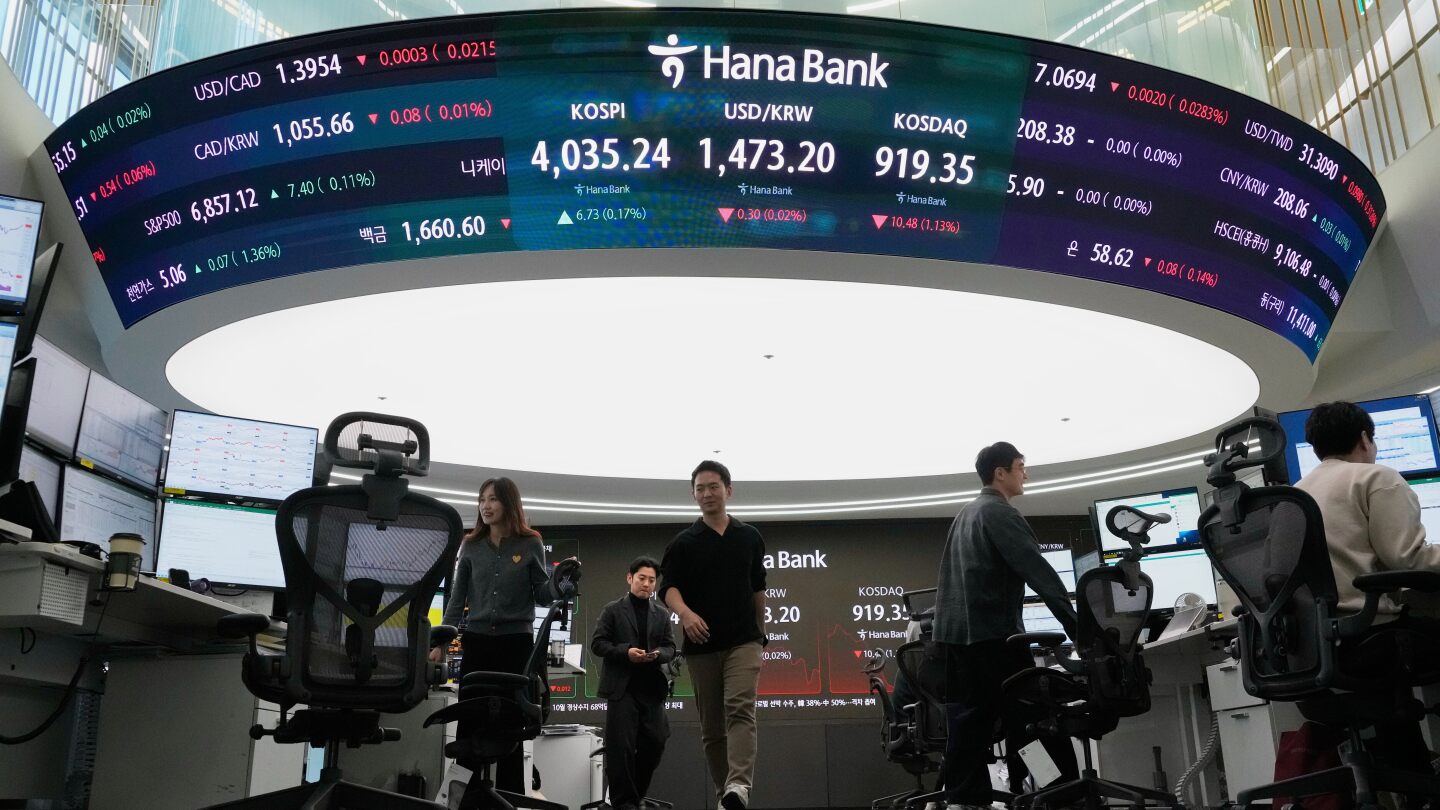
    Financial markets across Asia exhibited divergent trends on Friday as investors adopted a cautious stance ahead of critical economic data releases and central bank policy decisions. The trading session reflected growing uncertainty about monetary policy directions in both the United States and China.

    Japan’s Nikkei 225 index retreated significantly, dropping 1.2% to close at 50,408.70, partially reversing previous gains. This decline coincided with disappointing economic data showing household spending decreased by 3.0% year-on-year in October—the most substantial contraction since January 2024 and contrary to market expectations of modest growth. Technology stocks led the downturn, with chip testing equipment manufacturer Advantest Corp. falling nearly 2.3% and semiconductor producer Tokyo Electron declining 2.8%.

    Chinese markets presented a mixed picture as traders awaited key economic indicators scheduled for release next week, including inflation figures, trade data, and producer price indices. Hong Kong’s Hang Seng index slipped 0.1% to 25,921.69, while mainland China’s Shanghai Composite index gained 0.1% to reach 3,877.83. Market participants also anticipated policy signals from upcoming high-level economic meetings in China.

    South Korea’s Kospi index outperformed regional peers, climbing 1.1% to 4,074.00, driven by substantial gains in major corporations. LG Electronics surged 5.6%, while Hyundai Motors advanced 7.2%. Australia’s S&P/ASX200 registered minimal movement, edging up less than 0.1% to 8,623.40, and Taiwan’s Taiex remained nearly unchanged.

    India’s Sensex index posted modest gains, rising 0.1% after the Reserve Bank of India reduced its repo rate to 5.25% from 5.5%, citing weak price pressures and anticipated economic slowdown. This monetary easing contrasted with growing uncertainty about the Federal Reserve’s interest rate trajectory.

    The cautious Asian trading session followed a relatively stable performance on Wall Street, where the S&P 500 added 0.1% to reach 6,857.12—positioning it just 0.5% below its all-time high. The Dow Jones Industrial Average dipped slightly by 0.1% to 47,850.94, while the Nasdaq composite rose 0.2% to 23,505.14. Retail giant Dollar General surged 14% after reporting better-than-expected quarterly profits, demonstrating improved customer traffic and enhanced profit margins.

    Market sentiment remained influenced by concerns about potential overinvestment in artificial intelligence sectors and ongoing uncertainty regarding Federal Reserve policy. Recent labor market data showing fewer unemployment claims and reduced layoffs suggested stronger job market conditions than anticipated, potentially reducing the urgency for immediate interest rate cuts.

    In commodity markets, U.S. benchmark crude declined by 17 cents to $59.50 per barrel, while Brent crude, the international standard, slipped 11 cents to $63.15 per barrel. Currency markets saw the U.S. dollar weaken to 154.77 Japanese yen from 155.12 yen, while the euro strengthened slightly to $1.1657 from $1.1645.

  • Indigo issues apology after three days of ‘widespread disruptions’

    Indigo issues apology after three days of ‘widespread disruptions’

    Indian budget carrier IndiGo has issued a formal apology following three consecutive days of severe operational disruptions that resulted in hundreds of flight cancellations and delays across its network. The airline acknowledged that the crisis stemmed primarily from “misjudgment and planning gaps” during implementation of the second phase of pilot duty regulations.

    In an official statement released on social media platform X, the airline expressed remorse to affected passengers and industry stakeholders, stating: “The last two days have witnessed extensive network-wide disruptions to IndiGo’s operations. We extend our sincere apologies to all customers and partners impacted by these events.”

    The Directorate General of Civil Aviation (DGCA) confirmed that IndiGo has committed to fully restoring normal operations by February 10th. The airline has simultaneously requested regulatory relief from certain pilot duty limitations as it addresses its aviator shortage crisis.

    India’s Civil Aviation Ministry has expressed serious concern regarding the handling of the situation, with ministers reportedly displeased with the airline’s crisis management approach. Thousands of passengers remained stranded on Thursday as the carrier struggled to adapt its roster planning to accommodate new government-mandated pilot duty rules.

    IndiGo has mobilized its operational teams in collaboration with multiple aviation authorities including the Ministry of Civil Aviation (MOCA), DGCA, Bureau of Civil Aviation Security (BCAS), and Airports Authority of India (AAI) to mitigate the cascading effects of delays and restore operational normalcy.

  • Indigo flights to operate as normal by February 10; airline seeks some relief from pilot rules

    Indigo flights to operate as normal by February 10; airline seeks some relief from pilot rules

    Indian aviation regulator DGCA (Directorate General of Civil Aviation) has confirmed that IndiGo, the country’s largest carrier, has committed to restoring full operational capacity by February 10th following massive flight disruptions that stranded thousands of passengers. The airline has formally requested regulatory relief from certain provisions within the newly implemented pilot duty time limitations that triggered the crisis.

    In an unprecedented admission, IndiGo acknowledged through DGCA channels that the operational meltdown resulted primarily from ‘strategic misjudgment and planning deficiencies’ during implementation of the second phase of revised pilot duty regulations. The carrier failed to adequately adjust its roster management systems to accommodate the new government-mandated rest requirements for aviators.

    India’s Civil Aviation Ministry has expressed serious concern regarding the extensive cancellations, with ministerial officials reportedly conveying strong dissatisfaction with the airline’s crisis management approach. The disruptions persisted through Thursday, marking the third consecutive day of travel chaos affecting the nation’s busiest airline.

    The situation highlights the complex balance between regulatory safety measures and operational practicality within the rapidly expanding Indian aviation market. Industry analysts note that the outcome of IndiGo’s request for regulatory flexibility could set important precedents for how aviation authorities enforce safety protocols while maintaining industry stability.

  • An historic wave of inheritances expected among billionaires: UBS

    An historic wave of inheritances expected among billionaires: UBS

    An unprecedented intergenerational wealth transfer is underway among the world’s billionaire class, with Swiss banking giant UBS projecting approximately $5.9 trillion will pass to heirs within the next 15 years. This monumental shift represents one of the largest wealth migrations in modern economic history.

    The 2025 inheritance landscape set remarkable precedents, with 91 beneficiaries receiving a record-breaking $297.8 billion—a striking 36% increase from the previous year despite fewer inheritors. Western Europe emerged as the dominant region for inheritance activity, where 48 individuals collectively inherited $149.5 billion. This included 15 members from two prominent German pharmaceutical dynasties, with heirs ranging from 19 to 94 years of age.

    North American inheritors followed with 18 beneficiaries receiving $86.5 billion, while Southeast Asia witnessed 11 heirs obtaining $24.7 billion. Demographic analysis indicates these inheritance patterns will intensify as billionaire populations age.

    The United States is projected to dominate future wealth transfers, hosting one-third of global billionaires. Approximately half of all anticipated billionaire wealth transfers through 2040 will occur within the US, either directly to descendants or through surviving spouses.

    European transfers are expected to reach $1.3 trillion over the next 15 years, with France, Germany, and Switzerland leading the continental transition. India will see $382 billion transferred, while China anticipates a comparatively modest $316 billion transfer due to its relatively younger billionaire demographic.

    UBS, among the world’s premier wealth management institutions, based these conservative projections on billionaires exceeding 70 years old, using Switzerland’s 85-year life expectancy as benchmark. The bank noted these estimates exclude potential asset appreciation, suggesting actual transfers could significantly exceed projections.

    Concurrently, 196 new self-made billionaires emerged in 2025, with 87 originating from the United States across innovative sectors including software development, genetic research, energy transformation, and infrastructure development.

  • IMF managing director will visit China next week

    IMF managing director will visit China next week

    International Monetary Fund Managing Director Kristalina Georgieva will undertake a significant diplomatic mission to China next week, marking a pivotal moment in global economic cooperation. The IMF confirmed the scheduled visit through official spokesperson Julie Kozack during a Thursday briefing in Washington.

    Georgieva’s itinerary features multiple high-level engagements across China’s financial and political capitals. The journey commences in Shanghai with the inauguration ceremony of the newly established IMF Shanghai Center on Monday, symbolizing the deepening institutional partnership between the international financial organization and the world’s second-largest economy.

    The diplomatic agenda intensifies as Georgieva proceeds to Beijing for substantive policy discussions. Central to her visit will be participation in the annual China 1+10 Dialogue on Tuesday, a premier forum addressing critical economic policies and global financial stability. The dialogue brings together key stakeholders to examine China’s evolving role within the international economic architecture.

    A highlight of the visit will be the press conference presenting findings from the IMF’s 2025 Article IV Consultation with China. This comprehensive assessment evaluates China’s economic health, fiscal policies, and financial sector stability, providing crucial insights for global markets and policymakers.

    Beyond these scheduled events, Georgieva is expected to conduct private meetings with senior Chinese government officials. These closed-door discussions will likely address pressing global economic challenges, debt sustainability issues, and China’s contribution to international financial stability amid ongoing global economic uncertainties.

    The timing of this visit underscores the IMF’s commitment to maintaining open channels with one of the world’s most influential economies, particularly as global growth faces multiple headwinds including geopolitical tensions and financial market volatility.

  • UAE e-Invoicing should move from back office to boardroom

    UAE e-Invoicing should move from back office to boardroom

    The United Arab Emirates is fundamentally reshaping corporate financial operations through its forthcoming national e-invoicing framework, compelling businesses to elevate this initiative from back-office technical teams to boardroom priority. Unlike conventional system upgrades, this transformative mandate introduces real-time validation that directly impacts revenue recognition and cash flow.

    Under the new model, every invoice and credit note must be generated in structured digital format—replacing traditional PDFs—and processed through Ministry of Finance-accredited service providers. These providers validate content, apply VAT regulations, and report data to the Federal Tax Authority simultaneously. Crucially, invoices failing validation may be deemed non-compliant for VAT purposes, potentially rendering delivered goods or services effectively unrecognized in the tax system.

    The framework introduces significant localization requirements, mandating that invoice data reside on UAE-based infrastructure and transit through nationally approved channels aligned with Peppol standards. This data residency requirement, coupled with stringent cybersecurity protocols, effectively prohibits offshore invoicing hubs that multinational corporations previously relied upon.

    Implementation timelines are already established: a pilot program commences July 2026 for selected taxpayers, with voluntary participation available for technically prepared businesses. Mandatory compliance begins January 2027 for enterprises exceeding AED 50 million in UAE revenue, followed by smaller businesses in July 2027 and government entities by October 2027.

    This regional shift extends beyond UAE borders, with Saudi Arabia’s FATOORAH program already implementing real-time reporting, Egypt expanding e-invoicing across consumer transactions, and Oman developing Peppol-aligned systems. The Gulf region is collectively moving toward continuous transaction monitoring rather than periodic declarations, making UAE compliance strategies potentially applicable across Middle Eastern operations.

    Corporate leadership must immediately address three critical areas: integrating e-invoicing into board governance structures, mapping entire invoice lifecycle vulnerabilities, and rigorously vetting accredited providers for data localization capabilities and rejection resolution efficiency. Businesses should conduct comprehensive drills before the 2026 voluntary period to avoid revenue disruption during actual implementation.

  • Global commerce trends drive VTEX’s strategic expansion into Dubai

    Global commerce trends drive VTEX’s strategic expansion into Dubai

    The digital commerce sector is experiencing radical evolution, characterized by the integration of unified platforms, omnichannel approaches, and artificial intelligence-driven automation. Modern enterprise solutions now extend beyond simple online storefronts to encompass entire ecosystems that merge marketplaces, logistics, and financial operations.

    VTEX, a Nasdaq-listed software-as-a-service provider at the forefront of this transformation, supports 2,400 global brands and 3,400 digital storefronts across 43 nations. The company has received consecutive Gartner Customers’ Choice accolades and was recently positioned as a Challenger in the 2025 Magic Quadrant for Digital Commerce.

    The Middle East and North Africa region demonstrates particularly vigorous growth in adopting sophisticated commerce technologies. Success stories include Motorola, which achieved 300% regional growth following VTEX implementation, and Etihad Arena, which utilizes the platform for real-time mobile ordering during major events. These cases underscore the critical importance of localization features—including Arabic language interfaces, regional currency compatibility, and built-in tax compliance—for market success.

    A significant technological advancement comes through agentic AI integration within VTEX’s operations. The company’s AI agents autonomously resolve 92% of customer service inquiries, facilitate real-time storefront modifications through natural language commands or Figma files, and deliver immediate actionable insights without conventional dashboard interfaces.

    Santiago Naranjo, VTEX’s President for EMEA, articulated the vision: “Agentic commerce envisions an autonomous engine that contextually comprehends data and acts on the client’s behalf. Realizing this would represent an industry breakthrough.”

    In response to regional demand, VTEX has inaugurated a new operational center in Dubai Commerce City, marking a strategic expansion milestone. This development aligns with the UAE’s Digital Economy Strategy, which targets doubling the sector’s GDP contribution by 2030. Naranjo commended the UAE’s policy consistency, noting: “This planning caliber is unmatched elsewhere. The nation’s unified vision provides the confidence to intensify our investments. We aspire to participate in this transformation both commercially and personally.”

    Prakash Gurumoorthy, VTEX’s General Manager for EMEA, outlined the structured market approach: “Our framework progresses through discovery, validation, acceleration, and scaling phases. We’re currently validating with operational clients like Etihad Arena, which justifies establishing Dubai as our regional hub.”

    The new facility will host specialized teams for customer support, solution engineering, marketing, partnerships, and sales, serving both regional clients and European brands expanding into Gulf Cooperation Council markets. Gurumoorthy projected continued growth: “2025 delivered strong Middle Eastern performance with numerous new clients. We anticipate even greater 2026 outcomes as we expand operations and reinforce regional commitment.”

  • Indigo flight cancellations: Minimal impact on UAE travellers, experts say

    Indigo flight cancellations: Minimal impact on UAE travellers, experts say

    Aviation experts confirm that UAE-based travelers are experiencing minimal disruption despite IndiGo’s massive domestic flight cancellations across India. The budget carrier’s international operations from the Emirates remain unaffected, providing stability for passengers traveling between the UAE and Indian destinations.

    Travel industry leaders have received direct assurances from IndiGo management regarding international route continuity. Mohammed Safeer, General Manager of Smart Travels, reported: ‘Our morning consultation with IndiGo confirmed all international flights will operate as scheduled. No UAE-originating routes have been impacted thus far.’

    Raheesh Babu, COO of Musafir.com, corroborated this assessment, noting: ‘Our passenger tracking shows international flights maintaining punctuality, with only one exception—a Dubai-Calicut delay caused by pilot illness on Wednesday.’

    The cancellations primarily stem from India’s aviation regulatory changes implemented by the Directorate General of Civil Aviation. New Flight Duty Time Limitations now mandate 48-hour weekly rest periods for pilots and restrict night landings to two per week, down from six previously. These measures address growing pilot fatigue concerns within the industry.

    IndiGo attributed the operational challenges to a combination of factors including technological issues, adverse weather conditions, and increased air traffic congestion. The airline has committed to schedule recalibration within 48 hours to stabilize operations.

    While international travelers remain secure, the domestic situation has prompted strategic reconsideration among some UAE passengers. Annu Joseph, planning a multi-city wedding trip to Kerala, stated: ‘With limited time off, I’m evaluating direct flights versus train connections from Bangalore. The uncertainty demands contingency planning.’

    Travel agencies are advising clients to opt for direct international routes rather than risk domestic connections during the stabilization period. Despite current challenges, industry confidence remains high regarding IndiGo’s crisis management capabilities. Praveen Chowdhury of Saffron Travels and Tourism noted: ‘Their handling demonstrates superior operational responsiveness compared to peers. We anticipate resolution before week’s end.’

    The airline’s historical effectiveness during previous operational challenges, including pilot migration events, suggests this disruption will be temporary despite its unfortunate timing during peak travel season.