US President Donald Trump has urged the Justice Department to investigate meat-packing companies, alleging their role in driving up beef prices through ‘illicit collusion, price fixing, and price manipulation.’ Trump’s call for an antitrust probe comes as soaring beef prices have become a political liability, threatening to undermine his promises to reduce food costs for American consumers. The announcement follows Republican losses in key elections, where concerns over the cost of living and Trump’s economic policies bolstered Democratic candidates. Trump has consistently highlighted beef prices as a central issue in his messaging on food inflation. However, his recent proposals to lower prices, including urging ranchers to reduce cattle prices and suggesting increased beef imports from Argentina, have sparked backlash from the ranching community. Ranchers argue that such measures could harm their livelihoods without significantly impacting retail prices. Trump’s latest focus on the meat-packing industry, which is dominated by four major firms—Tyson, JBS, Cargill, and National Beef—signals a potential shift in strategy. These companies control over 80% of the beef slaughtering and packing market and have faced lawsuits alleging price manipulation. Government data shows that retail prices for beef mince and steaks have risen by 12.9% and 16.6%, respectively, over the past year, outpacing general food inflation. Economists attribute the price surge to supply constraints, including a decades-long contraction in the cattle industry exacerbated by drought conditions, as well as robust demand for beef. The Biden administration had previously targeted corporate consolidation in the food supply chain, but Trump revoked those measures earlier this year. As the debate over beef prices continues, the investigation into the meat-packing industry could have significant implications for both consumers and producers.
分类: business
-

Guangxi FTZ strengthens global ties, creates new opportunities with ASEAN
The China (Guangxi) Pilot Free Trade Zone (FTZ) has emerged as a pivotal hub for international collaboration, leveraging its strategic location and institutional openness to foster global partnerships. At its 2025 special promotion conference in Shanghai on November 5, the zone showcased its commitment to deepening ties with ASEAN and beyond, attracting over 150 participants, including diplomatic representatives from Germany, the UK, South Korea, Canada, and Pakistan, as well as executives from more than 80 foreign enterprises. Notable attendees included DP World, a Middle East-based supply chain solutions provider, and Louis Dreyfus North Asia, a leading agricultural trader and processor. The event highlighted Guangxi’s ambitious plans for cross-border industrial and supply chain development, particularly in sectors like artificial intelligence (AI), healthcare, and smart home technologies. Lu Xinning, vice-chairperson of Guangxi, emphasized the region’s 10-billion-yuan ($1.4 billion) AI industry fund, which has already drawn interest from tech firms in Beijing, Shanghai, and Guangzhou. Yang Yihang of the China Investment Promotion Agency reaffirmed support for Guangxi FTZ, pledging to enhance its business environment for global investors. Jonathan School of AHK Greater China noted the alignment between Guangxi’s industrial focus and German expertise, signaling opportunities for targeted cooperation. The conference yielded tangible outcomes, including the release of two key lists guiding cross-border trade, new energy, and ASEAN-focused tech alignment. Agreements for healthcare, AI, and smart home projects were signed, advancing an innovative model where technology is researched in China’s major hubs, assembled in Guangxi, and applied in ASEAN. Since its inception six years ago, Guangxi FTZ has registered over 120,000 new enterprises and sustained double-digit economic growth. Post-conference, visits to AI enterprises in Shanghai will further solidify Guangxi’s role as a global connector and opportunity creator.
-

China to repeal suspension of some US imports
In a significant move to ease trade tensions, China’s General Administration of Customs (GAC) announced on Friday the revocation of its earlier suspension on soybean exports from three US companies, including CHS Inc. The decision, effective from November 10, reinstates the export eligibility of these firms. This development follows a thorough evaluation of corrective measures implemented by the US, aligning with China’s domestic laws, regulations, and international phytosanitary standards. Additionally, the GAC declared the termination of the import suspension on US logs, also effective from November 10. These actions mark a positive step in bilateral trade relations, reflecting mutual efforts to address trade disputes and foster economic cooperation.
-

South Korean solar firm cuts pay and hours for Georgia workers as US officials detain imports
Qcells, a South Korean solar energy company and subsidiary of Hanwha Solutions, has announced temporary pay reductions and reduced working hours for approximately 1,000 of its 3,000 employees in Georgia. The decision comes as U.S. Customs and Border Protection continues to detain imported components essential for solar panel production, citing concerns over potential forced labor in China. Additionally, the company will lay off 300 workers from staffing agencies at its facilities in Dalton and Cartersville, both located northwest of Atlanta.
-

Ajman’s real estate ascent: Why people are moving to UAE’s smallest Emirate
Ajman, the UAE’s smallest emirate, is rapidly transforming into a major player in the real estate market, driven by accelerated infrastructure development, tourism growth, and increasing population. In the first half of 2025, the emirate’s real estate sector recorded transactions worth AED 12.4 billion, marking a 37% increase compared to the same period in 2024. The Department of Land and Real Estate Regulation reported 8,872 transactions, including 7,306 trading deals exceeding AED 8.4 billion in value. Among these, the luxurious Al Zahia development stood out, with its highest individual transaction valued at AED 50 million. Popular districts like Al Rashidiya and Ajman Downtown have seen significant price appreciation, with apartment sale prices rising between 6% and 48% in 2024. The villa segment also showed strong momentum, with price-per-square-foot increases ranging from 7% to 65%. Ajman’s affordability, accessibility, and growing lifestyle advantages are attracting both local and foreign investors. The emirate’s proximity to Dubai and improved transport connectivity further enhance its appeal. Tourism has also played a pivotal role, with Ajman generating AED 547 million in tourist revenue in 2024 and welcoming over 658,356 visitors. The emirate’s 52 hotels, offering 4,315 rooms, cater to this growing influx. Ajman University has also seen a surge in student enrollment, reflecting the emirate’s growing population. British expatriate Sally Wise, who plans to move from Dubai to Ajman, highlights the emirate’s competitive rental market and relaxed coastal lifestyle as key attractions. With modernized real estate regulations and steady demand, Ajman is poised to remain a hotspot for value-focused investors and end-users seeking practical alternatives to larger markets like Dubai and Abu Dhabi.
-

Is the 2025 Audi RS Q8 performance worth the hefty price tag?
The 2025 Audi RS Q8 Performance, priced at AED 728,000, is a high-performance SUV that combines luxury, power, and cutting-edge technology. Built on the MLB Evo platform shared with the Bentley Bentayga, Lamborghini Urus, Porsche Cayenne, and Volkswagen Touareg, the RS Q8 stands out as the most powerful Audi ever produced, surpassing even the V10 R8 and RS7 Performance. Its design blends aggression with elegance, featuring a massive honeycomb grille, Matrix LED headlamps, 23-inch wheels, and a continuous rear light bar. Inside, the RS Q8 offers a sophisticated cabin with premium materials, advanced infotainment, and ample space for passengers and cargo. Powered by a 4.0-liter bi-turbo V8 engine, it delivers 640 horsepower and 850 Nm of torque, enabling a 0–100 km/h sprint in just 3.6 seconds. The quattro all-wheel drive system, active roll stabilization, and optional carbon-ceramic brakes ensure exceptional handling and safety. Despite its hefty price tag, the RS Q8 justifies its cost with unparalleled performance, luxury, and versatility, making it a top contender in the super-SUV segment.
-

Here’s why women are increasingly investing in cryptocurrency
The cryptocurrency world, long dominated by men, is witnessing a transformative shift as women increasingly enter the space, bringing with them a fresh perspective rooted in emotional intelligence and accessibility. This evolution was highlighted during a women-led crypto workshop in Dubai, where the atmosphere was notably calm and supportive—a stark contrast to the often aggressive and male-centric environments typically associated with crypto. A simple yet symbolic moment occurred when an instructor advised against placing a purse on the floor, citing it as ‘bad energy.’ This seemingly minor comment underscored a broader cultural shift in the industry. For years, the crypto journey for many women has been navigated in isolation, with male figures dominating the landscape—from investors and influencers to educators and community leaders. However, this dynamic is changing. In September, the author joined a global crypto community founded by a female engineer, which has become a sanctuary for hundreds of women worldwide. This community emphasizes understanding the mechanics of blockchain and tokenization while incorporating emotional and intuitive approaches to investing. The author’s experience in this space has been profoundly different, marked by honesty, vulnerability, and a focus on learning rather than hype. Women in crypto are not only breaking barriers but also reshaping the industry to be more inclusive and emotionally intelligent. Their presence is crucial as the world moves toward a future where nearly anything can be tokenized and invested in through blockchain. The rise of women in crypto is not just about gender equality; it’s about creating a more balanced, thoughtful, and accessible financial ecosystem for all.
-

UAE: H&M bets on physical shops to win over Gen-Z in Middle East as Dubai Mall store re-opens
In a bold move to reclaim its position as a fashion leader, H&M has reopened its flagship store in Dubai Mall, targeting the Gen-Z demographic in the Middle East. The Swedish retailer, caught between premium brands like Zara and budget competitors such as Shein, is betting on its physical stores to differentiate itself. The newly revamped store features interactive fitting rooms, self-checkout systems, and a curated selection of beauty brands like By Mina Al Sheikhly and NYX, designed to appeal to younger consumers. To mark the occasion, H&M turned the Burj Khalifa red and offered exclusive gifts to the first 300 guests, including mystery boxes with gift cards and beauty bags. This strategy aligns with H&M’s global initiative to transform 250 stores into boutique-like spaces, emphasizing open layouts and modern aesthetics. Despite the rise of e-commerce, H&M’s focus on in-store experiences reflects a broader trend of consumers valuing physical retail. The move also highlights the growing competition in the Middle East’s fast fashion market, with Primark set to open three UAE stores next year. However, the absence of a strong local fashion player leaves the door open for H&M to solidify its presence in the region.
-

Qingdao conference promotes fair and rational global economic order
The Global Business and Law Conference 2025, held in Qingdao, Shandong Province, brought together over 1,000 participants from 47 countries and regions to address the pressing need for a fair and rational global economic order. Against the backdrop of global uncertainty, officials and experts emphasized the importance of strengthening the international rule of law to stabilize global industrial and supply chains and tackle economic challenges collectively. Ren Hongbin, Chairman of the China Council for the Promotion of International Trade (CCPIT), urged business and legal communities worldwide to respect established international trade and investment practices. He highlighted the need for constructive dialogue to align international rules in areas such as intellectual property, digital economy, and green standards. Ren also stressed the importance of reducing trade barriers and fostering global industrial cooperation to safeguard free trade and economic globalization. Li Mingzheng, Vice-Minister of the Ministry of Justice, outlined China’s efforts to create a stable legal environment for economic development. These measures include advancing legislation on arbitration, maritime affairs, and foreign investment, as well as revising customs and foreign trade laws. Additionally, Chinese law firms have established 207 branches in 37 countries, showcasing progress in legal services sector openness. El Hadji Abdourahmane Ndione, Chair of the ISO Committee on Developing Country Matters, emphasized that global governance reform should prioritize fairness, openness, and shared responsibility. The conference, now in its third year, continues to play a pivotal role in fostering consensus and cooperation in global governance and economic openness.
-

Watch: ‘This is not good’ – Airline travellers react to flight reductions
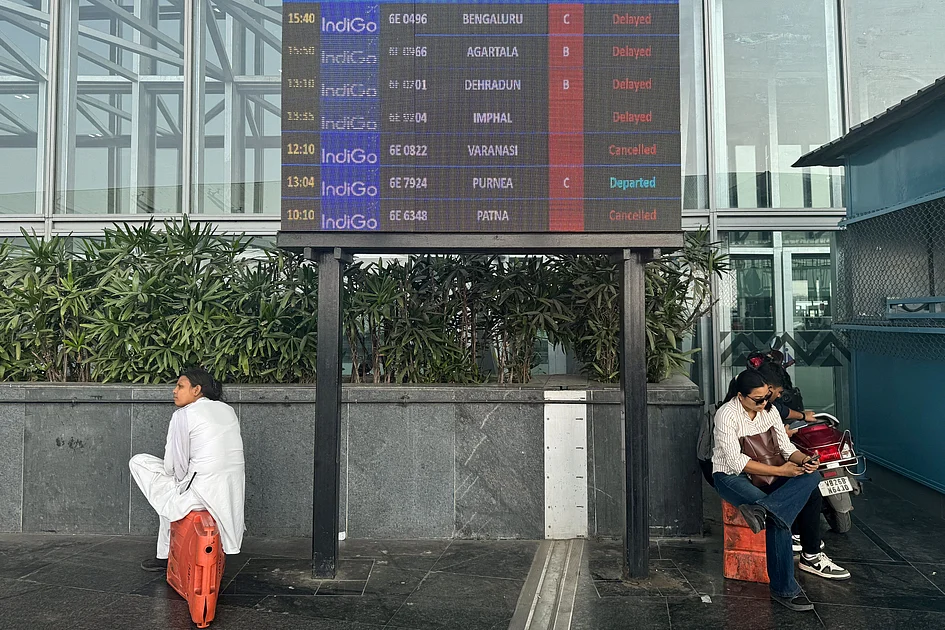
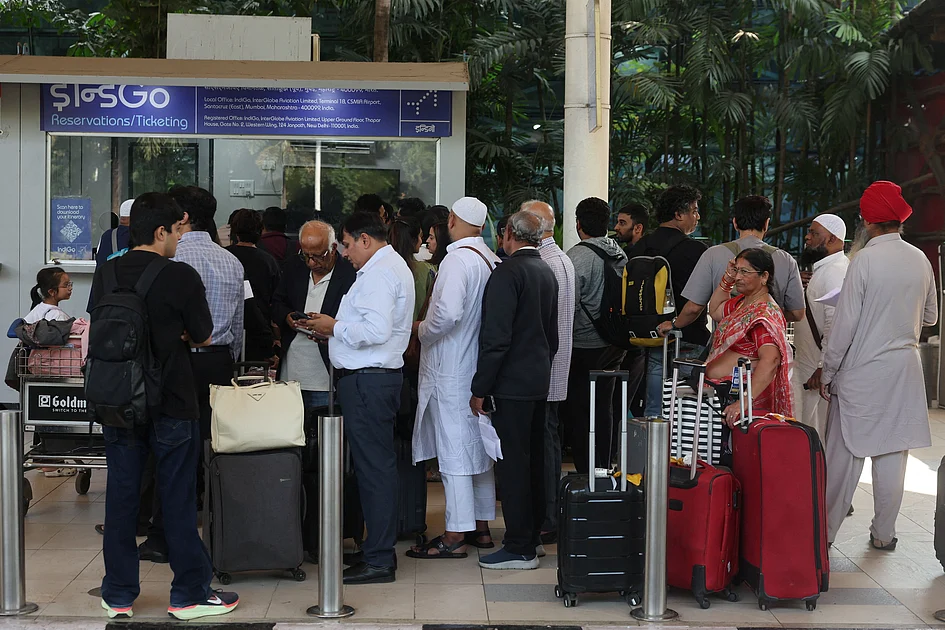
As the federal government shutdown continues, airports across the United States are facing significant challenges due to a shortage of air traffic controllers. This staffing crisis has led to widespread flight reductions, leaving travelers frustrated and concerned. ‘This is not good,’ remarked one passenger, echoing the sentiments of many who are experiencing delays and cancellations. The situation highlights the broader impact of the shutdown on critical infrastructure and public services. Airlines are scrambling to adjust schedules, but the uncertainty surrounding the shutdown’s duration leaves both carriers and passengers in limbo. Industry experts warn that prolonged disruptions could have lasting effects on the aviation sector and the economy at large.