Shenzhen, China’s renowned technology hub, is intensifying its investment and innovation efforts to drive high-quality development, with Australian-Chinese partnerships playing a pivotal role. The city, often referred to as the ‘Silicon Valley of China,’ is leveraging its robust technological ecosystem to foster international collaboration. Australian physician Jack Minas, founder of PulseLife Diagnostics, highlighted Shenzhen’s global significance in technology and innovation, stating that the city offers the expertise and resources needed to advance his medical devices for cardiovascular disease detection. The 2025 Shenzhen Global Investment Promotion Conference in Sydney underscored the growing opportunities for cooperation between Shenzhen and Australia. Shenzhen’s Economic and Trade Office in Australia reported that the city’s trade with Australia reached $11.5 billion in 2024, with major Chinese companies like Tencent and BYD expanding their presence in Australia. Shenzhen’s commitment to innovation is evident in its R&D investment, which surged to 223.66 billion yuan ($31.38 billion) in 2023, marking nine consecutive years of double-digit growth. Australian officials and business leaders, including Tim James of New South Wales, praised Shenzhen’s dynamic market and technological advancements. The collaboration extends to talent exchange and innovation events, such as the 9th China (Shenzhen) Innovation and Entrepreneurship International Competition, which showcased projects in AI, biomedical sciences, and new materials. Australian companies are optimistic about Shenzhen’s business environment, with initiatives like the New South Wales economic development agency’s partnership with Shenzhen’s Economic and Trade Office facilitating visits for biotechnology firms. Nadeesha Chandrasena, a competition winner, emphasized Shenzhen’s manufacturing and technological strengths in developing IoT-enabled drainage systems for flood-prone cities. Shenzhen’s strategic role in the Guangdong-Hong Kong-Macao Greater Bay Area continues to drive its global influence, making it a prime destination for international partnerships.
分类: business
-

The century’s new renaissance — Middle East
The Gulf Cooperation Council (GCC) is spearheading a global renaissance in modern hospitality, driven by innovation, design, and a renewed focus on luxury living. Yigit Sezgin, CEO of Clé & Partners, a leading advisory and investment firm, highlights the transformative forces shaping the region. The UAE, particularly Dubai, Abu Dhabi, and Ras Al Khaimah, alongside Saudi Arabia and Oman, are at the forefront of this evolution. Factors such as market potential, tax incentives, safety, and technological advancements are attracting global attention. The post-Covid era has further amplified the demand for unique, culturally immersive travel experiences, pushing the hospitality industry to new heights. Sezgin emphasizes the shift towards ‘quiet luxury,’ where refined, understated experiences replace ostentation. Wellness has also evolved beyond traditional spas, with a focus on longevity and holistic health. Branded residences are gaining traction, though they pose challenges in maintaining service quality. Clé & Partners’ vertically integrated model connects capital, creativity, and capability, setting it apart from traditional consultancies. The firm’s focus on the Global South, including the Middle East, Africa, and Southeast Asia, underscores the region’s untapped potential. Artificial intelligence is poised to redefine the hospitality landscape, but human connection will remain irreplaceable. The GCC’s hospitality renaissance is not just a regional phenomenon but a global benchmark for the future of luxury living.
-

India: Air traffic control glitch delays flights at Delhi airport
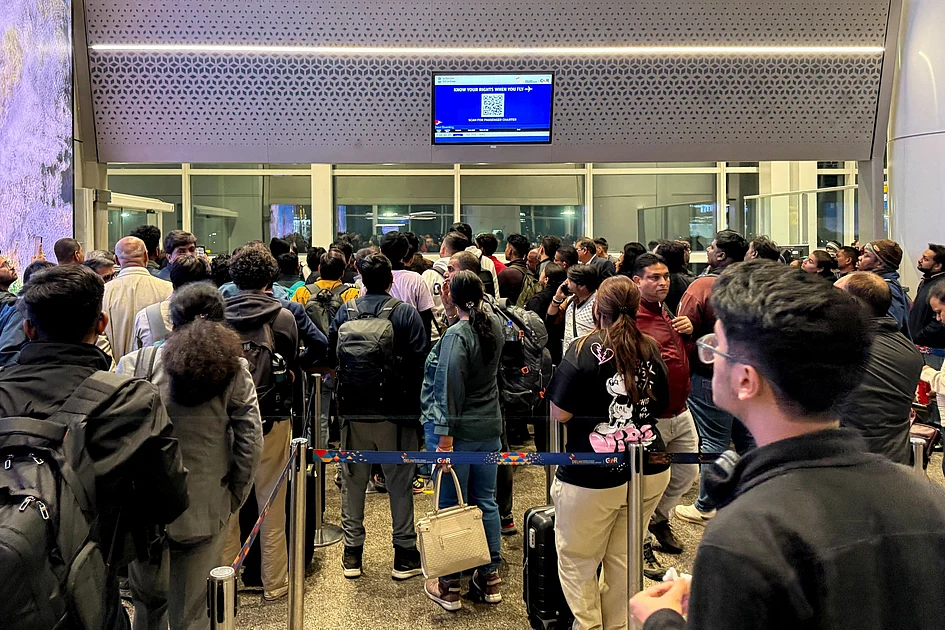
A significant technical malfunction in the air traffic control system at Delhi’s Indira Gandhi International Airport, one of the world’s busiest aviation hubs, led to widespread flight delays on Friday. The issue, which disrupted operations during peak hours, affected numerous flights, including those operated by major carriers such as IndiGo and Air India. Data from Flightradar24, a global flight tracking service, confirmed the delays, highlighting the scale of the disruption. The Airports Authority of India, responsible for managing the airport’s operations, has yet to issue an official statement regarding the cause of the glitch or the steps being taken to resolve it. This incident underscores the vulnerabilities in critical aviation infrastructure and raises concerns about the potential impact on passenger travel and airline schedules. Delhi Airport, a key gateway for both domestic and international flights, has faced similar challenges in the past, emphasizing the need for robust systems to ensure seamless operations.
-

Honda’s profit slips as President Trump’s tariffs take their toll on Japanese automakers
Honda Motor Co. announced a significant 37% drop in its first-half fiscal profit for the period ending September, attributing the decline to the adverse effects of U.S. tariffs and unfavorable currency exchange rates. The Tokyo-based automaker reported a profit of 311.8 billion yen ($2 billion), down from 494.6 billion yen in the same period last year. Sales also saw a slight decrease, falling 1.5% to 10.6 trillion yen ($69 billion). The company has revised its annual profit forecast downward to 300 billion yen ($2 billion), a stark 64% decline from the previous year’s 835.8 billion yen. Earlier projections had anticipated a 420 billion yen ($2.7 billion) profit. Honda cited President Donald Trump’s tariffs as a major factor, which led to a 164 billion yen ($1.1 billion) reduction in operating profit. Additionally, unfavorable currency rates erased 116 billion yen ($756 million) from its earnings. Despite these challenges, Honda achieved record motorcycle sales, particularly in Asia, where it sold over 9 million units, up from 8.8 million a year ago. Global motorcycle sales reached a record 10.7 million units, with growth in all regions except Europe. However, global vehicle sales declined to 1.68 million units from 1.78 million, with drops in Japan, Asia, and Europe, though North America saw an increase. Honda also faced supply chain disruptions due to a chip shortage following the Dutch government’s intervention in Nexperia, a Dutch-based company owned by China’s Wingtech Technology. This led to production halts at Honda’s Mexico plant and adjustments in North American operations. Despite these setbacks, Honda’s stock rose 1.8% to 1,585 yen ($10) in Tokyo trading.
-

The next step in financial inclusion may not be human at all
Across the Middle East, financial inclusion has seen remarkable growth, driven by soaring mobile penetration rates exceeding 95% in countries like Saudi Arabia and the UAE. In Egypt, financial inclusion has more than doubled since 2016, with mobile penetration surpassing 100%. Despite these advancements, a significant portion of the underbanked population still struggles with financial literacy, digital navigation, and cultural barriers, limiting their ability to fully engage with formal banking systems. This gap has prompted financial institutions to explore innovative solutions, with Agentic AI emerging as a transformative tool. Unlike traditional AI models, Agentic AI operates independently within defined boundaries, processing diverse inputs, recognizing behavioral patterns, and making context-driven decisions. Early deployments by global institutions like BlackRock, JPMorgan, and BNY Mellon have demonstrated its potential to streamline operations and enhance reliability. In the UAE, Agentic AI is already being used for autonomous decision-making in personal lending and SME financing, addressing long-standing inclusion challenges. By focusing on engagement rather than mere access, Agentic AI can preemptively assist users, guide those with low financial literacy, adapt to irregular income patterns, and communicate in local languages, making financial services more accessible and user-friendly. As financial institutions shift their focus from expanding reach to enhancing service adaptability, Agentic AI is poised to redefine the future of financial inclusion.
-

Luxury retail in the UAE embraces omnichannel future amid tourism boom and digital shift
The United Arab Emirates (UAE) is solidifying its position as a global luxury hub, with retailers rapidly adopting omnichannel strategies to cater to a tech-savvy, experience-driven consumer base. The luxury goods market in the UAE is projected to grow at a compound annual growth rate (CAGR) of 5.52%, reaching $7 billion by 2033. This growth is fueled by a combination of a tourism boom, a digitally engaged population, and the increasing demand for seamless shopping experiences. Globally, omnichannel retail has become a cornerstone of luxury strategy, with brands investing heavily in digital transformation to unify online and offline experiences. In the UAE, where 90% of luxury purchases still occur offline, the opportunity to bridge digital and physical channels is immense. One brand at the forefront of this transformation is Hugo Boss, which has partnered with Indian retail tech firm Fynd to implement a scalable omnichannel solution across its UAE operations. This partnership enables Hugo Boss to offer a unified shopping experience, allowing customers to access the full product catalog regardless of the channel. For instance, if a customer desires a jacket that is out of stock in-store, the system allows staff to order it from another store and deliver it to their home. If it doesn’t fit, the customer can return it without revisiting the store. This integration not only enhances customer satisfaction but also streamlines operations by reducing the need for separate e-commerce stock, improving stock rotation, and enabling direct fulfillment from any inventory location. Alessandro Bovone, Head of E-commerce GCC at Hugo Boss, emphasized the importance of technology in enhancing service levels and optimizing customer relationships. He noted that while e-commerce boomed during the COVID-19 pandemic, brands are now focusing on a horizontal understanding across all channels. The UAE’s luxury market is uniquely positioned to benefit from such innovations. With Dubai and Abu Dhabi attracting millions of tourists annually, luxury shopping remains a key driver of retail growth. High-net-worth residents, expatriates, and visitors contribute to a resilient demand for premium goods, while the country’s young, digitally engaged population accelerates the shift toward experiential and personalized retail. Bovone highlighted that cost efficiency is becoming fundamental in the luxury industry, with logistics and inventory rotation being the next frontier. Ronak Modi, Chief Business Officer Global at Fynd, echoed this sentiment, emphasizing the scalability of the solution and the significant opportunity to unify retail and e-commerce into a single channel over the next 12–24 months. As the UAE continues to evolve into a global logistics and luxury retail hub, partnerships like Hugo Boss and Fynd signal a broader industry shift—where technology, efficiency, and customer-centricity converge to redefine the luxury experience.
-

Adipec sees 35,000 deals worth $46 billion, sets bold agenda for energy future
The Abu Dhabi International Petroleum Exhibition and Conference (Adipec) 2025 concluded with a historic $46 billion in deals across 35,000 agreements, solidifying its position as a premier global energy platform. The event, held over four days, attracted an unprecedented 239,709 attendees from 172 countries, marking a 17% increase from 2024. This surge in participation underscores the UAE’s growing influence in fostering global energy dialogue. Organized by Adnoc under the theme “Energy. Intelligence. Impact.”, Adipec highlighted the transformative role of artificial intelligence, digitalization, and low-carbon solutions in the energy sector. Beyond the deals, the event generated an estimated $400 million in economic benefits for Abu Dhabi, boosting hospitality, tourism, and transport industries. Featuring over 1,800 speakers, including 45+ ministers and policymakers, Adipec welcomed delegations from industry giants like Aramco, ExxonMobil, Shell, and TotalEnergies. Christopher Hudson, President of dmg events, described Adipec 2025 as “extraordinary in every measure,” emphasizing its role in fostering tangible partnerships and investments. Abdulmunim Al Kindy, Chairman of Adipec 2025, stressed the event’s contribution to shaping a secure energy future through data-driven solutions and global collaboration. With energy demand on the rise, Adipec’s focus on resilience, innovation, and inclusive financing models positions it as a key driver of sustainable growth. The next edition, Adipec 2026, is scheduled for November 2–5, with an expanded agenda addressing energy security and global progress.
-

Emaar Properties records Dh61b in 9-month sales as backlog crosses Dh150b
Emaar Properties, a leading global real estate developer based in Dubai, has announced a remarkable 22% increase in property sales, reaching Dh61 billion in the first nine months of 2025. This milestone is further bolstered by an unprecedented revenue backlog of Dh150.3 billion as of September 30, 2025, marking a 49% year-on-year growth. These figures underscore the company’s robust performance and the sustained demand for premium real estate in Dubai. Emaar’s revenue surged 39% to Dh33.1 billion, while EBITDA grew 32% to Dh16.6 billion. Net profit before tax also saw a significant 35% increase, reaching Dh16.7 billion. The company’s strategic land bank, comprising approximately 660 million square feet of mixed-use development opportunities, provides a solid foundation for future expansion. Mohamed Alabbar, Emaar’s founder, credited the UAE government’s leadership and Emaar’s long-term planning for this success. Emaar Development, the company’s build-to-sell subsidiary, reported Dh52.9 billion in property sales, a 10% increase, while its international operations saw a staggering 331% growth in sales, particularly in Egypt and India. Recurring revenue streams, including malls, hospitality, and leisure, contributed Dh7.7 billion, reflecting 13% growth. Emaar’s ESG initiatives and credit rating upgrades further highlight its commitment to sustainability and financial stability. With new luxury projects like Emaar Hills and Dubai Mansions, Emaar continues to lead the global real estate market.
-

IHC confirms it is not planning to sell its stake in Aldar Properties
In a significant announcement on Thursday, International Holding Company (IHC), a global investment firm renowned for its dynamic value networks, confirmed that it has no plans to divest its majority stake in Aldar Properties PJSC. This reaffirmation underscores IHC’s unwavering confidence in Abu Dhabi’s robust and resilient real estate market, positioning Aldar as a cornerstone of its diversified investment portfolio.
-

EFG Hermes appoints Christopher Laing as head of equity capital markets
EFG Hermes, a prominent investment bank specializing in Frontier and Emerging Markets (FEM), has announced the appointment of Christopher Laing as its new Head of Equity Capital Markets (ECM). Effective immediately, Laing will be based in Dubai, where he will spearhead the firm’s ECM operations, driving growth and expanding its regional and global footprint. Laing brings over three decades of investment banking experience, including senior ECM roles at HSBC and Deutsche Bank, where he led significant transactions across emerging and developed markets. His appointment aligns with EFG Hermes’ strategy to bolster its regional presence and deliver innovative capital market solutions. Mostafa Gad, Global Head of Investment Banking at EFG Hermes, expressed enthusiasm about Laing’s addition, highlighting his extensive expertise and the value he brings to clients. Laing himself expressed excitement about joining EFG Hermes, emphasizing the region’s dynamic market opportunities and his commitment to enhancing client partnerships and delivering strategic advisory solutions. This move underscores EFG Hermes’ dedication to maintaining its leadership in the region’s investment banking sector and supporting clients across the MENA region and beyond.