分类: business

  • Asian shares mostly dip as the yen rises against the U.S. dollar

    Asian shares mostly dip as the yen rises against the U.S. dollar

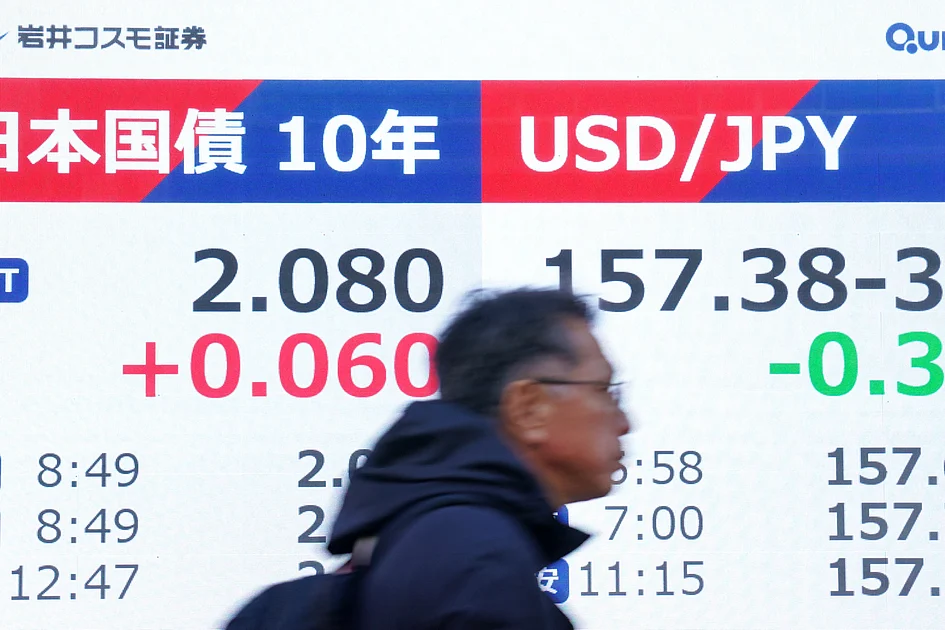
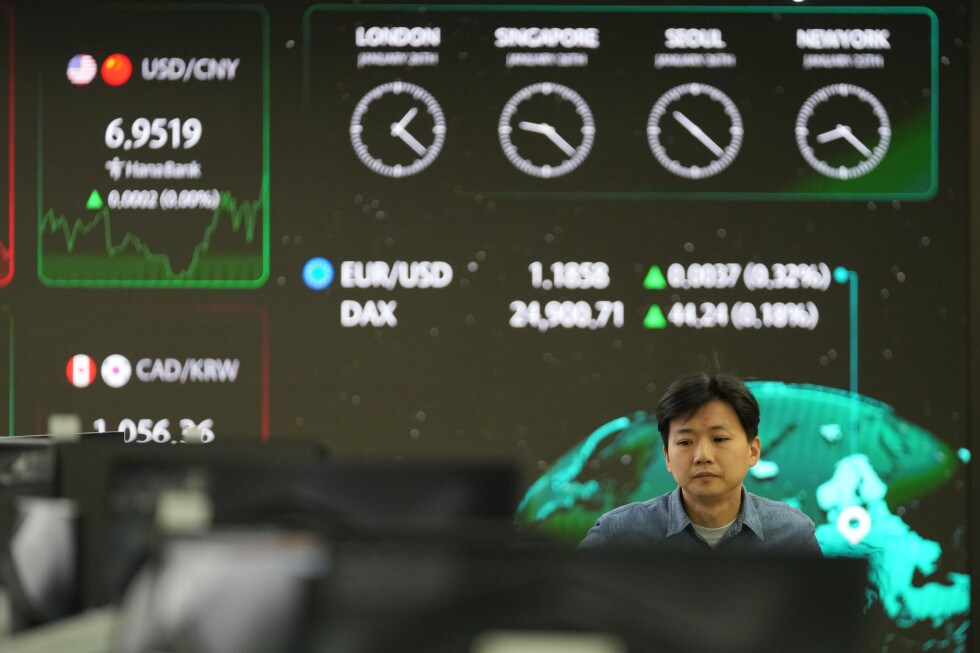
    Asian financial markets experienced broad declines on Monday, with Japan’s benchmark index leading the losses following a significant appreciation of the yen against the U.S. dollar. The Nikkei 225 plummeted 1.9% to close at 52,812.45, driven by substantial selling of major export-oriented corporations. Toyota Motor Corp. witnessed a notable 3.2% decline in share value, reflecting market concerns about reduced competitiveness in international markets due to currency fluctuations.

    The yen’s surge to 154.26 against the dollar, marking a substantial recovery from last week’s 158 yen level, came after financial authorities from both Japan and the United States indicated potential intervention measures to support the Japanese currency. This currency movement represents a dramatic shift from recent trends where the dollar had been consistently gaining ground against the yen.

    Other Asian markets followed the downward trend with South Korea’s Kospi declining 0.6% to 4,961.58. Hong Kong’s Hang Seng experienced a marginal 0.1% decrease to 26,722.89, while China’s Shanghai Composite managed a slight 0.1% gain to 4,141.10. Trading remained suspended in several major markets including Australia, New Zealand, India, and Indonesia due to local holidays.

    U.S. futures indicated continued market uncertainty, with S&P 500 and Dow Jones Industrial Average futures both declining 0.3%. This cautious sentiment reflects ongoing concerns regarding U.S. tariff policies and international trade tensions. Precious metals demonstrated strong performance as investors sought safe-haven assets, with gold climbing 2% to approach $5,100 per ounce and silver surging 6.4% to approximately $108 per ounce.

    Energy markets showed minimal movement with benchmark U.S. crude edging up 2 cents to $61.09 per barrel and Brent crude increasing 3 cents to $65.10. Market participants await the upcoming U.S. Federal Reserve meeting on Wednesday, where officials are expected to maintain current interest rate levels amid ongoing economic uncertainty.

  • India to slash tariffs on cars to 40% in trade deal with EU, Reuters report

    India to slash tariffs on cars to 40% in trade deal with EU, Reuters report

    In a historic move poised to reshape global trade dynamics, India has agreed to dramatically reduce import tariffs on European Union automobiles as part of a comprehensive free trade agreement expected to be finalized imminently. According to sources familiar with the negotiations, New Delhi will slash levies on EU-sourced vehicles from their current peak of 110% down to 40%, marking the most significant opening of India’s protected automotive market in decades.

    The breakthrough agreement, potentially announced as early as Tuesday, will immediately benefit premium European automakers including Volkswagen, Mercedes-Benz, and BMW. The reduced tariffs will apply to combustion-engine vehicles with an import value exceeding €15,000 ($17,739), with approximately 200,000 units annually qualifying under the new framework. The duty reduction represents a phased approach, with further decreases to 10% planned over subsequent years.

    This monumental pact, informally dubbed the ‘Mother Of All Deals’ by negotiators, extends beyond automotive trade. The agreement is expected to substantially boost bilateral commerce between the world’s largest trading bloc and one of its fastest-growing economies. Indian export sectors previously hampered by recent 50% U.S. tariffs—particularly textiles and jewelry—stand to gain significant market access to European consumers.

    Notably, battery electric vehicles (EVs) will be excluded from the tariff reductions for an initial five-year period. This protective measure aims to safeguard investments by domestic manufacturers Mahindra & Mahindra and Tata Motors in India’s emerging electric vehicle sector before eventually aligning with the reduced duty structure.

    The tariff reduction promises to transform market dynamics in India’s 4.4-million-unit automotive market, currently dominated by Japan’s Suzuki and domestic brands controlling two-thirds of sales. European manufacturers presently hold less than 4% market share, constrained by prohibitive import costs. The new framework will enable automakers to introduce broader product portfolios at competitive prices while testing consumer demand before committing to expanded local manufacturing.

    With India’s automotive market projected to reach 6 million annual units by 2030, several European manufacturers are already preparing increased investment. Renault is implementing a renewed India strategy seeking growth beyond Europe, while Volkswagen Group is finalizing additional investment plans through its Skoda brand. The agreement signifies India’s strategic pivot toward deeper economic integration with Western markets amid shifting global trade alliances.

  • Smart money pivots to Dubai offices, logistics, retail as investors recalibrate

    Smart money pivots to Dubai offices, logistics, retail as investors recalibrate

    Dubai’s commercial property sector is experiencing a strategic repositioning as sophisticated investors recalibrate their portfolios toward income-generating assets with strong fundamentals. Market data reveals a pronounced pivot toward off-plan offices, logistics hubs, and community retail centers, signaling a departure from speculative residential investments toward stable, long-term returns.

    The emirate’s real estate market recorded transactions exceeding Dh760 billion in 2025, with commercial and industrial assets contributing an estimated Dh90-100 billion according to Dubai Land Department statistics. This substantial commercial segment growth reflects deepening institutional confidence in Dubai’s non-residential property market.

    Office market dynamics show particular strength in prime locations. CBRE reports Grade A offices in central business districts like DIFC and Business Bay achieved high single-digit rental growth in 2025, driven by constrained new supply. Savills projects this supply limitation will persist through 2027, creating competitive conditions for premium space. Commercial lease registrations have increased year-on-year, with strongest demand for modern, energy-efficient buildings featuring flexible layouts and premium amenities.

    Logistics real estate demonstrates even more vigorous performance, with JLL reporting prime warehouse rents surging over 15% annually in key submarkets. This growth stems from Dubai’s expanding role as a global trade hub, supported by Jebel Ali Port, Dubai South logistics corridor, and growing air cargo volumes. Supply chain diversification and e-commerce expansion are structurally boosting demand for modern distribution facilities across the Gulf region.

    Retail investment patterns are evolving toward neighborhood centers embedded within residential communities rather than destination malls. Knight Frank data indicates these community assets deliver stable yields supported by daily consumer spending and population-driven footfall, making them less vulnerable to tourism fluctuations.

    Geographically, investment remains concentrated in established commercial districts including Business Bay, Jumeirah Lake Towers, and Barsha Heights, while emerging residential corridors like Jumeirah Village Circle and Dubai South are witnessing their first purpose-built commercial developments.

    Investor profiles are becoming increasingly segmented. International capital favors stabilized office and retail assets offering predictable income streams, while domestic investors are pursuing development-led strategies in the industrial sector where supply remains constrained.

    Market analysts emphasize this shift toward quality, location, and long-term performance indicates market maturation. With population growth exceeding 3.7 million, infrastructure expansion, and robust trade activity, Dubai’s commercial real estate fundamentals remain strong heading into 2026.

  • Geopolitics overshadows mood at global financial markets

    Geopolitics overshadows mood at global financial markets

    Global financial markets are commencing 2026 under the substantial weight of geopolitical tensions, creating an investment landscape where political narratives increasingly override fundamental economic indicators. This paradigm shift represents a fundamental transformation in market behavior, with political risk premiums expanding across asset classes at unprecedented velocity and scale.

    The current environment reflects a convergence of concerning developments: softening US economic metrics, ongoing earnings season uncertainties, and escalating geopolitical flashpoints. These include renewed discussions regarding US-Greenland acquisition ambitions, Middle Eastern regime instability following Venezuela’s political transition, and persistent Russia-Ukraine tensions. This complex backdrop has created a market exceptionally sensitive to headline-driven volatility rather than traditional valuation metrics.

    Market technicals reveal extraordinary conditions. Gold maintains historically elevated positions above $4,500, silver demonstrates exponential price structures approaching triple-digit territory, while crude oil rebounds toward $60 amid heightened hedging demand. US equity indices test record highs despite visible momentum deterioration, with the Dow approaching 50,000, Nasdaq near 26,300, and S&P 500 around 7,000. Even the US dollar defies rate-cut expectations through sustained safe-haven demand.

    Razan Hilal, Market Analyst and CMT at FOREX.com, observes: ‘These conditions reveal the limitations of conventional forecasting. When overnight sentiment shifts can reverse market directions, disciplined exposure management and scenario planning surpass directional predictions in importance.’

    This transformation manifests across investment vehicles. Precious metals, traditional geopolitical hedges, exhibit increasingly volatile trajectories. Silver’s dual nature as monetary and industrial asset attracts particular attention, though exponential advances carry significant correction risks. Crude oil’s price strength appears driven more by temporary supply concerns than structural narrative changes.

    Equity markets display growing fragility beneath surface-level strength. Technology-heavy benchmarks show concerning divergences as capital rotates toward defensive positions. Market participants increasingly view stability above technical thresholds as conditional rather than guaranteed.

    Hilal emphasizes: ‘This environment demands investment restraint. Successful navigation requires renewed focus on capital preservation fundamentals: defined invalidation levels, multi-timeframe analysis, and volatility-absorbing hedging strategies. Flexibility in exposure management becomes paramount as narratives evolve.’

    As 2026 progresses, the primary challenge transforms from interpreting individual geopolitical events to managing their cumulative market impact. In this new paradigm, sophisticated risk management emerges as the primary strategic approach rather than secondary consideration.

  • India expected to report over 7% GDP growth

    India expected to report over 7% GDP growth

    India’s economy is demonstrating remarkable resilience with leading global financial institutions revising their growth projections upward for the current fiscal year. The International Monetary Fund announced on January 19 an upgraded forecast of 7.3% GDP expansion for the April 2025-March 2026 period, significantly higher than its previous 6.6% estimate. This revision follows the World Bank’s January 13 adjustment increasing its FY26 growth projection to 7.2% from 6.3%.

    The optimistic assessments align with the Indian government’s own projection of 7.4% growth for the fiscal year ending March. According to analysts, this robust performance stems from multiple driving forces including strong domestic consumption patterns, effective tax reforms, and improved household incomes in rural regions.

    Professor Swaran Singh of Jawaharlal Nehru University identifies four key growth catalysts: structural reforms, demographic advantages, policy interventions, and external factors. “India benefits from a young and expanding workforce with a median age of approximately 28 years, ensuring sustained labor supply and continuously rising domestic consumption levels,” he explained. The expanding middle class continues to spearhead domestic demand, serving as a primary engine for economic expansion.

    Despite the encouraging figures, sustainability concerns emerge among experts. The nation faces significant challenges in maintaining this growth trajectory long-term. Karori Singh, former director of the South Asia Studies Centre, emphasizes the critical need to address manufacturing sector deficiencies. “India cannot fully capitalize on international trade and investment opportunities without strengthening manufacturing capabilities and integrating them with agricultural operations,” he noted.

    Additionally, wealth distribution presents another substantial hurdle. Economic benefits remain concentrated among limited segments rather than being broadly distributed across the population. Experts suggest India could draw meaningful lessons from China’s manufacturing and industrial development experience to address these structural challenges while leveraging its demographic dividend through appropriate skill development and job creation initiatives.

  • Dubai billionaire says India could lose millions of outsourcing jobs to AI

    Dubai billionaire says India could lose millions of outsourcing jobs to AI

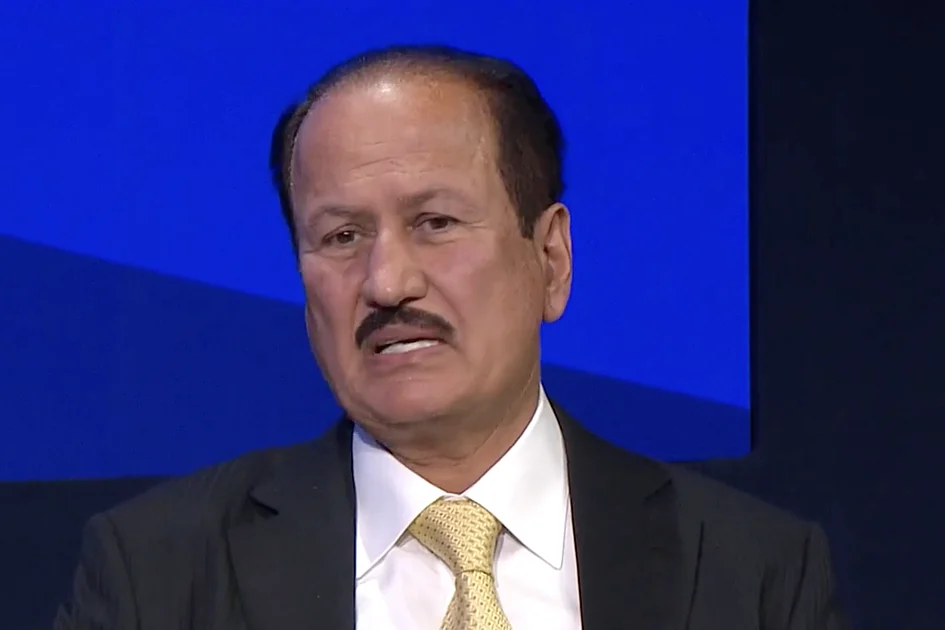
    DUBAI – Artificial intelligence is poised to trigger a seismic shift in global labor markets that could cost India millions of outsourcing jobs, according to prominent Dubai billionaire Hussain Sajwani. The Damac founder and chairman issued this stark warning during a panel discussion at the World Economic Forum 2026 in Davos, Switzerland.

    Sajwani drew historical parallels to illustrate the transformative power of AI, comparing its potential impact to the Industrial Revolution and the internet’s emergence. “AI will revolutionize the world tenfold, perhaps even a hundredfold, compared to the internet’s impact,” he stated. “Nations that fail to embrace this technology risk being left behind, much like the Ottoman Empire’s decline after rejecting the typewriter.”

    The billionaire specifically highlighted India’s vulnerability due to its massive outsourcing industry. “Approximately 80% of accounting positions, nursing roles, and similar occupations face replacement by AI systems,” Sajwani projected. “This technological displacement eliminates the necessity for Western companies to maintain offshore staffing arrangements in South Asia.”

    Sajwani identified distinct tiers of AI adoption globally: “China, America, the UAE, and Saudi Arabia are establishing leadership through substantial investments and strategic implementation. While smaller economies like the UAE may not single-handedly influence global trends, American and Chinese advancements will undoubtedly drive this revolution.”

    Conversely, Sajwani expressed skepticism about Europe’s approach: “European nations appear to be lagging in AI development. I anticipate they will implement restrictive regulations to protect existing jobs, ultimately hindering their competitive position.”

    UAE Minister of Foreign Trade Dr. Thani Al Zeyoudi echoed these sentiments during separate Forum remarks, noting the Emirates’ increasing reliance on robotics and AI to address labor shortages in construction and manufacturing sectors. “Our aging unskilled workforce presents significant challenges,” Al Zeyoudi explained. “Robotic solutions have become essential for maintaining economic development.”

    The discussion expanded to include Middle Eastern prosperity and reconstruction initiatives, with Sajwani expressing support for peace efforts in Gaza while noting that primary reconstruction funding would necessarily originate from governmental rather than private sources.

  • UAE-India travellers may face flight shortages, higher airfares as demand surges

    UAE-India travellers may face flight shortages, higher airfares as demand surges

    A severe capacity shortage is threatening to destabilize one of the world’s most critical aviation corridors as demand between the UAE and India dramatically outpaces available flight capacity. According to new analysis from Tourism Economics, an Oxford Economics company, approximately 27% of forecast passenger demand could go unserved by 2035 if current capacity limits remain unchanged.

    The projected deficit translates to a staggering 54.5 million passenger journeys being left unaccommodated between 2026 and 2035, with the Abu Dhabi-India corridor particularly vulnerable. Current load factors already exceed 80% on major routes, leaving minimal spare capacity. Tourism Economics projects that under existing schedules, all available seats will be fully absorbed as early as 2026.

    India’s remarkable aviation boom serves as the primary catalyst behind this surge. The country’s ‘travelling class’—households with sufficient income to fly—expanded from 24% of the population in 2010 to 40% in 2024, adding nearly 300 million potential flyers. This demographic shift is fueling annual demand growth of 7.2% through 2035, generating approximately 22 million additional passenger journeys each year.

    For airlines, this unprecedented demand underpins substantial revenue growth. For travelers, it translates to constrained supply and escalating airfares, particularly during peak travel periods. Limited capacity has curtailed competition, granting carriers enhanced pricing power on high-demand routes connecting major Indian cities with Dubai and Abu Dhabi.

    Aviation executives confirm that India routes continue outperforming most international markets. ‘India remains one of the fastest-growing source markets for Gulf carriers, both for point-to-point traffic and onward connections,’ noted Sudheesh TP, General Manager at Deira Travel & Tourist.

    The UAE maintains its position as India’s largest international aviation market by a significant margin, accounting for approximately 1.1 million monthly seats and a 27% market share as of November 2025. Thailand, the second-largest market, accounts for merely 9%. While capacity on the India-UAE route increased 3% year-on-year, growth has failed to match accelerating demand.

    Dubai International Airport’s 2024 traffic figures highlight the corridor’s strategic importance: 92.3 million passengers transited through the hub, with approximately 12 million traveling between Dubai and India. This means more than one in eight passengers at the world’s busiest international airport is India-related.

    Six major carriers currently operate 538 weekly flights between Dubai and 23 Indian destinations. Emirates serves as the market backbone, operating 167 weekly services connecting Dubai to nine Indian cities since launching its first India flights in 1985. Etihad Airways has expanded to 11 Indian destinations but retains limited expansion capacity with approximately 10,000 unutilized seats from its 50,000 weekly bilateral entitlement.

    Indian carriers have scaled operations significantly, with IndiGo operating roughly 220 weekly services, Air India maintaining 82 weekly frequencies, and Air India Express emerging as the largest Indian operator with over 240 weekly flights across multiple UAE destinations.

    Despite this substantial operational scale, demand continues to exceed supply. Travel industry executives report the imbalance is already reshaping booking patterns, with earlier sell-outs on popular routes and escalating last-minute fares, particularly around school holidays and festival seasons.

    The economic implications extend far beyond airline pricing structures. Tourism Economics estimates that maintaining current capacity caps would limit the air corridor’s GDP contribution growth to approximately 3% annually over the next five years. Easing restrictions could accelerate growth to between 5.5% and 7%, while doubling seat capacity on the Abu Dhabi-India route alone could generate an additional $7.2 billion in GDP over five years and support over 170,000 jobs annually.

    Policy constraints remain the fundamental bottleneck. The 2014 air service agreement caps weekly seat entitlements at approximately 66,000 for Dubai and 55,000 for Abu Dhabi, with these limits effectively fully utilized. Negotiations to increase capacity remain stalled, with India advocating for a 4:1 ratio favoring Indian carriers for new seats, while the UAE seeks broader access to address rising unmet demand.

  • Sri Lanka targets up to 100,000 UAE tourists in the coming years

    Sri Lanka targets up to 100,000 UAE tourists in the coming years

    Sri Lankan diplomatic officials have unveiled an ambitious strategy to significantly increase tourist arrivals from the United Arab Emirates, targeting up to 100,000 visitors annually within the coming years. This initiative, spearheaded by Consul General Alexi Gunasekera in Dubai, represents a substantial escalation from the current baseline of approximately 20,000 UAE visitors recorded in recent periods.

    The comprehensive tourism development framework extends beyond conventional visitor attraction programs, emphasizing what officials term ‘developmental tourism’ – an approach designed to generate inclusive economic growth and sustainable infrastructure advancement. The strategy actively courts UAE investment across multiple sectors including tourism infrastructure, construction, logistics, and agricultural development.

    Sri Lanka’s proposition to potential investors includes enhanced governance structures, tax incentive packages, and streamlined service delivery mechanisms. The nation is concurrently implementing recovery measures following the devastating impact of Cyclone Ditwah, which caused billions in damages to tourism infrastructure and related sectors last year.

    Speaking at the recent ‘Invest Sri Lanka Investor Forum’ in Dubai, Gunasekera emphasized the nation’s reopening for both tourism and economic cooperation. Geographic advantages position Sri Lanka favorably, with approximately four hours flight time from the UAE and a diverse expatriate population representing substantial potential market segments.

    The economic rationale behind this tourism push is substantial. With a national GDP of $85 billion, Sri Lanka anticipates tourism to contribute approximately $5 billion annually, complementing the $7 billion in remittances from overseas workers. The tourism sector functions as an economic catalyst, generating both direct and indirect employment opportunities while supporting livelihoods across the island nation.

    Industry experts including Naveen Gunawardane of Lynear Wealth Management identify significant investment opportunities in resort development, particularly outside Colombo in coastal regions and cultural hotspots. Sri Lanka’s diverse attractions encompass ancient cultural sites, high-altitude tea plantations, wildlife experiences, and natural beaches, all within a compact island nation boasting over 2,500 years of recorded history.

  • Chinese e-mobility company eyes US market for expansion

    Chinese e-mobility company eyes US market for expansion

    Chinese electric mobility innovator NAVEE is strategically advancing into the United States market, introducing a suite of artificial intelligence-integrated transportation solutions during its recent product showcase in Mountain View, California. The 2021-established manufacturer, known for its electric scooters and golf carts internationally, unveiled groundbreaking prototypes including autonomous energy storage robots, exoskeleton systems, and futuristic aerial mobility devices.

    During Friday’s demonstration event, NAVEE USA Vice President Polo Huang presented the company’s vision for next-generation transportation infrastructure. The showcase featured multiple AI-driven innovations: a space-expanding trailer system, personal eVTOL (electric vertical take-off and landing) aircraft, and the flagship energy storage robot designed as a ‘mobile energy companion’ rather than conventional battery technology.

    According to NAVEE’s US Sales Manager Mauricio Magallon, the energy storage robot and exoskeleton technology are scheduled for American market deployment in the upcoming quarter, while other demonstrated concepts remain in extended development phases. The robotic energy system addresses three critical mobility challenges: autonomous movement, charging efficiency optimization, and intelligent gear management. Its solar-tracking capability enables dynamic power collection by following sunlight patterns throughout the day.

    The company’s strategic expansion represents China’s growing influence in global smart transportation markets, combining electric propulsion with artificial intelligence to create integrated mobility ecosystems. NAVEE’s approach emphasizes seamless energy management through robotic solutions that automatically follow users while providing on-demand power distribution.

  • Middle East shows resilience as global bond sell-off hits markets

    Middle East shows resilience as global bond sell-off hits markets

    Amid a turbulent week for global fixed-income markets, the Gulf Cooperation Council (GCC) nations have demonstrated remarkable resilience against a widespread bond sell-off that originated in Japan and rippled through major economies. While regional debt instruments experienced modest yield increases, the fundamental strength of Middle Eastern economies has contained the financial contagion to manageable levels.

    The market volatility commenced when Japanese Government Bond (JGB) yields surged dramatically following Prime Minister Sanae Takaichi’s unexpected announcement of a snap election coupled with ambitious stimulus and tax-reduction proposals. This triggered a chain reaction that subsequently impacted US Treasuries and European sovereign debt, creating one of the most significant fixed-income disruptions in recent months.

    According to Emirates NBD’s Market Economics analysis, the 10-year JGB yield climbed to 2.296%, representing an 11 basis point weekly increase and nearly 25 basis points since January’s commencement. More dramatically, 30-year Japanese yields escalated by 28 basis points in just one week and approximately 40 basis points year-to-date.

    The contagion effect extended to US Treasury markets, where geopolitical tensions exacerbated the sell-off. President Donald Trump’s continued threats of tariffs against European allies contributed to the uncertainty, pushing the 10-year Treasury yield upward by 5 basis points to 4.276% with an 11 basis point increase since January began.

    Middle Eastern markets experienced comparatively moderate impact. Saudi Arabia’s 2036 USD bond witnessed a 6 basis point yield increase to 5.026%, while the UAE’s 2034 dollar-denominated bond rose 5 basis points to 4.385%. Türkiye’s 2036 dollar yield demonstrated the most significant regional movement, jumping 7 basis points to 6.872%. A Bloomberg index tracking regional debt declined approximately 0.5% weekly and 0.7% year-to-date.

    Critical technical factors contributed to this relative outperformance. The GCC region has witnessed substantial bond issuance in January 2026, totaling $28.4 billion as of January 21st—representing 15% of 2025’s total issuance and significantly exceeding the $21 billion raised during the same period last year. This supply dynamic temporarily pressured prices but reflects robust market access rather than structural weakness.

    The fundamental economic architecture of GCC nations provides substantial protection against global financial shocks. Saudi Arabia maintains a debt-to-GDP ratio of merely 33%, while Türkiye stands at approximately 25%—both dramatically lower than advanced economies. Even Bahrain, with a higher debt burden near 150% of GDP, is implementing comprehensive reforms including subsidy reductions, corporate tax implementation, and increased dividends from government-related entities.

    Emirates NBD’s analysis concludes that investor confidence will quickly return to regional markets due to the attractive combination of relatively high yields and strong credit ratings. The institution anticipates that GCC spreads will remain near record lows once global conditions stabilize.

    Edward Bell, Acting Chief Economist and Group Head of Research at Emirates NBD, emphasized that while global volatility persists, regional credit markets possess the necessary fiscal anchors and policy frameworks to withstand turbulence more effectively than their international counterparts.