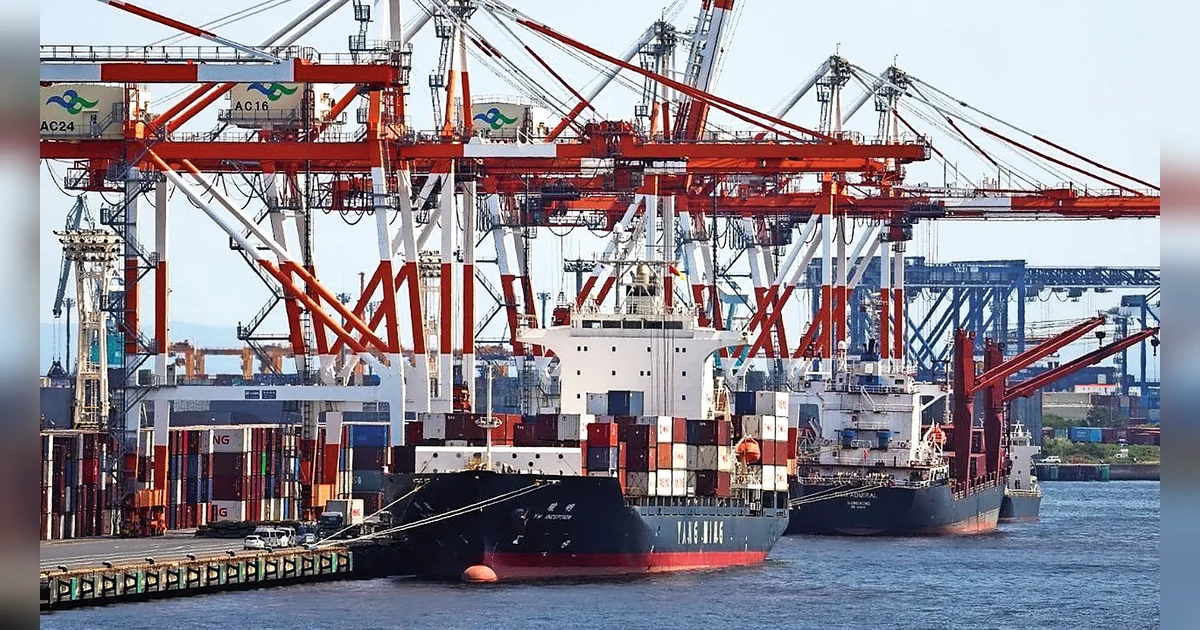
In a significant move toward establishing a unified resource recovery and reuse system, China has launched two national-level recycling platforms in Tianjin. Developed by China Resources Recycling Group Co (CRRG), the National Recycled Steel Trading Service Platform and the China Equipment Asset Recycling Platform aim to address industry challenges such as regional fragmentation and lack of transparency. Leveraging advanced technologies like artificial intelligence, these digital platforms integrate information, logistics, and capital to transform waste into valuable resources. CRRG’s deputy Party secretary and general manager, Zhu Jianchun, emphasized that these platforms will shift the recycling industry from isolated regional operations to a coordinated national effort, enhancing data transparency, industry oversight, and market activity. The recycled steel trading platform, now open to individual sellers, simplifies scrap metal recycling and boosts the supply of green raw materials. Additionally, CRRG has launched a nationwide green supply chain for secure mobile phone recycling in 32 major cities, ensuring personal data is securely erased to encourage public participation. The company also achieves high recovery rates for critical battery materials, with nickel, cobalt, and manganese recovery rates reaching 99.6% and lithium recovery at 91%. CRRG’s innovative projects, including the world’s first production line for repurposing retired solar panels, set new standards for solid waste reuse. The company is also developing refined recycling systems for end-of-life vehicles, ensuring nearly every component is reused or recycled. CRRG’s initiatives align with China’s 14th and upcoming 15th Five-Year Plans, positioning the company as a key driver of the circular economy.
分类: business
-

Asian shares are mostly lower after US stocks stumble
Asian markets experienced a mostly downward trend on Monday, with U.S. futures showing modest gains following a lackluster performance on Wall Street last week. Tokyo’s Nikkei 225 index dropped 0.3% to 50,226.67, reflecting concerns over Japan’s economic contraction, which saw a 1.8% annual decline in the July-September quarter. The dollar strengthened against the yen, rising to 154.65 yen from 154.58 yen. Chinese markets also saw declines, with Hong Kong’s Hang Seng index falling 0.8% to 26,359.22 and the Shanghai Composite index slipping 0.4% to 3,973.31. Geopolitical tensions between China and Japan further dampened market sentiment, particularly following Japanese Prime Minister Sanae Takaichi’s remarks suggesting a potential military response to Chinese actions against Taiwan. China, which views Taiwan as part of its territory, has warned its citizens against traveling to or studying in Japan. In South Korea, the Kospi index rose 1.7% to 4,078.39, driven by gains in tech-related shares, particularly computer chip makers collaborating with Nvidia on artificial intelligence projects. Australia’s S&P/ASX 200 edged down less than 0.1% to 8,628.60, while Taiwan’s Taiex and India’s Sensex posted modest gains. U.S. futures indicated a positive outlook, with the S&P 500 up 0.5% and the Dow Jones Industrial Average slightly higher. Despite recent volatility, the S&P 500 remains close to its record high, with investors closely watching Nvidia’s upcoming earnings report for signs of sustained growth. Meanwhile, questions linger over the Federal Reserve’s potential interest rate cuts, as inflation remains above the 2% target. Bitcoin saw a slight increase, while oil prices dipped in early trading.
-

Japan’s economy contracts as exports get hit by US tariffs
Japan’s economy experienced a notable downturn in the July-September quarter, contracting at an annualized rate of 1.8%, according to government data released on Monday. This marks the first economic contraction in six quarters, with the nation’s gross domestic product (GDP) declining by 0.4% on a quarterly basis. The downturn was primarily driven by a sharp decline in exports, which fell by 1.2% from the previous quarter and by 4.5% on an annualized basis. The slump in exports is largely attributed to the impact of U.S. tariffs, which have posed significant challenges for Japan’s export-reliant economy, particularly for major automakers like Toyota Motor Corp. Despite the contraction, the decline was less severe than the 0.6% drop anticipated by market analysts. Imports for the quarter saw a marginal decrease of 0.1%, while private consumption edged up by 0.1%. The U.S. currently imposes a 15% tariff on nearly all Japanese imports, a reduction from the earlier 25% rate. Japan’s recent political landscape also saw a shift with Sanae Takaichi assuming the role of prime minister in October, adding another layer of complexity to the nation’s economic outlook.
-

Sharjah’s green realty boom accelerates as Beeah’s Khalid bin Sultan City Phase 1 sells out
Sharjah’s real estate market has reached a significant milestone with the complete sell-out of Phase 1 of Khalid Bin Sultan City, a flagship mixed-use development by Beeah. This project, designed by the globally acclaimed Zaha Hadid Architects, represents the UAE’s first fully master-planned residential initiative by the firm. The strong buyer response, including the immediate sale of an entire residential cluster during the launch event, underscores Sharjah’s growing reputation as a hub for sustainable, master-planned living.
-

UAE markets face technical weakness amid global headwinds
The equity markets in Dubai and Abu Dhabi experienced a downturn last week, influenced by broader global economic challenges. The Dubai Financial Market (DFM) General Index fell by 1.25%, closing at 5,949, while the Abu Dhabi Securities Exchange (ADX) General Index dropped by 1.56% to 9,917.90, slipping below the significant 10,000 mark. This decline was primarily driven by significant losses in key sectors such as technology, financials, and healthcare, despite some gains in materials and real estate sectors. Analysts attribute this trend to the ongoing global risk-off sentiment, which has overshadowed the strong corporate earnings reported by major companies like Dewa and Salik. Vijay Valecha, Chief Investment Officer at Century Financial, highlighted the cautious outlook, suggesting that the markets may continue to face volatility and limited upside potential in the near term. The technical indicators also support this view, with both indices breaching their 50- and 100-day moving averages and the Relative Strength Index (RSI) indicating weakening momentum. Looking ahead, the market is expected to remain range-bound, with potential short-term rallies likely to encounter resistance unless there is a significant improvement in global risk appetite.
-

Fixed income gains ground among UAE investors amid market volatility
In the face of ongoing global market uncertainty and heightened geopolitical risks, fixed income investments are increasingly becoming a cornerstone in the portfolios of UAE investors. Kareena Moledina, Lead for Fixed Income Client Portfolio Management (EMEA) at Janus Henderson Investors, recently shared her insights with Khaleej Times on the growing relevance of bonds in the region’s investment strategy.
Moledina highlighted three primary benefits of fixed income investments: steady income, capital preservation, and diversification. With yields currently at attractive levels, investors can secure reliable, tax-free cash flows without assuming excessive risk. This is particularly advantageous in the UAE, where many investors depend on consistent income to meet their financial obligations.
Beyond income generation, bonds act as a defensive anchor in portfolios that are heavily weighted towards equities and real estate. ‘When markets become volatile, fixed income helps preserve capital,’ Moledina explained. ‘It serves as a stabilizing force, especially in economies like the UAE’s, where exposure to property and energy is significant.’
Moledina also emphasized how bonds complement traditional asset classes in the Gulf Cooperation Council (GCC), which are typically cyclical and sensitive to economic downturns. Unlike equities and real estate, which often decline together during slowdowns, bonds tend to rise when central banks cut interest rates. This inverse relationship helps smooth portfolio performance and reduce overall volatility.
Liquidity is another key advantage of fixed income investments. While real estate transactions can be slow and costly, and equities volatile, high-quality bonds offer quick access to cash. ‘Fixed income plays a key role in the liquidity waterfall of a portfolio,’ Moledina noted, referring to the hierarchy of assets investors can tap into when needed.
In a dollar-pegged economy like the UAE’s, the current ‘higher-for-longer’ interest rate environment presents both opportunities and challenges. On the upside, yields are significantly more attractive than during the ultra-low-rate era, allowing income-seeking investors to earn meaningful returns from high-quality bonds. However, Moledina cautioned that portfolio construction is now more critical than ever.
‘Investors should focus on shorter-duration, higher-quality assets to mitigate downside risks,’ she advised. Floating-rate securities, such as collateralised loan obligations (CLOs), are gaining popularity for their ability to adjust income streams in line with interest rate movements, offering a natural hedge against volatility.
Risk management remains central to fixed income investing. Moledina outlined key risks including interest rate fluctuations, inflation, credit stress, and geopolitical shocks. ‘Detailed bottom-up research is essential,’ she said, emphasizing the importance of analysing cash flows, leverage, and refinancing profiles to identify resilient issuers.
Diversification across issuers, sectors, and geographies also helps protect portfolios from systemic shocks. ‘Quality, liquidity, and diversification are the pillars of capital preservation,’ she added.
Securitised credit, once a niche segment, is now gaining traction among investors seeking stable income and attractive valuations. With spreads in traditional corporate bonds tightening, securitised assets offer a compelling alternative. ‘They provide a spread pick-up of 40 to 50 basis points over investment-grade corporates while maintaining higher credit quality,’ Moledina said.
Many of these instruments are floating-rate, making them well-suited to the current interest rate environment. Even if rates decline, securitised assets continue to deliver strong returns due to their underlying credit spreads.
Janus Henderson, a leading manager of securitised active ETFs, has played a pivotal role in enhancing liquidity and transparency in the fixed income space. ‘Our scale allows us to offer efficient execution and clear pricing visibility, especially in securitised credit,’ Moledina said.
As UAE investors seek to build resilient portfolios amid global uncertainty, fixed income is proving to be a powerful tool—offering stability, income, and flexibility in a rapidly changing financial landscape.
-

Al Marjan Island leads Ras Al Khaimah’s soaring apartment market in Q3 2025
Ras Al Khaimah’s real estate market witnessed significant growth in the third quarter of 2025, with Al Marjan Island emerging as the standout performer. According to the latest ValuStrat Price Index (VPI), apartment prices on the island surged by 16.8% year-on-year, the highest among all residential areas in the emirate. Additionally, Al Marjan Island recorded a robust 6.3% quarterly increase in capital values, solidifying its appeal among investors and homebuyers.
-

India’s greenfield airports herald a new era in aviation
India’s aviation sector is undergoing a monumental transformation, marked by the development of greenfield airports and a surge in domestic and international connectivity. On a brisk spring morning in May 2025, a calibration flight landed at Noida’s Jewar Airport, symbolizing more than just an infrastructure milestone—it heralded the dawn of a new era in Indian aviation. This event underscores India’s ambition to evolve from a burgeoning market to a global aviation hub.
-

Reportage Properties expect sales exceeding 500 million Saudi riyals by end of 2025
Reportage Properties, a leading real estate developer in Saudi Arabia and Egypt, has projected its sales to surpass 500 million Saudi riyals (SAR) by the end of 2025. This optimistic forecast was shared by CEO Eslam Hammam, who attributed the company’s robust performance to its sustainable development strategy and commitment to delivering high-quality residential projects tailored to the evolving demands of the Saudi market. Hammam highlighted the trust of clients and investors, particularly in Riyadh, as a key driver of this growth. The company’s focus on modern real estate products, grounded in stringent quality and urban planning standards, has further solidified its market position. Looking ahead, Reportage Saudi Arabia is gearing up for a strategic expansion phase in 2026, with two major projects underway in Riyadh and Jeddah. The Riyadh project aligns with the company’s natural expansion in the capital, a city renowned for its population growth and investment appeal. Meanwhile, the Jeddah project marks Reportage’s first significant venture outside Riyadh, aimed at tapping into high-density urban areas with rising demand for contemporary residential solutions. Both projects will feature advanced urban concepts, including integrated communities, service facilities, and extensive green spaces, reflecting the company’s dedication to creating sustainable and high-quality living environments. Currently, Reportage is meticulously studying the technical and regulatory aspects of these projects, including unit types, land use distribution, and implementation methods, to ensure the development of cohesive and sustainable communities. Hammam emphasized that details of these projects will remain confidential until all approvals and planning phases are completed, with an official announcement expected in 2026. In the interim, the company will showcase its Najd 5 project in eastern Riyadh at Cityscape Riyadh 2025. This project, designed with contemporary architecture, expansive gardens, and recreational facilities, aims to cater to families and homeowners seeking quality residences in a strategic location. Hammam also reaffirmed the company’s commitment to timely project delivery, citing the early completion of the Najd 1 project, set for handover in Q1 2026. This adherence to deadlines and quality standards underscores Reportage’s dedication to client satisfaction and its competitive edge in the Saudi real estate market. Aligned with Saudi Vision 2030, the company continues to prioritize sustainable urban development and diverse housing solutions to meet the needs of citizens and residents.
-

Crescent Petroleum and Edraak partner to boost AI readiness among Arab youth
Crescent Petroleum, the Middle East’s oldest and largest private oil and gas company, has joined forces with Edraak, the Arab world’s leading non-profit online education platform, to launch a groundbreaking AI training program. This initiative, titled ‘AI for Employment,’ aims to equip young people across the Arab world with essential AI skills to enhance their workplace capabilities and career prospects. The program builds on the success of the Career Compass Pathway, a joint venture launched in 2024 that has already trained 1.3 million young individuals in business skills, IT, and English language proficiency. Edraak, an initiative of the Queen Rania Foundation in Jordan, is renowned for its accessible, high-quality Arabic-language online courses. The new AI specialisation will offer four online courses, providing practical skills and hands-on experience in applying AI across various industries. Participants will learn to leverage AI productivity tools, craft effective AI prompts, and apply AI in real-world job functions. The courses, delivered in Arabic by expert practitioners, will culminate in a certificate, signalling participants’ readiness to innovate in a rapidly evolving job market. Majid Jafar, CEO of Crescent Petroleum, emphasised the transformative role of AI in the future of work, stating that the program will prepare young people to compete and thrive. Bassem Saad, CEO of the Queen Rania Foundation and Chairman of Edraak, highlighted the importance of AI as a core competency for career success and Edraak’s mission to meet market needs through accessible education. With youth unemployment in the MENA region exceeding 25%—the highest globally—and 78 million jobs expected to evolve by 2030, initiatives like AI for Employment are critical for equipping young Arabic speakers with future-ready skills. The program reinforces the Career Compass Pathway, which continues to offer modules in digital literacy, business communication, CV writing, and interview skills. Edraak’s broader initiatives, including AI for Employment and Career Compass, are pivotal in driving inclusive growth and opportunity across the Arab world.