The United Arab Emirates (UAE) is witnessing a significant transformation in its financial landscape, driven by the rapid adoption of digital trading and a shift toward diversified, technology-driven investment portfolios. Industry experts highlight a surge in online trading activity, fueled by fintech advancements, enhanced accessibility, and growing trust in the nation’s regulatory frameworks. Technological innovations, such as the UAE Pass digital identity system and efficient payment gateways, are simplifying access to global markets and accelerating trade execution, reshaping the trading experience for both retail and institutional investors. The Securities and Commodities Authority (SCA) plays a pivotal role in this evolution, ensuring robust regulatory frameworks and strengthening investor protection. This regulatory maturity has attracted both local and international firms to expand their offerings, solidifying the UAE’s position as a leading financial hub in the region. Among the key players is Traders Hub, a UAE-regulated brokerage that emphasizes digital efficiency and accessibility. Hafez Baker, COO of Traders Hub, notes that modern investors demand transparency, diversification, and seamless access to global markets. Brokerages across the UAE are responding by expanding their product suites, offering over 5,000 global instruments, including forex, equities, ETFs, indices, and commodities. This diversification enables investors to strategically manage risk and capitalize on global opportunities in real time. Market analysts believe that this shift toward technology-enabled diversification and client-centric infrastructure is enhancing the UAE’s competitiveness in global finance. With regulatory stability, innovative platforms, and broader market access, the UAE’s trading ecosystem is poised for sustained growth and deeper investor engagement.
分类: business
-

IATF 2025 opens in Dubai, marking 20 years as the Gulf’s leading fashion sourcing fair
The International Apparel & Textile Fair (IATF) 2025 has officially commenced at the Dubai World Trade Centre, marking its 20th anniversary as the Gulf’s leading B2B fashion sourcing event. Running from November 17 to 19, the fair features over 400 exhibitors from more than 30 countries, including the UK, USA, Italy, China, India, France, Germany, Russia, Spain, and Portugal. This milestone edition highlights the event’s pivotal role in shaping the region’s apparel and textile industry over the past two decades.
The inauguration ceremony was graced by Butti Saeed Al Ghandi, Vice Chairman of Dubai World Trade Centre, and Mahir Julfar, Executive Vice President, emphasizing Dubai’s growing prominence as a global fashion trade hub. The fair spans Halls 6 and 7, attracting thousands of sourcing professionals, industry buyers, and decision-makers from the GCC, Europe, and beyond.
This year’s edition introduces ‘Moda Sole & Accessories,’ a dedicated showcase featuring over 70 curated booths for footwear, handbags, laces, trims, and premium accessories. The event also emphasizes sustainability, ethical production, and circular design, aligning with global industry trends.
Bhavna Nihalani, Founder and Show Director of IATF, remarked, ‘IATF has become a dynamic platform that unites the entire fashion sourcing cycle, fostering creativity, responsibility, and innovation.’ The fair’s Hosted Buyers Program facilitates thousands of pre-scheduled meetings, driving meaningful business connections and long-term partnerships.
Visitor registration is now open for November 18 and 19, welcoming designers, manufacturers, suppliers, retailers, and wholesalers to explore the future of fashion sourcing.
-

Dubai Airshow 2025: Flydubai orders 60 GE engines for Boeing aircraft
Flydubai, Dubai’s second-largest carrier, has announced a significant agreement with GE Aerospace to acquire 60 GEnx-1B engines for its new fleet of 30 Boeing 787-9 aircraft. The deal, unveiled on the opening day of the Dubai Airshow 2025, also includes spare engines and a long-term services agreement to support the airline’s ambitious entry into long-haul operations. While the financial details remain undisclosed, the partnership underscores flydubai’s strategic shift from its all-Boeing 737 fleet to diversify its offerings and meet evolving market demands. The Boeing 787 Dreamliner, known for its fuel efficiency, will enable flydubai to expand its global reach and enhance its competitive edge. Ghaith Al Ghaith, CEO of flydubai, emphasized the critical role of engine performance and durability in the airline’s expansion plans, particularly as it prepares to integrate the 787 aircraft into its fleet. The announcement comes amid challenges posed by Boeing’s delivery delays, which have impacted flydubai’s growth trajectory. Russell Stokes, President and CEO of Commercial Engines and Services at GE Aerospace, expressed enthusiasm about supporting flydubai’s expansion, highlighting the GEnx engine’s proven reliability and efficiency. Since its introduction in 2011, the GEnx engine family has logged over 62 million flight hours, cementing its reputation as a trusted powerplant for modern aircraft.
-

Appinventiv expands Middle East presence with new Dubai office to support GCC clients
Appinventiv, a leading technology solutions provider, has unveiled its new regional office in Dubai, solidifying its commitment to the Gulf Cooperation Council (GCC) market. Situated on the 6th floor of Meydan Grand Stand in Nad Al Sheba, the office will serve as a hub for delivering cutting-edge mobile development, digital transformation, and emerging technology services to public and private sector clients across the Middle East and North Africa (MENA).
The expansion comes in response to growing demand for localized technology expertise in the GCC, where businesses face unique challenges such as Arabic-first design, right-to-left interfaces, and cultural nuances often overlooked by Western providers. Saurabh Singh, CEO and Director of Appinventiv, emphasized the importance of establishing a physical presence to better understand and address client needs. ‘Being on the ground allows us to respond with greater speed and precision,’ he stated.
Singh also highlighted the necessity of integrating local payment systems like Telr and Network International, as well as adhering to region-specific compliance standards such as the UAE’s NESA requirements, Saudi Arabia’s SAMA cybersecurity guidelines, and Qatar’s data sovereignty regulations. These factors underscore the complexity of digital transformation in the GCC.
Prior to the launch, Appinventiv conducted extensive research across GCC industries, identifying three critical areas of focus: accurate bilingual experiences, local collaboration, and data governance. Companies in the region demand culturally relevant user interfaces, in-region partnerships, and expert guidance to navigate evolving data protection laws.
The Dubai office will function as both a delivery and innovation center, aligning with the region’s digital acceleration initiatives, including Saudi Vision 2030 and the UAE’s innovation agenda. ‘Our goal is to ensure that digital platforms not only meet global standards but also reflect local requirements,’ Singh added.
With a proven track record in global projects, Appinventiv aims to empower GCC businesses to scale their digital capabilities effectively.
-

Dubai: Rolex sells for record-breaking $4.7 million; 9th most expensive in history
A historic Rolex Reference 4113, one of the rarest timepieces ever produced, has been sold for a staggering $4.7 million at an auction hosted by FutureGrail at the Bvlgari Yacht Club in Dubai. This sale marks the watch as the ninth most expensive Rolex in history, surpassing the previous record for the same model by over $1.2 million. Crafted in the 1940s, only 12 units of the Rolex Reference 4113 were ever made, with just nine known to have survived to this day. It is the only ‘split-seconds’ vintage chronograph ever produced by Rolex, adding to its exclusivity and allure. The watch has a strong connection to motor racing, having been owned by drivers and team owners over the decades. FutureGrail, a Singapore-based luxury auction house, organized the sale and is expanding its operations to the UAE in 2026 to meet growing demand in the Middle East. Ali Nael, CEO of FutureGrail, described the sale as a landmark event in auction history, highlighting the global appetite for rare luxury watches. Arnaud Tellier, Head of Curation at FutureGrail, emphasized the increasing interest from collectors and investors who view such items as valuable additions to their portfolios. This record-breaking sale underscores Dubai’s position as a hub for high-end auctions and luxury markets.
-

Airbus to win bulk of major flydubai jet order, sources say
In a significant shift in the aviation industry, Airbus is on track to secure the majority of a major jet order from flydubai at the Dubai Airshow 2025, according to sources familiar with the matter. This development marks a pivotal moment as it breaks Boeing’s longstanding dominance over the fast-growing budget carrier. Airbus is reportedly nearing a deal to sell approximately 100 A321neo jets to flydubai, while Boeing is in discussions for a smaller order of several dozen 737 MAX aircraft. The final allocation of the order, however, remains contingent on ongoing negotiations, which are expected to intensify as the industry gathers for its annual summit from November 17-21. Airbus and Boeing have both declined to comment on the matter, and flydubai has not yet responded to requests for clarification. This potential deal would represent a significant milestone for Airbus, as it seeks to penetrate a market that has historically been dominated by Boeing. Flydubai, which currently operates a fleet of 175 MAX jets and has 30 larger Boeing 787s on order, has previously indicated its intention to place its largest-ever aircraft order. The airline’s move to diversify its fleet with Airbus jets could provide it with access to hundreds of new aircraft, further enhancing its operational capabilities. The Dubai Airshow has historically been a platform for major aviation announcements, and this year’s event is no exception. Airbus has also projected that the Middle East’s aircraft fleet will more than double to 3,700 planes by 2044, underscoring the region’s growing importance in the global aviation market.
-

UAE: Emirates announces free Starlink WiFi on flights; rollout over 2 years
Emirates Airline has announced a groundbreaking initiative to provide free Starlink WiFi across its entire fleet, marking a significant leap in inflight connectivity. The rollout will begin in November 2025 with Boeing 777 aircraft and is expected to be completed by mid-2027. The service will be available to all passengers, regardless of cabin class, with no additional fees or Skywards membership required. The first aircraft equipped with Starlink, a Boeing 777-300ER (A6-EPF), is currently on display at the Dubai Airshow, where visitors can experience the high-speed internet firsthand. The first commercial flight featuring Starlink will depart immediately after the Airshow. Emirates plans to install the technology on approximately 14 aircraft per month, with the Airbus A380 fleet scheduled for upgrades starting in February 2026. This initiative underscores Emirates’ commitment to delivering industry-leading inflight experiences, allowing passengers to stream, game, work, and stay connected seamlessly at cruising altitude. The airline’s partnership with SpaceX’s Starlink aligns with its broader fleet refurbishment program, which includes new Premium Economy cabins, enhanced Business Class, and upgraded entertainment systems. Emirates President Sir Tim Clark emphasized that this move reflects the airline’s dedication to redefining air travel. Other regional carriers, such as Qatar Airways and Saudi airlines, have also adopted Starlink, further solidifying its position as a game-changer in aviation connectivity.
-

Silver’s 2025 ascent: Why there’s so much more to the metal
Silver, often dubbed ‘poor man’s gold,’ has proven to be a lucrative investment in 2025, surging over 70% in the past year. Trading at approximately $51 per ounce in the London spot market, it remains a key player in both jewelry and industrial sectors, particularly in the production of electric vehicles, electronics, solar panels, and medical devices. The metal’s ascent has been fueled by increased ETF flows, though it remains vulnerable to price corrections. Analysts predict a robust upward trajectory, with prices potentially averaging $57 per ounce by the fourth quarter of 2026. The U.S. government’s recent classification of silver as a critical mineral has sparked speculation about tariffs, though the market remains resilient. Despite a projected 11% decline in demand next year, Bank of America forecasts silver could reach $65 per ounce by 2026. The metal’s value has also been bolstered by a weak U.S. dollar and ongoing supply deficits. Experts anticipate continued volatility, driven by industrial demand and investor behavior.
-

UAE: Gold prices fall from record highs, but analysts predict another surge
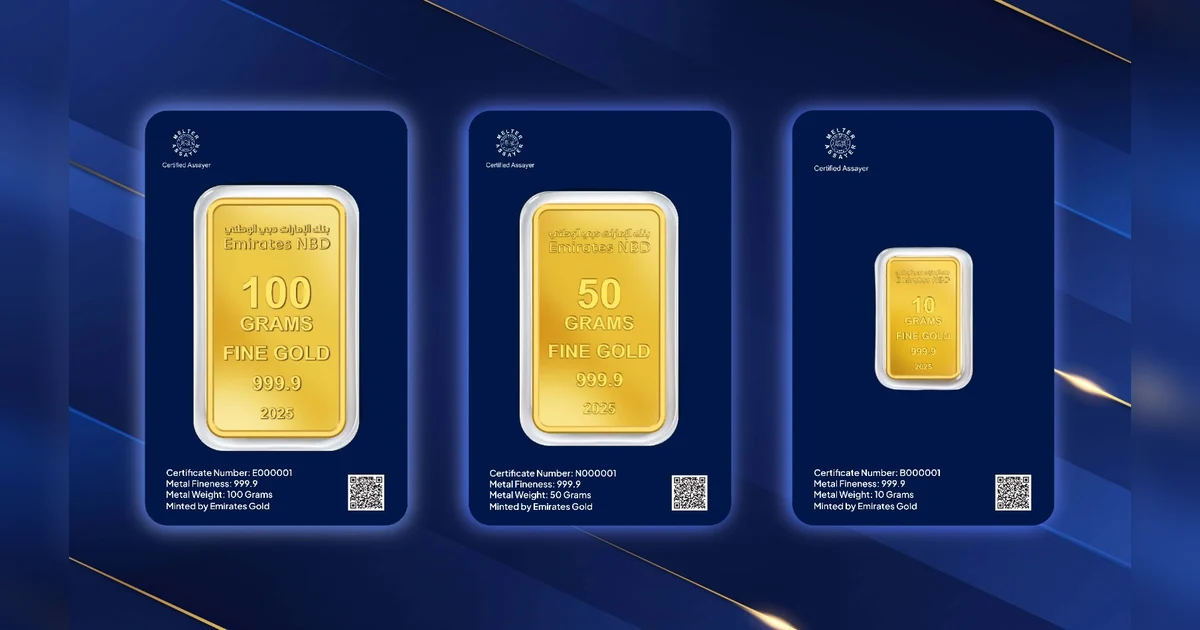
Gold prices, which recently soared to an unprecedented $4,500 per ounce, have experienced a slight decline, closing at $4,080.78 over the weekend. This 2.62% drop is attributed to profit-taking by investors. In the UAE, 24K and 22K gold were trading at Dh492.25 and Dh455.5 per gram, respectively. Despite the current dip, market analysts predict a potential resurgence, with prices potentially revisiting the $4,500 mark in the near future. Amir Boucetta, a marketing team leader at CPT, anticipates a temporary decline to $3,700-$3,800 before a bullish recovery. He emphasizes that this correction is healthy and advises investors to focus on fundamentals rather than panic selling. Komalpreet Kaur of XtremeMarkets highlights a gradual recovery, projecting gold could reach $5,000 by 2026-27, driven by factors such as US tariffs, China’s gold reserves buildup, and the US economy. Alex Kuptsikevich, chief market analyst at FxPro, notes that the US dollar’s weakness and Federal Reserve’s monetary policies have historically favored gold. However, he warns of potential volatility, as recent market trends suggest a shift in sentiment. Despite short-term fluctuations, the long-term outlook for gold remains optimistic, supported by global economic uncertainties and central bank activities.
-

US scraps tariffs on some foods over inflation woes
In a significant policy shift, the US administration has announced the removal of tariffs on over 200 food products, including essential items like coffee, beef, bananas, and orange juice. This decision comes as American consumers grapple with escalating grocery prices, which have fueled widespread discontent. The move represents a notable departure from President Donald Trump’s earlier stance, where he maintained that the tariffs imposed earlier this year were not contributing to inflation. The executive order, released on Friday, modifies the scope of reciprocal tariffs initially announced on April 2 and took immediate effect. Duties already collected will be refunded. Trump, speaking aboard Air Force One, acknowledged that tariffs might ‘in some cases’ raise prices but reiterated his belief that the US has ‘virtually no inflation.’ He also revealed plans to distribute a $2,000 payment to lower- and middle-income citizens next year, funded by tariff revenues. The list of exempted products includes everyday staples that have seen double-digit price increases, such as oranges, cocoa, and fertilizers. Critics, including US Representative Don Beyer, argue that the administration is finally acknowledging the inflationary impact of its trade policies. Despite the tariff rollback, consumers remain frustrated by high grocery prices, which economists attribute partly to import duties. Richard Neal, the top Democrat on the House Ways and Means Committee, criticized the move as ‘putting out a fire that they started.’ The US Consumer Price Index for September 2025 showed a 3% year-over-year increase, with beef and coffee prices surging by 14.7% and 18.9%, respectively. While some industry groups have praised the exemptions, the broader economic implications of the tariff reversal remain a contentious issue.