分类: business

  • Indian rupee nears Rs25 per UAE dirham; GCC expats could see remittance gains

    Indian rupee nears Rs25 per UAE dirham; GCC expats could see remittance gains

    The Indian rupee is approaching a psychologically significant threshold of 25 against the UAE dirham, creating favorable conditions for expatriate workers across the Gulf Cooperation Council (GCC) region. This currency movement signals potential gains for remittance flows as overseas earners benefit from improved exchange rates.

    Current trading positions the rupee at approximately 90.87 against the US dollar, translating to a UAE dirham rate between 24.70 and 24.75 rupees. Market analysts project further depreciation potentially reaching 92 rupees per dollar, which would push the dirham beyond the unprecedented 25-rupee benchmark. This development would substantially increase the rupee value of monthly transfers sent home by millions of GCC-based workers.

    The Reserve Bank of India (RBI) has indicated a flexible approach to currency management. Governor Sanjay Malhotra clarified that the central bank does not target specific exchange levels, focusing instead on curbing excessive volatility rather than defending psychological thresholds. This policy stance reflects India’s commitment to market-driven exchange rates while maintaining financial stability.

    Several factors contribute to the rupee’s downward trajectory, including global dollar strength, sustained foreign investor outflows, and widening external imbalances. The currency recorded its most significant annual decline in three years during 2025, falling 4.72 percent to close at 89.87 against the dollar—the weakest performance since 2022.

    Economists note that unlike the 2022 currency crisis driven by Federal Reserve rate hikes, the current depreciation occurs despite a 9.5 percent decline in the dollar index. This divergence suggests domestic and regional factors are increasingly influencing the rupee’s trajectory. IDFC First Bank economist Gaura Sen Gupta describes the situation as “largely a capital-flow story” with the RBI adopting a more pragmatic approach to currency management.

    Despite short-term pressures, India’s macroeconomic fundamentals remain robust. The country maintains substantial foreign exchange reserves of approximately $690 billion, coupled with high growth rates and relatively manageable inflation. The RBI governor noted that the rupee’s average annual depreciation of about 3 percent aligns with historical patterns given India’s inflation differential with advanced economies.

    For GCC expatriates, the currency movement translates to tangible financial benefits. Each incremental decline in the rupee’s value amplifies remittance purchasing power, potentially generating thousands of additional rupees annually for families managing education, housing, and healthcare costs in India.

  • Gold charges toward $5,000 as a new real-assets supercycle takes hold

    Gold charges toward $5,000 as a new real-assets supercycle takes hold

    The global gold market is experiencing a profound transformation as the precious metal accelerates toward the unprecedented $5,000 per ounce threshold. This remarkable rally, characterized by a 64% surge in 2025 followed by an additional 6% gain in early 2026, represents a fundamental revaluation of gold’s role in modern portfolios.

    Three powerful catalysts are driving this structural shift: aggressive central bank accumulation, escalating geopolitical tensions, and anticipated monetary easing cycles. Emerging market central banks, particularly China’s People’s Bank which has expanded its buying streak to 14 consecutive months, are systematically diversifying reserves away from traditional dollar holdings. This institutional demand has created an exceptionally solid foundation for continued price appreciation.

    Financial institutions are revising targets accordingly. Standard Chartered maintains gold as a core overweight position with projected targets of $4,350 within three months and $4,800 over twelve months. ANZ analysts present an even more bullish case, forecasting gold will surpass $5,000 during 2026 as safe-haven demand intensifies.

    The market dynamics reflect this paradigm shift. Spot gold recently achieved record highs approaching $4,630 per ounce, while silver simultaneously reached unprecedented levels above $86. According to World Gold Council data, gold established new record prices on 53 separate occasions during 2025, while physically-backed gold ETF inflows reached an extraordinary $89 billion.

    Market analysts emphasize this represents more than temporary speculation. Ross Norman, independent precious metals analyst, notes that gold increasingly reflects a world where geopolitical and monetary uncertainty has become structural rather than episodic. This sentiment is echoed by KCM Trade’s Tim Waterer, who observes that sustained breaks above $4,600 could open the path to significantly higher valuations.

    Despite technical indicators occasionally signaling overbought conditions, analysts universally agree that any near-term corrections will likely be shallow and temporary. FXTM’s Lukman Otunuga emphasizes that fundamentals remain overwhelmingly favorable due to persistent concerns regarding Federal Reserve policy credibility, ongoing trade tensions, and unwavering central bank demand.

    As Naeem Aslam of Zaye Capital Markets concludes, gold is evolving from traditional defensive hedge to core strategic asset precisely because global tensions across multiple flashpoints are driving investors toward bullion as the ultimate store of value in an increasingly uncertain world.

  • UAE: DXB maintains its position as busiest international airport in 2025

    UAE: DXB maintains its position as busiest international airport in 2025

    Dubai International Airport (DXB) has solidified its status as the world’s premier gateway for international travel, maintaining its top ranking for the third consecutive year according to aviation analytics firm OAG. The hub recorded 62.4 million seats in 2025, representing a remarkable 16% growth since 2019 and a 4% year-on-year increase in capacity.

    While Atlanta’s Hartsfield-Jackson International Airport (ATL) claimed the overall busiest airport title with 63.1 million seats combining both domestic and international traffic, Dubai’s exclusive focus on international passengers secured its specialized dominance. The airport even outperformed Atlanta during several months of 2025, with CEO Paul Griffiths projecting DXB will surpass 95.3 million passengers by year’s end and break the 100 million threshold by 2027.

    London Heathrow (LHR) trailed significantly in second place with 49.0 million international seats, while Seoul Incheon (ICN) captured third position at 43.0 million seats, signaling a full recovery to pre-pandemic levels. Singapore Changi (SIN) followed closely in fourth with 42.6 million seats.

    The report revealed notable growth patterns across global hubs. Hong Kong International (HKG) demonstrated the most dramatic year-on-year surge at 12%, reaching 38.7 million seats, though still 14% below 2019 capacity. Istanbul Airport emerged as the fastest-growing major hub with a 27% increase since 2019, handling 41.2 million international seats and establishing itself as a rapidly expanding global nexus.

    Regional analysis shows North American and Asian airports dominating the overall busiest rankings due to substantial domestic markets, while European and Middle Eastern hubs maintain strong international specialization. Frankfurt Airport (36.4 million seats) and Doha’s Hamad International (32.7 million seats) rounded out the top ten, with the Qatari hub showing a significant 20% capacity increase compared to 2019 levels.

  • Venezuelan banks will get $300 million of oil money to sell on exchange market

    Venezuelan banks will get $300 million of oil money to sell on exchange market

    In a significant move to address critical foreign exchange shortages, Venezuela’s interim government has authorized the distribution of $300 million in oil revenues to four private banks for sale on the exchange market. The funds, sourced from recent oil sales and held in a Qatari account, will be allocated to financial institutions to provide dollars to domestic companies requiring foreign currency for essential imports and raw materials.

    Interim President Delcy Rodríguez confirmed the strategy on Friday, stating that oil revenues would now be channeled through the central bank before reaching private banks via the foreign-exchange market mechanism. This decision follows weeks of severe dollar scarcity exacerbated by U.S. seizures of Venezuelan oil tankers and disruptions to the country’s primary revenue stream.

    The allocation forms part of a broader $2 billion agreement with the United States, which has already completed $500 million in sales of Venezuelan oil following the political transition that saw Nicolás Maduro ousted and Rodríguez sworn in as interim leader. The U.S. administration anticipates Venezuela will sell between 30 million and 50 million barrels under this arrangement.

    Economist Alejandro Grisanti, director of Caracas-based firm Ecoanalítica, revealed via social media that $500 million had been deposited in the Qatar trust account, with $300 million designated for distribution to four major private banks. Financial sources indicate each institution will receive approximately $75 million in coming days.

    The bolívar’s dramatic 83% depreciation throughout 2025 has accelerated price increases and created urgent need for dollar access. While Venezuela previously permitted dollar-linked cryptocurrencies like USDT on exchange markets following limited U.S. licensing agreements, even these crypto flows have recently diminished. Analysts suggest traditional dollar allocations may now reduce reliance on cryptocurrency mechanisms.

    Rodríguez has simultaneously proposed hydrocarbons law reforms to stimulate oil investment, indicating portions of oil revenues will also fund social projects and infrastructure development, potentially signaling broader economic restructuring under the interim administration.

  • ADNOC Distribution launches one of world’s largest superfast EV charging hubs

    ADNOC Distribution launches one of world’s largest superfast EV charging hubs

    ABU DHABI – In a landmark move for sustainable transportation, ADNOC Distribution has inaugurated the world’s sixth largest superfast electric vehicle charging facility while revealing comprehensive plans to electrify the United Arab Emirates’ entire highway network by 2027.

    The strategic unveiling precedes Abu Dhabi Sustainability Week (ADSW), where international leaders are gathering to deliberate on future energy and infrastructure solutions. This development exemplifies ADNOC Group’s expanded dedication to crafting intelligent sustainable energy systems that generate substantial positive environmental impact.

    Strategically positioned at Saih Shuaib along the critical E11 corridor connecting Abu Dhabi and Dubai, the EV Mega hub boasts 60 high-capacity charging stations capable of replenishing most electric vehicles from zero to 80% capacity in roughly 20 minutes. As the largest such facility across the Middle East, Africa, and Turkey, this hub represents the cornerstone of an ambitious national infrastructure initiative.

    According to the detailed roadmap, ADNOC Distribution will establish 20 EV charging hubs by December 2027, with 15 locations anticipated to become operational by late 2026. This infrastructure expansion will ensure comprehensive charging coverage along all major UAE national highways, effectively enabling seamless long-distance electric travel and supporting the nation’s transition toward smarter, more sustainable mobility ecosystems.

    Eng. Sharif Al Olama, Under-Secretary for Energy and Petroleum Affairs at the Ministry of Energy and Infrastructure, emphasized: “This EV Megahub inauguration marks a crucial advancement in implementing the UAE’s National Electric Vehicles Policy. Its strategic placement along the vital E11 corridor provides integrated services for intercity commuters while accelerating our transformational ‘Global EV Market’ initiative targeting 50% electric vehicle penetration by 2050.”

    Eng. Bader Saeed Al Lamki, CEO of ADNOC Distribution, noted: “Building on our legacy of powering journeys since 1973, we’re now constructing the future of mobility through the UAE’s premier superfast charging facility. As consumer adoption of electric vehicles accelerates, we’re redefining convenience standards to ensure confident nationwide travel through our expanding E2GO network.”

    The newly launched facility also introduces the first Highway-focused “The Hub by ADNOC” concept, featuring a footprint triple the size of conventional service stations. This innovative space combines traditional fuel services with EV charging, culinary offerings, lifestyle amenities, and notably incorporates a dedicated coworking space—addressing the evolving needs of commuters traveling between the nation’s two largest urban centers.

    ADNOC Distribution’s E2GO network, already comprising over 400 charging points with plans to reach 750 by 2028, positions the company as a leading charge point operator supporting the UAE’s ambitious target of 50% electric vehicle adoption by 2050. With the country’s largest service station network exceeding 560 locations, ADNOC Distribution possesses unique capabilities to scale EV infrastructure efficiently while advancing national sustainability objectives.

  • Trump’s protectionist trade policies allow China to swoop in

    Trump’s protectionist trade policies allow China to swoop in

    In a significant shift in global trade dynamics, key U.S. allies are actively diversifying their economic partnerships in response to the Trump administration’s aggressive tariff policies. Canada has taken a landmark step by dramatically reducing its 100% import tariff on Chinese electric vehicles, securing in return substantially lower Chinese tariffs on Canadian agricultural exports, particularly canola seeds.

    This strategic pivot reflects a fundamental recalibration of Canada’s economic priorities. Trade expert Edward Alden of the Council on Foreign Relations notes, ‘The economic threat from the United States is now perceived by Canadians as far bigger than the economic threat from China. This represents a substantial declaration of realignment in Canada’s economic relations.’

    The Canadian decision comes amid persistent trade tensions with the United States, including maintained tariffs on Canadian steel and aluminum exports. Prime Minister Mark Carney’s government has made a calculated gamble in pursuing closer ties with Beijing, despite historical tensions including past diplomatic incidents involving detained citizens.

    This trend extends beyond North America. The European Union is finalizing a major trade agreement with Mercosur, the South American trading bloc, while simultaneously pursuing enhanced trade relations with India. China, meanwhile, has successfully diversified its export markets away from the United States, achieving a record $1.2 trillion global trade surplus in 2025 despite reduced exports to the American market.

    The Trump administration has fundamentally overhauled seven decades of U.S. trade policy, implementing double-digit tariffs on imports from nearly every nation while targeting specific industries with additional levies. While the administration claims these measures protect American industries and generate Treasury revenue—pointing to Taiwan’s agreement to invest $250 billion in the United States in exchange for tariff reductions—many allies view the approach as unpredictable and arbitrary.

    The Canadian-Chinese agreement has drawn domestic criticism, particularly from Ontario Premier Doug Ford, who warned that ‘China now has a foothold in the Canadian market and will use it to their full advantage at the expense of Canadian workers.’ However, the agreement includes limitations, capping Chinese EV exports at 49,000 vehicles initially with a reduced 6.1% tariff, gradually increasing to approximately 70,000 over five years.

    The most significant risk for Canada remains the impending renegotiation of the USMCA trade pact with the United States. Analysts suggest the Chinese agreement could complicate these talks, potentially provoking retaliatory measures from the Trump administration. Nevertheless, Canada appears to be signaling its readiness to explore alternatives rather than make ‘humiliating compromises to serve only American interests,’ according to trade economist Mary Lovely of the Peterson Institute for International Economics.

  • Dubai: Planning to buy property in 2026? Here’s what off-plan looks like

    Dubai: Planning to buy property in 2026? Here’s what off-plan looks like

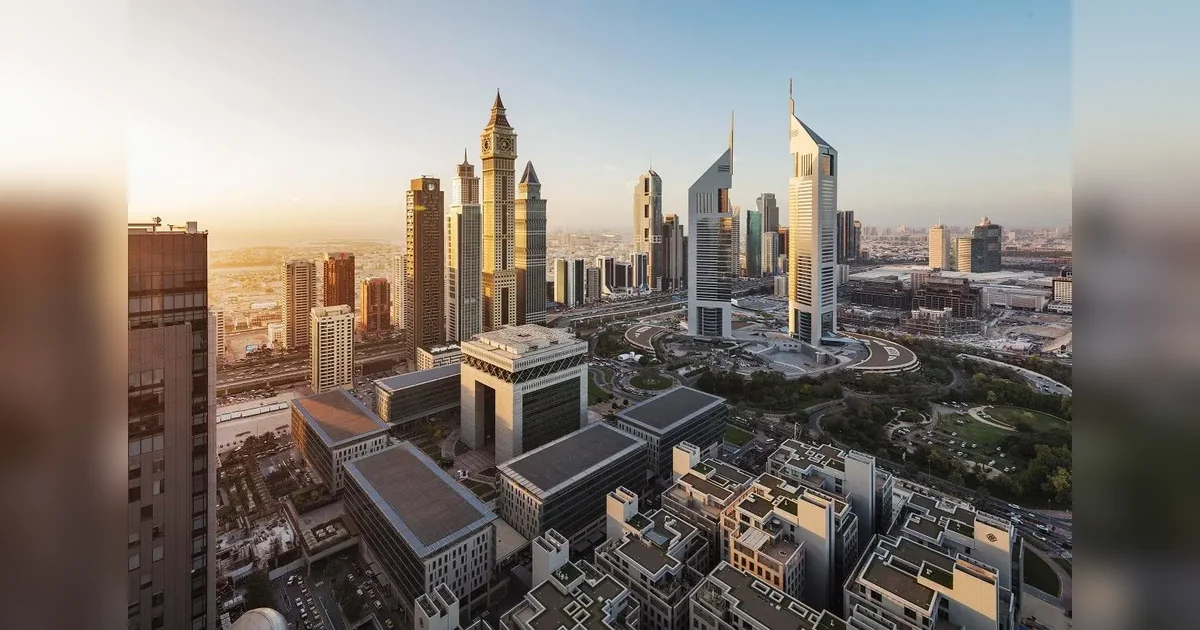
    Dubai’s real estate sector continues to demonstrate unprecedented momentum as off-plan developments solidify their position as the primary growth driver heading into 2026. Industry analysis reveals that pre-construction properties not only maintained market dominance throughout 2025 but are positioned to capture an even larger share of transaction volume in the coming year.

    Market intelligence indicates that both local and international developers are preparing significant project launches that will further stimulate investor interest. According to Himanshi Trivedi, Deputy Director for Off-Plan Sales at Metropolitan Premium Properties, “Off-plan remains the driving force of Dubai’s residential real estate market, accounting for over 70% of total transactions in 2025. With major developments underway in high-growth corridors including Dubai South, Dubai Islands, and new master-planned phases by industry leaders Emaar and Damac, we anticipate off-plan unit sales to increase by 10-15% in 2026.”

    The appeal of off-plan investments stems from their superior return potential compared to completed properties. Market data shows that projects nearing completion continue to experience price appreciation, while the ready market offers rental savings advantages for residents.

    Betterhomes CEO Louis Harding notes a pronounced shift in demand dynamics: “Demand is clearly tilting toward new supply, especially in the apartment segment.” This trend is reflected in 2025 transaction data, where off-plan activity constituted 65% of total transactions and 53% of total value, with apartment sales surging 29% to AED 325 billion while villas and townhouses contributed AED 221 billion, representing a 26% increase.

    The market expansion has been extraordinary, with approximately 145,000 new off-plan units entering the market during 2024—averaging 400 units daily. Cavendish Maxwell research indicates sales volumes reached four times pre-pandemic levels, demonstrating the sector’s robust recovery and growth trajectory.

    John Lyons, Managing Director at Espace Real Estate, observed: “Dubai’s real estate market, spanning both residential and commercial sales, continued to demonstrate remarkable resilience and growth throughout the second half of 2025. Transaction volumes remained robust, buoyed by sustained demand across all asset classes.”

    Development leadership emerged clearly in H2 2025, with Binghatti launching over 13,000 units, followed by Damac Properties (6,588 units) and Emaar (6,262 units), signaling continued confidence in Dubai’s property market fundamentals.

  • Xinjiang leads China in cross-border rail traffic, central Asian connectivity in 2025

    Xinjiang leads China in cross-border rail traffic, central Asian connectivity in 2025

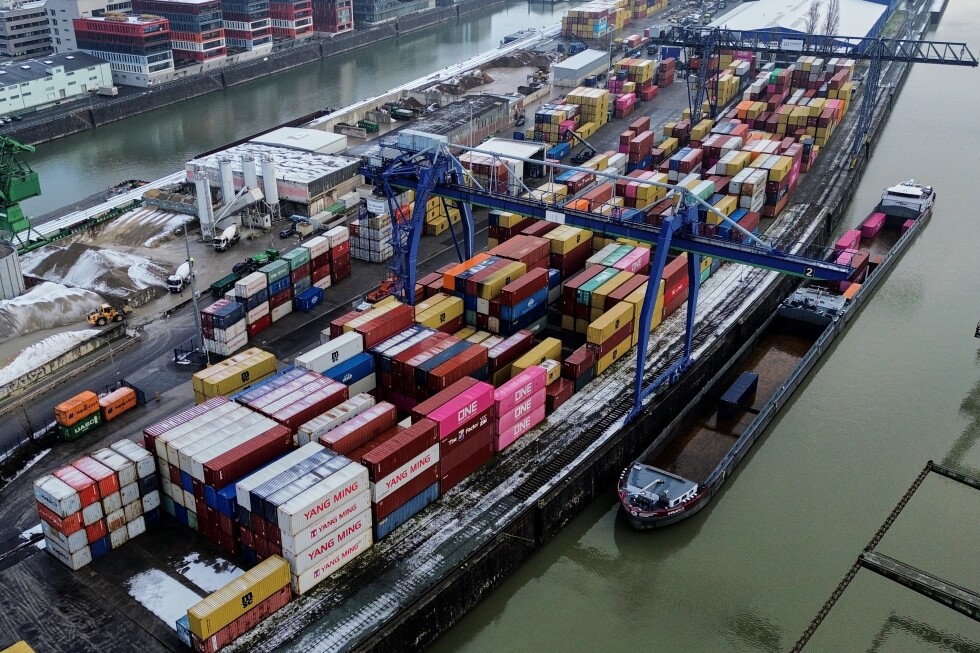
    Northwest China’s Xinjiang Uygur Autonomous Region has solidified its position as the nation’s foremost hub for Eurasian connectivity, achieving unprecedented cross-border rail traffic volumes throughout 2025. Regional authorities confirmed on January 17, 2026, that Xinjiang’s strategic ports handled the highest rail freight volume across all Chinese provinces, marking a significant milestone in China’s transnational infrastructure development.

    The region has simultaneously emerged as the dominant aviation corridor to Central Asia, with flights connecting regional capital Urumqi to Kazakhstan, Kyrgyzstan, Tajikistan, Uzbekistan and Turkmenistan comprising 35.1% of China’s total passenger flights to these nations. This dual achievement in both rail and air connectivity demonstrates Xinjiang’s evolving role as a critical nexus in China’s Belt and Road Initiative.

    With 19 operational ports, Xinjiang implemented comprehensive measures to accommodate diverse logistical requirements. At Urumqi’s international port, the introduction of specialized cargo zones and expedited clearance protocols for priority shipments catalyzed a remarkable 170.6% year-on-year surge in international cargo flights, according to Liu Peng, an official with the Xinjiang Immigration Inspection General Station.

    The region welcomed over 58 million international travelers in 2025, drawn by cross-border commerce, tourism opportunities, and border-area cultural exchanges. To accommodate this substantial influx, immigration service centers established at major ports including Horgos and Urumqi now provide integrated services encompassing policy consultation, emergency medical assistance, and currency exchange facilities.

    Through strategic investments in ‘smart port’ infrastructure and continued institutional reforms, Xinjiang is enhancing its capacity as China’s primary conduit to Central Asia and beyond, effectively bridging economic networks across Eurasia with increasing operational efficiency.

  • Adaptability key for businesses amid challenges

    Adaptability key for businesses amid challenges

    At its annual gala in New York on Thursday, the China General Chamber of Commerce-USA (CGCC) convened approximately 300 senior executives, government officials, and business leaders to address navigating ongoing trade complexities between the world’s two largest economies. The event, themed “Together We Gallop Toward the Future,” served as a platform to emphasize resilience and the critical need for sustained dialogue.

    CGCC Chairman Hu Wei, who also serves as President and CEO of Bank of China USA, outlined the significant challenges member companies currently face. These include escalating operational costs, persistent supply chain disruptions, and increasing regulatory hurdles in cross-border commerce. Despite these headwinds, Hu highlighted the remarkable adaptability demonstrated by Chinese businesses operating in the US. He issued a call to action for policymakers in both nations to heed the business community’s perspective, stating, “I have witnessed firsthand the power of dialogue and engagement… real progress is made through steady relationship and is in action.”

    Chinese Ambassador to the US Xie Feng delivered a keynote address reinforcing China’s commitment to high-quality development and high-standard opening-up, irrespective of the external environment. He pointed to burgeoning industrial clusters in strategic sectors like new energy, advanced materials, aviation, aerospace, and the low-altitude economy as sources of future multi-trillion-yuan markets. Ambassador Xie also announced plans to expand pilot programs opening value-added telecommunications, biotechnology, and wholly foreign-owned hospitals to foreign investment. While urging deeper cooperation, he called on American officials to foster a more open, fair, and non-discriminatory environment for Chinese enterprises, including providing visa and border entry facilitation.

    The gala also recognized standout corporate achievements. Vornado Realty Trust received the “Outstanding Partner of the Year” award for its long-standing professional collaborations with CGCC members. Michael Franco, President and CFO of Vornado, celebrated these relationships built on “mutual respect and confidence,” and announced that Chinese pop culture brand Pop Mart would open a new flagship store in its Times Square retail space. Pop Mart, alongside construction machinery giant Sany Group and Sunon Furniture LLC, were honored as “Brands of the Year” for embodying creativity, resilience, and a future-driven spirit. Sany North America President Xiang Fei encapsulated the evening’s sentiment, remarking, “Success is not just about revenue and size. It’s about delivering our values,” and reaffirming a commitment to strengthening US-China cooperation through long-term investment.

  • Kashgar area of Xinjiang Pilot FTZ sees robust growth over past two years

    Kashgar area of Xinjiang Pilot FTZ sees robust growth over past two years

    The Kashgar area within China’s Xinjiang Pilot Free Trade Zone has demonstrated remarkable economic expansion since its establishment in November 2023, establishing itself as a thriving hub for regional commerce and cross-border trade. Over the past two years, this strategic northwestern region has achieved unprecedented growth metrics through comprehensive institutional reforms and business climate optimization.

    Positioned as China’s gateway to Central and Western Asia, the Kashgar FTZ has leveraged its geographical advantages to create a dynamic ecosystem for international trade and investment. The zone’s success stems from pioneering administrative simplifications, streamlined customs procedures, and innovative financial services specifically designed to facilitate cross-border commerce.

    Key performance indicators reveal substantial progress across multiple sectors. Trade volumes have increased exponentially, with particular strength in agricultural exports, textile manufacturing, and renewable energy technologies. The zone has attracted significant foreign direct investment through competitive tax incentives and specialized industrial parks catering to various sectors including logistics, e-commerce, and high-value processing.

    Infrastructure development has kept pace with economic expansion, with enhanced transportation networks connecting Kashgar to major international markets through road, rail, and air corridors. Digital transformation initiatives have implemented smart customs systems and blockchain-based documentation processes, significantly reducing administrative processing times.

    The zone’s unique positioning has enabled it to serve as a critical bridge for China’s Belt and Road Initiative, facilitating economic cooperation with neighboring countries including Pakistan, Afghanistan, and Central Asian republics. Specialized cross-border e-commerce platforms have emerged as particularly successful, handling growing volumes of international transactions.

    Looking forward, Kashgar FTZ authorities plan to expand into new areas including digital trade, green energy partnerships, and specialized financial services. The continued development of this economic zone represents a significant component of China’s broader strategy to stimulate economic development in its western regions while strengthening international trade connections across Eurasia.