分类: business

  • Africa leads growth in solar energy as demand spreads beyond traditional markets, report says

    Africa leads growth in solar energy as demand spreads beyond traditional markets, report says

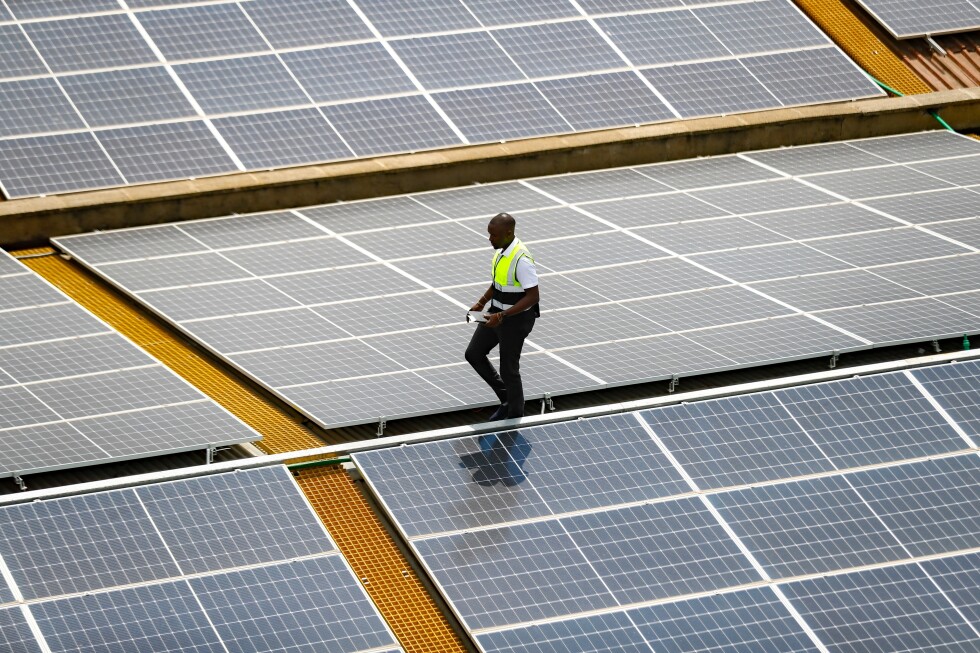
    NAIROBI, Kenya — Defying a worldwide deceleration in renewable energy expansion, Africa has astonishingly positioned itself as the planet’s most rapidly expanding solar market in 2025. This remarkable growth, meticulously documented in a recent industry analysis, signifies a pivotal shift in the global concentration of renewable energy momentum.

    The Africa Solar Industry Association’s comprehensive report reveals that the continent’s installed solar capacity witnessed a robust 17% surge last year. This acceleration was predominantly fueled by a substantial influx of competitively priced, Chinese-manufactured solar panels. While the global solar power capacity increased by 23% to 618 gigawatts (GW) in 2025, this represented a significant slowdown from the 44% growth rate recorded in 2024, making Africa’s performance particularly standout.

    Cynthia Angweya-Muhati, Acting CEO of the Kenya Renewable Energy Association, emphasized the crucial role of international partnership, stating, ‘Chinese enterprises are fundamentally propelling Africa’s green energy transformation. They are making assertive investments and establishing resilient supply chains within the continent’s burgeoning green ecosystem.’

    However, a notable implementation gap persists. Data indicates that although nearly 64 gigawatts peak (GWp) of solar equipment has been shipped to Africa since 2017, the operational capacity currently stands at only 23.4 GWp. A gigawatt peak denotes one billion watts of maximum potential power output under ideal conditions.

    John Van Zuylen, CEO of the Africa Solar Industry Association, attributed this sustained growth to strategic policy evolution. ‘Solar energy has transcended its status as a niche interest of a few early adopters to become a widespread continental priority,’ he commented during the Inter Solar Africa summit in Nairobi. ‘The current trajectory is not ephemeral; it is the result of policies successfully aligning with potent market dynamics.’

    The market landscape is also diversifying. Historically, South Africa was the dominant force, once accounting for approximately half of all solar panel imports. Its share has now receded to below one-third as demand skyrockets across the continent. In a striking demonstration of this broadening appeal, 20 African nations established new annual import records in 2025, with 25 countries each importing a minimum of 100 megawatts of capacity.

    Nigeria has now eclipsed Egypt to become Africa’s second-largest solar importer. The driving force behind this shift is the practical and cost-effective nature of solar energy coupled with battery storage, offering a reliable alternative to expensive diesel generators and an unstable national grid. Algeria experienced a meteoric rise with year-on-year imports soaring over thirty times, while Zambia and Botswana also recorded significant surges.

    The report further highlights that at least 23 African nations, including South Africa, Tunisia, Kenya, Chad, and the Central African Republic, now generate over 5% of their electricity from solar sources.

    A key enabler of this boom is the precipitous decline in costs. Prices for solar panels and, crucially, battery storage units—primarily sourced from China—have fallen dramatically. Battery storage costs in Africa dropped to $112 per kilowatt-hour in 2025, down from an average of $144 in 2023, thanks to technological advancements yielding more flexible and durable systems.

    Van Zuylen noted the profound impact of this trend: ‘This ever-decreasing price of storage carries game-changing implications for a continent with an acute need for stable, baseload power.’

    Policy reforms are also playing a critical role. In Nigeria, the phased removal of diesel subsidies over the past two years has made diesel progressively more expensive, effectively pushing businesses and households toward solar alternatives. This policy was implemented incrementally across sectors to mitigate economic shock. In a major development for regional manufacturing, Nigeria announced plans in September for a 1 GW solar panel factory, poised to be the largest in West Africa. Similar facilities are currently under construction in Egypt, South Africa, and Ethiopia.

    As Africa ambitiously moves to develop its indigenous manufacturing capabilities, the industry is looking towards China for knowledge transfer to mitigate the continent’s reliance on imported equipment and technology.

    The economic benefits extend far beyond manufacturing. Van Zuylen pointed to a parallel jobs boom, explaining, ‘The solar employment surge is occurring in service sectors such as installation, maintenance, distribution, and financing, where thousands of small and medium enterprises are emerging to cater to the escalating demand.’

    Despite the optimistic outlook, significant challenges remain. A primary obstacle is policy inconsistency. Unlike regions such as the Middle East, where governments publish clear, long-term energy roadmaps, many African markets lack stable policy signals. Solar firms operating across the continent cite unpredictable tax structures, fluctuating import duties, and ambiguous long-term energy strategies as factors that erode investor confidence.

    Amos Wemanya, Senior Analyst on Renewable Energy at Powershift Africa, succinctly captured the issue: ‘The problem is not the opportunity. It’s visibility. If a government announces a plan, companies need to have trust that it will remain in place.’


  • Taylor Swift asks US government to block ‘Swift Home’ trademark

    Taylor Swift asks US government to block ‘Swift Home’ trademark

    Global music icon Taylor Swift has initiated formal legal proceedings against bedding manufacturer Cathay Home, alleging the company’s attempt to trademark “Swift Home” constitutes unauthorized appropriation of her identity and brand equity. Through her representation at TAS Rights Management LLC, Swift submitted a detailed objection to the United States Patent and Trademark Office on Wednesday, asserting that the proposed branding bears striking resemblance to her federally protected cursive signature.

    The legal filing contends that Cathay Home’s stylized presentation of the word “Swift” creates consumer confusion by implying an official endorsement from the recording artist. Court documents reviewed by media outlets indicate Swift’s legal team believes the company intentionally seeks to capitalize on the performer’s substantial commercial recognition and public goodwill without authorization.

    New York-based Cathay Home, which distributes products through major retail channels, filed the contested trademark application specifically for bedding merchandise. The company’s marketing materials now face scrutiny for potentially misleading consumers regarding product associations with the entertainment superstar.

    This legal action forms part of Swift’s comprehensive brand protection strategy, which includes over 300 registered trademarks spanning multiple jurisdictions. These intellectual property protections cover her name, distinctive initials, album nomenclature, and select lyrical content across product categories including bedding, apparel, and music-related merchandise.

    The multi-Grammy winner’s commercial empire, recently bolstered by record-shattering international concert attendance and music sales, now exceeds an estimated $1 billion valuation. This trademark challenge demonstrates the rigorous enforcement approach taken by celebrity entities to safeguard their commercial interests against perceived brand dilution and unauthorized exploitation.

  • Canadian and UK finance groups pause new ventures with DP World over CEO’s emails with Epstein

    Canadian and UK finance groups pause new ventures with DP World over CEO’s emails with Epstein

    Leading financial institutions from Canada and the United Kingdom have suspended future collaborations with global logistics firm DP World following the disclosure of extensive email correspondence between company CEO Sultan Ahmed bin Sulayem and convicted sex offender Jeffrey Epstein. The communications, unveiled in recently released U.S. Department of Justice documents, contain explicit references to sexual content and escort services spanning several years.

    British International Investment, the UK’s development finance agency, announced it will withhold new investments with DP World until the company implements necessary corrective measures. Similarly, La Caisse de dépôt et placement du Québec, one of Canada’s largest pension funds, has paused further capital deployment with the Dubai-based port operator.

    The email exchanges, dating from 2009 to 2018, reveal a longstanding personal relationship between Sulayem and Epstein, who died by suicide in 2019 while facing sex trafficking charges. Among the most concerning communications is a 2009 message where Epstein references a ‘torture video’ he apparently received from Sulayem. Subsequent emails include Sulayem’s description of a ‘100% female Russian’ on his yacht, menus from massage businesses offering sexual services, and direct links to pornographic websites.

    While the correspondence does not directly implicate Sulayem in Epstein’s criminal activities, the nature of the discussions has prompted serious concern among DP World’s investment partners. Both financial institutions emphasized they are not direct investors in DP World but have previously collaborated on global port infrastructure projects.

    DP World, which operates the massive Jebel Ali port in Dubai and numerous international terminals, has remained silent despite multiple requests for comment. Sulayem previously served as chairman of Dubai World, the conglomerate behind Dubai’s iconic palm-shaped artificial islands.

  • Costs from Trump’s tariffs paid almost entirely by US consumers, NY Fed says

    Costs from Trump’s tariffs paid almost entirely by US consumers, NY Fed says

    A comprehensive analysis by the Federal Reserve Bank of New York demonstrates that American corporations and consumers are absorbing approximately 90% of the financial burden resulting from elevated tariffs imposed on imported goods. The research, published Thursday, indicates that the average tariff rate surged dramatically from 2.6% to 13% throughout 2025, marking one of the most significant increases in recent trade history.

    The study examined tariff implementations targeting multiple trading partners including China, Mexico, Canada, and the European Union. Contrary to conventional economic expectations, exporting nations maintained stable pricing structures rather than reducing costs to mitigate potential declines in U.S. demand. This pricing strategy resulted in importers transferring additional expenses directly to American consumers through elevated retail prices.

    This pattern mirrors outcomes observed during the 2018 tariff implementations during President Trump’s initial term, suggesting consistent economic behavior across different trade environments. The New York Fed’s findings receive substantial validation from parallel international studies.

    Independent analysis from Germany’s Kiel Institute for the World Economy, based on examination of 25 million transactions, confirmed nearly complete transfer of tariff costs to U.S. import prices. Their research revealed that major exporters including Brazil and India opted to reduce shipment volumes rather than decrease pricing, resulting in what researchers termed ‘trade volume collapse.’

    Supporting evidence from the National Bureau of Economic Research indicated approximately 100% pass-through of tariffs to consumer pricing. Meanwhile, the Tax Foundation, a Washington DC-based policy research organization, characterized the tariffs as effectively constituting a new consumer tax. Their calculations suggest the average American household incurred approximately $1,000 in additional costs during 2025, with projections indicating a rise to $1,300 for 2026.

    The Tax Foundation further noted that the effective tariff rate—accounting for reduced purchasing in response to higher prices—currently stands at 9.9%, representing the highest average rate recorded since 1946. According to their analysis, these increased costs will completely offset any potential economic benefits derived from tax reductions included in the administration’s legislative proposals.

  • Oil prices tumble more than $1 as IEA cuts demand forecast

    Oil prices tumble more than $1 as IEA cuts demand forecast

    Global oil markets experienced significant downward pressure on Thursday following a sobering demand forecast revision from the International Energy Agency. The Paris-based organization substantially lowered its 2026 global oil consumption projections, triggering a swift market reaction that erased earlier geopolitical risk premiums.

    Benchmark crude indices registered pronounced declines throughout the trading session. Brent crude futures plummeted by $1.26, representing a 1.82% decrease to settle at $68.14 per barrel. Simultaneously, US West Texas Intermediate crude witnessed a $1.24 drop, equating to a 1.92% decline, closing at $63.39 per barrel.

    The IEA’s monthly market report indicated that demand growth would underperform previous estimates despite January supply disruptions. The agency projected a substantial market surplus would persist throughout the year, fundamentally altering trader sentiment. This revision prompted investors to reassess the balance between geopolitical tensions and fundamental supply-demand dynamics.

    Market analysts observed that the earlier price support derived from US-Iran tensions had rapidly dissipated. Phil Flynn, senior analyst at Price Futures Group, noted that the market ‘just ran out of steam’ as participants prioritized the weakened demand outlook over Middle Eastern geopolitical concerns.

    Concurrently, substantial US inventory data exacerbated the bearish sentiment. The Energy Information Administration reported an 8.5 million barrel crude stockpile increase, dramatically exceeding analyst expectations of a 793,000-barrel build. Refinery utilization rates concurrently declined by 1.1 percentage points to 89.4%, indicating reduced processing demand.

    On the supply front, Russian seaborne oil product exports climbed 0.7% month-over-month to 9.12 million metric tons in January, driven by elevated fuel production and seasonal domestic consumption patterns. This additional supply further contributed to the global surplus scenario outlined by the IEA.

  • The US economy is growing – so where are all the jobs?

    The US economy is growing – so where are all the jobs?

    The American labor market is presenting a paradoxical scenario that defies conventional economic wisdom. While macroeconomic indicators show robust growth with the economy expanding at a 4.4% annual pace, job seekers like Jacob Trigg face unprecedented challenges. The 42-year-old Texan project manager, previously accustomed to quick employment transitions, has submitted over 2,000 applications without securing permanent professional work, instead relying on package delivery and landscaping jobs to survive.

    This personal struggle reflects a broader national phenomenon where job openings and hiring rates have plummeted to multi-year lows. Recent data reveals the US added merely 15,000 jobs monthly last year—a strikingly low figure by historical standards. Yet simultaneously, the unemployment rate remains stable at 4.3%, layoffs stay limited outside notable exceptions like Amazon and UPS, and economic expansion continues.

    Economists describe this combination as highly unusual. Jed Kolko of the Peterson Institute for International Economics notes: ‘It’s actually very hard to point to another moment in the last 25 years where you have the combination we see today.’

    The situation has sparked intense debate about potential structural shifts in the economy. Goldman Sachs’ widely cited October report suggested the US might be entering a period of ‘jobless growth,’ driven particularly by artificial intelligence adoption enabling companies to achieve more with reduced human resources. This concern resonated through World Economic Forum discussions in Davos, contributing to widespread economic anxiety.

    Professor Constantin Burgi of University College Dublin observes that such decoupling of job gains from overall growth typically occurs during fundamental economic transformations. While he views the situation as potentially temporary, he acknowledges it could persist for years if jobs are permanently lost to AI or outsourcing.

    The human impact is profound. James Richardson, a 33-year-old information security analyst from Pittsburgh, has applied to over 1,200 positions since October, sometimes receiving rejections within 15 minutes. ‘It feels like there is no-one on the other side even bothering to look at your experiences,’ he lamented, noting he would be homeless without parental support.

    Multiple factors beyond technology may contribute to the hiring slowdown. Many companies, especially in tech, still carry surplus workers hired during pandemic-era booms. The Trump administration’s immigration crackdown simultaneously reduces both available workers and demand for them. Economic uncertainty from government spending cuts and tariff programs may also suppress hiring appetite.

    Despite stronger-than-expected January job gains offering some hope, economists like Indeed’s research director Laura Ullrich caution against declaring a ‘new normal.’ She maintains current conditions are unsustainable long-term, as low hiring, low firing, and low quit rates during economic growth cannot persist indefinitely.

    For job seekers like Amy Beson, laid off from the University of Arizona amid government funding cuts, the situation feels desperately permanent. Even expanding her search to healthcare—typically a resilient sector—has yielded nothing, leading her to worry this challenging environment represents a permanent shift rather than a temporary anomaly.

  • Emaar posts strongest-ever results as revenues climb 44%

    Emaar posts strongest-ever results as revenues climb 44%

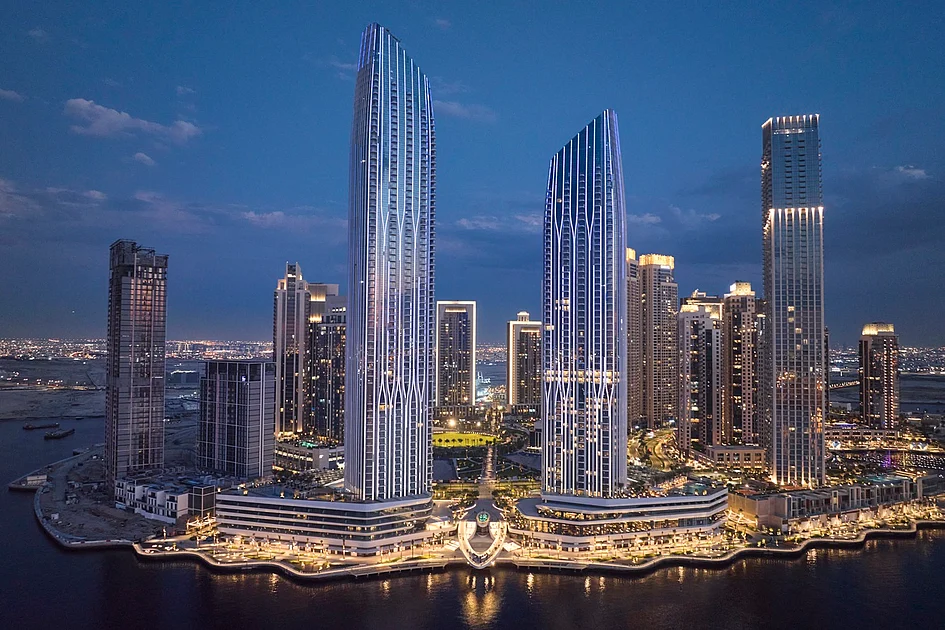
    Dubai’s premier real estate developer Emaar Development has announced unprecedented financial achievements for the fiscal year 2025, marking its most successful performance since inception. The property giant, operating as a majority-controlled subsidiary of Emaar Properties, demonstrated remarkable growth across all key metrics amid soaring demand for residential properties throughout Dubai.

    The company’s annual property sales reached an extraordinary Dh71.1 billion, representing a 9% increase from the previous year and establishing a new benchmark in the company’s history. This exceptional performance has been attributed to strategic project expansions and sustained market confidence in Dubai’s real estate landscape, driven by demographic expansion, increased international investment, and supportive regulatory frameworks.

    Financial indicators revealed spectacular progress with revenues skyrocketing 44% to Dh27.5 billion, while pre-tax net profit experienced a substantial 52% leap to Dh15.5 billion. These figures reflect enhanced operational efficiency and favorable market conditions. The revenue backlog—representing future earnings from sold but undelivered properties—expanded significantly to Dh125.2 billion, ensuring strong financial visibility for forthcoming years.

    In a move rewarding investor confidence, the board has proposed a record dividend distribution of Dh4 billion, a 47% increase from the previous year, subject to shareholder ratification.

    Strategic expansion efforts in 2025 included the acquisition of 36 million square feet of land with an estimated development value of Dh120 billion. The company launched over 48 residential developments within its master-planned communities, featuring new phases in The Valley, Bristol at Emaar Beachfront, and the Grand Polo Club and Resort.

    A landmark announcement included Emaar Hills, an ambitious new district featuring Dubai Mansions—ultra-luxury residences targeting high-net-worth international buyers, signaling the company’s intensified focus on the premium property segment.

    Founder Mohamed Alabbar emphasized that these achievements demonstrate the robustness of Dubai’s development ecosystem and the UAE government’s forward-looking policies. “The stable regulatory environment, strategic long-term planning, and openness to global investment enable developers like Emaar to execute large-scale projects with confidence,” Alabbar stated, noting the company’s continued commitment to creating communities that elevate living standards.

    Since 2002, Emaar Development has delivered more than 80,500 residential units and currently maintains approximately 51,000 units under development across Dubai’s most prestigious communities, including Dubai Hills Estate, Arabian Ranches, Downtown Dubai, Dubai Marina, and Emaar Beachfront.

  • Presight reports sharp rise in revenue and continued international expansion

    Presight reports sharp rise in revenue and continued international expansion

    Abu Dhabi-based artificial intelligence firm Presight has demonstrated exceptional financial performance throughout 2025, reporting substantial revenue growth and significant international market penetration. The company’s latest financial disclosures reveal a remarkable 36.9% year-over-year revenue increase, reaching Dh3.03 billion, surpassing analyst projections and establishing new benchmarks in the AI solutions sector.

    The fourth quarter of 2025 emerged as Presight’s strongest final-quarter performance to date, generating Dh1.29 billion in revenue—a 23.6% increase compared to the same period in 2024. EBITDA showed robust growth at 23.5%, totaling Dh785 million annually, while net profit reached Dh665.5 million despite the full implementation of the UAE’s revised corporate tax structure. Without the tax impact, profit growth would have reached 16.7% rather than the reported 8.6%.

    International expansion has become a cornerstone of Presight’s growth strategy, with non-UAE revenue more than doubling to Dh1.17 billion—accounting for nearly 39% of total annual revenue compared to just 23% in 2024. The fourth quarter saw international markets contribute almost half of total revenue, demonstrating rapidly accelerating global demand for sovereign AI solutions. Major multi-year deployments are currently advancing in Jordan, Kazakhstan, and Albania, reflecting the company’s strategic focus on emerging markets.

    His Excellency Dr. Sultan Al Jaber, Presight’s Chairman, emphasized that the company’s performance reflects the UAE’s commitment to establishing intelligence as critical national infrastructure. CEO Thomas Pramotedham highlighted twelve consecutive quarters of growth since the company’s 2023 initial public offering, underscoring Presight’s capacity to deliver intelligence-led infrastructure at scale while maintaining responsible global expansion.

    The company’s order intake remained strong throughout 2025, with Dh3.4 billion in new contracts signed and an equivalent amount recorded as year-end backlog—representing a 13% annual increase and an 85% growth over three years. Presight concluded the year with no debt, strengthening its position to invest in innovation, talent development, and strategic expansion initiatives. Subsidiary AIQ contributed significantly to this success, particularly within the energy sector.

    Based on this performance, Presight has elevated its medium-term guidance through 2029, projecting revenue compound annual growth of 20-25%, EBITDA growth of 23-28%, and profit after tax growth of 21-26%. These targets are supported by the company’s expanding contract backlog, diversified global presence, and robust innovation pipeline.

  • Adnoc Drilling net profit tops $1.45b as it sets sights on regional expansion

    Adnoc Drilling net profit tops $1.45b as it sets sights on regional expansion

    Abu Dhabi National Oil Company’s drilling subsidiary has announced unprecedented financial performance for the 2025 fiscal year, achieving a landmark net profit of $1.45 billion. The exceptional results stem from strategic regional expansion, technology-driven operational enhancements, and consistently high fleet utilization rates across all operational segments.

    The company demonstrated remarkable revenue growth, climbing 22% annually to reach $4.9 billion. This financial upswing was propelled by substantial increases in both onshore and offshore drilling activities, complemented by a significant surge in oilfield services operations. The integration of artificial intelligence systems, predictive maintenance protocols, and automated workflows contributed substantially to cost reduction, safety improvements, and enhanced drilling efficiency.

    Chief Executive Officer Abdulla Ateya Al Messabi characterized 2025 as a transformative period marked by operational discipline and technological innovation. Under his leadership, the organization is rapidly evolving into the Gulf region’s premier energy services provider through expanded GCC operations, AI-powered operational enhancements, and new sustainability benchmarks.

    Segment analysis reveals diversified growth patterns: the onshore division generated $2.04 billion in revenue (8% increase), the offshore segment reached $1.40 billion through capacity enhancements, while oilfield services experienced an extraordinary 80% revenue surge to $1.46 billion due to expanded integrated drilling services and unconventional operations.

    The company achieved several industry milestones, including drilling the world’s longest well at 55,000 feet using advanced digital systems from offshore artificial islands. Additionally, regional performance records were shattered with over 5,300 feet drilled within a 24-hour period.

    Shareholders will benefit from the robust financial position through a $250 million fourth-quarter dividend recommendation, bringing total 2025 distributions to $1 billion. For 2026, the board has established a higher minimum annual dividend of $1.05 billion, supported by substantial free cash flow generation of $1.47 billion.

    Future projections indicate sustained momentum through 2026, with expectations of stable revenue growth, maintained high utilization rates, and continued operational efficiencies through digital transformation. The company plans to scale integrated drilling services to approximately 70 rigs by year-end 2026, reinforcing its critical role in supporting the UAE’s long-term energy expansion strategies.

  • Panvel’s Aerotropolis moment: Why NRIs are tracking Mumbai’s next airport‑led growth hub

    Panvel’s Aerotropolis moment: Why NRIs are tracking Mumbai’s next airport‑led growth hub

    The emergence of Navi Mumbai International Airport (NMIA) has catalyzed a profound transformation in the regional real estate landscape, with Non-Resident Indians establishing themselves as the primary drivers of this infrastructure-led investment boom. Industry analysts confirm that speculative interest has evolved into conviction-based acquisitions as the airport transitions from conceptual planning to operational reality.

    Market data reveals extraordinary appreciation patterns in the Panvel region, with residential apartment prices escalating by 74% between fiscal years 2021 and 2025, currently commanding rates between ₹10,000–12,000 per square foot. Concurrently, plotted land valuations have experienced a dramatic 93% surge, substantially outperforming other Navi Mumbai submarkets.

    Bhavesh Shah, Joint Managing Director at Today Group, observes: “We’re witnessing consistently strengthening engagement from the NRI community, particularly from the Middle East, Southeast Asia, and United Kingdom. This interest has matured from preliminary inquiries to decisive, early-phase capital commitments.”

    The development community emphasizes the region’s transition from theoretical potential to tangible performance. Samyag M. Shah, Director of Marathon Nextgen Realty, notes: “Panvel has definitively arrived as a investment destination. The operationalization of NMIA combined with transformative connectivity infrastructure like Atal Setu—which reduces South Mumbai travel duration to approximately 40 minutes—has fundamentally altered investment psychology.”

    Global parallels demonstrate that airport-anchored urban centers—from Amsterdam’s Schiphol to Paris’s Charles de Gaulle—historically exhibit patterns of sustained appreciation and resilient rental demand. Panvel now demonstrates analogous early indicators, with rental demand materializing ahead of projections.

    Marathon Nexzone’s operational data indicates approximately 45% of residential units currently maintain rental occupancy, primarily housing aviation specialists, logistics professionals, and corporate employees from neighboring business parks. This rental absorption is anticipated to intensify as NMIA expands its route network and complementary infrastructure projects advance.

    The valuation proposition presents particular appeal for international investors. Panvel offers substantially larger, contemporary residential configurations (3-4 bedroom units) at price points comparable to compact apartments in established Mumbai suburbs. This value differential, combined with early-entry positioning in an emerging aerotropolis, creates compelling long-term appreciation potential.

    Industry projections indicate the forthcoming decade will establish Panvel as a self-sustaining urban ecosystem. The convergence of NMIA’s global connectivity, proposed Metro Line 8, logistics hubs, and the envisioned BKC 2.0 at Kharghar positions the region as Mumbai’s next multidimensional growth engine, transitioning from peripheral suburb to strategic global gateway.