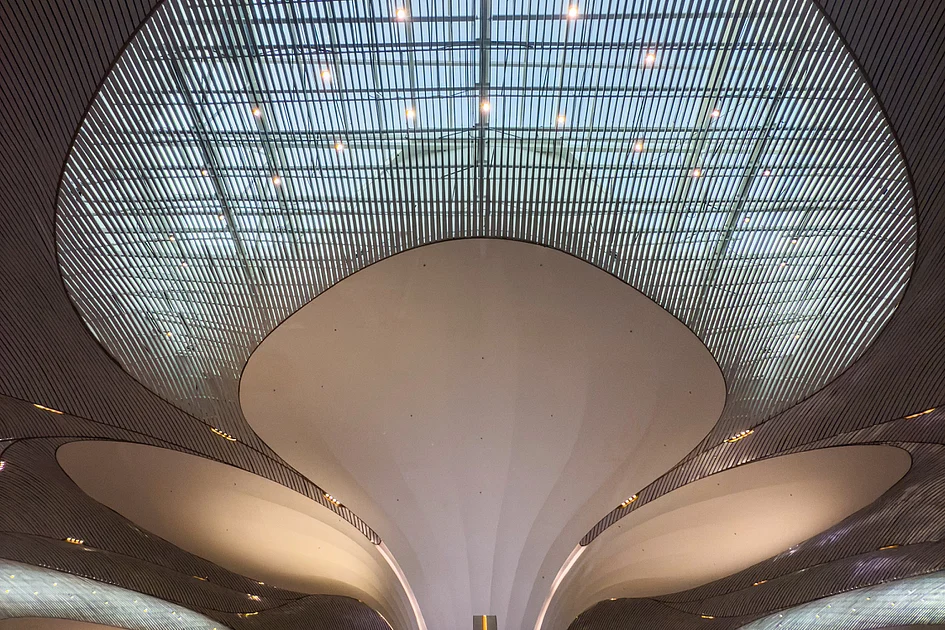
The emergence of Navi Mumbai International Airport (NMIA) has catalyzed a profound transformation in the regional real estate landscape, with Non-Resident Indians establishing themselves as the primary drivers of this infrastructure-led investment boom. Industry analysts confirm that speculative interest has evolved into conviction-based acquisitions as the airport transitions from conceptual planning to operational reality.
Market data reveals extraordinary appreciation patterns in the Panvel region, with residential apartment prices escalating by 74% between fiscal years 2021 and 2025, currently commanding rates between ₹10,000–12,000 per square foot. Concurrently, plotted land valuations have experienced a dramatic 93% surge, substantially outperforming other Navi Mumbai submarkets.
Bhavesh Shah, Joint Managing Director at Today Group, observes: “We’re witnessing consistently strengthening engagement from the NRI community, particularly from the Middle East, Southeast Asia, and United Kingdom. This interest has matured from preliminary inquiries to decisive, early-phase capital commitments.”
The development community emphasizes the region’s transition from theoretical potential to tangible performance. Samyag M. Shah, Director of Marathon Nextgen Realty, notes: “Panvel has definitively arrived as a investment destination. The operationalization of NMIA combined with transformative connectivity infrastructure like Atal Setu—which reduces South Mumbai travel duration to approximately 40 minutes—has fundamentally altered investment psychology.”
Global parallels demonstrate that airport-anchored urban centers—from Amsterdam’s Schiphol to Paris’s Charles de Gaulle—historically exhibit patterns of sustained appreciation and resilient rental demand. Panvel now demonstrates analogous early indicators, with rental demand materializing ahead of projections.
Marathon Nexzone’s operational data indicates approximately 45% of residential units currently maintain rental occupancy, primarily housing aviation specialists, logistics professionals, and corporate employees from neighboring business parks. This rental absorption is anticipated to intensify as NMIA expands its route network and complementary infrastructure projects advance.
The valuation proposition presents particular appeal for international investors. Panvel offers substantially larger, contemporary residential configurations (3-4 bedroom units) at price points comparable to compact apartments in established Mumbai suburbs. This value differential, combined with early-entry positioning in an emerging aerotropolis, creates compelling long-term appreciation potential.
Industry projections indicate the forthcoming decade will establish Panvel as a self-sustaining urban ecosystem. The convergence of NMIA’s global connectivity, proposed Metro Line 8, logistics hubs, and the envisioned BKC 2.0 at Kharghar positions the region as Mumbai’s next multidimensional growth engine, transitioning from peripheral suburb to strategic global gateway.