分类: business

  • Sai Syam Ramachandran honoured with ‘Visionary Leader’ award by Sheikh Saqer Ali Binsaeed Al Nuaimi

    Sai Syam Ramachandran honoured with ‘Visionary Leader’ award by Sheikh Saqer Ali Binsaeed Al Nuaimi

    In a prestigious ceremony recognizing business excellence, Sai Syam Ramachandran, Founder and CEO of ELL Properties, was bestowed with the ‘Visionary Leader in Real Estate Advisory & Digital Influence’ award by Sheikh Saqer Ali Binsaeed Al Nuaimi, a distinguished member of Ajman’s Ruling Family. The honor was presented during the One UAE International Business Awards on February 9, 2026, highlighting Ramachandran’s transformative impact on the Emirates’ property sector.

    The accolade celebrates Ramachandran’s decade-long leadership in the regional real estate market, during which he has expertly managed a property portfolio exceeding Dh500 million in value. Under his guidance, ELL Properties has ascended to become a premier advisory firm, recently achieving the top consultant ranking for semi-government developer Deyaar Properties.

    Beyond traditional real estate accomplishments, the award specifically acknowledges Ramachandran’s innovative digital outreach. His influential ‘Explore Dubai with Sai’ content series has amassed over 600,000 followers across platforms, earning him YouTube’s Silver Play Button for making complex property insights accessible to international audiences.

    ‘This recognition from Sheikh Saqer Ali Binsaeed Al Nuaimi represents a milestone for our entire organization,’ Ramachandran stated. ‘We have consistently pursued the integration of traditional real estate expertise with digital transparency, aligning with the UAE’s broader vision of innovation and economic development.’

    As a respected industry commentator featured in prominent business publications, Ramachandran leads a team of 100+ consultants at ELL Properties, continuously establishing new benchmarks in luxury and investment property segments across the region.

  • Dubai gold prices rise above Dh600 per gram again as dollar weakens

    Dubai gold prices rise above Dh600 per gram again as dollar weakens

    Dubai’s gold market witnessed a significant surge at the week’s opening, with 24K gold climbing to Dh603.75 per gram as the US dollar exhibited weakness. This resurgence marks another breach of the psychologically important Dh600 threshold, a level that has been tested multiple times in recent months before profit-taking activities drove prices downward.

    The broader spectrum of gold varieties experienced corresponding gains, with 22K, 21K, 18K, and 14K gold reaching Dh559.25, Dh536.25, Dh459.5, and Dh358.5 per gram respectively. This upward movement mirrored global trends where spot gold exceeded $5,000 per ounce, registering a 1.25 percent increase at Monday’s market opening.

    Market analysts point to sustained volatility in gold trading, with prices maintaining proximity to levels observed in recent sessions. Joseph Dahrieh, Managing Director at Tickmill, noted that while markets might gradually stabilize following previous sell-offs, they remain highly responsive to new economic data and geopolitical developments. “The latter could fuel demand for safe-haven assets,” Dahrieh emphasized.

    Geopolitical tensions continue to play a crucial role in gold’s performance. Ongoing US-Iran negotiations in the Middle East present both diplomatic opportunities and risks, with tense rhetoric and military incidents maintaining market caution. Simultaneously, continued hostilities in Eastern Europe despite peace talks contribute to a persistent geopolitical risk premium that supports gold prices.

    Institutional investment flows have emerged as another critical support pillar. Gold-backed ETFs recorded substantial inflows of 44.8 tonnes in the week ending January 30, representing the strongest weekly influx since mid-October. Asian markets led this demand, effectively counterbalancing modest European outflows and reinforcing the metal’s broader bullish structure.

    The current price environment has already impacted consumer behavior, with UAE gold jewellery demand declining approximately 15% in 2025 as buyers increasingly turn to diamond alternatives amid record-high gold prices.

  • UAE: Why NRIs are increasingly choosing insurance policies in India

    UAE: Why NRIs are increasingly choosing insurance policies in India

    A significant financial shift is underway as Non-Resident Indians (NRIs), particularly in the UAE, are increasingly opting to purchase life insurance policies from their home country. This trend is propelled by a confluence of economic factors and regulatory innovations that make Indian insurance products exceptionally attractive to the diaspora.

    The Indian rupee’s depreciation against major currencies like the US dollar and UAE dirham has substantially increased the affordability of Indian insurance for NRIs earning in foreign currencies. This currency advantage, coupled with intense competition in India’s insurance sector, has created a buyer’s market rich with diverse and competitive product offerings.

    A pivotal development accelerating this trend is the establishment of the Gujarat International Finance Tec-City (Gift City), India’s first operational smart city and international financial services center. This tax-neutral zone has implemented a foreign currency settlement system that significantly expedites cross-border financial transactions, removing previous bureaucratic hurdles for NRIs seeking Indian financial products.

    Jude Gomes, Managing Director and CEO of Ageas Federal Life Insurance, emphasizes that the perception of life insurance among NRIs has evolved dramatically. “Earlier, life insurance was treated just as a tax tool in India due to mandatory taxation,” Gomes noted. “Today, people living outside India recognize they need protection for themselves and their families, leading to need-based purchases.”

    The regulatory environment in India has undergone substantial improvements, with customer-friendly interventions strengthening servicing and claim payment capabilities over the past five to six years. This enhanced regulatory framework provides NRIs with greater confidence in transacting with Indian insurance providers.

    Gomes further highlighted that Indian insurance products are generally more cost-effective compared to similar offerings in foreign markets. For the many NRIs considering eventual return to India, purchasing policies from Indian companies offers additional financial sense as they will receive proceeds and tax benefits in their home currency.

    With Dubai’s status as a global financial hub featuring strong regulatory frameworks and a mature expatriate population with high financial awareness, the combination of Gift City offerings and competitive pricing positions Indian insurers advantageously to serve the substantial NRI community in the UAE and beyond.

  • South Africa, Kenya advance trade links with Beijing

    South Africa, Kenya advance trade links with Beijing

    China has significantly advanced its economic partnerships with two of Africa’s leading economies, securing framework agreements that promise to reshape trade dynamics across the continent. South Africa and Kenya have both made substantial progress in negotiations with Beijing that will grant their exports unprecedented access to Chinese markets under preferential tariff conditions.

    The breakthrough came as China’s Commerce Minister Wang Wentao and South African Trade Minister Parks Tau formalized a comprehensive economic partnership agreement on February 9th. This landmark arrangement guarantees South Africa zero-tariff treatment for 100% of its exports to China, structured in full compliance with World Trade Organization regulations. Minister Wang emphasized that this agreement establishes “a long-term, stable, and predictable institutional guarantee” for elevating bilateral economic cooperation to new heights.

    South African officials identified multiple sectors positioned to benefit from the enhanced trade terms, including mining operations, agricultural production, renewable energy infrastructure, and technology transfer initiatives. The agreement is projected to stimulate increased Chinese investment in South Africa’s manufacturing capabilities while generating substantial employment opportunities. Minister Tau specifically highlighted growing Chinese automotive investments in South Africa as exemplary models of job-creating partnerships.

    Simultaneously, Kenya has negotiated preliminary terms that would provide duty-free access for 98% of its exports to Chinese markets. According to Investment, Trade and Industry Cabinet Secretary Lee Kinyanjui, the pending agreement would eliminate both tariff barriers and volume restrictions for Kenyan goods entering China’s consumer market of over 1.4 billion people.

    Kenyan agricultural producers stand to benefit disproportionately from the arrangement, particularly growers of avocados, tea, coffee, and cut flowers—commodities experiencing surging demand across Asian markets. Secretary Kinyanjui outlined plans to deploy technical officers nationwide to assist farmers in meeting Chinese quality standards, noting that even capturing 1% of China’s avocado or pork market could transform Kenya’s employment landscape.

    The bilateral advancements represent concrete implementation of China’s 2025 commitment to extend zero-tariff treatment to all 53 African nations maintaining diplomatic relations with Beijing. These developments signal China’s strategic prioritization of African partnerships while offering African exporters competitive advantages in the world’s second-largest economy.

  • Tokyo benchmark Nikkei 225 jumps after PM Takaichi’s ruling party wins a super majority in election

    Tokyo benchmark Nikkei 225 jumps after PM Takaichi’s ruling party wins a super majority in election

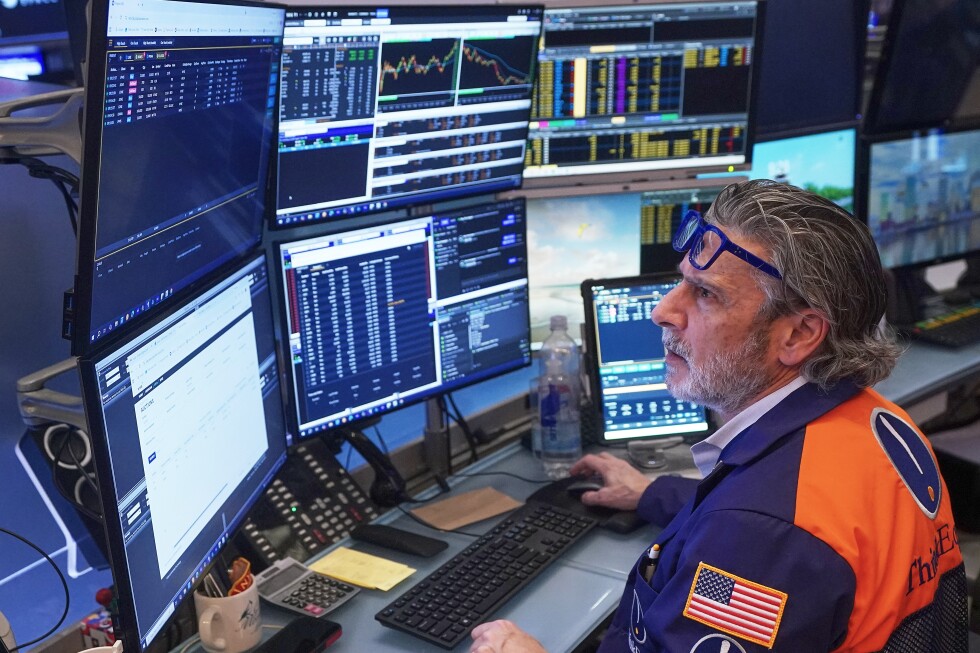
    Asian financial markets experienced a significant surge on Monday, propelled by a powerful combination of political stability in Japan and a robust rebound on Wall Street. The catalyst for the regional rally was Tokyo’s Nikkei 225 index, which skyrocketed 4.7% to close at 56,788.85 after briefly surpassing the 57,000 mark during the session—setting a new historical record.

    The dramatic market response followed Japanese Prime Minister Sanae Takaichi’s governing party achieving an extraordinary political victory. According to NHK public broadcaster, Takaichi’s Liberal Democratic Party (LDP) secured 316 seats in the 465-member lower house of parliament, comfortably exceeding the 261-seat absolute majority requirement. This remarkable achievement represents the party’s strongest performance since its establishment in 1955, surpassing the previous record of 300 seats set in 1986 under late Prime Minister Yasuhiro Nakasone.

    Prime Minister Takaichi reinforced market confidence by announcing her commitment to pursuing policies that would “make Japan strong and prosperous” through NHK. Her market-friendly approach and the supermajority victory provide unprecedented political stability for implementing economic reforms.

    The bullish sentiment spread across Asian exchanges, with South Korea’s Kospi surging 4.3% to 5,308.84. Hong Kong’s Hang Seng index advanced 1.5% to 26,963.25, while China’s Shanghai Composite rose 1% to 4,106.54. Taiwan’s Taiex gained 2.4%, and Australia’s S&P/ASX 200 jumped 1.9% to 8,876.50.

    This regional rally built upon Friday’s dramatic recovery on Wall Street, where technology stocks rebounded strongly from earlier weekly losses. The S&P 500 posted its best performance since May with a 2% rally, while the Dow Jones Industrial Average soared 1,206 points (2.5%) to close above the 50,000 level for the first time. The Nasdaq composite leaped 2.2%, driven by semiconductor companies like Nvidia (up 7.8%) and Broadcom (up 7.1%), both recovering significantly from weekly declines.

    Additional positive factors included Bitcoin’s stabilization above $70,000 after recent volatility and calmer conditions in metals markets, with gold settling at $4,979.80 per ounce after a 1.8% increase.

    Looking ahead, Prime Minister Takaichi’s immediate challenge involves addressing delayed budget legislation when parliament reconvenes in mid-February, focusing on economic measures to counter rising costs and stagnant wages—a task now facilitated by her party’s commanding parliamentary position.

  • UAE: Modern succession planning for global families

    UAE: Modern succession planning for global families

    In an increasingly interconnected world, high-net-worth families across the GCC and beyond are confronting unprecedented complexities in succession planning. The conventional model of finalizing inheritance documents has become inadequate for modern global families whose members study abroad, hold assets across multiple jurisdictions, and operate businesses in diverse regulatory environments.

    Contemporary succession planning now demands sophisticated foresight, structured governance frameworks, and transparent multigenerational communication. The emergence of blended families, multi-branch households, and international family enterprises has made clarity in roles and decision rights increasingly critical. Without proper planning, even harmonious families risk encountering uncertainty, delays, or disputes during transitions.

    The most effective approach integrates three core elements: governance, structure, and emotional intelligence. Thoughtful family governance provides stabilizing frameworks for decision-making and information sharing, while appropriate structures like trusts and holding entities must align with actual family circumstances. Perhaps most importantly, addressing emotional dynamics—unspoken assumptions, documentation gaps, and difficult conversations—proves essential for successful transitions.

    Successful families treat succession as an ongoing strategic process rather than a one-time event. Next-generation involvement should occur gradually, allowing younger members to understand business operations, investments, and family values. This approach becomes particularly crucial when the next generation holds different cultural perspectives, risk appetites, or career aspirations.

    Ultimately, modern succession planning transcends mere wealth transfer, focusing instead on continuity of purpose and legacy. Families that begin early, communicate openly, and build adaptable frameworks will be best positioned to protect both their assets and relationships across generations.

  • Saudi Arabia adds 20 new high-speed trains to Haramain Railway

    Saudi Arabia adds 20 new high-speed trains to Haramain Railway

    In a major infrastructure enhancement, Saudi Arabia has significantly expanded its high-speed rail capabilities through a new agreement with Spanish manufacturer Talgo. The Kingdom’s Ministry of Transportation and Logistics, in collaboration with the Ministry of Finance, has commissioned 20 additional high-speed trains for the critically important Haramain Railway line.

    The contract, valued at approximately €1.3 billion ($1.54 billion), represents a substantial investment in Saudi Arabia’s transportation future. This acquisition will augment the existing fleet of 35 Talgo 350 trains that have been operational since 2018, dramatically increasing capacity along the route connecting the holy cities of Mekkah, Medinah, and the commercial hub of Jeddah.

    Each new trainset will maintain the technical specifications of the current fleet, featuring two power cars and thirteen coaches with a combined capacity of 417 passengers. The design includes dedicated spaces for catering services and passengers with reduced mobility, alongside full platform-level access for improved boarding efficiency.

    The expansion directly addresses growing passenger demand, particularly during the annual Hajj pilgrimage season when service frequency increases from over 100 daily trips to more than 140. This enhancement comes after the railway successfully transported nearly two million pilgrims during the 2025 Hajj season.

    Beyond manufacturing, the agreement extends Talgo’s maintenance responsibilities through the Saudi Spanish Train Project Company consortium. The Spanish firm will now maintain the entire 55-train fleet until at least 2033, with potential extension options through 2038. Talgo currently operates two maintenance facilities in Saudi Arabia employing over 270 personnel.

    The Haramain Railway represents one of the Middle East’s most advanced transportation projects, operating over 450 kilometers of track built to Spanish high-speed standards with maximum commercial speeds of 300 km/h and modern ERTMS Level 2 signaling systems.

  • Sharjah property expo Acres 2026 records 17% sales growth, surpassing Dh5 billion

    Sharjah property expo Acres 2026 records 17% sales growth, surpassing Dh5 billion

    The recently concluded Sharjah Real Estate Exhibition (Acres 2026) has demonstrated remarkable commercial success, achieving property transactions exceeding Dh5 billion and registering a substantial 17% growth compared to its previous iteration. This impressive performance was significantly influenced by the Sharjah Executive Council’s strategic decision to reduce real estate registration fees by 50% for transactions finalized during the event period.

    Organized through a collaborative effort between the Sharjah Chamber of Commerce and Industry (SCCI), the Sharjah Real Estate Registration Department (SRERD), and Leader Events Management, the exhibition established new benchmarks for participation and engagement. The event attracted an unprecedented gathering of over 120 exhibitors and drew more than 18,000 visitors, creating a dynamic platform for real estate investment and development.

    The exhibition floor featured comprehensive presentations of more than 200 diverse projects, encompassing residential complexes, commercial properties, and meticulously planned community developments. This extensive showcase provided investors and potential buyers with a thorough overview of Sharjah’s expanding real estate landscape.

    Abdallah Sultan Al Owais, Chairman of SCCI, emphasized that the exhibition’s outstanding results underscore the inherent resilience and robustness of Sharjah’s property market despite fluctuating global economic conditions. He further noted that this achievement reflects exceptional coordination between governmental entities and private sector stakeholders, effectively actualizing Sharjah’s strategic vision for a sustainable and forward-looking real estate sector.

    According to Abdul Aziz Ahmed Al Shamsi, Director-General of SRERD, the event recorded 2,747 individual sales transactions, collectively valued at Dh5 billion. These figures indicate sustained market demand and reinforce investor confidence in Sharjah’s property offerings. Al Shamsi attributed this success directly to the government’s implementation of targeted incentives and facilitation measures, which not only stimulated transaction volumes but also attracted significant international and domestic investor participation.

  • China’s first domestically built cruise ship welcomes its 1 millionth guest

    China’s first domestically built cruise ship welcomes its 1 millionth guest

    China’s maritime tourism sector achieved a significant breakthrough as Adora Magic City, the country’s inaugural domestically manufactured cruise liner, welcomed its one millionth passenger on February 8th. This landmark event signals a new era of development for China’s indigenous cruise brand under operator Adora Cruises.

    During a special ceremony commemorating this achievement, Adora Cruises marketing executive Jia Ying revealed impressive operational metrics. The company transported more than 500,000 passengers throughout 2025, representing travelers from over twenty different countries and regions globally. This performance secured Adora Cruises a dominant 40 percent market share within China’s rapidly expanding cruise tourism sector.

    The successful deployment of Adora Magic City demonstrates China’s growing capabilities in the sophisticated cruise ship manufacturing industry. This achievement reflects broader national efforts to develop advanced manufacturing technologies and establish a stronger presence in the global tourism market. The vessel’s operational success comes as China continues to expand its domestic tourism infrastructure while simultaneously attracting international visitors to its maritime offerings.

    Industry analysts note that reaching the one-million-passenger milestone in such a relatively short timeframe indicates strong market acceptance and represents a significant step toward China’s goal of becoming a major player in the global cruise industry. The development aligns with broader national strategies to enhance high-value manufacturing and promote domestic tourism brands on the international stage.

  • What’s at stake for Indian agriculture in Trump’s trade deal?

    What’s at stake for Indian agriculture in Trump’s trade deal?

    A newly brokered trade agreement between the United States and India has ignited significant apprehension among Indian agricultural stakeholders, who fear the arrangement disproportionately favors American interests. The deal, announced jointly on February 8, 2026, involves India committing to eliminate or reduce tariffs on a comprehensive range of US industrial goods and agricultural products, including tree nuts, select fresh fruits, soybean oil, wine, and spirits.

    In reciprocal terms, the United States will implement an 18 percent tariff on Indian exports spanning textiles, apparel, leather goods, footwear, plastic and rubber products, organic chemicals, and specific machinery categories. The announcement came alongside President Donald Trump’s revelation that Prime Minister Narendra Modi had pledged to cease Russian oil purchases, adding geopolitical dimensions to the economic agreement.

    While Prime Minister Modi celebrated the pact as a job-creating opportunity engine, agricultural coalitions expressed vehement opposition. The Samyukt Kisan Morcha (SKM), representing multiple farmers’ unions, condemned the arrangement as a ‘total surrender’ to American agricultural conglomerates, warning that cheap imports would flood Indian markets and undermine domestic producers. The coalition has called for nationwide protests scheduled for February 12.

    Despite government assurances that sensitive sectors including grains, spices, dairy, poultry, meat, and certain fruits and vegetables remain protected, opposition lawmakers highlight particular vulnerability for soybean farmers in Maharashtra and Madhya Pradesh. The agreement facilitates increased imports of dried distillers’ grains and soybean oil, potentially displacing domestic soybean meal demand.

    Agricultural experts note the fundamental imbalance between India’s predominantly small-scale farming operations—supporting 45% of the population despite contributing only 16% to GDP—and the highly subsidized, industrial-scale American agricultural sector. This disparity raises concerns about long-term competitiveness, echoing previous farmer protests that forced policy reversals in 2021.

    Trade data from January-November 2025 already shows a 34% year-on-year increase in Indian agricultural imports from the US, reaching nearly $2.9 billion, predominantly in cotton, soybean oil, ethanol, and nuts. Further tariff reductions anticipated under the new agreement are expected to accelerate this trend, potentially reshaping India’s agricultural landscape.