分类: business

  • Why are most of Dubai’s off-plan property owners holding onto their assets?

    Why are most of Dubai’s off-plan property owners holding onto their assets?

    Dubai’s real estate market is experiencing a significant behavioral shift as the majority of off-plan property investors are choosing to retain their assets rather than pursue immediate resale opportunities. This trend emerges despite the market showing signs of normalization following five years of unprecedented growth.

    According to Cavendish Maxwell’s comprehensive 2025 Dubai Residential Market Performance Report, the emirate’s property sector achieved historic milestones with over 200,000 transactions totaling Dh541.5 billion. Sales volume increased by 19% compared to 2024, while transaction values surged by 27%. The off-plan segment continued to dominate, accounting for 73% of all sales activity and generating Dh395.7 billion in value—a 32% year-on-year increase.

    Market experts identify multiple factors influencing investor behavior. Zacky Sajjad, Director and Head of Business Development at Cavendish Maxwell, notes that only 10-20% of off-plan unit owners are currently pursuing resales. This retention strategy appears driven by investors awaiting optimal returns that continue to outperform many global markets, despite recent modest price adjustments.

    The market’s underlying fundamentals remain robust. Geopolitical stability continues to attract international buyers, while record tourism numbers and population growth sustain demand. The Property Monitor Index, tracking 41 freehold communities, indicates three consecutive months of marginal decline, suggesting a controlled cooling period rather than a sharp correction.

    Supply dynamics also play a crucial role. While 110,500 new units are forecast for delivery in 2026, historical completion rates suggest actual deliveries may range between 33,000-50,000 units—a significant reduction from initial projections that could support property values.

    Ronan Arthur, Head of Residential Valuation at Cavendish Maxwell, characterizes the current phase as a transition toward market normalization. ‘After another record-breaking year, rising supply and slowing price growth indicate more balanced conditions emerging in 2026,’ Arthur observed. ‘Future performance will increasingly depend on absorption rates, buyer sentiment, and the market’s ability to digest upcoming completions.’

    This holding pattern among investors reflects a maturation of Dubai’s property market, with participants demonstrating increased sophistication and long-term perspective compared to previous market cycles.

  • JIFU expands physical presence in the UAE amid rising regional wellness demand

    JIFU expands physical presence in the UAE amid rising regional wellness demand

    In a strategic response to growing regional demand for wellness products, international direct-selling enterprise JIFU has officially launched physical operations within the United Arab Emirates. This expansion establishes a critical regional headquarters that will serve the entire Gulf Cooperation Council (GCC) region, signaling a shift from remote operational models to localized infrastructure development.

    The newly established UAE facility will function as a comprehensive support center, providing logistical coordination, regulatory compliance oversight, and field support for independent distributors operating throughout Gulf markets. Company executives emphasized that this physical presence reflects a deliberate strategy to align with specific regulatory requirements governing direct-selling businesses in the region while enhancing operational accountability.

    Market analysts observe that JIFU’s expansion coincides with accelerating growth in the Middle East wellness sector, driven by increasing consumer health consciousness and receptiveness to alternative retail distribution methods. Industry observers note that successful market penetration in the GCC increasingly demands tangible physical presence, transparent supply chains, and rigorous regulatory compliance to build long-term market credibility.

    The UAE was specifically selected for its advanced logistics infrastructure, business-friendly regulatory environment, and established role as a regional commercial gateway. According to company statements, physical operations enable deeper engagement with local stakeholders and more responsive market support systems.

    In an official statement, JIFU’s Chief Executive Officer outlined the strategic rationale: ‘Establishing physical operations in the UAE enables us to operate within a clear regulatory framework while providing structured support to our independent business owners. Our focus remains on sustainable development and responsible market expansion rather than pursuing rapid but potentially unstable market entry.’

    The UAE headquarters will additionally serve as a training center and compliance hub, ensuring distributor activities align with local business standards and regulatory expectations. While the company has not revealed specific timelines for further GCC expansion, it confirmed that the UAE operation constitutes the foundational element of its comprehensive regional strategy.

    JIFU, which markets wellness and lifestyle products through direct-selling channels across multiple international markets, exemplifies a broader trend of global consumer brands strengthening local operational presence in the Gulf region to address specific regulatory, logistical, and market dynamics.

  • Pakistan’s new net billing model gets backlash from homeowners

    Pakistan’s new net billing model gets backlash from homeowners

    Pakistan’s energy sector faces significant upheaval as the National Electric Power Regulatory Authority (Nepra) implements controversial reforms to its solar energy compensation framework. The regulatory body has formally abolished the existing net metering system, replacing it with a new net billing mechanism that substantially reduces financial incentives for solar power producers.

    The transformative policy shift slashes the solar power buyback rate from Rs25.9 to just Rs11 per unit—a nearly 60% reduction in compensation for excess energy fed back into the national grid. Additionally, the credit validity period for exported units has been dramatically shortened from three months to just one month, fundamentally altering the economic calculus for solar investments.

    Existing registered prosumers (solar consumers with net metering) will be transitioned to the new net-billing system, though other contractual terms remain unchanged until their seven-year agreements expire. New consumers will be subject to five-year contracts under the revised compensation structure. Meanwhile, electricity imported from distribution companies continues to command premium rates between Rs37 to Rs55 per unit, depending on consumption slabs.

    The power division reveals that on-grid solar capacity has reached 7,000MW while off-grid installations have surged to 13,000MW. Regulatory authorities attribute grid challenges and higher capacity charges to consumers with non-metered solar installations and those exceeding approved capacity limits, though these specific concerns weren’t explicitly addressed in the new regulations.

    Energy analysts interpret these measures as strategic efforts to contain rapidly expanding solar penetration and protect state-owned power infrastructure. The regulations will also extend to biogas consumers, marking a comprehensive overhaul of Pakistan’s renewable energy compensation framework.

  • iFX EXPO Dubai 2026 starts today

    iFX EXPO Dubai 2026 starts today

    The iFX EXPO Dubai 2026 commenced today at the Dubai World Trade Centre, marking a significant convergence of the global online trading and fintech sectors. This premier industry gathering, occurring as Dubai solidifies its status as the Middle East’s foremost financial technology hub, has introduced an innovative component—The Trading Festival—specifically designed for hands-on trader engagement.

    With unprecedented attendance metrics projecting over 10,000 professionals, 200+ exhibiting companies, and 150+ expert speakers, this year’s event promises transformative networking and business development opportunities. The expo floors at Za’abeel Halls 5 and 6 will host established industry giants including Exness, Vantage, Pepperstone, IC Funded, and Tattvam alongside emerging innovators demonstrating groundbreaking financial technologies.

    The newly launched Trading Festival represents a strategic evolution in event programming, featuring specialized zones such as the Mastery Hub, Investing Lab, Traders Arena, and the competitive Trading Cup. These dedicated spaces offer retail traders unprecedented access to practical education and skill development opportunities within a dynamic festival atmosphere.

    Complementing the exhibition activities, the conference agenda addresses pivotal industry themes including Web3 integration, cryptocurrency evolution, asset tokenization, and regulatory frameworks. Prominent speakers from Deutsche Bank, VARA (Virtual Assets Regulatory Authority), MENA Fintech Association, Middle East Stablecoin Association, and The Ruler’s Court of Dubai will provide expert insights on market trends and regulatory developments.

    The event commenced with an exclusive B2B Welcome Party at Bla Bla Dubai, facilitating preliminary networking among industry professionals before the formal opening. While certain events remain restricted to business participants, retail traders have full access to the Expo and Trading Festival areas where live trading demonstrations and educational sessions occur.

    This gathering continues to serve as the definitive platform for forging strategic partnerships, finalizing commercial agreements, and experiencing cutting-edge financial technology solutions shaping the future of online trading across the MENA region and beyond.

  • US consumer spending slowed in December – Is it a warning for the economy?

    US consumer spending slowed in December – Is it a warning for the economy?

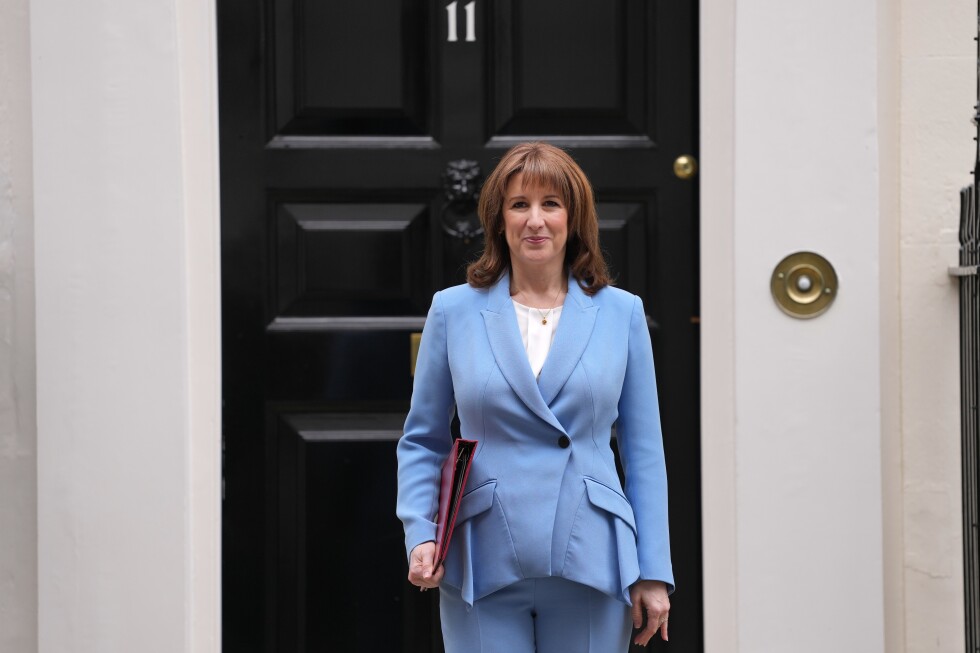
    The United States witnessed an unanticipated stagnation in retail sales during the crucial December holiday season, according to a delayed Commerce Department report released Tuesday. This flat performance—following a 0.6% increase in November—signals potential consumer retrenchment amid growing economic uncertainties.

    The data reveals distinct sectoral weaknesses, with furniture stores experiencing a 0.9% monthly decline and clothing retailers seeing a 0.7% drop—categories particularly vulnerable to tariff exposures. While year-over-year sales still showed a 2.4% increase, this represented a noticeable deceleration from November’s 3.3% annual growth rate.

    Economic analysts attribute this softening to multiple converging factors: a faltering labor market, persistent inflationary pressures, and cooling wage growth that saw its slowest pace in over four years at just 0.7% in Q4 2025. Chris Zaccarelli of Northlight Asset Management observed, “Consumer spending has finally caught up with consumer sentiment, and not in a good way.”

    Despite concerning indicators, economists caution against premature pessimism. Michael Pearce of Oxford Economics suggested potential rebounds from three Federal Reserve interest rate cuts implemented last year and the upcoming tax refund season. The unemployment rate’s dip to 4.4% in December provides additional grounds for measured optimism.

    The report underscores a growing economic divergence, with high-income consumers continuing to drive spending while many households increasingly focus on essential purchases. EY-Parthenon’s Gregory Daco noted this “economics of necessity” trend, evidenced by increased spending on gasoline and building materials alongside declines in discretionary categories like electronics and apparel.

    As markets await forthcoming labor market data and Q4 growth estimates, the December retail figures present a complex portrait of consumer behavior in the world’s largest economy, balancing between temporary weakness and fundamental resilience.

  • New homes in Abu Dhabi’s Saadiyat to overlook Guggenheim, Louvre museums

    New homes in Abu Dhabi’s Saadiyat to overlook Guggenheim, Louvre museums

    Abu Dhabi’s real estate landscape gains an architectural masterpiece as Aldar Properties announces the development of Baccarat Residences Saadiyat, an exclusive collection of 77 luxury homes in the emirate’s prestigious Cultural District. The project marks Japanese architect Sou Fujimoto’s inaugural United Arab Emirates commission, featuring two sculptural buildings designed with undulating curves inspired by Saadiyat Island’s natural shoreline.

    The residential complex occupies a privileged position overlooking both the existing Louvre Abu Dhabi and the forthcoming Guggenheim Abu Dhabi, creating an unparalleled cultural environment for residents. The development will comprise two- and three-bedroom residences, expansive four-bedroom sky villas, and two signature penthouses, all offering panoramic views of the Arabian Sea and direct beach access.

    Aldar Development CEO Jonathan Emery confirmed significant market interest in the project, noting that pricing strategy would position the residences as exclusive offerings targeting discerning buyers. “The level of interest is very high,” Emery told Khaleej Times, “but it’s going to be at a price point that’s not going to be for everybody.”

    The location represents one of Abu Dhabi’s most coveted addresses, surrounded by institutional landmarks including Berklee Abu Dhabi, the future Zayed National Museum, and the Natural History Museum Abu Dhabi. Residents will enjoy proximity to the upcoming Saadiyat Grove Mall, scheduled to open later this year, creating a comprehensive live-work-play environment.

    The announcement follows Aldar Group’s record-breaking financial performance for 2025, with net profit surging 25% to Dh8.8 billion—the strongest in the company’s history. The real estate giant continues expanding its portfolio beyond Abu Dhabi and Dubai, with ongoing developments in London and Egypt.

  • Hotel demand soars in RAK, set to outpace supply by next year

    Hotel demand soars in RAK, set to outpace supply by next year

    Ras Al Khaimah’s hospitality sector is entering a transformative growth phase characterized by unprecedented demand projections that will significantly outpace hotel room availability through 2028, creating what industry leaders term a crucial ‘window of opportunity’ for established operators.

    During the 8th RAK Investment Pulse forum, senior hospitality executives revealed that major tourism developments currently underway are reshaping the emirate’s market dynamics. Tatiana Veller, Senior Vice President at Marjan Hospitality, emphasized that despite numerous announced hotel projects, most remain in early development stages. Given typical construction timelines of 3-5 years, new supply cannot adequately address the accelerating demand in the immediate future.

    Market analytics from Stirling Hospitality Advisors project a substantial supply deficit of approximately 1,300 hotel rooms by 2030, with the gap beginning to materialize from 2027 onward. This imbalance is expected to create optimal investment conditions for developers initiating projects between 2026 and 2029.

    The supply constraint is driving innovative market adaptations. Existing hotels are focusing on premium positioning as lifestyle and experiential destinations rather than direct competition with upcoming mega-developments like Wynn Al Marjan Island. Evan Harrington, Cluster General Manager at Pullman and Mövenpick Resorts Al Marjan Island, highlighted strategic preparations for evolving guest demographics: ‘We’ve made a conscious decision to lean into being complementary, not competitive. This means sharpening our identity, investing in service depth, and upgrading experiences.’

    Beyond traditional accommodations, the demand surge is creating opportunities for alternative lodging formats including serviced apartments, short-term rentals, and branded residences. The growth extends to supporting industries with lower entry barriers—laundries, bakeries, staffing agencies, logistics providers, and transportation services all represent solid investment opportunities requiring significantly less capital than hotel developments.

    A critical challenge emerging alongside this growth is talent acquisition and retention. Industry leaders emphasize that addressing this requires holistic investments in livability infrastructure—healthcare, education, transport connectivity, and employment opportunities. The Stirling report identifies quality-of-life investments as fundamental to sustaining hospitality demand, with Ras Al Khaimah’s population projected to reach 650,000 by 2030 and 730,000 by 2034.

    This comprehensive development approach is positioning Ras Al Khaimah not merely as a tourism destination but as a sustainable community where hospitality professionals can build long-term careers, ultimately strengthening the emirate’s global competitiveness.

  • India’s Adani discloses US sanction violation probe after Iranian cargo report

    India’s Adani discloses US sanction violation probe after Iranian cargo report

    Indian conglomerate Adani Enterprises has confirmed its cooperation with a United States investigation into potential sanctions violations involving Iranian-origin energy products. The development follows a Wall Street Journal report from June alleging that Adani Group entities had imported Iranian liquefied petroleum gas (LPG) through Mundra port.

    According to a stock-exchange filing submitted on Tuesday, Adani received a formal information request from the US Office of Foreign Assets Control (OFAC) last week. The Treasury Department agency is conducting a civil investigation into transactions that may have involved Iran or interests of persons subject to US sanctions, particularly those routed through American financial institutions.

    The company emphasized that its engagement with OFAC began voluntarily following the media report’s publication. In what it described as an ‘abundance of caution,’ Adani immediately ceased all LPG imports on June 2, the same day the Journal’s investigation became public.

    Adani maintains that its communication with OFAC ‘does not contain any findings of aberrations/non-compliances’ and has repeatedly denied ‘any deliberate engagement in sanctions evasion or trade involving Iranian-origin LPG.’ The conglomerate asserts that the questioned shipment was handled through routine commercial transactions via third-party logistics partners, with documentation identifying Sohar, Oman as the port of origin.

    The investigation represents a significant regulatory challenge for the ports-to-power conglomerate led by billionaire Gautam Adani, though the company expresses confidence in its compliance procedures and commitment to full cooperation with US authorities.

  • Xinjiang’s horse industry gallops with culture and tourism integration

    Xinjiang’s horse industry gallops with culture and tourism integration

    The Xinjiang Uygur Autonomous Region is witnessing a remarkable transformation of its traditional horse industry into a multifaceted economic powerhouse, seamlessly blending cultural heritage with tourism innovation. With the largest equine population in China, this northwestern region has developed a comprehensive industrial ecosystem spanning breeding, competitive racing, cultural preservation, and experiential tourism.

    According to Yao Xinkui, head of the Horse Industry Research Institute at Xinjiang Agricultural University and president of the Xinjiang Horse Industry Association, the region has established a fully integrated equine economy. Recent data reveals extraordinary growth, with the total output value reaching 16.95 billion yuan ($2.5 billion) in 2024, marking a significant peak in the industry’s development.

    The most explosive growth has occurred in horse racing events, which saw a staggering 230 percent increase in output value compared to 2018 levels. This surge reflects both increased domestic interest in equestrian sports and successful integration with tourism initiatives.

    The Ili Kazak Autonomous Prefecture, home to the prized Ili Horse breed, now dominates China’s domestic sports horse market, capturing over 60 percent of market share according to recent government reports. This genetic advantage has become a cornerstone of the region’s economic strategy, combining premium breeding programs with cultural experiences that attract tourists and enthusiasts nationwide.

    The strategic integration of equine activities with cultural tourism has created new economic opportunities while preserving ethnic traditions. Visitors can now experience everything from traditional Kazakh horsemanship demonstrations to modern racing events, all set against Xinjiang’s dramatic landscapes including the breathtaking Zhaosu Wetland Park where horses are frequently photographed crossing rivers against mountainous backdrops.

    This equine-economic transformation represents a successful model of rural vitalization through cultural preservation and tourism innovation, demonstrating how traditional industries can evolve into modern economic drivers while maintaining ethnic heritage and promoting regional development.

  • 35 Dubai flights affected due to fog; passengers advised to check with airlines

    35 Dubai flights affected due to fog; passengers advised to check with airlines

    Dubai’s aviation operations experienced significant disruption on Tuesday morning as dense fog enveloped the city, severely impacting both Dubai International (DXB) and Al Maktoum International (DWC) airports. According to official statements from Dubai Airports, adverse weather conditions necessitated the cancellation of 12 scheduled flights and forced the diversion of 23 inbound services during the early hours of February 10, 2026.

    The reduced visibility, which dropped to just a few hundred meters, created challenging operational conditions that affected not only air traffic but also ground transportation across the emirate’s major highways. Airport authorities confirmed they are maintaining close coordination with airline partners and service providers to mitigate passenger inconvenience and restore normal operations promptly.

    Travelers have been strongly advised to verify their flight status directly with their respective airlines before proceeding to either airport. This weather-related disruption follows similar incidents in recent weeks, highlighting the recurring challenge that seasonal fog presents to the world’s busiest international aviation hub. Dubai International Airport, which typically handles hundreds of flights daily, has implemented its contingency protocols to manage the situation while prioritizing passenger safety.