分类: business

  • Fertiglobe earnings top $1b in 2025, reflecting 57 per cent y-o-y growth

    Fertiglobe earnings top $1b in 2025, reflecting 57 per cent y-o-y growth

    Fertiglobe, recognized as the world’s premier seaborne exporter of urea and ammonia products, has announced exceptional financial results for the fourth quarter and full year of 2025. The company, which serves as the exclusive ammonia platform for Adnoc and XRG, demonstrated remarkable growth with Q4 revenues surging 73% year-over-year to $808 million.

    The full-year performance proved even more impressive, with annual revenues climbing 41% to $2.8 billion. Adjusted EBITDA reached $1.02 billion, representing a substantial 57% increase compared to 2024 figures. Net profit attributable to shareholders saw extraordinary growth, escalating by 87% to $325 million for the year.

    Reflecting this robust financial performance, Fertiglobe’s Board has recommended second-half 2025 dividends of $135 million (6.1 fils per share), bringing total dividends for the year to $260 million. Combined with $74 million in share buybacks executed to date, the company has returned $334 million to shareholders in 2025 alone. This capital return strategy demonstrates Fertiglobe’s commitment to delivering competitive shareholder yields exceeding 5%.

    Since its initial public offering, Fertiglobe has paid or committed to pay $2.9 billion in capital returns to shareholders. The company’s ongoing share repurchase program, targeting 2.5% of outstanding shares, has already resulted in the buyback of 111 million shares worth $74 million as of February 10, 2026.

    The company’s financial position remains strong with a net debt of $1,006 million as of December 31, 2025, representing a conservative net debt to EBITDA ratio of 1.0x. This solid balance sheet provides Fertiglobe with ample flexibility to pursue strategic growth investments while maintaining attractive shareholder distributions.

    CEO Ahmed El-Hoshy attributed this success to disciplined execution of the Grow 2030 strategy, noting that ‘we have already activated more than 40% of our 2030 growth target.’ The strategy has focused on operational efficiency improvements, record production levels at facilities in Algeria and EFC-2, significant cost reductions, and strategic portfolio expansion.

    Under Adnoc’s majority ownership, Fertiglobe has strengthened both its industrial and financial foundations, implementing 99% of cost optimization targets and advancing manufacturing improvement plans that have delivered 46% of planned reliability and energy efficiency gains. Strategic acquisitions, including Wengfu Australia, have expanded Fertiglobe’s global footprint while production scale-up of Diesel Exhaust Fluid and Automotive Grade Urea in Egypt and the UAE has created more resilient, higher-margin revenue streams.

    The company remains well-positioned to capitalize on tight urea and ammonia markets, with current prices exceeding $500/t for Egypt FOB urea and $670/t for NW Europe ammonia. Fertiglobe’s outstanding safety performance in 2025 further underscores the comprehensive transformation underway across all operational aspects as the company progresses toward its zero-incident safety目标.

  • Deyaar profit before tax rises 26% in 2025 on positive investor sentiment and ambitious pipeline

    Deyaar profit before tax rises 26% in 2025 on positive investor sentiment and ambitious pipeline

    Dubai’s prominent real estate developer Deyaar Development PJSC has announced exceptional financial results for the full year 2025, demonstrating significant growth across key performance indicators. The company reported a substantial 26% increase in pre-tax profits, reaching Dh637.9 million compared to Dh505.4 million in the previous year. Revenue performance was equally impressive, climbing 30% to Dh1,972.1 million from Dh1,512.8 million in 2024.

    The company’s financial strength is further evidenced by a 17% expansion in total assets, which grew to Dh8,027.6 million as of December 31, 2025, up from Dh6,832.9 million a year earlier. This asset growth reflects Deyaar’s strategic investments and ongoing enhancements to its property portfolio quality.

    Deyaar maintains a robust development pipeline valued at approximately Dh7 billion, positioning the company for sustained future revenue generation and the continued delivery of high-quality real estate projects. In recognition of this strong financial performance, the Board of Directors has proposed a 5% dividend distribution, subject to approval at the upcoming General Assembly.

    Board Chairman Abdulla Ali Obaid Al Hamli attributed the company’s success to favorable market fundamentals within the UAE’s real estate sector, supported by long-term national strategies that have cultivated one of the world’s most resilient property markets. He highlighted sustained demand, rising population growth, and exceptional market liquidity across both off-plan and ready property segments as key drivers of the sector’s strength.

    CEO Saeed Mohammed Al Qatami emphasized Deyaar’s strategic alignment with Dubai’s D33 economic agenda and the Dubai 2040 Urban Master Plan, initiatives that are driving population growth, infrastructure expansion, and sustained housing demand. He noted that Dubai’s record-breaking Dh917 billion in real estate transactions during 2025 demonstrates the emirate’s unwavering commitment to excellence in property development.

    The company is advancing several landmark projects, including Downtown Residences, launched in June 2025 as one of the UAE’s tallest vertical residential communities, representing Deyaar’s strategic entry into the high-rise ultra-luxury segment. Additionally, the final phase of the Park Five community at Dubai Production City was launched in September 2025, with completion targeted for December 2027.

  • Zeiss top exec: Learn from China speed

    Zeiss top exec: Learn from China speed

    German optical systems giant Zeiss has officially inaugurated its Greater China Headquarters Campus in Shanghai’s Waigaoqiao Free Trade Zone, representing the company’s most substantial infrastructure investment in China to date. The February 7th launch ceremony marked a significant milestone in Zeiss’s strategic expansion within the Chinese market.

    In an exclusive interview with China Daily, Martin Fischer, President and CEO of Zeiss Greater China, expressed extraordinary confidence in China’s economic landscape and development pace. Fischer emphasized that Zeiss aims to embrace what he termed ‘China speed’ – the remarkable rapidity of development and implementation characteristic of China’s business environment.

    ‘We are not hesitating to invest in our future here,’ Fischer stated, highlighting the company’s long-term commitment to the Chinese market. The new campus signifies more than just physical infrastructure; it represents Zeiss’s dedication to integrating more deeply within China’s innovation ecosystem and manufacturing capabilities.

    The investment comes at a time when many multinational corporations are reevaluating their China strategies amid evolving global supply chains. Zeiss’s substantial commitment demonstrates a contrasting approach, betting on continued growth and technological advancement within the Chinese market. The headquarters will serve as a central hub for Zeiss’s operations across Greater China, coordinating research, development, and commercial activities throughout the region.

  • European airlines warn of ‘severe disruption’ from new border checks

    European airlines warn of ‘severe disruption’ from new border checks

    Major European aviation associations have issued a stark warning regarding the European Union’s newly implemented Entry/Exit System (EES), predicting potentially catastrophic disruptions during the upcoming peak travel season. In a coordinated appeal to European authorities, industry leaders expressed grave concerns about the system’s operational readiness.

    The Airports Council International (ACI Europe), Airlines for Europe (A4E), and the International Air Transport Association (IATA) jointly communicated their apprehensions to European Commissioner for Internal Affairs and Migration Magnus Brunner. Their letter highlighted that despite the system’s phased implementation since October, airports are already experiencing excessive border control waiting times extending to two hours.

    The EES represents a significant technological advancement in border management, designed to replace traditional passport stamps with automated biometric data collection including photographs and fingerprints for non-EU nationals. The system aims to enhance information sharing among the 27 Schengen member states and improve detection of visa overstays and previously refused entrants.

    However, aviation authorities identify two critical challenges: chronic understaffing at border control points and unresolved technical issues with the automated systems. The industry groups have urgently requested clarification regarding potential flexibility measures, including whether Schengen members might partially or fully suspend EES implementation until October to accommodate summer travel demands.

    The core concern centers on projections that without immediate intervention, peak summer months could see queue times escalating to four hours or more, creating severe operational challenges for airports, airlines, and travelers alike. This warning comes as the European travel industry prepares for its busiest season since before the pandemic.

  • Modern industrial system key to Shanghai’s grown plan

    Modern industrial system key to Shanghai’s grown plan

    Shanghai has launched a comprehensive development blueprint for its 15th Five-Year Plan period (2026-2030), centering on the establishment of an advanced industrial ecosystem to enhance urban capacity and core competitiveness. Municipal officials announced the strategy during a Wednesday press conference, outlining specific economic targets and development priorities.

    The metropolitan economic powerhouse aims to maintain an average annual GDP growth rate of approximately 5% throughout the five-year timeframe, with an ambitious target to double its per capita GDP by 2035 from the 2020 baseline of over $23,000. Vice-Mayor Wu Wei emphasized that substantial investments will be channeled toward technological innovation, industrial modernization, urban regeneration, and public welfare initiatives.

    Central to Shanghai’s development vision is the creation of a sophisticated industrial framework that encompasses digital transformation of conventional industries and a comprehensive green transition. The strategy prioritizes three cutting-edge sectors—integrated circuits, artificial intelligence, and biomedicine—alongside six emerging industrial clusters including next-generation information technology. The city will also pioneer future-oriented domains such as energy and advanced materials.

    Scientific advancement forms another critical pillar of Shanghai’s roadmap. Luo Dajin, Director of the Shanghai Municipal Science and Technology Commission, revealed plans to intensify original innovation and achieve crucial technological breakthroughs. The city expects basic research expenditure to constitute roughly 15% of total societal R&D investment by 2030, supported by enhanced funding for fundamental studies and core technologies alongside expanded infrastructure including Shanghai’s national blockchain network hub.

    Human capital development receives equal emphasis, with Shanghai targeting cultivation of an additional 300,000 high-skilled professionals by 2030, according to Gu Jun, Director of the Shanghai Municipal Development and Reform Commission.

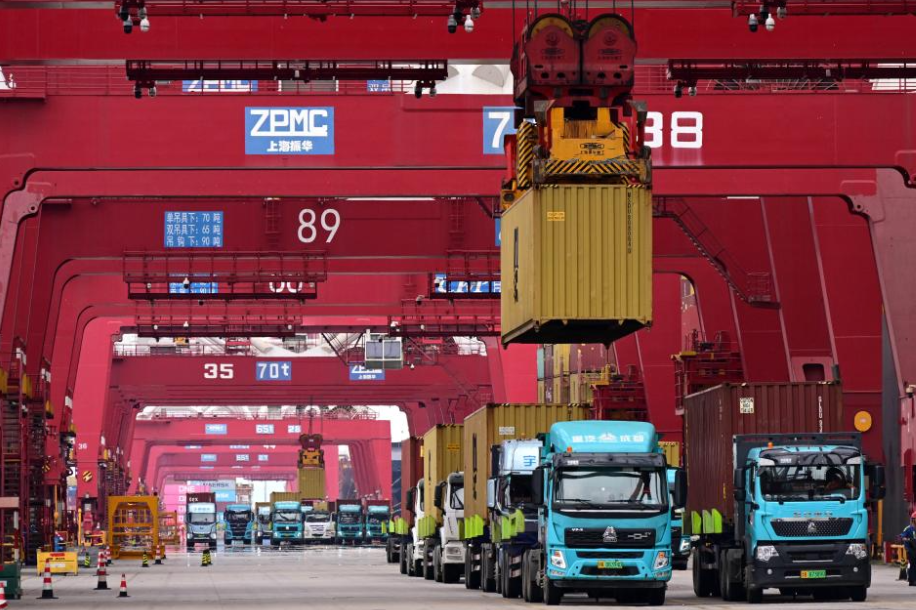
    The financial and trade sectors will undergo further enhancement through continued reform and opening-up policies. Shanghai aims to achieve annual container throughput of 58 million TEUs by 2030 while attracting world-class supply chain management centers and strengthening global commodity resource allocation capabilities. Zhou Xiaoquan, Executive Deputy Director of the Shanghai Municipal Bureau of Finance, indicated plans to introduce more internationally accessible financial products, attract premier global asset managers and financial institutions, and explore offshore financial mechanisms with corresponding regulatory frameworks.

    Regional integration features prominently in the development agenda, with dedicated focus on Yangtze River Delta coordination through technological collaboration, industrial innovation, regulatory alignment, and infrastructure connectivity. Within Shanghai, land resources will be strategically allocated for new infrastructure including computing, telecommunications, and low-altitude facilities, while urban rail transit coverage expands toward exceeding 1,260 kilometers of operational mileage by 2030.

    The comprehensive plan additionally addresses quality-of-life improvements through renovation of 30 million square meters of aging residential compounds, new park development, and enhanced accessibility to employment, housing, education, healthcare, and childcare services. Environmental commitments include building a resilient megacity and ensuring carbon emissions peak before 2030.

  • Dubai’s tourism industry achieves third successive record-breaking year with 19.59 million international visitors in 2025

    Dubai’s tourism industry achieves third successive record-breaking year with 19.59 million international visitors in 2025

    Dubai has cemented its status as a premier global destination by achieving an unprecedented third consecutive record-breaking year in tourism, welcoming 19.59 million international overnight visitors throughout 2025. This represents a robust 5% increase from the 18.72 million arrivals recorded in 2024, according to official data released by the Dubai Department of Economy and Tourism (DET).

    The city’s tourism sector demonstrated exceptional momentum by surpassing the 2 million visitor mark in a single calendar month for the first time in its history during December 2025, setting a powerful trajectory for 2026. This remarkable achievement was attributed to strategic global partnerships, innovative marketing campaigns, and a diverse portfolio of major events that showcased Dubai’s multifaceted appeal.

    His Highness Sheikh Hamdan bin Mohammed bin Rashid Al Maktoum, Crown Prince of Dubai, emphasized that this sustained growth reflects the visionary leadership of His Highness Sheikh Mohammed bin Rashid Al Maktoum and the ambitious targets outlined in the Dubai Economic Agenda D33. “Dubai’s success stems from our commitment to building a globally connected city that offers distinctive experiences while creating substantial opportunities for visitors and residents alike,” stated Sheikh Hamdan.

    Regional market analysis revealed Western Europe maintained its position as Dubai’s largest source market, contributing 4.1 million visitors (21% share), followed closely by the GCC region with 2.99 million arrivals (15%). The city’s diversified tourism strategy effectively attracted visitors from both traditional and emerging markets, with significant growth recorded across all major regions including CIS/Eastern Europe (2.89 million), South Asia (2.89 million), and the Americas (1.40 million).

    Dubai’s hospitality sector demonstrated exceptional performance with average hotel occupancy reaching 80.7% in 2025, up from 78.2% the previous year. The city’s hotel inventory expanded to 154,264 rooms across 827 establishments, positioning Dubai ahead of other global destinations such as Bangkok, New York, Paris, and Singapore in terms of room capacity. Notable new property openings included Ciel Dubai Marina (the world’s tallest hotel), Jumeirah Marsa Al Arab, and Mandarin Oriental Downtown.

    The emirate’s tourism ecosystem received multiple international accolades throughout 2025, including recognition as the first Certified Autism Destination™ in the Eastern Hemisphere and ranking among the world’s top ten safest cities. Dubai’s culinary scene gained global recognition with three hotels featured in The World’s 50 Best Hotels list and two restaurants ranking among The World’s 50 Best Restaurants.

    Infrastructure developments played a crucial role in supporting this growth, with Dubai International Airport maintaining its position as the world’s busiest airport for international passengers for the eleventh consecutive year. Future developments including the expansion of Al Maktoum International Airport and the construction of the Dubai Metro Blue Line are expected to further enhance the city’s accessibility and tourism capacity.

    Sustainability initiatives achieved significant milestones, with the Dubai Sustainable Tourism drive recognizing 153 hotels for their environmental practices. The Dubai Can initiative eliminated 42.7 million single-use plastic bottles through its network of 65 water refill stations, while the DUBAI REEF project advanced with over 47% of planned reef modules deployed to support marine conservation.

    As Dubai looks toward 2026 and beyond, the emirate remains focused on accelerating its D33 vision through continued infrastructure development, cultural preservation, and sustainable urban planning, ensuring its position at the forefront of global tourism innovation.

  • Xinjiang’s January cross-provincial power deliveries surge nearly 40 percent

    Xinjiang’s January cross-provincial power deliveries surge nearly 40 percent

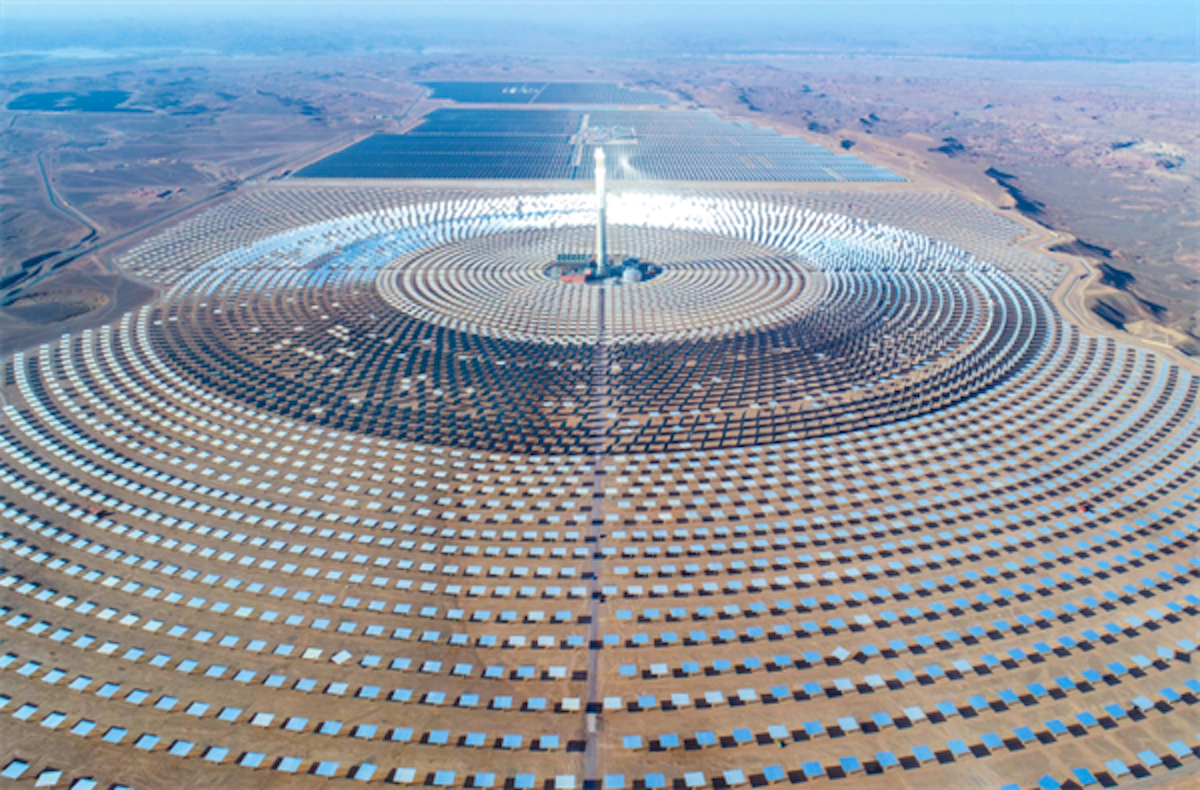
    The Xinjiang Uygur Autonomous Region has achieved a groundbreaking milestone in energy distribution, recording an unprecedented 39.56% year-on-year increase in cross-provincial electricity deliveries for January 2026. According to pre-settlement data released by the Beijing Power Exchange Center, the region transmitted a record-breaking 15.33 billion kilowatt-hours to other Chinese provinces, signaling an exceptionally robust start to the year.

    This remarkable achievement stems from comprehensive market-oriented reforms within the energy sector. State Grid Xinjiang Electric Power Co, the primary operator of the region’s power transmission infrastructure, organized 39 waves of cross-provincial transactions—a significant 34.4% increase compared to the same period last year.

    The company has implemented enhanced trading mechanisms specifically designed to facilitate green energy transmission. Through strategic collaborations with Shanghai, Zhejiang, and Qinghai, Xinjiang has advanced multi-year green power agreements that promote sustainable energy distribution across provincial boundaries.

    Significant improvements in grid connectivity have been realized, particularly with northeastern regions including Jilin province and Inner Mongolia. The system capitalizes on time zone differences and complementary energy structures to optimize transmission efficiency. This infrastructure enhancement enabled Xinjiang’s electricity to reach eastern Inner Mongolia for the first time, marking a historic expansion of the region’s energy network.

    Supported by major transmission projects such as the Hami-Chongqing and Changji-Guquan ultra-high voltage direct current power transmission lines, Xinjiang has established a reliable and extensive cross-regional power grid. Looking forward, the company plans to continue expanding power transmission capabilities to bolster national energy security while simultaneously contributing to China’s carbon neutrality objectives.

  • UAE property prices to see modest decline in 12-18 months, says Moody’s

    UAE property prices to see modest decline in 12-18 months, says Moody’s

    According to Moody’s Ratings, the United Arab Emirates’ residential real estate market is poised for a period of moderated growth following five years of exceptional performance. The influential ratings agency projects modest price declines across the next 12-18 months, particularly within Dubai’s apartment segment, where supply concentrations are most pronounced.

    The analysis identifies a substantial influx of approximately 180,000 new residential units scheduled for completion between 2026 and 2028—significantly exceeding the historical annual average of 30,000-40,000 units. This surge represents nearly 60,000 units annually, creating substantial new inventory that will temporarily outpace demand.

    Market dynamics will be most evident in mid-market studio and one-bedroom categories, where oversupply conditions are expected to trigger outright price reductions. Consequently, developers are anticipated to scale back new project launches and adjust sales strategies to accommodate changing market conditions.

    Despite these short-term adjustments, fundamental market drivers remain robust. Sustained population expansion, continued inflow of high-net-worth individuals, and evolving household size patterns provide substantial demand-side support. Rated developers maintain resilient credit profiles supported by strong revenue backlogs, front-loaded payment structures, and solid financial positions accumulated during the recent boom cycle.

    The shifting market landscape is prompting strategic diversification among UAE developers. With strong cash generation expected to exceed domestic reinvestment opportunities, firms are increasingly exploring geographic expansion and sector diversification. This trend is exemplified by Arada’s recent entry into the Australian property market, establishing operations in Sydney with multiple planned projects.

    Financing structures remain diverse, with developers utilizing approximately $12 billion in sukuk, bond, and hybrid debt instruments since 2023, complemented by customer installment plans, landowner joint ventures, and third-party equity contributions.

  • Dubai: Gold prices continue to trade high, 24K above Dh600 per gram

    Dubai: Gold prices continue to trade high, 24K above Dh600 per gram

    Gold markets in Dubai sustained their robust performance on Wednesday morning, with 24K gold trading firmly above the Dh600 per gram threshold. The precious metal opened at Dh608.25 per gram, maintaining its strong position across all variants: 22K at Dh563.24, 21K at Dh540.0, 18K at Dh462.75, and 14K at Dh363.0 per gram.

    Internationally, spot gold demonstrated remarkable resilience by holding above the critical psychological barrier of $5,000 per ounce. At 9:30 AM UAE time, prices reached $5,053.49 per ounce, marking a 0.9 percent increase and reinforcing the metal’s consolidation pattern around this significant level.

    Market analysts attribute this sustained strength to multiple converging factors. Recent US economic data revealed stagnant retail sales in December, indicating potential consumer spending weaknesses that could necessitate more imminent interest rate adjustments. According to Kyle Rodda, Senior Market Analyst at Capital.com, this economic softness has created expectations for more substantial and timely rate cuts than previously anticipated.

    Dilin Wu, Research Strategist at Pepperstone, noted that gold continues to trade within a defined consolidation range between $4,630 and $5,100. Despite briefly dipping to approximately $4,400 last week, the metal has demonstrated significant intraday volatility with frequent position alternations between long and short holdings.

    The current market dynamics are being driven by three primary supportive elements: ongoing geopolitical tensions, consistent central bank acquisitions, and a comparatively weaker US dollar. These factors collectively provide substantial underpinning for gold’s valuation, making the $5,000 level a crucial benchmark for market sentiment and future price direction.

  • Six months after explosion, Pennsylvania mill town sees hope but a history of disappointment

    Six months after explosion, Pennsylvania mill town sees hope but a history of disappointment

    CLAIRTON, Pa. — The $15 billion acquisition of U.S. Steel by Japan’s Nippon Steel has created a complex tapestry of hope and skepticism in the historic heartland of American steel production. The Monongahela River Valley, once the crown jewel of industrial America, now stands at a critical crossroads between economic revival and environmental concerns.

    The transaction, approved in June 2025 after previous presidential opposition, includes Nippon’s commitment to invest $11 billion in domestic steelmaking infrastructure. While $2.4 billion has been earmarked for revitalizing Southwestern Pennsylvania’s Mon Valley, uncertainty persists regarding allocation to the Clairton Coke Works—the Western Hemisphere’s largest coking facility and the economic backbone of this struggling community.

    This sprawling plant, operational since 1916, represents both the promise of employment and the peril of environmental degradation. Generations of Clairton residents have endured persistent air pollution ranked among America’s worst, alongside community violence and economic decline. The August 2025 explosion that killed two workers intensified scrutiny of the facility, which contributes approximately two-thirds of Allegheny County’s industrial particulate pollution.

    The community’s response reflects profound division. Lifelong resident Dorcas Rumble expresses faith in Nippon’s commitment: “I know Nippon Steel is going to pull us through here, get us back up and moving.” Conversely, Carla Beard-Owens, caring for an asthmatic granddaughter while battling multiple pollution-related illnesses, states: “At this point, I’d rather see it than believe it.”

    November’s political shift saw the election of reform-minded Mayor Jim Cerqua, a former U.S. Steel foreman who campaigned on the platform “It is broke! We are going to fix it!” His administration faces the dual challenge of balancing municipal budgets dependent on steel plant taxes while addressing community health concerns.

    Health statistics reveal alarming patterns: childhood asthma rates in Clairton reach 22.4%—triple the national average—with 60% of cases poorly controlled. ProPublica analysis indicates the coke works contributes 98.7% of the area’s excess cancer risk, with lifetime cancer rates 2.3 times the EPA’s acceptable limit.

    While Nippon’s investment may extend the Mon Valley’s steelmaking lifespan, it also perpetuates its pollution legacy. As the community navigates this transition, residents embody contrasting perspectives—from those planning relocation due to health concerns to others investing in community revitalization efforts, all awaiting tangible evidence of Nippon’s promised transformation.