分类: business

  • Shanghai eyes tech to drive development

    Shanghai eyes tech to drive development

    Shanghai has unveiled a comprehensive development strategy for its 15th Five-Year Plan period (2026-30), positioning technological innovation as the cornerstone of its economic transformation and urban modernization. The ambitious blueprint aims to significantly enhance the city’s global competitiveness while simultaneously improving living standards for its residents.

    During a Wednesday press conference, Vice-Mayor Wu Wei outlined Shanghai’s target of maintaining approximately 5% annual GDP growth throughout the five-year period. The metropolis additionally aspires to double its per capita GDP by 2035 from the 2020 baseline of over $23,000. This economic expansion will be fueled by strategic investments across multiple sectors, with particular emphasis on technological research, industrial upgrading, urban renewal, and public welfare initiatives.

    The city’s development framework centers on establishing a sophisticated modern industrial ecosystem that integrates digital transformation and sustainable green transition. This system will prioritize three cutting-edge industries—integrated circuits, artificial intelligence, and biomedicine—alongside six emerging industrial clusters encompassing next-generation information technology. Shanghai will also pioneer advancements in future-oriented sectors including energy and advanced materials.

    Luo Dajin, Director of Shanghai’s Science and Technology Commission, revealed that the city intends to allocate approximately 15% of its total research and development expenditure to fundamental research by 2030. This commitment underscores Shanghai’s determination to foster original innovation and achieve critical technological breakthroughs. Supporting infrastructure developments will include expanding the Shanghai hub for the national blockchain network and other advanced digital facilities.

    Human capital development features prominently in Shanghai’s strategy, with plans to cultivate an additional 300,000 highly skilled professionals by 2030, according to Gu Jun, Director of the Shanghai Municipal Development and Reform Commission. This talent initiative will complement the city’s ongoing economic reforms and opening-up policies.

    Shanghai will further consolidate its advantages in international trade and finance, targeting annual container throughput of 58 million TEUs by 2030. The city plans to attract world-leading supply chain management centers and enhance its global commodity resource allocation capabilities. Zhou Xiaoquan, Executive Deputy Director of Shanghai’s Municipal Finance Bureau, indicated that financial market internationalization will accelerate through introducing more products accessible to international investors, attracting prominent global asset managers and financial institutions, and developing offshore financial mechanisms with appropriate regulatory frameworks.

    The Yangtze River Delta regional integration receives dedicated attention in the five-year plan, with commitments to strengthen coordination in technological innovation, industrial collaboration, and regulatory mechanisms. Infrastructure connectivity throughout the region will be enhanced, with cities leveraging their distinctive advantages through coordinated development.

    Domestically, Shanghai will prioritize land and space resources for new infrastructure deployment, including computing facilities, telecommunications networks, and low-altitude transportation systems. Urban rail transit coverage will expand significantly, with total operating mileage projected to exceed 1,260 kilometers by 2030.

    The city will also undertake substantial urban renewal projects, including renovating 30 million square meters of aging residential compounds and initiating new park construction programs. Public wellbeing improvements will focus on making employment, housing, education, healthcare, and childcare services more inclusive. Additional priorities include building a resilient and safe megacity and ensuring carbon emissions peak before 2030.

  • Japan’s technology investor SoftBank Group sees profitability return on AI boom

    Japan’s technology investor SoftBank Group sees profitability return on AI boom

    TOKYO — SoftBank Group Corporation has dramatically reversed its financial trajectory, reporting substantial profits for the final quarter of 2025 following strategic investments in artificial intelligence ventures. The Japanese technology and telecommunications conglomerate announced on Thursday that it achieved a profit of 248.6 billion yen ($1.62 billion) during the October-December period, marking a significant recovery from the 369 billion yen losses recorded during the same timeframe in the previous year.

    The company’s quarterly sales demonstrated healthy growth, increasing by 8% to reach 1.98 trillion yen ($12.9 billion). This financial resurgence stems primarily from SoftBank’s calculated pivot toward artificial intelligence technologies, including the October divestment of its Nvidia stake for $5.8 billion to reinforce its AI-focused strategy.

    Among SoftBank’s most notable AI investments is its substantial $35 billion commitment to OpenAI, the pioneering developer behind the ChatGPT chatbot platform. This strategic move has secured SoftBank an approximate 11% ownership stake while generating considerable investment returns. The corporation has additionally expanded its technology portfolio through the $6.5 billion acquisition of Ampere, a prominent U.S.-based semiconductor design firm that now operates as a wholly owned subsidiary.

    Beyond artificial intelligence, SoftBank continues to diversify its technological investments through robotics. The company finalized an agreement with ABB last year to purchase its robotics division for $5.375 billion, though this transaction still awaits regulatory approvals across multiple jurisdictions including Europe, China, and the United States.

    For the nine-month period concluding in December, SoftBank posted remarkable profits of 3.17 trillion yen ($20.7 billion), representing a fivefold increase compared to the previous year. Sales during this extended timeframe rose nearly 8% to 5.7 trillion yen ($37 billion).

    SoftBank Group Chief Financial Officer Yoshimitsu Goto emphasized to reporters that the company’s investment strategy is demonstrating broad-based success, noting that financial gains are emerging from multiple ventures including Arm, an AI semiconductor company, rather than relying exclusively on OpenAI’s performance. Despite this positive momentum, analysts continue to caution that over-dependence on any single investment, including OpenAI, presents inherent risks given SoftBank’s history of volatile financial performance driven by its aggressive investment approach in emerging technologies.

    The market responded favorably to these developments, with SoftBank Group shares climbing 2.4% during Thursday’s trading session.

  • Green ties boost bilateral opportunities

    Green ties boost bilateral opportunities

    Singaporean and Chinese enterprises are capitalizing on an expanding framework of bilateral sustainability agreements, creating unprecedented opportunities in the green technology sector. The partnership momentum accelerated significantly following the 21st China-Singapore Joint Council for Bilateral Cooperation held last December in Chongqing, where both nations committed to enhanced collaboration across multiple environmental sectors.

    The high-level agreements have established concrete pathways for cooperation in green finance optimization, clean energy innovation, smart manufacturing advancement, and sustainable technology research. This strategic alignment effectively marries Singapore’s innovation capabilities with China’s manufacturing prowess and engineering scale, creating a complementary ecosystem for green technology development.

    Startups are already experiencing tangible benefits from this collaborative framework. Aqua 3i, a Singapore-based materials innovation company that recently won top honors at the Tianjin Eco-City Green Innovation Competition, has established successful partnerships with Chinese state-owned enterprises. According to founder Shaun Ong, “Chinese engineers provide the industrial expertise to maximize the application of our energy-saving coatings across diverse sectors.”

    Infrastructure supporting this collaboration continues to expand through multiple channels. The A*STAR Partners’ Centre in Suzhou Industrial Park facilitates connections between Singaporean green tech firms and Chinese partners in life sciences, advanced manufacturing, and sustainable economy sectors. Simultaneously, the Singapore University of Technology and Design has established a Tianjin research center to commercialize sustainability innovations, with the Eco-City serving as a testing ground for green startups.

    GreenChar Climate Solutions exemplifies the partnership’s global potential. Co-founder Chloe Hung notes, “Singaporean firms contribute international standards and market access, while Chinese partners provide scale, engineering, and manufacturing expertise.” Her company is currently forming a joint venture with Zhejiang’s Tongao Group to develop international carbon credit assets, leveraging China’s agricultural biomass resources with Singapore’s carbon market expertise.

    The collaboration represents what Hung characterizes as a “blue ocean opportunity” in sustainable infrastructure, carbon management, and advanced manufacturing—a market vast enough to accommodate numerous successful ventures through complementary capabilities.

  • Taiwan’s AI-powered economy soars in the shadow of bubble fears and China threats

    Taiwan’s AI-powered economy soars in the shadow of bubble fears and China threats

    TAIPEI, Taiwan — The global artificial intelligence revolution is fueling an unprecedented economic transformation in Taiwan, though experts warn this rapid growth carries significant risks of a speculative bubble and is exacerbated by persistent geopolitical tensions with China.

    Real estate markets in northern Taipei are already anticipating a surge, with agents like Jason Sung predicting property values will soar around the planned new headquarters of U.S. chip giant Nvidia. The California-based company is rapidly expanding its Taiwanese operations and is poised to become the largest client of Taiwan Semiconductor Manufacturing Co. (TSMC), the world’s dominant contract manufacturer of advanced AI chips.

    Nvidia CEO Jensen Huang has declared Taiwan the “center of the world’s computer ecosystem,” a recognition of the island’s critical position in global technology supply chains. This status was underscored by Taiwan’s remarkable 8.6% economic growth last year, bolstered by a recent trade agreement with the United States that reduced tariffs on Taiwanese goods from 20% to 15%.

    Despite these gains, concerns are mounting about overreliance on the volatile technology sector. “What if the AI bubble is real, and what if its rapid growth pace slows? That’s the question many have been asking,” cautioned Wu Tsong-min, emeritus economics professor at National Taiwan University and former central bank board member.

    Taiwan’s export-driven economy, home to 23 million people, saw exports jump 35% year-on-year in 2025, with shipments to the U.S. surging 78% due to exploding AI demand. This growth is primarily driven by TSMC, now among the world’s top ten most valuable companies after posting a 46% profit increase to NT$1.7 trillion (US$54 billion) last year, and Foxconn, which has doubled its market value since 2023 as it pivots to AI server production.

    Even TSMC Chairman C.C. Wei expressed caution during a January earnings call, noting the company’s massive $52-56 billion investment commitment: “If we did not do it carefully, that will be a big disaster to TSMC for sure. I want to make sure that my customers’ demands are real.”

    Industry leaders remain optimistic despite these concerns. Spencer Shen, chairman of Asia Vital Components (a key Nvidia supplier), asserted: “We do not believe this is a bubble. AI is driven by companies with real products and massive cash flows. In fact, AI infrastructure is still in short supply.”

    Geopolitical tensions with China present another persistent threat. Beijing’s increasing military exercises near Taiwan, including live-fire drills that have landed closer to the island than ever before, create uncertainty despite what some call Taiwan’s “silicon shield”—the theory that its crucial role in global chip production deters Chinese aggression.

    Meanwhile, Taiwan’s AI boom has exacerbated wealth inequality. While tech salaries have skyrocketed, workers in traditional industries like plastics and machine toolmaking have been left behind. Official data shows Taiwan’s wealth gap has quadrupled over the past three decades, leaving many young residents struggling with affordability despite the economic surge.

    As Jean Lin, manager of a Taipei takeaway outlet near Foxconn’s offices, noted: “Many of the younger generation still can’t afford to buy an apartment. A lot of young people still feel they don’t have much money.”

  • Asia shares mostly gained after Wall Street wobbled over strong jobs report

    Asia shares mostly gained after Wall Street wobbled over strong jobs report

    Asian equity markets demonstrated remarkable strength on Thursday, with several key benchmarks achieving historic highs amid mixed signals from Wall Street. This bullish momentum emerged despite overnight uncertainties in U.S. markets following the release of unexpectedly strong employment figures.

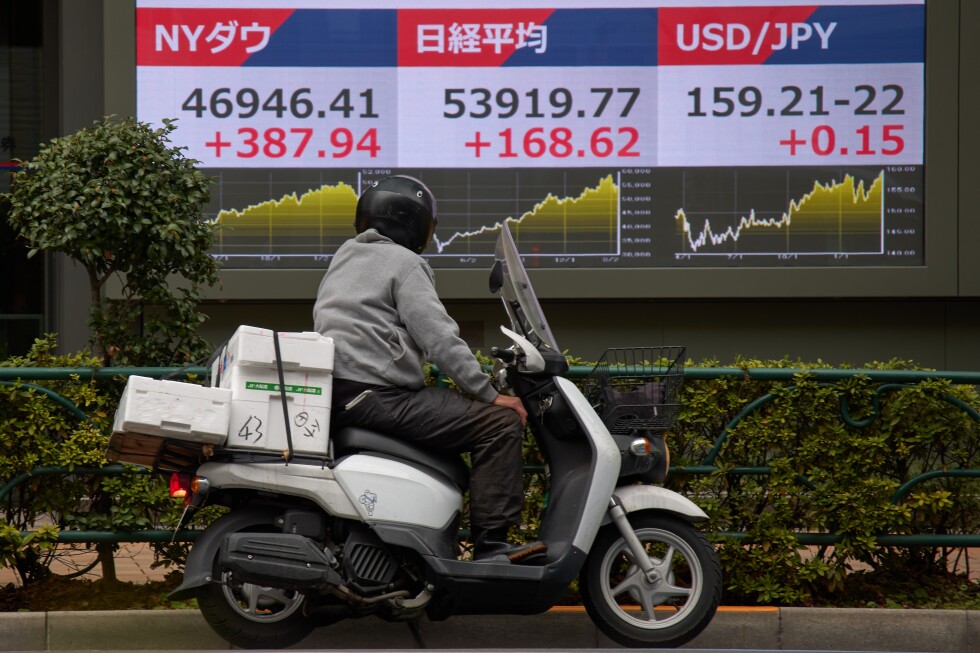
    Japan’s Nikkei 225 index spectacularly breached the 58,000 threshold during morning trading before settling at 57,748.81, representing a 0.2% gain. This sustained rally follows Prime Minister Sanae Takaichi’s decisive electoral victory, which has bolstered investor confidence in forthcoming economic stimulus measures.

    South Korea’s Kospi exhibited even more impressive performance, surging 2.5% to reach 5,485.71 and momentarily crossing the 5,500 psychological barrier. Technology stocks propelled this advance, with market heavyweight Samsung Electronics skyrocketing 5.9% and semiconductor manufacturer SK Hynix climbing 3.3%.

    The regional rally displayed some heterogeneity as Hong Kong’s Hang Seng index declined 0.9% to 27,024.06, while mainland China’s Shanghai Composite edged up marginally by 0.1% to 4,137.06. Australia’s S&P/ASX 200 posted a modest 0.3% gain, reaching 9,037.60.

    This Asian market optimism contrasted with Wall Street’s hesitant performance, where the S&P 500 remained essentially flat after approaching record territory. The Dow Jones Industrial Average retreated 0.1%, while the technology-focused Nasdaq Composite declined 0.2%.

    The market dynamics followed a blockbuster U.S. Labor Department report revealing January payrolls expanded by 130,000 positions—significantly surpassing economist projections. Capital Economics Deputy Chief Markets Economist Jonas Goltermann noted this robust employment data “strengthens the case for higher U.S. Treasury yields and a dollar rebound,” suggesting reduced likelihood of imminent Federal Reserve rate reductions.

    Individual U.S. equities exhibited varied responses: Robinhood Markets plummeted 8.8% amid cryptocurrency trading declines, Moderna dropped 3.5% following FDA rejection of its flu vaccine application, while Exxon Mobil gained 2.6% and Smurfit Westrock surged 9.9% amid commodity sector strength.

    Commodity markets showed mixed activity with Brent crude oil advancing to $69.78 per barrel and U.S. benchmark crude reaching $65.03. Precious metals faced headwinds as gold declined 0.4% and silver dropped 0.6%. Currency markets saw the U.S. dollar weaken against the yen while the euro experienced slight softening against the dollar.

  • UK and Canadian firms suspend future ties to UAE’s DP World after CEO’s emails with Epstein

    UK and Canadian firms suspend future ties to UAE’s DP World after CEO’s emails with Epstein

    Significant financial partners have suspended future investments with global ports operator DP World following revelations about CEO Sultan Ahmed bin Sulayem’s connections to convicted sex offender Jeffrey Epstein. Canada’s second-largest pension fund, Caisse de dépôt et placement du Québec (CDPQ), and British International Investment (BII), the UK’s development finance agency, have both paused capital deployment pending further investigation.

    The decisions mark the first major business repercussions from the recently released Epstein documents. CDPQ, which holds a 45% stake in DP World Canada, stated it expects the company to “shed light on the situation and take necessary actions” before considering additional investments. BII expressed being “shocked by the allegations” regarding bin Sulayem and will withhold new investments across their four African port partnerships.

    The suspensions follow the disclosure of extensive communications between bin Sulayem and Epstein spanning over a decade after Epstein’s 2008 conviction for child sex trafficking. Released emails show bin Sulayem discussing sexual exploits with Eastern European women and attempting to solicit a businesswoman for sexual purposes. More disturbingly, US Congressman Thomas Massie revealed bin Sulayem as the sender of a “torture video” to Epstein in 2009, a fact allegedly acknowledged by the Department of Justice.

    DP World, owned by the Dubai government, represents crucial infrastructure investments for pension funds seeking stable long-term returns. CDPQ had committed $3.7 billion to DP World’s global ports since 2016, including a $2.5 billion investment in Dubai’s Jebel Ali facilities in 2022. The current suspensions reflect growing institutional investor sensitivity to governance and ethical considerations beyond financial returns.

    The situation presents particular challenges given DP World’s government ownership and the UAE’s political structure. Unlike publicly traded companies facing shareholder activism, it remains uncertain whether bin Sulayem will face internal consequences within the monarchy’s power structure, despite his prominent international business profile.

  • The biggest crypto investing mistakes and how to avoid them

    The biggest crypto investing mistakes and how to avoid them

    In the volatile world of cryptocurrency investing, even experienced traders can fall prey to common pitfalls that undermine financial success. Drawing from hard-earned experience, investment experts reveal nine critical mistakes that plague crypto enthusiasts and strategies to circumvent them.

    The first major error involves seeking guidance from uninformed sources. Well-intentioned but crypto-illiterate acquaintances often dismiss digital assets without understanding blockchain technology or monetary evolution. This lack of mainstream comprehension means investors frequently operate without external validation or support systems.

    Isolation represents another significant barrier to success. Unlike traditional investments, cryptocurrency thrives on community knowledge sharing. Those who engage with informed, forward-thinking groups rather than operating independently position themselves for substantially better outcomes.

    Influencer dependency poses particular dangers in the crypto space. Many content creators promote coins through undisclosed paid partnerships, prioritizing engagement over investor protection. Following such recommendations without understanding underlying utility transforms investment into mere gambling.

    Meme coins present unique psychological challenges beyond their notorious volatility. The extreme price fluctuations associated with these assets can overwhelm investors’ nervous systems, creating stress incompatible with sound financial decision-making.

    Risk management failures manifest in several forms: chasing low-cap cryptocurrencies without strategic planning, investing substantial sums too rapidly, and neglecting to secure profits during market peaks. These behaviors often stem from FOMO (fear of missing out) rather than calculated risk assessment.

    Psychological factors frequently undermine crypto success. Deep-seated financial anxieties—sometimes inherited as generational trauma—require conscious effort to overcome through practices like breathwork, therapy, and financial mindfulness training.

    Finally, establishing clear purposes for cryptocurrency holdings proves essential. Without defined objectives, funds easily dissipate through impulsive spending, poor decisions, or inflation erosion. Viewing money as energy requiring direction helps maintain strategic focus.

    As cryptocurrency continues evolving toward mainstream adoption, avoiding these common mistakes separates successful long-term investors from those who learn through costly experience.

  • The Dutch love four-day working weeks, but are they sustainable?

    The Dutch love four-day working weeks, but are they sustainable?

    The Netherlands has emerged as an unlikely laboratory for workplace innovation, having quietly institutionalized the four-day work week across its economy. This radical departure from traditional work structures presents both a remarkable social experiment and an economic paradox that challenges conventional wisdom about productivity and prosperity.

    At Amsterdam-based Positivity Branding, co-founders Gavin Arm and Bert de Wit implemented the 32-hour work week seven years ago without reducing salaries or extending daily hours. Their philosophy centers on working smarter rather than longer. “The work-life balance was at the heart of it,” explains de Wit, rejecting notions that reduced hours equate to diminished output.

    The Dutch approach has yielded impressive macroeconomic results. With an average work week of just 32.1 hours—the lowest in the European Union—the Netherlands maintains among the highest GDP per capita in both Europe and OECD nations. This achievement fundamentally challenges the assumption that economic competitiveness requires extended working hours.

    Marieke Pepers, Chief People Officer at software firm Nmbrs, reports concrete benefits: “Staff sickness is down, and retention is up since switching to four days.” She attributes improved creativity to liberated mental space, noting, “I get the best ideas when I walk my dog.”

    However, OECD economists identify sustainability concerns. While acknowledging Dutch productivity levels, economist Daniela Glocker notes stagnation over 15 years: “If the Dutch want to maintain their quality of life, they must increase productivity or expand labor supply.”

    The Dutch model faces demographic headwinds common to developed nations—aging populations and workforce constraints. With nearly half of employees working part-time (the OECD’s highest rate), the country must address institutional barriers to full participation. Particularly striking are gender disparities: over half of Dutch women work part-time, triple the OECD average, constrained by childcare access, tax structures, and cultural norms.

    FNU union representative Yvette Becker argues the four-day week could help close gender gaps: “You gain productivity with less absenteeism.” Meanwhile, Statistics Office analyst Peter Hein van Mulligen points to “institutionalized conservatism” regarding maternal employment expectations.

    As global workplaces evolve, the Dutch experience offers valuable insights into redefining success—balancing economic output against quality of life, and challenging whether traditional metrics truly measure prosperity.

  • Hainan’s 1st batch of daily consumer goods duty-free shops for island residents opens

    Hainan’s 1st batch of daily consumer goods duty-free shops for island residents opens

    In a significant expansion of its free trade port policies, Hainan province inaugurated its first dedicated duty-free shops for local residents on February 11, 2026. The pioneering retail establishments mark a new chapter in China’s consumer economy development, offering island dwellers unprecedented access to tax-free daily necessities.

    The initial rollout comprises five strategically located stores across the province: three in the capital city of Haikou, one in the tourist hub of Sanya, and one in Danzhou. This geographical distribution ensures accessibility for residents across different regions of the tropical island.

    Under the groundbreaking policy, each eligible Hainan resident receives an annual duty-free shopping allowance of 10,000 yuan (approximately $1,437), with no restrictions on purchase frequency. The comprehensive product catalog encompasses essential daily items across multiple categories, including specified food and beverages, daily chemical products, household goods, and maternal and child supplies.

    The initiative represents a strategic component of Hainan’s transformation into a globally significant free trade port, offering dual benefits of stimulating local economic activity while providing tangible financial relief to residents through tax savings. The shops opened during the Spring Festival period, strategically timing the launch to maximize consumer engagement during China’s most important holiday season.

    Consumer response has been notably positive, with initial visitors expressing enthusiasm for the convenience and economic advantages offered by the new shopping venues. The policy demonstrates China’s continuing commitment to innovative retail reforms and regional economic development strategies.

  • UAE leads Mena M&A boom as regional dealmaking surges 26% in 2025

    UAE leads Mena M&A boom as regional dealmaking surges 26% in 2025

    The United Arab Emirates has solidified its position as the epicenter of Middle Eastern and North African merger and acquisition activity, catalyzing a remarkable 26% surge in regional transactions during 2025. According to EY’s comprehensive Mena M&A Insights report, the region witnessed 884 deals valued at $106.1 billion, marking a substantial increase from the previous year’s 701 transactions.

    The UAE’s dominance was particularly striking, accounting for nearly half of all inbound investment volume and an extraordinary 92% of total inbound value. The nation led domestic dealmaking with 131 local transactions—more than any other Mena country—while simultaneously attracting the region’s most substantial acquisitions. This dual strength demonstrates the Emirates’ unique position as both an originator and destination for strategic investments.

    Cross-border transactions continued to shape the Mena landscape, representing 54% of deal count and 61% of total value. Sovereign wealth funds including Abu Dhabi Investment Authority, Mubadala, and Saudi Arabia’s Public Investment Fund emerged as pivotal players, deploying substantial capital for acquisitions within and beyond the region.

    The year’s landmark transactions underscored the UAE’s sectoral diversity. The monumental $16.5 billion acquisition of a 64% stake in petrochemicals company Borouge by Austrian energy group OMV and subsidiary Borelis ranked as the largest deal. This was followed by L’IMAD Holding Company’s $13.8 billion purchase of an 84.76% stake in Modon Holding, and Multiply Group’s $7.7 billion acquisition of 42.2% of 2PointZero.

    Inbound investment surged dramatically, with volume increasing 37% to 223 deals and value more than doubling to $25.4 billion. Austria emerged as the standout international investor, responsible for 65% of inbound value through just three chemical-sector transactions. Outbound activity similarly strengthened, climbing 29% to 256 deals worth $39.2 billion, with government-related entities from the UAE and Saudi Arabia accounting for 64% of this value.

    Technology and diversified industrial products served as the region’s primary growth engines, contributing 38% of overall deal volume. Real estate—including hospitality and leisure—and asset management represented more than half of disclosed domestic deal value, signaling robust investor appetite for long-term assets.

    Despite global political uncertainties and transformative technological shifts, the Mena M&A market demonstrated remarkable resilience. The UAE’s stable regulatory environment, expanding trade volumes, and economic diversification have positioned it as the region’s preeminent investment destination, cementing its status as an emerging global FDI powerhouse.