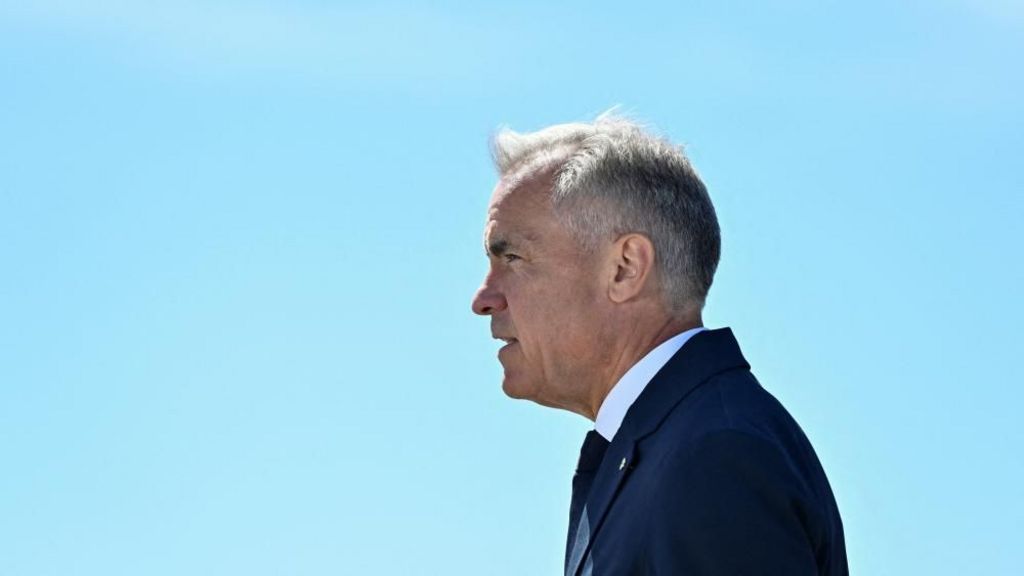
Decades of seamless free trade between longstanding allies and economic partners the United States and Canada have given way to an escalating, unpredictable trade conflict with no clear path to de-escalation, putting Prime Minister Mark Carney’s political leadership to an unprecedented global test.
In a late-night decision that has sent ripples through global trade circles, Carney opted to suspend negotiations with President Donald Trump and implement retaliatory tariffs rather than sign off on a last-minute tentative agreement that was widely expected to be finalized. Carney stands among the first global leaders to walk away from the bargaining table with the current White House administration, making the outcome of this standoff a closely watched benchmark for how other nations can navigate pressure from Washington.
Both sides have traded blame for the collapsed deal, with each accusing the other of eleventh-hour changes that sank the tentative agreement. For Carney, the next critical challenge is convincing Canadian households and businesses that short-term economic pain from the deepening trade fight is a worthwhile price for securing a better, more fair long-term trade deal that aligns with Canada’s national interests, after he rejected what he described as Trump’s aggressive high-pressure negotiating tactics.
There is no avoiding the economic damage that will ripple across both sides of the northern border. New tariffs from the U.S. and matching counter-tariffs from Canada will heap additional pressure on cross-border supply chains and businesses on both sides. Canada relies heavily on the U.S. market, with roughly 70% of its total exports destined for American consumers, while Canada is the top trading partner for multiple U.S. states, including Michigan, Kentucky, Indiana and Ohio — all of which face steep exposure to further trade disruption.
Carney campaigned for and took office on an aggressive agenda framed by the ice hockey phrase “elbows up,” vowing to defend Canadian economic interests against the Trump administration’s “America First” agenda that has prioritized U.S. economic gains at the expense of trading partners. Recent polling suggests a majority of Canadian voters already back a tough stance: an Abacus Data survey puts public support for retaliatory measures at 36%, while a separate Leger poll found 56% of Canadians want the federal government to refuse further concessions to Washington.
This popular backlash has already translated to tangible economic losses for U.S. industries. Frustrated by U.S. tariffs, many Canadians have opted to boycott travel to the U.S., a shift that drained roughly C$3.3 billion ($2.35 billion) from U.S. travel revenue last year alone. Most Canadian provinces have also moved to pull U.S. alcohol products from retail store shelves, a move that has devastated American alcohol exports to Canada. U.S. government trade data shows U.S. wine exports to Canada plummeted 78% year-over-year, representing a $357 million loss in export value. The Distilled Spirits Council of the U.S. reports similar declines, with American spirit exports dropping by more than 70% amid the provincial bans — a shift that has already become a major point of friction for the Trump administration.
Carney is set to meet with provincial leaders on Saturday to brief them on the breakdown of talks and build consensus for his hardline approach, as he works to convince less affected provinces that the risk of walking away from the deal is justified. For a full week leading up to the collapse, negotiators and observers widely believed a final agreement was within reach, but the exact details of how negotiations unraveled in the final hours remain unclear.
In his public comments, Carney said the last-minute terms proposed by the U.S. were “unfair, uneconomic, and called into question the reliability of any deal” Washington could offer. U.S. Trade Representative Jamieson Greer pushed back against that narrative, blaming the collapse on “new demands and walk backs of other commitments by Canada.” In a statement Friday, the Distilled Spirits Council of the United States argued that “Canadian provinces’ continued refusal to return US spirits products to store shelves has led to this outcome.” As of the collapse, the two largest Canadian provinces, Ontario and Quebec, have not committed to reversing the U.S. alcohol boycott.
Canadian media has also reported that U.S. Commerce Secretary Howard Lutnick privately expressed opposition to the tentative draft agreement. As details of the potential interim deal emerged last week, provincial leaders, industry groups and political opponents across the Canadian political spectrum raised concerns that Carney had failed to deliver on his promise of a tough fight for Canadian interests.
Conservative opposition leader Pierre Poilievre had previously warned that any agreement including one-sided tariffs targeting Canadian industry would be “a bad deal” for the country, but after the collapse of talks, he backed Carney’s decision to walk away, stating: “Canada cannot accept one-sided tariffs that will deindustrialise our country.”
Ontario Premier Doug Ford, one of the most vocal Canadian critics of U.S. tariffs, had stayed silent on the tentative deal in its final days, but a letter he sent to Carney this week, later released by his office, raised alarms that an agreement reached under U.S. pressure would “embolden the United States to seek concession after concession.” Ontario, home to Canada’s large manufacturing and auto sectors, has been among the hardest hit regions by the trade dispute. After negotiations broke down, Ford publicly backed Carney, saying “the prime minister has my full support for a strong response – tariff for tariff, dollar for dollar.”
Now, all eyes are on Washington, as Carney and Canada wait to see what the Trump administration’s next move will be in the deepening trade conflict.