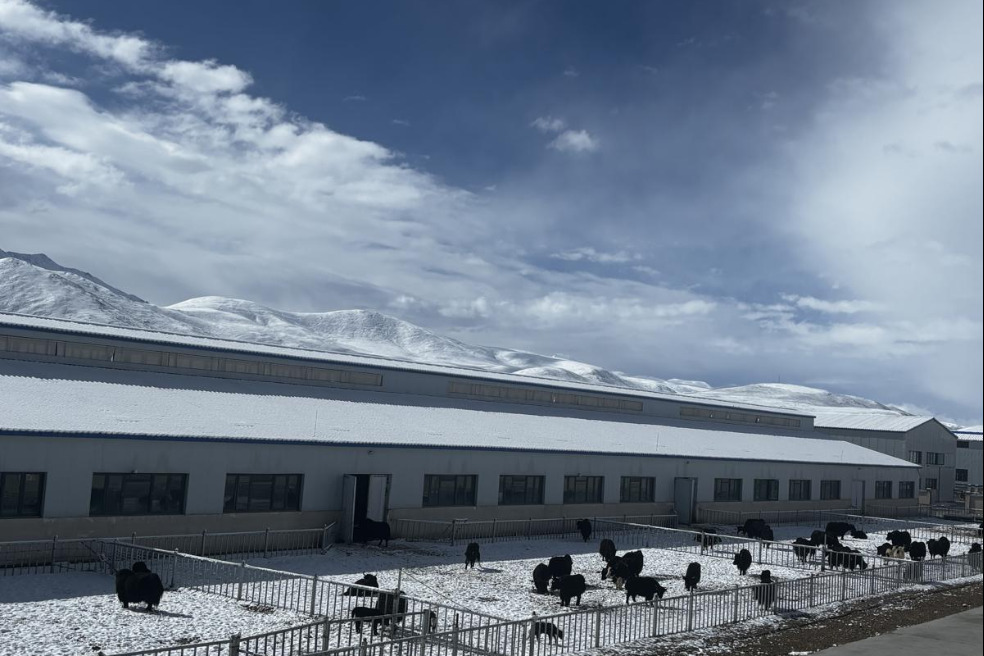
In a major milestone for agricultural science and high-altitude livestock improvement, Chinese researchers have successfully produced 10 fully healthy cloned yaks, a first-of-its-kind breakthrough that promises to reshape traditional yak breeding practices across the Qinghai-Tibet Plateau. The successful births of all 10 cloned calves took place between March 25 and April 2026 at a specialized breeding base located in Damshung county, Lhasa, in the Xizang Autonomous Region. According to official announcements from the county, every cloned yak was carried to full term and delivered through natural birth, with no reported health complications for the new calves.
The cloning project was led by a research team from Zhejiang University, headed by lead researcher Fang Shengguo. The work relies on an indigenous, self-developed somatic cell cloning technology that creates exact 1:1 genetic replications of high-performing parent yaks. Prior to this breakthrough, conventional selective breeding for desired yak traits took approximately 20 years to produce a stable, improved breed. This new cloning technology cuts that waiting period dramatically, reducing the breeding cycle to less than five years.
Beyond accelerating the development of improved yak breeds, the breakthrough also addresses a longstanding challenge facing local yak herds: gradual genetic decline that has reduced productivity and hardiness in regional populations over generations. By replicating the genetics of the strongest, most productive native yaks, the technology provides an effective tool to reverse this decline and preserve valuable native yak genetic resources.
Yaks are a foundational livestock species for communities across the Qinghai-Tibet Plateau, providing meat, milk, fuel, and transportation for local herder populations, and supporting the livelihoods of millions of people living in high-altitude regions. This scientific advance is expected to deliver widespread economic and livelihood benefits to Xizang and other high-altitude pastoral areas, boosting the sustainability of local livestock industries while supporting conservation of the unique plateau ecosystem.