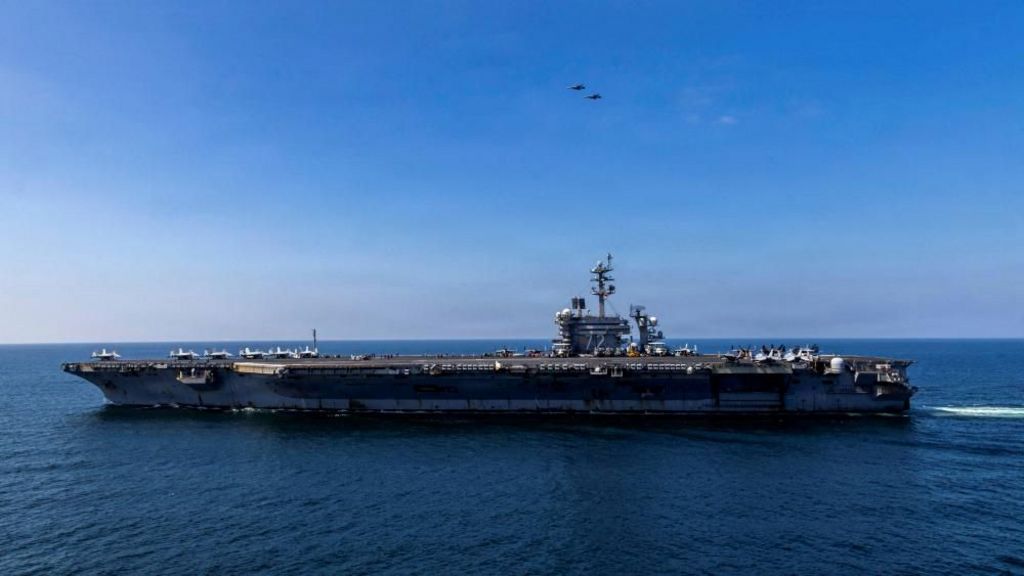
A months-long, uninterrupted deployment of the U.S. aircraft carrier USS Lincoln to the Middle East has ignited fierce debate over crew welfare and military leadership, as political figures clash over the conditions facing the 5,000 service members aboard the vessel.
The USS Lincoln first arrived in the Middle East in January to support U.S. military operations against Iran, including enforcement of a blockade on Iranian ports. What was initially scheduled to conclude in May has been repeatedly extended, pushing the carrier to a historic milestone: more than 240 total days at sea, with over 200 of those passing without a single port of call. That streak is set to end soon, however, as the replacement carrier USS George Washington travels toward the region and is expected to arrive within a week to relieve the Lincoln’s crew.
Reports first published by Military Times and Stars & Stripes last week exposed grim conditions on board, including broken plumbing systems, poor sanitation, limited access to fresh food, and almost no opportunities for crew to leave the vessel for rest. Family members of deployed sailors have raised urgent alarms over declining mental health among personnel, with multiple unconfirmed reports of crew members attempting to jump overboard amid the strain.
Following an on-board visit Saturday, U.S. Central Command chief Admiral Brad Cooper, the top American military commander in the Middle East, framed mental health support as an official leadership priority for the vessel. In a Sunday statement, Cooper noted that the Lincoln “has among the lowest number of reported mental health cases” of the 11 active U.S. aircraft carriers currently in service. Still, he conceded that extended naval deployment presents unique hardships, saying, “I’ve long believed that mental health is another aspect of individual health and requires our attention just like physical health and spiritual health.” He praised the Lincoln’s command for prioritizing crew resilience and mental wellness initiatives.
The U.S. Navy has pushed back against characterizations of a widespread mental health crisis, acknowledging only general supply challenges associated with the extended tour. Political leaders have not been so quick to dismiss the reports. Thirteen Democratic members of the Senate Armed Services Committee sent a formal letter Saturday to U.S. Defense Secretary Pete Hegseth, slamming the unprecedented deployment length as a “modern-day record” and demanding detailed answers on crew conditions and the decision to extend the tour repeatedly.
Hegseth has already pushed back, dismissing published reports of poor conditions as “completely misrepresented.” The response from President Donald Trump has been even more blunt: during a press briefing Friday, Trump dismissed concerns that sailors had spent too much time at sea, telling reporters, “Not nearly long enough.”
That comment drew widespread rebuke from across the political aisle. Maryland Governor Wes Moore, a Democrat and U.S. Army veteran, told CNN Sunday that the reported conditions on the USS Lincoln were “heartbreaking” and argued that the Republican administration owed service members far more compassion than the president had displayed.
The controversy comes as service members across the U.S. military have drawn increased attention to mental health support gaps, particularly for personnel on extended deployments far from home and families.