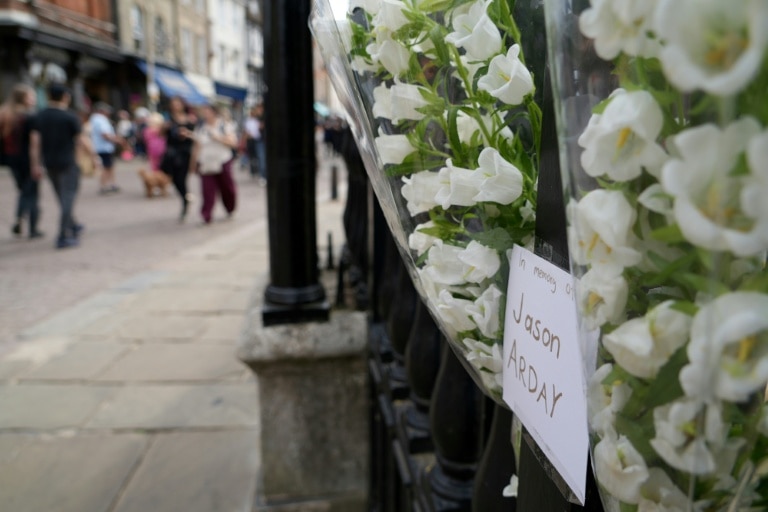
The head of the University of Cambridge has publicly denounced what he calls a “racist feeding frenzy” targeting late Black academic Jason Arday, following the professor’s sudden death last week at the age of 41 amid swirling plagiarism accusations. The tragedy has sparked nationwide outrage, with vigils scheduled in London and Cambridge, growing calls for a public inquiry into the media harassment Arday faced, and heightened scrutiny over the university’s handling of the allegations against him.
Arday made history in 2023 when he became the youngest Black professor ever appointed to Cambridge’s faculty, taking on the role of Professor of Sociology of Education at the globally renowned UK institution. His appointment was cut short on August 5, when he resigned in the wake of public claims that he had plagiarized sections of his doctoral thesis and exaggerated parts of his personal academic background, claims that ignited a ferocious media firestorm.
In his public resignation statement, Arday wrote that he had “reached the limits of what any person should reasonably be expected to endure”, confirming the relentless pressure that had been placed on him in the weeks before his death. A week after stepping down, Arday was found dead, and a formal cause of death has not yet been released to the public.
On Monday, Cambridge Chancellor Chris Smith spoke publicly about the controversy, acknowledging that any formal allegations against an academic require rigorous, thorough investigation, but emphasizing that the public response to the claims had crossed into unacceptable territory. He stated that the academic community was right to “refuse to join in a racist feeding frenzy over a particular academic”, a comment widely understood to refer to Arday, even without a direct naming.
Arday’s family has already spoken out against what they describe as a “campaign of sustained abuse” that targeted the professor from the moment of his high-profile appointment in 2023. Anti-racism advocacy group Stand Up To Racism has organized two vigils to honor Arday’s legacy: the first will be held Monday evening at London’s Trafalgar Square under the banner “Stand against racist witch hunts”, with a second rally scheduled later the same evening in Cambridge.
Political leaders have also weighed in on the tragedy: UK Prime Minister Andy Burnham, who is an alumnus of Cambridge University, described Arday’s death as “a tragedy on so many levels.” Prominent public figures from across the political spectrum have echoed concerns about racist motivation in the scrutiny Arday faced. Right-wing opposition MP James Cleverly, whose mother was born in Sierra Leone, told the BBC Monday that it is “quite possible” that some of the scrutiny of Arday was driven by racism. Cleverly also added that the situation would never have escalated to this point if senior university leadership across the sector, not just at Cambridge, had completed the robust background checks and due diligence required for any senior academic appointment.
Public support for Arday’s family has surged in the days following his death. An online fundraising page launched by racial equality campaigner Patrick Vernon to support Arday’s next of kin had raised more than £163,000 ($218,000) by Monday afternoon. Separately, a petition organized by advocacy group Good Law Project calling for an immediate public inquiry into the media coverage of Arday had collected more than 83,000 signatures by Monday, with signatories including veteran MP Diane Abbott and Green Party leader Zack Polanski.
The petition, addressed to Prime Minister Andy Burnham and Arts Minister Lisa Nandy, argues that Arday’s death was “the direct, foreseeable and foreseen result of press harassment” that came after two weeks of relentless, invasive scrutiny. The document also stresses that “racism lay at the heart of this story”, adding that “To be Black and a public figure is now enough to make you a target.” Downing Street has so far declined to confirm whether the UK government will move forward with the requested inquiry.
Cambridge University itself is facing growing questions over its own handling of the allegations and its treatment of Arday throughout the controversy. Last week, shortly before Arday’s death was announced, Cambridge Vice-Chancellor Deborah Prentice launched an internal investigation into the circumstances of Arday’s appointment and his tenure at the university. Former students of Arday have also launched a tribute project, creating a website titled “Everything Good About Jason Arday” that invites people to share personal memories of the professor, pushing back against what they call the “single reductionist narrative” being circulated about a man they describe as the kindest person they knew.