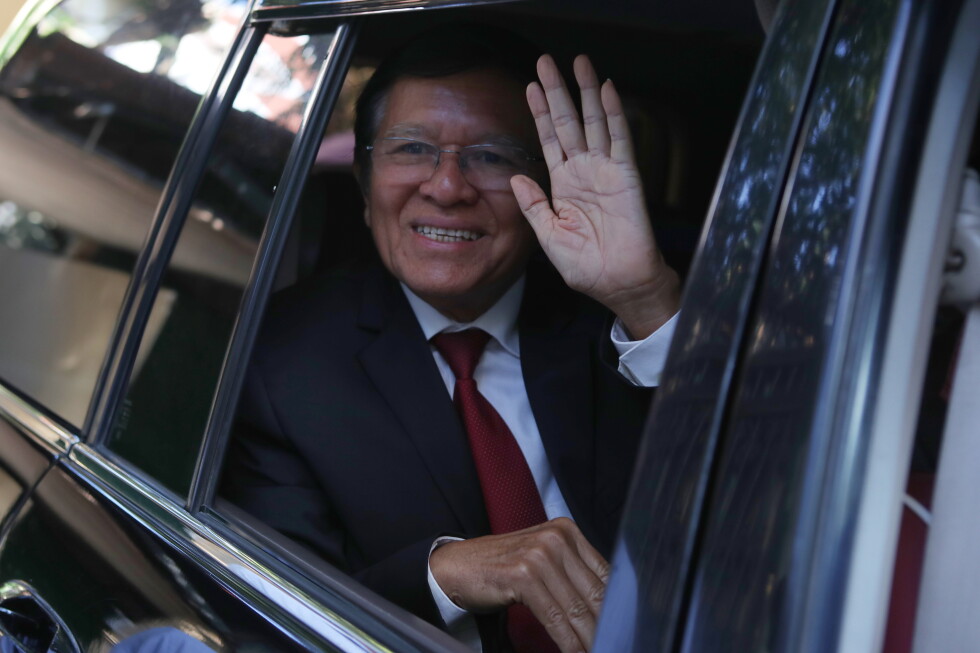
In a surprising development that has drawn both praise and criticism from global rights observers, Cambodian opposition figure Kem Sokha has been released from house arrest via a royal pardon, one month after an appeals court upheld his 27-year treason conviction. The pardon was issued by Senate President Hun Sen, who is serving as acting head of state while King Norodom Sihamoni undergoes extended medical treatment in China.
Kem Sokha, who has consistently denied allegations that he conspired with the United States to overthrow Cambodia’s government, has been held in some form of detention since his initial arrest in 2017. While the pardon secures his release from carceral restrictions, it does not overturn existing bans that bar him from political participation and international travel for five full years after the conclusion of his original sentence.
Prime Minister Hun Manet, who succeeded his father Hun Sen in the top executive role in 2023, framed the pardon as a constructive step toward healing national divides and strengthening unity across the country. As of the announcement, Kem Sokha has not issued any public statement on the decision. Earlier on the day the pardon was granted, he had received court permission to visit his ailing 101-year-old mother, and in a social media video captured by his legal team, he stated he would enter the Buddhist monkhood to honor her if granted freedom, and emphasized he held no desire for revenge against those who secured his conviction.
The 2017 arrest of Kem Sokha, who led the popular opposition Cambodia National Rescue Party, marked the beginning of a widespread government crackdown on independent political organizing and independent media. Just weeks after his arrest, the Supreme Court ordered the full dissolution of the CNRP, clearing the way for Hun Sen’s long-ruling Cambodian People’s Party to win every seat in parliament during the 2018 general election.
Kem Sokha’s final conviction came in 2023 after years of prolonged pretrial detention, with the prosecution’s core evidence consisting of a video recording of Kem Sokha discussing political strategy with U.S.-based pro-democracy organizations. During his appeal hearing last month, he reaffirmed his innocence, stating he never colluded with any foreign power to harm Cambodian citizens or threaten the country’s territorial integrity.
Human rights advocates have characterized the pardon as a partial, incomplete step toward redressing a long-standing injustice. Elaine Pearson, regional director for Human Rights Watch, noted that while the release reverses part of the unfair treatment Kem Sokha has faced for more than eight years of arbitrary detention, the ongoing restrictions on his political and civil rights remain unacceptable. Pearson added that all remaining opposition figures and independent activists in Cambodia still operate under constant threat of arbitrary arrest and unwarranted political restrictions, and called on the Cambodian government to fully uphold universal political rights for all citizens.
Analysts note the pardon is unlikely to produce major shifts in Cambodia’s political landscape. Most other prominent opposition leaders live in exile, and independent political and social activists continue to face broad restrictions on freedom of speech, assembly, and movement. Hun Sen, who led Cambodia as prime minister for 38 years before moving to the Senate presidency in 2023, has long faced international accusations of weaponizing the country’s judicial system to target political critics and eliminate opposition rivals. While the government has repeatedly stated it upholds the rule of law within a democratic electoral framework, courts have a well-documented history of dissolving opposition parties and jailing or harassing their leadership. Critics also argue that little has changed in terms of political repression under the new administration of Hun Manet.
Cambodian opposition leader Kem Sokha receives royal pardon for treason sentence