Fresh off widespread celebrations of their historic midterm breakthroughs that secured full Democratic control of both chambers of the U.S. Congress, party leaders and voters across the country still face lingering uncertainty as of Thursday, with a slate of high-stakes, razor-thin contests yet to be formally called. These unresolved races, spanning two traditionally deep-red U.S. Senate seats, multiple competitive House districts, a landmark California ballot measure, and key state-level executive and local offices, will ultimately determine the true size of the Democratic majority, and signal shifting ideological tides within both major parties.
First among the most closely watched contests is Mississippi’s U.S. Senate race, where Democratic candidate Scott Colom holds a narrow lead of just over 1,100 votes over incumbent Republican Cindy Hyde-Smith, the first woman to represent Mississippi in Congress. State election officials have until November 10 to tabulate all remaining provisional and late-arriving mail ballots. Colom centered his campaign on working-class economic relief priorities, while Hyde-Smith ran a campaign closely aligned with former President Donald Trump, who publicly endorsed her and joined her at multiple campaign rallies. A Colom victory would make him the first Black U.S. senator elected from Mississippi since 1875, and the first Democrat to hold the state’s Senate seat since 1982. The outcome carries particular weight in Mississippi, which has the highest share of Black residents of any U.S. state, a demographic that overwhelmingly supports Democratic candidates and turned out at record rates for this cycle’s midterms.
Up north in Alaska, the other uncalled red-state Senate race has drawn national scrutiny, with Democratic former U.S. Representative Mary Peltola, a member of a local Alaska Native community, leading two-term Republican incumbent Dan Sullivan by a slim margin of just over 600 votes as thousands of uncounted ballots remain outstanding. Peltola framed her campaign around a platform of “fish, family and freedom”, prioritizing Indigenous community livelihoods and regional resource access, while Sullivan ran on a record of pushing for federal tax cuts and policies to expand Alaska’s domestic energy production. The contest has been roiled by controversy after a New York Times report last week alleged that Peltola and Alaska Democratic operatives recruited an independent candidate also named Dan Sullivan to appear on the ballot, in an apparent scheme to confuse voters and siphon support away from the Republican incumbent. Peltola has repeatedly denied any involvement in or awareness of the alleged plot.
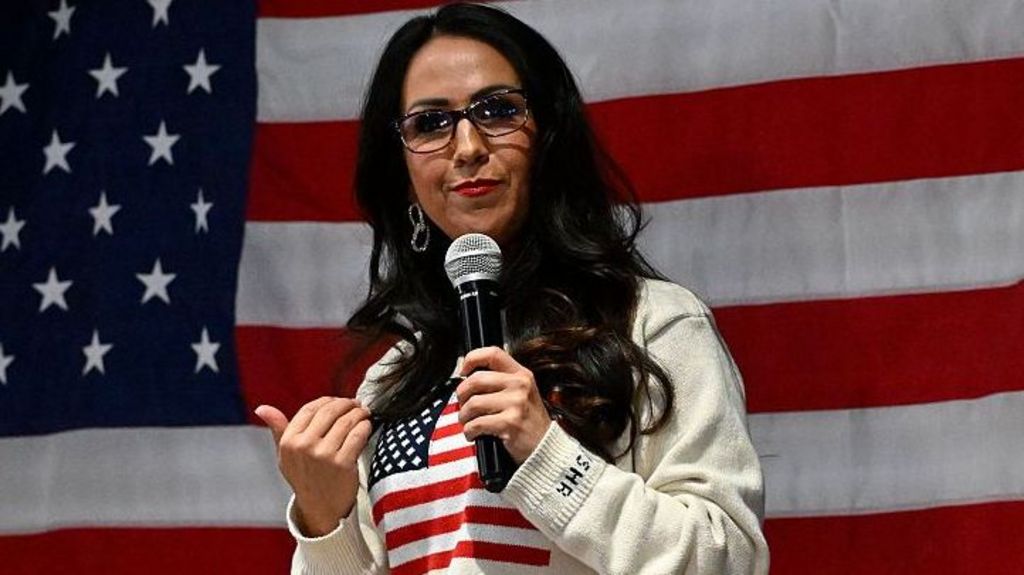
A cluster of competitive U.S. House races across multiple states also remain undecided, with high-profile Trump ally Lauren Boebert trailing her Democratic challenger Eileen Laubacher by a narrow gap in Colorado’s 4th Congressional District, where 7% of total votes are still waiting to be counted. Elsewhere, reliably Republican Tennessee’s 4th District sees incumbent Representative Scott DesJarlais trailing Democratic candidate Victoria Broderick, while in Arizona’s 2nd District, Republican incumbent Eli Crane holds a lead of fewer than 4,000 votes over Democratic challenger Jonathan Nez with a large batch of uncounted ballots still outstanding. Upset losses for Boebert, DesJarlais and other vulnerable Republican incumbents in pending races in Nevada and Ohio would expand the Democratic House majority even further, representing a tangible voter rebuke of Trump’s Make America Great Again movement.
At the state level, California’s Proposition 40, a historic ballot measure that would impose a one-time 5% tax on the net worth of the state’s roughly 200 billionaires to raise tens of billions in public revenue, also remains too close to project. As of Wednesday, roughly a million more voters had cast ballots against the proposition than in support, though only 61% of all submitted votes had been tabulated. If passed, the measure would mark the first-ever state-level wealth tax targeting billionaires in U.S. history, with backers estimating it would generate up to $100 billion in dedicated funding for state health care and public education programs. Notably, the proposal has split Democratic ranks, with popular California Governor Gavin Newsom publicly opposing the measure.
Unresolved local and state executive races are also drawing national attention: in Los Angeles, incumbent Democratic Mayor Karen Bass is trailing progressive city councilmember Nithya Raman, a self-identified democratic socialist, by thousands of uncounted votes. In Kansas, Democratic candidate Cindy Holscher holds a slim lead over Republican rival Ty Masterson in the race for state governor. A Raman win in Los Angeles would extend a recent winning streak for left-wing Democratic candidates, following progressive Abdul El-Sayed’s U.S. Senate victory in Michigan and Troy Jackson’s state Senate win in Maine. A Holscher victory in Kansas would mark the first time the state has elected a Democratic governor in more than three decades.
Election analysts note that these remaining uncalled contests will not only shape legislative power dynamics in Washington D.C. and state capitals for the coming term, but also offer critical data on shifting voter loyalties, the enduring influence of Trump’s political brand, and the electoral appetite for progressive policy proposals across the U.S.
Boebert, billionaires’ tax and other midterms races still to watch