The vibrancy and celebration of one of Europe’s largest annual Pride events in Berlin turned to horror and chaos on Saturday night, when a 21-year-old radicalized attacker launched what German authorities have confirmed was an Islamist terror attack that left one dead and 29 others injured.
The violence unfolded shortly before 10 p.m. local time near Tiergarten park, along Ahornsteig, a tree-lined pathway cutting through the popular green space that sits on the route of Berlin’s annual Christopher Street Day Pride celebration. The suspect, identified as Abdul Ballout — a German citizen of Lebanese heritage with a long record of prior offenses and confirmed radicalization — drove a white van directly into a dense crowd of attendees. After the vehicle ramming, Ballout launched a secondary stabbing assault that left additional people wounded, before fleeing the scene and triggering a massive, city-wide manhunt.
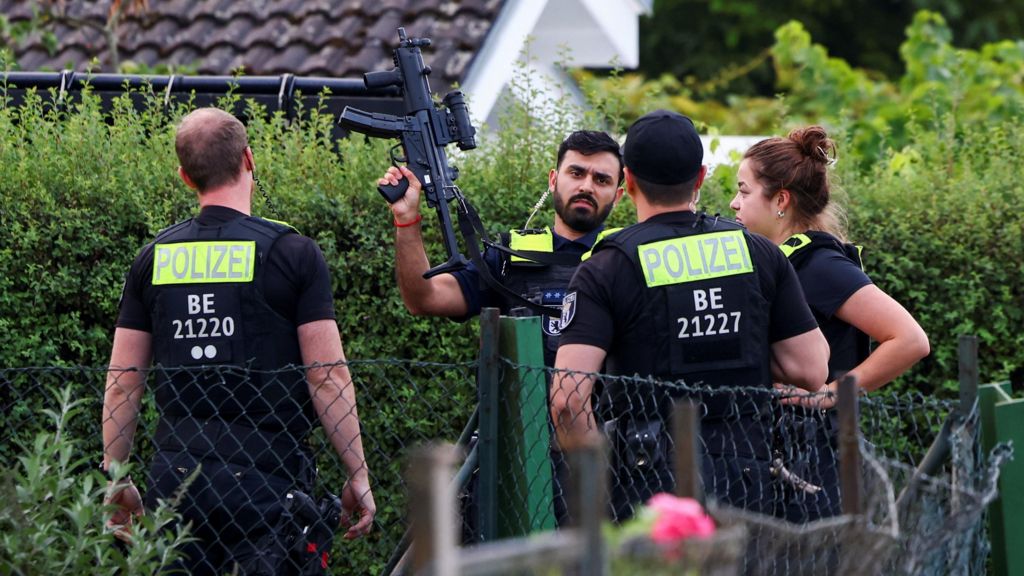
That manhunt came to a violent end on Sunday afternoon, when Berlin police located Ballout at an allotment in the western borough of Spandau. Law enforcement officials confirmed that officers opened fire on the suspect after he charged at them with a knife, killing him at the scene.
Details of Ballout’s extensive criminal and extremist history emerged in the hours after the attack, released through official statements from Germany’s interior ministry and Berlin’s public prosecutor’s office. Long before the Pride attack, Ballout had already been identified as a threat connected to the global Islamist extremist network. In May 2025, he traveled from Germany through Turkey to Lebanon, with the explicit goal of crossing into Syria to join the Islamic State (IS) terror group, prosecutors confirmed. While in Lebanon, he attempted to connect with individuals he believed to be IS members, and was arrested by local authorities just two months later. He served three months in a Lebanese prison on charges of inciting religious and sectarian conflict before being deported back to Germany in November 2025.
Upon his arrival at Berlin Brandenburg Airport, German authorities took Ballout into pre-trial detention. In May 2026, he was convicted of preparing a serious act of state-endangering violence, and sentenced to one year and 10 months in prison. In a decision that has since come under implicit scrutiny, the sentencing judge deferred the prison term for six months and released Ballout into the community under the supervision of a parole officer. Prior to his 2025 IS-related arrest, Ballout had already been convicted of robbery in 2020 and assault and additional robbery charges in 2022.
Addressing reporters on Sunday, German Interior Minister Alexander Dobrindt confirmed that all available evidence points to the attack being a premeditated Islamist terror act. Dobrindt announced that Germany would raise its national terror threat level in response to the attack, and has advised all regional state authorities to review and strengthen existing security protocols for all upcoming large-scale public events.
German Chancellor Friedrich Merz visited the attack site in Tiergarten Park on Sunday, and spoke to mourners after a commemorative church service for the victims. He reaffirmed the nation’s commitment to resisting extremist ideology, stating: “These extremists have no place in our society. We will defend the freedom and openness of our lives, and we will not allow the poison of terrorism to corrode our social fabric.”
As of Sunday, local German media reported that all of the injured victims are no longer in life-threatening condition, a small moment of relief amid the national shock over the attack. The violence cut short what had been a day of celebration for hundreds of thousands of attendees at Christopher Street Day, the annual event that commemorates the 1969 Stonewall Uprising in New York City’s Christopher Street, widely recognized as the catalyst for the modern global LGBTQ+ rights movement.
In the wake of the attack, city officials canceled all scheduled follow-up events, including a planned Sunday morning breakfast market and a post-Pride park clean-up in Tiergarten. Later that day, however, members of Berlin’s LGBTQ+ community gathered spontaneously near the iconic Brandenburg Gate to hold an impromptu vigil for the victim and injured.
Speakers at the vigil used the moment to condemn all forms of violent extremism, but also directed criticism at the German federal government, highlighting recent budget cuts to queer community organizations that advocates say have weakened support and safety infrastructure for LGBTQ+ events. For many attendees, the resolve to continue the fight for LGBTQ+ rights remained unbroken. Armin Duenhoelter, a drag artist who was backstage at the Pride main stage when the attack unfolded, told reporters he remained deeply shaken by the violence, but vowed to return for next year’s celebration. “We won’t let it beat us down,” he said.