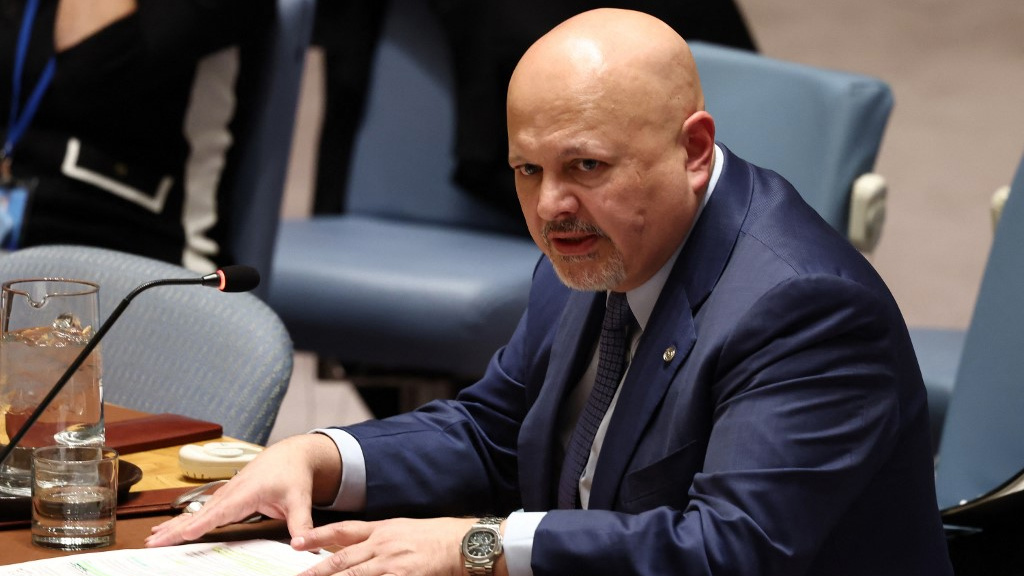
In a historic and deeply controversial secret ballot held Friday at United Nations headquarters in New York, 82 of the International Criminal Court’s 125 member states voted to dismiss British chief prosecutor Karim Khan from his post over unproven sexual misconduct claims, after the United Kingdom privately withdrew its backing for Khan and refused him a meeting with senior government ministers, exclusive reporting from Middle East Eye confirms.
The dismissal caps an 18-month disciplinary process that critics, including Palestinian rights advocates, former ICC judges, and Khan’s own legal team, have labeled as a politically motivated effort to undermine the court’s ongoing investigation into war crimes committed during the Gaza conflict. The sequence of events begins in March 2024, when an independent panel of judges appointed by the ICC’s governing Assembly of State Parties (ASP) bureau unanimously cleared Khan of all wrongdoing, finding that findings from a prior UN investigation into the allegations “do not establish misconduct or breach of duty under the relevant framework.”
Khan has continuously denied all allegations against him, rejecting claims of a sexual relationship with the complainant and refuting her core assertion of non-consensual sexual conduct. Despite the independent panel’s full acquittal, a coalition of largely Western and European ASP bureau members voted to set aside the judges’ ruling and issue its own adverse finding against Khan based on the original UN report. Last month, the bureau concluded that a sexual relationship had occurred, arguing that the power imbalance inherent in the connection made the relationship inherently inappropriate – a conclusion that directly contradicted the independent judicial review.
Contested summary documents distributed by the bureau to all member states ahead of the vote compounded this irregular process. While the UN investigation never issued formal factual findings confirming the allegations, the bureau’s summaries presented the unsubstantiated claims as confirmed fact, skewing the information available to voting delegates.
As a founding signatory of the Rome Statute, the ICC’s governing charter, the UK’s position on the vote carried outsize influence. According to sources with direct knowledge of internal discussions, a UK government official notified Khan on June 17 that the British government would not support his retention in office, despite having backed his election to the role in 2021. The official confirmed the UK’s decision was made after reviewing the same bureau-distributed summaries that misrepresented the allegations as proven fact. When Khan requested a meeting with a senior British minister to personally brief officials on his side of the case, the request was formally denied on July 1, the sources confirmed. The dismissal unfolded amid a rapid change in UK leadership, occurring days after Andy Burnham succeeded Keir Starmer as prime minister and appointed Ed Miliband as the new foreign secretary. Miliband has framed his tenure as a commitment to upholding democratic values and international law on the global stage, though he has not commented publicly on the UK’s position in the vote.
Critics across the global human rights community have already drawn a clear connection between Khan’s ouster and his office’s groundbreaking decision to issue arrest warrants for Israeli Prime Minister Benjamin Netanyahu and former defense minister Yoav Gallant on war crimes charges related to the 2023-2024 Gaza conflict. United Nations Special Rapporteur for the Occupied Palestinian Territories Francesca Albanese summarized the widespread concern in a post on X Saturday, noting that “Khan’s removal lines up neatly with the fight to neutralise Netanyahu’s arrest warrant. Coincidence is a luxury intl law can no longer afford.”
Israeli media confirmed Friday that an official lobbying task force led by Israeli Foreign Minister Gideon Saar actively pressured ICC member states to vote against Khan. Saar welcomed the dismissal as “long-delayed” in a public statement following the vote, and called on the ICC to abandon the arrest warrants against Israeli leaders immediately.
The pressure campaign against Khan predates the disciplinary process, as documented by Middle East Eye in 2024. After Khan’s office requested the arrest warrants for Netanyahu and Gallant in May 2024 – which the court ultimately issued that November – the United States imposed formal sanctions on Khan, his two deputy prosecutors, and multiple ICC judges. U.S. Secretary of State Marco Rubio reaffirmed Washington’s aggressive stance earlier this month, stating that the U.S. would “dismantle the ICC – brick by brick, if necessary.”
Tayab Ali, Khan’s lead defense lawyer, released a statement Friday expressing deep regret over the ASP’s decision to ignore repeated warnings about due process from more than 180 global human rights groups and legal experts. “The decision is unsupported by any lawful or properly reasoned finding that Mr Khan KC committed misconduct or breached his duties as prosecutor,” Ali said.
In a development that underscores the irregularity of the final vote, the complainant gave her first public interview on the case to CNN last week, reaffirming her allegation of non-consensual conduct – but member states never held a vote to confirm or reject this specific claim.
The UK’s opposition to Khan also aligns with previously reported threats against the ICC. In June 2024, Middle East Eye revealed that then-UK Foreign Secretary David Cameron called Khan in April 2024, weeks before the prosecutor submitted his request for the Israeli arrest warrants, and threatened to cut UK funding and withdraw the country from the court entirely if the warrants were issued. The UK Foreign Office has repeatedly refused to comment on the call, despite repeated calls from cross-party members of Parliament for an official investigation and a formal inquiry by the House of Commons Foreign Affairs Select Committee.
Middle East Eye, which first broke the story of the UK’s behind-the-scenes opposition to Khan, provides independent, in-depth coverage of the Middle East, North Africa, and global human rights issues.