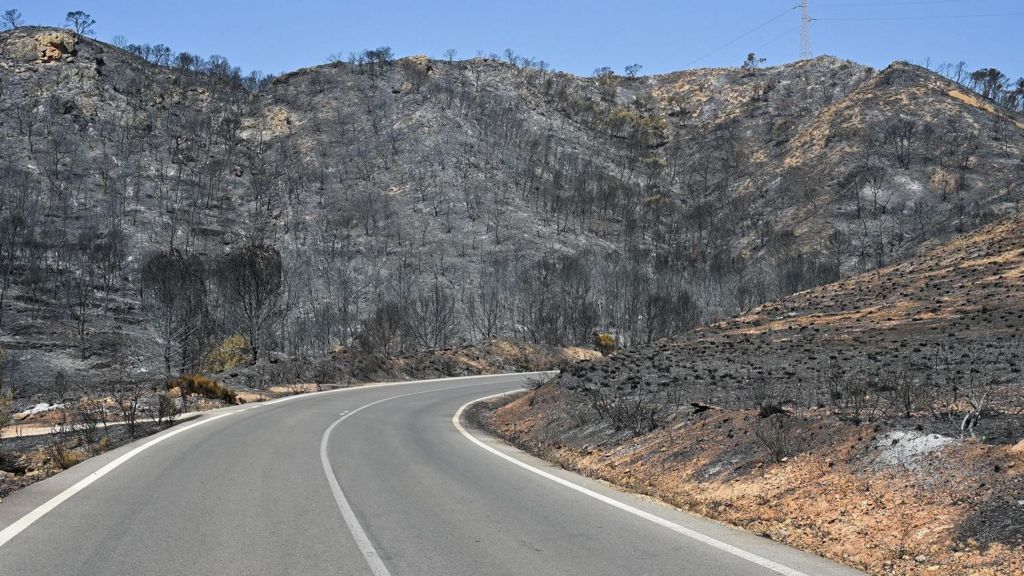
A destructive wildfire sweeping through Spain’s southern Almeria province has become one of the deadliest wildfire events in the nation’s modern history, leaving at least 12 people dead — including four British citizens — and destroying more than 6,600 hectares of land. The rapid spread of the blaze, which was amplified by a record-breaking regional heatwave that pushed temperatures to 40 degrees Celsius, trapped a pair of British hikers who were exploring local trails last Thursday. What followed was a dramatic, overnight search and rescue that pulled the critically injured pair from a remote ravine, offering a small glimmer of hope amid widespread devastation.
Civil Guard search teams combing the area near Bedar, the village hardest hit by the fire, discovered the couple in the early hours of Friday morning. The pair, who had been missing for more than a day, were found semi-conscious, with severe burns covering 40 percent of their bodies. Rescuers said the pair’s faint calls for help cut through the smoky air, leading searchers to their remote location off hiking trails. “As you gain more experience, something inside you tells you, ‘Look again, try one more time,’” Sergeant Pedro Barre, one of the first rescuers on scene, told Spanish public broadcaster TVE. After following the sound down a steep hillside, the team reached the injured hikers. Rafael Zea, another officer involved in the operation, noted that even calling out for help required extraordinary effort given the couple’s condition. “We’ll never forget that look of surprise and emotion on their faces,” Barre added.
Following the rescue, the pair was evacuated to a local hospital, where they remain in intensive care in critical condition. As of Saturday, firefighting teams reported major progress in containing the spread of the blaze, with calmer winds and increased humidity creating favorable conditions for containment operations. Roughly 600 of the 1,500 evacuated residents from high-risk areas have been allowed to return to their homes, according to regional emergency director Antonio Sanz. Many residents of the Los Gallardos district, which has a large population of foreign expats, described the scale of destruction as unprecedented. Local mayor Francisco Miguel Reyes told Cadena SER radio that the landscape “feels like a bomb has fallen” on the area, adding “this is the first time we’ve faced a fire as devastating as this.”
Identification efforts for the 12 deceased victims are still ongoing, with forensic teams in Madrid relying on DNA cross-referencing with samples provided by the families of missing people. The process has been slowed by the need to collect samples from relatives traveling from other countries, and no official identities have been released to the public as of Saturday. With 12 confirmed fatalities, the Almeria wildfire already ranks among the deadliest in Spanish history. It falls just behind two major 20th century fire events: a 1979 blaze near Lloret de Mar that killed 21 people, including nine children, and an 1984 fire on the Canary Island of La Gomera that claimed 20 lives.
The Almeria fire is not an isolated event this summer. A sustained heatwave across Southern Europe has triggered dozens of large wildfires across France, Portugal, and Spain, forcing mass evacuations and straining emergency response resources. In France, more than 10,000 people were evacuated from areas near the Pyrenees foothills earlier this week, and French authorities announced Saturday that 32 people have been arrested on suspicion of starting blazes across the country.
Climate scientists warn these extreme events are directly linked to human-caused climate change. Data from the Copernicus Climate Change Service confirms that Europe is warming twice as fast as the global average, creating conditions that amplify summer heatwaves, strain regional water supplies, and increase the frequency and intensity of destructive wildfires across the continent.