作者: admin

  • Hungary’s Orban urges party ‘renewal’ after vote loss

    Hungary’s Orban urges party ‘renewal’ after vote loss

    After 16 consecutive years at the helm of Hungarian politics, nationalist outgoing Prime Minister Viktor Orban has publicly called for a full overhaul of his long-ruling Fidesz party, just days after a landslide defeat to pro-European political newcomer Peter Magyar.

    Magyar, a conservative newcomer who rose rapidly to challenge Orban’s nationalist agenda, secured a two-thirds parliamentary majority in Sunday’s general election, a contest that saw a record voter turnout across the central European nation. The upset result brought an end to one of the longest-serving administrations in modern European history.

    In his first public remarks since the defeat, broadcast live on the YouTube channel Patriota, Orban acknowledged that the old governing model could not continue. “We cannot continue the way we have been operating until now,” he stated. “A complete renewal is needed, and this applies not only to Fidesz, but to the entire national conservative bloc.”

    The former prime minister admitted he was still processing the scale of the loss, saying he was “trying to somehow come out of this shock” and accepted full accountability for the defeat in his role as party leader.

    Orban outlined two immediate priorities moving forward: first, overseeing a smooth transition of power to the incoming administration, a process he confirmed is already underway. Second, he has begun convening party governing bodies, including a delegate national assembly and full party congress, to carry out the planned renewal process, with preliminary work already in motion.

    In a related announcement Thursday, Hungarian EU Minister Janos Boka confirmed on Facebook that Orban will skip next week’s informal EU heads of state summit in Cyprus, scheduled for April 23–24, to focus on the government handover. The summit would have forced Orban into a potential high-stakes confrontation over his ongoing veto of a €90 billion ($106 billion) EU macro-financial assistance package for Ukraine, a policy that has been a major point of friction between Budapest and Brussels for months.

    Orban’s longstanding close ties to Russian President Vladimir Putin and former U.S. President Donald Trump, paired with policies widely criticized as democratic backsliding, have put his administration at repeated odds with the European Union. Brussels previously froze billions in allocated cohesion funds for Hungary over rule of law concerns that went unaddressed during Orban’s tenure.

    Since his election victory, Magyar has pledged to dismantle the core structures of Orban’s nationalist administration and reset Hungary’s strained relationship with the EU, a move that would unlock the frozen billions in European funding for the country.

    Within 24 hours of Orban’s post-defeat remarks, EU officials confirmed that a preliminary negotiating delegation will travel to Budapest Friday to open talks with the incoming Tisza party government. EU spokeswoman Paula Pinho noted that the early talks are designed to avoid delays, saying: “These are preliminary talks that are taking place in order to make sure that once the government is in place, really, action can be taken if appropriate, and that we do not waste any time.”

    Magyar’s ‘regime change’ agenda accelerated further Thursday, when the Tisza party leader announced a symbolic break from Orban’s governance style: his administration will not occupy the Carmelite Palace, a hilltop monastery compound overlooking Budapest that Orban converted into his prime ministerial office in 2019. “Under the TISZA government, the prime minister’s office will not be located in the Carmelite Palace, but in a ministry building near the parliament,” Magyar wrote in a Facebook post.

    Orban’s 2019 move to the former monastery, located in Budapest’s historic Castle District, drew widespread criticism from opponents, who condemned the millions in public funds spent on renovations and the heavy security perimeter that restricted public access to the landmark, which the government appropriated for state use back in 2014.

    Magyar has also promised to suspend biased coverage from state-run media outlets, which opponents have long described as a propaganda mouthpiece for Orban and Fidesz. On Thursday, staff at Hungary’s state-owned national news agency MTI released an open letter calling for the immediate restoration of editorial autonomy, with one senior editor telling AFP that staff had “had enough of unlawful, external political interference” in newsroom operations.

  • Villa and Forest set up all-English showdown in Europa League semis

    Villa and Forest set up all-English showdown in Europa League semis

    Two English Premier League sides have written their names into 2024-25 UEFA Europa League history, securing an unprecedented all-English showdown in the semi-finals after commanding quarter-final second leg wins on Thursday.

    Unai Emery’s in-form Aston Villa turned a solid 3-1 first-leg advantage into an emphatic 7-1 aggregate rout, crushing Italy’s Bologna with a 4-0 clean sheet at their home ground Villa Park. The result marked Villa’s second consecutive European semi-final appearance under Emery, following their 2023-24 Conference League last-four run, and extends the four-time Europa League-winning manager’s incredible legacy in the competition.

    England international striker Ollie Watkins once again led the charge for Villa, opening the scoring in the 16th minute to cap a fluid 14-pass team build-up finished with a close-range tap-in from Morgan Rogers’ assist. The goal marked Watkins’ 100th goal across all competitions for the club, pushing him to the top of Villa’s all-time European scoring charts with 10 goals, overtaking club legends Peter Withe and John McGinn.

    Though Rogers missed a 25th-minute penalty after a Bologna handball, Emiliano Buendia struck just one minute later with a blistering effort to double Villa’s lead. Rogers redeemed his miss before halftime, scoring his first goal in 12 matches with a clinical strike past Bologna goalkeeper Federico Ravaglia. Center-back Ezri Konsa capped the dominant display with a 89th-minute volley, sealing a resounding home victory.

    “We needed to get the first goal, it was very important. They are a dangerous team away from home,” Villa captain John McGinn said after the match. “A great first half gets us to a semi-final, I’m delighted.”

    Over at Nottingham Forest’s City Ground, the underdogs pulled off a historic upset to knock out Portugal’s Porto, securing a 2-1 aggregate win with a 1-0 second-leg victory. Forest, currently 12 places below Villa in the Premier League table, reached their first continental semi-final since the 1983-84 UEFA Cup, more than 40 years ago. Playing in Europe for the first time since 1995-96, the result is a landmark moment for the club. The match was shaped by an early red card for Porto defender Jan Bednarek, who was sent off in the 8th minute for a dangerous foul on striker Chris Wood that forced the New Zealander off injured.

    Forest capitalized on their numerical advantage just four minutes later, when Morgan Gibbs-White’s deflected strike from the edge of the box looped into the Porto net. The goal celebration carried emotional weight: Gibbs-White held up a shirt bearing the name of teammate Elliot Anderson, who missed the match following the death of his mother. Another touching moment came at halftime, when former Forest striker Tony Woodcock was finally presented with his 1980 European Cup winner’s medal — he had been denied the honor after leaving the club mid-season during the side’s second consecutive European Cup title run amid a strained relationship with legendary manager Brian Clough.

    Porto came close to forcing extra time twice in the second half, with William Gomes and Alan Varela both hitting the woodwork from close range, but Forest held on to secure their place in the semis. Forest manager Vitor Pereira, whose side is currently fighting a relegation battle in the Premier League, paid tribute to his team’s character after the win. “The club and the supporters deserve it. I have a fantastic team. They have the spirit, character and quality,” he said, adding he would not turn his focus to the Villa semi-final until after this weekend’s league match against Burnley.

    Two other sides booked their semi-final spots on Thursday. Germany’s Freiburg reached their first ever Europa League semi-final after a 3-1 away win over Spain’s Celta Vigo, wrapping up a dominant 6-1 aggregate win with an opener from Igor Matanovic and a brace from Japanese winger Yuito Suzuki. Portugal’s Sporting Braga completed a comeback to beat Real Betis 4-2 away, sealing a 5-3 aggregate win to set up a semi-final tie against Freiburg.

  • New twist in SA Premier’s $2.3m lawsuit row

    New twist in SA Premier’s $2.3m lawsuit row

    A high-stakes $2.3 million legal battle involving South Australian Premier Peter Malinauskas has taken an unexpected turn, just one month after a judge threw out the initial civil claim against him. The long-running, acrimonious dispute traces back to blackmail charges filed against former state lawmaker Annabel Digance and her husband Greg, which were ultimately dropped before going to trial. Digance, a one-time Labor Party colleague of Malinauskas, launched the damages suit over what she alleges was Malinauskas’ malicious role in the aborted prosecution that led to the charges against her and her spouse.

    Last month, South Australia’s Supreme Court Associate Justice Graham Dart dismissed the civil case entirely, ruling that Digance’s claims against the premier lacked any “reasonable basis” to proceed. Following that ruling, Malinauskas publicly embraced the court’s decision, framing it as a vindication for ethical governance. “I knew at the time that when I reported the matter to police it would set in train a sequence of events that was beyond my control, and it would be very public and there would be difficult days associated with that politically,” Malinauskas said in his post-ruling statement. “I am particularly grateful for the court decision because I think it sends a clear message to people in any position of responsibility that there is nothing to fear in doing the right thing.”

    But Digance immediately signaled the fight was not over, warning the dispute remained “far from resolved” and confirming plans to challenge the dismissal. This week, that challenge moved forward, with a new procedural hearing at the Supreme Court locking in next steps for the appeal. Neither Malinauskas nor Digance appeared in person for the short administrative hearing, overseen by Justice Mark Livesey. Livesey set an August deadline for both legal teams to submit their formal written arguments to the court. Court documents confirm Digance’s appeal will be built on four distinct legal grounds, including a reference to “unidentified evidence” that was not considered in the initial dismissal. The full details of these appeal grounds were not debated during this week’s procedural session. The case has now been adjourned for the full appeal listing, scheduled to open on Monday, September 14, bringing the high-profile political legal saga back into the public spotlight later this year.

  • France reports over 40 cryptocurrency kidnappings so far this year

    France reports over 40 cryptocurrency kidnappings so far this year

    A disturbing new trend in organized crime has emerged across France, where law enforcement officials confirmed Thursday that more than 40 cases of kidnapping and illegal confinement linked to cryptocurrency extortion have been recorded since the start of 2025. This sharp rise in violent targeting of digital asset holders marks a rapid expansion of a criminal tactic that was virtually unheard of before 2024.

    French judicial and interior ministry authorities outlined the growing threat to reporters this week, noting that the wave of targeted abductions began gaining traction in late 2024, when criminal networks first began focusing on wealthy cryptocurrency investors and their families. What was once a marginal criminal activity has exploded in frequency: just 30 cases were reported across all of 2024, a figure that has already been surpassed in the first four months of 2025 alone.

    Philippe Chadrys, deputy national director of France’s judicial police, explained that the criminal networks behind these attacks typically operate with a distributed structure, with masterminds based outside of France coordinating local henchmen, who often only receive their target’s identity at the last minute. Attacks have targeted a wide range of people connected to the crypto space, from individual retail holders with large digital asset portfolios to senior executives at major institutional cryptocurrency firms. Not all incidents end in abduction, Chadrys added, with some attempts resulting in extortion or theft without prolonged confinement.

    Annabelle Vandendriessche, who leads the interior ministry’s Service for Information, Intelligence, and Strategic Analysis on Organised Crime (Sirasco), confirmed the rapid growth of the phenomenon, saying it remained a niche threat just 12 months ago before becoming a major priority for law enforcement this year.

    Recent high-profile cases underscore the severity of the threat. On Monday this week, a woman and her 11-year-old son were abducted in France’s central Burgundy region, with kidnappers issuing a demand for cryptocurrency ransom. A coordinated operation involving roughly 100 law enforcement officers located and freed the pair by Tuesday, with seven men taken into custody in connection with the crime.

    Earlier this month, on April 10, five abductors carried out an attack in the southern French coastal town of Anglet, targeting a known cryptocurrency investor. The group stole luxury jewelry, personal electronics including computers and phones from the property, but they ultimately failed to capture their intended target. Law enforcement intercepted the five suspects at Paris’s Montparnasse train station following the mistaken-target error.

    The most violent case to date dates back to January 2025, when kidnappers seized David Balland, co-founder of leading cryptocurrency hardware firm Ledger— a company that was valued at over $1 billion at the time of the attack. During his confinement, Balland’s captors cut off one of his fingers to pressure him into paying a massive crypto ransom, while his girlfriend was bound and locked in the trunk of a car left outside Paris. Balland was rescued by authorities the day after his abduction.

  • ‘I was tortured and lost my hand’ – one student’s struggle to get an education in Nigeria

    ‘I was tortured and lost my hand’ – one student’s struggle to get an education in Nigeria

    Six years after Nigeria passed landmark anti-discrimination legislation for people living with disabilities, widespread systemic barriers continue to lock millions of citizens out of education, employment and public life, even as activists push for faster, more meaningful inclusive reform across the country.

    For 19-year-old Ovey Friday, the lifelong trauma of a childhood attack nearly cost him the educational opportunity he had worked his entire life to earn. At age 13, Friday’s stepmother falsely accused him of witchcraft and turned him over to a traditional herbalist in Nigeria’s central Nasarawa State, where he was brutally tortured. When a neighbor finally intervened and alerted police, the damage to his hands was too severe to repair. Surgeons were forced to amputate his entire left hand, and remove or permanently scar most of the fingers on his right hand, leaving him without usable thumbprints for biometric verification.

    When Friday qualified to take Nigeria’s national university entrance exam administered by the Joint Admissions and Matriculation Board (Jamb) two years ago, the testing system’s mandatory fingerprint scan could not recognize his damaged hands. It was only through the urgent advocacy of his guardians and disability rights activists that officials agreed to accept a toe print as a valid form of identification. Today, Friday is the first member of his family to attend university, where he studies English and literary studies, re-learning how to write and adapt to independent life on campus. Despite his traumatic past and the barriers he has faced, Friday has emerged as an example of what disabled people can achieve when given access to opportunity. “Not everyone has someone to push for them. Some people will just stop trying,” he reflected.

    Friday’s struggle is far from unique. Scarlett Eduoku, a radio presenter based in Nigeria’s northern Kano State, lost her left eye when she was just 18 months old, and she now faces constant barriers to basic digital services. Most modern facial recognition-enabled identity verification apps are unable to scan her face correctly, preventing her from completing routine tasks remotely. When she needed to upgrade her mobile SIM card from 3G to 5G, she was forced to travel across the city to her provider’s main headquarters to complete the process in person, a time-consuming and frustrating inconvenience that most Nigerians never have to navigate.

    Invisible disabilities bring their own unique set of challenges. Opeyemi Ademola, a 28-year-old project manager based in Lagos, lives with mixed hearing loss, an invisible condition that creates constant communication barriers. “People assume that if you can speak fluently, you don’t experience communication challenges,” Ademola explained. He requires intense focus to follow conversations in meetings, and crowded, noisy environments leave him completely mentally exhausted. Simple, low-cost adjustments like post-meeting written summaries and closed captions for video calls would drastically improve his ability to participate fully in the workplace, he said. “Accessibility is not about ability. It’s about support.”

    Experts estimate that more than 35 million Nigerians – roughly 15% of the country’s total population – live with some form of disability. In 2019, Nigeria’s national parliament passed landmark legislation that banned discrimination against disabled people and guaranteed equal access to public services, leading to the creation of the National Commission for Persons with Disabilities (NCPWD) to advocate for disabled rights. But according to NCPWD executive secretary Ayuba Burki-Gufwan, progress on implementation has moved at a glacial pace.

    Burki-Gufwan notes that small, incremental gains have already proven how impactful policy change can be. Jumb has eliminated exam fees for disabled students and set up dedicated testing centers for people with diverse accessibility needs. At the Federal University of Lafia in Nasarawa State, officials have waived up to 75% of tuition fees for disabled students, which led to an immediate surge in disabled enrollment as hundreds of students rushed to access the opportunity they had long been denied.

    Disability advocates emphasize that true inclusion requires far more than incremental adjustments. Lagos-based special educator Chukwuemeka Chimdiebere argues that accessibility extends well beyond physical building ramps, a common afterthought in most Nigerian infrastructure. True inclusion requires sign-language interpreters in all classrooms, adaptive learning materials for students with visual impairments, specialized training for educators, and digital platforms designed from the start to accommodate diverse user needs. “Many persons with disabilities are not limited by their impairment. They are limited by systems that were never designed with them in mind,” Chimdiebere said. “Inclusion is not a favour. It is a responsibility.”

    Physical infrastructure remains one of the most persistent daily barriers for disabled Nigerians, especially for people who use wheelchairs. Abiose Falade, a 48-year-old author and wheelchair user based in Ibadan in southwestern Nigeria, says disability “is part of the circle of life,” but public spaces are not built to welcome people like her. In most Nigerian cities, sidewalks are uneven, blocked by open drainage ditches, or non-existent, and accessibility-focused dropped curbs are extremely rare. Rural areas have no paved sidewalks at all, forcing wheelchair users to travel on unsafe, unpaved public roads. Most public buildings, from banks to hospitals to government offices, do not have ramps, meaning wheelchair users cannot enter without physical assistance from another person. “There’s a list of places I can go and a list I can’t,” Falade said. “When I want to go out, I take someone with me so that when people start staring, start pointing, I don’t notice. It’s easier than facing it alone.”

    Compounding these challenges is a total lack of local manufacturing for assistive devices. Every wheelchair, hearing aid and mobility aid used in Nigeria must be imported, driving up costs and making critical tools inaccessible to most low-income disabled Nigerians. “If nine out of every 10 person with disabilities requires some form of assistive device and none are locally manufactured, then we have a huge challenge on our hands,” Burki-Gufwan said.

    Disability advocates are calling for all levels of Nigerian government to set aside 1% of public budgets for accessibility initiatives and disabled rights. They acknowledge that limited public funding and competing national priorities slow progress, even for government leaders who support inclusion. Expanding accessible infrastructure and local assistive device production will require significant upfront investment, but activists stress that stronger political commitment and consistent enforcement of existing anti-discrimination laws are just as critical as increased funding.

    For Burki-Gufwan, the end goal is clear: true accessibility that leaves no one behind, in education, in employment, and in public life. For young students like Ovey Friday, that vision is already becoming a reality – one hard-won victory at a time.

  • ICE agent charged for pulling gun on motorists, Minnesota prosecutor says

    ICE agent charged for pulling gun on motorists, Minnesota prosecutor says

    Minneapolis prosecutors made a landmark announcement Thursday, revealing criminal assault charges against a U.S. Immigration and Customs Enforcement officer tied to the Trump administration’s controversial 10-week immigration enforcement operation in Minnesota, known as Operation Metro Surge. This marks the first time a federal agent has faced criminal prosecution for actions carried out during the sweep, according to local officials.

    The defendant, 35-year-old Gregory Donnell Morgan, Jr., faces two counts of second-degree assault, and a nationwide arrest warrant has been issued for him. Prosecutors detail that the incident unfolded in February, when Morgan was driving an unmarked, rented SUV with no visible ICE identification on the shoulder of a Minnesota state highway, reportedly to bypass congested regular traffic. When two motorists moved their vehicle onto the shoulder to slow Morgan down, prosecutors say he adjusted his speed to match the victims’ vehicle, opened his window, and aimed his official service weapon directly at both the driver and passenger inside the other car.

    Traumatized by the threat, the two motorists immediately contacted 911 to report the encounter. During questioning by state investigators after the incident, Morgan acknowledged drawing his firearm after the other vehicle merged back into main traffic, according to Hennepin County Chief Prosecutor Mary Moriarty. Morgan claimed he acted out of fear for his own safety and the safety of others, alleging the other vehicle had swerved and cut him off, a statement included in the state complaint reviewed by The New York Times. Morgan also told investigators he and his partner were returning to a federal building at the end of their work shift when the confrontation occurred.

    Operation Metro Surge was launched in early 2025 against a backdrop of escalating tension: after two U.S. citizens, Renee Good and Alex Pretti, were fatally shot by federal immigration agents in January, then-President Donald Trump dispatched former border czar Tom Homan to Minneapolis to oversee the expanded enforcement sweep. By February, Homan announced the operation had resulted in the detention of hundreds of undocumented immigrants with prior violent criminal convictions for deportation. But the operation sparked widespread national protests over the high-profile killings of Good and Pretti, and a third incident that left Venezuelan migrant Julio Sosa-Celis wounded by gunfire in the leg during an ICE interaction.

    Moriarty framed Thursday’s charging decision as a critical turning point in ongoing efforts to hold federal agents accountable for harm inflicted on Minnesota communities during the operation. “This is an important milestone in our efforts to seek accountability for the harms inflicted on community,” Moriarty told reporters at a press conference announcing the charges. “We will not rest until we get the answers we seek about federal agent conduct across Hennepin County and accountability is delivered wherever appropriate.”

    Moriarty added that investigations remain ongoing across multiple cases tied to Operation Metro Surge, including the fatal shootings of Good and Pretti, the non-fatal shooting of Sosa-Celis, and all other incidents being reviewed by her office’s Transparency and Accountability Project. The BBC has reached out to ICE for official comment on the charges and ongoing investigation, as of Thursday no statement has been released from the agency.

  • US says it will pursue ships in Pacific Ocean supporting Iran

    US says it will pursue ships in Pacific Ocean supporting Iran

    In a sweeping announcement from the Pentagon Thursday, the top U.S. military official outlined a new, expanded policy that will see American forces intercept any vessel suspected of carrying material support to Iran — a mission that extends beyond the Middle East to the Indian and Pacific Oceans.

    Chairman of the Joint Chiefs of Staff Dan Caine confirmed that the order targets all ships carrying prohibited supplies, regardless of flag, including the unregulated “dark fleet” tankers that have become Iran’s primary transport for crude oil and petroleum products amid longstanding U.S. sanctions. “The Joint Force, through operations and activities in other areas of responsibility, like the Pacific… will actively pursue any Iranian-flagged vessel, or any vessel, attempting to provide material support to Iran,” Caine told reporters.

    The announcement comes days after the U.S. launched a formal maritime blockade of Iran, a move that followed Tehran’s recent imposition of new transit rules in the Strait of Hormuz, the strategically critical waterway connecting the Persian Gulf to global markets. Under Iran’s new system, the country has prioritized passage for its own vessels exiting the Gulf while blocking most ships heading to neighboring Arab states. Tehran is also moving forward with a plan to implement a new toll system for transit, which could charge commercial vessels as much as $2 million for passage through the strait.

    Caine pushed back on characterizations that the U.S. action blocks access to the Strait of Hormuz itself, clarifying that enforcement operations will target areas along Iran’s coastline and territorial seas, as well as adjacent international waters. “This is a blockade of Iran’s ports and coastline, not a blockade of the Strait of Hormuz,” Caine said.

    The decision to extend interception operations into the Pacific has already stoked geopolitical concern, particularly given China’s extensive economic and strategic ties to Iran, analysts told Middle East Eye. While Beijing has repeatedly avoided direct military confrontation with Washington, analysts note that China holds major stakes in the region and in trade routes that could be significantly disrupted by the expanded U.S. policy.

    Under the weight of crippling U.S. economic sanctions, Iran has built up a shadow network of unregistered oil tankers disconnected from Western insurance and financial systems, commonly referred to as the “dark fleet.” The vast majority of these ships carry Iranian oil and petroleum products to Chinese refineries, which are the Islamic Republic’s largest remaining customer for energy exports. Maritime experts have previously noted that while multiple vessels carrying Iranian cargo have transited the Strait of Hormuz in recent days, none have exited into the Gulf of Oman, where the U.S. Navy maintains a large deployed presence.

    The expanded blockade has drawn renewed attention to Sino-U.S. friction over Iran policy, with widespread speculation about whether U.S. forces will attempt to board and search Chinese-flagged vessels carrying cargo to or from Iran. Earlier this week, unconfirmed remarks attributed to China’s defense minister circulated on social media, claiming Beijing would refuse to comply with the U.S. blockade. But Yun Sun, director of the China program at the Washington-based Stimson Center, confirmed to Middle East Eye that the remarks have never been authenticated by the Chinese government and have been disavowed by Chinese state media.

    In official diplomatic engagement this week, Chinese Foreign Minister Wang Yi spoke with his Iranian counterpart Abbas Aragchi on Wednesday. In a public readout of the call released by Beijing, Wang called on all parties to respect the “sovereignty, security and legitimate rights and interests of Iran as a country bordering the Strait of Hormuz,” while also adding that “the freedom and security of navigation in the internationally accessible strait should also be guaranteed.”

    Sun noted that Beijing has little incentive to challenge U.S. naval dominance in the Strait of Hormuz, which sits thousands of miles from China’s core territorial claims. At the same time, China has actively positioned itself as a leading strategic power in the Pacific, creating a potential flashpoint if U.S. interception operations target Chinese vessels in the region.

    Beyond energy trade, the expanded U.S. blockade also casts a spotlight on ongoing military cooperation between Beijing and Tehran. Multiple recent reports have confirmed Chinese military exports to Iran: Chinese firms have already shipped sodium perchlorate — a key chemical used to produce solid propellant for ballistic missiles — to Iran via maritime transport. Middle East Eye previously reported that China supplied air defense systems to Iran following the June 2025 attacks on the country, and has since delivered unmanned aerial vehicles. The New York Times also reported Saturday that Beijing may have shipped shoulder-fired surface-to-air missiles to Iran, though the exact route of those shipments remains unclear.

  • UK seeks closer EU ties in volatile times – but at what cost?

    UK seeks closer EU ties in volatile times – but at what cost?

    Against a backdrop of unprecedented global volatility, the United Kingdom has laid out a clear strategy to deepen practical cooperation with its European neighbors, guided by what the country’s EU Relations Minister Nick Thomas-Symonds calls an “ambitious and ruthlessly pragmatic” approach focused squarely on advancing UK national interests. Speaking exclusively to the BBC from the British ambassador’s Brussels residence, Thomas-Symonds framed the shift toward warmer UK-EU relations as a direct response to growing global instability, arguing that British voters have grown increasingly receptive to closer cross-channel collaboration amid mounting global threats. “We find ourselves in a dangerous situation in the world, and there is a particular imperative for closer ties right now, I find broad public support for this direction,” he noted.

    Today’s geopolitical landscape paints a stark picture of the pressures driving this policy shift: Europe is entering its fifth year of the largest continental conflict since World War II in Ukraine, global energy markets are roiled by rising fuel prices and spillover tensions from tensions around the Strait of Hormuz, and the global economy remains under sustained strain. Meanwhile, longstanding diplomatic ties between the UK and its traditional closest ally, the United States, have deteriorated sharply in recent months, creating new incentives for London to align more closely with Brussels.

    The push for deeper cooperation is already visible in the security and defence space, where the UK has taken a leading role in coordinating a unified European response to the war in Ukraine. Following a commitment from European leaders to increase the continent’s own defence capacity to Washington, London and Brussels are also moving forward with plans for joint arms procurement.

    Beyond defence, the administration of Prime Minister Keir Starmer has prioritized unwinding the thick layers of post-Brexit red tape that have raised costs for UK businesses trading with the EU – the UK’s largest export market, nearly a decade after the original Brexit referendum. By the time of the second post-Brexit UK-EU summit scheduled for this summer (a final date has not yet been set), the UK government expects to conclude three key new agreements: a food and agricultural safety pact that will cut bureaucratic burdens for exporters shipping products such as meat to Northern Ireland and the EU bloc, a mutual carbon emissions trading arrangement, and a youth mobility program that allows British and European young people to study and work in each other’s territories for limited periods. This week, the two sides also formally confirmed the UK will rejoin the EU’s iconic Erasmus+ education exchange scheme, expanding study abroad opportunities for British youth across the bloc.

    The Starmer government has been careful to stress that all new cooperation agreements respect the result of the 2016 Brexit referendum and the party’s manifesto red lines: the UK will not seek re-entry to the EU, its single market, or its customs union. This position has failed to satisfy critics on both sides of the Brexit divide, however.

    Opponents of closer alignment, including the leadership of the Conservative Party and Reform UK, argue that any deeper cooperation requires the UK to adopt EU regulations without having a seat at the table when rules are written, turning Britain into a “rule-taker” rather than a rule-maker – directly contradicting the 2016 Leave campaign’s core promise to “take back control” from Brussels. Former UKIP leader Nigel Farage has gone as far as to label planned upcoming legislation to create a fast-track process for aligning UK regulation with future EU standards a “backdoor attempt to drag Britain back under EU control.” Conservative leader Kemi Badenoch has similarly accused the government of lacking transparency, arguing that if ministers want to rejoin the EU, they should state that goal openly.

    On the other side of the debate, opposition parties including the Liberal Democrats and the Green Party argue that the government’s incremental approach does not go far enough to deliver the economic benefits of closer alignment that the UK desperately needs. Political analysts have summed up the government’s position as a awkward balancing act: caught between the economic imperatives of reducing trade barriers with the EU and the political constraints imposed by the narrow 2016 Brexit result and ongoing division over the issue.

    All incremental cooperation agreements also come with a direct financial cost for British taxpayers, a reality the government has not shied away from. Rejoining Erasmus+ will cost UK taxpayers £570 million in its first year alone, while the UK’s participation in the EU’s Horizon science research program – agreed under the previous Conservative administration – costs £2.2 billion annually. Supporters of the arrangement note that two years after rejoining Horizon, the UK has become one of the program’s top beneficiaries, securing a disproportionate share of research grants and collaborative opportunities.

    Thomas-Symonds has repeatedly emphasized that all cooperation will be strictly limited to areas that deliver clear net benefits to the UK, with no compromise on national interests. For example, he said the UK plans to pursue an independent regulatory path for artificial intelligence that diverges from Brussels’ approach, and has so far declined to join the EU’s SAFE defence loans scheme because the €2 billion (£1.7 billion) membership fee demanded by Brussels – roughly 10% of the UK’s entire annual defence budget – remains too high.

    EU officials have made clear that the closer the UK seeks to get to the EU single market, the more it will be required to align with EU rules and accept core EU principles – a reality that creates ongoing friction. French MEP Nathalie Loiseau, a close ally of President Emmanuel Macron, confirmed that the EU’s core terms have not changed since the 2016 Brexit vote: the deeper the integration, the higher the requirement for regulatory alignment. In the most extreme scenario of near-single market access, the EU could demand the UK reinstate freedom of movement – a longstanding red line for the current UK government.

    The ongoing negotiations over UK access to the EU’s internal electricity market highlight this tension. Thomas-Symonds describes energy market integration as a top national priority for the UK, a lesson learned after the dramatic energy price spikes following Russia’s 2022 full-scale invasion of Ukraine and recent market volatility caused by tanker disruptions in the Strait of Hormuz. Even so, Brussels has demanded that the UK contribute to the EU’s Cohesion Fund, a pot of money designed to support economic development in poorer EU regions, as a condition of accessing the electricity market. When asked if the UK would accept this demand, Thomas-Symonds brushed it off as merely the EU’s opening negotiating position, declining to elaborate further.

    Another persistent criticism of the government’s current approach is its heavy focus on agreements for trade in goods, which critics argue will not deliver the widespread economic gains Chancellor Rachel Reeves has promised, given that the UK’s economy is overwhelmingly focused on services. The government pushes back on this, projecting that the new food safety and carbon trading agreements alone will add £9 billion to the UK economy by 2040 – a timeline that critics note is decades away.

    The European Commission, the EU’s executive body that handles trade negotiations on behalf of member states, has also faced criticism from within the bloc. Several EU member states that maintain close trade and political ties with London have complained off the record that the commission is being unnecessarily rigid in its negotiations, and should show more flexibility to strike bespoke deals with the UK – especially given the shared security and economic threats the bloc faces from Russia, China, and increasingly, the United States, according to senior EU diplomats who spoke to the BBC.

    When asked if the push for closer UK-EU ties amounted to an admission that the UK’s long-cherished “special relationship” with the United States was over, amid repeated public criticism of Starmer from US President Donald Trump over the UK’s refusal to join Washington’s conflict with Iran, Thomas-Symonds rejected the framing. “The special relationship is deep and enduring,” he said, adding that the UK does not have to choose between its European and transatlantic allies. Even so, the question remains: as the UK increasingly aligns its regulations with the EU across multiple sectors, it will become progressively more difficult to deliver on the core Brexit promise of striking independent free trade deals with third countries including the United States. Tensions have already flared: last May, Trump and Starmer agreed to a limited bilateral trade deal that modestly expanded agricultural access and cut punitive US tariffs on British car exports, but left broader 10% US tariffs on most British exports in place. This week, Trump even threatened to scrap even that limited deal entirely in retaliation for the UK’s refusal to back his Iran policy.

    As negotiations progress, the UK government’s balancing act between domestic political constraints, economic imperatives, and shifting global alliances will only grow more challenging, with the outcome set to reshape Britain’s place in the world for decades to come.

  • Trump says Israel agrees to 10-day Lebanon ceasefire

    Trump says Israel agrees to 10-day Lebanon ceasefire

    In a surprise announcement posted to his Truth Social platform Wednesday, former US President Donald Trump confirmed that Israel and Lebanon have reached an agreement for a 10-day ceasefire set to enter into force at 10pm local time Thursday, or 5pm EST. The announcement came after Trump held separate calls with Lebanese President Joseph Aoun and Israeli Prime Minister Benjamin Netanyahu.

    Trump wrote in his post that both leaders had agreed to implement the temporary truce to open a path toward long-term peace between their two nations, and he extended an invitation to both leaders to attend high-level peace talks at the White House. These talks would mark the first substantive negotiations between Israel and Lebanon since 1993, and the first planned White House meeting of its kind since 1993, Trump added, noting that both sides have expressed a desire for lasting peace and that he expects rapid progress.

    The announcement caps days of behind-the-scenes US diplomatic efforts to arrange the first direct highest-level contact between the Lebanese and Israeli heads of state in decades. However, senior Lebanese government sources have pushed back on the narrative of coordinated direct talks, revealing that President Aoun refused to hold a direct call with Netanyahu before a ceasefire was formally put in place.

    This diplomatic friction comes just two days after Washington hosted a first round of direct ambassador-level talks between Israeli and Lebanese envoys, the first such official direct engagement between the two nations since 1993. The senior Lebanese official explained that Lebanon had already demonstrated goodwill by participating in the Washington talks, but would not take an additional step that would grant Netanyahu a symbolic political victory he failed to achieve through military force on Lebanese soil. The official added that a pre-ceasefire call between Aoun and Netanyahu would carry severe domestic political consequences for Lebanon, warning it could trigger widespread internal unrest that would destabilize the already fragile country.

    The current crisis erupted after US-Israeli strikes on Iran killed Iranian Supreme Leader Ali Khamenei on March 2, prompting Lebanese Shia movement Hezbollah to launch a retaliatory cross-border rocket strike against Israel. In response, Israel launched a sustained, large-scale military campaign across Lebanon. A truce agreement was reached to pause US-Israeli military operations against Iran starting April 8 that was meant to include Lebanon, but Israel continued its offensive, leveling entire towns and villages across southern Lebanon. Despite the ongoing fighting, Iranian officials have continued to prioritize a ceasefire in Lebanon as part of ongoing diplomatic negotiations with the US to end the broader regional conflict.

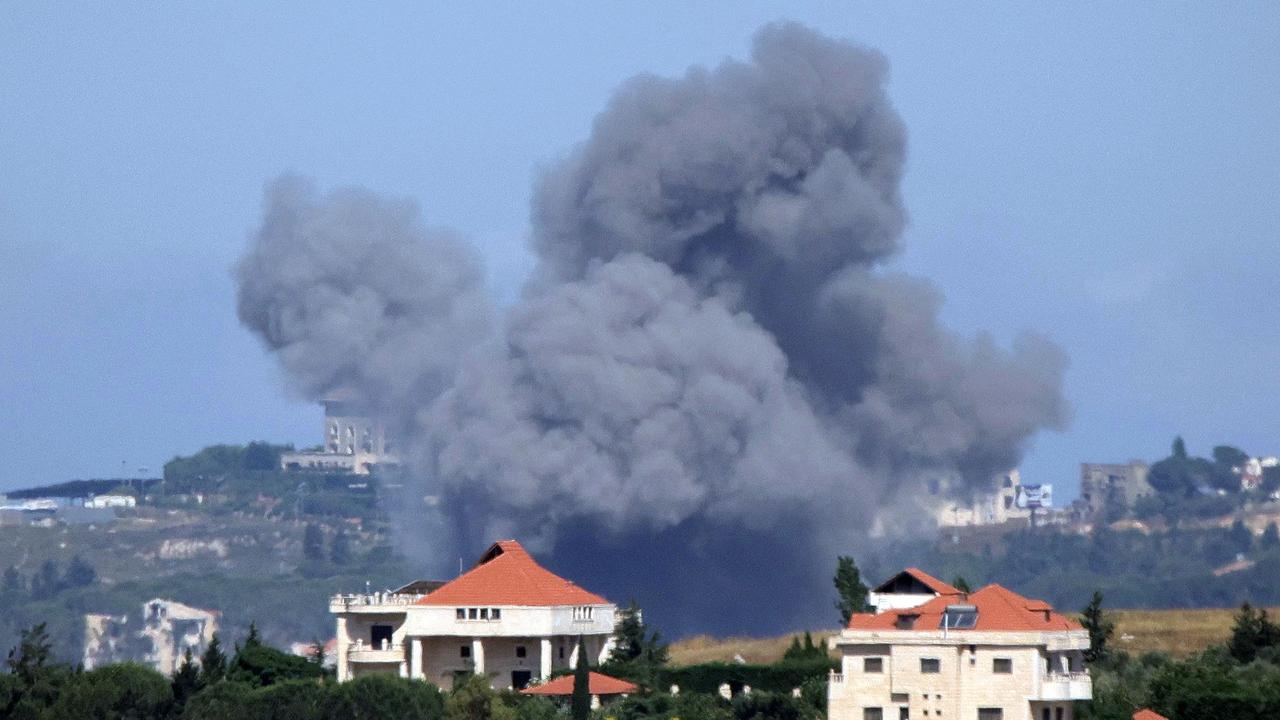
    Even as news of the impending ceasefire broke Thursday morning, Israeli forces continued their military campaign. After Israeli media reported that a direct call between Aoun and Netanyahu would happen imminently, Israeli warplanes targeted and destroyed the Qasmiyeh bridge, the last remaining crossing connecting southern Lebanon to the rest of the country. Lebanon’s state-run National News Agency confirmed that enemy aircraft carried out two consecutive strikes on the structure, which connected the Sour and Saida regions, leaving it completely destroyed.

    The Qasmiyeh strike is part of a broader Israeli campaign to sever transportation links across southern Lebanon. Last month, the Israel Defense Forces announced it would target all bridges and crossings along the Litani River, which cuts across southern Lebanon from east to west, a move designed to isolate large swathes of the territory from the rest of the country. In recent weeks, the military has carried out that plan, damaging or destroying at least nine spans across the river. The Qasmiyeh bridge had already been hit in late March, suffering major damage, but Lebanese military engineers had partially repaired it and reopened it to traffic just last week. According to Lebanese outlet L’Orient Today, Lebanese soldiers stationed near the bridge preemptively closed access roads ahead of Thursday’s strike, but the attack still completely shattered the crossing, leaving it irreparable, a Lebanese security official told Reuters.

    The ongoing Israeli strikes have continued to claim civilian lives across the country. On Thursday alone, at least 11 people including women and children were killed in multiple Israeli strikes across southern Lebanon, while one additional person was killed in a strike targeting a vehicle on the highway connecting Beirut to Damascus, the capital of neighboring Syria. Official Lebanese government data puts the total death toll from Israeli attacks in Lebanon since March 2 at more than 2,190 people.

    The violence has disproportionately targeted medical and humanitarian personnel. On Wednesday, Lebanese paramedic organizations confirmed that the Israeli military killed four rescue workers and wounded six more in three sequential targeted strikes on the southern village of Mayfadoun. The strikes deliberately targeted medical teams in waves: the first wave hit medics responding to a call for wounded civilians, the second struck responders who arrived to assist the first team, and a third hit medics rushing to support both groups. The Lebanese Ministry of Health reports that 91 healthcare workers have been killed by Israeli forces in the past six weeks alone.

    Israel has not carried out large-scale strikes on Beirut since April 8, when the military conducted roughly 100 simultaneous strikes across Lebanon in a 10-minute window that killed more than 350 people. But deadly strikes against civilian and infrastructure targets across southern Lebanon have continued unabated, as Israeli ground forces push forward with their incremental ground invasion into the southern part of the country. Notably, the US announcement of the ceasefire deal made no mention of Hezbollah, the political and military movement that controls much of southern Lebanon and has been Israel’s primary opponent in the ongoing fighting.

  • Ten-day ceasefire deal between Israel, Lebanon takes effect

    Ten-day ceasefire deal between Israel, Lebanon takes effect

    A 10-day ceasefire agreement negotiated between Israel and Lebanon officially entered into force on Friday, marking a major breakthrough after weeks of open hostilities, as U.S. President Donald Trump revealed plans to facilitate the first-ever direct face-to-face summit between the two nations’ top leaders. The truce, which launched at 2100 GMT — midnight local time for both countries — comes as Washington accelerates diplomatic efforts to reach a wider peace deal that would end the ongoing regional war with Iran, a negotiation where Tehran has long conditioned any agreement on a halt to fighting between Israel and Lebanese groups.

    As the ceasefire took hold, unconfirmed reports of celebratory gunfire echoed through Beirut’s southern suburbs, the traditional stronghold of the Iran-backed militant group Hezbollah. The current cycle of regional violence began on February 28, when a joint U.S.-Israeli military offensive against Iran triggered broader conflict, and Lebanon was drawn into the fighting on March 2 after Hezbollah launched rocket attacks against Israeli targets. In the weeks since, Israeli air and ground operations across southern Lebanon have left more than 2,000 people dead, forced more than one million Lebanese civilians from their homes, and pushed Israeli ground forces deep into the country’s southern border region.

    Shortly after the truce went into effect, the Israeli military confirmed it had carried out strikes on more than 380 sites it described as “Hezbollah terror organization targets” across southern Lebanon in the final hours before the ceasefire, and announced it remains on high alert to resume military operations if the terms of the agreement are broken.

    President Trump wrote on his Truth Social platform that the truce followed “excellent” telephone conversations with both Israeli Prime Minister Benjamin Netanyahu and Lebanese President Joseph Aoun, confirming that both leaders had signed off on the 10-day halt to hostilities. He later added that he expects both Netanyahu and Aoun to travel to the White House within the next four to five days for talks. A direct, high-level meeting between the Israeli and Lebanese heads of state would represent a historic watershed for a region that has been defined by decades of open conflict.

    In the 24 hours leading up to the ceasefire, violence continued across the border. An Israeli hospital spokesperson confirmed three people were injured in attacks on Thursday, while Lebanon’s Ministry of Health reported that an Israeli airstrike on the southern Lebanese town of Ghazieh killed at least seven people and wounded 33 others.

    Prime Minister Netanyahu framed the truce as an opening to reach a “historic peace agreement” with Beirut, but stressed that the full disarmament of Hezbollah remains a non-negotiable precondition for any long-term deal. Trump confirmed that Hezbollah is bound by the terms of the ceasefire, while the U.S. State Department clarified that the agreement requires the Lebanese government itself to dismantle the Iran-backed militant group. United Nations Secretary-General António Guterres issued a statement welcoming the truce and calling on “all actors” — language intentionally including Hezbollah — to fully uphold the terms of the agreement.

    Reactions to the truce among Lebanese civilians in Beirut were mixed. Sixty-one-year-old housewife Jamal Shehab expressed relief at the halt in fighting, saying, “We are very happy that a ceasefire has been reached in Lebanon because we are tired of war and we want safety and peace.” But sitting in a central Beirut cafe, lawyer Tarek Bou Khalil voiced deep skepticism about the longevity of the deal. “It’s well known Trump cannot be taken at his word, and Netanyahu cannot be trusted,” he told Agence France-Presse. Still, he acknowledged the pressure that forced the deal, adding, “the result of the pressures of the war with Iran and the blunders of Netanyahu and the enemy army in south Lebanon, forced them into a ceasefire.”

    Speaking to reporters before departing the White House for a scheduled trip to Las Vegas, Trump called the ceasefire “very exciting” and confirmed the deal includes Hezbollah. He added that he expects the Lebanese government to “take care of Hezbollah” moving forward, and said he believes the Iran-backed group will abide by the truce. A Hezbollah lawmaker told AFP that the group would “cautiously adhere” to the ceasefire on the condition that Israel halts all offensive attacks. Hezbollah lawmaker Ibrahim al-Moussawi thanked Iran for its diplomatic support, saying the ceasefire would not have been possible without Iran’s backing, noting that Tehran framed the truce as a negotiation equal in importance to any agreement over the Strait of Hormuz.

    Netanyahu confirmed that while Israel has agreed to the 10-day truce, it will maintain a 10-kilometer (six-mile) “security zone” along the entire southern Lebanese border. He reaffirmed that Israel’s two core conditions for a permanent ceasefire remain unchanged: the full disarmament of Hezbollah, and a lasting peace agreement “based on strength.”

    Lebanese Prime Minister Nawaf Salam welcomed Trump’s mediation and the ceasefire announcement, calling a halt to hostilities a “key Lebanese demand that we have pursued since the very first day of the war.” An official source told AFP that while President Aoun’s office thanked Trump for his diplomatic efforts to secure the truce, Aoun has rejected Trump’s request for a direct telephone call with Netanyahu. The ceasefire comes shortly after this week’s historic meeting between the Israeli and Lebanese ambassadors in Washington, the first such meeting between senior diplomatic representatives of the two countries since 1993.

    The truce is also expected to strengthen Trump’s ongoing push for a wider peace deal to end the war with Iran. The U.S. president told reporters that Washington is “very close” to a final peace agreement with Tehran after six weeks of war, and suggested he may travel to Pakistan to sign any finalized deal.