作者: admin

  • Embattled LIV Golf to make ‘surprise’ changes: CEO

    Embattled LIV Golf to make ‘surprise’ changes: CEO

    Embattled breakaway golf circuit LIV Golf is set to implement unexpected structural adjustments as it navigates swirling speculation that its primary backer, Saudi Arabia’s sovereign wealth fund, is preparing to end its massive financial support, chief executive Scott O’Neil confirmed Thursday.

    Recent reports from multiple international media outlets have claimed that the Saudi fund, which has poured billions into luring top-tier golf talent away from the established PGA Tour and DP World Tour since LIV launched in 2022, will imminently halt its funding commitments for the divisive league. Despite the uncertainty, LIV has insisted its ongoing 2024 season will proceed without interruption. This week’s tournament in Mexico City kicked off as scheduled Thursday, though broadcast coverage was disrupted for an extended period by local power outages that caused a blackout.

    In an on-air interview during the Mexico City event, O’Neil addressed the growing speculation head-on. “I talked about some structural changes. They’re coming,” he said, referencing a plan he had already presented to roughly 50 stakeholders during last weekend’s Masters tournament at Augusta. “We have one, and it is… It might surprise some people.”

    Since its debut in 2022, the Saudi-backed league has upended the global golf landscape, pitting the new circuit against traditional golf governing bodies. Built around a format of shorter, faster events with team-based competition and a geographically diverse tournament schedule, LIV has attracted some of the sport’s biggest names, including major champions Bryson DeChambeau and Jon Rahm, while drawing large crowds to stops in emerging markets such as Australia and South Africa. However, the circuit has struggled to secure the lucrative multi-year media rights deals that are a core revenue stream for established major sports leagues.

    Industry estimates peg the Saudi sovereign wealth fund’s total spending on LIV Golf at roughly $5 billion to date. During a recent five-year strategy presentation, the fund signaled a shift to prioritize “increasing the efficiency of investments,” fueling rumors of an imminent pullback from the golf project.

    O’Neil acknowledged Thursday that LIV will “probably” need to secure new external capital to sustain operations, pointing to the league’s long-stated strategy of selling ownership stakes in its 12 existing team franchises. The circuit’s long-term business model is modeled after motorsport’s Formula 1, which relies on independently owned and operated team franchises. “I had two calls this morning” about stake sales, O’Neil confirmed. Prior to this week’s funding rumors, LIV had already been exploring the sale of minority or even controlling stakes in two teams to outside wealthy investors or corporations, and in January Bloomberg reported the league was targeting valuations as high as $300 million per team. No public valuation of the franchises has been released to date.

    O’Neil also pushed back against recent sensationalized media coverage of the league’s turmoil, specifically calling out a report from Britain’s *Telegraph* that claimed LIV executives had been called to an emergency emergency meeting in New York. “It’s a lot of reaching and grabbing for headlines and clickbait and stories,” he said. While he rejected claims of an imminent collapse, he did confirm that operational shifts are on the horizon. “Will there be a change in how we operate? Of course,” he added.

  • Singer D4vd arrested in connection to death of runaway teen

    Singer D4vd arrested in connection to death of runaway teen

    A rising American music artist and viral TikTok personality known professionally as d4vd has been taken into custody by Los Angeles law enforcement, linked to the fatal killing of a teenage girl who disappeared last year, officials confirmed this week. The 21-year-old performer, whose legal full name is David Anthony Burke, was named as the target of an ongoing grand jury investigation centered on the murder of 19-year-old Celeste Rivas Hernandez. Human remains belonging to Hernandez were discovered inside the entertainer’s personal Tesla vehicle back in September 2024, a key discovery that advanced the investigation that had begun after the teen was reported missing.

    The Los Angeles Police Department announced Thursday that Burke is currently being held in custody without the option of bail ahead of his first formal court processing. Per department protocol, the full case file will be submitted to the Los Angeles County District Attorney’s office next Monday for prosecutors to review and decide on formal criminal charges to be filed against the singer.

    To date, Burke has not made any public statement addressing the allegations against him. Prior to his arrest, representatives for the artist confirmed that he was actively cooperating with law enforcement authorities as they carried out their investigative work into the teen’s death. The case has sent shockwaves through the global online music community, where d4vd built a massive fanbase through his viral hit tracks released via the TikTok platform in recent years.

  • After a paralyzing stroke, a South Korean pianist recreates himself as a one-handed performer

    After a paralyzing stroke, a South Korean pianist recreates himself as a one-handed performer

    Twelve years ago, a devastating stroke upended the life and career of South Korean pianist Lee Hun, leaving him paralyzed on his right side and uncertain he would ever regain the ability to walk, let alone return to the instrument he devoted his life to. Today, the 54-year-old artist stands on the cusp of his biggest milestone since his life-altering injury: making his first debut with a full orchestra at next month’s Icheon Young-Artist International Music Festival, a performance that represents far more than a new artistic challenge for the nation’s only professional left-hand-only pianist.

    In August 2012, when the stroke struck, Lee was a doctorate candidate in music at the University of Cincinnati, building the career he had spent decades working toward. He collapsed suddenly at his home, and while emergency life-saving surgery saved his life, the stroke damaged roughly 60 percent of his brain’s left hemisphere. The damage left him unable to move his right arm and leg, and he also experienced temporary aphasia that robbed him of the ability to communicate clearly. He was transported back to his home country of South Korea in a wheelchair, and his father — legendary South Korean baseball player Lee Hae Chang — later recalled that his own son could not recognize him when he arrived home.

    In the immediate aftermath of the stroke, Lee’s priorities were drastically different from the musical ambitions that once defined his life. “After the stroke, I didn’t even imagine playing the piano. I only thought about whether I could stand on my feet again,” Lee shared in a recent interview with the Associated Press at his Seoul home. The road to recovery was grueling not just for Lee, but for his family, who stepped in to provide daily care. His mother, Poong Ok Hee, recalled frequent conflicts sparked by Lee’s intense mood swings as he adjusted to his new reality, with Lee often pushing back against her offers of help and guidance.

    The turning point came in 2013, when Lee shared a meal with his former piano mentor, Chun Yung Hae, a former dean of the College of Music at Seoul’s Kyung Hee University. Chun shared a life-changing piece of information that rekindled Lee’s dormant passion for performance: there are more than 1,000 published compositions written exclusively for the left hand. That night, Lee sat back at the piano bench for the first time since his stroke and began to practice.

    After years of relentless, exhaustive training, Lee made his formal debut as a one-handed pianist in 2016 at Seoul St. Mary’s Hospital, the same facility where he had completed his stroke rehabilitation and treatment. His program included Camille Saint-Saëns’ iconic *6 Etudes for the Left Hand Alone*, followed by a duet of *Amazing Grace* with Chun — Lee playing the melody with his left hand, Chun accompanying with her right. At least one attendee was moved to tears by the performance. Chun, who encouraged Lee to return to music to pull him out of his deep despair, never imagined he would reach such heights so quickly. “He is a pianist so he must play the piano. He was completely hopeless and in despair, so I tried to give him some hope. But I didn’t expect him to play as well as this,” the former educator said.

    In the years since his debut, Lee has steadily built a career as a working concert artist, giving solo recitals across the country, appearing on national television programs, and even publishing a memoir chronicling his recovery. Through years of physical therapy and determination, he has regained the ability to walk unassisted and communicate clearly in Korean, a milestone many never expected he would reach. Local media outlets have dubbed him “Korea’s Paul Wittgenstein,” a nod to the iconic Austrian pianist who pioneered left-hand solo piano repertoire after losing his right arm in World War I. It was Wittgenstein who commissioned Maurice Ravel’s famous *Piano Concerto for the Left Hand* — the very piece Lee will perform with the festival orchestra on May 2.

    Speaking about the upcoming performance, Lee admitted he is overwhelmed by nerves: “I’m so, so nervous I could die. It’s just one concerto but working with an orchestra has its own difficulties.” Even so, the challenging composition has been a long-held dream for Lee, according to Chung Eun-hyon, head of his management agency Tool Music. “He has told me it’s his dream to play the concerto,” Chung said. “I feel deeply emotional as I help make his dream come true.”

    Lee Eungkwang, head of the cultural foundation that organizes the Icheon festival, says Lee’s music resonates with audiences in a way that transcends technical skill. “Before becoming a one-handed pianist, Lee said he focused on how to perfect skills to wow audiences. Now, he agonizes over how to convey his emotions and interpretation of music to people,” he explained. “He plays a sort of music that truly touches the heart of people and it’s not about finger dexterity.”

    For Lee, the milestone of performing Ravel’s concerto is not the end of his journey. He still holds onto the hope of one day making a full two-handed comeback to performance, a goal he got a glimmer of hope for when he successfully pressed a single piano key with his right hand during a concert in November 2024. Medically, his doctor Koo Jaseong of Seoul St. Mary’s Hospital says the odds of a full recovery are extremely low, but that does not diminish what Lee has already achieved. “I still would like to give him a round of applause for his efforts. Though rare, there have been reports of miraculous recoveries too,” Koo said. When asked about his dream of returning to two-handed performance, Lee simply said, “I’m really curious what it was like when he played with both hands.”

  • South Korea’s runaway wolf finally captured after nine-day search

    South Korea’s runaway wolf finally captured after nine-day search

    For nine days, a young wolf on the run from a South Korean zoo held the entire nation’s attention, capturing public imagination and sparking widespread concern for his safety. Now, that tense search has come to a successful end: Neukgu, the two-year-old grey wolf that slipped his enclosure at Daejeon’s O-World zoo and theme park, has been captured alive and healthy near a local expressway.

    According to official statements from Daejeon’s municipal government, the capture went down at 00:44 local time Friday, equal to 16:44 GMT, in the city’s Anyeong-dong district. A routine medical check conducted immediately after recapture confirmed Neukgu’s vital signs — including pulse and body temperature — were completely normal, easing worries about his condition after more than a week navigating unfamiliar wild and suburban terrain.

    The months-long captive wolf was never an easy target for the hundreds of rescue officials deployed to track him down. The search was marked by multiple near-misses that kept the public on edge. The first close call came earlier this week, when authorities received a Monday night sighting report placing Neukgu on a mountainside just 2 kilometers (1.2 miles) from the O-World enclosure he escaped from. A short time later, a viral video circulated on South Korean social media showing the young wolf darting across a dark road, lit only by the headlights of a passing car. Search teams swarmed the area immediately after both leads, but each time, the elusive wolf managed to slip away before crews could close their net.

    Neukgu’s daring escape and days-long run from capture resonated far beyond local search operations. He became a viral cultural sensation, even inspiring a cryptocurrency meme coin that positioned the wolf as a “symbol of independence” and the “wolf that wouldn’t stay caged” to online audiences.

    For conservationists, Neukgu carries far more meaning than viral fame. Born in 2024, he is part of a captive breeding program at O-World focused on restoring Korean wolves, a subspecies that once roamed the entire Korean Peninsula but is currently classified as extinct in the wild. Even before his recapture, the public raised widespread concerns about his well-being: many feared the captive-born wolf would not be able to survive for long in the wild, while animal welfare advocates warned he could be killed during search efforts — echoing the 2018 death of Porongi, an escaped puma from the same zoo that was killed during capture operations.

    The concern crossed all levels of South Korean society, even reaching the country’s highest office. South Korean President Lee Jae Myung publicly shared a social media post praying for Neukgu’s safe return ahead of the successful capture.

    All those public fears were laid to rest after Thursday’s final search operation. Acting on a new tip-off, authorities deployed search teams to the Anyeong-dong area Thursday evening, and this time, the net held. Crews used a tranquillizer gun to safely subdue Neukgu before transporting him back to his zoo enclosure. Official footage of the operation, released by the Daejeon city government, shows sedated Neukgu being carefully carried by rescue workers and placed in a secure transport carrier. Subsequent photos released by the city show the wolf receiving routine medical care from zoo staff after his return.

    In a public social media statement following the capture, Daejeon’s municipal government expressed gratitude to all parties involved. “Thank you to everyone who worked hard to bring Neukgu home,” the post read. “To everyone who worried about Neukgu’s safety and cheered us on, thank you all so much.”

  • Acting ICE director Todd Lyons to leave agency

    Acting ICE director Todd Lyons to leave agency

    The acting head of one of the United States’ most high-profile federal law enforcement agencies is preparing to depart his post, a top Department of Homeland Security official has officially confirmed. Todd Lyons, who has served as acting director of U.S. Immigration and Customs Enforcement (ICE) since March 2025, will leave the agency on May 31 to take up a role in the private sector.

    In a public statement released Thursday, Homeland Security Secretary Markwayne Mullin praised Lyons’ tenure, describing the outgoing acting director as an exceptional leader for ICE and a central contributor to the Trump administration’s sweeping immigration policy agenda. “Director Lyons has been a great leader of ICE,” Mullin said, “he has been a key player in the Trump administration’s immigration agenda.”

    Lyons’ nearly 20-year career with ICE caps a decades-long background in public service, which includes prior service as a U.S. Air Force service member and a local law enforcement officer. During his time leading the agency, Lyons oversaw the removal of hundreds of thousands of undocumented immigrants from the U.S., aligning with the Trump administration’s priority of expanding immigration enforcement. Since Donald Trump returned to the White House in January 2025, the president has dramatically expanded ICE’s workforce, budget, and enforcement mandate, putting the agency at the heart of his controversial mass deportation initiative.

    Under Lyons’ leadership, ICE carried out thousands of immigration arrests across the country, triggering heightened public scrutiny and repeated high-profile clashes with activists and protesters who oppose the agency’s expanded operations. Despite this public pushback, the Trump administration’s top border policy official lauded Lyons’ work. Tom Homan, the administration’s border czar, said in a statement that under Lyons’ direction, “ICE achieved a record number of removals in the first year of this Administration, despite unprecedented challenges.”

    As of Thursday, no successor has been named to take the helm of ICE, an agency with more than 27,400 employees tasked with enforcing federal immigration law, investigating unauthorized border entry, and carrying out deportations. The process of selecting Lyons’ replacement will fall to Mullin, who was only confirmed to his role as Homeland Security Secretary last month.

  • Saudi Arabia pressed US to secure a Lebanon ceasefire to preserve Iran negotiations, sources say

    Saudi Arabia pressed US to secure a Lebanon ceasefire to preserve Iran negotiations, sources say

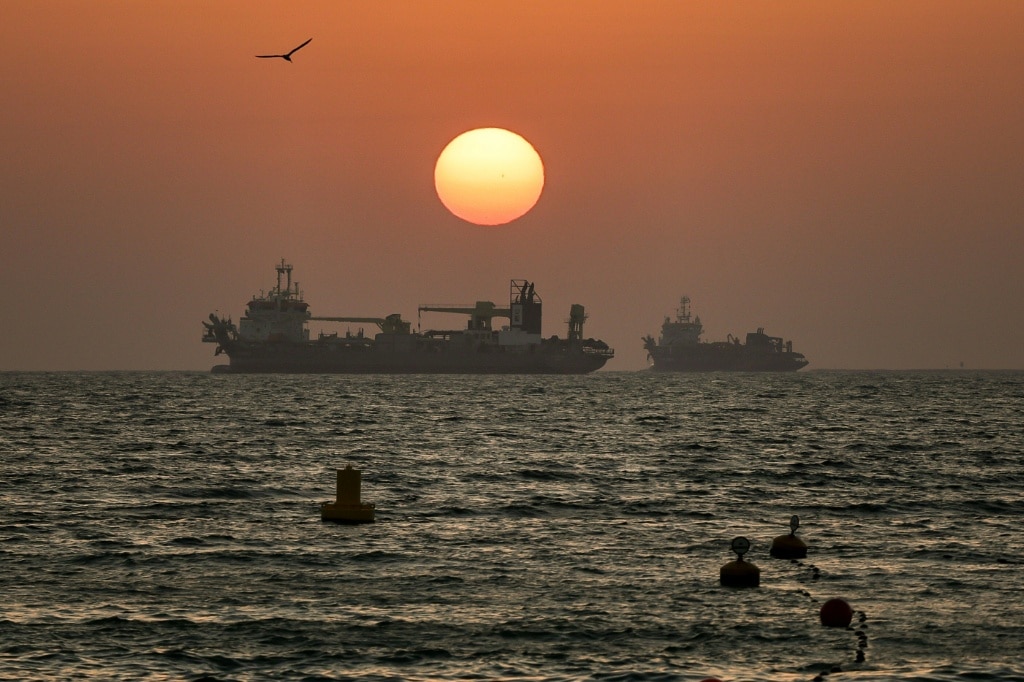
    Diplomatic efforts to de-escalate tensions across the Middle East have taken a sharp turn after Saudi Arabia successfully pushed the United States to prioritize a ceasefire in Lebanon, with the goal of preserving fragile negotiations between Washington and Tehran and clearing the way for the reopening of the strategically vital Strait of Hormuz, multiple senior sources from the US, European and Arab nations have confirmed to Middle East Eye.

    According to Arab and Western officials familiar with the exchange, Saudi Crown Prince Mohammed bin Salman directly pressed US President Donald Trump on the urgency of a ceasefire between Israel and Lebanese armed groups during a private telephone conversation held Wednesday. Just 24 hours after that call, Trump made a public announcement of a planned 10-day ceasefire in Lebanon, a step multiple sources attribute directly to intensive lobbying from Riyadh.

    Despite the announcement, major questions remain unresolved: it is still uncertain whether Israel will adhere to the truce terms, and it remains unclear what level of pressure the Trump administration will ultimately bring to bear on Israeli Prime Minister Benjamin Netanyahu to enforce the pause. Domestically, Lebanon has also faced internal friction over the deal: Hezbollah has publicly criticized the Lebanese government for holding rare direct negotiations with Israel over the ceasefire framework.

    A Western official with direct knowledge of the phone call between the two leaders told Middle East Eye that Crown Prince Mohammed bin Salman made clear that securing a Lebanon ceasefire is a non-negotiable prerequisite to reopening the Strait of Hormuz and ending broader regional hostilities.

    Further diplomatic meetings are already in the works, sources confirm: Saudi Foreign Minister Prince Faisal bin Farhan is scheduled to hold talks with US Secretary of State Marco Rubio as early as next week, and Saudi Defense Minister Khalid bin Salman – the crown prince’s brother and close senior advisor – is expected to join the meeting. Saudi diplomatic teams have also begun circulating a formal negotiation position paper across regional and international capitals, according to Western and Arab officials.

    Last week, Trump stated that Netanyahu had agreed to “scale back” Israeli military operations in Lebanon following formal complaints from Iran over ongoing strikes, but a formal, publicly announced ceasefire represents a far more significant step toward de-escalation. Tehran has repeatedly made clear that no meaningful talks with Washington can proceed without a full ceasefire in Lebanon. Iranian Parliament Speaker Mohammad Bagher Ghalibaf and a top Iranian nuclear and security negotiator have both reaffirmed this position in recent statements.

    A two-week US-Iran truce, mediated by Pakistan, was announced earlier this month and explicitly included Lebanon in its terms, but Israeli strikes on Lebanese territory continued uninterrupted after the deal was struck. If the newly announced 10-day ceasefire holds, it is expected to clear the way for Washington and Tehran to extend their bilateral truce, which is set to expire on April 21. Trump confirmed Wednesday that formal negotiations could resume in the Pakistani capital of Islamabad as soon as within the next 48 hours.

    Pakistan has publicly emerged as the primary intermediary between the US and Iran, but multiple Western and Arab officials note that Islamabad’s diplomatic maneuvering would not be possible without extensive backing from Saudi Arabia, a long-time strategic ally and major financial patron of Pakistan. The two nations maintain a formal mutual defense pact, and Riyadh has repeatedly stepped in to provide critical economic support to Islamabad during periods of financial strain. Just this week, Saudi Arabia agreed to issue a $3 billion loan to cash-strapped Pakistan to help the country cover an urgent debt repayment to the United Arab Emirates.

    A senior Western official noted that Saudi Arabia holds unique influence to encourage Trump to prioritize mediation and acknowledge the importance of Iran’s demand for a Lebanese ceasefire. The kingdom has walked a careful diplomatic line in recent months: it initially opposed large-scale US military strikes on Iran, but ultimately provided limited support to Washington, including opening the King Fahd Air Base in Taif to US operations after Iranian strikes damaged infrastructure at the US-run Prince Sultan Air Base, a development first revealed exclusively by Middle East Eye. Riyadh also previously pushed the US to maintain targeted strikes on Iranian positions after Iranian-aligned groups attacked Saudi and regional energy infrastructure.

    “Saudi Arabia answered the US call and did the minimum necessary to appease Trump. But now they are focused on reopening the Strait of Hormuz and a ceasefire. They don’t want further escalation. It’s a dance,” the senior Western official told Middle East Eye. This aligns with earlier reporting from The Wall Street Journal, which revealed that Saudi Arabia has already urged Trump to reject proposals for a US blockade of the Strait of Hormuz.

    At present, Saudi Arabia is able to bypass Iranian control of the Strait of Hormuz via the East-West pipeline that connects Gulf oil fields to the Red Sea, allowing the kingdom to export roughly 5 million barrels of crude oil per day despite the closure. Riyadh’s current top priority is preventing the closure of the Bab el-Mandeb Strait by Houthi forces in Yemen, another critical chokepoint for global energy trade.

  • Iranian footballers say Australia has given them ‘hope’ for safe future

    Iranian footballers say Australia has given them ‘hope’ for safe future

    Two Iranian female footballers who have been granted political asylum in Australia have opened up about their new chapter, saying the country has given them a renewed chance to build a secure life where they can both live and compete without fear. Atefeh Ramezanisadeh and Fatemeh Pasandideh were part of a seven-member group of Iranian national team delegation that initially received humanitarian visas while participating in the 2024 Women’s Asian Cup hosted in Australia. In a surprise turn of events, the remaining five members of the group ultimately chose to return to Iran, reversing their initial decision to seek protection abroad.

    The crisis surrounding the team began shortly after the squad declined to sing Iran’s national anthem ahead of their opening tournament match, a silent protest that came just days after joint air strikes by Israel and the United States sparked deadly conflict in Iran starting February 28. After the protest, footage emerged of an Iranian state television host labeling the players as “traitors” who deserved punishment for their silence during the anthem, triggering widespread international alarm over the players’ safety if they returned home.

    In their first formal public statement since their asylum application was approved, Ramezanisadeh and Pasandideh expressed gratitude to supporters who have stood by them, while requesting space to adjust to their new lives. “At this stage, our primary focus is on our safety, our health and beginning the process of rebuilding our lives,” the joint statement reads. The pair added that they have been deeply moved by the warmth and generosity of Australia’s large Iranian diaspora community, saying that widespread community support has made them feel welcome and eased the isolation of their major life transition. They also extended thanks to the Australian government for granting them a safe haven in the country, and to Home Affairs department officials for their committed, personalized support throughout the visa and asylum process.

    The two players have already begun integrating into Australia’s domestic football landscape, with recent photos showing them training with A-League Women side Brisbane Roar. They confirmed in their statement that they aim to continue pursuing elite professional football careers in their new home.

    To understand the full context of the players’ decision, the sequence of events that unfolded during the Asian Cup offers critical context: after the anthem protest sparked backlash back home, the players were relocated from their original accommodation on the Gold Coast to Brisbane, roughly an hour’s drive north. It was there that they slipped away from the minders accompanying the Iranian delegation, seeking protection from the Australian Federal Police before starting their asylum claims.

    Human rights activists have long raised allegations that the five players who chose to return to Iran faced extreme coercion, arguing that Iranian authorities made threats against their immediate family members remaining in the country to force the players to reverse their decision to seek asylum. Speaking at the height of the crisis earlier this year, Australian Home Affairs Minister Tony Burke acknowledged that the government could not ignore the immense external pressures that shaped each player’s impossible decision.

    The Iranian government has pushed back sharply against the events, with the country’s sports ministry claiming that the return of the five players proved they had “defeated the enemy’s plans” through national unity and patriotism. The ministry also accused the Australian government of advancing foreign political agendas, claiming Canberra was “playing in Trump’s field.” Tasnim News Agency, an outlet closely affiliated with Iran’s Islamic Revolutionary Guard Corps, has further claimed that the two players who stayed were subjected to systematic “psychological warfare, extensive propaganda and seductive offers” from Australian actors to convince them to remain in the country.

    The case has drawn global attention to the risks facing Iranian athletes who speak out against their government, and has sparked renewed debate over Australia’s humanitarian visa obligations for at-risk sportspeople from conflict zones.

  • Attacks on US Muslims rose eleven-fold this year alone, advocacy group says

    Attacks on US Muslims rose eleven-fold this year alone, advocacy group says

    Hate violence targeting Muslim-American people and community institutions has surged to its highest level in 15 months during the current Trump administration, a prominent Muslim civil rights and advocacy organization has confirmed. The Muslim Public Affairs Committee (MPAC) documented this alarming upward trajectory in a new policy paper released Thursday, revealing an eleven-fold jump in targeted hate incidents in just the first three months of the year alone.

    According to MPAC’s analysis, at least nine of these recorded attacks took place in March alone. The incidents span a wide spectrum of violence and intimidation, ranging from property vandalism and bomb threats targeting houses of worship to sexual assault directed at Muslim women wearing traditional religious attire.

    Khuram Zaman, founding director of MPAC’s Center for Security, Technology and Policy, tied the sharp spike in attacks to the U.S.-led military campaign against Iran that launched at the end of February. Speaking to independent outlet Middle East Eye, Zaman noted that this military escalation created a clear dividing line between lower baseline levels of anti-Muslim hate seen earlier in the year and the sharp rise seen after the conflict began.

    “What has been most striking is how mainstream extreme anti-Muslim rhetoric has become in public discourse since the war started,” Zaman explained. “Comments calling for burning mosques or planting improvised explosive devices at Islamic centers would once have been relegated to the darkest corners of the internet. Now, that violent language is increasingly normalized and accepted on mainstream social media platforms.”

    Zaman’s assessment is backed by separate research from the Center for the Study of Organized Hate (CSOH), which tracked a sharp and immediate surge in explicitly anti-Muslim content on X, the social platform owned by Elon Musk, in the hours immediately after the Iran campaign began. Between January 1 and March 5, CSOH documented a wave of posts that dehumanize Muslim people, push for their exclusion from public life, and incite direct violence. Content analyzed ranged from individual hate-filled rants to formal calls for extremist legislation, including a proposed “Muslim Exclusion Act” and demands for the mass deportation of all Muslim people from the U.S.

    MPAC’s policy paper emphasizes that this violent rhetoric is not limited to anonymous social media users: it is increasingly being voiced by sitting Republican members of Congress, a trend that has further normalized anti-Muslim bigotry across the country. Florida Representative Randy Fine has emerged as one of the most high-profile voices of this movement, having called for the deportation of New York City’s Muslim mayor Zohran Mamdani and publicly stated, “If they force us to choose, the choice between dogs and Muslims is not a difficult one.” While Fine has faced criticism from Democratic lawmakers, he has faced no repercussions from his own party or from President Trump.

    Tennessee Representative Andy Ogles has similarly stated openly that he believes “Muslims don’t belong in American society.” Both Fine and Ogles are members of the newly launched “Sharia-Free America” congressional caucus, which now counts more than 60 Republican members. That makes the caucus larger than the Congressional Hispanic Caucus and the House Freedom Caucus, and comparable in size to the Congressional Black Caucus. Zaman stressed that caucus members have explicitly called for the denaturalization and deportation of Muslim American citizens, a policy he described as ethnic cleansing.

    While anti-Muslim sentiment in the U.S. has persisted at varying levels since the aftermath of the September 11 attacks, MPAC’s report warns that the current shift toward mainstream acceptance of open bigotry represents a dangerous new phase. The organization’s analysis confirms a long-documented trend: periods of heightened U.S. military engagement in the Middle East consistently correspond to rises in domestic anti-Muslim hate, fueled by skewed media coverage and political rhetoric designed to mobilize public support for military action.

    The report pushes back against the common political claim that restricting the rights of Muslim Americans strengthens national security, noting that no evidence supports this assertion. Instead, the group warns, the erosion of Muslim Americans’ civil rights undermines the social cohesion and community trust that effective domestic security depends on.

    At its core, MPAC’s primary policy demand is a permanent end to the U.S.-Israeli military campaign in Iran. The report warns that prolonged conflict will likely lead to a revival and expansion of the intrusive domestic security policies that defined the post-9/11 era, including targeted mass surveillance of Muslim American communities and expanded investigative authority for the FBI. Historically, such policies have led to widespread erosion of civil liberties, from expanded watchlists to intrusive monitoring of religious and community spaces, ultimately weakening U.S. civil society as a whole.

    The impact of rising anti-Muslim hate extends beyond Muslim communities, the report adds. So-called “adjacent communities” — people of color who are often misidentified as Muslim, including Sikh, Hindu, Armenian, and Christian Arab Americans — have also seen a rise in hate attacks as bigotry becomes more normalized.

    MPAC is calling on the Trump administration and all U.S. public institutions to take urgent action: to swiftly condemn all anti-Muslim hateful rhetoric and violence, hold perpetrators of hate crimes accountable, and proactively engage with affected communities to address their safety needs.

    Zaman added that meaningful progress will not be possible until major social media companies take decisive action to remove content inciting violence and restrict accounts that spread anti-Muslim misinformation. “When targets of hate are Muslim people, our mosques and our communities, there is simply no sense of urgency from the platforms or from political leaders to address the threat,” he said.

  • Global warming causes Colombian glacier to disappear

    Global warming causes Colombian glacier to disappear

    A stark visual testament to the accelerating impacts of human-caused climate change has emerged from the Colombian Andes, where the Cerros de la Plaza glacier has been officially declared completely vanished after more than a century of gradual retreat driven by rising global temperatures.

    New satellite composite imagery compiled from 2026 Copernicus Sentinel data illustrates the dramatic transformation: in late December 2015, the mountain peak still retained a visible layer of permanent ice and snow, but by the end of February 2026, no frozen cover remained, leaving only exposed bedrock where the glacier once stood. Official confirmation of the glacier’s total disappearance came last week from Colombia’s Institute of Hydrology, Meteorology and Environmental Studies (IDEAM), the government agency tasked with monitoring the country’s changing natural landscapes.

    Historical data compiled by IDEAM underscores the scale of the loss: at its peak in the 19th century, Cerros de la Plaza spanned 5 square kilometers (1.93 square miles) across the high peaks of the Sierra Nevada del Cocuy range in northeastern Colombia, where summits rise more than 5,000 meters above sea level. Decades of rising temperatures pushed the glacier into steady retreat, with the ice sheet shrinking incrementally from 2015 until it vanished entirely by March 2026.

    IDEAM’s official statement framed the loss as a tangible warning of climate change’s irreversible impacts. “Climate change is a reality that is already transforming our territories. And what is at stake is not only the landscape, but the very balance of these ecosystems,” the agency said.

    The Colombian Andes are recognized as one of the world’s most biodiverse mountain regions, hosting iconic threatened species including Andean condors and the rare spectacled bear, a mammal endemic to South America’s high altitude ecosystems. The Sierra Nevada del Cocuy glacial system is already one of only six remaining glacial networks left in Colombia, and national environment ministry data shows the country’s total glacial ice coverage has plummeted by 90% since the 19th century.

    Beyond biodiversity, the loss of Andean glaciers carries direct consequences for human communities across the region. Glacial melt feeds critical freshwater sources that sustain mountain ecosystems, and underpin key human activities ranging from agricultural crop irrigation to commercial and subsistence fishing.

    The disappearance of Cerros de la Plaza aligns with broader global climate trends: both the European Union’s Copernicus Climate Change Service and U.S.-based non-profit research organization Berkeley Earth have confirmed that the past 11 years are the warmest ever recorded on Earth. A landmark 2023 study published in the *Science* journal projected that even if all nations meet their Paris Agreement commitments to limit global warming to 1.5 degrees Celsius above pre-industrial levels, half of the planet’s total glacier mass will have melted by the end of the 21st century.

  • Hungary’s Orban urges party ‘renewal’ after vote loss

    Hungary’s Orban urges party ‘renewal’ after vote loss

    After 16 consecutive years at the helm of Hungarian politics, nationalist outgoing Prime Minister Viktor Orban has publicly called for a full overhaul of his long-ruling Fidesz party, just days after a landslide defeat to pro-European political newcomer Peter Magyar.

    Magyar, a conservative newcomer who rose rapidly to challenge Orban’s nationalist agenda, secured a two-thirds parliamentary majority in Sunday’s general election, a contest that saw a record voter turnout across the central European nation. The upset result brought an end to one of the longest-serving administrations in modern European history.

    In his first public remarks since the defeat, broadcast live on the YouTube channel Patriota, Orban acknowledged that the old governing model could not continue. “We cannot continue the way we have been operating until now,” he stated. “A complete renewal is needed, and this applies not only to Fidesz, but to the entire national conservative bloc.”

    The former prime minister admitted he was still processing the scale of the loss, saying he was “trying to somehow come out of this shock” and accepted full accountability for the defeat in his role as party leader.

    Orban outlined two immediate priorities moving forward: first, overseeing a smooth transition of power to the incoming administration, a process he confirmed is already underway. Second, he has begun convening party governing bodies, including a delegate national assembly and full party congress, to carry out the planned renewal process, with preliminary work already in motion.

    In a related announcement Thursday, Hungarian EU Minister Janos Boka confirmed on Facebook that Orban will skip next week’s informal EU heads of state summit in Cyprus, scheduled for April 23–24, to focus on the government handover. The summit would have forced Orban into a potential high-stakes confrontation over his ongoing veto of a €90 billion ($106 billion) EU macro-financial assistance package for Ukraine, a policy that has been a major point of friction between Budapest and Brussels for months.

    Orban’s longstanding close ties to Russian President Vladimir Putin and former U.S. President Donald Trump, paired with policies widely criticized as democratic backsliding, have put his administration at repeated odds with the European Union. Brussels previously froze billions in allocated cohesion funds for Hungary over rule of law concerns that went unaddressed during Orban’s tenure.

    Since his election victory, Magyar has pledged to dismantle the core structures of Orban’s nationalist administration and reset Hungary’s strained relationship with the EU, a move that would unlock the frozen billions in European funding for the country.

    Within 24 hours of Orban’s post-defeat remarks, EU officials confirmed that a preliminary negotiating delegation will travel to Budapest Friday to open talks with the incoming Tisza party government. EU spokeswoman Paula Pinho noted that the early talks are designed to avoid delays, saying: “These are preliminary talks that are taking place in order to make sure that once the government is in place, really, action can be taken if appropriate, and that we do not waste any time.”

    Magyar’s ‘regime change’ agenda accelerated further Thursday, when the Tisza party leader announced a symbolic break from Orban’s governance style: his administration will not occupy the Carmelite Palace, a hilltop monastery compound overlooking Budapest that Orban converted into his prime ministerial office in 2019. “Under the TISZA government, the prime minister’s office will not be located in the Carmelite Palace, but in a ministry building near the parliament,” Magyar wrote in a Facebook post.

    Orban’s 2019 move to the former monastery, located in Budapest’s historic Castle District, drew widespread criticism from opponents, who condemned the millions in public funds spent on renovations and the heavy security perimeter that restricted public access to the landmark, which the government appropriated for state use back in 2014.

    Magyar has also promised to suspend biased coverage from state-run media outlets, which opponents have long described as a propaganda mouthpiece for Orban and Fidesz. On Thursday, staff at Hungary’s state-owned national news agency MTI released an open letter calling for the immediate restoration of editorial autonomy, with one senior editor telling AFP that staff had “had enough of unlawful, external political interference” in newsroom operations.