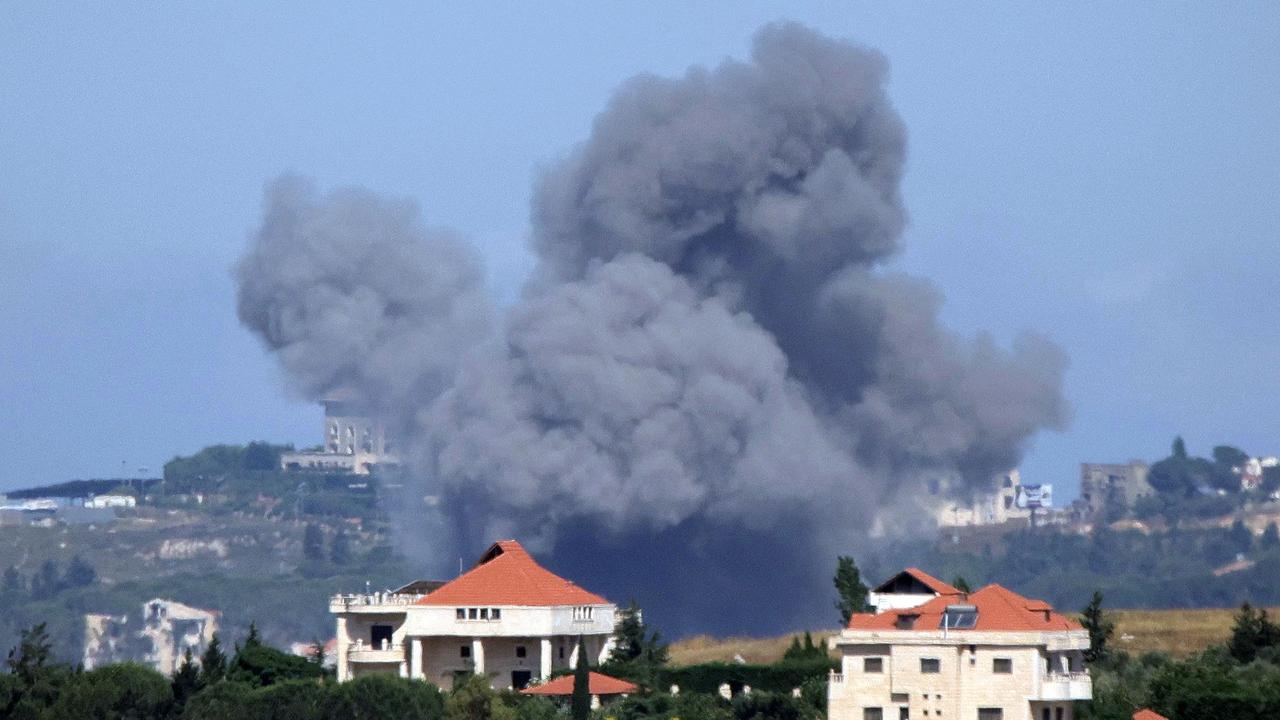
A fragile, recently brokered ceasefire in the Middle East has collapsed into a dangerous new cycle of cross-border violence, drawing sharp international response as Australia pushes all parties to return to dialogue and avoid full-scale regional war. The latest escalation traces back to an Israeli airstrike carried out Sunday, local time, on the Dahieh neighborhood of southern Beirut, Lebanon. The attack killed two civilians and injured at least 20 more, multiple sources confirmed, with children among those harmed.
Israeli Prime Minister Benjamin Netanyahu framed the Beirut strike as a retaliatory action against Hezbollah, the Iran-aligned militant group that has been engaged in cross-border skirmishes with Israel for months. He said the attack was a direct response to recent rocket fire launched from Hezbollah positions into Israeli territory.
Within hours of the Lebanese strike, Iran launched three sequential waves of missile attacks targeting northern Israel. The Israeli military reported that all incoming Iranian projectiles were successfully intercepted by its air defense systems, with no fatalities recorded from the assault. That exchange, however, quickly expanded further: by early Monday local time, multiple explosions were reported across major Iranian population centers, including the capital Tehran, as well as the key economic hubs of Isfahan and Tabriz. The Israeli military later issued an official statement confirming it had targeted “military targets belonging to the Iranian terror regime” in central and western regions of the country. Separately, Al Jazeera Arabic also reported fresh explosions audible across multiple locations in Lebanon, deepening fears of a widening conflict that has already displaced a fifth of Lebanon’s entire population since fighting escalated in February.
The ongoing crisis has already had devastating humanitarian consequences for Lebanon. Since Hezbollah launched rocket attacks into northern Israel in early March – days after a joint US-Israeli strike on Iran opened the current phase of conflict – the small Mediterranean nation has been dragged fully into the regional war. Independent United Nations human rights experts have raised alarming allegations that Israel’s widespread evacuation orders, paired with the systematic destruction of residential housing that displaced residents would otherwise return to, may amount to ethnic cleansing of Shiite communities in southern Lebanon.
In response to the rapidly deteriorating situation, top Australian officials have issued clear calls for an immediate end to hostilities. Defence Industry Minister Pat Conroy described the sudden escalation just days after a US-brokered ceasefire was agreed to as “incredibly unhelpful” in comments to the Australian Broadcasting Corporation on Monday. He reiterated Australia’s longstanding position that all parties must step back from confrontation to protect both regional stability and the global economy.
“ We want the ceasefire to hold and a long term peace to be negotiated and agreed to so that the Strait of Hormuz can be reopened and resources can flow to and from that region,” Conroy said. “That’s critical to the global economy. And, all parties need to take a breath, de-escalate and find a solution to what’s occurring there.” Conroy acknowledged that the existing ceasefire remains extremely fragile, but emphasized that a negotiated end to conflict is in the interest of the entire global community. “It’s in the interest of the entire globe and the sooner this conflict gets resolved the better,” he added.
Prime Minister Anthony Albanese echoed Conroy’s call for de-escalation, but stood firm on his earlier decision to back US and Israeli actions when the current conflict broke out in February. “Iran can’t be allowed to get a nuclear weapon. That was the position that we took. That’s the right position,” Albanese said. “We’ve called for a de-escalation. We’ve called for a clear exit plan out of this and we’ve done that consistently for a long period of time. This needs to conclude.”
Internationally, the US has also pushed for restraint: Reuters reported, citing an unnamed Israeli official, that US President Donald Trump spoke with Netanyahu to urge caution in responding to Iran’s initial retaliatory strike. Despite that diplomatic pressure, the latest wave of attacks has already pushed the region closer to full-scale conflict than it has been in weeks, leaving global leaders scrambling to prevent a wider war that would carry catastrophic humanitarian and economic consequences.