作者: admin

  • Pope Leo slams ‘those who manipulate religion’ for war, as White House invokes divine calling

    Pope Leo slams ‘those who manipulate religion’ for war, as White House invokes divine calling

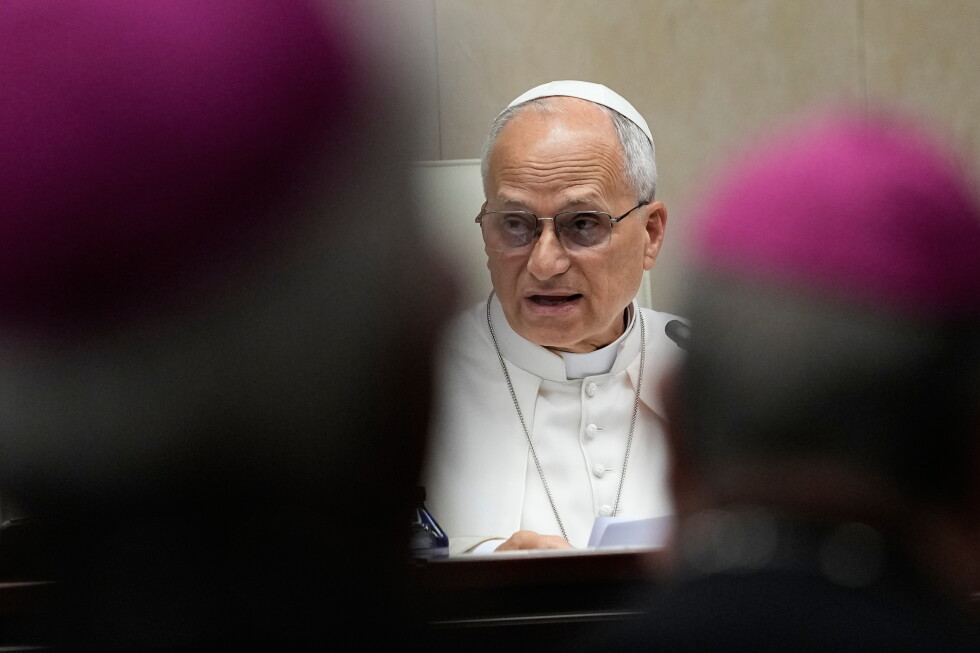
    A sharp public rift between the first American-born head of the Catholic Church, Pope Leo XIV, and the Trump administration has deepened this week, centered on the controversial use of religious rhetoric to justify the seven-week US-Israeli war on Iran. The escalating war of words reached a new peak on Thursday, when Pope Leo issued his most direct rebuke to date of leaders who twist sacred scripture to advance military and political ambitions.

    In a post on the social platform X, the Pope repeated a pointed line from a recent address he delivered during a visit to Cameroon: “Woe to those who manipulate religion and the very name of God for their own military, economic, and political gain, dragging that which is sacred into darkness and filth.” He expanded on this condemnation in his original speech, adding that the globe is currently being exploited by a small group of authoritarian actors who put their own interests above global peace.

    Coinciding nearly exactly with the Pope’s post, US Secretary of War Pete Hegseth made his own religious reference during a press briefing in Washington D.C. Hegseth, who has repeatedly framed the war against Iran as a divine mission for the United States in regular Pentagon press briefings, compared journalists covering the conflict to Pharisees — the biblical figures Christians believe witnessed Jesus’ miracles but rejected his teachings. His analogy implied reporters were refusing to acknowledge what he framed as miraculous US military achievements in the war, which official counts confirm have killed more than 3,000 Iranian civilians and combatants to date.

    This framing of the war as a religious cause has been a particular point of friction with Pope Leo, a longstanding public advocate for global peace and diplomatic conflict resolution. While the Pope’s anti-war stance aligns with longstanding Vatican policy, it has put him in direct conflict with President Donald Trump, who has launched a series of public attacks against the American pontiff for contradicting what he frames as core US interests.

    The feud has stretched on for nearly a week, with Trump attempting to fracture the Pope’s public standing by highlighting the pontiff’s brother, Louis Prevost, who is an open supporter of Trump’s Make America Great Again movement. Speaking to reporters Thursday, Trump sought to downplay the intensity of the dispute, claiming “I’m not fighting with him. I have nothing against the Pope. His brother is Maga all the way.” Trump also falsely claimed that Pope Leo supports Iran acquiring a nuclear weapon, a claim the Pope has never publicly made, as he has declined to weigh in on US allegations of an Iranian nuclear weapons program.

    Earlier in the week, the conflict sparked widespread controversy after Trump shared an AI-generated image that depicted him as Jesus Christ, healing a sick man in a hospital bed. After widespread public backlash, Trump removed the post, later claiming he had believed the image showed him as a doctor associated with the Red Cross, telling reporters “It’s supposed to be me as a doctor making people better. And I do make people better. I make people a lot better.” Observers widely rejected the explanation, noting the image clearly showed Trump in a holy robe with glowing, miraculous hands positioned over the patient.

    The public attack on the Pope came immediately before that controversial post, with Trump launching a tirade against Pope Leo on social media that criticized his positions on crime and foreign policy. The former president also brought up COVID-era restrictions on religious gatherings, writing “He talks about ‘fear’ of the Trump Administration, but doesn’t mention the FEAR that the Catholic Church, and all other Christian Organizations, had during COVID when they were arresting priests, ministers, and everybody else, for holding Church Services, even when going outside, and being ten and even twenty feet apart. I like his brother Louis much better than I like him. I don’t want a Pope who criticizes the President of the United States.”

    This is not the first time Pope Leo has broken with the Trump administration: he has already publicly condemned Israel’s ongoing war in Lebanon and Trump’s hardline crackdown on undocumented immigrants inside the United States. The broader Catholic Church hierarchy has largely stood behind Pope Leo, creating new religious divisions between American Catholics and the Evangelical Christian community that forms one of Trump’s core political support bases.

    Multiple senior Catholic cardinals spoke out against the administration’s war agenda in an interview with CBS’s 60 Minutes that aired Sunday. Just one day earlier, Washington D.C.’s archbishop Cardinal Robert McElroy delivered an uncommonly direct political rebuke during a public peace mass, calling on Christian believers to move past passive prayer and actively advocate for an end to the conflict. “As citizens and believers in this democracy that we cherish so deeply, we must advocate for peace with our representatives and leaders. It is not enough to say we have prayed. We must also act… our president will move to re-enter this immoral war,” McElroy said. “No. Not in our name. Not at this moment. Not with our country.”

  • Judgement day for Man City and Arsenal in title showdown

    Judgement day for Man City and Arsenal in title showdown

    The English Premier League is gearing up for one of its most consequential matchweeks of the 2024-25 season, with a title-deciding showdown between league leaders Arsenal and defending-chasing Manchester City set to take center stage at the Etihad Stadium this Sunday. Beyond the top-of-the-table clash, the weekend also brings high-stakes battles for Champions League qualification, a historic first Merseyside derby at Everton’s new stadium, and a host of other fixtures that could reshape the final standings of England’s top flight with just six weeks remaining in the campaign.

    For Arsenal, Sunday’s trip to Manchester represents the defining moment of their bid to end a 21-year wait for a Premier League crown. Mikel Arteta’s side currently hold a comfortable six-point advantage over second-placed City, but their form has nosedived dramatically in recent weeks, putting their title momentum in question. The Gunners have dropped points across all competitions, suffering a League Cup final defeat to City, a shock FA Cup quarter-final exit to second-tier Southampton, and a damaging league loss to Bournemouth. Even their 1-0 aggregate win over Sporting Lisbon to reach the Champions League semi-finals was underwhelming, secured via a nervous, laborious goalless draw in the second leg. Arsenal have recorded just one victory in their last five matches across all competitions, while City enter the clash in peak form, having knocked off Arsenal, Liverpool and Chelsea in their previous three outings.

    Despite the slump, Arsenal midfielder Declan Rice says the squad is relishing the challenge of facing City on their own turf. “There’s no beating around the bush. We have to perform better than we did against Bournemouth and probably Sporting as well,” Rice told reporters ahead of the match. “Recently, we have made too many errors. The Etihad is the ultimate test but it’s why we play this game. So, bring it on. It’s beautiful. I can’t wait. When you’re a kid, you’re watching the Premier League, you see these big matches, these title-defining moments and it comes down to if you’re going to be ready and how much do you want it?”

    Down the table, the fight for the final Champions League qualification spots is reaching a fever pitch, with Chelsea and Manchester United set to clash at Stamford Bridge on Saturday night in a make-or-break fixture for the west London side. Chelsea have slumped to a dismal run of form, picking up just one win in their last seven league outings, leaving them on the brink of falling out of contention for a top-four finish. Sixth-placed Chelsea currently trail third-placed United by seven points, and sit four points behind fifth-placed Liverpool, leaving the Blues with zero margin for error with only six matches left to play. A loss against United would all but end Chelsea’s Champions League hopes, piling even more pressure on manager Liam Rosenior just one week after his side was booed off the pitch following a 3-0 home defeat to Manchester City.

    Blues midfielder Andrey Santos admitted the squad understands fan frustration, but says the players remain committed to turning their season around. “We understand the fans are frustrated. We are frustrated too. When you talk about Chelsea, you talk about winning games, which we’re not doing. It’s a difficult moment but we have to work hard and keep going. Of course we believe we can finish in a Champions League place.”

    Meanwhile, Merseyside rivals Everton and Liverpool will write a new chapter of their historic derby on Sunday, when Liverpool visits Everton’s brand-new Hill Dickinson Stadium for the first ever Merseyside derby at the venue. Liverpool is reeling from a bruising 4-0 aggregate Champions League exit at the hands of Paris Saint-Germain earlier this week, a result that has increased scrutiny on manager Arne Slot. The Reds suffered another major blow this week when French striker Hugo Ekitike was ruled out for the remainder of the season with a ruptured Achilles injury, leaving their attacking depth depleted heading into the final stretch of the campaign.

    Liverpool midfielder Ryan Gravenberch says a derby win would not only lift the mood for anxious Reds fans, but also keep the club firmly in the mix for Champions League qualification. “We have to pick ourselves up as Sunday is waiting,” he said. “We just want to play in the Champions League next year. We have to give it our all.”

    The full slate of fixtures kicks off on Saturday with an early London derby between Brentford and Fulham, followed by midday matches between Leeds United and Wolverhampton Wanderers, and Newcastle United against Bournemouth. Later that day, Tottenham Hotspur hosts Brighton & Hove Albion before the primetime clash between Chelsea and United. Sunday’s action opens with Aston Villa hosting Sunderland, followed by the Merseyside derby, Nottingham Forest against Burnley, and the highly anticipated title showdown between City and Arsenal. The matchweek wraps up on Monday night with Crystal Palace hosting West Ham United at Selhurst Park.

  • ‘AI shamans’ tell the fortunes of curious South Koreans

    ‘AI shamans’ tell the fortunes of curious South Koreans

    In a narrow alley in central Seoul, the soft jingle of traditional bells still signals the presence of a fortune-teller — but the mystic behind the sound is no longer a human shaman. It is an artificial intelligence-powered robot avatar, blending ancient Korean spiritual tradition with cutting-edge generative AI to meet the demands of 21st-century curious seekers.

    Shamanic fortune-telling has long held deep cultural roots in South Korea, where the centuries-old practice of saju, or the “four pillars of destiny”, uses a person’s birth date and time to map their fate. Traditional human shamans, called mudang, perform elaborate rituals, from vibrant ceremonial dances to channelling messages from ancestral spirits, to help visitors navigate life’s uncertainties. Now, a Seoul-based cultural goods store called Vinaida — whose name translates to “I pray earnestly” in Korean — has reimagined this tradition for the digital age, replacing human practitioners with AI-driven virtual shamans.

    Unlike the intimidating, often overwhelming experience of visiting a traditional shaman, the AI fortune-telling experience is designed to be approachable and low-pressure for casual visitors. The store’s virtual shamans are designed with visuals evocative of characters from the global hit animated film *KPop Demon Hunters*, which itself drew inspiration from Korean shamanic lore, making them instantly familiar to younger audiences and pop culture fans. Inside a private consultation booth, visitors input their name, gender, and birth details into a computer terminal, before a projected masked shaman avatar guides them to share their personal concerns via a connected headset.

    The system integrates advanced voice recognition technology with a generative AI chatbot to enable natural, real-time back-and-forth interaction between the visitor and the virtual shaman. It pulls from the core principles of saju to interpret birth details and generate a personalized fortune reading. After the consultation, customers receive a physical plastic talisman embedded with a QR code; scanning the code with a smartphone pulls up a full detailed version of their reading to keep. In a separate section of the store, a second AI-powered robot uses facial recognition and a mechanical drawing arm to sketch visitors’ faces and deliver a personalized fortune based on physiognomic principles drawn from traditional Korean divination.

    For 36-year-old visitor Kim Da-ae, the low-stakes nature of the AI experience is its biggest draw. “A visit with a real shaman can feel scary and burdensome,” she explained to AFP during her consultation. “But I was just walking by and read this AI sign… So I walked in with a light heart.” After receiving her reading — which described her fortune as bright and balanced, noting her resilience amid change and auspicious romantic and social connections — Kim said she was surprised by how accurately it aligned with her own self-perception. “I felt a sense of similarity with my fate because it matched my own personality, like valuing relationships while also being practical,” she added.

    The concept has quickly gained traction with locals and tourists alike. Since opening its doors in February, Vinaida has drawn roughly 100 visitors per day, with individual consultations costing up to 8,000 won, equal to approximately $5.50 USD. The service supports four languages — Korean, English, Chinese, and Japanese — making it accessible to international visitors as well. Singaporean tourist Amos Chun, who tried the reading during a recent visit to Seoul, said he found the AI’s advice surprisingly relevant: the robot told him to “avoid impulse spending”, a habit Chun acknowledged is one of his personal pitfalls. “It’s quite a good reading, coming from AI,” Chun said with a laugh. “Because that’s something that I do.”

    Store manager Kim Hae-seol explained that the concept was developed to modernize a beloved cultural tradition for a new generation, noting that most visitors leave satisfied with their experience. “Customers have something tangible or meaningful to take away, which is probably why there aren’t many who feel dissatisfied,” Kim said. “We thought it had the potential to succeed, so we seized on this concept.” The growing popularity of AI fortune-telling in South Korea reflects a broader trend of blending emerging technology with long-held cultural practices, creating new accessible entry points for younger audiences to engage with traditions that have shaped Korean life for centuries.

  • Australia’s most decorated living soldier granted bail over war crime charges

    Australia’s most decorated living soldier granted bail over war crime charges

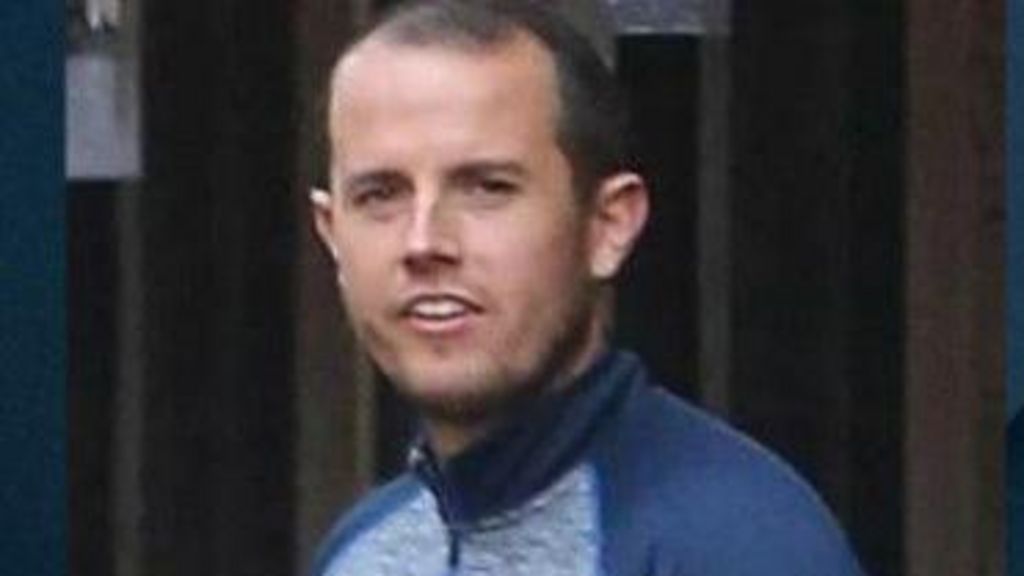
    One of Australia’s most high-profile military figures, Victoria Cross recipient and former Special Air Service (SAS) corporal Ben Roberts-Smith, has been approved for bail following his arrest last week on six counts of the war crime of murder. The 45-year-old, who denies all allegations against him, stands accused of involvement in the killings of multiple unarmed Afghan detainees between 2009 and 2012 — allegations that include both personally carrying out fatal acts and ordering subordinates to kill. The case marks an unprecedented moment in Australian legal history, as it is the first time criminal war crime charges have been brought against an Australian special forces soldier for actions in the 20-year Afghan conflict.

    Roberts-Smith appeared at his bail hearing via video link from Sydney’s Silverwater Prison on Friday. His legal team argued the extraordinary nature of the case, which is set to involve years of delays and massive volumes of sensitive national security material, made pre-trial detention unfair to his right to mount a proper defense. Leading barrister Slade Howell told the Sydney Local Court that the matter falls into completely uncharted legal territory for Australia, with layers of complexity that will almost certainly slow court proceedings significantly. He noted that if Roberts-Smith remained in custody, he would not be able to access and securely store the sensitive materials needed to build his defense, irreparably compromising his right to a fair trial. Howell also added that the intensity of ongoing global and domestic media scrutiny surrounding the allegations could ultimately undermine the possibility of selecting an impartial jury, and that the evidence presented in the earlier civil defamation case would differ drastically from what will be brought forward in criminal proceedings.

    The decision to grant bail came after Judge Greg Grogan ruled that Roberts-Smith’s case was exceptional, and that the strict bail conditions imposed would mitigate any risks raised by prosecutors. The terms of Roberts-Smith’s release require him to report to local police three times weekly, surrender all electronic devices for unrestricted law enforcement access, and forfeit his passport before he can leave custody. Prosecutors had pushed for the former soldier to remain behind bars, arguing that the charges are graver than almost any other criminal matter before Australian courts, and that Roberts-Smith was planning to relocate overseas just days before his arrest, demonstrating a clear flight risk. Prosecutor Simon Buchen SC also highlighted that the allegations had already gone through a full civil trial in 2023, where a judge found the claims of misconduct to be substantially true on the balance of probabilities, meaning the allegations are not untested as his defense has claimed. Prosecutors also raised concerns that Roberts-Smith could seek to interfere with witnesses or tamper with evidence if released.

    The current criminal proceedings build on a years-long investigation into alleged Australian special forces misconduct in Afghanistan. In 2018, Nine Entertainment newspapers first published the initial allegations against Roberts-Smith, prompting the decorated soldier to launch a high-profile defamation suit against the publications. While the defamation trial ended with a ruling that substantial truth existed to the reports of war crimes, the criminal proceedings that followed require a higher legal standard: proof beyond a reasonable doubt for a conviction. Legal analysts note the case is expected to take at least several years to reach trial, due to the massive volume of evidence and national security procedural steps that will be required before any jury can hear the matter.

  • Trump says Israel and Lebanon have agreed to 10-day ceasefire

    Trump says Israel and Lebanon have agreed to 10-day ceasefire

    In an unexpected announcement posted to social media Thursday, former U.S. President Donald Trump revealed that the Israeli and Lebanese national governments have reached an agreement for a 10-day ceasefire set to go into effect the same evening. Alongside the ceasefire reveal, Trump stated he will invite Lebanese President Joseph Aoun and Israeli Prime Minister Benjamin Netanyahu to the White House for talks aimed at forging a more durable long-term truce between the two neighboring nations.

    The announcement comes weeks after Israel launched a sweeping military campaign of intensive airstrikes and a ground incursion into Lebanon that has already killed and injured thousands of people and forced more than one million Lebanese civilians from their homes. But despite the optimistic framing of the deal from Trump, experts have highlighted critical gaps that cast serious doubt on the ceasefire’s ability to hold: the agreement was struck solely between the two national governments, and does not include Hezbollah, the primary Lebanese political and militant group that has been the main target of Israel’s military operations.

    Nicholas Grossman, an international relations professor at the University of Illinois, pointed out a fundamental flaw in the negotiated arrangement. “A ceasefire between Israel and Lebanon is a weird thing to tout, since Lebanon isn’t a combatant,” he explained, noting “there is no Lebanese fire for the Lebanese government to cease.”

    The announcement also sparked internal friction in Israel: Amichai Stein, diplomatic correspondent for Israeli outlet i24News, reported that multiple members of Netanyahu’s Cabinet expressed outrage during a closed-door meeting, criticizing Trump for publicly announcing Israel’s consent to the ceasefire before the Israeli Security Cabinet granted formal approval.

    Diplomatic context further complicates the situation: Iran has repeatedly stated that a ceasefire between Israel and Lebanon is a non-negotiable precondition for continuing nuclear and security negotiations with the U.S. – talks that stem from Trump’s unauthorized February military action against Iran, launched without congressional approval.

    Even as the ceasefire was being announced, a group of 24 United Nations independent experts issued a harsh condemnation of Israel’s ongoing military assault on Lebanon Wednesday, describing the campaign as “a blatant violation of the UN Charter, a deliberate destruction of prospects for peace, and an affront to multilateralism and the UN-based international order.”

    The experts, which included UN special rapporteurs Farida Shaheed (right to education), Ben Saul (right to food), and Francesca Albanese (occupied Palestinian territories), emphasized that Israel launched its largest coordinated wave of airstrikes on Lebanon since 1980 even as ceasefire negotiations were being finalized. “We are witnessing the continuing utmost contempt for the international legal order, for diplomacy, and above all for the lives of civilians and the environment in Lebanon,” the group said, rejecting Israeli claims that the operation is an act of self-defense: “This is not self-defense.”

    The experts also drew a parallel between the situation in Lebanon and the humanitarian crisis in Gaza, noting that Israel’s blanket evacuation orders and systematic destruction of civilian housing align with patterns of “domicide” first seen in the Gaza campaign. “Forced displacement of a civilian population constitutes crimes against humanity and is a war crime under international law,” the statement added.

    On-the-ground humanitarian data underscores the severity of the crisis. Since Israel escalated its offensive in early March, more than one million people – over 20 percent of Lebanon’s entire population – have been displaced. UNICEF USA confirmed Thursday that at least 600 children have been killed or wounded in Israeli attacks since March 2, with more than 390,000 children displaced by the violence. “Nowhere is safe for children in Lebanon,” the organization warned.

    As of Wednesday, Israeli military forces continued to carry out intensive bombing campaigns across southern Lebanon, leveling entire towns, destroying civilian infrastructure including homes and schools, and killing non-combatants. Lebanese officials reported that an Israeli triple-tap airstrike on the southern Lebanese town of Mayfadoun Wednesday killed three paramedics responding to earlier strikes.

    In their formal demand, the UN experts called on Israel to “immediately cease all military operations in Lebanon” and urged the United States – Israel’s closest ally and primary supplier of military arms – to leverage its considerable influence to force an end to the bombing campaign.

  • RSPCA issues major warning over use of ‘barbaric’ steel-jaw traps after cat euthanised from being caught in trap

    RSPCA issues major warning over use of ‘barbaric’ steel-jaw traps after cat euthanised from being caught in trap

    Over the recent Easter long weekend in South Australia, three domestic cats fell victim to illegal steel-jaw traps, leaving one euthanized due to catastrophic injuries and sparking a urgent public warning from the Royal Society for the Prevention of Cruelty to Animals (RSPCA) SA about the inherent danger of these banned devices. The first incident occurred in Nairne, where a black and white domestic cat was discovered caught in a triggered steel-jaw trap. The damage to the animal’s body was so extensive that humane euthanasia carried out by RSPCA animal welfare officers became the only possible option to end its suffering. In two separate cases across the same weekend, a second adult cat was recovered from a trap in Birdwood, while a young kitten was found snared in Port Augusta. Though both survived and did not require euthanasia, each suffered serious, permanent damage to their legs, leaving them with lasting harm. Andrea Lewis, head of animal welfare at RSPCA SA, emphasized that the ban on steel-jaw traps is rooted in profound humanitarian concern. Describing the devices as inherently barbaric, Lewis noted that they do not only target domestic cats—wild native species and other animals are equally at risk. Common victims include foxes and possums, and the organization has recently responded to reports of a young magpie that suffered a trapped leg. Several years prior, an echidna was also found stuck in one of the traps on the Fleurieu Peninsula. For animals that are not discovered quickly by rescue teams, Lewis explained, the outcome is a prolonged, agonizing death from untreated injury, dehydration or starvation. The RSPCA SA is reminding the public that setting steel-jaw traps carries serious legal consequences, pointing to a high-profile 2025 case as a clear precedent. In March of that year, a cat named Lunar endured two hours of unrelenting pain after being caught in a trap set in Rosewater. The man responsible was later convicted, and ordered to pay more than $4,000 to cover the cat’s veterinary treatment costs. Under South Australia’s current Animal Welfare Act, anyone caught setting an illegal steel-jaw trap faces an immediate fine of $2,500. If the case proceeds to prosecution, offenders can face maximum penalties of up to $20,000 in fines or two years of prison time. The RSPCA is urging members of the public who spot any suspicious traps to report the location to authorities immediately, to prevent further unnecessary animal deaths and suffering.

  • Airline adding bunk beds for economy travelers but bans snacks, smells and cuddling

    Airline adding bunk beds for economy travelers but bans snacks, smells and cuddling

    For millions of air travelers, catching uninterrupted, restful sleep while crammed into an economy seat on a 16+ hour long-haul flight has long been nothing more than a distant dream. Now, New Zealand’s flag carrier Air New Zealand is preparing to turn that dream into a accessible reality with the upcoming launch of Skynest, the world’s first purpose-built lie-flat sleep pods designed exclusively for budget economy passengers.Starting this November, the triple-tier bunk bed-style pods will be available exclusively to economy and premium economy passengers flying on Air New Zealand’s new Boeing 787-9 Dreamliner aircraft operating the high-demand Auckland to New York route — one of the planet’s longest commercial air routes, where passengers are forced to remain seated upright for a grueling 16 to 18 hours straight.

    Travelers can pre-book a private, four-hour block of time in one of the curtained berths, with pricing starting at 495 New Zealand dollars (equivalent to roughly $291 USD), charged as an add-on separate from the base economy ticket price. The carrier has installed six Skynest pods on each of the route’s Dreamliners, arranged in a stacked triple-bunk configuration between standard passenger cabins. Due to the tight shared space arrangement, Air New Zealand has released a clear set of etiquette and usage rules for pod users.

    The rules prohibit children from using the pods, ban outside visitors, outlaw snacking inside the enclosed space to avoid crumbs and pest risks, and restrict each booking to a single passenger only. “That means solo snoozes only please, no musical nests or tag-teaming,” the company explains on its official website. Travelers must also change into special disposable socks provided by the airline before entering the pod, and are forbidden from wearing heavily scented perfumes or body products to avoid disturbing nearby sleepers. To address passenger concerns around hygiene, Air New Zealand confirms that all pillows, blankets and fitted sheets are completely replaced and refreshed between every four-hour booking. At the end of the pre-booked block, users are woken first by a gradual adjustment in cabin lighting, with flight attendants on hand to give a more firm wake-up call for any travelers who sleep through the soft alert.

    In terms of dimensions, each berth matches the length of a standard twin mattress at 80 inches (203 centimeters), but the compact design means there is no headroom for sitting upright. Accessing the pod requires users to bend, kneel, crawl or climb into the space, and the width tapers from 25 inches (64 centimeters) at shoulder height down to just 16 inches (41 centimeters) at the foot of the bunk. The airline also anticipates that snoring will be a common occurrence in the shared pod space, so complimentary earplugs are provided for all users. “Statistically, someone’s going to do it. It might be you,” the website notes dryly.

    While lie-flat convertible seats and beds have been a standard premium offering for first and business class travelers for decades, Air New Zealand’s Skynest marks the first time a major carrier has offered purpose-built lie-flat sleeping accommodation for economy passengers. The new product is part of a broader industry trend among global airlines, which are increasingly offering paid add-ons and upgrades to economy passengers to boost ancillary revenue beyond base ticket sales. Air New Zealand first publicly announced the Skynest concept was in development back in 2020.

    The launch comes at a challenging time for the carrier, which has had to adjust its operations amid ongoing global fuel price volatility tied to the ongoing conflict in the Middle East. In response to spiking jet fuel costs, Air New Zealand has raised base fares, cut underperforming domestic routes, and suspended its official earnings outlook back in March, warning that further route adjustments could be necessary in coming months. Even with these headwinds, the carrier is betting that its innovative sleep pod offering will fill a long-unmet need for passengers enduring ultra-long-haul budget travel, making the long trip between New Zealand and the United States far more comfortable.

  • Wayne Bennett launches passionate defence of six again rule, explains why Latrell won’t play fullback

    Wayne Bennett launches passionate defence of six again rule, explains why Latrell won’t play fullback

    The National Rugby League’s contentious six again rule has sparked a heated divide between two of the code’s most long-serving and respected coaches, with legendary South Sydney Rabbitohs mentor Wayne Bennett doubling down on his support for the controversial regulation, arguing it has rescued the sport from more than a decade of slow, grapple-heavy stagnation.

    Bennett’s outspoken defense of the rule, which replaces traditional penalties for ruck infringements and offside offences beyond the 20-metre line with fresh set restarts, comes just 24 hours after Canberra Raiders head coach Ricky Stuart delivered a scathing rebuke of the policy, claiming it has eroded the core identity of rugby league. While the rule change has drawn widespread criticism from fans online, who argue its frenetic pace and frequent set changes have stripped the game of its traditional fabric, Bennett says the current format is a dramatic improvement over the slow, wrestling-dominated play that bogged matches down for 10 years.

    “There’s no doubt it’s a game-changer,” Bennett told reporters this week. “We’ve got a game that’s full of entertainment right now, some wonderful tries being scored, some great ball movement. Do we go back to when we had wrestle and we had all the other terms for different types of tackles that were making the whole game bog down? I don’t want to go back to that. We suffered for over a decade with that and I don’t want to go back there. If we find an answer for not having the six again then I’d be happy, but the reality of it is the onus is back on the players. The players are always playing on the edge with the rules and this is one they really can’t play on the edge with because it really hurts your team.”

    Beyond the rule debate, Bennett is facing a string of injury challenges ahead of his side’s Saturday night clash against the winless St. George Illawarra Dragons, and has made a surprising selection call to bring dynamic fullback Matt Dufty back for his first NRL outing in four years. Dufty, who most recently played in the UK’s Super League for Warrington Wolves, returned to Australia earlier than planned and linked up with the Rabbitohs, earning an unexpected call-up after starting fullback Jye Gray was sidelined for two to three weeks with an AC joint injury.

    Many fans and analysts expected Bennett would shift star back Latrell Mitchell from his current position at left centre back to fullback, a role Mitchell has played extensively throughout his career. But Bennett opted against a major reshuffle of his backline, noting Gray’s absence is only short-term, and that the team already has an injury gap on the left edge after second-rower David Fifita was ruled out for three to four weeks with a hamstring injury. “That was based on the fact that Jye will be back in a couple of weeks, probably two to three weeks max, so do I change one position or do I change four positions to put Latrell back at fullback?” Bennett explained. “That really wasn’t an option for me with only two or three weeks. If Jye had been out for a lot longer I might have made a different decision, but next couple of weeks I think we can get the job done there and it makes us more stable in our backline because these guys are playing together each week, and I think any coach in the game wants his players to play together as much as they possibly can.”

    Bennett added that Mitchell’s permanent shift to centre this season was already a deliberate choice made in the best interest of the club, and a short-term injury did not justify upending the entire unit. “I don’t see a world where he won’t go back to fullback eventually,” he said. “It was only a decision we made this year because we believed it was in the best interest of the club, and we made this decision again because I believe it’s in the best interest of the team that we have one new guy coming in rather than moving the whole backline around.”

    The Rabbitohs are already stretched thin in their forward pack, with five forwards currently sidelined in rehab. Prop Keaon Koloamatangi will play through a painful knee injury this weekend, after Bennett ruled out resting him, with the club awaiting the return of Junior Tatola next week to ease their forward depth crisis. “He’s a bit restricted as well. We probably need a week off for him, but we just can’t do it at the moment,” Bennett said. “We’ve got five forwards sitting in rehab at the moment with injuries and won’t be back for a couple of weeks, we’ll probably get Junior Tatola back next week, so we just need a bit of relief there and have to hang on a little bit longer for Keaon.” Dufty, a former Dragons player, will make his Rabbitohs debut against his old club this weekend, with Bennett saying the club is excited to welcome him to the squad. Assistant coach Ben Hornby has a long history of coaching Dufty, giving the South Sydney staff confidence he will fit in both on and off the pitch, Bennett added.

  • Major refinery fire won’t lead to fuel rationing, Australian PM says

    Major refinery fire won’t lead to fuel rationing, Australian PM says

    A devastating 13-hour blaze triggered by equipment failure has disrupted output at one of Australia’s only two operating oil refineries, deepening existing strain on the nation’s fuel market that has already been roiled by global supply shocks tied to the ongoing Iran conflict. Prime Minister Anthony Albanese has moved quickly to reassure the public, confirming that strict fuel rationing will not be introduced despite the production cuts.

    The fire broke out at Viva Energy’s Corio Refinery, located just outside the regional Victorian city of Geelong, shortly before midnight on Wednesday. When extinguishing operations concluded 13 hours later, the facility faced significant output reductions. As one of just two domestic refineries still operating in Australia, the Corio site plays an outsize role in national fuel supply: it meets half of Victoria’s fuel demand and roughly 10 percent of the entire country’s total requirements.

    During an on-site visit Friday — which required Albanese to cut short a Southeast Asian diplomatic tour focused on shoring up alternative fuel supplies — the prime Minister outlined the current production status. According to official assessments, 80 percent of the refinery’s usual diesel and aviation fuel output remains online, while 60 percent of petrol production is still operational. Albanese noted that both the government and Viva Energy expect production volumes to gradually ramp up in the coming days and weeks as repairs progress.

    Australia currently operates at level two of a four-stage national fuel security framework that was finalized by federal, state and territory leaders just one month ago. The third tier of this plan introduces binding restrictions on fuel consumption, including formal rationing. Albanese confirmed that the damage from the fire does not warrant an escalation to this higher alert level, and urged Australian motorways and businesses to avoid panic buying or unnecessary stockpiling.

    While ruling out immediate rationing, the government has acknowledged that the refinery damage will likely put additional upward pressure on already elevated fuel prices and tighten domestic reserves. Australia has long been heavily dependent on imported refined fuel, making it particularly vulnerable to global supply disruptions. Earlier this week, ahead of his interrupted tour, Albanese announced that the government had secured an additional 100 million liters of diesel from suppliers in Brunei and South Korea to offset existing gaps. Speaking to reporters after his site visit, the prime Minister also affirmed that Australia needed to expand domestic refining capacity to reduce its exposure to international market volatility moving forward.

  • Escaped wolf in South Korea recaptured, returned to zoo

    Escaped wolf in South Korea recaptured, returned to zoo

    After nine days of evading hundreds of search personnel, roaming through wooded and urban areas of South Korea’s Daejeon, and triggering a series of public disruptions and official missteps, a young escaped gray wolf named Neukgu has been safely recaptured and returned to his home zoo, local authorities confirmed Friday.

    The 2-year-old male wolf, weighing 30 kilograms, first broke free from his Daejeon zoo enclosure on April 8 by digging an escape tunnel under his compound fence and breaking through an outer boundary. What followed was one of the most high-profile fugitive searches in the region in recent years: local officials mobilized a joint team of hundreds of police officers, firefighters, and military troops, deploying drones equipped with thermal imaging cameras and encouraging residents to report any potential sightings to authorities. But for nearly a week and a half, the young wolf repeatedly avoided capture, slipping out of search cordons even after multiple confirmed sightings across the city.

    The search concluded in the early hours of Friday, after officials received a credible citizen tip that the wolf had been spotted resting in a local Daejeon park, according to South Korea’s Yonhap News Agency. Search teams moved in quickly, firing a tranquilizer dart to subdue the animal without injury, taking him into custody alive.

    In a celebratory post on the social platform X shortly after the capture, the Daejeon Metropolitan City government wrote: “Welcome back, #Neukgu!” The city also released official footage and photos of the capture, showing search teams carrying a sedated, sleepy Neukgu in a canvas sack before moving him into a secure transport crate. Subsequent images released by the city showed the shaggy-furred wolf sedated and resting on a veterinary examination table, fitted with a soft muzzle to protect medical staff.

    Preliminary veterinary checks completed after the capture confirmed Neukgu is in good condition, with normal pulse and body temperature readings, the city government added in an official statement. “We would like to thank everyone who offered their support to ensure Neukgu’s safe and healthy return. We also apologise to the public for the anxiety and concern this incident has caused,” the statement read.

    Neukgu’s escape sparked immediate public safety concerns across Daejeon, prompting a local elementary school to suspend in-person classes for at least one day out of caution. The incident also drew embarrassment for city officials after a fake AI-generated image, purporting to show Neukgu trotting across a busy Daejeon intersection, was widely shared by the city government and multiple major South Korean and international media outlets, including AFP, which later withdrew the image after an AFP analysis confirmed it was inauthentic.

    Now that Neukgu has been returned to the zoo, South Korean animal welfare advocates are calling for sweeping reforms to captive animal safety standards, pointing to a 2018 escape from the exact same Daejeon facility that ended in tragedy. In that earlier incident, a puma named Bborong escaped the zoo and was shot and killed by responding authorities.

    “The fact that Neukgu has returned to his cage at the zoo does not signify a ‘happy ending’ to the incident,” the Korean Animal Welfare Association said in a statement following the recapture, arguing that repeated escape incidents point to systemic failures in enclosure safety and captive animal care at the facility.