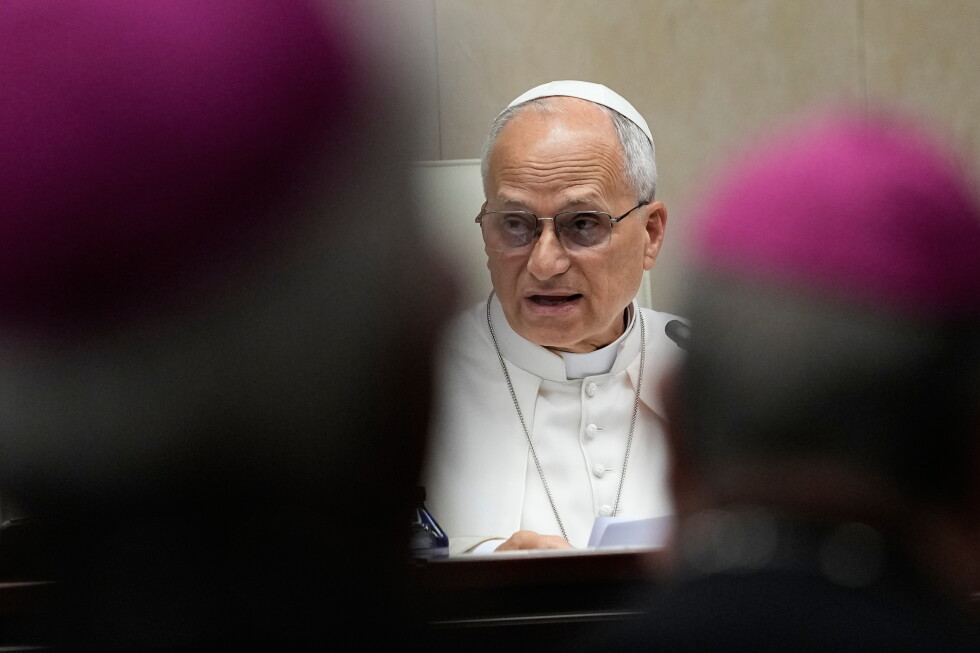
During the opening days of his week-long apostolic visit to Spain, Pope Leo XIV delivered a clear mandate to the country’s Catholic leadership on Monday, demanding meaningful reparations for survivors of clergy sexual abuse and a transparent reckoning with a decades-long crisis that has shaken the institution’s credibility. The address came ahead of a planned meeting between the pontiff and a cohort of abuse survivors, a gathering that has already sparked friction between survivor advocacy groups and church officials.
In his remarks to the Spanish Episcopal Conference, Pope Leo emphasized that the entire global Catholic community must uphold an unwavering commitment to preventing future abuse and building a culture centered on care for vulnerable people. For generations, Spain’s top church leaders downplayed the true scale of clergy abuse across the country’s parishes and institutions, until independent investigative reporting by major Spanish news outlets exposed a widespread pattern of abuse and deliberate cover-ups that stretched across decades.
“In the face of this terrible scourge, the ecclesial community is called to respond through listening, truth, justice, and reparations,” Pope Leo told the assembled bishops. “Every person who has been wounded must be able to find sincere listening, warm welcome, meaningful protection, and tangible paths toward healing.”
The pontiff’s call aligns with a historic step Spain took earlier this year, when the national government launched a landmark reparations program for survivors of clerical abuse whose cases are too old to pursue through criminal prosecution. The program is a joint effort between the Spanish state and the Catholic Church, and it stands out from similar reparations initiatives in other countries: unlike other mechanisms that are led primarily by church bodies, Spain’s framework gives the government final authority over compensation payouts. While the program has drawn praise from some quarters for breaking new ground in addressing historical abuse, it has also faced skepticism from survivors and advocacy groups, and it is not legally binding. Survivors have one full year to submit claims for compensation under the program.
Even ahead of Pope Leo’s scheduled meeting with survivors, multiple survivor organizations have pushed back against the planning process, saying they were excluded from preparations and left unaware of details about the encounter. In response, a small group of protesters held a demonstration outside the Vatican’s embassy in Madrid to voice their discontent.
Juan Cuatrecasas, a spokesperson for leading survivor group Robbed Childhood, criticized the selection of meeting attendees, saying that the small group of survivors participating does not represent the broader community of people harmed by clergy abuse. “Our associations are pleased that a group of victims from the reparation plan can be heard by the pope, but they do not represent all the victims, and deep down they are being used by the church, by the bishops conference, to clean up the image of a Spanish church that has never been able to live up to its victims,” Cuatrecasas said.
The clergy abuse crisis is not unique to Spain: more than 30 years after the scandal first broke into public view across Western countries, ongoing revelations of abuse and cover-ups have continued to roil Catholic dioceses around the globe, severely eroding public trust in the institution.
In addition to his address on abuse reparations, Pope Leo reaffirmed the Catholic Church’s long-held position defending the seal of confession, the rule requiring priests to keep all conversations during the sacrament completely confidential. The defense comes as lawmakers across Europe and other regions have pushed for new rules that would require priests to report any abuse disclosed during confession to civil authorities.
Independent public investigations into clergy abuse around the world have repeatedly identified the confessional seal as a major barrier to exposing and preventing abuse, with many reports calling for the rule to be eliminated. Investigations have documented cases where abusers solicited sexual acts from minors during confession, then relied on the seal to prevent the abuse from being reported to authorities.
Speaking to Spain’s national parliament on the same day he addressed the bishops, Pope Leo framed the protection of confessional secrecy as a fundamental issue of religious freedom. “To protect it legally, as is done in a similar way in some professions, means preserving a sacred space of inner freedom, where the believer can open his or her soul to God without fear of external pressures,” he said.
Another point of controversy emerged during the visit when a group of former members of Opus Dei, the influential conservative Catholic movement founded in Spain that remains powerful within the country’s church, revealed they had been denied a meeting with Pope Leo. The group had requested an audience to raise allegations of psychological and institutional abuse they say they experienced while part of the movement.
In a public letter dated May 24, the eight former members emphasized their request was not motivated by anger or a desire for revenge. “We do not speak out of bitterness, nor do we seek any kind of revenge; rather, we speak out of a sense of responsibility and moral duty as those who have firsthand knowledge of a reality that has caused grave harm to the church and suffering to many people,” the letter read.
Gareth Gore, an author who met with Pope Francis at the Vatican in March to discuss his 2024 book detailing abuse allegations against Opus Dei — claims the movement has repeatedly dismissed as baseless — confirmed that the pontiff’s office received the former members’ letter but could not schedule the meeting on such short notice. Sources close to the Vatican suggest the decision to decline the request was also motivated by a desire to avoid perceptions that Pope Leo is interfering in ongoing investigations into Opus Dei in both Spain and Argentina.
Last year, Argentine prosecutors concluded there was sufficient evidence to launch a formal criminal investigation into top Opus Dei leaders in South America, charging the officials with human trafficking and labor exploitation involving 45 women. Opus Dei’s Argentine branch has forcefully denied all wrongdoing.