作者: admin

  • Iran signals re-closure of Hormuz as it rejects uranium transfer abroad

    Iran signals re-closure of Hormuz as it rejects uranium transfer abroad

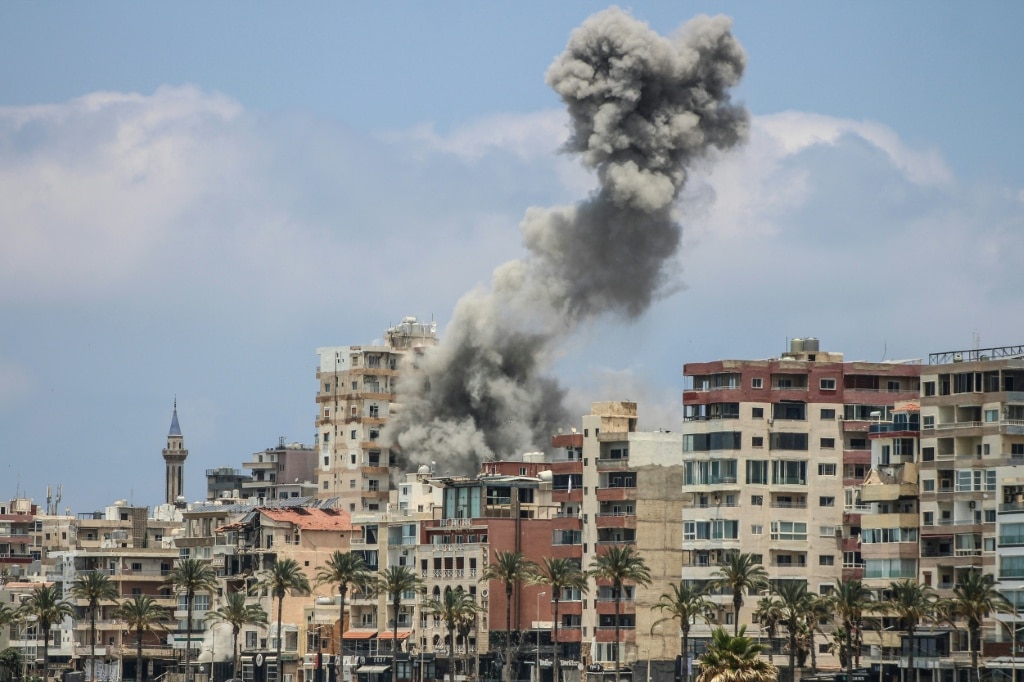
    A fresh standoff between the United States and Iran has thrown the strategically critical Strait of Hormuz back into crisis, as Tehran rejected Washington’s unsubstantiated claims of a planned enriched uranium transfer and threatened to reclose the global energy chokepoint if the U.S. naval blockade on Iranian ports remains in place. The escalation unfolded Saturday even as a small group of commercial vessels began transiting the waterway, marking days of fragile progress that has been put at sudden risk.

    The chain of tensions traces back to a U.S.-brokered 10-day ceasefire that halted Israel’s ongoing war in Lebanon, which prompted Iran to end its initial closure of the Strait of Hormuz this past Thursday. But just one day later, U.S. President Donald Trump announced that the American naval blockade imposed on Iranian ports earlier this week would remain in force until a comprehensive final agreement is reached between the two nations.

    In the wake of Trump’s announcement, Iran quickly reversed its earlier stance on opening the strait. Parliamentary Speaker Mohammad Bagher Ghalibaf emphasized in a post on X that the waterway would not stay open as long as the U.S. blockade remains in place. “What they call a naval blockade will definitely be met with an appropriate response from Iran,” Ghalibaf wrote. As of overnight, U.S. Central Command confirmed it had ordered at least 21 ships to turn away from the region since the blockade was first implemented.

    Hours before Iran issued its new threat, a convoy of eight commercial vessels — including one very large crude carrier (VLCC), oil product tankers, chemical carriers, and liquefied petroleum gas (LPG) carriers — was observed transiting Iranian waters south of Larak Island on Saturday morning, with additional vessels anchored in the Gulf preparing to follow the convoy. A spokesperson for Iran’s Islamic Revolutionary Guard Corps had previously stated that the limited passage was permitted under temporary negotiation terms, though it remains uncertain whether the initial convoy will be allowed to complete its full transit.

    The Strait of Hormuz is widely recognized as the world’s most important energy chokepoint, carrying roughly one-fifth of the global supply of crude oil and liquefied natural gas. The International Energy Agency has already warned that any extended closure would trigger the largest global energy supply disruption in history: cutting more than 10 million barrels of daily oil output and reducing global LNG supplies by 20 percent.

    Beyond the strait standoff, Tehran has issued a firm denial of a separate claim made by Trump Friday, in which the U.S. president stated that Iran had agreed to transfer its stockpile of enriched uranium to the United States. Trump told supporters at an Arizona rally that the U.S. would “very soon” retrieve what he called “nuclear dust” remaining from U.S.-Israeli strikes on Iranian nuclear sites in June 2024. “We’re going to get it together. We’re going to go in with Iran, at a nice leisurely pace, and go down and start excavating with big machinery… We’ll bring it back to the United States,” Trump said.

    Iran’s foreign ministry spokesperson Esmaeil Baghaei rejected the claim outright in comments to state television, saying: “Iran’s enriched uranium is not going to be transferred anywhere. Transferring uranium to the United States has not been an option for us.” Currently, Iran is estimated to hold more than 900 pounds of uranium enriched to 60 percent purity, just a step away from weapons-grade material. The Trump administration has repeatedly listed preventing Iran from developing a nuclear weapon as a core war goal, while Iran has consistently maintained its uranium enrichment program is exclusively for peaceful civilian energy and medical purposes.

    Negotiations between the two sides have also hit snags over other key sticking points, including the unfreezing of billions of dollars in Iranian assets held abroad. A senior Iranian official told Reuters that a preliminary agreement had been reached on the issue, but Trump denied any such deal Friday, saying “no money will exchange hands in any way, shape or form.” On nuclear terms, Washington has proposed a 20-year full suspension of all Iranian nuclear enrichment activity, while Tehran has countered with an offer of a three to five-year pause, according to anonymous sources familiar with the talks cited by Reuters. Two Iranian sources have noted preliminary signals of a possible compromise that would see part of Iran’s uranium stockpile removed, but no formal deal has been announced.

    The broader conflict that sparked this crisis began on February 28, when the U.S. and Israel launched a massive coordinated barrage of strikes on Iranian targets across the Islamic Republic. Tehran responded with its own strikes against Israeli and Gulf targets, and the initial closure of the Strait of Hormuz. Days after the conflict began, Israel launched a ground invasion of Lebanon, which has killed more than 2,000 Lebanese people to date.

    As tensions spike again, regional powers are ramping up diplomatic efforts to de-escalate. Pakistan concluded two parallel high-level diplomatic visits Saturday aimed at securing a permanent end to the conflict. Pakistani Army Chief Asim Munir completed a three-day visit to Tehran, where he held meetings with Iran’s president, foreign minister, parliament speaker, and top military commanders, according to an official statement from the Pakistani military. Separately, Pakistani Prime Minister Shehbaz Sharif wrapped up a three-day tour of Saudi Arabia, Qatar, and Turkey focused on building regional consensus for a peace deal.

    A second round of direct high-level talks between the U.S. and Iranian delegations is scheduled to take place in Islamabad next week. The first round, held last week, marked the highest-level face-to-face diplomatic engagement between the two nations in decades, with Ghalibaf and Iranian Foreign Minister Abbas Araghchi leading the Iranian delegation to the Pakistani capital.

  • Around 600 delegates attend opening ceremony of 2026 Henan Entrepreneurs Convention

    Around 600 delegates attend opening ceremony of 2026 Henan Entrepreneurs Convention

    China’s central Henan province launched its 2026 Henan Entrepreneurs Convention on Saturday, with an opening ceremony held in the provincial capital Zhengzhou that brought together nearly 600 industry leaders and business representatives from across the country and beyond. Centered on the official theme “New Development of Henan, New Opportunities”, the annual gathering is designed to highlight the province’s evolving economic landscape and unlock new collaborative growth opportunities for domestic and international stakeholders.

    Attendees at the opening ceremony included top representatives from China’s Fortune 500 enterprises, leading sector entrepreneurs, and senior figures from national and global investment institutions, all gathering to explore partnership prospects and gain insight into Henan’s latest policy and market developments.

    In a keynote address delivered at the opening ceremony, Liu Ning, Secretary of the Communist Party of China Henan Provincial Committee, outlined Henan’s strategic progress in integrating into regional and global economic cooperation frameworks. Liu noted that the province has embedded itself deeply into both the Belt and Road Initiative and Regional Comprehensive Economic Partnership (RCEP) cooperation mechanisms, developing a coordinated multimodal transport network that links air, land, and maritime Silk Road routes. This interconnected infrastructure has empowered local and foreign enterprises operating in Henan to access global markets more efficiently and secure stable positions in international industrial and supply chains, ultimately realizing the goal of “buy globally, sell globally” for businesses based in the region.

    Beyond infrastructure and global connectivity, Liu emphasized that Henan’s provincial government has made continuous, targeted efforts to upgrade the province’s business environment, rolling out a series of supportive policies designed to foster the sustainable long-term growth of Henan-based merchants and enterprises. The convention is expected to serve as a key platform to showcase these improvements, attract new investment, and strengthen ties between Henan and business communities nationwide.

  • Pope arrives in Angola on Africa tour overshadowed by Trump

    Pope arrives in Angola on Africa tour overshadowed by Trump

    Pope Leo XIV touched down in Angola on Saturday, kicking off the third stop of his 11-day four-nation African pilgrimage, even as he expressed regret that the entire trip has been overshadowed by a public verbal dispute with former U.S. President Donald Trump. After arriving in the coastal nation’s capital of Luanda, the pontiff made his way through cheering crowds lining motorcade routes in his popemobile for a scheduled meeting with Angolan President Joao Lourenco, following a concluding open-air mass that wrapped up his previous stop in Cameroon.

    Speaking to reporters aboard his flight from Cameroon to Angola, Pope Leo pushed back against widespread media narratives that framed a recent speech he delivered as a deliberate jab at Trump. During an address in Cameroon’s restive northwestern city of Bameroon, the epicenter of a 10-year separatist insurgency that has claimed thousands of lives, the pontiff condemned authoritarian tyrants for laying waste to global order. U.S. media outlets widely interpreted the remarks as a direct response to earlier criticism of the pope from Trump, but Pope Leo clarified that the full text of his speech was finalized long before Trump launched his public critique.

    “There’s been a certain narrative that has not been accurate in all of its aspects,” the pope told reporters. “And yet it was perceived as if I were trying to start a new debate with the president, which doesn’t interest me at all.” The dispute traces back to April 12, when Trump stated publicly that he was “not a big fan of Pope Leo,” and accused the American-born pontiff of recklessly engaging with Iran as the country pursues nuclear development capabilities. Pope Leo emphasized Saturday that he has no intention of engaging in a public back-and-forth with the U.S. political figure, noting that the focus of his African tour is meant to center on the challenges and needs of the continent, not transatlantic political sparring.

    Beyond the unwanted controversy, Pope Leo has used his tour, which launched in Algeria earlier this month, to deliver sharp warnings on a range of pressing global and regional issues: endemic corruption on the African continent, the systematic plunder of African natural resources by foreign and domestic actors, and the unregulated risks posed by rapid artificial intelligence development. In his opening address to Angolan government officials Saturday, the pontiff doubled down on these themes, condemning the destructive “logic of exploitation” that has created widespread social and environmental harm across the resource-rich nation.

    Angola ranks among Africa’s top crude oil exporters and holds vast reserves of diamonds and other minerals, but decades of extractive economic policy have left the country with crippling systemic inequality. World Bank data shows that roughly one-third of Angola’s 36.6 million residents, a majority of whom are young people, live below the $2.15-per-day international poverty line, with little of the nation’s natural resource wealth trickling down to working-class and low-income communities. Pope Leo also used his address to urge Angolan authorities to embrace open discourse, telling officials they “should not be afraid of dissent.”

    Lourenco’s socialist MPLA party has governed Angola continuously since the nation gained independence from Portugal in 1975, and human rights groups have repeatedly criticized the government for cracking down on freedom of expression, including harsh responses to peaceful public demonstrations. Last July, a three-day wave of looting and unrest broke out amid a national strike over fuel price hikes; roughly 30 people were killed in a subsequent police crackdown that drew widespread international condemnation, with hundreds of protestors arrested and jailed.

    For many of the hundreds of Angolans who lined the motorcade route Saturday, the papal visit carries personal significance: roughly 44% of Angola’s population identifies as Catholic, making the nation one of the largest Catholic-majority states in southern Africa. Pope Leo is only the third sitting pontiff to visit the country, following trips by John Paul II in 1992 and Benedict XVI in 2009. “There is a lot of suffering, a lot of poverty in Angola. I hope the pope will see with his own eyes the needs of the youth here,” said 33-year-old Luanda-based engineer Antonio Masaidi ahead of the visit.

    Looking ahead, Pope Leo is scheduled to lead a large open-air mass on Sunday in the Kilamba suburb of Luanda, before traveling by helicopter to the historic village of Muxima, a key Catholic pilgrimage site home to a 16th-century century church located roughly 130 kilometers southeast of the capital. On April 20, the pontiff will journey more than 800 kilometers from Luanda to Saurimo, where he will visit a local retirement home and celebrate a second mass before departing the next morning for the fourth and final stop of his African tour in Equatorial Guinea.

  • HiPP recalls jarred baby food in Austria over contamination fears

    HiPP recalls jarred baby food in Austria over contamination fears

    Leading European baby food manufacturer HiPP has launched a full recall of all its jarred puree products stocked at more than 1,500 Spar-affiliated supermarkets across Austria, triggered by alarming evidence of potential external tampering that could leave consumers facing life-threatening health risks.

    In an official public statement, the brand confirmed that while suspicious interference has only been linked to its carrot and potato flavored puree, pre-emptive safety measures led the company to pull every SKU in its jarred baby puree line from all Spar locations—including sub-brands Eurospar, Interspar, and Maximarkt. HiPP explained that investigators cannot rule out the introduction of dangerous harmful substances into affected products as a result of unauthorized external tampering, a flaw that makes consumption of potentially compromised goods a major hazard to infants.

    Affected products can be identified by a distinct white sticker marked with a red circle on the bottom of the jar, authorities confirmed. Law enforcement officials in Austria’s eastern Burgenland region have launched an investigation into the incident and are actively calling on members of the public to come forward with any information that could help the inquiry.

    Major retail chain Spar has independently verified the recall, confirming that customers who purchased any HiPP jarred puree products from its Austrian stores are eligible for a full refund upon returning affected items. As a urgent safety warning, HiPP has strongly advised all parents and caregivers to avoid feeding any of its jarred baby food purchased from Austrian Spar outlets to children, noting that HiPP baby food sold through non-Spar retailers in Austria and all of the company’s products in other countries remain entirely unaffected by the recall. HiPP’s baby formula line is also not impacted by this incident.

    This recall comes at a time of growing global scrutiny over infant food safety, coming just months after two of the world’s largest food conglomerates issued massive, multi-country recalls of baby formula over contamination that made dozens of infants ill. Earlier this year between January and February, Nestle and Danone pulled batches of their baby formula products from markets in over 60 countries—including the United Kingdom—after reports of infants falling ill from consumption. Investigations confirmed affected batches were contaminated with the toxin cereulide, a harmful bacterial byproduct that triggers severe nausea and vomiting and is resistant to heat, meaning it cannot be destroyed through cooking or standard formula preparation processes.

    The UK Health Security Agency (UKHSA) documented at least 36 confirmed cases of food poisoning among infants in the UK linked to that contamination incident, though officials confirmed none of the cases were classified as life-threatening.

  • Pope says ‘tyrants’ speech was not aimed at Trump

    Pope says ‘tyrants’ speech was not aimed at Trump

    Pope Leo XIV touched down in Angola on Saturday, the latest stop on his multi-nation tour of Africa, and used the opportunity to clear up widespread misinterpretation of recent comments he made about global authoritarianism and military spending. The pontiff told reporters traveling with him that his earlier remarks criticizing world leaders he labeled “tyrants” for pouring billions of dollars into conflict were drafted two weeks before former U.S. President Donald Trump launched a high-profile public attack on him. There was never any intention, he stressed, to enter into a public debate with the American leader.

    The back-and-forth between the two figures began earlier this month, after Pope Leo publicly voiced criticism of the U.S.-Israeli military campaign in Iran and pushed back against Trump’s warning that an entire civilization would be destroyed if Tehran did not accept Washington’s demands to end the conflict and reopen the Strait of Hormuz. That critique prompted Trump to unleash a scathing social media attack on the first American-born pope, calling him “terrible for foreign policy,” “WEAK on crime,” and saying he was “not a big fan” of the pontiff. Trump also briefly shared an AI-generated image that depicted him as a Jesus-like figure before removing it, and later told reporters that while he accepted the Pope’s right to his own views, he retained the right to disagree.

    Days after Trump’s initial attack, Pope Leo delivered a speech in Cameroon, another stop on his African tour, that drew immediate scrutiny. In that address, he condemned leaders who “turn a blind eye to the fact that billions of dollars are spent on killing and devastation, yet the resources needed for healing, education and restoration are nowhere to be found.” He added, “The masters of war pretend not to know that it takes only a moment to destroy, yet often a lifetime is not enough to rebuild.” The pontiff also used the speech to denounce the nearly decade-long insurgency that has left a bloodstained trail of destruction across parts of Cameroon, decrying what he called “an endless cycle of destabilisation and death.”

    Many political analysts and media outlets quickly framed that speech as a direct response to Trump, a narrative the Pope pushed back on firmly Saturday. “A certain narrative that has not been accurate” has taken root, he told reporters, fueled by the political tension that emerged after Trump’s original criticism. “Which is not in my interest at all,” he added, emphasizing that entering political sparring matches with the U.S. leader was never his goal.

    The four-country African tour, which includes stops in 11 cities, marks Pope Leo’s second major international visit since his election to the papacy in 2024. The trip underscores the outsized importance of the Catholic faith across the African continent: 2024 Vatican data shows that more than 20% of the world’s 1.3 billion Catholics – approximately 288 million people – currently reside in Africa, a share that is projected to grow steadily in coming decades.

  • At least five killed in Kyiv as gunman opens fire and takes hostages

    At least five killed in Kyiv as gunman opens fire and takes hostages

    A horrific mass shooting in the Ukrainian capital Kyiv has left a minimum of five people dead and multiple others wounded, in an attack that unfolded in a busy residential district on April 19, Ukrainian President Volodymyr Zelensky has confirmed.

    The violence erupted in southern Kyiv’s Holosiivskyi district, local law enforcement officials confirmed. According to initial police accounts, the 58-year-old attacker first opened fire on random civilians on a public street, before retreating to a nearby supermarket and taking bystanders hostage.

    Ukraine’s Interior Minister Ihor Klymenko told reporters that after the gunman exchanged fire with responding officers from inside the supermarket, law enforcement teams moved in and fatally shot the attacker. All four hostages taken by the gunman were successfully rescued without fatal harm, President Zelensky confirmed.

    Kyiv Mayor Vitali Klitschko updated casualty figures to note at least 15 people suffered injuries in the attack, 10 of whom – including one minor child – have been admitted to local hospitals for ongoing medical care. Prosecutor General Ruslan Kravchenko clarified the breakdown of fatalities: four of the victims were killed during the initial street shooting, while one additional fatality occurred inside the supermarket.

    Kravchenko also confirmed that the attacker is a 58-year-old man originally from Moscow, Russia, and that he carried out the attack using a fully automatic firearm. Unconfirmed reports suggest the shooter may have detonated an explosive device, and responding authorities confirmed a fire broke out at the attacker’s local apartment following the shooting. The motive behind the attack remains under active investigation as of publishing.

  • China sex toy makers cautiously embrace AI wave

    China sex toy makers cautiously embrace AI wave

    At a recent adult product exhibition held in Shanghai, attendees were captivated by a new wave of AI-integrated intimate wellness products, as China’s leading sex toy manufacturers begin to tap into the global artificial intelligence boom. As the world’s largest manufacturing hub for adult products, China’s tech-driven innovation has already reshaped countless other industries, and the intimate wellness sector is now starting to explore AI’s transformative potential — though many players are moving cautiously to avoid running afoul of existing regulatory frameworks.

    During a visit to the exhibition by AFP on Friday, a clear divide in approach emerged among participating companies. While some firms were eager to showcase their AI-enhanced offerings, others openly acknowledged wariness over the legal and privacy risks associated with machine-generated sexual content.

    Across the sprawling exhibition floor, banners advertised Guangzhou-based firm Luvmazer’s “AI character dating” app, which syncs conversational interactions with virtual partners to real-time pulse adjustments on connected vibrators, with marketing copy promising responsive, immersive experiences that “leave you trembling with one sentence.” At the Cydoll exhibition booth, a life-sized cyberpunk-themed silicone doll with adjustable metal joints was displayed as a working prototype. According to factory manager Zhou Yuanqing, the prototype is engineered to deliver natural conversational responses and simulate authentic emotional expression, filling a growing demand for companionship amid shifting social habits. “Nowadays, many people don’t go out to socialize or meet friends anymore, they’d rather stay home alone playing games on their phones or computers,” Zhou explained to AFP. “But that doesn’t mean they don’t still need connection and companionship.”

    Several other manufacturers showcased AI-powered tools that use machine learning to analyze adult video content, translating on-screen action into dynamic adjustments to device pressure, vibration speed, and pulse patterns — a feature that was little more than a niche novelty just a few years ago. “Almost every brand offers video syncing now,” noted an employee at Amorlink, a leading teledildonics brand that showcased its new connected vacuum cups built with high-performance processing chips at the event. Domestic condom giant Jissbon exhibited a two-in-one suction vibrator equipped with equally impressive AI features: long-distance remote control access, a library of customizable virtual “boyfriend” personas, and the ability to match vibration frequency and intensity to surrounding environmental noise.

    Beyond consumer-facing products, some companies are also developing AI tools for back-end operations, offering AI-powered customer service agents for marketing and running offline adult retail stores, while others provide custom development solutions for brands looking to build their own smart intimate products. A promotional poster for Hong Kong-based firm metaXsire, which did not have a physical booth at the exhibition, advertised an AI-powered adult image and video generator capable of generating sexually explicit dialogue in over 80 languages. The company’s website claims its tool can swap the faces of celebrities or personal contacts onto pornographic video content, which can then be synced to connected smart toys. While the app’s terms of service prohibit users from leveraging the deepfake feature to shame or harass others, it provides no clear details on how the company will verify consent for the faces used in generated content.

    Despite the rush to innovate, many exhibitors emphasized that caution remains the watchword for integrating AI with adult content, particularly given China’s strict regulatory landscape around explicit material. Pornography is technically illegal in mainland China, and most international adult video platforms are blocked by the country’s national internet firewall, only accessible via unauthorized virtual private network services. For many manufacturers, this regulatory environment means balancing innovation with risk mitigation.

    Sam Xie, founder of Shanghai-based adult toy manufacturer Magic Motion, said his company’s products are compatible with third-party AI agents, but the firm carefully vets all software development partners to avoid compliance issues. “We have to be extremely careful, otherwise we can face all kinds of problems, even getting reported by consumers,” Xie told AFP.

    For China’s $XX billion sex toy industry, the integration of AI represents both a major market opportunity and a complex regulatory balancing act, as manufacturers work to bring cutting-edge smart products to both domestic and global consumers while navigating uncertain legal terrain around AI-generated explicit content and user privacy.

  • Ukrainian police shoot and kill a gunman who killed at least 6 and took hostages in a supermarket

    Ukrainian police shoot and kill a gunman who killed at least 6 and took hostages in a supermarket

    On a Saturday in Ukraine’s capital Kyiv, a violent mass shooting left at least six people dead, ending after law enforcement special forces stormed the local supermarket where the attacker had barricaded himself and taken hostages, killing the gunman during the confrontation, senior Ukrainian officials confirmed.

    Ihor Klymenko, head of Ukraine’s Interior Ministry, announced the outcome of the incident in an official social media statement, noting that the tactical raid was launched after hours of negotiation attempts failed to draw a cooperative response from the shooter. According to Klymenko’s on-site remarks to reporters, the attacker did not begin the violence inside the store: he first shot and killed four innocent bystanders on an adjacent public street before moving into the supermarket, where he killed a fifth person inside the building. Kyiv Mayor Vitali Klitschko later confirmed that a sixth fatality, a young woman who had been wounded in the attack, succumbed to her injuries while receiving treatment at a local hospital.

    An Associated Press journalist who arrived at the scene shortly after the shooting began observed multiple victim bodies lying on the street, covered by emergency blankets before being removed by medical personnel.

    Klymenko shared key details about the assailant: the man was born in 1962, and was carrying a legally registered short-barrel carbine assault rifle at the time of the attack. No further information about his identity or motive was released immediately, but Klymenko confirmed that police negotiators spent roughly 40 minutes attempting to de-escalate the situation before ordering the raid. Footage from the scene captured a female negotiator, protected by body armor and an armored police vehicle, using a megaphone to urge the gunman to release unharmed hostages, telling him “the people are not to blame for this. Please, let them go and we will talk with you.”

    Klymenko added that negotiation teams even offered to send medical supplies including tourniquets into the building to treat a wounded person the team believed was being held inside, but the gunman never responded to any outreach. “Consequently, the order was given to neutralize him,” Klymenko said.

    Investigators are currently reviewing how the attacker obtained his legal weapons permit. Klymenko explained that the gunman had applied to renew his expiring weapons permit in December of the previous year, which required a medical certification to confirm he was fit to own a firearm. The investigation will now focus on identifying which medical facility issued that certificate, to determine if any regulatory failures contributed to the attack.

    The shooting unfolded in Kyiv’s Holosiivskyi district, one of the capital’s central residential and administrative areas. Broadcast footage from the scene shows uniformed officers taking cover throughout the multi-tenant shopping mall that houses the targeted supermarket while exchanges of gunfire were ongoing, with emergency teams escorting dozens of unharmed bystanders out of the secured area.

    Associated Press writer Katie Marie Davies, based in Manchester, England, contributed reporting to this account.

  • France blames Hezbollah for French peacekeeper’s death in Lebanon

    France blames Hezbollah for French peacekeeper’s death in Lebanon

    Just two days after Israel and Lebanon agreed to a 10-day ceasefire to negotiate an end to six weeks of cross-border conflict, a deadly ambush targeting United Nations peacekeepers in southern Lebanon has left one French soldier dead and three more wounded, with French President Emmanuel Macron publicly holding the Iran-backed militant group Hezbollah responsible — an accusation the organization has forcefully denied.

    The fallen service member was identified as 24-year-old Staff Sergeant Florian Montorio, who died from a close-range gunshot wound during the attack Saturday in the Ghandouriyeh-Bint Jbeil region near the Israeli-Lebanese border. French Armed Forces Minister Catherine Vautrin confirmed in a post on X that Montorio’s unit was moving to resupply a UN Interim Force in Lebanon (UNIFIL) outpost that had been isolated by days of ongoing combat when they were ambushed by an armed faction. Despite Montorio’s comrades pulling him to safety under active fire, medical efforts to revive him were unsuccessful, Vautrin added.

    In his own public statement on X, President Macron said “Everything points to Hezbollah being responsible for this attack,” and called on Lebanese national authorities to immediately apprehend and prosecute those behind the killing. This is not the first French military fatality linked to the broader regional conflict sparked by the October 7 Hamas attacks: last month, another French soldier, Arnaud Frion, was killed by an Iranian-designed drone in Iraq’s Kurdistan region.

    Hezbollah, which has repeatedly denounced the upcoming ceasefire negotiations with Israel as a surrender of Lebanese sovereignty, quickly rejected all claims of involvement. In an official statement, the group said it “denies any connection to the incident that occurred with UNIFIL forces in the Ghandouriyeh-Bint Jbeil area,” and called for “caution in making judgments and assigning responsibilities” until the Lebanese army completes its official probe into the attack.

    Senior Hezbollah official Mahmud Qamati doubled down on the group’s opposition to the talks Saturday, describing the negotiations led by the Lebanese government as “a failure, weak, defeated… and submissive,” and stressed the organization would not be bound by any outcome of the discussions. Lebanese President Joseph Aoun has pushed back against Hezbollah criticism, saying the negotiations do not represent any concession of Lebanese interests, marking the first direct formal talks between Lebanon and Israel in decades.

    UNIFIL’s initial assessment echoed French claims that the attack was likely carried out by Hezbollah, with the peacekeeping force noting the gunfire came from non-state actors as peacekeepers cleared explosive ordnance from a local road to reach the cut-off outpost. UNIFIL added that the incident “may amount to war crimes,” and has launched an independent internal investigation into the attack. Both Lebanese President Aoun and Prime Minister Nawaf Salam have condemned the killing, with Salam ordering a national probe and Aoun pledging to hold all responsible parties accountable. In the wake of the attack, Macron held urgent phone calls with both Aoun and Salam to press for full guarantees of security for all UNIFIL personnel deployed in the country.

    Tensions around UNIFIL’s mission have escalated sharply since the Israel-Hezbollah border conflict began six weeks ago, when Hezbollah launched rocket attacks on Israel in solidarity with Hamas, drawing Lebanon into the broader regional war. The peacekeeping force, which has served as a neutral buffer between Lebanon and Israel for nearly 45 years, has repeatedly been targeted by both Israeli and Hezbollah forces during the current fighting. Last month, three Indonesian UNIFIL peacekeepers were killed: a preliminary UN investigation found one was killed by Israeli tank fire, while the other two died in an improvised explosive device attack widely linked to Hezbollah. In separate incidents earlier this year, Israeli troops destroyed surveillance cameras at UNIFIL’s headquarters, and just last week an Israeli tank rammed two UNIFIL patrol vehicles, causing damage but no injuries. UNIFIL’s current mandate is set to expire at the end of 2024, adding further uncertainty to the force’s future in the region.

  • UK police investigate an arson attempt on a building once used by the Jewish community

    UK police investigate an arson attempt on a building once used by the Jewish community

    LONDON – A coordinated investigation led by London’s counterterrorism policing unit is underway after a string of suspicious arson attempts targeting sites associated with London’s Jewish community and Iranian opposition groups across the city’s northwest districts.

    The most recent incident unfolded on Friday evening in Hendon, a residential neighborhood just a short distance from Golders Green, one of London’s most prominent Jewish population centers. Law enforcement officials confirmed that witnesses observed a male suspect drop a canvas bag holding three flammable liquid-filled bottles outside a former Jewish community facility. The suspect attempted to ignite the cache before fleeing the scene; the material failed to fully catch fire, and no injuries were reported. As of Saturday, no suspects have been taken into custody.

    This attempted attack is the latest in a series of arson incidents targeting relevant sites that have shaken the capital in recent weeks. On March 23, four vehicles belonging to a Jewish charity ambulance service were destroyed in a deliberate fire in Golders Green, four people have already been charged in connection with that attack. Just two days before the Hendon incident, two separate arson attempts were recorded across northwest London: one targeted a local synagogue, while the second saw an ignited container thrown into the headquarters of a Persian-language media organization based in Wembley. Three suspects – two adult men and one teenage boy – have been charged with arson over that incident. No people have been hurt in any of the five linked events.

    While detectives have not formally connected the Friday Hendon attack to the earlier incidents, counterterrorism officials have taken lead of the ongoing probe due to clear thematic and operational similarities across all events. Originally, investigating officers had not classified any of the attacks as confirmed terrorist acts, but the pattern of targeting has drawn significant attention from national security officials.

    A key line of ongoing inquiry centers on whether the attacks have any connection to the Iranian government. British authorities have repeatedly publicly accused Iran of leveraging criminal proxy networks to carry out covert attacks on European soil, specifically targeting Jewish community institutions and Iranian opposition media outlets operating in exile. The UK’s domestic intelligence agency MI5 previously disclosed that it foiled more than 20 potentially lethal Iran-backed plots against targets in the country in the 12-month period ending last October.

    Metropolitan Police have not released a detailed description of the Hendon suspect as of Saturday, and have appealed to any members of the public who witnessed suspicious activity in the area Friday night to come forward with information to aid the investigation.