作者: admin

  • Mediators push US-Iran ceasefire extension as deal hopes fade

    Mediators push US-Iran ceasefire extension as deal hopes fade

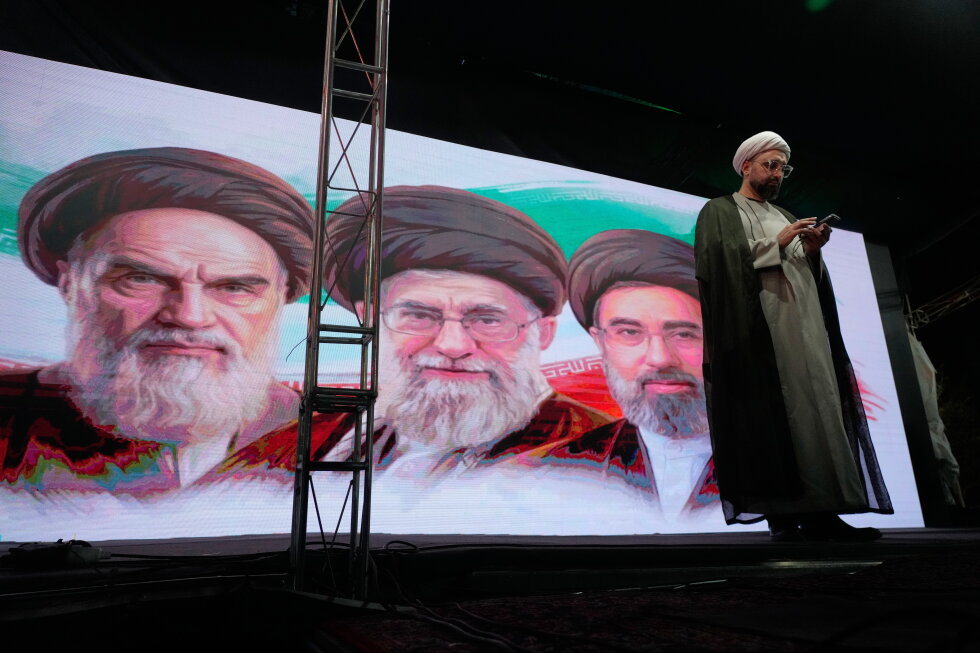
    As a critical Wednesday deadline for a US-Iran ceasefire approaches, diplomatic mediators have begun pushing to extend the truce, after hopes of locking in a comprehensive peace agreement dimmed over the weekend, multiple anonymous senior regional sources told Middle East Eye.

    While negotiators had made incremental progress on core sticking points in the days leading up to the weekend, the shifting geopolitical context has widened unresolved gaps across key negotiation tracks, a senior Turkish official confirmed. The official noted that the complex, multifaceted talks have seen some modules move forward as scheduled, but irreconcilable differences remain on other critical components that cannot be bridged in the remaining timeline before the two-week ceasefire expires on Wednesday.

    Pakistani mediators, who have played a central role in facilitating the talks, are eager to extend the deadline to keep negotiations alive, and remain optimistic that a final resolution can be secured in the days following the original expiration. Turkish Foreign Minister Hakan Fidan has publicly backed the extension push, saying additional time is a non-negotiable requirement to reach a durable deal. Still, a senior Turkish security official warned that the risk of total negotiations collapse is tangible, and a breakdown could spark a far more brutal new round of open conflict between the two nations.

    Before the weekend shift in diplomatic momentum, negotiators had laid out a detailed draft framework covering the full scope of disputed issues. The draft includes provisions to transfer Iran’s stockpile of highly enriched uranium to Pakistan, implement a multi-year moratorium on domestic uranium enrichment, establish new transit rules for the Strait of Hormuz, require partial disarmament of Iran-aligned armed groups across the Middle East, and deliver immediate sanctions relief alongside the unfreezing of an estimated $100 billion in Iranian sovereign assets held abroad. Notably, Iran’s ballistic missile program is entirely excluded from the current draft agreement.

    One of the most contentious unresolved disputes centers on the length of the enrichment suspension. The U.S. originally demanded a 20-year moratorium, while conflicting reports place Iran’s current offer between a five-year and 12-year halt. After the initial moratorium period expires, the agreement would allow Iran to extend the pause in consultation with the International Atomic Energy Agency (IAEA). On the transfer of enriched uranium, however, sources indicate Tehran has come close to accepting the proposal: Pakistan originally suggested sending the stockpile to a neutral third country, a principle Iran agreed to, before Tehran put forward Pakistan itself as the storage destination, which Islamabad accepted.

    The draft framework also lays out new rules for shipping through the Strait of Hormuz, a chokepoint for 20% of the world’s daily oil trade. Under the proposal, Iran would fully reopen the strait, collect a transit tariff to be split with Oman, and maintain exclusive control over transits, requiring individual approval for every passing vessel. Critically, the deal would ban military warships from transiting the strait, a provision that would block British and French plans to escort commercial tankers through the waterway.

    The weekend shift in momentum came after rising tensions in the Strait of Hormuz Saturday: Iran announced it was closing the waterway just two days after reopening it, citing the ongoing U.S. naval blockade, which Tehran says constitutes a direct violation of the existing ceasefire. The move was intended to demonstrate Iran’s continued sovereignty over its territorial waters and push back against the blockade, according to Iranian sources.

    On Sunday, U.S. President Donald Trump accused Iran of violating the ceasefire with the strait closure, but confirmed that U.S. negotiating teams would travel to Islamabad for a new round of talks Monday. In an interview with Fox News and a subsequent post on Truth Social, Trump issued an extreme warning, saying the U.S. would “blow up the whole country” if Iran refused to sign a deal, adding that “it’s time for the Iran killing machine to end” after 47 years of inaction by previous U.S. administrations. In response, Iran’s state-owned Tasnim news agency reported that Tehran has not yet committed to sending a negotiating delegation to Pakistan as long as the U.S. naval blockade remains in place.

    On the issue of regional armed groups aligned with Iran, the draft requires the partial disbandment of Iraq’s Popular Mobilisation Forces (PMF) and Lebanon’s Hezbollah, and could open a path to a non-aggression pact or even full peace deal between Lebanon and Israel. The proposal would require Iranian-aligned PMF factions to withdraw from border regions near Kuwait and Jordan, and cap the total number of PMF fighters at 15,000, down from the group’s current estimated 238,000 total members. For Hezbollah, the agreement would require the group to dismantle all offensive weapons targeting Israel, while allowing it to retain small arms for self-defense.

    Multiple sources have cast major doubt on the feasibility of the Hezbollah disarmament provision. One senior Lebanese source noted that Hezbollah emerged as a resistance movement in response to Israeli invasion, and that the Lebanese military lacks the capacity to defend the country from Israeli incursion, meaning the group will never agree to give up its offensive capabilities. Iran has also pushed back on the provision, flatly denying that it exercises control over either Hezbollah or the PMF, and insisting both groups make their own decisions independent of Tehran.

    Additional layers of uncertainty hang over the negotiations beyond core policy disputes. Reports are conflicting over whether Iran’s top leadership has signed off on the draft framework: one source says Supreme Leader Mojtaba Khamenei has approved the text, but other sources claim Khamenei remains severely injured from the attack that killed his predecessor, Ayatollah Ali Khamenei, having lost a leg and suffered serious facial trauma that leaves him unable to communicate. There is also no consensus on how any final agreement would be structured or announced, with negotiators only agreeing to separate “packets of agreements on different files” so far.

    Beyond Iran’s internal divides, the deal also faces major external threats from key regional actors. Israeli Prime Minister Benjamin Netanyahu has already been pressured by the Trump administration to pause Israel’s offensive in southern Lebanon, but the current draft falls far short of Israel’s core war aims: it allows Iran to retain its regime, keep its ballistic missile program, and only suspend rather than permanently end uranium enrichment. With Israel facing an election year, Netanyahu’s popularity has already suffered from a ceasefire that does not deliver a definitive victory, and senior sources confirm he will reject the current framework. There are also widespread doubts that Israel’s intelligence service Mossad will abandon its decades-long goal of forcing regime change in Iran.

    Three Gulf Arab states that suffered major damage to their energy infrastructure and urban centers during the recent conflict also stand opposed to the draft. After initially lobbying against a U.S.-led attack on Iran, the United Arab Emirates, Kuwait, and Bahrain have since pushed Trump to continue military operations to eliminate Iran’s military and nuclear capabilities, with some evidence indicating the UAE and Bahrain even participated in recent drone strikes on Iranian targets. For these states, the current draft would be seen as a betrayal of their security interests by the U.S.

  • Iranian president reaffirms stance on nuclear rights

    Iranian president reaffirms stance on nuclear rights

    TEHRAN – In a firm public statement carried by the Iranian Students News Agency on Sunday, Iranian President Masoud Pezeshkian doubled down on his country’s long-held position, rejecting United States attempts to block Tehran from accessing its legally recognized nuclear rights. Pezeshkian specifically pushed back against recent remarks by US President Donald Trump, who has claimed Iran should not be permitted to exercise its sovereign rights to nuclear development, calling the argument fundamentally unreasonable.

    Pushing for clarity on the US position, Pezeshkian noted that Washington has yet to outline any specific violation or offense that would justify stripping Iran of the nuclear rights it is entitled to under international frameworks. Beyond the nuclear issue, the Iranian president added that the country remains committed to working toward ending ongoing regional conflicts, with the goal of reaching a resolution that preserves Iran’s national dignity.

    The statement comes amid long-running international tensions over Iran’s nuclear program, with successive US administrations imposing sanctions and diplomatic pressure to curb Tehran’s activities. Pezeshkian’s remarks mark the latest formal reaffirmation of Iran’s consistent stance that it retains full sovereign right to peaceful nuclear development for civilian energy and medical purposes.

  • Pakistan tightens security ahead of expected US-Iran talks

    Pakistan tightens security ahead of expected US-Iran talks

    As the second round of long-awaited negotiations between the United States and Iran draws near, Pakistan has rolled out one of its largest security deployments in recent years, locking down key urban centers to ensure the safety of the upcoming diplomatic talks.

    Authorities in the South Asian nation have issued a high-level security alert for Islamabad, the national capital, and its adjacent garrison city Rawalpindi, the two primary hubs set to host the diplomatic event. Unnamed police sources familiar with the security plan confirm that around 20,000 regular police officers have been assigned to security duties across the so-called twin cities, with additional backup from hundreds of elite commandos including specially trained sniper units to counter potential threats.

    To reinforce the security perimeter, specialized rapid response units have also been put on high standby. Additional teams from the Punjab Highway Patrol, the Dolphin Force counter-terror unit, and the Quick Response Unit are positioned at key checkpoints and transit routes, while the integrated Safe City surveillance network and rooftop sniper outposts maintain continuous 24-hour monitoring of all public and sensitive areas across the region.

    This is not the first time Pakistan has rolled out such stringent security measures for US-Iran diplomatic engagement. Similar extensive security arrangements were implemented ahead of the first round of talks, which were launched to de-escalate rising tensions and hostilities that have disrupted stability across the Middle East in recent months.

    Security officials confirmed that advance delegations from the United States, including dedicated US security personnel, have already begun arriving in the country to coordinate logistics and security protocols ahead of the talks. As part of the finalized security plan, Pakistani authorities have enacted sweeping movement restrictions: all public and commercial transport services have been suspended across both Islamabad and Rawalpindi, and most access points to the capital’s high-security Red Zone, which houses key government buildings and foreign diplomatic missions, have been permanently sealed off for the duration of the event.

    Major five-star hotels frequently used to host high-profile international delegations, including the iconic Islamabad Serena Hotel and Islamabad Marriott Hotel, have been requisitioned by the government to accommodate negotiating teams and accompanying delegates. Hotel management has requested all existing non-official guests to vacate their rooms ahead of the talks. Additionally, all public hostels and private guest houses across the capital have been ordered to suspend operations until further official notice.

  • Fils wins on Barcelona clay with French Open looming

    Fils wins on Barcelona clay with French Open looming

    With just four weeks remaining until the opening serve of the 2025 French Open at Roland Garros, rising French tennis star Arthur Fils sent a seismic statement through the men’s game on Sunday, capturing the prestigious ATP 500 Barcelona Open title with a confident 6-2, 7-6(2) victory over top-ranked Russian competitor Andrey Rublev.

    The 21-year-old rising talent has overcome enormous odds to reach this career milestone: after an eight-month layoff sidelined by a serious injury, Fils only made his return to competitive tour play in February this year. In just three months back on court, the young Frenchman has already put together a staggering run of form. He reached the Doha final earlier this spring, falling only to world number one Carlos Alcaraz, and Sunday’s title marks the fourth ATP trophy of his still-burgeoning professional career.

    Reflecting on the winding road that led to his Barcelona victory, Fils opened up about the mental and physical toll of his extended injury break. “These eight months have been hard,” he told reporters after the win. “And now here I am winning a tournament again.”

    Fils’ run to the Barcelona crown was defined by the kind of poise and mental toughness rarely seen in a player his age, a performance that will catapult him past compatriots to become the highest-ranked French male player on the ATP tour when the new rankings are released. His road to the final included a dramatic comeback win over Spanish wildcard Rafael Jodar in the semi-finals, where he fought back from a one-set deficit to secure his spot in the title match.

    Against Rublev on Sunday, Fils got off to a rocky start, dropping the first two games of the opening set before finding his rhythm. A sharp adjustment to his serving accuracy, paired with a string of blistering baseline winners, turned the tide completely: Fils reeled off six straight games to close out the first set 6-2, putting the 28-year-old Rublev immediately on the back foot.

    The second set brought a new test of Fils’ mental fortitude: after holding a commanding position, the young Frenchman squandered four consecutive championship points, forcing the set into a deciding tiebreak. But rather than crumbling under the pressure of his first big ATP 500 title, Fils regained his composure quickly, moving Rublev from side to side across the clay to take the tiebreak comfortably 7-2 and seal the win.

    Addressing the late-match slip, Fils acknowledged the weight of the moment got to him in the closing games. “It was all in my head at the end. I played very well for a set and a half, but the pressure of the title caught up with me,” he explained. “At the end, I told myself I just had to put the ball in, and it paid off.”

    For French tennis, Fils’ breakout win comes at a historic moment: no French man has lifted the Roland Garros men’s singles trophy since Yannick Noah claimed the title in 1983, leaving a decades-long drought that has weighed on every generation of domestic players. With the 2025 tournament set to get underway on May 18, Fils will now enter the event as the clear home favorite and a legitimate contender to end that long wait.

    Notably, defending French Open champion Carlos Alcaraz was forced to withdraw from the Barcelona Open mid-tournament last week due to a lingering wrist injury, clearing a path for Fils’ title run that he fully capitalized on.

  • Aer Lingus cancels some flights from summer schedule

    Aer Lingus cancels some flights from summer schedule

    Irish national airline Aer Lingus has confirmed that it has slashed a slice of its scheduled summer flights, attributing the cuts to mandatory aircraft maintenance work. While the carrier says only a small share of its total seasonal schedule has been affected, independent media reports have put the number of canceled services at more than 500.

    In an official statement, Aer Lingus clarified that the adjustments affect roughly 2% of its overall flight schedule. The company added that it has rebooked the vast majority of impacted passengers onto alternate flights departing the same day, minimizing disruption to travel plans. According to earlier reporting from the *Sunday Independent*, the canceled routes cover popular short-haul connections out of Dublin Airport, including services to major European destinations such as Amsterdam, Athens, Berlin, Faro and Zurich, as well as key UK airports including London Heathrow, Manchester, Birmingham and Edinburgh across multiple dates in the summer season.

    The schedule changes come amid a growing regional jet fuel crisis that has sent global aviation fuel prices soaring, prompting industry analysts to question the official explanation for Aer Lingus’ cuts. The crisis traces back to the effective closure of the Strait of Hormuz — a critical chokepoint that carries much of the Gulf region’s oil and refined fuel exports to global markets — by Iran for more than six weeks. The closure was implemented in response to recent US and Israeli military attacks, and has already disrupted global supply chains, driving up jet fuel prices and stoking widespread fears of widespread shortages across Europe.

    Earlier this week, the head of the International Energy Agency (IEA) warned that Europe currently holds only around six weeks of commercially available jet fuel reserves. In an official briefing, the IEA noted that the ongoing supply crunch has thrown global aviation fuel markets into chaos, creating unprecedented cost pressures for air carriers worldwide. For most airlines, jet fuel accounts for between 20% and 40% of total operating costs, meaning even moderate price jumps can turn low-margin routes unprofitable overnight. As a result, carriers across the globe have already been forced to implement emergency cost-cutting measures to offset rising fuel expenses.

    While Aer Lingus has framed the cancellations as a routine response to mandatory maintenance requirements, veteran travel journalist Simon Calder argues the cuts are likely a symptom of the broader industry crisis hitting European aviation. “Airlines trimming some of their summer services is becoming widespread across Europe, because the doubling of the cost of fuel means some routes are no longer profitable,” Calder explained.

    Irish Transport Minister Darragh O’Brien has moved to reassure the public that the country’s jet fuel supply remains secure, brushing off concerns about immediate shortages. Speaking to Ireland’s national broadcaster RTÉ on the *This Week* program, O’Brien stated that Ireland maintains a robust 70-day jet fuel reserve, and sources most of its aviation fuel from the United States rather than Gulf markets. The minister added that decisions about flight scheduling remain independent operational choices for individual airlines, separate from government supply policy.

  • 17 die in US immigration custody this year: report

    17 die in US immigration custody this year: report

    WASHINGTON D.C. – New official data from U.S. Immigration and Customs Enforcement (ICE) confirms that 17 people held in immigration detention facilities across the United States have died since the start of 2026, marking a continuation of a years-long upward trend in detainee mortality that has drawn widespread criticism from immigration advocacy and human rights groups.

    The most recent fatality, recorded by ICE this Thursday, involves a 27-year-old Cuban national who was found unresponsive in his cell at a Miami federal detention center on April 12. Emergency response teams carried out immediate resuscitation procedures, but the man was pronounced dead at the scene. Authorities have not yet released a confirmed cause of death, noting that the investigation into the circumstances of his passing remains ongoing.

    Historical data compiled by ICE and reported by NBC News places this year’s mortality figures in a troubling context. In 2025, ICE recorded 33 detainee deaths across its custody network – the highest annual total recorded in more than 20 years. That marked a sharp jump from 2024, when 11 deaths were reported among people held in immigration detention.

    As of early April 2026, ICE’s total detainee population sits at more than 60,000 people. While this overall population number has fallen modestly in recent months, it remains substantially higher than the detention levels recorded before the return of Donald Trump to the U.S. presidency, a period during which the administration has implemented sweeping and restrictive immigration policies that expanded detention capacity and increased overall detention numbers.

  • China sees drop in common cancer incidence amid all-round prevention, control efforts

    China sees drop in common cancer incidence amid all-round prevention, control efforts

    BEIJING – Latest official data from China’s National Cancer Center confirms meaningful public health progress: the country has recorded consistent drops in the incidence and mortality rates of multiple prevalent cancers, while the overall five-year survival rate for people living with cancer has climbed steadily in recent years.

    The figures, unveiled Friday during China’s annual national cancer prevention awareness campaign (held this year from April 15 to 21), show esophageal cancer incidence and mortality falling by roughly 4.5% year-over-year on average. Annual average declines of around 2% have also been registered in death rates for both lung cancer and nasopharyngeal cancer, according to the updated data.

    “China has achieved steady progress in cancer prevention and control, bringing more confidence and hope to patients and their families,” noted He Jie, director of the National Cancer Center. He added that China’s overall national cancer incidence now aligns with the global average.

    These encouraging outcomes follow a multi-pronged, prevention-first strategy China has rolled out over the past several years to strengthen the country’s anti-cancer defenses. Global research confirms that more than 40% of all cancer cases can be avoided through effective primary prevention, which centers on adopting healthier daily habits and limiting exposure to known carcinogens – a focus that has been central to China’s public health strategy.

    In 2023, Chinese health authorities released official guidelines for the high-quality development of national cancer prevention and control. The policy document prioritizes raising public cancer awareness and reducing modifiable cancer risk factors, and sets a national target to reach an 80% public awareness rate for core cancer prevention knowledge by 2030.

    To advance this target, China’s National Health Commission (NHC) recently released a set of 15 simple, actionable recommendations for a cancer-conscious healthy lifestyle. The guide has earned the nickname “the national cancer prevention manual” among Chinese social media users for its accessible, practical advice.

    Beyond public education, China has built out a extensive multi-tiered cancer prevention and monitoring network that expands access to early cancer screening across the country. Today, cancer registry sites cover 98.6% of all counties and districts nationwide. Screening programs for cervical and breast cancer – two of the most common cancers affecting women globally – now reach 98% of Chinese county-level administrative regions, and the early diagnosis rate for major cancers in priority regions has surpassed 55%.

    Wider access to early screening directly enables earlier intervention, which creates a clear path to better long-term outcomes for people with malignant tumors, explained Liu Jixian, head of the Department of Thoracic Surgery at Peking University Shenzhen Hospital. He noted that most patients diagnosed with early-stage cancer can achieve clinical cure through modern, diversified, comprehensive treatment protocols.

    Innovation in diagnostic and treatment technologies has also been a key driver of progress in China’s fight against cancer. A domestic-developed CAR-T therapy, for example, is set to open new treatment pathways for people living with advanced gastric cancer – a disease with high prevalence in China and limited effective options for patients who do not respond to standard second-line treatments.

    According to Zhang Jingdong, deputy director of Liaoning Cancer Hospital and Institute, the therapy marks a major targeted breakthrough for this patient population. This homegrown therapy is just one example of the rapidly growing innovation capacity of China’s pharmaceutical sector: China currently accounts for roughly one-third of all innovative cancer and general drugs in development worldwide, and outbound licensing deals for Chinese innovative drugs exceeded $130 billion in 2025 alone.

    The pace of innovative drug development in China continues to accelerate. Data from the National Medical Products Administration shows that 14 new innovative drugs have already received market approval in 2026, the majority of which are indicated for cancer treatment.

    Alongside breakthroughs in pharmaceutical development, artificial intelligence is playing an expanding role in catching cancer at its earliest, most treatable stages. DAMO PANDA, an AI diagnostic system developed by Alibaba’s DAMO Academy, has delivered promising results in early detection of pancreatic cancer – one of the deadliest forms of the disease, with very low early diagnosis rates historically. The technology is already deployed in both large urban hospitals and remote, underserved regions of China.

    Looking ahead, NHC official Liu Wen pledged continued expanded support for scientific research into key challenges in cancer prevention and control, to speed the development of new life-saving technologies and therapies. Liu added that further integration of digital and smart health technologies will help break down longstanding regional barriers to care, ensuring more standardized and equitable cancer treatment access across all parts of China.

  • Drone footage shows huge Malaysian coastal village fire

    Drone footage shows huge Malaysian coastal village fire

    A devastating large-scale fire has swept through a coastal village in Malaysia’s Sabah state, leaving a trail of destruction that has upended the lives of thousands of local residents. Aerial drone footage captured the full scale of the disaster, showing raging flames tearing through tightly packed residential structures and leaving entire neighborhoods reduced to ash and charred debris. According to official early assessments, the blaze destroyed approximately 1,000 homes, leaving most of the village’s inhabitants with nowhere to go. Local emergency management agencies have mobilized response teams to the affected area, establishing temporary evacuation centers to host the displaced residents, who lost all of their personal belongings and housing in the fast-moving fire. Rescue teams are currently working to assess the full extent of the damage, check for any unaccounted-for residents, and deliver critical emergency supplies including food, clean water, medical care, and temporary shelter to those affected. The cause of the fire is still under investigation by local authorities, who are working to determine whether it was accidental or sparked by other factors. The disaster has drawn attention to the vulnerability of low-lying coastal settlements in Sabah, many of which have narrow access routes that can slow emergency response efforts during large-scale events.

  • Fujian to transform itself into a world-renowned tourist destination

    Fujian to transform itself into a world-renowned tourist destination

    East China’s Fujian province has launched an ambitious strategic roadmap to leverage its unparalleled cultural and natural heritage to establish itself as a world-renowned international tourism hub, as the region records dramatic double-digit growth in inbound travel.

    The comprehensive plan, officially named *The Goals, Vision, and Actions to Build Fujian into a World-Renowned Tourist Destination*, was publicly announced at the Fujian Provincial Conference on Cultural and Tourism Economic Development, which took place from April 17 to 19 in Zhangzhou, a coastal city in southern Fujian. The plan lays out a clear long-term target: by 2035, Fujian will earn recognition as a leading international and Asian tourism magnet, drawing high-spending visitors who extend their stays across the province and cementing the region’s global brand reputation.

    According to the official document, the upgraded tourism sector, backed by world-class public infrastructure and iconic cultural heritage assets, is expected to drive robust economic innovation, generate large numbers of new jobs, and improve overall quality of life for Fujian’s local residents.

    Jamie Mayaki, director of the Department of International Development and Cooperation at the United Nations World Tourism Organization (UNWTO), has voiced strong support for the initiative, noting that Fujian holds one-of-a-kind competitive advantages for this transformative tourism development push.

    Mayaki pointed out that Fujian is home to five UNESCO World Heritage Sites — including the ecologically diverse Mount Wuyi, the distinctive traditional fortified Hakka villages known as Fujian Tulou, and the car-free cultural island of Gulangyu — alongside 10 entries on UNESCO’s Intangible Cultural Heritage Lists. Both counts rank among the highest of any Chinese province, a rare distinction that few regions globally can match.

    Mayaki also highlighted the region’s globally influential centuries-old tea culture, noting that Fujian, one of China’s most prominent tea-producing regions, is the birthplace of four of the world’s most beloved tea varieties: oolong, black, white, and jasmine tea. “This represents a valuable asset for the development of Fujian’s cultural and tourism industries and deserves to be further explored and fully leveraged,” he added.

    To advance Fujian’s goals, UNWTO will provide targeted support for the province’s initiative. This includes developing tailored marketing strategies for key source markets such as South Korea, Western Europe, and the global diaspora of Fujian origin. The organization will also back Fujian in hosting high-profile international tourism conferences and supporting local communities to apply for the UNWTO “Best Tourism Villages” initiative, which recognizes outstanding rural tourism destinations that prioritize sustainability and cultural preservation.

    Fujian’s strategic policy push comes on the heels of remarkable recent growth in the province’s inbound tourism sector. In 2025, the province received 5.55 million inbound visitors, marking a 51.2% year-on-year surge, while total international tourism spending jumped 63.2% to reach $6.56 billion. This strong upward trajectory provides a solid foundation for the province’s long-term transformation into a global tourism leader.

  • Thousands of Parisians evacuated as WW2 bomb detonated

    Thousands of Parisians evacuated as WW2 bomb detonated

    On a Sunday in April, a massive coordinated emergency operation unfolded in Colombes, a northern suburb of Paris, where authorities safely disposed of a decades-old unexploded World War II-era bomb after evacuating thousands of local residents. The operation, which required weeks of careful preparation and hundreds of law enforcement personnel, concluded successfully without any injuries or damage to surrounding infrastructure, allowing displaced residents to return to their homes by early Sunday evening.

    The journey to Sunday’s disposal operation began on April 10, when construction crews working on infrastructure projects along Rue des Champarons uncovered the large, intact wartime munition. Immediately after the discovery, local authorities moved quickly to secure the site, piling sand over the device to reduce potential risk while planners drew up a detailed strategy for its neutralization.

    In the lead-up to the operation, local officials made it clear that the mission carried inherent risks that demanded rigorous preparation. Alexandre Brugère, a leading local official, publicly described the task as inherently “risky” and noted that it required an extraordinary level of advance planning to protect public safety.

    To carry out the operation, a multi-tiered safety perimeter was established around the bomb’s location. A core 450-meter radius zone was cleared entirely, with all residents ordered to evacuate their homes by 7 a.m. local time (5 a.m. GMT). Beyond this inner zone, a wider 900-meter perimeter required nearly 800 deployed police officers to enforce evacuation rules, while a second extended zone stretching 1 kilometer from the site allowed residents to remain inside their homes but banned all outdoor activity for the duration of the operation.

    Local authorities distributed emergency alerts to all residents in affected areas, clearly outlining evacuation instructions and confirming that no one would be permitted to return until the device was fully neutralized. For many residents, the evacuation was sudden and unexpected. Alida, a local resident interviewed by Le Parisien, shared that “The authorities told us to close our windows and shutters when we left the house, but we didn’t take anything – we left everything as it was.”

    Local government set up dedicated reception centers to host displaced residents during the operation, with specialized support on hand for vulnerable community members who required ongoing medical assistance.

    According to reports from French media, bomb disposal experts initially attempted to remove the bomb’s original detonator, but the attempt was unsuccessful. Facing the risk of an accidental unplanned detonation, teams made the decision to carry out a controlled in-situ detonation to destroy the historic munition. The controlled explosion was carried out at 3:20 p.m. local time, and officials confirmed the operation was completed successfully just under an hour later, lifting the evacuation order shortly after 4 p.m.

    Unexploded ordnance from World War II remains a common discovery across Europe, 86 years after the outbreak of the global conflict. Most of these devices are uncovered during construction or excavation work, and those found in dense urban areas carry an amplified risk due to the large surrounding residential and commercial populations.

    In recent years, similar discoveries have prompted large-scale evacuations across major European cities. Dozens of WWII bombs have been found across London in recent years, forcing evacuations of popular tourist districts and even the temporary shutdown of London City Airport. Just one year ago, a 500-kilogram undetonated bomb was discovered and successfully diffused near Paris’ Gare du Nord train station during construction work to install a new bridge over existing railway lines.