作者: admin

  • Man allegedly mowed down by out-of-control car outside Melbourne Supanova & Comic Con identified

    Man allegedly mowed down by out-of-control car outside Melbourne Supanova & Comic Con identified

    On a Saturday afternoon in Melbourne, a routine day of pop culture celebration outside the Supanova Comic Con & Gaming convention turned into an unthinkable tragedy, leaving a beloved young man dead and a tight-knit community grappling with sudden loss.

    Around 5 p.m. local time, a vehicle mounted the kerb on Langs Road, directly outside the Melbourne Showgrounds where the convention was being held. The car struck three pedestrians, among them 20-year-old Volkan Aksoy, who died at the scene of the crash. A second 20-year-old suffered severe lower-body injuries and was rushed to a nearby hospital for urgent treatment, while the third person was discharged after receiving care for acute shock.

    According to local broadcaster 9News, Aksoy had spent the entire day enjoying the annual convention, a popular gathering for gaming and comic book fans, before the fatal incident. His family has opened up about their overwhelming grief in the wake of the accident, describing the young man as a warm, gentle presence who loved deeply.

    “He was a kind and compassionate young man who cherished time with his friends and family, whom he loved deeply,” Aksoy’s mother told 9News. “He had a beautiful spirit, he was very much loved and will be profoundly missed by all who knew him. His life was taken far too soon.” The family added that they are still unable to process the sudden loss.

    Aksoy worked at a fast-food outlet in Keysborough, a south-eastern Melbourne suburb, where colleagues and friends remembered him as a bright, optimistic young person with big ambitions. “He had big dreams, he was very intellectual,” said Hasha Kong, a friend and co-worker. “That’s what I’m going to miss the most about him. The team are still distraught. He would always come in with a smile on his face. Now he’s watching from above.”

    Following the incident, Victoria Police arrested 33-year-old Awer Dau, who has been charged with two counts of dangerous driving causing death and culpable driving causing death. Dau appeared via video link at the Melbourne Magistrates’ Court on Sunday, joining the hearing from the Melbourne West Police Station. During the brief hearing, he was not required to enter a plea, and sat hunched with his arms resting on his knees. His lawyer confirmed to the court that Dau would not be applying for bail at this stage.

    The court was informed that key investigative evidence, including a toxicological report, forensic examination of the involved vehicle, mechanical reconstruction of the crash, and review of CCTV footage and witness statements, is still being collected and prepared for the case. Investigators also confirmed that Dau was already out on bail at the time of the alleged crash. He is scheduled to return to court for a further hearing on September 15.

    In the aftermath of the tragedy, Supanova event organizers held a minute of silence at midday on Sunday to honor Aksoy’s memory. “We here at Supanova Comic Con & Gaming are deeply saddened and distressed by the incident that occurred outside the Melbourne Showgrounds this evening,” organizers said in an official statement shared to social media. “Our thoughts and prayers go out to all those affected by the unspeakable tragedy that has happened on our doorstep.”

    Organizers noted that as the incident occurred outside the Showgrounds event precinct and remains an active police investigation, they do not currently have additional details to share. “We will not enter into any speculation regarding this appalling situation until all the facts come to light,” the statement added. Tributes continue to flow from across the community for Aksoy, as loved ones hold space for their grief.

  • Elon Musk summoned by French prosecutors amid ongoing X probe

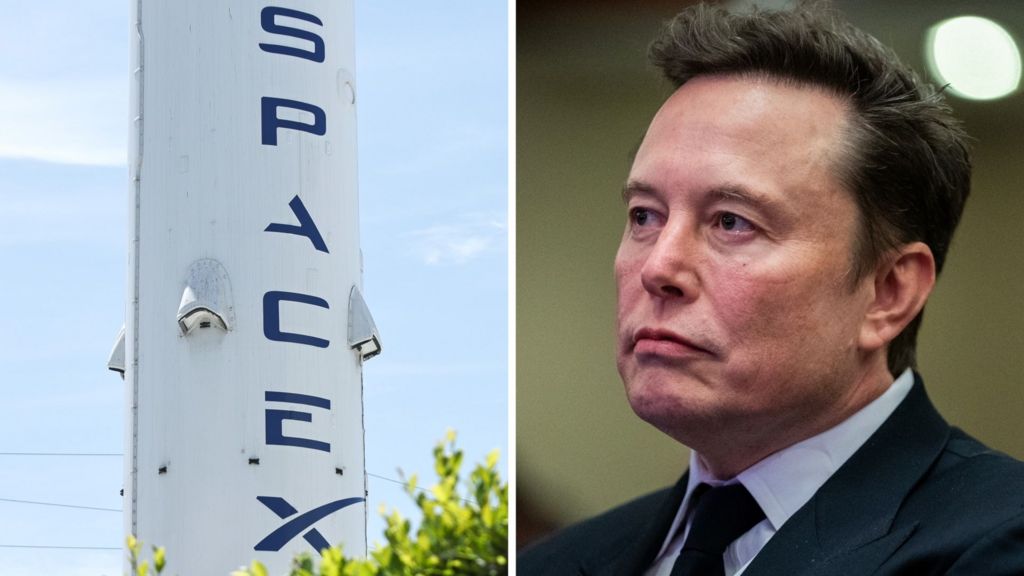
    Elon Musk summoned by French prosecutors amid ongoing X probe

    A high-stakes legal and regulatory clash over Elon Musk’s social media platform X has entered a new phase, with French authorities calling both the tech billionaire and X’s former CEO Linda Yaccarino to appear for a voluntary interview in Paris this Monday. As the investigation into alleged criminal activity on the platform stretches into its second year, uncertainty lingers over whether Musk will comply with the summons, following a well-documented pattern of him declining to appear for official questioning in the past.

    The probe first launched in January 2025, after French prosecutors received multiple formal reports flagging harmful content circulating on X’s recommendation algorithm. Just one month later, in February 2026, cybercrime units from the Paris prosecutor’s office executed raids on X’s French offices as the scope of the inquiry expanded. The investigation now encompasses serious new allegations tied to Grok, X’s controversial in-house AI chatbot. Prosecutors suspect Grok has been leveraged to generate non-consensual sexual deepfake imagery, including manipulated content targeting women and reportedly even underage individuals.

    The list of suspected offences being probed extends far beyond deepfake misuse. French investigators are also examining claims that X facilitated complicity in the possession and organized distribution of child sexual abuse material (CSAM), violated personal image rights through non-consensual explicit synthetic content, and carried out fraudulent large-scale data extraction via an organized criminal network.

    This latest summons follows a reported diplomatic rift between French and U.S. justice authorities. The Wall Street Journal revealed over the weekend that the U.S. Department of Justice sent an official letter to French prosecutors declining to assist with the X investigation, and accusing French officials of misusing the U.S. legal system to advance their inquiry. Musk quickly weighed in on the report via a post on his own platform, writing simply, “indeed, this needs to stop.”

    Musk and X’s leadership have repeatedly framed the entire investigation as a politically motivated attack rather than a legitimate legal inquiry. Following the February office raids, X issued a formal statement denying all wrongdoing, dismissing the allegations as entirely baseless. The company argued that the raids amounted to a “staged” action that distorted French law, bypassed standard due process, and threatened protections for free speech. “X is committed to defending its fundamental rights and the rights of its users,” the company added in that statement.

    Yaccarino, who led X through the period when the alleged offences occurred, has echoed this hardline stance. She previously took to X to accuse French prosecutors of waging “a political vendetta against Americans.” Now, she joins Musk in being called to appear for voluntary questioning this month.

    A history of non-compliance has fueled speculation that Musk may skip the scheduled Monday interview, which was initially set by prosecutors back in February. In September 2024, the billionaire failed to appear for a court-ordered questioning as part of a U.S. Securities and Exchange Commission investigation into his 2022 takeover of the platform, then known as Twitter.

    The French investigation has already triggered a wave of additional legal and regulatory action against X and its parent AI firm xAI across the globe, including multiple probes launched by regulators in the United Kingdom and throughout the European Union. As of Monday morning, neither the Paris prosecutor’s office nor the U.S. Department of Justice has issued an updated comment on the case in response to requests from the BBC.

  • Bulgaria ex-president wins parliamentary majority

    Bulgaria ex-president wins parliamentary majority

    Nearly complete official results from Bulgaria’s snap parliamentary election confirm a historic landslide victory for former president Rumen Radev’s Progressive Bulgaria alliance, which has secured the first absolute parliamentary majority held by a single political bloc in the country since 1997. The outcome brings an end to nearly four years of chronic political instability that forced the Balkan nation to hold eight consecutive elections since 2021.

    The 62-year-old Radev, a former air force general who stepped down from the presidency earlier this year to run for a parliamentary seat, campaigned on a populist anti-corruption platform aimed at dismantling what he calls Bulgaria’s entrenched “oligarchic governance model”. His coalition captured 44.7 percent of the popular vote with 98.3 percent of ballots counted, putting it on track to control roughly 130 of the 240 seats in Bulgaria’s unicameral parliament. Turnout for Sunday’s vote hit the highest level recorded since 2021, reflecting broad cross-spectrum support for Radev’s pledge to break years of political gridlock.

    The election upends Bulgaria’s existing political order. Longtime pro-EU conservative leader Boyko Borissov’s GERB party, which dominated Bulgarian politics for nearly a decade before 2021, slumped to just 13.4 percent of the vote, barely edging out the liberal pro-EU PP-DB coalition which captured 12.7 percent. Both the far-right Vazrazhdane party and the MRF, a minority-focused party representing Bulgarian Turks and Roma communities, are projected to cross the electoral threshold to win parliamentary seats.

    In his victory address to reporters, Radev framed the win as a transformative shift for Bulgarian politics. “This is an unequivocal win for Progressive Bulgaria – a victory of hope over distrust, a victory of freedom over fear,” he stated. While Radev emphasized that Bulgaria will remain committed to its European integration path, he also pushed back against existing EU policy orthodoxy, noting: “A strong Bulgaria and a strong Europe need critical thinking and pragmatism. Europe has fallen victim to its own ambition to be a moral leader in a world with new rules.”

    Radev’s foreign policy positions have already drawn sharp attention from both Moscow and Brussels. A self-described pragmatist who has emerged as a vocal critic of EU policy, Radev has repeatedly called for the restoration of closer practical ties with Russia, based on mutual respect and equal dialogue. He has opposed Bulgaria’s existing policy of sending military arms to Ukraine, criticized the recent 10-year defense cooperation deal between Sofia and Kyiv, and has argued for a negotiated end to the ongoing conflict. Even so, he has pledged not to use Bulgaria’s EU veto power to block collective EU foreign policy decisions.

    The Kremlin quickly welcomed Radev’s election win. Kremlin spokesman Dmitry Peskov told reporters Monday that Moscow views Radev’s calls for closer ties with Moscow favorably, adding that the Kremlin also approves of his commitment to resolving international disputes through dialogue. For its part, the European Commission struck a measured tone in its initial reaction. European Commission President Ursula von der Leyen reaffirmed that “Bulgaria is a proud member of the European family and plays an important role in tackling our common challenges,” adding that she looks forward to working with the new government.

    Political analysts across Bulgaria have framed the result as a watershed moment, but warn that major questions remain about Radev’s ability to deliver on his core promises. Political analyst Teodor Slavev noted that while Radev’s bloc holds an absolute majority that allows it to govern alone, passing sweeping judicial and constitutional reforms required to root out high-level corruption will need a two-thirds parliamentary majority, forcing Radev to negotiate cross-party support. Daniel Smilov, a political scientist at Sofia’s Center for Liberal Strategies, added that Radev will face persistent pressure from Eurosceptic factions within his own bloc and the far-right opposition to shift Bulgaria toward a more openly anti-EU course. “His initial signals are that he will pursue a pro-European policy and will not block the EU… The whole question is whether those signals will actually be followed through,” Smilov told AFP.

    Outgoing long-time prime minister Boyko Borissov congratulated Radev on his victory Sunday, but offered a cautious note: “Winning elections is one thing, governing is another.”

    The election was overshadowed by long-standing concerns about electoral fraud in Bulgaria. Political parties across the ideological spectrum urged voters to turn out to counter the widespread practice of vote buying. In pre-election anti-corruption raids, Bulgarian police seized more than 1 million euros in suspected vote-buying funds and detained hundreds of people, including sitting local councillors and municipal mayors.

  • War in the Middle East: latest developments

    War in the Middle East: latest developments

    ### Latest Developments Unfold Across Multiple Fronts of the Ongoing Middle East War
    Twelve minutes ago, Agence France-Presse published a comprehensive update on the rapidly shifting situation across the Middle East, covering developments in aviation policy, economic aid, diplomatic negotiations, military tensions, human rights issues, cultural incidents and global market reactions.

    #### Qatar Resumes Foreign Airline Operations at Hamad International Airport
    Qatar’s Civil Aviation Authority announced that it will gradually lift the suspension of foreign airline operations at Hamad International Airport, marking the first time international carriers have been allowed to land at the country’s primary hub since the outbreak of the current regional war. In an official Notice to Airmen, the regulatory body confirmed the phased resumption of cross-border air services.

    #### Dutch Government Unveils Over €950 Million Aid Package to Offset Fuel Price Surge
    The Netherlands has approved a €952 million ($1.1 billion) support package to cushion households and businesses from the sharp spike in fuel prices triggered by the Middle East conflict. Dutch officials noted that energy prices are expected to stay elevated even if the conflict concludes in the near term, as households and local industries have already felt significant financial strain. An initial tranche of €627 million will be distributed first to prioritize the most impacted groups.

    #### Lebanon Clarifies Israel Talks Are Independent of Iran-US Negotiations
    Lebanese President Joseph Aoun has clarified that upcoming negotiations with Israel are solely focused on ending ongoing hostilities along the shared border, and are entirely separate from diplomatic discussions between Iran and the United States. Aoun emphasized that Lebanon’s core negotiating goals are to halt cross-border violence, end Israeli occupation of southern Lebanese territories, and deploy the national Lebanese army all the way to the country’s internationally recognized southern border with Israel. This clarification comes as regional diplomatic efforts have become increasingly fragmented across multiple negotiation tracks.

    #### Iran Rejects US Ceasefire Violations, Ponders Pullout From Upcoming Talks
    Iran’s foreign ministry has levied sharp criticism against the United States for alleged violations of a two-week ceasefire agreement, and announced that Tehran has not yet made a final decision on whether to participate in the next round of bilateral talks. Ministry spokesman Esmaeil Baqaei told reporters that while Washington publicly claims it supports diplomatic efforts, its recent actions show no real commitment to a peaceful negotiated outcome. The announcement comes after former US President Donald Trump said he would send American negotiators to the region for further discussions.

    #### China Voices Concern Over Vessel Seizure, Calls for Strait of Hormuz Security
    China has publicly expressed concern over the United States’ seizure of an Iranian-flagged cargo vessel that attempted to evade a naval blockade, and has called on all regional parties to return to the negotiating table. In a Monday phone call with Saudi Arabia’s Crown Prince Mohammed bin Salman, Chinese President Xi Jinping stressed that unimpeded normal commercial traffic through the Strait of Hormuz, a critical global energy chokepoint, must be guaranteed at all times.

    #### Israel Warns Lebanese Civilians Against Returning to Southern Villages
    The Israeli military has issued an urgent warning to displaced Lebanese civilians, urging them not to return to dozens of villages in southern Lebanon. Israeli officials claim that armed activities by the Hezbollah group in these border areas violate the ceasefire agreement reached between the two sides last week. Despite the warning, thousands of displaced Lebanese residents have already begun traveling back to their homes in southern Lebanon since the bilateral truce took effect last Friday.

    #### Iran Executes Two Men Linked To Israeli Intelligence, Rights Groups Raise Alarms
    Iran has executed two men convicted of maintaining links to Israel’s national intelligence agency, the latest in a growing series of executions of detainees that international human rights groups classify as political prisoners. The executions come amid heightened tensions between Iran, Israel and the United States following the outbreak of open conflict. The People’s Mujahedin of Iran, an Iranian opposition group banned in the country, confirmed that the two executed men were identified as 38-year-old Mohammad Masoom Shahi and 48-year-old Hamed Validi, both registered members of the MEK.

    #### Israeli Army Confirms Soldier Vandalized Jesus Statue in Southern Lebanon
    The Israeli military has confirmed that a viral social media video showing one of its soldiers vandalizing a statue of Jesus Christ in southern Lebanon is authentic. The footage shows the soldier using a sledgehammer to destroy the head of a statue of the crucified Jesus that had already fallen from its cross. Israeli Prime Minister Benjamin Netanyahu has promised that the soldier responsible will face appropriate and harsh disciplinary action following a full investigation.

    #### Global Markets React to Escalating Tensions: Oil Prices Surge, Stocks Fall
    Global energy and financial markets have reacted sharply to renewed escalation in the conflict after Iran announced it was closing the Strait of Hormuz over the weekend, just one day after reopening the waterway. Tehran cited the US blockade of Iranian ports as the reason for the renewed closure. Oil prices jumped sharply on the news of the closure, while European equity markets traded lower in late morning trading. Additional downward pressure on stocks came after Tehran announced it was unlikely to attend upcoming peace talks.

  • Iranian woman arrested in US for allegedly trafficking arms to Sudan

    Iranian woman arrested in US for allegedly trafficking arms to Sudan

    Federal U.S. prosecutors have announced the arrest of an Iranian national and U.S. lawful permanent resident on charges that she ran an illicit arms trafficking network brokering Iranian weapons sales to Sudan’s national military, a scheme that violated sweeping American sanctions imposed on Tehran.

    Forty-four-year-old Shamim Mafi was taken into custody by law enforcement officials at Los Angeles International Airport on Saturday, as she prepared to board an outbound flight to Turkey, according to a public statement posted to X by Bill Essayli, First Assistant U.S. Attorney for the Central District of California. Court documents unsealed following the arrest detail accusations that Mafi coordinated multiple large-scale arms deals directly with Sudan’s Ministry of Defense, moving military hardware produced by Iranian manufacturers into the war-torn Northeast African nation.

    The most high-value transaction cited in filings is a $70 million (€60 million / £52 million) contract for unmanned aerial drones, a deal for which Mafi is alleged to have arranged travel for a Sudanese official delegation to Iran, collected more than €6 million in payments from the Sudanese side, issued official payment receipts, and coordinated logistics between Iranian producers and Sudanese military buyers. Court records also add that Mafi formally submitted a letter of intent to Iran’s Islamic Revolutionary Guard Corps (IRGC) to broker a separate agreement for 55,000 bomb fuses, alongside additional deals for conventional bombs and millions of rounds of small-arms ammunition.

    To hide the transactions from U.S. regulators, prosecutors say Mafi deliberately structured deals to bypass oversight, repeatedly using unregulated informal currency exchange entities across multiple transactions in a calculated effort to evade American sanctions that ban any U.S.-based person or resident from engaging in unauthorised commercial activity involving Iranian goods or services. Essayli’s public announcement included accompanying images: one shows a woman believed to be Mafi detained by airport security personnel, while others show a military drone on an airfield tarmac and stacks of bundled cash linked to the alleged scheme.

    Mafi, who became a U.S. lawful permanent resident in 2016, has not yet issued any public statement responding to the charges against her. She is scheduled to make her first court appearance for the case on Monday, and if convicted on all counts, she faces a maximum possible prison sentence of 20 years behind bars.

    The allegations come against the backdrop of a devastating three-year civil war in Sudan, which has pitted the country’s formal national army against the paramilitary Rapid Support Forces (RSF). The United Nations has labeled the conflict the world’s worst ongoing humanitarian catastrophe, with tens of thousands of civilians and combatants killed, more than 7 million people internally displaced or refuged across neighboring borders, and widespread famine and collapse of basic public services across large swathes of the country.

    For months, global human rights watchdogs have documented widespread foreign arms flows to both warring parties, which international observers say have prolonged and intensified the violence. Amnesty International previously published research confirming that weapons manufactured in countries including China, Russia, Serbia, Turkey, the United Arab Emirates, and Yemen have been recovered from battlefields in Sudan. Tehran has repeatedly been accused of supplying military support including weapons to Sudan’s army, allegations that Sudanese government officials have repeatedly denied in past statements.

  • Tired of political turmoil, Bulgarians give ex-president a convincing mandate for change

    Tired of political turmoil, Bulgarians give ex-president a convincing mandate for change

    SOFIA, Bulgaria — In a result that reshapes Bulgaria’s turbulent political landscape, the nation’s central electoral commission confirmed Monday that former president Rumen Radev’s center-left Progressive Bulgaria coalition has won a decisive majority in the country’s latest parliamentary election, bringing a close to five years of fragmented governance and unstable short-lived governments.

    With 96% of all ballots processed by Monday morning, early official data put the Radev-led coalition at 44.7% of the popular vote — a lead of more than 20 percentage points over its nearest competitors. Former prime minister Boyko Borissov’s long-dominant center-right GERB party captured 13.4% of the vote, while the pro-Western We Continue the Change-led reformist bloc followed closely at 12.9%, with the two rival groups running nearly neck-and-neck for second place. Latest projections indicate only two additional political parties will cross the electoral threshold to claim seats in the 240-seat national legislature, streamlining the chamber after years of splintered representation.

    Shortly after results were published, Borissov publicly conceded defeat and extended formal congratulations to the winning coalition. Radev, for his part, framed his coalition’s victory as a defining turning point for the Balkan nation. Addressing reporters, he called the outcome “unequivocal,” describing it as “a victory of hope over distrust, a victory of freedom over fear.” He reaffirmed that Bulgaria will remain committed to its integration trajectory with the European Union, while adding a note of pragmatic critique: “But believe me, a strong Bulgaria and a strong Europe need critical thinking and pragmatism. Europe has fallen victim to its own ambition to be a moral leader in a world without rules.”

    The 62-year-old former fighter pilot, who holds a master’s degree in Strategic Studies from the U.S. Air War College and previously served as commander of the Bulgarian Air Force, resigned from his largely ceremonial presidential post in January, several months ahead of the end of his second term, to launch a bid for the far more powerful position of prime minister.

    Throughout his two terms as president, Radev gained widespread recognition for his open sympathy toward Moscow, repeatedly opposing European Union-led initiatives to supply military aid to Ukraine following Russia’s full-scale invasion. He has long argued that military support for Kyiv risks dragging Bulgaria directly into the conflict, and has repeatedly called for the resumption of diplomatic negotiations with Russia to end the war. His coalition of supporters draws two distinct camps: one faction that backs him as an anti-corruption outsider committed to rooting out entrenched graft, and another that aligns closely with his Euroskeptic, Russia-leaning policy stances.

    Bulgaria, a NATO and EU member state of 6.5 million people, has faced long-standing international criticism for its failure to tackle systemic corruption and address persistent gaps in the rule of law. Since 2021, repeated elections have produced only fragmented parliaments and weak coalition governments, none of which have lasted longer than 12 months before collapsing amid street protests or parliamentary power struggles. The previous conservative administration fell in December after mass nationwide anti-corruption protests drew hundreds of thousands of predominantly young Bulgarians to the capital’s streets. Radev capitalized on this public anger, positioning himself as a staunch opponent of the entrenched oligarchic networks that have long been accused of colluding with top political figures. During his campaign, he made a core promise to “remove the corrupt, oligarchic model of governance from political power.”

    After years of repeated election cycles and constant political upheaval, ordinary Sofia residents expressed mixed reactions to the landslide result. Nikoleta Dimitrova, a 37-year-old shop assistant working in the capital, said she welcomed the shift and hoped for lasting institutional reform. “Above all, we expect a more stable judicial system, and for trust in institutions to truly be restored. Until now, they have been heavily influenced by various figures, many of whom, as we can see from the current results, have now left the government,” she explained. Others remained more skeptical, however. Cveta Gerogieva, a 55-year-old accountant, cautioned that long-term stability remains far from guaranteed. “I hope that we will really live a better life, but I am not sure that there will be stability for a long period. Probably we will vote again,” she said.

  • Rebel Wilson’s claims against actress are ‘malicious concoctions’, Australian court hears

    Rebel Wilson’s claims against actress are ‘malicious concoctions’, Australian court hears

    A high-stakes defamation trial has commenced in a Sydney court, pitching Hollywood star Rebel Wilson against rising Australian actress Charlotte MacInnes, the lead of Wilson’s recently released musical comedy *The Deb*. At the center of the legal clash are a series of Instagram posts Wilson published in 2024 and 2025, which MacInnes’ legal team argues are baseless, malicious lies that have permanently damaged her professional reputation.\n\nThe events under scrutiny trace back to September 2023, when MacInnes and *The Deb* producer Amanda Ghost spent an afternoon at Sydney’s iconic Bondi Beach. After Ghost experienced a sudden allergic reaction to the cold ocean water — a condition called cold urticaria that triggered painful red welts and uncontrollable shaking — the pair retreated to Ghost’s nearby beachfront apartment. MacInnes ran a hot bath to help Ghost warm up, with both women remaining in their swimsuits while sharing the oversized tub, the court heard. Ghost’s assistant even stayed in the bathroom preparing hot drinks for part of the time, and the two never made physical contact, according to MacInnes’ senior counsel Sue Chrysanthou.\n\nWilson has claimed that MacInnes originally told her she felt sexually uncomfortable following the shared bath, filed an implicit complaint, then later retracted the claim in exchange for a plum lead theater role and a major record deal. But MacInnes’ legal team refutes every part of this narrative, arguing the actress never made any complaint of sexual harassment at all. Instead, they say Wilson twisted a passing comment about the situation being “bizarre” into a false harassment narrative to gain leverage in a separate dispute with *The Deb* producers over budget and contract terms. The defamation claims, Chrysanthou told the court, are nothing more than “completely false, fantasy, malicious concoctions.”\n\nOpening arguments on the first day of the trial included the presentation of private text exchanges between Wilson, Ghost and MacInnes, as well as email chains detailing the competing accounts of the 2023 incident. Court documents show Wilson even acknowledged in an early text to Ghost that “Charlotte says all good. She just meant ‘it was a bizarre situation’ not that she personally felt uncomfortable.” The three women even attended a Boy George concert together the same night the text was sent, the court confirmed.\n\nWilson’s legal team has pushed back against MacInnes’ claims, arguing that the young actress deliberately lied about ever making an initial complaint to win professional favor from Ghost. Since the incident, Wilson’s lawyer Dauid Sibtain noted, MacInnes has landed the lead role in a Boston production of *Gatsby* and secured a record deal, with new music expected to release imminently. “She’s suffered no harm to her reputation, indeed, her career has progressed,” Sibtain told the court, adding that MacInnes’ changed story was a calculated move to advance her career by aligning with Ghost’s version of events.\n\nFor MacInnes, a 2021 graduate of a Western Australian acting academy who rose to prominence through the stage version of *The Deb* before landing the film role, the allegations have destroyed her core reputation for honesty and integrity, and she is seeking unspecified damages in the case. *The Deb* premiered in Australian theaters earlier this month, marking Wilson’s latest project following her breakout roles in *Pitch Perfect* and *Bridesmaids*. This trial is not the only legal trouble Wilson is currently navigating: she is already involved in a separate contract dispute with *The Deb* producers in an Australian court, and faces another defamation lawsuit from the same producers in the U.S., where she has also filed a countersuit. The Sydney trial, which opened Monday, is scheduled to run for nine days as the court hears full arguments from both sides.

  • Billion-dollar attack: France boasts a rich scoring depth other World Cup teams only dream of

    Billion-dollar attack: France boasts a rich scoring depth other World Cup teams only dream of

    As the upcoming FIFA World Cup approaches, the French men’s national team is entering the global tournament with one of the most stacked and valuable attacking groups in modern soccer history. Two independent leading football valuation bodies, Transfermarkt and the CIES Football Observatory, have calculated that the combined market value of France’s 10 forward candidates for Deschamps’ squad totals 855 million euros, equal to just over $1 billion. That staggering figure has put Les Bleus in a rare position: head coach Didier Deschamps does not face a crisis of who to select for his roster — he faces the far more pleasant challenge of which world-class talent to cut from his starting 11 for their opening group stage match against Senegal on June 16.

    Leading this extraordinary cohort of attackers is 27-year-old Kylian Mbappé, the two-time World Cup final top scorer and Real Madrid superstar, whose individual market value tops the group at 200 million euros ($236 million). Currently in another dominant club season, Mbappé is just one goal away from equaling Olivier Giroud’s record of 56 career goals for France, which would make him the nation’s all-time leading international scorer. His proven big-game pedigree and consistent prolific finishing make him the undisputed anchor of France’s attacking threat.

    Behind Mbappé, a mix of established stars and exciting emerging talent gives Deschamps endless tactical options. Bayern Munich’s Michael Olise ranks second in squad value at 140 million euros, coming off a scintillating season for the Bundesliga champions that has seen him net 18 goals and register 25 assists across 44 competitions. Paris Saint-Germain’s rising 20-year-old Désiré Doué comes in third at 115 million euros, outvaluing 28-year-old Ballon d’Or winner Ousmane Dembélé, who is valued at 100 million euros and brings blistering pace and clinical finishing to any attacking line. Bradley Barcola, Doué’s in-form PSG teammate who impressed against Chelsea in this season’s Champions League, is valued at 70 million euros, followed by 21-year-old playmaker Rayan Cherki at 65 million euros.

    Cherki, who first made headlines as a 16-year-old scoring a brace in a French Cup fixture for Lyon, has seen his stock skyrocket after a mid-season transfer to Manchester City for an initial 36 million euros, a fee that already looks like a major bargain. He turned heads again with a superb solo goal in a top-of-the-table Premier League clash against Arsenal, and his instinctive, creative playmaking has drawn praise even from City manager Pep Guardiola, who worked alongside legends of passing like Lionel Messi and Andres Iniesta during his time at Barcelona. A strong World Cup performance could send Cherki’s market value soaring even higher.

    The list of talented options continues with 25-year-old Maghnes Akliouche, who scored in both legs of Monaco’s tight Champions League playoff against PSG and whose galloping runs from deep are notoriously difficult for defenders to track. His 50 million euro valuation matches that of Inter Milan’s Marcus Thuram, who has hit top form as Inter closes in on the Serie A title, adding strong aerial ability to France’s attacking diversity. That same physical, aerial threat is offered by Crystal Palace’s Jean-Philippe Mateta, a consistent Premier League goalscorer who has two strikes in three appearances for Les Bleus and is valued at 35 million euros, with a move to a top European club expected this summer.

    Rounding out the group is Randal Kolo Muani, who is currently on loan at Tottenham Hotspur from PSG. Although he has struggled for form in North London this season, the forward still holds a 30 million euro valuation, and he remains a familiar name to World Cup viewers after coming seconds away from writing his name into tournament history: in the 2022 World Cup final against Argentina, he missed a point-blank chance in the final moments of extra time, before France lost the title on penalties despite a Mbappé hat-trick.

    For French soccer fans and neutrals alike, the sheer quality and depth of this $1 billion attacking group makes Les Bleus one of the most exciting teams to watch ahead of the tournament, with Deschamps holding all the cards as he prepares to build his starting lineup around the world’s most valuable forward line.

  • Japan’s drill role stirs unease

    Japan’s drill role stirs unease

    Japan’s historic upgrade from observer to active participant in the annual US-Philippine Balikatan military exercises has ignited fresh debate across Southeast Asia, with regional analysts warning that the deployment threatens to test the ASEAN bloc’s long-standing commitment to neutrality and force leaders to confront unresolved historical tensions from World War II. Running from April 21 to May 8 on Philippine territory, this year’s exercise will see approximately 1,400 Japanese Self-Defense Forces personnel join the drills, making Japan the third-largest contributing nation behind hosts the Philippines and lead organizer the United States. Additional troops from Australia, Canada, France, and New Zealand will also take part in the multinational exercise, which experts frame as a core component of Washington’s expanding regional security outreach.

    Julia Roknifard, a senior lecturer in law and governance at Malaysia’s Taylor’s University, explains that while participation in the drill does not inherently require full political alignment with Washington for participating nations, Japan’s stepped-up involvement this year marks a distinctly provocative shift. Her criticism comes in the wake of recent inflammatory remarks and policy moves from Japanese Prime Minister Sanae Takaichi, including provocative statements regarding China’s Taiwan region. For ASEAN member states that have joined the exercise, Roknifard argues, it is critical to explicitly clarify that their involvement reflects routine security partnership rather than a partisan political alignment, to uphold the bloc’s formal neutral posture.

    Hiroshi Shiratori, a professor of political science at Tokyo’s Hosei University, points to a deeper identity shift driving regional anxiety: Japan’s increasingly assertive defense policy marks a visible departure from its post-World War II commitment to prioritizing peace, diplomatic negotiation, and dialogue, a shift that many neighboring states are already viewing with suspicion. If this perception solidifies across the region, Shiratori warns, Tokyo could quickly become framed as a new source of strategic instability in Southeast Asia.

    Not all analysis points to outright opposition to expanded Japanese security cooperation. Lucio Blanco Pitlo III, president of the Philippine Association for Chinese Studies, notes that many ASEAN states are open to Japanese partnership on shared transnational security challenges, including counter-piracy operations and responses to maritime pollution. The friction emerges, he argues, when discussions turn to restructuring the broader regional security order. Pitlo highlights persistent regional skepticism of the push for a so-called “Asian NATO” — a framework that Japan has promoted alongside a small group of like-minded partners. Instead of exclusive, security-focused blocs, he says, most ASEAN members prefer broad minilateral arrangements that integrate security cooperation with investment, technology, and other development priorities.

    Unresolved historical trauma continues to shape regional attitudes toward Japan’s expanding military footprint. Roknifard emphasizes that the scars of Japanese wartime occupation across Southeast Asia have never fully healed, with public tensions flaring regularly in response to high-profile actions by Japanese leaders. She cites the widespread public backlash that emerged in Malaysia after reports that Takaichi visited a Japanese cemetery in Kuala Lumpur during an October ASEAN Summit trip as a clear example of this lingering sensitivity.

    Anna Rosario Malindog-Uy, vice president of the Asian Century Philippines Strategic Studies Institute in Manila, echoes this observation, noting that Japan’s growing military role in the region still carries heavy historical baggage that has spawned what she calls “quiet unease” across Southeast Asian capitals. For ASEAN leaders, she argues, the key challenge is navigating a careful hedging strategy that accommodates Japan’s expanding security engagement without aligning fully with Tokyo’s strategic goals, while preserving balanced diplomatic and economic ties with other major regional powers including China. “ASEAN does not erase history but manages it,” she explains of the bloc’s balancing approach.

    Malindog-Uy also warns that Japan’s upgraded participation this year could set a dangerous precedent, opening the door for more external powers to demand similar active military roles in Southeast Asian exercises, further complicating regional stability.

    Former Japanese senior Foreign Ministry official Ukeru Magosaki, now director of the East Asian Community Institute in Tokyo, contextualizes the drill within Washington’s broader regional strategy. He notes that the Biden administration has framed Beijing as its primary strategic rival in the Indo-Pacific, and the expansion of Balikatan to include active Japanese participation is part of a coordinated policy to link Japan, the Philippines, and China’s Taiwan region in a unified counterbalance to China. Despite this coordinated push, Magosaki argues that the move is unlikely to fundamentally shift the existing balance of power across the Indo-Pacific.

  • Tiny fossil egg sets new world record

    Tiny fossil egg sets new world record

    In a groundbreaking paleontological discovery announced Friday by the Jiangxi Provincial Institute of Geological Survey and Exploration, a minuscule fossilized dinosaur egg recovered from East China’s Jiangxi province has earned official Guinness World Records certification as the smallest non-avian dinosaur egg ever documented by science.

    Discovered alongside five other eggs in a fossilized nest uncovered in Meilin Township, Ganzhou, back in 2021, the record-breaking specimen measures just 29.93 millimeters at its maximum length — smaller than the average thumbnail of an adult human. The entire fossil nest dates to the Late Cretaceous period, pushing the origins of this find back more than 80 million years.

    After years of collaborative study involving researchers from the Jiangxi institute, China University of Geosciences (Wuhan) and multiple other academic institutions, the team formally classified the eggs as belonging to an entirely new genus and species, which they have named *Minioolithus ganzhouensis*.

    To uncover key details about the ancient eggs, the research team deployed cutting-edge analytical tools including scanning electron microscopy to examine the fine microstructure of the eggshells. Their analysis confirmed that the eggs were laid by a non-avian theropod, a group of bipedal, mostly carnivorous dinosaurs that includes well-known species such as Tyrannosaurus rex and Velociraptor.

    This new measurement shatters the previous world record for the smallest non-avian dinosaur egg. The prior title holder, a fossil recovered in Japan in 2020, measured approximately 45 millimeters in length, making the new Ganzhou specimen nearly 33% smaller than the former record. Researchers note that the discovery of such a tiny fossil egg offers unprecedented new insights into the reproductive biology and diversity of small non-avian theropods that roamed southern China during the final days of the Cretaceous period, filling a critical gap in the global fossil record of dinosaur reproduction.