作者: admin

  • Hong Kong customs swoop ahead of the World Cup, seizing $20M in fake goods

    Hong Kong customs swoop ahead of the World Cup, seizing $20M in fake goods

    Hours before the opening match of the 2026 joint FIFA World Cup hosted by the United States, Mexico, and Canada, Hong Kong customs officials have announced a major bust of counterfeit merchandise, seizing more than 230,000 fake items valued at roughly $20 million. The haul includes tens of thousands of counterfeit World Cup team jerseys, alongside high-end imitation luxury goods and consumer electronics.

    The operation, which ran from late May through early June 2026, targeted smuggling networks operating out of Hong Kong’s logistics hubs. At a press briefing held on June 11, 2026, senior customs inspector Wayne Chung detailed that around 30,000 counterfeit jerseys were recovered in the seizure. Many of these fakes were high-quality replicas of premium player-issue team jerseys, which retail for far higher prices than standard fan versions due to their advanced design and performance materials. Chung noted that the craftsmanship of many fakes is so refined that casual soccer fans struggle to tell them apart from authentic merchandise.

    Investigations indicate the entire shipment of counterfeit goods was bound for international markets, with close to 80% destined for North, Central and South America — the host region for this year’s World Cup. The tournament kicked off later the same day as the press conference, with Mexico facing South Africa in the opening match. Officials believe the counterfeit jerseys were produced to meet soaring tourist and fan demand for World Cup merchandise across the Americas ahead of the tournament.

    Beyond soccer apparel, the seizure also included thousands of counterfeit non-sports goods, including imitation luxury footwear, handbags, watches, and portable audio devices. At the briefing, customs officials displayed prominent examples of the fakes, including replica Louis Vuitton handbags and imitation Rolex watches. Authorities are still working to trace the full supply chain and origins of the counterfeit products.

    As part of the multi-part enforcement operation, six suspects have been arrested. One truck driver was taken into custody at a border checkpoint connecting Hong Kong to mainland China and Macau, while five additional suspects were apprehended for their alleged role in selling the counterfeit jerseys via online retail platforms. All six suspects have since been released on bail as the investigation continues.

    Under Hong Kong’s intellectual property laws, anyone convicted of importing, exporting, distributing, selling, or holding counterfeit goods for commercial sale can face a maximum sentence of five years imprisonment and a fine of approximately $64,000. Officials urged consumers to purchase World Cup merchandise only from authorized retailers to avoid supporting intellectual property theft, and reminded the public that counterfeit goods often violate safety and quality standards.

  • Thai court sentences two men to death over Bangkok shrine bombing

    Thai court sentences two men to death over Bangkok shrine bombing

    Ten years after Thailand’s deadliest terrorist attack shook the heart of Bangkok, a court has handed down death sentences to two ethnic Uyghur men from China convicted of planning and carrying out the 2015 Erawan Shrine bombing – but deep flaws in the investigation and drawn-out legal proceedings have cast persistent doubt over whether the verdict delivers true justice.

    On the evening of August 17, 2015, a powerful explosive device detonated next to the Erawan Shrine, a popular tourist landmark in central Bangkok that draws thousands of visitors annually. The blast killed 20 people and injured more than 120, tearing through crowds of worshippers and knocking nearby motorcyclists off their vehicles, igniting some of their bikes. A Reuters correspondent who arrived at the scene within minutes described a scene of utter chaos: sirens blaring, first responders scrambling to triage the wounded, and sheets covering the bodies of those killed in the attack. Witnessing a grieving injured man asked to wait for care while holding the hand of his dead wife left an indelible mark; for those familiar with Bangkok’s history of political unrest, this large-scale attack targeting civilians was unprecedented, leaving urgent questions about who was responsible and what motivated the attack.

    From the earliest stages of the investigation, red flags emerged. Fearing negative impacts on the country’s critical tourism industry, the Thai military government ordered the blast site to be cleared and repaired as quickly as possible, reopening the shrine just two days after the attack and cementing over the bomb crater before forensics teams could fully collect evidence. Most security cameras in the area were non-functional at the time of the bombing, and the only usable footage was grainy, showing a man with long hair and thick glasses leaving a backpack under a bench before fleeing. While police captured video of a second suspect disposing of an unexploded secondary bomb in a nearby canal, the primary suspect’s trail quickly went cold. Initially, officials even denied the attack was an act of terrorism, despite its scale and targeting of a high-profile tourist site.

    Just two weeks after the attack, Thai authorities arrested the two men now convicted: Bilal Mohammad, who was found hiding in a suburban Bangkok home where bomb-making chemicals were discovered, traveling on a forged Turkish passport under the name Adem Karadag; and Yusufu Mierali, who was apprehended in Cambodia and extradited to Thailand. Both men are Uyghurs, but Thai police initially acknowledged neither matched the description of the bomber seen in surveillance footage. Arrest warrants were issued for 13 additional suspects, most of whom had already fled Thailand, and the case was effectively declared closed after the arrests, even as most suspects remained at large. In a controversial move, police awarded the $80,000 reward for information leading to arrests to themselves, despite the ongoing open investigation into other co-conspirators.

    In the weeks before the bombing, Thailand had drawn international condemnation for forcibly repatriating 109 Uyghur men to China, a decision that sparked widespread protests from Uyghur rights activists around the world. Many independent analysts quickly connected the attack, which targeted a shrine popular with Chinese tourists, to the repatriation as a likely retaliatory act. But the ruling military junta rejected this narrative out of hand, first suggesting the attack was carried out by anti-government political opponents, then later shifting blame to human trafficking groups angered by a government crackdown on smuggling networks.

    The trial itself stretched on for more than a decade, marked by repeated delays that human rights groups say are unjustifiable. Both defendants were held in military custody and have long claimed they were tortured into giving forced confessions, which they withdrew immediately once the formal trial began. Bilal Mohammad has maintained he was simply waiting for a smuggler to facilitate his travel to Malaysia, en route to Turkey, a common route for Uyghur asylum seekers, and had no involvement in the bombing. Most delays were officially blamed on difficulties finding qualified Uyghur-speaking translators, after the defendants rejected translators provided by the Chinese government.

    International human rights organizations, including the International Commission of Jurists, have heavily criticized the trial process, pointing to widespread human rights violations and systemic failures in Thailand’s criminal justice system exposed by the case. The group argues that the multiple procedural flaws and unreasonable decade-long delay are so severe that the two men should have been released. Defense lawyers have confirmed they will immediately appeal the guilty verdict and death sentences, leaving the legal saga far from over a full decade after the attack that shook the nation.

  • Korea fines e-commerce giant $400m over data breach affecting millions

    Korea fines e-commerce giant $400m over data breach affecting millions

    South Korea’s top privacy regulator has slapped the country’s leading e-commerce platform Coupang with a historic fine exceeding $400 million, the largest penalty ever levied for a data breach in the nation, over a 2023 cyber incident that exposed sensitive personal information of more than 37 million users – a figure that equals over half of South Korea’s total population.

    The Personal Information Protection Commission (PIPC) announced Wednesday that it is imposing a 624.68 billion won fine on Coupang, finding the company violated two key national privacy regulations: failing to uphold required data safety obligations, and collecting personal user information without proper legal justification. A months-long investigation launched after the breach was first reported last November uncovered critical gaps in Coupang’s cybersecurity infrastructure, including inadequate management of authentication signing keys and poorly implemented access controls. These vulnerabilities created the opening that allowed unauthorized actors to access user data, the regulator confirmed.

    The exposed information included full names, contact details, delivery addresses, and complete order histories for affected customers. Widely regarded as South Korea’s equivalent to Amazon, Coupang is the dominant player in the country’s online retail sector. While the company is incorporated in the United States, it generates the vast majority of its revenue from the South Korean market.

    When news of the breach first broke in November 2023, Coupang initially reported that only around 4,500 customer accounts had been compromised, and promptly notified regulatory authorities of the incident. Follow-up internal investigations later revised that number dramatically, revealing that nearly 34 million South Korean-based user accounts were likely exposed. The company has acknowledged that the unauthorized access likely began as early as June 2023, originating from an overseas-based server. In the wake of the scandal, Coupang’s then-CEO Park Dae-jun stepped down from his position, issuing a public apology for the security failure. The company’s chief administrative officer Harold Rogers was subsequently named interim chief executive to lead the response.

    In a statement to the BBC following the PIPC’s announcement, Coupang expressed that it “deeply regrets the concern caused” by the incident and has committed to overhauling its cybersecurity frameworks to prevent future breaches. However, the company confirmed it intends to contest the regulator’s ruling, arguing that PIPC did not adequately incorporate Coupang’s own explanations and corrective measures into its final decision. “Upon receiving the official resolution from the PIPC, we expect that the facts will be clearly established through legal procedures,” a Coupang spokesperson said.

    This record penalty comes at a time when South Korea – a country globally recognized for its advanced digital infrastructure and strict data privacy standards – is grappling with a string of high-profile cybersecurity incidents. Just last year, the nation’s largest mobile operator SK Telecom was hit with a nearly $100 million fine over a separate data breach that compromised the information of more than 20 million subscribers, underscoring growing systemic risks to personal data across major South Korean digital services.

  • Thailand sentences Chinese Uyghurs to death in 2015 shrine bombing case

    Thailand sentences Chinese Uyghurs to death in 2015 shrine bombing case

    After nearly a decade of delayed proceedings and public scrutiny, a Thai court has handed down the long-awaited final verdict in the kingdom’s deadliest terrorist attack: two Chinese Uyghur men have been sentenced to death for carrying out the 2015 bombing at Bangkok’s iconic Erawan Shrine that left 20 people dead and more than 100 injured.

    The 2015 attack ripped through the popular tourist and worship site located in the heart of Bangkok’s central commercial district on an August afternoon. The explosive device, hidden inside a backpack left at the shrine, detonated as crowds of worshippers and sightseers gathered, leaving the area scattered with charred debris and wreckage from nearby damaged motorbikes. Multiple Chinese tourists were among those killed in the blast, making it one of the most high-profile violent incidents to strike Thailand’s key tourism sector in modern history.

    The guilty ruling delivered on Thursday convicts Yusufu Mieraili and Bilal Mohammed of premeditated murder and attempted murder for their role in planting the bomb. In a statement accompanying the verdict, a member of the four-judge panel explained the severity of the sentence, noting that “the defendants committed a single act that violated multiple laws. The court therefore imposed the harshest penalty available under the law, the death sentence.” The two men, who appeared in court in standard prison uniforms, were acquitted on separate charges connected to a second smaller bombing at a pier in Bangkok’s Charoen Nakhon district that occurred shortly after the shrine attack.

    Immediately after the verdict was read, Mieraili rejected the court’s finding, telling reporters “RIP Thailand’s justice system. I don’t accept any of this. I didn’t do anything wrong.” The defendants’ lead legal counsel, Choochat Kanpai, confirmed that his clients will immediately file an appeal against the ruling, citing gaps in the court’s consideration of key evidence and allegations of improper treatment of the defendants during the extended trial proceedings.

    The case has been marked by repeated delays and controversy since the attack took place 10 years ago. Within days of the bombing, Thai police issued warrants for 17 suspects, but only Mieraili and Mohammed were arrested in the immediate aftermath. The case went to trial in 2016, but hundreds of witness testimonies and repeated procedural disruptions pushed the final verdict back for years. Delays were caused by multiple factors, including widespread court shutdowns during the global COVID-19 pandemic, and a high-profile disruption when the court-appointed translator for the accused was arrested on drug charges. In 2017, a third suspect, Thai national Wanna Suansan, was apprehended upon her return to Bangkok and charged with terrorism-related counts connected to the blast, but she was acquitted of all charges earlier this year.

    The timing of the 2015 attack, which came just weeks after Thailand’s ruling military junta forcibly repatriated 109 Uyghurs to China, sparked long-running international speculation over the attack’s potential motives. At the time, Thailand was a key transit point for Uyghurs seeking to leave China, and the junta had been moving to strengthen diplomatic and economic ties with Beijing. Rights groups have long documented what they describe as widespread cultural and religious repression of Uyghurs, a Turkic Muslim minority group from China’s far western Xinjiang region. China has repeatedly denied allegations of mass human rights abuses in Xinjiang, which include claims of mass internment of over one million Uyghurs and other Muslim minorities.

    Most recently, in February 2025, Thailand drew sharp international condemnation from the United Nations and global human rights groups after it deported dozens more Uyghur detainees back to China, despite repeated warnings that the group would face systematic persecution on their return.

    Today, the Erawan Shrine remains one of the most visited attractions for Chinese tourists traveling to Bangkok, but an Agence France-Presse survey of visitors ahead of the verdict found that almost none of the tourists questioned were aware of the 2015 bombing or the decade-long trial that followed. One Chinese tourist who said he visits the shrine annually declined to comment on the attack when approached, only saying “It’s nice to come here to pray” before ending the conversation.

  • Pope visiting ‘dock of shame’ in Canary Islands where migrants slept in squalor

    Pope visiting ‘dock of shame’ in Canary Islands where migrants slept in squalor

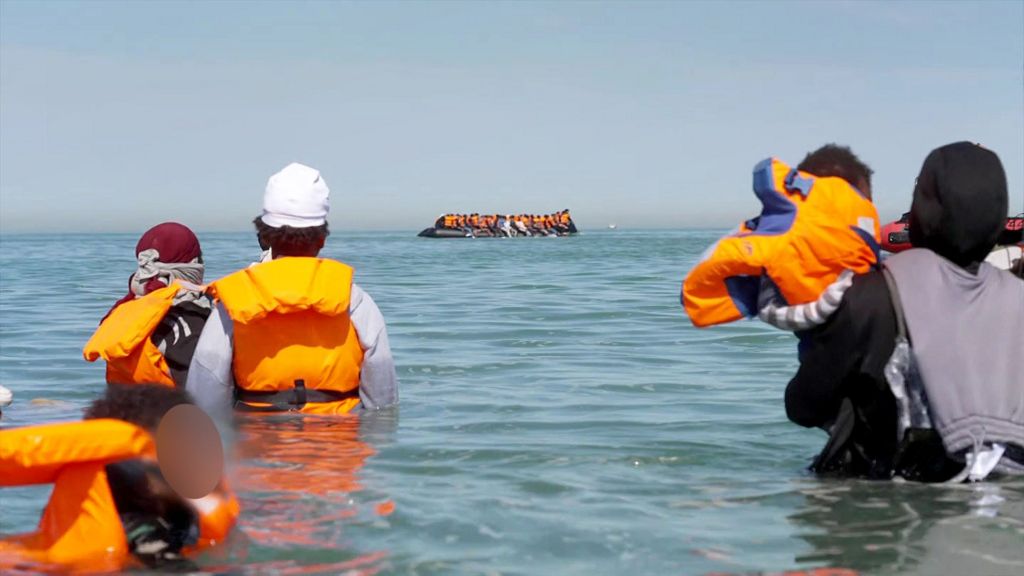
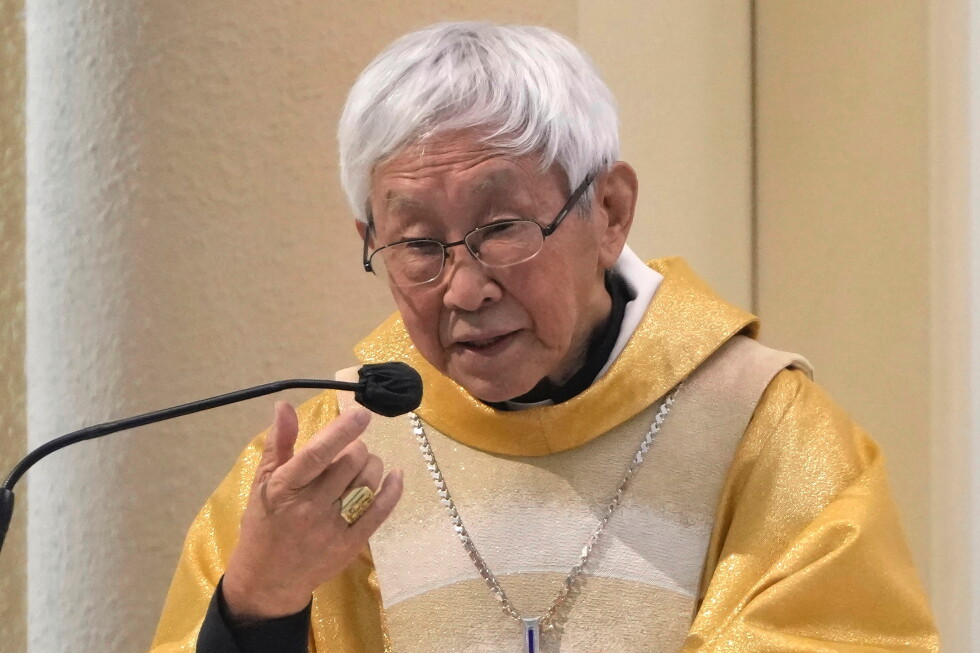
    BARCELONA, Spain — On the final leg of his week-long official visit to Spain, Pope Leo XIV traveled Thursday to the Canary Islands, a Spanish archipelago off the northwest coast of Africa, to honor a long-held wish of his predecessor Pope Francis and shine a global spotlight on the dangerous journey that hundreds of thousands of migrants undertake each year to reach European shores. Positioned far closer to West Africa than to mainland Spain’s Iberian Peninsula, the Canaries have emerged as one of the most pivotal entry points for irregular migration to the European Union, making it a natural epicenter for debates over migration policy across the continent.

    During his two-day visit, the pontiff scheduled a series of engagements: private meetings with migrants who have arrived in the archipelago in recent months, discussions with representatives of Catholic Church outreach groups and humanitarian organizations that provide life-saving aid and integration support for new arrivals, and a solemn commemoration at a site that has become a global symbol of the world’s failure to protect vulnerable migrants: Arguineguin Port, infamously dubbed the “dock of shame” after a 2020 crisis exposed inhumane conditions for displaced people.

    In 2020, a sudden spike in migrant crossings to the Canary Islands overwhelmed local authorities, forcing thousands of new arrivals to camp in open-air makeshift facilities on the port’s dock. For weeks, migrants had access only to basic blankets, with no functioning shower facilities, limited access to food and medical care, and no proper legal support for people seeking international asylum. Many were detained far longer than the 3-day maximum detention period permitted under Spanish law, triggering national outcry. Spain’s national ombudsman eventually ordered the camp closed and all migrants relocated, leaving a permanent stain on the country’s immigration policy reputation.

    Pope Francis, who centered much of his papacy on upholding the biblical call to “welcome the stranger” and made refugee rights a defining policy priority, had long planned to visit the Canary Islands to stand in solidarity with migrants after the 2020 crisis, but he never had the opportunity to make the trip before stepping down. Pope Leo, the first American pope, has carried forward this commitment, emerging as a vocal critic of hardline migration policies both in his home country, where he has pushed back against former President Donald Trump’s mass deportation crackdown, and across the globe.

    Earlier in his Spanish trip, Pope Leo made history by becoming the first pope ever to address the Spanish Parliament, where he delivered a rousing defense of migrant dignity that earned him a seven-minute standing ovation from lawmakers. “The moral greatness of a nation is manifested, above all, in its capacity to accompany, protect and love those lives that are most fragile,” he told the chamber, extending his framing of inherent human dignity to unborn children, the elderly, and people living with terminal illness. Beyond his call for welcome, the pope has pushed for coordinated global action to dismantle human smuggling networks, establish safe, legal migration pathways, and invest in economic development in migrants’ countries of origin to give people the choice to build stable lives at home rather than undertaking dangerous cross-border journeys.

    Spain’s current Socialist-led government has carved out a unique stance on migration relative to many other Western nations, bucking the hardline trend that has taken hold across much of Europe and the United States. Prime Minister Pedro Sánchez has openly defended liberal immigration policies on both humanitarian and economic grounds, pointing to Spain’s rapidly aging population and chronically low birth rate, which have left critical gaps in the national workforce that immigrant workers can fill. Earlier this year, the administration launched an ambitious regularization campaign that will grant legal status to hundreds of thousands of unauthorized migrants currently living and working in the country.

    Migrant arrivals to the Canary Islands hit a peak of nearly 47,000 people in 2024, but numbers have dropped dramatically in recent years, with just over 2,000 arrivals recorded in the first four months of 2026. Following his visit to the Canaries, Pope Leo will continue his tour of key migration epicenters next month, when he plans to spend U.S. Independence Day on the Italian island of Lampedusa — another major entry point for migrants crossing from North Africa. The visit will echo Pope Francis’ first official trip outside Rome back in 2013, when he traveled to Lampedusa to toss a wreath into the Mediterranean Sea in honor of thousands of migrants who died attempting the crossing, and coined his iconic phrase decrying the “globalization of indifference” that allows the world to turn a blind eye to migrant suffering.

    This coverage from the Associated Press is supported through a collaboration with The Conversation US, with funding provided by Lilly Endowment Inc. The AP retains sole editorial responsibility for all content.

  • Knicks fans go wild as New York team makes biggest comeback in NBA Finals history

    Knicks fans go wild as New York team makes biggest comeback in NBA Finals history

    On a feverish Wednesday night at Manhattan’s iconic Madison Square Garden, the New York Knicks etched their name into NBA history, pulling off the largest comeback in Finals history to secure a 107-106 one-point win over the San Antonio Spurs, with the game-winning basket dropping with just 1.2 seconds left on the clock.

    The matchup marked Game 4 of the best-of-seven championship series, and carried extra weight for New York fans: it was the first time the franchise had hosted a Finals game in 27 years, having last reached the league’s final stage back in 1999, when they fell to the very same Spurs side they faced this week.

    London-born forward OG Anunoby, who joined the Knicks roster in January 2024, delivered the iconic game-winning three-pointer that sent the sold-out crowd into hysterics. As fans flooded the stands with chants of “O-G! O-G!”, A-list spectators dotted the courtside, including pop superstar Taylor Swift – who sported a playful “Stevie Knicks” shirt that blended the team’s name with Fleetwood Mac legend Stevie Nicks – Academy Award-nominated actor Timothée Chalamet, iconic New York filmmaker Spike Lee, late-night host Jimmy Fallon, comedy star Ben Stiller, and pop trio Haim members Este and Alana Haim. Post-game, Swift was spotted jumping for joy while exiting the arena, even stopping for a playful twirl with a member of the Knicks City Dancers.

    New York Mayor Zohran Mamdani captured the collective shock and joy of the city in a viral all-caps post on X, writing simply: “SPEECHLESS.” Knicks head coach Mike Brown echoed that awe in post-game comments, calling Anunoby’s clutch shot “the most iconic shot in the history of New York basketball” adding, “It was just unbelievable.”

    The 2025-26 season has already represented a stunning reversal of fortune for a franchise that has spent decades mired in mediocrity after its 1999 Finals appearance. Long-suffering New Yorkers have poured into city streets to celebrate every playoff win, turning the five boroughs into a sea of orange and blue. City landmarks have embraced the moment: the Empire State Building has been lit up in the team’s signature colors every game night, and even the iconic marble lions outside the New York Public Library’s Fifth Avenue branch have gotten in on the Knicks fever.

    “It’s electric out there, you can feel the energy everywhere you go,” one local fan told the BBC earlier this week. Sol, a 31-year-old New York resident, added, “I can’t say I’ve ever seen anything like this before because in 1999 I was 4 years old. I’m just trying to soak it all in.” No Knicks fan has watched their team lift the Larry O’Brien Championship Trophy in their lifetime – the franchise’s last championship win came all the way back in 1973.

    With Wednesday’s win, the Knicks now hold a commanding 3-1 series lead, needing just one more victory to claim the historic title. Their first chance to close out the series will come this coming Saturday, when the team travels to San Antonio for Game 5. While the path to the trophy now runs through the Spurs’ home court, and San Antonio remains capable of pulling off a comeback of its own – the franchise could still claim the title if it wins three straight games – the night belonged to New York, in what will go down as one of the most memorable games in NBA history.

  • What to know about the stabbing that set off fiery riots in Northern Ireland

    What to know about the stabbing that set off fiery riots in Northern Ireland

    BELFAST, Northern Ireland – A brutal street stabbing committed by an asylum-seeking Sudanese man in Northern Ireland has ignited two consecutive nights of violent, arson-fueled rioting, stoked by preexisting anti-migrant rhetoric that has been spreading across parts of the United Kingdom and Europe. The 30-year-old suspect, Hadi Alodid, made his first court appearance at Belfast Magistrates’ Court on Wednesday, where he faced charges including attempted murder, a separate count of threatening to kill, and illegal possession of a bladed weapon.

    According to law enforcement testimony delivered during the hearing, Alodid carried out the attack with a common kitchen knife, leaving his primary victim, Stephen Ogilvie, permanently blinded in the left eye with deep lacerations across the head, face, and back. After the stabbing, while Alodid received medical treatment for a self-inflicted hand wound, he allegedly threatened to kill an attending radiologist. A detective testifying in court shared that Alodid told hospital staff, “I’ve killed someone, I don’t know if they are dead.” To date, investigators have not confirmed a clear motive for the attack, though they have explicitly ruled out terrorism as a driving factor. Alodid declined to secure legal representation through an Arabic interpreter, entered no plea during the Wednesday hearing, and was ordered to remain in custody pending further proceedings.

    The first wave of unrest broke out within hours of the attack on Tuesday, when groups of masked rioters took to Belfast’s streets. The mob set fire to multiple residential properties that they claimed housed migrant families, torched a city bus, and launched a barrage of rocks and other projectiles at responding police officers. Firefighters were forced to carry out dramatic rescue operations to pull trapped residents out of burning homes. By the end of the two days of violence, more than 20 local residents had been left homeless, including African migrant communities already settled in the area. Anselme Shima, a Congolese native who has lived in Belfast for nearly a decade, described the chaos as deeply traumatic. “I’ve lived on my street for almost 10 years, I have a good relationship with my neighbors, but last night was a horrific one,” Shima said. “We don’t know what to do. I’m scared. Seeing this, I’m wondering if I’m next.” Police deployed water cannons to disperse the rioters, who tore bricks and stone chunks from local garden walls and patios to hurl at officers.

    Senior political leaders from both blocs of Northern Ireland’s power-sharing regional government have unanimously condemned the outbreak of violence. First Minister Michelle O’Neill of the Irish nationalist party Sinn Féin labeled the unrest “thuggery,” echoing widespread cross-party rejection of the rioting.

    The current unrest in Belfast mirrors a pattern of anti-migrant violence that has followed recent high-profile stabbing cases across the U.K. over the past two years. Most notably, three young girls were killed in a 2024 stabbing attack at a dance class near Liverpool, which sparked widespread rioting across England and parts of Northern Ireland after false social media claims misidentified the underage suspect as a Muslim asylum seeker. Even after police confirmed the suspect was a British citizen born in Wales, raised by Rwandan Christian parents, violence remained centered on migrant and Muslim communities. The Belfast riots also come just one week after violent clashes between protesters and police in Southampton, which erupted following the sentencing of a man convicted of fatally stabbing university student Henry Nowak.

    In the Southampton case, the stabbing, carried out by Vickrum Digwa, exposed deep tensions over policing and immigration. Judge William Mousley found that Digwa, who used an illegal long dagger after initially carrying a traditional Sikh ceremonial knife, misled police by falsely claiming Nowak had attacked him first, resulting in a life prison sentence. Outrage among far-right groups grew after it was revealed that responding officers, called to the scene of a reported racist assault, misidentified Nowak as the perpetrator. Officers dismissed his dying pleas that he had been stabbed and could not breathe, handcuffing him as he lost consciousness. Nigel Farage, leader of the anti-immigration Reform UK party, seized on the case to promote the far-right talking point of “two-tier policing” – the unsubstantiated claim that British policing systems systematically favor ethnic minorities over white residents. While government officials and police leaders have repeatedly denied the existence of such bias, many independent analysts note that multiple major studies, including a 2022 report on London’s Metropolitan Police, the U.K.’s largest force, have confirmed the force is plagued by widespread institutional racism that disadvantages ethnic minority communities.

    Far-right and anti-immigration activists across social media have actively organized these post-stabbing protests, with prominent international figures amplifying their rhetoric to stoke division. High-profile far-right British activist Stephen Yaxley-Lennon, better known by his pseudonym Tommy Robinson, has been a key voice calling protesters to action. Tech billionaire Elon Musk, owner of the social platform X, has amplified the outrage over Nowak’s killing, posting more than 100 times about the case around the time of Digwa’s trial and offering to fund a private prosecution of the local police force. U.S. Vice President JD Vance also waded into the debate, posting on X that the killing was proof of “the mass invasion of migrants, many of whom despise the West and the people who love it.” U.K. Prime Minister Keir Starmer pushed back sharply against these foreign interventions, criticizing outside actors “trying to interfere in our democracy and seeking to stir up division on our streets.”

    The unrest in Belfast reflects a broader, years-long surge in anti-immigrant sentiment across the U.K. and much of Western Europe, fueled by ongoing political debates over asylum policy, the steady arrival of asylum seekers via small-boat crossings across the English Channel, and rising public pressure on housing and public services.

    Some British anti-immigration political figures have blamed the open border policy between the U.K.’s Northern Ireland and the Republic of Ireland for allowing Alodid to enter the region. Alodid reportedly traveled from Paris to Dublin before moving north into Northern Ireland, a path made possible by the free movement policy that has been a core pillar of the 1998 Good Friday Agreement, the peace deal that ended 30 years of sectarian conflict known as “The Troubles” that killed nearly 3,600 people. “There is absolutely no doubt in my mind that this man should not have been in this country,” Farage said Wednesday. “He entered the country illegally. And is it any surprise that people in Belfast and elsewhere are scared?”

  • Messi, Maradona or Pele? Ranking the top 10 World Cup legends

    Messi, Maradona or Pele? Ranking the top 10 World Cup legends

    Narrowing down thousands of elite players across 22 men’s FIFA World Cup tournaments spanning nearly 120 years to a final list of just 10 all-time greats is no small feat, according to senior BBC Sport journalist Alex Bysouth. While Bysouth notes the top six or seven selections are largely undisputed, debate will inevitably rage over the final spots on the ranking, with many iconic players forced to miss out.

    Among the standout omissions is Miroslav Klose, the men’s World Cup’s all-time leading goalscorer, who lands just outside the top 10 at 11th. Also left off the final list are Brazilian dribbling legend Garrincha, Italian icon Roberto Baggio, 1958 single-tournament 13-goal record holder Just Fontaine, Dutch revolutionary Johan Cruyff, Portuguese powerhouse Eusébio, German clinical finisher Gerd Müller, and no individual from Spain’s universally celebrated 2010 World Cup-winning squad, whose collective strength left no single player standing out enough to claim a spot. With that context, here is Bysouth’s ranking of the 10 greatest World Cup legends in history:

    10. Sir Geoff Hurst, England (1966 Winner)
    England’s 1966 home World Cup final was meant to see star striker Jimmy Greaves return from a group stage injury to start, but manager Alf Ramsey opted to retain Hurst — a player who had made his international debut just months earlier. That decision went down in football folklore: the West Ham forward scored the only hat-trick in a men’s World Cup final for 56 years, leading England to their first and to date only World Cup title. Hurst was not the most naturally gifted player in that England squad, but his historic final feat — only matched 56 years later by Kylian Mbappé in Qatar, who finished on the losing side — cements his place in World Cup history. Without Hurst, there would be no iconic “they think it’s all over” commentary, nor the decades of national longing that have followed England’s 1966 triumph.

    9. Cafu, Brazil (1994 & 2002 Winner)
    The only player in history to feature in three consecutive World Cup finals, Cafu’s legacy stretches from the favelas of São Paulo to the world’s biggest football stages. He came off the bench to claim his first winners’ medal when Brazil beat Italy on penalties in the 1994 Rose Bowl final, finished as a runner-up in 1998 on home soil for France, and lifted the trophy as captain in the 2002 co-hosted tournament in Japan and South Korea. Across four tournaments, Cafu notched 16 World Cup wins — a total only topped by the omitted Miroslav Klose. Before lifting the 2002 trophy, he wrote “100% Jardim Irene” on his Brazil shirt, a tribute to the working-class favela where he grew up, cementing his status as both a World Cup great and a grounded icon of the game.

    8. Paolo Rossi, Italy (1982 Winner)
    Rossi’s 1982 World Cup run remains one of the greatest fairytale redemption stories in tournament history. Returning to international football just months after a two-year ban over match-fixing allegations he always denied, Rossi rose to the occasion in one of the most iconic World Cup matches of all time: Italy’s second-round clash with tournament favorites Brazil at Barcelona. Expected to rely on their solid defense to grind out a result, Italy found their match-winning hero in Rossi, who scored a hat-trick — including the game-winner — to knock out the Seleção. He went one step further, bagging a brace against Poland in the semi-final, and scoring the opening goal of Italy’s 3-1 final victory over West Germany at the Santiago Bernabéu, securing Italy’s first World Cup title since 1938. His six tournament goals earned him the Golden Boot, Golden Ball, and FIFA World Player of the Year honors.

    7. Zinedine Zidane, France (1998 Winner)
    A second-generation Algerian immigrant raised in the public housing towers of northern Marseille, Zidane became the face of France’s multicultural 1998 World Cup-winning squad, a team that united the nation behind the tournament hosted on home soil. After a red card against Saudi Arabia in the group stage sidelined him for two matches, Zidane returned in the knockout stage to lead France past Italy and Croatia, before delivering a masterclass in the final against favorites Brazil. He scored two trademark header goals from corner kicks, sparking mass celebrations across Paris that saw a million fans pack the Champs-Élysées, with chants of “Zidane for president” ringing out around the Arc de Triomphe. Zidane’s World Cup legacy is equal parts brilliance and controversy: he is also remembered for a red card after headbutting Marco Materazzi in the 2006 final, which France lost to Italy, but that moment does not overshadow his status as one of the tournament’s greatest ever players.

    6. Kylian Mbappé, France (2018 Winner)
    Mbappé’s World Cup legend is still being written at just 27 years old, with potentially two or three more tournaments left in his career before he retires. As a 19-year-old at the 2018 Russia World Cup, he became France’s youngest ever World Cup goalscorer, the first teenager to score twice in a knockout round match since Pele in 1958 (in a last-16 win over Argentina), and the first teen to score in a World Cup final since Pele, as France lifted the trophy against Croatia. Despite his prolific club success at Paris Saint-Germain and now Real Madrid, Mbappé has yet to win a UEFA Champions League title — his greatest performances have consistently come on the World Cup’s biggest stage. His sensational hat-trick in the 2022 Qatar final against Argentina, including a stunning volley, was a performance worthy of a second title, even if he ultimately ended on the losing side against Lionel Messi.

    5. Franz Beckenbauer, West Germany (1974 Winner as Captain, 1990 Winner as Manager)
    Nicknamed Der Kaiser, Beckenbauer is one of only a handful of people to win the World Cup both as a player and as a manager. After finishing runner-up in 1966 and third in 1970, he captained host West Germany to the 1974 title against the heavily favored Dutch side led by Johan Cruyff. Despite falling behind to a second-minute penalty before the German side had even touched the ball, the elegant ball-playing defender led his team to a comeback victory over Cruyff’s revolutionary Total Football side, a style that had influenced Beckenbauer’s own approach to the game. After retiring as a player, he moved to the dugout, leading West Germany to the 1986 final (a loss to Argentina) before securing revenge and the 1990 title in Italy, cementing his unique multi-decade World Cup legacy.

    4. Lionel Messi, Argentina (2022 Winner)
    For years, it looked like World Cup glory would elude Messi, one of the greatest players of his generation and of all time. As he entered his mid-30s, Messi had never lifted the trophy, even after leading Argentina to the 2014 final. His fifth tournament in Qatar got off to a disastrous start, with a shocking opening defeat to Saudi Arabia that left Argentina facing early elimination. But Messi turned the tournament around single-handedly: he notched a goal and an assist in a critical win over Mexico, scored against Australia in the last 16, converted a penalty against the Netherlands in the quarter-final, and scored another spot kick against Croatia in the semi-final to send Argentina to the final. In a classic final against France, Messi scored twice to bring his tournament total to seven goals, and converted his penalty in the shootout to secure Argentina’s first World Cup title since Diego Maradona’s 1986 triumph, finally completing his legacy.

    3. Ronaldo (Brazil, 1994 & 2002 Winner)
    Ronaldo’s 2002 World Cup triumph remains the sport’s most iconic redemption arc. Like Cafu, the teenage Ronaldo was part of Brazil’s 1994 World Cup squad but did not make an appearance. By 1998, he was the best player on the planet, a dynamic combination of blistering pace, technical skill and ruthless finishing, and carried Brazil to the final, scoring four goals en route. But a pre-match seizure left him disoriented for the final, and Brazil fell to France, leaving the star with a painful legacy he carried for four years. Years of serious knee injury kept him out of club and international football for long stretches ahead of 2002, leaving his place in the squad in doubt. But in Japan and South Korea, the Brazilian legend reclaimed his status, scoring eight goals — including two in the final win over Germany — to erase the memory of 1998, and brought his total World Cup goal tally to 15, a record that stood for years.

    2. Diego Maradona, Argentina (1986 Winner)
    No player in World Cup history brought more drama, star power and iconic moments than Maradona, who claims the second spot on this list. Left out of Argentina’s 1978 home World Cup win at 17, he made his tournament debut in 1982, where he was sent off for retaliation in a fiery knockout clash with Brazil. His defining tournament came in 1986 in Mexico, where he delivered what many still consider the greatest individual performance in World Cup history. His quarter-final clash with England produced two of the most famous goals in history: the controversial “Hand of God” opening goal, followed by a moment of pure genius, where he dribbled from inside his own half past six England players to score one of the greatest goals the tournament has ever seen. He scored twice more against Belgium in the semi-final, and captained Argentina to a final win over West Germany, finishing the tournament with five goals and five assists. Maradona’s World Cup career ended as dramatically as it played out: he led Argentina to the 1990 final, where they lost, and was sent home from the 1994 tournament after failing a doping test.

    1. Pele, Brazil (1958, 1962 & 1970 Winner)
    There was never any question who would top this list: Pele remains the only player in men’s World Cup history to win three titles, across three different decades, and for generations, he was the most iconic name in global football. As a 17-year-old in 1958, he fulfilled a promise he made to his father after Brazil’s devastating 1950 Maracana final defeat to Uruguay, scoring a semi-final hat-trick against France and two more in the final win over Sweden to claim his first title. He was part of the 1962 Brazilian squad that retained the trophy, though he missed most of the tournament through injury after scoring in the opening match. A series of brutal tackles in the 1966 tournament led him to vow he would never play in the World Cup again, but he returned in 1970, leading what many consider the greatest World Cup squad of all time to victory in Mexico, scoring in the 4-1 final thumping of Italy and setting up two more goals. Across four World Cups, Pele scored 12 goals in 14 matches and left an unmatched legacy as the greatest World Cup star of all time.

    Bysouth has invited football fans to share their own takes on the ranking in public comments, opening the debate up to the global football community.

  • Victoria Police release new images of escaped prison inmate Orijol Rukaj

    Victoria Police release new images of escaped prison inmate Orijol Rukaj

    Two months after a convicted inmate vanished from a supervised funeral visit in Melbourne, Australian authorities have turned to the public for fresh tips, releasing new closed-circuit television footage in a bid to reignite the stagnating manhunt.

    Forty-seven-year-old Orijol Rukaj has not been spotted by law enforcement since he slipped away undetected mid-service on April 25, when he was granted temporary, supervised release from custody to attend a funeral at Keilor East Cemetery in Melbourne’s northwestern suburbs.

    After eight weeks of intensive searches across the state that yielded no confirmed sightings, Victoria Police have announced a new push for public assistance, publishing additional CCTV clips captured inside the correctional facility that show Rukaj at multiple timepoints. Investigators hope the newly released images will jog the memory of members of the public who may have encountered the fugitive since his escape.

    In a public statement detailing the progress of the manhunt to date, police confirmed that officers executed visits to 20 separate properties across Melbourne’s metropolitan area on June 9 to question Rukaj’s known associates. Following those inquiries, investigators confirmed they now believe the escaped inmate remains hiding somewhere within the Melbourne region.

    The investigation has also uncovered that multiple people allegedly helped Rukaj plan his escape, though all suspects believed to be involved are currently outside of Australia. Police added that Rukaj has documented ties to Albanian organized criminal networks, further underscoring the urgency of the manhunt.

    Law enforcement has released a detailed public description of the fugitive: he is a Caucasian male with a thin build, standing approximately 176 centimeters tall, with hazel eyes and short, shaved brown hair. He speaks with a Southern European accent, and was last seen wearing a white collared shirt, a black suit, and a pair of Asics athletic trainers.

    Victoria Police have issued a clear warning to the public: anyone who spots Rukaj should contact emergency services via the triple-zero emergency line immediately. Members of the community with any relevant information that could help investigators locate the fugitive are asked to either visit their nearest local police station or contact the anonymous Crime Stoppers hotline at 1800 333 000.

  • Minimum wage rise sparks warning of two more interest rate hikes

    Minimum wage rise sparks warning of two more interest rate hikes

    Starting July 1, more than one in five Australian workers will see their pay packets grow after the Fair Work Commission formalized a 4.75% increase to the national minimum award wage, a decision that has split economic experts over its impact on inflation and the Reserve Bank of Australia’s monetary policy trajectory.

    The adjustment lifts the hourly minimum wage from $24.95 to $26.44, or from $948 to $1004.90 per week, covering 2.8 million employees whose pay is set under modern awards rather than enterprise agreements. The announcement comes amid already shifting conditions in Australia’s labour market, recent data shows.

    New Commonwealth Bank analysis of current wage trends found a 0.8% quarterly wage increase pushed annual growth to 3.1% in May, holding steady even as official Australian Bureau of Statistics data recorded an unexpected 19,000 drop in employment and a small uptick in the unemployment rate in April. CBA senior economist Harry Ottley noted that wage growth has remained remarkably stable in recent months, with no definitive evidence that persistently high inflation has triggered a self-reinforcing wage-price spiral.

    “Right now, there is still no clear sign that higher inflation is translating into stronger permanent wages growth, with labour market conditions remaining relatively balanced,” Ottley explained. His team projects official May employment data, set for release in the coming days, will show a rebound of 23,000 new jobs, a signal the labour market has retained resilience against the pressure of already elevated interest rates and global economic volatility stemming from the Middle East conflict. Still, Ottley warned that rising unemployment points to emerging softness, with growth in hiring expected to stay muted through 2026 as the economy cools, pushing the unemployment rate to a peak of around 4.6%.

    The newly announced minimum wage increase will add fresh upward momentum to national wage growth, Ottley confirmed, with additional gains expected for public sector workers including New South Wales nurses in coming months, even as overall wage inflation remains contained for the time being.

    But other leading economists have raised sharp alarms over the size of the pay increase, which came in higher than many market forecasts. AMP economist My Bui warned that while the Fair Work Commission’s decision to prevent negative real wage growth for low-income workers is logically understandable, the sheer scale of the workforce affected creates meaningful inflation risk. Even though the hike is projected to add less than 0.6 percentage points to next year’s annual wage growth, Bui noted there is a significant risk that higher minimum wages will push pay demands across other private sector industries.

    “Wage pressures will add to already sticky services inflation, as businesses pass on higher labour and input costs, which have remained elevated amid rising goods prices,” she said. CreditorWatch chief economist Ivan Colhoun echoed that concern, pointing out that more than two-thirds of the workers impacted by the increase are concentrated in four labour-intensive sectors: retail, hospitality, healthcare and social assistance, and administrative and support services. For businesses already grappling with sky-high inflation, rising borrowing costs and a recent temporary jump in fuel prices, the new wage mandate will add significant new cost burdens.

    “While the larger than expected minimum wage increase will be welcome for the lowest paid, many businesses and the RBA are unlikely to be as happy,” Colhoun said. The inflation risk has led AMP to revise its interest rate forecast, with Bui now projecting two additional Reserve Bank rate hikes to counter inflationary pressure. Her baseline forecast puts the peak cash rate at 4.85% with a hike coming in November, though she warned there is a growing chance the next increase could come as early as July, rather than being delayed until later in the year.