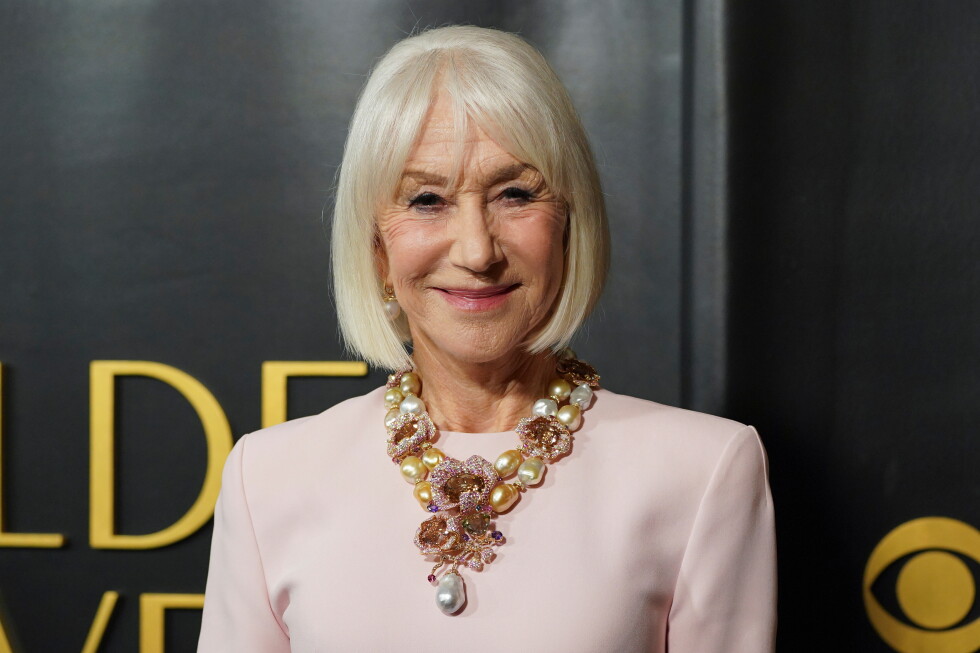
LONDON – Acclaimed British actor Helen Mirren, 80, has been appointed a Companion of Honour by King Charles III as part of the monarch’s 2026 birthday honors, a distinction reserved for only 65 living recipients at any time for extraordinary long-term contributions to British national life. One of the highest honors bestowed by the British Crown across the United Kingdom and Commonwealth, the Companion of Honour places Mirren in an exclusive circle that already includes prominent figures such as legendary environmental broadcaster David Attenborough, celebrated Canadian author Margaret Atwood, and former British Prime Minister Gordon Brown. Mirren’s appointment stands as one of the most high-profile recognitions in the annual mid-year honors, a twice-yearly tradition – held each New Year and June to mark the ruling monarch’s official birthday – that honors extraordinary contributions from celebrities, public figures and ordinary members of the public alike. Nearly 1,200 recipients are recognized in the 2026 birthday round of honors. Mirren’s latest honor specifically recognizes her decades of outstanding service to drama. A decorated veteran of stage and screen, she has long been a leading advocate for equal representation and opportunity for female actors, building her career starting in the 1960s with classical roles at the National Youth Theatre and Royal Shakespeare Company before breaking into film. Her early iconic big screen credits include *The Long Good Friday*, *Excalibur*, and *The Madness of King George*, and she captivated British television audiences for seven seasons as the sharp, trailblazing Detective Chief Inspector Jane Tennison in the landmark series *Prime Suspect*. The career highlight that cemented her global stardom came in 2007, when she won the Academy Award for Best Actress for her searing portrayal of Queen Elizabeth II in *The Queen*, a drama exploring the British royal family’s response to the 1997 death of Diana, Princess of Wales. First established in 1917 by King George V, the Companion of Honour was created to recognize major sustained contributions to the arts, sciences, medicine, or government. Membership is held for life, with new appointments only made when existing members pass away. Mirren fills the vacancy created by the recent death of David Hockney, one of the most influential British artists of the 20th century, with the next potential new appointment expected at the 2027 New Year honors. Beyond Mirren’s historic appointment, the 2026 birthday honors recognized a wide range of achievement across sectors. Beloved children’s author Julia Donaldson, whose total global book sales have surpassed 50 million copies to make her the top-selling author of all time in the UK, outranking *Harry Potter* creator J.K. Rowling, was appointed a dame – the highest female equivalent of a knighthood, an honor Mirren herself received in 2003. “Receiving this honor has been a very happy surprise,” said the 77-year-old author of *The Gruffalo* and *The Highway Rat*. “It’s really gratifying to have children’s books recognized in this way.” The sports world also saw multiple prominent honorees. Rugby league legend Kevin Sinfield was knighted for his decorated playing career and groundbreaking fundraising work for motor neuron disease (MND) research and family support. Since his close friend and former teammate Rob Burrow died from the neurological disorder in 2024, Sinfield has raised more than £11 million (nearly $15 million USD) to back the cause. Two-time Ryder Cup-winning captain Luke Donald was awarded an Order of the British Empire, as he prepares to make history next year when he leads Team Europe against the United States in Ireland, aiming to become the first captain ever to secure three consecutive Ryder Cup victories. Chloe Kelly, who scored the match-winning penalty for England’s women’s national football team at Euro 2025, was appointed a Member of the Most Excellent Order of the British Empire alongside six of her Euro-winning teammates. In the arts, Black Sabbath founding guitarist Tony Iommi received honors for his contributions to music and charity, coming just under a year after the death of the band’s iconic frontman Ozzy Osbourne. Welsh musician and broadcaster Cerys Matthews, former lead singer of Catatonia, was also recognized for her service to music. Unlike many high-profile public recognitions, the UK honors system intentionally centers ordinary people as well as household names. All recipients are selected by independent civil service committees from public and government nominations, and medals and titles are usually presented by King Charles or a senior royal, most often at Windsor Castle where the monarch resides full-time. One notable non-celebrity honoree is Debbie Lewis, who founded the bereavement support organization COVID-19 Families U.K. after losing her father to COVID-19 in 2020, just four months after her mother’s death. After Lewis posted a public message on Facebook saying she was grieving alone and hoping to connect with others who shared similar loss, 40 people reached out to her within the first week. Six years later, her support network now serves more than 4,500 people navigating pandemic-related bereavement. “I’m still a little bit in shock,” the 56-year-old said of her honor. “I know it’s a huge achievement and I’m just a little bit overwhelmed at the moment.”
作者: admin
-

England crush Sri Lanka in Women’s T20 World Cup as Wyatt-Hodge’s 105 powers record total
BIRMINGHAM, England — Host nation England got its 2024 Women’s Twenty20 World Cup campaign off to a historic, electrifying start on Friday, cruising to an overwhelming 87-run victory over Sri Lanka in front of a sold-out-feeling crowd of 14,865 cheering fans at Edgbaston.
The story of the match was written by England’s batters, who delivered a tournament record-breaking performance to post the highest total in Women’s T20 World Cup history: 219 runs for the loss of just one wicket at the close of their 20 overs. The standout of the innings was opening batter Danni Wyatt-Hodge, who recently returned to international cricket after maternity leave, finishing an unbeaten 105 runs off 62 deliveries.
Wyatt-Hodge shared the crease for a game-changing opening stand with Amy Jones, who was promoted up the batting order to open the innings. The pair put on 135 runs together, a new record for England’s highest opening partnership in T20 World Cup history, hitting 100 runs inside the first 10 overs. Jones survived two dropped catches on 12 and 48 before finally being dismissed for 53 runs off 38 balls, cementing her role in the dominant opening display.
England captain Nat Sciver-Brunt, who only recently made her return to competitive cricket after suffering a torn calf injury in April, also made history during the innings. She survived a dropped catch when she was on 14, and went on to score an unbeaten 46 runs off just 22 deliveries. This knock pushed her career T20 World Cup run total to 784, overtaking former captain and current England head coach Charlotte Edwards’ previous record of 768 to become the nation’s all-time leading run-scorer in the tournament.
In the final over of England’s innings, Sciver-Brunt gave the final two deliveries to Wyatt-Hodge, who was stuck on 97 runs at the time. The opener wasted no time, hitting the first of the two behind square for a boundary to bring up her century — just the seventh hundred in Women’s T20 World Cup history, and only the second ever scored by an English player. She followed that with another four off the final delivery, closing her innings on 105 not out with 13 fours, marking her third career T20 century.
After reaching the milestone, Wyatt-Hodge punched the air in celebration before re-creating the iconic baby-rocking celebration first made famous by Brazilian soccer star Bebeto at the 1994 men’s FIFA World Cup. The celebration was a tribute to her newborn daughter Daisy, who was born on May 20 to Wyatt-Hodge and her wife. “It was great fun out there,” Wyatt-Hodge told reporters after the match. “My century celebration was for my daughter Daisy. I hope TV got it.”
Wyatt-Hodge’s impact extended far beyond her batting performance. In the fourth over of Sri Lanka’s chase, she ran from deep square leg, dove over her shoulder, and pulled off a spectacular one-handed catch to remove Chamari Athapaththu — Sri Lanka’s dangerous captain and biggest batting threat — for just 4 runs. Though she dropped two subsequent catching chances, neither miscue proved costly for England.
Left-arm fast bowler Freya Kemp turned in a career-defining performance with the ball as Sri Lanka’s chase collapsed. Kemp finished with career-best figures of 4 wickets for just 21 runs, including three wickets in a single over that crumbled Sri Lanka’s batting order and reduced them to 92 runs for 8 wickets. Sri Lanka was eventually bowled out for 132 runs, sealing England’s 87-run opening win.
The tournament continues Saturday with three group-stage matches: Ireland faces Scotland, Australia takes on South Africa, and defending champion New Zealand meets the West Indies.
-
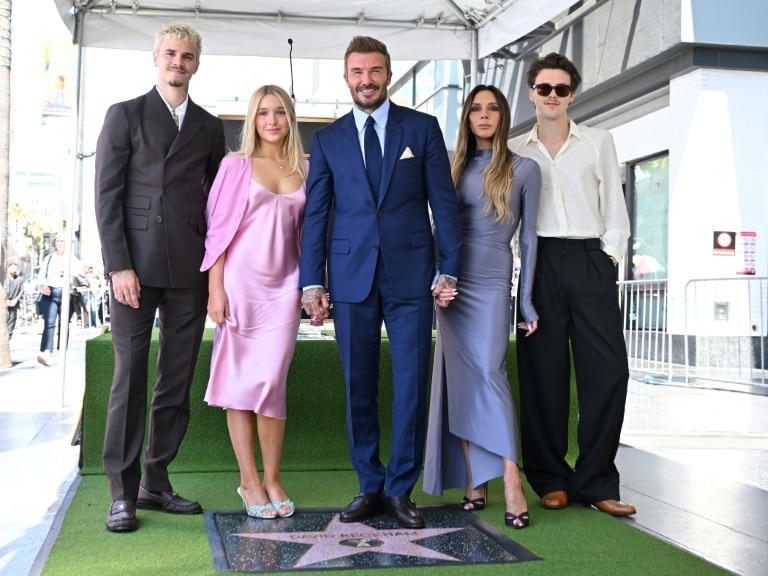
David Beckham gets Hollywood star as World Cup begins in US
As the 2026 FIFA World Cup prepared to kick off its first match on U.S. soil, global football icon David Beckham received one of entertainment’s most prestigious honors – a star on the Hollywood Walk of Fame. The 51-year-old former Manchester United and England captain, who cemented his legacy as one of football’s most recognizable global ambassadors, received the honor on a sun-drenched Los Angeles boulevard Friday, with A-list friends, family and adoring fans in attendance.
Hollywood legend and Beckham’s close personal friend Tom Cruise took to the stage to celebrate the English footballer’s transformative impact on soccer in the United States, an achievement he said deserves far more recognition than a star on a sidewalk. Reflecting on Beckham’s 2007 move to LA Galaxy, where he spent six seasons raising the profile of Major League Soccer (MLS), Cruise noted how the star’s arrival shifted American public perception of the sport forever.
“When David arrived, Major League Soccer had just 13 teams. Today, it has 30. That’s the impact we’re celebrating today: not just an extraordinary playing career, but a legacy that changed the trajectory of a sport across North America,” Cruise told the gathered crowd. “People who had never watched soccer suddenly had a reason to tune in. Beckham changed this game in this country.”
For his part, a humbled Beckham called the honor a surreal moment that he never could have imagined as a working-class kid growing up in England. “I’ve always been a dreamer, but I could never have imagined that an honor like this would come to a working-class English soccer player like me,” he said. “How fitting then that I am here today as we prepare to celebrate the opening here in the US of the 2026 World Cup. It’s a powerful moment to recognize how the sport I love so much has grown in this country over the past three decades.”
Beckham also paid tribute to Cruise, who first welcomed him to Los Angeles nearly 20 years ago, calling the opportunity to be honored by one of Hollywood’s biggest stars “mind-blowing.” “To stand here in front of my friend Tom Cruise, the greatest movie star of our time, is quite frankly overwhelming,” he said. “You welcomed us to LA 20 years ago, and you have been a loyal friend and an inspiration to me ever since.”
Victoria Beckham, David’s wife, former Spice Girls member and now successful fashion designer and entrepreneur, emphasized that the honor comes at a pivotal moment for American soccer. “Soccer in America is entering one of the most exciting chapters in its history, which makes this incredible honor feel all the more timely,” she said, echoing the widely held view that the 2026 World Cup will cement the U.S.’s status as a major global soccer market.
This year’s World Cup is co-hosted by the U.S., Mexico and Canada, marking the second time the U.S. has hosted the tournament after its debut as host in 1994. The U.S. men’s national team was set to play its opening match of the tournament against Paraguay in Los Angeles later the same day Beckham received his star.
After retiring from professional playing in 2013 following a 20-year career stints with global powerhouses including Real Madrid, AC Milan and Paris Saint-Germain, Beckham has continued to shape the growth of American soccer. He co-founded Inter Miami CF, which shocked the global sports world in 2023 when it signed Argentine megastar Lionel Messi, leading the expansion club to its first-ever MLS title last season. Beyond sports, Beckham has also built a successful career in media and entertainment, launching content production company Studio 99 in 2019.
-
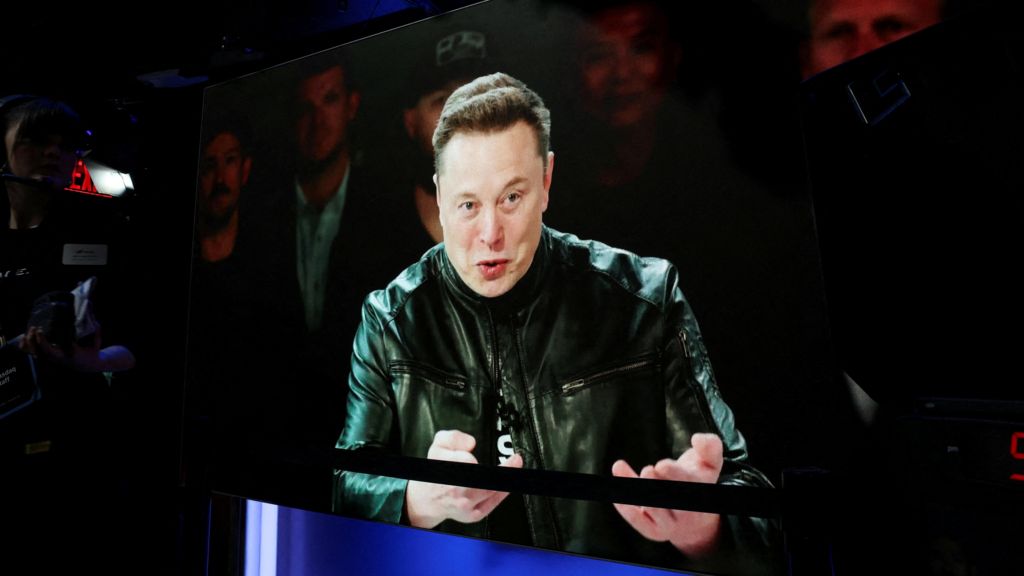
Elon Musk becomes world’s first trillionaire as SpaceX soars in stock market debut
On a historic Friday that reshaped global business and inequality dynamics, Elon Musk crossed an unprecedented financial threshold to become the world’s first trillionaire, driven by a roaring market debut of his aerospace and artificial intelligence firm SpaceX that went down as the largest initial public offering in stock market history.
SpaceX opened trading on the New York-based Nasdaq exchange with a total market valuation of $2.2 trillion, after pricing its initial shares at $135 apiece. Buoyed by overwhelming investor enthusiasm for Musk, the commercial space sector, and emerging AI, opening trades jumped to $150 per share, and the price briefly peaked at $176.50 before closing the session at $160.95. The blockbuster IPO raised $75 billion in fresh capital for the company, which earmarked the funds to accelerate development of reusable rocket technology and advance its artificial intelligence projects.
Musk’s 42% ownership stake in SpaceX alone closed the day valued at roughly $884 billion, when combined with his 12% stake in electric vehicle manufacturer Tesla, his total net worth pushed just over the $1 trillion mark, cementing his position as the world’s wealthiest individual by a wide margin. For context, Musk’s on-paper net worth is roughly equivalent to the entire annual gross domestic product of European nations Poland and Switzerland.
This unprecedented milestone for a private individual immediately ignited fierce global debate over skyrocketing wealth concentration. High-profile progressive U.S. politicians Bernie Sanders and Elizabeth Warren were quick to condemn the development, with Warren arguing that Musk’s new trillionaire status should serve as a urgent ‘wake up call’ that reinforces the urgent need for targeted wealth taxation on the world’s ultra-wealthy.
It is important to note that Musk’s new status is based on the valuation of his equity holdings, not liquid cash reserves, and he is bound by a lock-up agreement that bars him from selling any of his SpaceX shares for at least 12 months. Beyond Musk, the IPO has delivered life-changing windfalls for more than 4,400 current and former SpaceX employees, who received company equity as part of their compensation packages and are now set to become millionaires from the listing.
The historic listing also renewed public scrutiny of Musk’s increasingly high-profile political engagements in recent months. Musk, who currently leads U.S. President Donald Trump’s Department for Government Efficiency (DOGE), oversaw the shutdown of the U.S. Agency for International Development (USAID) as part of the department’s cost-cutting agenda. Researchers publishing in *The Lancet* medical journal have warned that the cuts to USAID could lead to more than 14 million additional preventable deaths globally by 2030. He has also had repeated public clashes with UK Prime Minister Keir Starmer, most recently over the murder of 18-year-old British student Henry Nowak. He has also drawn sharp criticism for his stances on immigration policy from governments on both sides of the Atlantic.
Unlike many established public companies, SpaceX’s $2.2 trillion valuation is rooted overwhelmingly in investor optimism about its long-term future potential rather than proven consistent profitability. Recent regulatory financial filings show the company has recorded cumulative losses of more than $9 billion across 2025 and the first half of 2026, driven by massive upfront spending on AI development, rocket infrastructure, and other capital projects. The company did not provide a clear timeline for when it expects to turn a profit in its pre-IPO filings with the U.S. Securities and Exchange Commission (SEC).
Today, SpaceX already operates a leading commercial rocket launch business, manages the growing Starlink satellite internet constellation, and owns xAI, the artificial intelligence firm behind the controversial chatbot Grok. Its long-term ambitions outlined in its IPO prospectus far exceed its current operations: the company states its core mission is ‘To build the systems and technologies necessary to make life multiplanetary, to understand the true nature of the universe and to extend the light of consciousness to the stars.’ Musk has long publicly championed the goal of colonizing Mars and has also floated plans to build cloud data centers in orbit.
Ahead of the Nasdaq listing, protesters gathered in New York’s Times Square to demonstrate against Musk and the company, echoing widespread public criticism of his wealth and political actions. Market analysts hold mixed views on the company’s post-IPO trajectory. Susannah Streeter, chief investment strategist at asset manager Wealth Club, noted that the outsized jump in share price reflects how deeply investors have bought into Musk’s ambitious long-term vision. ‘He has long been reaching for the stars with his extra-terrestrial ambitions, and it appears plenty of investors share his enthusiasm for the future,’ Streeter said. However, she also warned that Friday’s rally is ‘being driven as much by hype and scarcity as fundamentals.’
Industry observers have also raised concerns about unintended exposure to SpaceX’s expected volatility for ordinary savers. Many pension funds and retail savings products invest in broad market index funds that automatically include shares of the largest public companies, meaning millions of ordinary savers will be exposed to any future swings in SpaceX’s share price. Samuel Kerr, who leads equity capital markets research for Mergermarket, emphasized that the real test for SpaceX will not be its first-day trading performance but its ability to sustain its valuation over the long term. ‘The question on SpaceX is less about the immediate trading after IPO,’ Kerr said. ‘It’s more about how the price holds over the longer term.’
-

World Cup kicks off in Canada with Alanis Morissette and Michael Bublé performing in opening ceremony
The historic 48-nation 2026 FIFA World Cup, the largest edition of the global football tournament in history, officially entered its North American co-host phase on Friday, as Canada stepped into the international spotlight with a vibrant, diversity-focused opening ceremony in Toronto ahead of its opening group stage match against Bosnia and Herzegovina.
A day earlier, the tournament kicked off in Mexico City with its own star-studded opening ceremony featuring global superstars Shakira and Nigerian Afrobeats icon Burna Boy. Later Friday, the United States will play its first match of the tournament in Los Angeles, with a pre-game performance lineup headlined by pop star Katy Perry and Atlanta rapper Future, plus additional sets from Brazilian hitmaker Anitta, South African Grammy winner Tyla, and Blackpink alumna LISA.
The 2026 World Cup marks the first time the tournament has been split across three host nations: Canada, Mexico, and the United States. The expanded format, which grew from 32 to 48 competing teams, has already cemented its status as the most expansive World Cup ever staged.
For Canadian football fans, Friday’s opening match in Toronto represented a long-awaited milestone in the country’s sporting history. Thousands of supporters flooded the streets and stadium stands, turning the area around Toronto Stadium into a sea of Canadian red, with fans breaking into an impromptu, heartfelt performance of *O Canada* as they entered the venue. Two local fans, Peter Giacobbe and Robert McIntosh, planned to attend all three of Canada’s group stage matches across the country’s two host cities, Toronto and Vancouver. “We’ve very excited. This is a long time coming,” Giacobbe told reporters, with McIntosh adding, “We woke up this morning realising that this is making Canadian history together.”
Bosnia and Herzegovina fans brought just as much enthusiasm to the match, marking the team’s first World Cup appearance since 2014. Hundreds of supporters marched to the stadium separately from Canadian fans, with some traveling all the way from the Balkans to cheer on their team, while others with dual roots embraced the unique moment of competing in North America. Layla Mesic, a Bosnian-Canadian who attended the game with her Canadian mother (who wore a Canada jersey), proudly wore Bosnia’s iconic yellow and blue kit. “To even qualify to the World Cup, it’s a big point of pride for us,” Mesic said. “Today I’m 100% Bosnian. It might have cost an arm and a leg, but I’m here, and this is a once-in-a-lifetime experience.”
Canada’s opening ceremony lineup leaned heavily into homegrown talent and the country’s commitment to cultural diversity, as highlighted by organizers. Iconic Canadian artists Alanis Morissette and Michael Bublé headlined the event: Morissette delivered a powerful, crowd-pleasing performance of the Canadian national anthem, while Bublé joined a local choir to lead fans in a rousing rendition of Sam Cooke’s *Bring It on Home to Me*. Additional performers included Grammy-winning singer Alessia Cara, Palestinian singer-songwriter Elyanna, Toronto-born artists Jessie Reyez and Nora Fatehi, and William Prince, an acclaimed Indigenous artist from Manitoba. Organizers noted the curated lineup was intentionally designed to reflect Canada’s diverse communities and rich cultural tapestry. Before kickoff, the stadium announcer invited the entire crowd to join in a round of applause for peace, a quiet moment of unity ahead of the match.
For fans unable to secure the high-priced match tickets, Toronto offered a free alternative fan zone located just across the street from the stadium, open to attendees on a first-come, first-served basis. Many local fans gathered there to watch the ceremony and match, embracing the energetic atmosphere even with heavier-than-usual traffic disruptions across the city. “Getting tickets for the actual game wasn’t even a consideration for us because of the high cost,” said Torontonian Angela Aco, who attended the fan zone to cheer on Canada. “It’s great to see people from all over the place. We just roll with the punches,” she added, noting that Michael Bublé’s performance was her favorite part of the opening ceremony.
Notably, top political leaders from all three host nations are skipping their respective countries’ opening matches. U.S. President Donald Trump will not attend the Los Angeles match, with Secretary of State Marco Rubio attending in his place. Canadian Prime Minister Mark Carney is currently on a working trip to France ahead of next week’s G7 summit, where he is scheduled to meet with French President Emmanuel Macron on Friday. Mexico’s President Claudia Sheinbaum also skipped her country’s opening match on Thursday, announcing she was staying away in protest of the tournament’s exorbitant ticket prices.
Looking ahead to the end of the tournament, FIFA has planned a historic first for the World Cup: a Super Bowl-style halftime show during the July 19 final at MetLife Stadium in New Jersey, the first of its kind in the tournament’s nearly 100-year history. The closing ceremony and halftime show will feature an all-star lineup headlined by Coldplay’s Chris Martin, Madonna, and Shakira, capping off the month-long global sporting event.
-
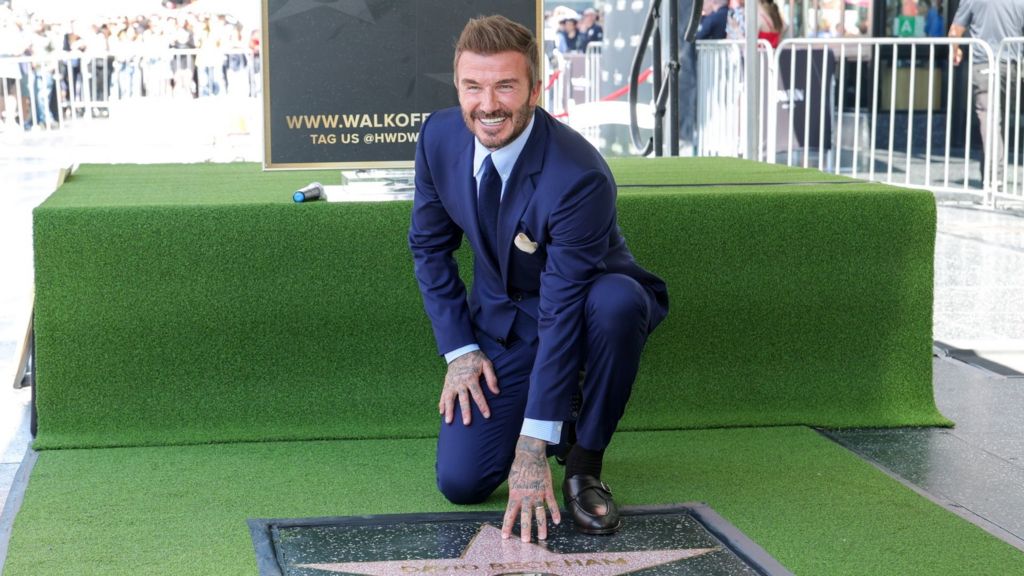
Watch: David Beckham receives star on the Hollywood Walk of Fame
In a glittering ceremony that blended sports stardom with Hollywood glamour, former professional football icon David Beckham has received one of the entertainment industry’s most iconic honors: a permanent star on the Hollywood Walk of Fame.
The special induction event drew a high-profile crowd, with Beckham’s inner circle leading the group of well-wishers. His wife, former Spice Group member and celebrated fashion designer Victoria Beckham, and the couple’s four children were on hand to share the milestone moment, posing for photos alongside the newly unveiled star embedded in the sidewalk along Hollywood Boulevard.
Adding another layer of A-list star power to the occasion, legendary Hollywood actor Tom Cruise also attended the ceremony, standing alongside the Beckham family to celebrate David Beckham’s cross-cultural impact that has stretched far beyond the football pitch over his decades in the public eye. For years, Beckham has built a global brand that merges his athletic legacy with ventures in fashion, media, and entertainment, making the Walk of Fame honor a fitting recognition of his multi-faceted career.
-
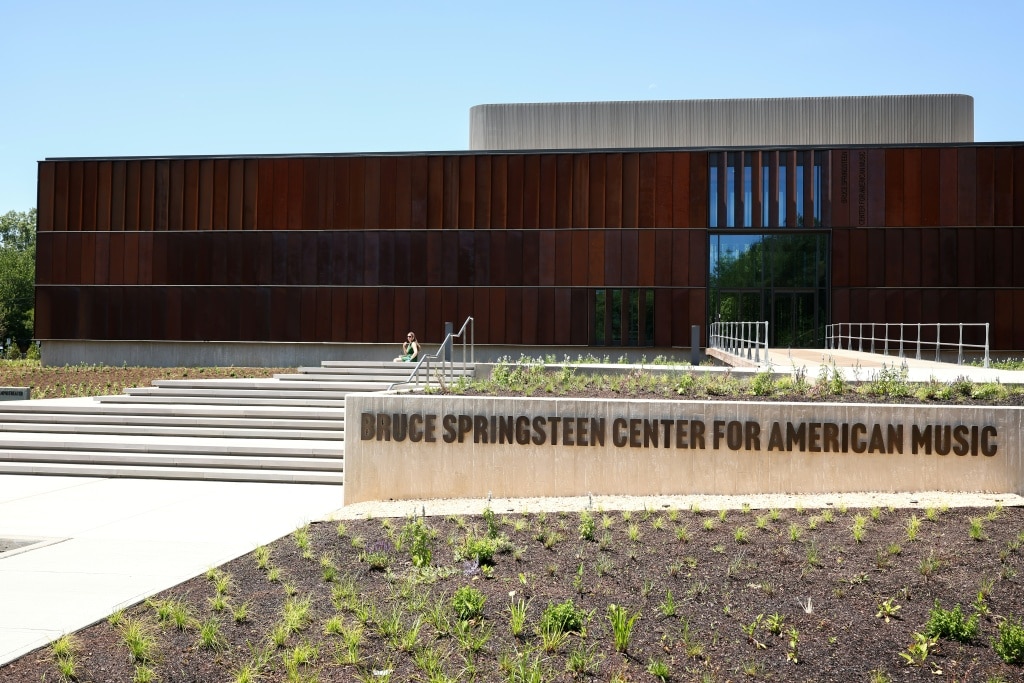
Bruce Springsteen music center set to open in New Jersey
As one of the most iconic native sons of the Garden State, rock legend Bruce Springsteen is about to receive a permanent, heartfelt tribute from his home: the Bruce Springsteen Center for American Music, a new $53 million museum celebrating both his decades-long career and the broader tapestry of American music, is set to open its doors to the public this Saturday in Long Branch, New Jersey. This coastal town is Springsteen’s birthplace, and sits just minutes from Asbury Park, the working-class seaside community that fostered the young musician’s growth and carved its indelible mark on his artistic voice.
Spanning two floors and covering roughly 3,000 square meters of exhibition space, the museum’s layout is designed to weave together the broader history of American roots and popular music with the specific story of Springsteen’s rise to stardom. One entire floor is dedicated to tracing the evolution of core American music genres, from blues, country and jazz to modern hip-hop. A central throughline of this section is highlighting the long tradition of protest music that has shaped American culture, featuring iconic artists from Woody Guthrie, Bob Dylan and Nina Simone to Public Enemy, Kendrick Lamar, and Springsteen himself. Springsteen, a well-documented vocal critic of former President Donald Trump, introduces this theme in a 25-minute introductory film that greets all visitors upon arrival, where he frames himself as one messenger in a long, unbroken line of musical storytellers.
Exhibition curators drew direct inspiration from Springsteen’s own words to shape the museum’s design. According to Jared Gilbert, an associate at lead architectural firm CookFox, Springsteen’s memoir *Born to Run* and the narratives woven into his song lyrics served as the core inspiration for many of the space’s key design choices. The museum’s collection features a host of one-of-a-kind artifacts loaned by artists or their estates, including a gold jacket once owned by Elvis Presley, a saxophone played by jazz legend John Coltrane, a guitar from rock icon Eddie Van Halen, and a signature cap from Public Enemy frontman Chuck D. Bob Santelli, the center’s executive director and a close personal friend of Springsteen, told reporters that securing these rare items was far simpler than many expected, noting that Springsteen’s reputation and name opened almost every door for the curatorial team. The entire project, which will house Springsteen’s personal professional archives, was funded primarily through donations from high-net-worth fans of the rock star, Santelli added.
To make the collection accessible to all visitors, the museum integrates interactive listening stations and touchscreen displays that let guests explore hundreds of tracks across different styles and eras. Curators acknowledged one notable gap, however: popular dance genres including disco, funk, house and techno are not featured in the genre exhibition, a omission the team says was purely due to space constraints rather than an intentional choice.
The museum’s upper floor is dedicated entirely to tracing Springsteen’s decades-long career, starting from his earliest live performances on the campus of Monmouth University, through the formation of his long-time backing group the E Street Band, his commercial breakthrough in the mid-1970s, and the global blockbuster success of his 1984 seminal album *Born in the U.S.A.*. A large, dedicated section of the exhibition unpacks the album’s iconic title track, clarifying its nuanced message for the many listeners who still misinterpret it as a straightforward patriotic anthem: the song was actually written to condemn the poor treatment of Vietnam War veterans after they returned home from service.
Additional interactive and personal exhibits include a virtual library holding the key books that shaped Springsteen as an artist – the singer, who dropped out of college, shares in a recorded video that he only developed his love of reading at age 28 – and a replica recording studio where visitors can experiment with mixing their own musical tracks. Notably, while Springsteen used his 20-date U.S. tour completed in May to openly criticize former President Trump at every stop, the former president’s name does not appear anywhere in the museum’s permanent exhibitions. Santelli explained that the center has intentionally kept its core narrative apolitical, noting that Springsteen’s personal political views are his own, not the institutional stance of the museum. To address the intersection of music and politics that runs through Springsteen’s work and American music broadly, the center will launch a six-month temporary exhibit alongside the opening, titled *Chimes of Freedom: Politics, Protest and the Power of Song*, which will explore that theme in depth.
-

‘I hope Rama resigns’: Why Albania’s Flamingo Revolution isn’t actually about flamingos
As the clock strikes 6 p.m. on a midweek Wednesday, several hundred Albanian demonstrators assemble along the perimeter of Tirana’s central Skanderbeg Square. A small group of speakers steps forward to address the crowd, while new arrivals stream in, carrying hand-painted posters and national flags. Roughly 30 minutes after the first gathering, the crowd begins a coordinated march toward the residential compound of Albanian Prime Minister Edi Rama, located in the capital’s core. Along the route, informal street vendors do brisk business selling Albanian national flags, branded scarves, whistles, and traditional white wool qeleshe hats, a symbol of national identity. By the time the crowd reaches the prime minister’s office, their numbers have swollen to thousands, stretching nearly a full kilometer along the city’s central boulevard. Chants ring out across the thoroughfare, mixed with the sound of drumming, whistles, and defiant singing. One slogan, scrawled on signs and shouted in unison, translates plainly: “Edi Rama ka mbaru” — Prime Minister Edi Rama’s time is up. By 9 p.m., the march has spread through central Tirana, gridlocking traffic for blocks. But most stranded drivers do not express frustration; instead, many wave Albanian flags, cheer on the marchers, or lean on their horns in solidarity, with some even climbing onto the roofs of their vehicles to display their support. What began as a localized environmental demonstration against a controversial luxury development has erupted into a sustained national uprising, entering its 13th consecutive day of action by the end of last week. The unrest first ignited on May 30, sparked by plans for high-end resorts on Sazan, Albania’s largest island, and within the protected Vjosa-Narta nature reserve — a unique ecosystem home to flamingos, sea turtles, more than 200 bird species, and over 70 plants and animals classified as endangered. The multi-billion-dollar development project is led by Affinity Partners, the private investment firm founded by Jared Kushner, son-in-law of former U.S. President Donald Trump. Public scrutiny of the project intensified after Ivanka Trump, Kushner’s wife, claimed she “discovered” Sazan during a private yacht trip, a comment that drew widespread anger among Albanians. In 2024, the Rama administration oversaw amendments to legislation governing protected natural areas, a change critics say deliberately opened formerly off-limits conservation zones to private tourism development. Construction work on the project kicked off in late May, and local residents immediately began staging small protests around the fenced construction site, which was guarded by private security contractors. Tensions boiled over after a video went viral showing security guards dragging a protester across the ground, an incident that galvanized public anger and drew thousands of new demonstrators to the movement. In the opening days of the protest, demonstrators centered their opposition on the threat to Vjosa-Narta’s fragile ecosystem, with viral photos of marchers holding signs featuring the reserve’s iconic pink flamingos spreading across social media. But in less than two weeks, the movement has undergone a profound transformation: what started as a single-issue environmental campaign has evolved into a broad-based anti-government uprising targeting Rama’s administration and the entire Albanian political establishment. Rama has repeatedly dismissed the protests, dismissing the movement as “engineered digital hysteria,” accusing international media of exaggerating the scope of public anger, and drawing a hard line on the development project. “There is no chance for this investment to stop as long as I am here,” the prime minister said. For demonstrators, however, anger extends far beyond the proposed resort. Many have grown deeply frustrated with years of unaddressed public grievances, entrenched corruption, and policy decisions they say prioritize the interests of wealthy foreign investors over the basic needs of ordinary Albanian citizens. Oljam Dervishi, founder and CEO of Albanian environmental NGO Resu, explained that the project sets a dangerous precedent for the future of the country’s protected natural spaces. “If the resort gets built, that will mean that everywhere where there are protected areas, they are not protected anymore,” Dervishi told Middle East Eye. “This project shouldn’t happen. If they want to develop, they should develop somewhere else.” Dervishi added that the movement’s priorities have already shifted far beyond environmental protection: “I don’t think this is a question of protected areas or the environment anymore. People feel like decisions are not taken for the people, but for investors. And that’s why they are furious.” Jonida, a computer programming student who has joined every day of the protests since they began, echoed that sentiment, noting that opposition to the project is not rooted in anti-American sentiment or opposition to the Trump family specifically. “Even if it was another billionaire, we would still be here,” she said. “Because the real problem is the principle of selling the country.” For Jonida, the Albanian government should be prioritizing far more urgent domestic issues: improving the country’s underfunded healthcare and public education systems, and lowering skyrocketing fuel prices. “This needs to be fixed first. You can think about tourism for elites after. But even then, it has to be outside of protective areas. You cannot change laws through corruption.” Like many demonstrators, Jonida’s ultimate demand goes far beyond canceling the resort: she is calling for Rama’s resignation, and says she does not support the country’s traditional political opposition either. Instead, she hopes the protests will pave the way for a new grassroots people’s party that will prioritize the needs of Albanian citizens. “I hope there will be a party that cares about Albanian citizens; that there will be people who are in it for the country and not for the money.” Rezarta, a 21-year-old architecture student and fellow protester, laughed off Ivanka Trump’s comment about “discovering” the island, noting “Ivanka the explorer says she found our island, but it was ours to begin with.” While Rama has promoted the resort as a major driver of economic growth for Albania, Rezarta says ordinary Albanians will see none of the benefits. “We Albanians get nothing. Only Ivanka, her friends, our prime minister and his friends can enjoy it.” For her, the protests are a reflection of widespread anger at a political system that prioritizes elite luxury tourism over the basic needs of the Albanian public. “The healthcare is horrible and living here is very expensive compared to the wages we get. We cannot take it anymore.” Rezarta also joined calls for the removal of the entire top political leadership, including both Rama and opposition leader Sali Berisha, echoing the popular protest slogan “Rama to prison; Berisha to prison.” The 81-year-old leader of the Democratic Party, who previously served as prime minister and president, is widely accused by demonstrators of colluding with Rama to protect elite interests. “We know that they are working together,” Rezarta said. “We want them gone from our politics. We want new people and new faces.” She added that the large presence of young people at the protests reflects a last stand for the future of the country: “Many of the people here are Gen Z and Millennials. You can feel that they’re here to fix everything – or else we’re all leaving Albania.” That fear of a mass exodus of young people is what drove Hortensa, a mother of two, to join the protests. Her motivation is simple: “I don’t want my kids to leave Albania.” Her anxiety is well founded: roughly 1.2 million Albanians — a third of the country’s total population — currently live abroad. “What don’t we have that Italy or Germany have?” she asked. “Our youth should remain in Albania.” Redes, a dentist who has watched dozens of his relatives and friends emigrate “because of this corrupted government,” shares that frustration. Even with a stable professional career, Redes says daily life in Albania remains a struggle. “The wages are bad. Everyone is fed up.” He is also calling for Rama’s resignation, arguing the resort project is designed to line the prime minister’s pockets and curry favor with the U.S. “But at what cost?” he asked. “None of the working-class people would be able to go to the resort. It’s for billionaires, not for us. Even though this is our land.” Ilir, a long-time anti-government activist who has been demonstrating against Albanian administrations for years, notes this movement is different from previous small-scale protests. “In the past, it was just a couple of hundred people. This time is different. Most people here want both the government and opposition leaders in prison. We consider them traitors,” he said. Ilir accuses the government of “selling and destroying the most beautiful parts of Albania,” adding that the protected natural areas were “sold to foreigners under the table.” While the protests have already shifted far from their original environmental roots, they have notched early partial wins. Albania’s top anti-corruption judicial body, SPAK, has launched a formal investigation into the project and frozen assets and bank accounts linked to the developing company. Separately, the European Commission has issued a formal warning that the project could create significant complications for Albania’s bid to join the European Union — a goal that public polling shows is supported by 91% of Albanians. Earlier this week, a European Commission spokesperson confirmed that after the body raised formal concerns, Albania’s environment minister committed to pausing construction and ordering a full independent environmental impact assessment of the project. As of Friday, when the protests entered their 13th consecutive day, there is no sign of the movement winding down. For Dervishi, even the act of sustained public protest is already a victory. “One of my goals is to end this state of being scared of speaking out,” he said. “That’s why this protest is so meaningful for me and for all the people here. And I’m very positive that the protests will have good outcomes that will serve the people of Albania.”
-
Israeli spyware firm targeted Whatsapp users despite US court order
Facebook parent company Meta has uncovered new unlawful activity by the notorious NSO Group, claiming the Israeli-founded spyware developer has repeatedly violated a permanent US court injunction by targeting WhatsApp users across Jordan and Lebanon, the tech giant confirmed earlier this week.
Meta’s security investigation found that NSO Group carried out coordinated spear-phishing operations against a small number of WhatsApp accounts in the two Middle Eastern nations. The firm also created unauthorized test accounts and discussion groups on the messaging platform, according to Meta’s findings.
Following the discovery, WhatsApp published the three domain names NSO Group used to facilitate one-click device infections: ikhwancast, ghazacast and fr24cast. John Scott-Railton, a senior researcher at University of Toronto’s cybersecurity watchdog Citizen Lab, has raised questions over whether the fr24cast domain was intentionally designed to impersonate respected international French news outlet France24, a common tactic in deceptive phishing attacks.
A look at NSO Group’s history of controversial activity shows the firm is the creator of Pegasus, the world-famous (and widely condemned) spyware that can silently infiltrate WhatsApp accounts to extract sensitive personal data including private messages, photos, call logs and other user information. After years of legal and regulatory scrutiny, the company came under US ownership in 2024.
The 2025 court battle between Meta and NSO Group resulted in a major ruling against the spyware firm. A US judge ordered NSO Group to pay Meta $167 million in damages, a figure that was later reduced to $4 million, but the most impactful outcome was a permanent nationwide ban that forbids NSO Group from accessing or targeting any WhatsApp services or its global user base.
Meta says this newly uncovered campaign is clear proof NSO Group has blatantly violated that court order. The firm has a long-standing placement on a US Commerce Department blacklist that bars any American company from doing business with NSO Group, a designation the Biden administration implemented after determining the firm’s activities posed a threat to US national security and foreign policy interests.
Recent industry reporting indicates NSO Group has been lobbying heavily to be removed from the US blacklist under the second Trump administration, a push that aligns with the firm’s 2024 appointment of David Friedman as executive chair. Friedman served as the US Ambassador to Israel throughout Trump’s first presidential term from 2017 to 2021, a high-profile pick widely interpreted as an effort to win favor with the current White House.
This is not the first time NSO Group’s spyware has been linked to invasive surveillance of targets in the Middle East. A 2021 collaborative investigation coordinated by the journalism non-profit Forbidden Stories exposed how multiple Middle Eastern governments were using Pegasus to spy on journalists, human rights activists, and political opposition figures. Saudi Arabia, Morocco, Bahrain, and the United Arab Emirates were among the nations named in the investigation as clients of NSO Group. One high-profile incident from 2022, documented by independent regional outlet Middle East Eye, captured the human cost of this surveillance: Finsbury Park Mosque chair Mohammed Kozbar was filmed explaining to his son that the family’s devices had been compromised by Pegasus, a moment observers described as a heartbreaking illustration of the harm invasive spyware inflicts on ordinary people.
As of this week, NSO Group has not issued any public response to Meta’s allegations, after declining to comment on the claims when approached by The Guardian. Meta has not yet announced what legal action it may pursue in response to the reported court order violation.
-

London judge sentences Palestine Action activists for raid at Israeli defense factory
On a Friday ruling at Woolwich Crown Court, a London judge imposed multi-year prison sentences on four Palestine Action activists, convicting their 2024 raid on a British-based Israeli defense factory as a terror-connected act, amid widespread debate over protest rights and counter-terrorism policy in the United Kingdom.
The targeted facility, operated by Israeli defense contractor Elbit Systems, is located in Bristol. On August 6, 2024, the activists carried out a coordinated break-in: 30-year-old Charlotte Head drove a van through the factory’s perimeter gates, and all four activists, clad in matching red jumpsuits, used sledgehammers and crowbars to destroy production equipment. Their stated goal was to halt manufacturing of drones that they argued would be used to kill Palestinian civilians in the Gaza Strip.
The break-in caused an estimated £1.2 million ($1.6 million) in property damage, and escalated into a violent confrontation with on-site security and responding law enforcement. During the clash, 23-year-old defendant Samuel Corner struck responding police Sergeant Kate Evans twice in the back with a 3.2-kilogram sledgehammer, fracturing her spine. Corner was separately convicted of inflicting grievous bodily harm for the attack. In testimony to the court, Evans said she continues to suffer long-term physical and psychological harm from the incident, including persistent sleep disturbance, recurring panic attacks and distressing nightmares. She also told the court she has received abusive online messages accusing her of collaborating with what the senders called the “Zionist occupation of Britain.”
In his ruling, Justice Jeremy Johnson found that the offense extended far beyond standard criminal damage, because the activists’ actions were intended to force Elbit Systems to cease operations in the U.K. and compel the British government to end arms production ties with Israel. Johnson ruled that this intent gave the crime a clear “terrorist connection.”
“Each defendant agreed to take part in high-level actions, and did so with the shared aim of shutting down Elbit and ending what they regarded as British complicity in Israeli war crimes,” Johnson stated. “The action was designed to influence the U.K. government and also to intimidate a section of the public, and was for the purpose of advancing an ideological or political cause.”
The sentencing handed down reflected the judge’s terror ruling: Corner received a sentence of seven years and eight months, Head and 30-year-old Leona Kamio each got five years, and 21-year-old Fatema Rajwani was sentenced to four years and eight months. The terror conviction also means all four activists must serve at least two-thirds of their sentences before becoming eligible for parole, and will require formal Parole Board approval to be released.
The 2024 Bristol raid was a key event cited by the British government when it proscribed Palestine Action as a designated terrorist organization last year. Official Home Office data shows the ban led to more than 1,600 arrests of pro-Palestine protesters between July and September 2024 alone. While London’s High Court has since ruled the original proscription decision was unlawful, the ban remains in effect pending an appeal ruling scheduled for Monday. Even as Friday’s sentencing proceeded inside the Woolwich Crown Court, more than 100 pro-Palestine protesters were arrested outside the southeast London courthouse by law enforcement.
The four activists were originally convicted of criminal damage during a May 2025 retrial. The case originated from an earlier trial where jurors acquitted six other defendants on charges of aggravated burglary and violent disorder, but could not reach a consensus on criminal damage counts. Two additional co-defendants were ultimately acquitted during the retrial.
Human rights organizations have sharply criticized the ruling, warning it sets a dangerous precedent for the criminalization of political protest in the U.K. Amnesty International’s UK chief executive Kerry Moscogiuri called the sentencing “a new low” in what the group describes as a broader national crackdown on peaceful protest activity. “It is completely disproportionate to treat protest-related offending as terrorism,” Moscogiuri said in a post-sentencing statement.